
REVIEW · PARIS
Family Tour at the Musée d’Orsay
The best part of this Musée d’Orsay visit is that it gives children a job to do. Instead of asking them to quietly follow adults from painting to painting, the guide uses riddles and a family treasure hunt to turn the museum into a puzzle. I especially like the no-line entry and the way the guide can adjust explanations to your children’s ages.
I also like that this is a private tour for your own group, so you can pause, ask questions, or shift attention when a child becomes fascinated by a sculpture or a famous painting. The main caution is the price: at $702.93 for up to four people, it makes the most sense for families who want a planned, guided visit rather than a quick museum stop.
Key points to know before booking
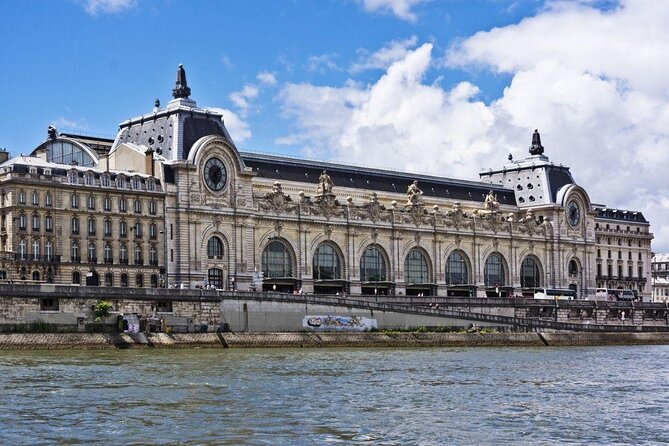
- The Great Clock starts the story: You enter through the former railway station and learn how the building’s train-station past shaped the museum.
- Children get their own activity booklet: Riddles include clues about the Statue of Liberty and other works in the collection.
- The route covers major Impressionist art: Expect Monet, Degas, Cézanne, Van Gogh, Gauguin, and others.
- The guide tailors the visit to your family: The discussion can be adjusted around your children’s ages and interests.
- The two-hour route includes views and a café pause: Lookouts reveal Paris rooftops, and the visit finishes with time at one of the museum cafés.
- The cost rewards a full family booking: The listed price covers two adults and two children, with admission and a professional guide included.
Why this Orsay visit works better for children
The Musée d’Orsay is one of Paris’s easiest major museums for a family to enjoy, but it can still feel like a lot for children. The building is large, the galleries are packed with famous names, and adults can spend far longer studying a painting than young visitors can tolerate.
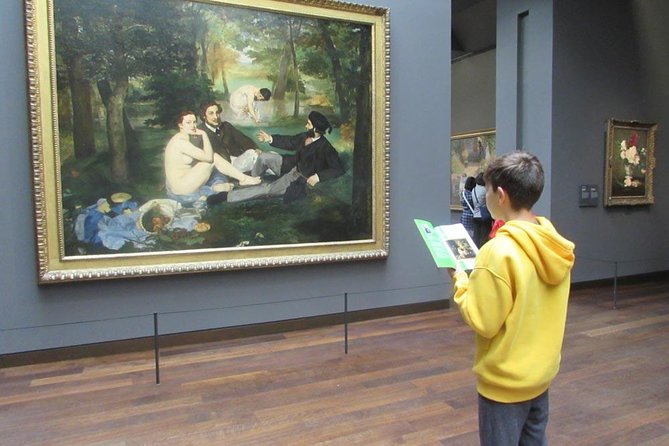
This tour solves that problem with a simple idea: give the children clues to follow. Each child receives an activity booklet, and the guide uses questions to keep the group moving from one discovery to the next. A clue about the Statue of Liberty, for example, becomes a reason to look closely rather than a random fact to memorize.
I like this approach because it respects children without reducing the art to a cartoon. The guide can explain why a work matters, then connect it to something a child can see, question, or solve. The result is less of a lecture and more of a shared search.
The family focus also helps adults. You are not left trying to read every label while keeping an eye on restless children. The guide carries much of the storytelling, while you can take in the architecture and the paintings at a more natural pace.
The visit has been particularly successful for children around the pre-teen and teenage years. One family described two 12-year-olds staying engaged through clues and age-appropriate conversation, even after several museum visits in the same week. That is a useful sign for parents who worry that another art museum might be one Paris attraction too many.
More Art Museum Tours in Paris
- Paris: Louvre Museum Timed-Entrance Ticket
★ 4.6 · 71,977 reviews - Paris: Orsay Museum Entry Ticket
★ 4.7 · 25,647 reviews - Paris: Louvre Guided Tour with Reserved Access & Boat Cruise
★ 4.3 · 16,353 reviews
Starting beneath the Musée d’Orsay’s Great Clock
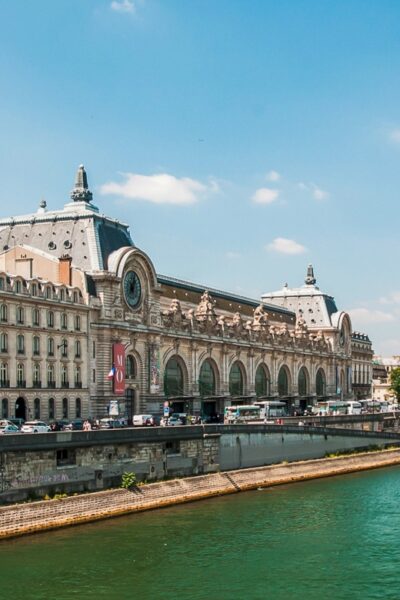
You meet the guide in front of the Musée d’Orsay at 75007 Paris. The opening setting is part of the attraction. Before you see the Impressionist galleries, you enter a former railway station, with its huge clock and long central space recalling the building’s original purpose.
The guide uses the Great Clock to introduce the museum’s identity. You may be asked to imagine trains passing through the station, and the children’s first puzzle begins from there. This is a smart opening because it makes the building itself part of the story.
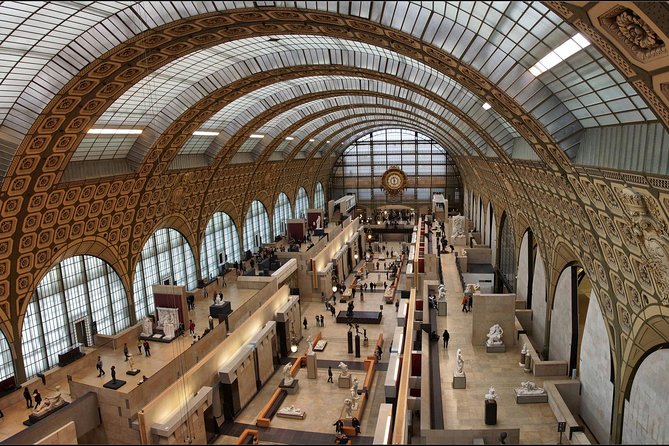
The Orsay covers French art from 1848 to 1914, and its former railway setting helps explain why the museum feels different from the Louvre. The interior is spacious, bright, and built around a grand central axis. Even children who are not yet interested in art can understand the basic idea: this was once a place for arriving and departing, and now it is a place for looking.
Skip-the-line admission matters here. You receive entrance tickets from the guide and enter through a no-line route, rather than spending part of your limited Paris day waiting outside. Entry arrangements can matter even more for families, since standing in a queue is rarely the best start to a museum visit.
Rodin, Pompon, and the first choices for your family
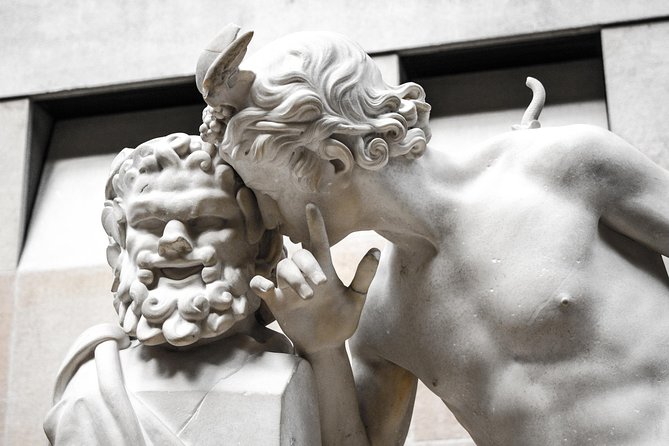
After the opening clues, the guide may adjust the route according to what catches your children’s attention. A sculpture by Auguste Rodin may become an early stop, or the group might pause at François Pompon’s Polar Bear.
That flexibility is one of the strongest reasons to choose a private tour. A fixed group has to follow a preset pace. Your family can spend a little more time with a sculpture, move on from a painting that does not connect, or ask for an explanation in simpler or more advanced terms.
Rodin gives the guide a chance to talk about movement, bodies, and expression in three dimensions. Children can walk around a sculpture and notice how it changes from different angles. Pompon’s Polar Bear offers a simpler visual entry point, with a clear animal form that younger children can recognize at once.
These stops also break up the painting galleries. A child may find it easier to stay focused when the visit moves between sculpture, architecture, and painting instead of presenting one long run of framed works.
You should still expect a museum visit, not a children’s entertainment show. The booklet and clues provide structure, but your family will spend much of the two hours looking closely, listening, and walking through galleries.
The Paris Opera and a Phantom of the Opera question
The museum includes a section devoted to the Paris Opera House, an important building from the period covered by the collection. The guide uses this area to connect architecture, music, performance, and Parisian life.
This is a particularly useful stop for children who know the Phantom of the Opera story. The tour raises the question of the underground river associated with the tale and lets the guide explain what is legend and what is fact. It gives the children a familiar story to hold onto while they look at a real Paris landmark and its artistic setting.
I like this kind of connection because it makes the museum feel less isolated from the city outside. You are not only looking at old objects. You are learning how buildings, stories, artists, and Paris itself fit together.
The Opera section also gives the guide a chance to point out details that adults may otherwise pass without noticing. The focus is not only on famous paintings. The museum’s interiors and the culture of the period receive attention too.
More gallery tours built for kids in Paris:
- Paris Louvre: 2-Hour Private Tour for Groups or Families
★ 4.6 · 639 reviews - Paris: Louvre Private Family Tour for Kids + Reserved Entry
★ 4.6 · 508 reviews - Paris Kids and Families Private Louvre Tour
★ 5.0 · 430 reviews - Family Friendly Louvre Museum Private Guided Tour
★ 5.0 · 190 reviews
The Impressionist galleries and the famous questions
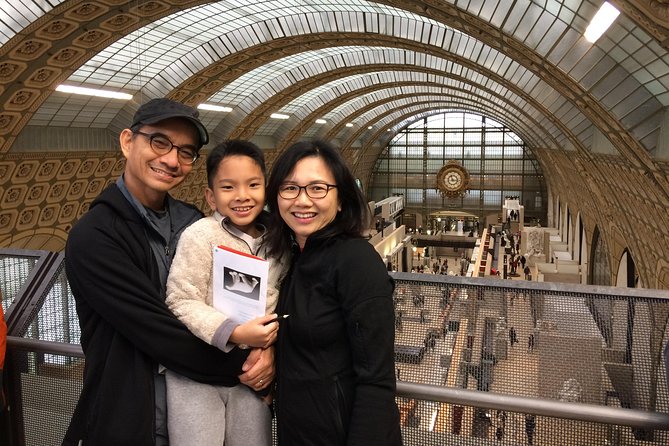
The central attraction is the Impressionist collection. The guide leads your family toward major works while using questions to keep the children looking closely.
Claude Monet’s Poppies offers one example. Rather than simply naming the artist and date, the guide can ask who the figures are and what they are doing among the flowers. A question like that encourages children to inspect the painting for themselves.
Edgar Degas’s Small Dancer Aged 14 raises another useful question. Children can look at the dancer’s stance, clothing, and posture, then consider why this sculpture feels different from a traditional formal statue. Cézanne’s apples provide a lighter moment, with the guide asking whether the artist really ate all the fruit he painted.
These small mysteries are well suited to a family visit. They do not require prior art knowledge, and they help children understand that paintings can be studied through observation before anyone gives them an interpretation.
You will also see works by Vincent van Gogh and Paul Gauguin. Van Gogh’s Sunflowers provides a recognizable highlight, while Gauguin’s Tahitian scenes open a conversation about place, color, and the way artists represent people and cultures.
The two-hour length forces some selectivity, which is a good thing. The Orsay contains far more art than any family can absorb in one sitting. A guide who focuses on key works helps you leave with a clear sense of what you saw instead of a blur of artist names.
How the private format changes the pace
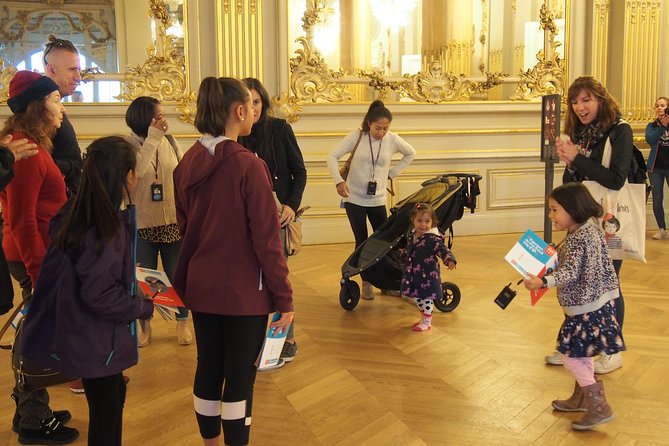
A private tour means only your group participates. That matters more with children than it might with adults. If one child asks a detailed question, the guide does not have to quiet the group or keep pace with strangers. If another child needs a short pause, you can make a small adjustment without disrupting a larger party.
The guide also speaks English, and the explanations are tailored around the ages and levels of the children. That does not mean every child will love every painting, but it gives the visit a better chance of holding their attention.
A private format can also be helpful for mixed-age families. A younger child may need simple visual questions, while an older child may be ready for more detail about the artist or the period. The guide can move between those levels more easily than a standard group tour.
The limitation is cost. The $702.93 price applies to a family of two adults and two children, which works out to roughly $175.73 per person when the group is full. That is a significant museum expense, even with admission included.
The value improves if you want a carefully planned family experience and would otherwise struggle to organize the museum on your own. It is harder to justify if your children already enjoy museums, you are happy to explore independently, or you only want to see one or two famous paintings.
Rooftops, architecture, and a café pause
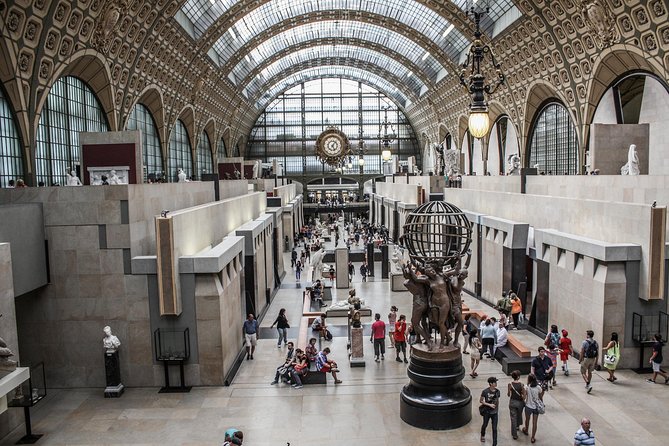
The tour is not confined to the main galleries. Lookouts and terraces provide views of the museum’s architecture and Paris rooftops. These moments give your family a chance to step away from close-looking and regain a sense of the city beyond the walls.
For adults, the views offer a welcome visual break. For children, they can make the museum feel less like a series of enclosed rooms. You can point out the rooflines and see how the museum’s former station structure fits into central Paris.
The visit also includes time at one of the Orsay’s stylish cafés. Food, snacks, and alcoholic drinks are not included, so you pay separately for anything you order. Treat the stop as a pause rather than a full meal unless you confirm your family’s needs at the time.
This break is useful near the end of a two-hour museum visit. Children can sit down, adults can collect their thoughts, and everyone gets a chance to talk about the works they remember. The museum even has a ballroom to see, adding one last glimpse of the grand social world connected to the building and its period.
What the $702.93 price includes
The price includes a professional guide, entrance tickets, and an activity booklet for each child. It does not include food, snacks, alcoholic drinks, or transport to and from the attraction. Bus tickets during the tour are the exception noted in the booking information.
Since the experience begins and ends at the Musée d’Orsay, you need to arrange your own way there. The meeting point is straightforward, but leave enough time to reach the museum before the scheduled start.
For a full family of four, the price buys more than admission. You are paying for skip-the-line entry, two hours of focused guidance, child-specific materials, and a route through the museum’s major highlights. You also avoid the work of deciding which galleries to see and how to explain them.
For a smaller group, the same group price becomes harder to defend. The listed rate is designed around two adults and two children, and the minimum booking is two people. I would compare it with the cost of standard museum entry and consider how much help your family needs with pacing and interpretation.
The cancellation terms are strict near the date. You can receive a full refund if you cancel at least three full days before the start time, based on local time. Changes or cancellations made within that period are not accepted for a refund.
Who should book this Musée d’Orsay experience
I would choose this tour for parents who want their children to see serious art without spending the day managing a museum visit alone. It is also a good fit if you have only a short window in Paris and want the main Orsay highlights organized into a clear two-hour route.
It suits families with children who enjoy puzzles, questions, stories, or hands-on challenges. It can also work for teenagers who might resist a standard art lecture but respond to the chance to solve clues and debate what they see.
The tour has some flexibility, but you should expect a moderate amount of walking and standing. The booking information recommends a moderate physical fitness level. If your family needs a very slow pace or frequent long breaks, mention that when arranging the visit.
The experience is offered in English. A separate family itinerary with Meet the Locals included a guide who spoke Portuguese, but you should not assume Portuguese or another language is available for this specific booking unless the provider confirms it.
Camille is one guide associated with a highly praised Orsay family visit, while other families who booked several Paris activities worked with guides including Nathalie and Sebastien. Guide assignment can vary, so treat those names as examples rather than a promise of who will lead your tour.
Should you book the family Orsay tour?
Book it if you want your children to engage with the Musée d’Orsay through clues, stories, and direct questions instead of simply following an adult from masterpiece to masterpiece. The skip-the-line entry, private setting, and child booklets make the two-hour visit easier to manage, and the route includes the museum’s strongest names along with architecture, views, and café time.
Skip it if you prefer to wander independently, your family already knows how to enjoy museums, or the $702.93 group price feels too high for two hours. For the right family, though, the value is in turning a potentially tiring museum visit into a shared activity that children can help lead.
FAQ
How long does the Musée d’Orsay family tour last?
The tour lasts approximately two hours.
Where does the tour start and end?
You meet the guide in front of the Musée d’Orsay at 75007 Paris, France. The activity ends back at the meeting point.
Is admission to the Musée d’Orsay included?
Yes. Entrance tickets are included, along with skip-the-line access.
Do children receive anything for the treasure hunt?
Yes. Each child receives an activity booklet with puzzles and clues to use during the visit.
Is this a private tour?
Yes. Only your own group participates in the activity.
What does the listed price cover?
The price is $702.93 per group of up to four people and applies to two adults and two children. It includes the professional guide, entrance tickets, and children’s activity booklets. Food, snacks, alcoholic drinks, and transport to and from the museum are not included.
What is the cancellation policy?
You can cancel for a full refund if you do so at least three full days before the experience start time. Cancellations or changes made less than three full days beforehand are not accepted for a refund.
More Orsay Tours in Paris
- Paris: Orsay Museum Entry Ticket and Digital Audio Guide App
★ 4.4 · 3,170 reviews - Paris in a Day: Louvre or Orsay, Eiffel Tower, City Walk & Cruise
★ 5.0 · 1,956 reviews - Paris: Musée d’Orsay Skip-the-Line Tour with Expert Guide
★ 4.5 · 1,145 reviews - Musée d’Orsay Skip-the-Line Tour with Expert Guide
★ 4.8 · 1,088 reviews
Just added around Paris
- Paris Day Tour with Eiffel Tower, Louvre and Cruise Max 6 People★ 4.5 · 29 reviews
- PRIVATE Louvre Wonders & Hidden Treasures Visit★ 5.0 · 65 reviews
- d’Orsay Museum Paris entry ticket★ 3.5 · 31 reviews
- visiting the masterpieces of impressionists at Orsay museum★ 5.0 · 7 reviews
- Louvre Museum with private guide★ 5.0 · 3 reviews
- Louvre Wheelchair-Accessible Private Tour – Stress-Free & Easy★ 5.0 · 16 reviews
- LOUVRE, Small Group Guided Tour in French (TOP SALES)★ 4.5 · 9 reviews
- Musée d’Orsay Highlights Tour with Gourmet Lunch★ 4.5 · 11 reviews
Art Museum Tours in Paris, compared.
Louvre Guided Tour with Reserved Access & Boat Cruise
Read our review →
Louvre Overview, Exploration tour and Reserved Entry
Read our review →
Louvre Museum Entry Ticket With Host and River Cruise
Read our review →
Mona Lisa & Louvre Masterpieces Tour with Reserved Access
Read our review →
Louvre Museum – Exclusive Guided Tour (Entry Included)
Read our review →
Louvre Museum Hosted Entry and Mona Lisa Audioguide
Read our review →Browse the lists this tour appears in