
REVIEW · WALKING
Maputo Art Walking Tour
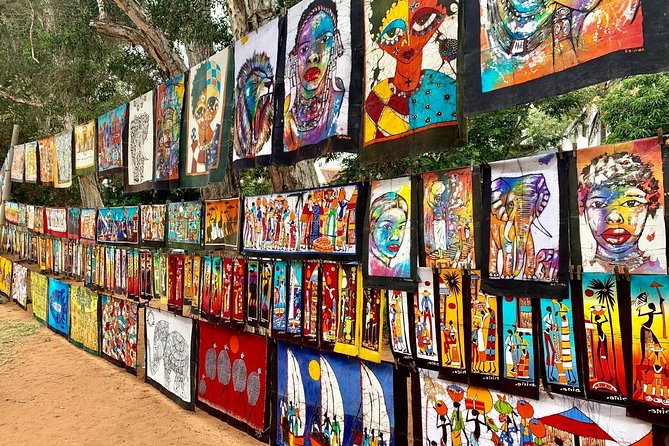
Maputo’s art tells some unusually sharp stories. On this three-hour walking tour, you move from elephant fetuses and colonial architecture to artists working in open studios, sculptures made from guns and bullets, and the handicrafts of FEIMA. It is a useful way to see how Mozambique’s past and present share the same streets.
I especially like the visit to Núcleo de Arte, where artists may be painting or sculpting as you look on, and the stop at Vila Algarve, whose fine tiles hide a much darker past. The price is fair for a private-feeling cultural outing, though the tour covers a lot in three hours and some stops receive only five or ten minutes.
- A museum beginning: See Maputo’s unusual natural-history displays, including elephant fetuses and old wildlife scenes.
- Art in progress: Visit Núcleo de Arte, an artists’ association with working studios and a gallery.
- Architecture with stories: Study Portuguese styles, Art Deco influences, and Pancho Guedes connections around central Maputo.
- A difficult past: Learn about Vila Algarve and its former use as a secret-police interrogation site.
- A practical finish: End at FEIMA, where you can shop for capulanas, carvings, small gifts, and local crafts.
Why Maputo’s art and architecture make a good walking tour
This is not simply a stroll past attractive façades. The route links buildings, artists, and public spaces so you can read Maputo as a city shaped by Portuguese rule, African creativity, political violence, and a lively modern arts scene.
You begin at the Museu de História Natural and finish at Parque dos Continuadores, home to FEIMA. Along the way, you see grand civic and religious buildings, modest working studios, a former Greek community center, and the elegant Polana Serena Hotel.
The tour is led by Maputo Tour Guides. Guides named in the available tour feedback include Walter and Edilson. Their strengths appear to be explanation and conversation. Walter is described as willing to answer questions about the city, while Edilson is praised for a thorough and professional approach. Guide assignments can change, so you should not book on the assumption that one specific person will lead your walk.
The tour has a maximum of 20 people. That is small enough for questions, though a group of that size can feel less intimate inside compact studios or on busy sidewalks. At $35 per person, the value depends on what you want. If you only want exterior photos, you can see many buildings independently. If you want the stories connected by a local guide, the museum entry, art visits, and context make the fee more worthwhile.
Starting with elephant fetuses at the Natural History Museum
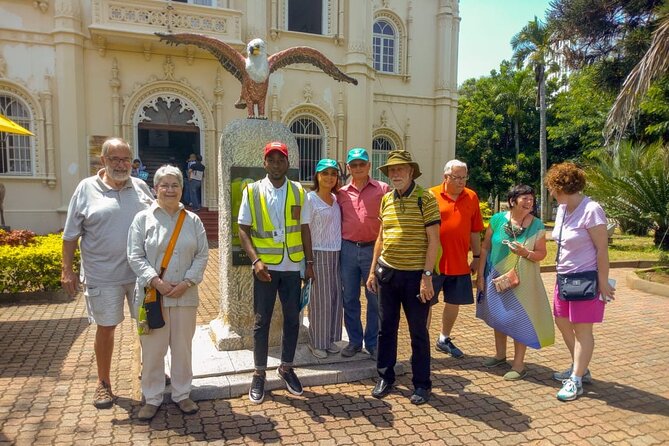
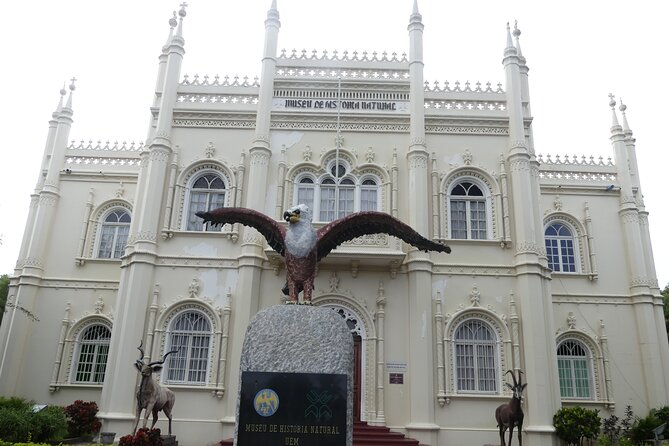
The meeting point is the Museu de História Natural at Praça Travessia do Zambeze. The building dates from 1931 to 1933 and was designed in a neo-Manueline style, a Portuguese Gothic form, by municipal engineer António Ribeiro de Mendonça. The original plan was reportedly for a school.
The museum’s most unusual displays are downstairs. You can see elephant fetuses from one to 20 months old, along with realistic wildlife scenes such as a lioness tearing at a zebra carcass. Taxidermist Peão Lopes created the scenes.
You should set your expectations correctly. These displays are old and may look dusty rather than polished or modern. That is part of the point, though. They offer a glimpse into an earlier style of museum display, when showing a frozen moment in nature was considered an educational spectacle.
The scheduled visit is about 10 minutes, so you will not have time for a slow museum visit. Think of it as a visual opening that gives the tour a sense of place before you turn toward architecture and contemporary art. Admission is included.
More art walks around the world:
- Picasso Museum and Walking Tour Plus Optional Wine & Food Tasting
★ 5.0 · 596 reviews - Picasso Small Group Walking Tour with Museum Skip the Line Ticket
★ 4.0 · 548 reviews - Montmartre for Art Lovers – Walking tour with Expert Guide
★ 5.0 · 456 reviews
Núcleo de Arte and the value of seeing artists work
Núcleo de Arte is one of the strongest stops for anyone who wants more than colonial façades. It is an artists’ association and a school that has helped many Mozambican artists. The site includes a gallery and ateliers where artists work on paintings and sculptures.
The visit is planned for about 15 minutes, but the quality of the stop will depend on which artists are working that day. You may see painters and sculptors at their tables and have the chance to watch rather than simply view finished objects behind glass.
Eugenio Mucavele is one artist associated with the site. The tour description presents him as a calm, focused, highly experienced painter. You may also hear about Gonçalo Mabunda, whose work turns guns and bullets into chairs, planes, and other sculptures. That material choice carries obvious weight in Mozambique, where objects linked to war are given a new public meaning.
I like this part because it puts art in a working setting. You are not only told that Maputo has a creative community. You see the place where that work is made. The drawback is time. Fifteen minutes may give you an introduction, but not enough for a long gallery visit or a serious conversation with every artist.
Vila Algarve, fine tiles and a painful past
Vila Algarve was built in 1934 by architect Augusto da Silva Pinto and engineer Alfredo F. Soares. Its style is known as português suave, a formal Portuguese architectural style used during the colonial period.
The building was commissioned by José dos Santos Rutino, a photographer and stationery-shop owner who also held the local lottery concession. His connection to Portugal’s Algarve region explains the name. The exterior is especially notable for its hand-painted azulejos, made by the Aleluia company.
The building’s story changed in 1952, when the Portuguese secret police, PIDE, took it over. Its basement contained an interrogation room known as Kula, a Shangaan word meaning where one is eaten up. The tour also identifies Francisco Langa, known as Chico Feio, as the principal torturer there.
This is a short stop, listed at about five minutes, and it is not light sightseeing. The building’s decorated exterior can draw your eye, but the information attached to it asks you to think about colonial power and political imprisonment. If you prefer a tour that stays cheerful, this moment may feel heavy. I consider that a strength, since Maputo’s architecture cannot be understood by looking only at paint, tiles, and symmetry.
The Palace of Marriages and Malangatana’s mural
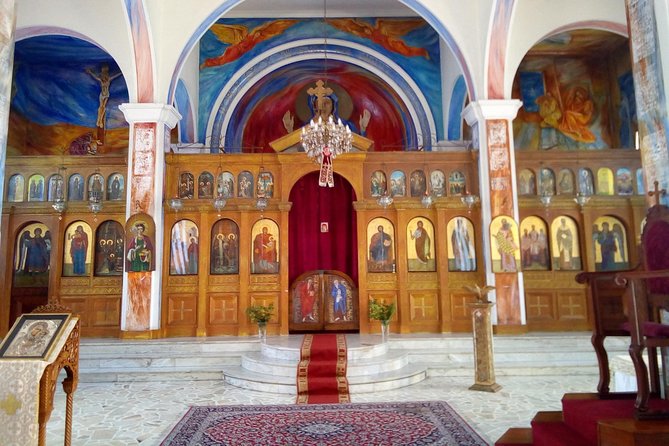
The Palácio de Casamentos, or Palace of Marriages, was built between 1931 and 1934. Agapus Nicolau and Nicolas Kassimatis designed it as the Ateneu Grego, a community center for Maputo’s Greek colony.
The center was open to all, and dance matinees were among its popular events. Today, you may see civil marriages taking place inside, accompanied by formal ceremony and singing. That possibility makes this stop feel less like a museum visit and more like a look at a building still connected to daily life.
The interior also contains several important artworks. A large painting by Malangatana, made in 1979 or 1980, is titled The Long Passage Towards Marriage. There is also a carved pillar by Alberto Chissano and two painted concrete reliefs in the basement.
Only about five minutes are assigned here. If a wedding is taking place, access and viewing may be limited. The tour does not promise a full interior visit every time, so treat the building and its art as a brief introduction rather than a dedicated museum appointment.
A few more gallery visits around the world worth comparing
- Vatican Museums, Sistine Chapel & St. Peter’s Basilica Tour
★ 4.3 · 73,970 reviews - Paris: Louvre Museum Timed-Entrance Ticket
★ 4.6 · 71,977 reviews - Amsterdam: Van Gogh Museum Ticket
★ 4.7 · 52,054 reviews - Vatican Museums, Sistine Chapel & St Peter’s Basilica Guided Tour
★ 4.5 · 39,149 reviews
Polana Serena Hotel and the city’s changing ownership
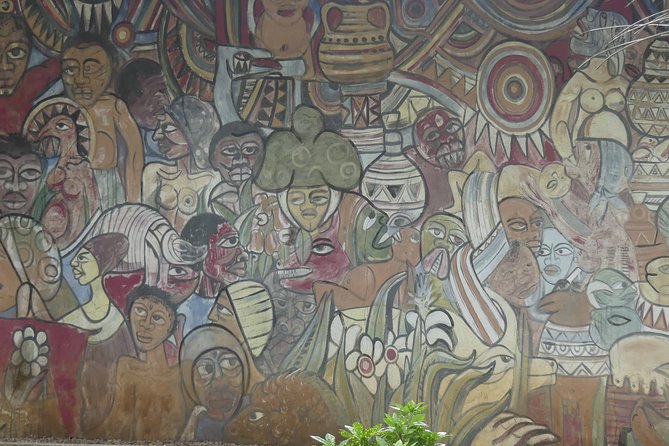
The Polana Serena Hotel was commissioned by the Delagoa Bay Lands Syndicate and completed in 1922. It is often attributed to Sir Herbert Baker, who also designed the Union Buildings in Pretoria, but the responsible architect was Walter Reid. Hugh Le May served as contractor.
The hotel takes its name from an African chief called Polana, who had lived near the site. His land was sold to Sommerschield without compensation, and his descendants were eventually removed from the area in 1946.
That history changes how you look at an elegant hotel. It is not simply a grand old building with a famous architectural connection. Its location also reflects land transfer and colonial control.
The site once had a tramway connection, tennis courts, and a golf course. The tour allows around five minutes here, so you will mainly take in the exterior and hear the key story. It is a good example of how this route uses buildings to explain social power, not just architectural style.
The Lemon Squeezer Church
The Church of Saint Anthony is one of Maputo’s most memorable modern buildings. Built in 1962 by Nuno Craveiro Lopes, son of a former Portuguese president, it is commonly called the Lemon Squeezer or the inverted flower because of its unusual shape.
The church’s form is easy to recognize. A miniature replica sits in the garden at the corner, giving you a useful view of the design before you enter. The interior is also worth seeing, particularly the stained glass produced by Sociedad Mauméjean Hermanos in Madrid.
The scheduled visit is about 10 minutes. That is enough to appreciate the building’s shape and interior details, but not enough for a long architectural study. If you enjoy modern religious architecture, this may be one of the route’s highlights. It breaks up the older Portuguese styles with something more sculptural and unexpected.
Shopping for capulanas at FEIMA
The final stop is FEIMA, the Feira de Artesanato, Flores e Gastronomia, at Parque dos Continuadores. This is a handicraft market with restaurants, and it gives the tour a practical ending.
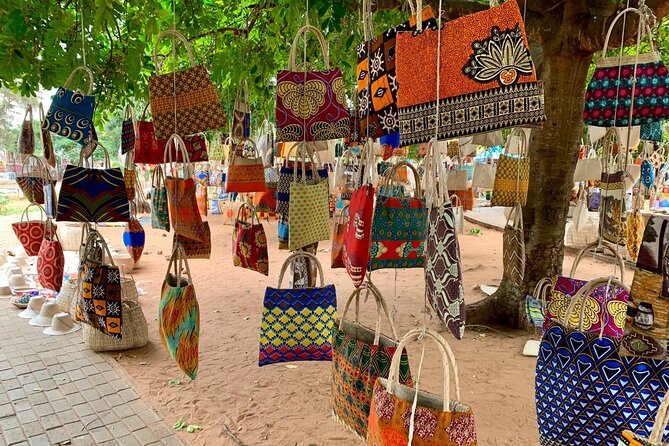
You can look for capulanas, fridge magnets, carvings, and other souvenirs. The selection is broad enough for both small gifts and more substantial reminders of Maputo. Since the tour finishes here, you can stay on after the guide leaves to browse or eat.
I like ending at FEIMA because it gives you time to act on what you have seen. After learning about artists and local materials, you can look at objects made for sale rather than only viewing historic buildings. The trade-off is that the tour cannot guarantee how much time you will want to spend shopping. The planned stop is about 25 minutes, which may be enough for a quick look but short if you want to compare several pieces.
Timing, walking pace and what the $35 covers
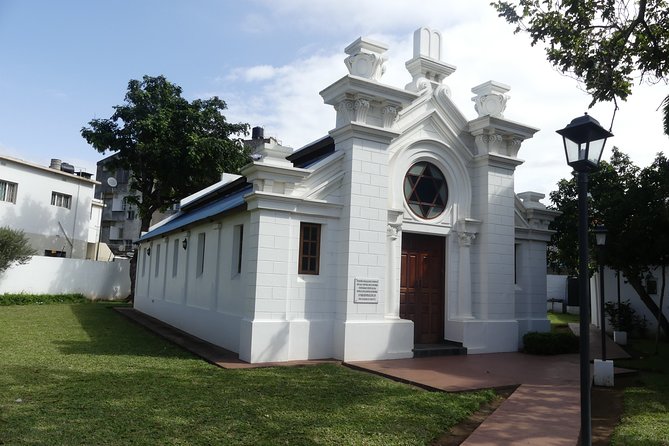
The experience begins at 9:00 am at the Natural History Museum and lasts about three hours. The listed stop times add up to roughly 75 minutes, leaving the rest of the morning for walking between places, explanations, questions, and changes in pace.
You should wear comfortable shoes and expect a morning on foot. No special fitness level is stated, and most people can take part. The route is near public transportation, but the tour does not provide a separate vehicle transfer.
A mobile ticket is used, and confirmation is received when you book. Bottled water, admission fees, and taxes are included. Alcoholic drinks are not included.
The price is $35 per person. That is reasonable if you want a guide to connect the buildings with Maputo’s political and artistic story. It is less compelling if you only want a quick photo walk, since several stops are brief and many of the buildings can be viewed from public streets.
The tour is commonly booked about five days ahead. I would reserve early if your Maputo schedule is tight, especially since the experience requires a minimum number of participants and has a maximum group size of 20.
Who will get the most from this Maputo walk
I would choose this tour if you are interested in architecture, modern art, colonial history, or the way public spaces reflect political change. It also works well if you have only one full day in Maputo and want a structured introduction rather than a list of disconnected sights.
Art students, photographers, architecture fans, and first-time visitors should find plenty to examine. The route also suits anyone who likes to ask questions, since the guide’s role is especially important at Núcleo de Arte, Vila Algarve, and the Palace of Marriages.
You may want a different plan if you need a slow museum visit, extensive shopping time, or a tour focused mainly on food. The route has a serious historical thread, and the short stop at Vila Algarve can be sobering.
Free cancellation is available up to 24 hours before the 9:00 am start. Changes or cancellations within 24 hours are not refunded. Bad weather or failure to meet the minimum number of participants can lead to a new date or a full refund.
Should you book the Maputo Art Walking Tour?
Book it if you want Maputo explained through buildings and working artists, not just photographed from a car. The combination of the old museum, Núcleo de Arte, decorated Portuguese buildings, the Lemon Squeezer Church, and FEIMA gives you a broad first look at the city in a compact morning.
I would be less keen if your main goal is a relaxed shopping trip or detailed time inside each museum and gallery. Still, for $35, the tour offers a useful route, included water and entry fees, and access to local context that is hard to assemble on your own in three hours. Keep an eye on the meeting time, allow for a serious historical stop at Vila Algarve, and treat FEIMA as a place to continue exploring after the official tour ends.
FAQ
Where does the Maputo Art Walking Tour start?
The tour starts at Museu de História Natural, at 2HFP+4Q7, Travessia de Zambeze, Maputo, Mozambique.
Where does the tour end?
The tour ends at Parque dos Continuadores FEIMA on Avenida Armando Tivane, Maputo, Mozambique.
What time does the tour begin?
The start time is 9:00 am.
How long does the tour last?
The walking tour lasts approximately three hours.
How much does the tour cost?
The listed price is $35 per person.
What is included in the price?
Bottled water, all fees, and all taxes are included.
Are drinks included?
Alcoholic beverages are not included.
How many people can join the tour?
The activity has a maximum of 20 participants.
Can I cancel for a refund?
You can cancel at least 24 hours before the start time for a full refund. Cancellations or changes made less than 24 hours before the experience are not refunded. If poor weather or insufficient participation causes the tour to be canceled, you will be offered another date or a full refund.
Just added around the world
- Colosseum,Vatican Museum & Sistine Chapel in One Day Guided Tour★ 3.5 · 9 reviews
- Vatican Museums and Sistine Chapel last entry Guided Tour★ 5.0 · 3 reviews
- Private Tour Of Rome Highlights And Vatican Museums Skip-The-Line all included★ 5.0 · 4 reviews
- Caravaggio Art Walking Tour of Rome with Pantheon Visit★ 4.5 · 35 reviews
- Borghese Gallery Admission Ticket with Audioguide★ 4.0 · 64 reviews
- Borghese Gallery Skip the Line Guided Tour★ 4.5 · 23 reviews
- Borghese Gallery Ticket with Audioguide★ 3.5 · 51 reviews
- Borghese Gallery VIP Tour – Skip the Line Tickets★ 5.0 · 2 reviews
Walking Tours, compared.
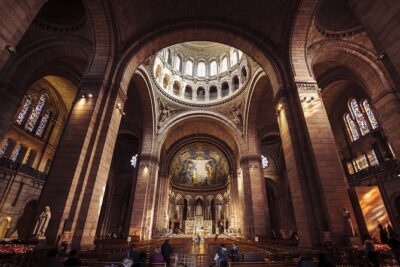
Paris in a Day: Louvre or Orsay, Eiffel Tower, City Walk & Cruise
Read our review →
Florence in a Day: Michelangelo’s David, Uffizi and Guided City Walking Tour
Read our review →
Florence Walking Tour with Accademia, Uffizi & Lunch
Read our review →
Livorno: Florence Optional Walking Tour and Accademia Entry
Read our review →
Picasso Museum and Walking Tour Plus Optional Wine & Food Tasting
Read our review →
Picasso Small Group Walking Tour with Museum Skip the Line Ticket
Read our review →
Montmartre for Art Lovers – Walking tour with Expert Guide
Read our review →Browse the lists this tour appears in