
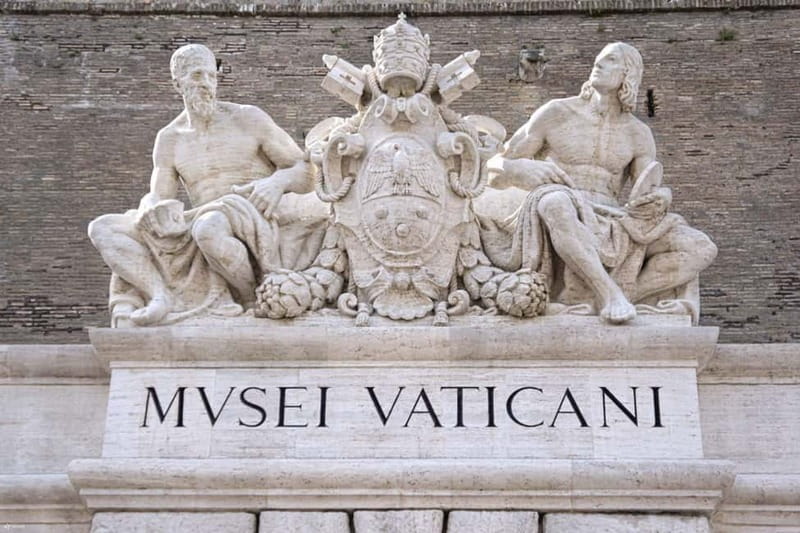
REVIEW · ROME
Exclusive Sunday Tour of Vatican Museums & Sistine Chapel
The clever hook here is the last Sunday of the month, when admission to the Vatican Museums is free. You still pay $69 for the guided experience, but you get a planned route through famous rooms, a guide, and headsets rather than trying to make sense of this huge complex alone. Expect a standard queue, not skip-the-line entry.
I like the focused two-hour route and the chance to see major highlights without spending half a day wandering. I also like the human touch: Estefanía is praised for using visual materials and filling waiting time with stories, while Marzia brings an archaeologist’s eye to the ancient works. The catch is the crowd. Free admission Sunday can mean long waits at security and headset collection.
Key points to know
- Free admission day: The tour runs on the last Sunday of the month, but the $69 fee covers the guided service and related charges, not a skip-the-line ticket.
- A classic Vatican route: You visit the Pigna Courtyard, Belvedere Courtyard, Pio Clementino Museum, Gallery of Maps, and Sistine Chapel.
- Two hours means highlights: This is a brisk introduction, not a complete visit to every Vatican room.
- The guide matters: English, Spanish, French, and German tours are available, with guides such as Estefanía and Marzia receiving especially warm praise.
- Sistine Chapel rules apply: Your shoulders and knees must be covered, and the guide cannot speak inside the chapel.
- Not suitable for wheelchairs: Stairs and uneven surfaces make the route unsuitable for wheelchair users, mobility scooters, and electric wheelchairs.
Why the Last Sunday Changes the Vatican Visit
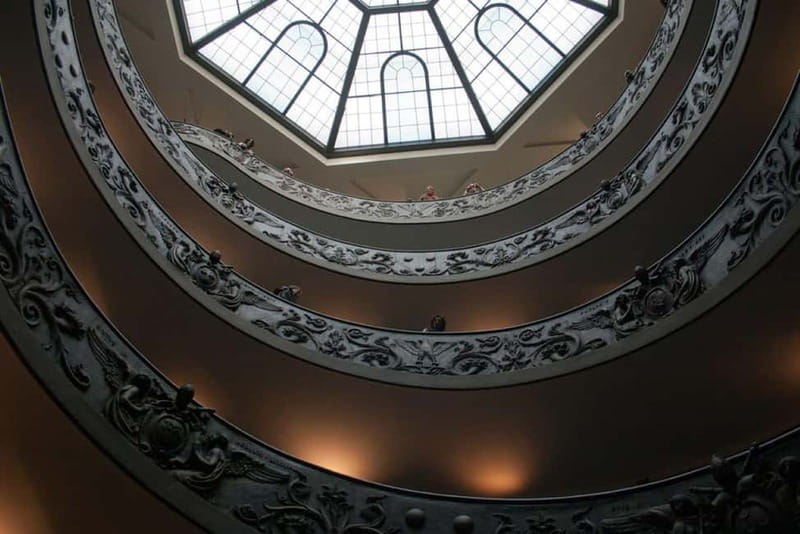
The Vatican Museums are one of Rome’s biggest draws, and the last Sunday of the month brings free admission. That sounds like an easy bargain, but it also creates the day’s main problem: more people and longer waits.
This tour is useful because it gives the free-admission day some structure. Instead of entering with no plan and trying to work out which corridor leads where, you meet at Via Vittor Pisani, 6/8, then follow a guide through a selection of major rooms. The guide explains what you are seeing and why it matters.
You should be clear about the money. The museum admission is free on this day, but the tour costs $69 per person. That price is not buying a private museum entrance or a fast lane. It pays for the guide, headset, tour organization, taxes, booking charges, and related amenities. Since the tour uses the standard queue, the value depends on how much you want guidance and how much you dislike navigating a vast museum alone.
For a first Vatican visit, I think the guided format can make sense. The museums contain far more art than you can absorb in one short visit. A guide helps you spend your limited time on the sections most people hope to see.
More Art Museum Tours in Rome
- Vatican Museums, Sistine Chapel & St. Peter’s Basilica Tour
★ 4.3 · 73,970 reviews - Vatican Museums, Sistine Chapel & St Peter’s Basilica Guided Tour
★ 4.5 · 39,149 reviews - Rome: Vatican Museums, Sistine Chapel and Basilica Tour
★ 4.3 · 16,039 reviews
Meeting Near Cipro Metro
The meeting point is Via Vittor Pisani, 6/8. The closest metro station is Cipro on Rome’s Line A, followed by a short walk.
Plan to arrive 10 minutes early. That small margin matters on a timed group tour. If you arrive late, you may be trying to find the group while the guide is organizing entry, headsets, or the queue.
The meeting point is not at the Sistine Chapel or inside the museum galleries. You need to make your own way there, and transportation is not included. Cipro is the practical reference point supplied for the tour, so check your route before leaving your hotel.
At busy times, you may wait for security and headset collection even after the tour begins. That is not the same as skip-the-line access. The tour enters through the normal queue, and free Sunday admission can make that queue slower than expected.
The Pigna Courtyard and Belvedere Courtyard
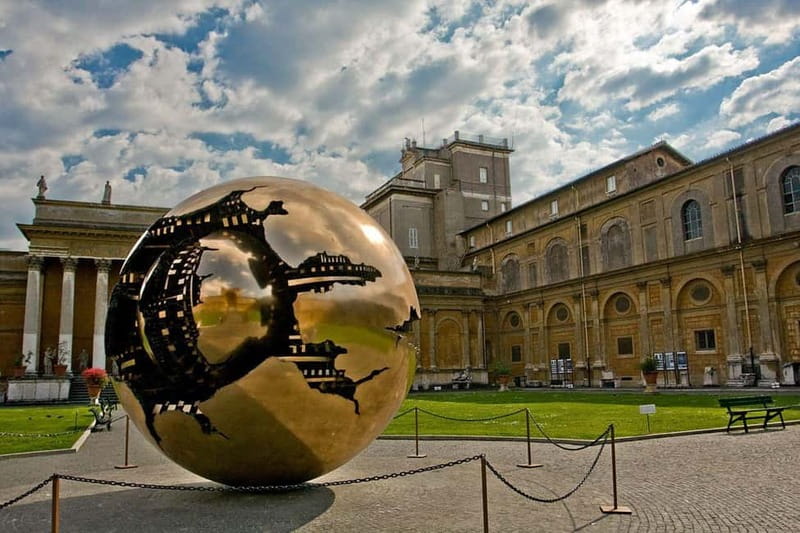
The route begins with the Vatican’s open courtyards, starting at the Courtyard of the Pigna. This is a good place to get your bearings before moving into the more crowded galleries.
The courtyard takes its name from the large bronze pinecone sculpture that once stood near ancient Roman sites and later became part of the Vatican setting. The supplied tour details do not promise a long stop, so expect the guide to use it as an introduction rather than a full lesson in Roman sculpture.
Next comes the Cortile del Belvedere, or Belvedere Courtyard. This area connects the Vatican’s museum buildings and offers a sense of the scale of the complex. A guide can help you understand that the Vatican Museums are not one simple room with a few famous paintings. They are a chain of courtyards, halls, galleries, and collections assembled over centuries.
The courtyards are also a practical pause. You can reset before the indoor galleries become more intense. Listen closely here, because the guide may explain the plan for the rest of the visit and set up the works you are about to see.
Ancient Sculpture at Museo Pio Clementino
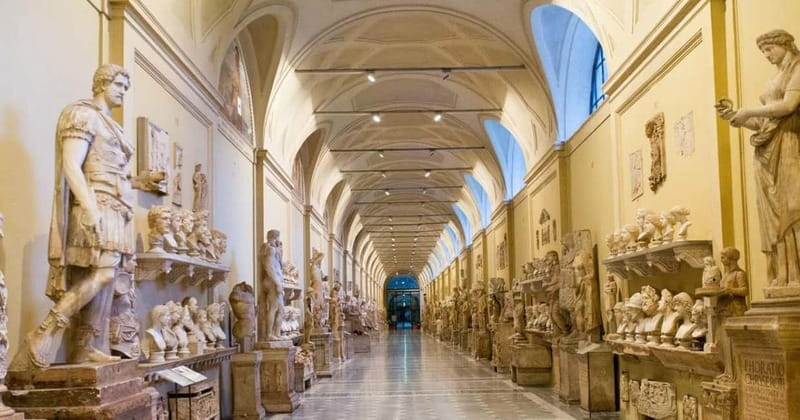
Museo Pio Clementino is one of the key stops for ancient sculpture. It is named after two eighteenth-century popes, Clement XIV and Pius VI, whose collecting and display work shaped this part of the museum.
The museum is especially important for its ancient Greek and Roman works. The tour information specifically points to ancient sculptures as part of the Vatican’s broad collection, and this is where that theme becomes most visible.
You may find the guide’s explanation more useful here than a quick solo walk through the rooms. Ancient sculptures can look familiar because images of them appear in books and museums around the world. Their place in the Vatican collection, their condition, and the way they have been displayed all add layers that are easy to miss.
Marzia, one of the named guides associated with this experience, is an archaeologist. If she leads your tour, her background should be especially helpful in these rooms. Her role is not just to identify a statue, but to explain how ancient art fits into the larger story of the museum.
The drawback is time. Two hours must cover several major sections, so you will not have the leisure to study every statue. If ancient sculpture is your main reason for visiting, you may want a longer independent visit on another day.
More ways into the Vatican Museums:
- Vatican Museums & Sistine Chapel Skip-the-Line Entry Ticket
★ 4.4 · 13,838 reviews - Rome: Vatican Museums, Sistine Chapel & Basilica Tour
★ 4.7 · 13,217 reviews - Rome: Vatican Museums & Sistine Chapel Guided Tour
★ 4.3 · 12,117 reviews - Vatican Museums & Sistine Chapel Skip-the-Ticket-Line Tour
★ 4.3 · 10,486 reviews
The Octagonal Courtyard and Sala delle Muse
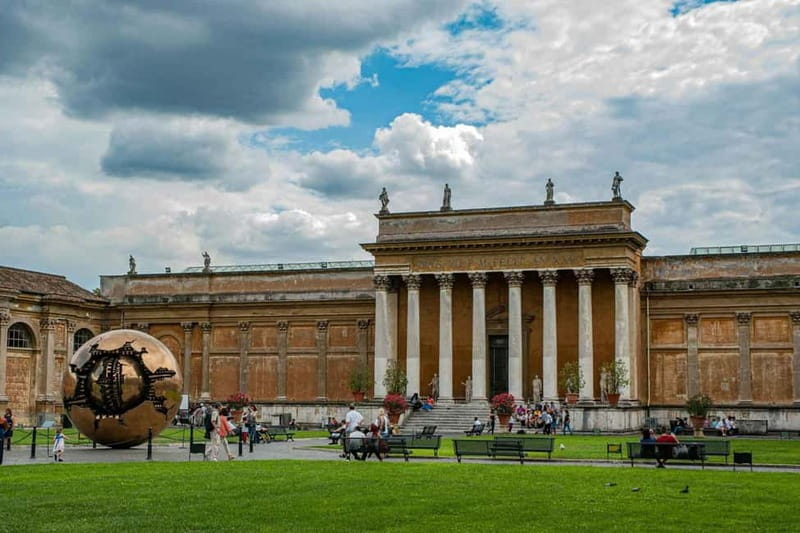
The Octagonal Courtyard follows as part of the Pio Clementino section. Its shape and arrangement give the room a strong sense of order, while the surrounding sculpture displays show how the Vatican turned collections into formal museum spaces.
This is one of those stops where a guide can save you from walking past important objects without knowing what you are looking at. You will hear explanations about the art, history, and significance of the works, but the amount of detail depends on the pace of the group and the waiting time at entry.
The Sala delle Muse, or Hall of the Muses, continues the classical theme. The name points to the Greek and Roman world of the Muses, and the room connects sculpture with ancient ideas about art, learning, and creative work.
I like this portion of the route because it gives the visit a clear foundation. You start with ancient art before moving through the grander decorative galleries and toward Michelangelo. That order helps you see the Vatican as a collection built across different periods, not simply as a hallway leading to one famous ceiling.
Still, do not expect a quiet museum experience on the last Sunday. The rooms can be busy, and you may need to stay close to the guide to hear the headset clearly.
The Gallery of the Candelabra
The Gallery of the Candelabra is one of the long ceremonial corridors in the Vatican Museums. Its name comes from the large candelabra displayed along the gallery, but the room is also filled with sculpture, decorative elements, and painted details.
Long galleries can be tiring because they are visually packed. You might find yourself looking up at the ceiling, then down at a statue, then across at another painted panel. A guide gives you a filter. Instead of attempting to remember every object, you can focus on the few works and details chosen for explanation.
The gallery also shows the power and scale of the Vatican collections. This is not a small art museum designed for a quick loop. The halls were made to impress, and their decoration is part of the experience.
The practical issue is pace. Stay aware of your group, especially when the gallery is crowded. The headset helps, but you still need to keep the guide in view.
The Gallery of Maps
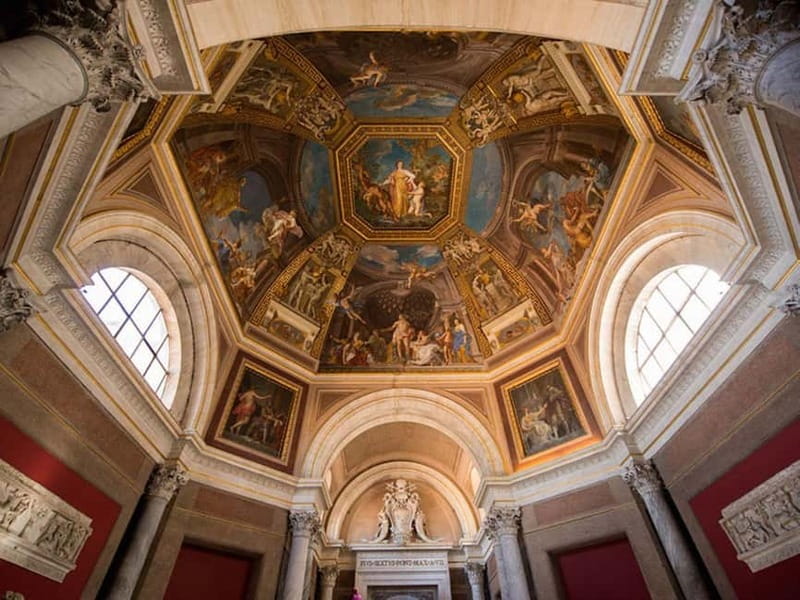
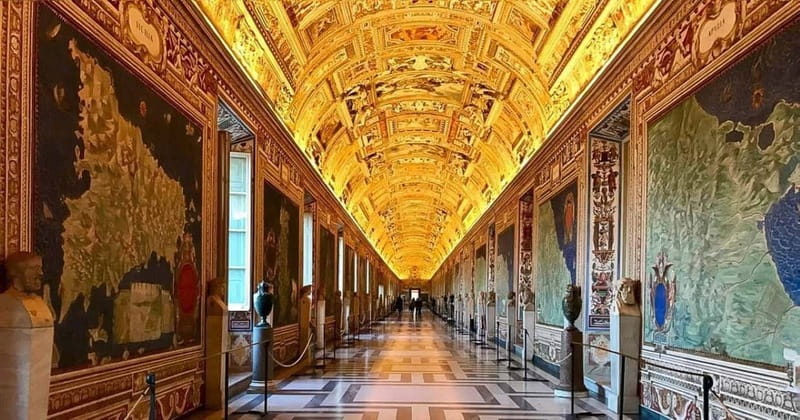
The Gallery of Maps is usually one of the most memorable corridors on a Vatican route. Its walls are covered with large painted maps, while the ceiling and architectural details compete for your attention.
You do not need to be a map expert to enjoy it. The room turns geography into art, showing how places were pictured and understood in an earlier age. Your guide can point out how the maps function both as geographic documents and as grand decoration.
This is a good place to slow your eyes, even if the group must keep moving. Look along the length of the corridor, then at the individual panels. Notice how much information is packed into each section.
The Gallery of Maps is also a reminder that the Vatican Museums are about more than isolated masterpieces. The setting, the ceiling, the scale, and the route through the building all shape what you see.
Because the tour is short, you may not get extended time for photographs or close inspection. If you have a favorite map or want to study the details, remember where it is and return later if your admission arrangements allow it.
Preparing for the Sistine Chapel
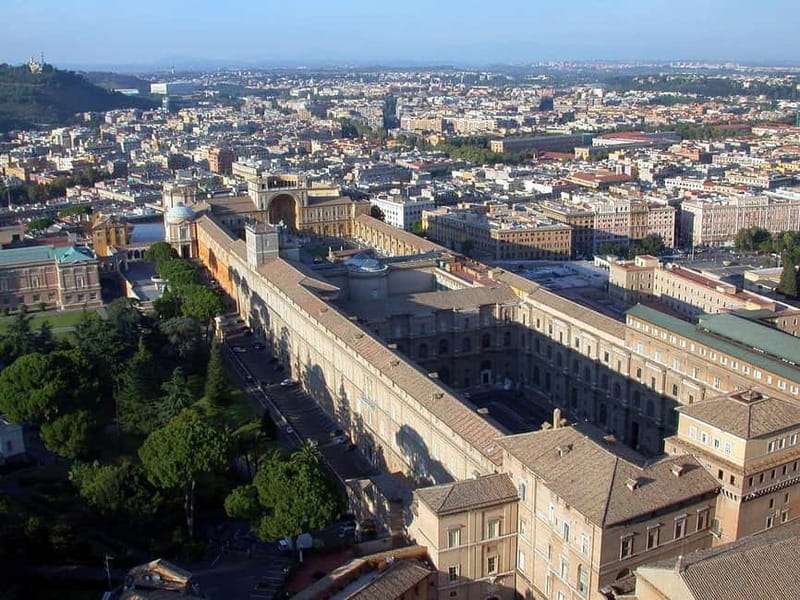
The Sistine Chapel is the destination most people have in mind, and the guide prepares you for it before you enter. This is important because guides cannot speak inside the chapel. Explanations are given beforehand, and the guide accompanies you inside without providing live commentary.
That rule changes how you should approach the visit. Pay attention during the briefing. The guide can explain what to look for in Michelangelo’s ceiling and help you understand the imagery before the room becomes silent.
Michelangelo’s ceiling is the headline, but the Sistine Chapel is also known for its wider cycle of religious art and for The Last Judgment. The provided information warns that restoration work in 2026 may obstruct The Last Judgment. Access to the chapel or particular sections can also change without notice.
Do not build your entire Rome schedule around seeing one exact painting from one exact position. The chapel may close unexpectedly, and no refund is provided for such closures. That is a real risk, even with a booked tour.
You must cover your shoulders and knees to enter. This is enforced as part of the chapel’s dress rules, so dress appropriately before arriving. Short skirts are not allowed, and modest clothing is the simplest solution.
Inside, keep your voice down and follow the instructions given by staff. The chapel is a place of worship as well as a major art site. The lack of commentary can actually make the room feel calmer, but only if you arrive prepared.
What $69 Buys You on a Free Sunday
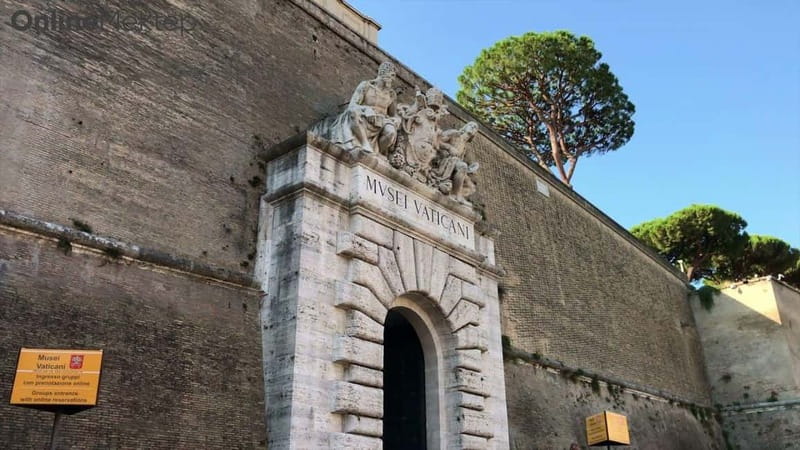
At first glance, $69 may seem high when museum admission is free. That is a fair concern. You are not paying for a premium entrance lane, and the standard queue can still be long.
The value is in the service around the admission. You get a live guide, a planned route, headsets for clearer audio, and access to the main museum and chapel areas covered by the tour. You also avoid having to choose among dozens of rooms without any context.
I would consider this a reasonable price for someone who wants an introduction and values explanation. It is less appealing for an experienced art lover who already knows the Vatican layout and prefers to move slowly at an independent pace.
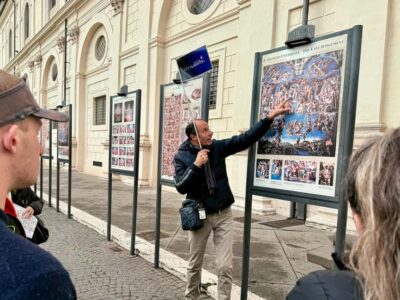
The guide can make a noticeable difference. Estefanía is praised for her passion, for explaining art in a way that works even if you are not an art specialist, and for using graphic materials. She also uses waiting time for stories instead of leaving you to stare at a queue. Marzia is praised for her strong knowledge as an archaeologist. Those details suggest that the quality of the experience rests heavily on who leads your group.
The tour is rated 4.3 from 20 reviews, which points to a generally positive experience without pretending every visit is identical. Guide quality, crowd levels, and unexpected closures can all affect the day.
Who Will Get the Most From This Tour
I would recommend this tour to a first-time Vatican visitor who wants the main rooms explained in plain language. It also suits you if you have only two hours and want a clear route through ancient sculpture, decorative galleries, maps, and the Sistine Chapel.
It is a good fit if you like asking questions, hearing stories, and learning why an object matters rather than simply photographing it. The headsets help when the group is moving through busy halls.
You should think twice if you want skip-the-line entry. You will use the standard queue, and free admission Sunday is likely to bring longer waits. You should also think twice if you need a wheelchair or mobility scooter. The route includes stairs and uneven surfaces and is not suitable for wheelchair users, non-folding wheelchairs, or electric wheelchairs.
Bring a passport or ID card. A copy is accepted. Check availability for the start time, since the tour lasts two hours but the exact departure time varies.
Cancellation is free up to 24 hours in advance, and you can reserve now and pay later. Those terms help if your Rome schedule is still shifting, but they do not remove the risk of chapel or gallery closures.
Should You Book the Sunday Vatican Tour?
Book it if you want a short, guided introduction and understand that $69 buys expertise and organization, not a fast entrance. The route covers the Vatican highlights efficiently, and guides such as Estefanía and Marzia can add the human explanation that makes crowded rooms easier to understand.
Skip it if you want a quiet, unhurried museum day, need accessible facilities, or refuse to wait in a standard queue. For everyone else, this is a practical way to use the last Sunday’s free admission while still getting a thoughtful route through the Vatican’s major collections.
FAQ
When does this Vatican tour take place?
It takes place on the last Sunday of the month, when admission to the Vatican Museums is free.
Does the $69 price include museum admission?
Admission is free on Sundays, but the $69 price covers the guided tour and related charges. Skip-the-line access is not included.
Where is the meeting point?
The meeting point is Via Vittor Pisani, 6/8. The closest metro station is Cipro on Line A, followed by a short walk.
How long does the tour last?
The guided tour lasts two hours. Starting times vary, so check availability when booking.
Can the guide speak inside the Sistine Chapel?
No. The guide gives explanations before entering. The guide can accompany you inside, but cannot provide commentary there.
Is the tour suitable for wheelchair users?
No. The route includes stairs and uneven surfaces and is not suitable for wheelchair users, mobility scooters, non-folding wheelchairs, or electric wheelchairs.
Just added around Rome
- Colosseum,Vatican Museum & Sistine Chapel in One Day Guided Tour★ 3.5 · 9 reviews
- Vatican Museums and Sistine Chapel last entry Guided Tour★ 5.0 · 3 reviews
- Private Tour Of Rome Highlights And Vatican Museums Skip-The-Line all included★ 5.0 · 4 reviews
- Borghese Gallery Admission Ticket with Audioguide★ 4.0 · 64 reviews
- Caravaggio Art Walking Tour of Rome with Pantheon Visit★ 4.5 · 35 reviews
- Borghese Gallery Skip the Line Guided Tour★ 4.5 · 23 reviews
- Borghese Gallery Ticket with Audioguide★ 3.5 · 51 reviews
- Borghese Gallery VIP Tour – Skip the Line Tickets★ 5.0 · 2 reviews
Art Museum Tours in Rome, compared.
Vatican Museums, Sistine Chapel & St. Peter’s Basilica Tour
Read our review →
Vatican Museums, Sistine Chapel & St Peter’s Basilica Guided Tour
Read our review →
Vatican Museums, Sistine Chapel and Basilica Tour
Read our review →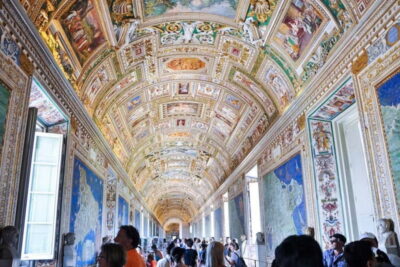
Vatican Museums & Sistine Chapel Skip-the-Line Entry Ticket
Read our review →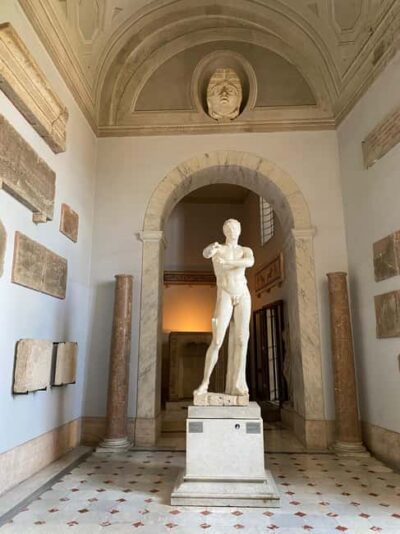
Vatican Museums, Sistine Chapel & Basilica Tour
Read our review →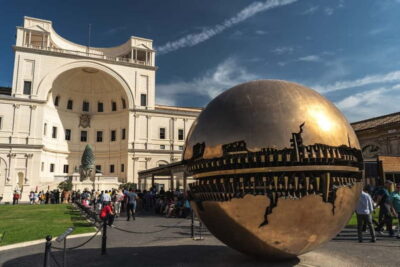
Vatican Museums & Sistine Chapel Guided Tour
Read our review →
Vatican Museums & Sistine Chapel Skip-the-Ticket-Line Tour
Read our review →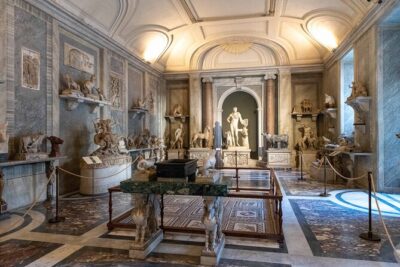
Vatican Museums, Sistine Chapel and St. Peter’s Basilica Tour
Read our review →Browse the lists this tour appears in