
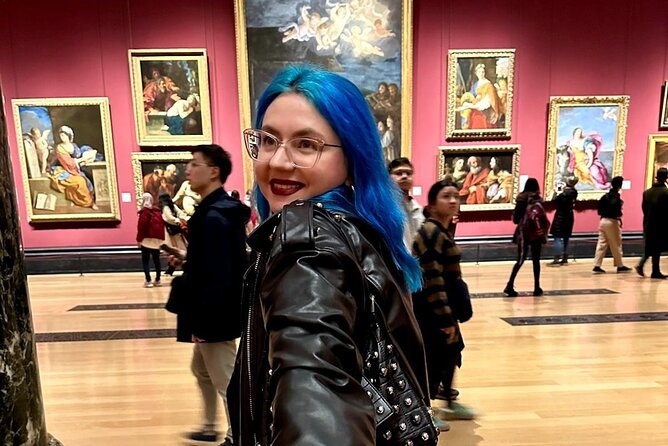
REVIEW · LONDON
A Guided Tour at the National Gallery in London
The most interesting thread here is the focus on women in art, traced through queens, saints, muses, artists, wives, and working women. You move from Leonardo da Vinci and Titian to Artemisia Gentileschi, Elisabeth Louise Vigée Le Brun, Berthe Morisot, and Van Gogh’s famous Sunflowers.
I like the private format, since you can stop and ask about a painting that catches your eye. I also like the wide sweep of the route, which moves from Renaissance religious art to Rococo flirtation, Victorian social criticism, Impressionism, and Gauguin’s Tahiti.
The weak point is the meeting arrangement. The tour begins at 11:30 a.m. at the National Gallery, but one guide held no sign and the directions were too general. Allow time to find your guide, and confirm the exact meeting spot before the morning of the tour.
Key Points at a Glance
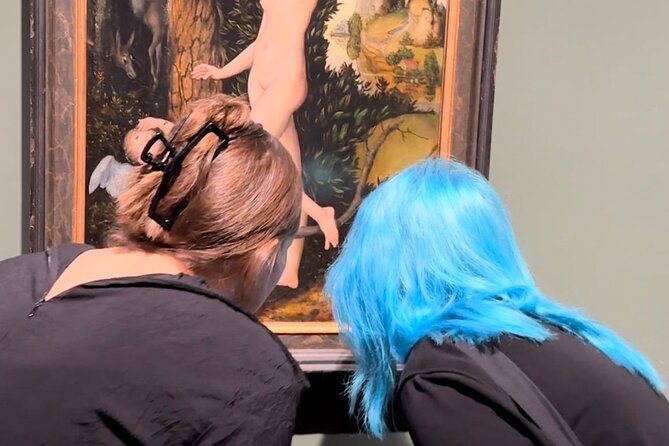
- Women give the tour its theme: See Artemisia Gentileschi, Vigée Le Brun, Berthe Morisot, and the women represented in European art.
- Major paintings are packed into 90 minutes: The route includes Leonardo, Michelangelo, Raphael, Titian, Velázquez, Rubens, and Van Gogh.
- You get a private guide: Only your group takes part, so questions and pacing can be tailored to your interests.
- The National Gallery is free to enter: The $48.61 cost pays for the guided experience, not a separate gallery admission ticket.
- Katya has earned particular praise: She has been described as clear, helpful, and willing to answer questions about paintings outside the planned route.
- Meeting instructions need care: The National Gallery entrance at Trafalgar Square is broad enough that a clear guide description matters.
Why the Women in Art Theme Works
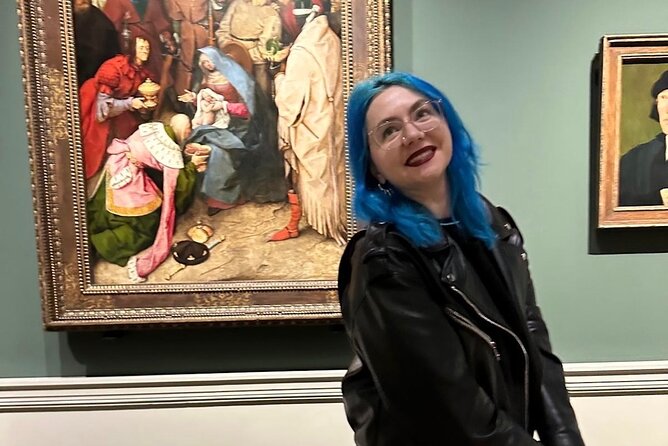
A tour of the National Gallery can easily become a parade of famous names. This one has a more useful question running through it: how have women been shown, controlled, admired, judged, and allowed to work as artists?
That question gives the 90 minutes a shape. You are not only looking at pretty pictures. You are also considering who had power in a painting, who was expected to pose, and who managed to build a career behind the canvas.
The theme reaches back to ancient Greek women through Titian’s work and then moves through religious subjects, mythology, marriage, fashion, and portraiture. It is a good way to make connections across centuries without turning the visit into a list of dates.
You should still know what this format cannot do. The National Gallery holds far more than any 90-minute visit can cover. This is a brisk introduction with selected stops, not a slow survey of every room or every major artist.
More Art Museum Tours in London
- Official tickets: Moco Modern & Contemporary Art Museum
★ 4.5 · 1,157 reviews - London: National Gallery Guided Tour with Art Expert Guide
★ 4.7 · 440 reviews - London: Tickets for Moco Modern & Contemporary Art Museum
★ 4.7 · 391 reviews
Beginning with Leonardo, Michelangelo, and Raphael
The opening part of the route includes three major Renaissance names: Leonardo da Vinci, Michelangelo, and Raphael. Leonardo’s Madonna of the Rocks offers a chance to talk about the idealized sacred family and the careful arrangement of figures, light, and landscape.
Michelangelo’s The Entombment gives you a different kind of encounter. It is unfinished, which makes the working process part of what you see. You can look at the handling of the figures and ask your guide how an incomplete painting changes the way you judge an artist.
Raphael’s St Catherine brings the focus back to an idealized female saint. A private guide can help you compare her with the women in later works, where the role may shift from saint or symbolic figure to artist, wife, social subject, or independent sitter.
These first paintings set up the larger topic well. Women appear as religious figures and subjects, but their presence in the art world itself was much more restricted. That difference becomes clearer as the tour moves forward.
Titian’s Mythology and the Women of Antiquity
Titian takes you into myth, sensuality, and the artistic treatment of female bodies. Bacchus and Ariadne is one of the gallery’s best-known works, with a dramatic mythological scene and a strong sense of movement.
The route also includes Titian’s Diana and Actaeon and Diana and Callisto. These paintings come from the artist’s celebrated mythological series and give your guide room to discuss Diana, the women around her, and the consequences built into these stories.
The ancient Greek women section adds useful context. Myth gave painters a way to show women in scenes of beauty, desire, punishment, and transformation. You can ask how much freedom these stories offered female figures, and how much they still reflected the expectations of the society that commissioned the art.
This is also a point where the private format helps. If you want to spend more time on mythology, the guide can answer questions rather than simply moving the group to the next room.
Venus, Cupid, and the Origin of the Milky Way
Veronese’s Allegory with Venus and Cupid continues the tour’s look at love and desire. Allegorical paintings can be hard to read on your own because the figures and gestures often carry several meanings at once. A guide can point out how the characters function as ideas as well as people.
Tintoretto’s The Origin of the Milky Way adds another mythological scene. Its subject links the heavens to a story involving Juno and Hercules, while its composition lets you consider how a painter creates drama through bodies, movement, and unusual placement.
These stops are valuable if you enjoy stories behind paintings. They may feel less direct if you prefer portraits or familiar everyday scenes. The tour does not stay with one period long enough for a full technical study, so you should expect a guided overview rather than a specialist lecture on Venetian painting.
More National Gallery tours:
- National Gallery of London Museum Tour Semi-Private 8ppl Max
★ 5.0 · 178 reviews - British Museum & National Gallery of London Semi-Private 8ppl Max
★ 5.0 · 168 reviews - London: National Gallery + Guided Tour + Priority Entry
★ 3.7 · 162 reviews - Official National Gallery Highlights Guided Tour
★ 4.5 · 149 reviews
Rubens, Velázquez, and the Question of the Female Gaze
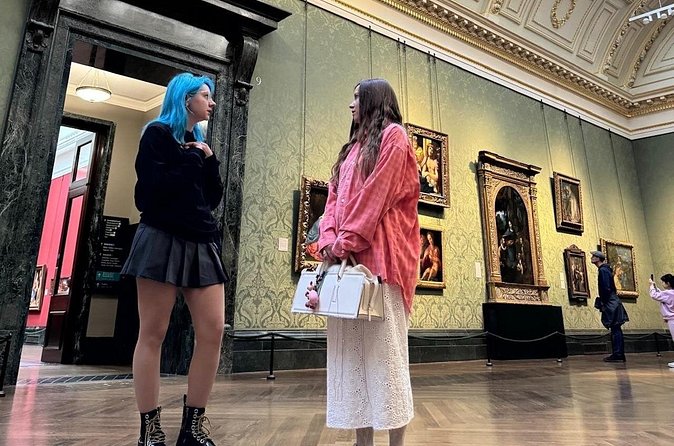
Rubens’ The Judgement of Paris presents another mythological subject and another opportunity to think about beauty as a competition. The scene is not simply about Paris choosing among goddesses. It also reflects the ideals of the period and the ways female bodies were presented for a largely male audience.
Velázquez’s The Toilet of Venus shifts the mood. Venus is shown from behind, looking toward a mirror held by Cupid. You get an unusual combination of distance and intimacy, since the figure’s face is partly hidden while the mirror suggests self-awareness and observation.
This is one of the stronger places to discuss who is looking and who is being looked at. A good guide can make the painting feel less like a famous nude and more like a work with carefully controlled choices about privacy, beauty, and display.
The tour’s best moments will depend on the guide’s ability to connect individual paintings. Katya, one guide associated with this experience, was praised for giving clear answers and handling questions about works outside the planned route. That flexibility matters in a gallery where another painting can easily catch your attention.
Artemisia Gentileschi and a Woman Claiming Her Image
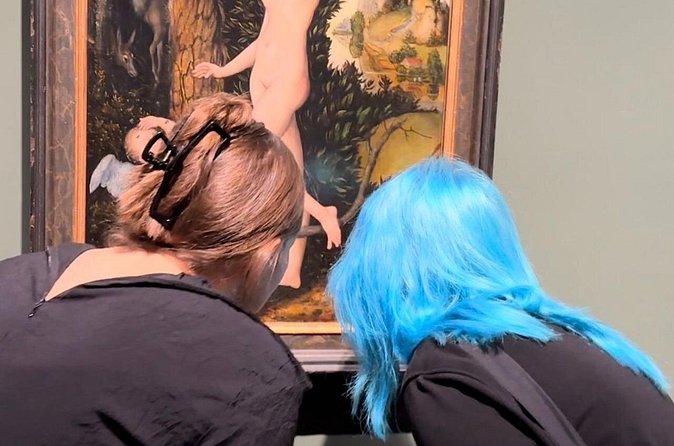
Artemisia Gentileschi’s Self Portrait as Saint Catherine of Alexandria is one of the most important stops on the route. Here, a woman artist presents herself through the identity of a saint, joining personal portraiture with a respected religious subject.
The painting gives you a direct way to discuss women as makers of art, not only as its subjects. Gentileschi worked in a period when female artists faced serious limits, yet she built a career and used her own image with purpose.
This stop can anchor the whole visit. After seeing women represented by male painters as saints, goddesses, wives, or muses, you meet a woman controlling her own appearance and artistic role.
You should ask your guide to compare Gentileschi’s self-portrait with the other portraits on the route. That kind of question is exactly where a private tour can offer more value than a standard group walk, provided the guide has enough time and interest to follow it.
Hogarth’s Marriage A-la-Mode and Rococo Social Rules
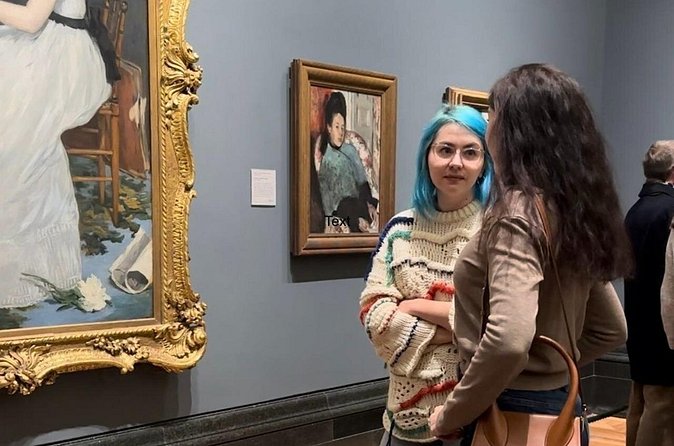
William Hogarth’s Marriage A-la-Mode takes the subject of marriage out of myth and into sharp social criticism. The series examines an arranged marriage and the damage caused by money, status, infidelity, and poor judgment.
This is a useful change of pace. Instead of an idealized goddess or saint, you see people caught in social arrangements that shape their choices. The scenes reward close looking, since details in the room and the characters’ expressions carry much of the story.
The Rococo section then turns to love, fashion, and social roles. Works by Watteau show a world of elegant clothing, courtship, leisure, and carefully staged behavior. The lightness of the style can be deceptive. These paintings also reveal rules about how women were expected to appear and act.
If fashion and social history interest you, this section may be a highlight. If you want only the biggest names, it may feel less urgent than Van Gogh or Leonardo. The guide’s job is to show why these quieter scenes matter, especially when placed beside grand religious and mythological works.
Vigée Le Brun, Morisot, and Women Behind the Easel
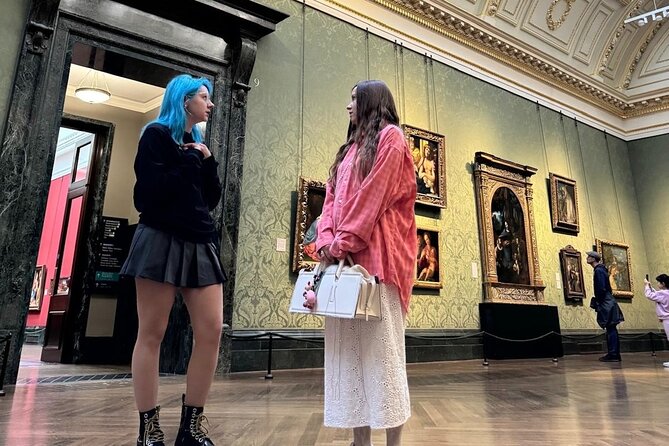
Elisabeth Louise Vigée Le Brun’s Self Portrait in a Straw Hat brings a confident female artist directly into view. It is a portrait of an artist presenting herself as stylish, capable, and visible in a world where women had fewer opportunities to gain recognition.
That makes a natural comparison with Artemisia Gentileschi. Both artists use self-representation to shape how you see them. Their paintings also remind you that a woman artist was often expected to negotiate social expectations as well as artistic skill.
Berthe Morisot’s Summer’s Day moves into the modern period. The scene offers a different kind of subject and brushwork, with everyday life replacing biblical or mythological drama. Morisot was a major Impressionist painter, and this work helps show how women artists claimed space within modern art.
I like this part of the tour because it broadens the story beyond a single heroic figure. You see women working in different settings, using different styles, and presenting different versions of themselves. The visit becomes less about adding female names to a canon and more about asking why some artists were remembered more easily than others.
Van Gogh’s Sunflowers and Gauguin’s Tahiti
Van Gogh’s Sunflowers is the stop many people will anticipate. The painting has instant recognition, but a guide can help you look beyond the postcard image at the color, brushwork, and emotional force of the flowers.
You may find that the painting works best after the earlier stops. By then, you have seen how artists used religious stories, mythology, portraiture, and social scenes. Van Gogh offers something more personal and direct, with ordinary flowers carrying the full weight of the composition.
The final part includes Gauguin’s tales of Tahiti. These works open questions about travel, fantasy, and the way European artists pictured places and people outside Europe. The subject is not only exotic color or distant scenery. You can ask what Gauguin chose to show, what he left out, and how his vision shaped the viewer’s idea of Tahiti.
The route ends with a broader view of art and representation. You move from women in ancient and biblical stories to women who painted themselves, and then to an artist interpreting another culture. That gives the tour a thoughtful finish, even if you would need more time to examine each work closely.
What $48.61 Buys You
The price is $48.61 per person, and admission to the National Gallery itself is listed as free. In practical terms, you are paying for about 90 minutes of a private English-speaking guide, not for entry to the building.
That can be good value if you want structure and conversation. A guide helps you find major works efficiently and gives you a way to connect paintings that span several centuries. For a first visit, the saved time may matter as much as the commentary.
The value is weaker if you already know the gallery well or prefer to wander alone. You can enter the National Gallery without paying admission, so the guided fee makes sense only if you want the selected route, personal answers, and a focused introduction.
The private format improves the calculation for a small group. You are not sharing the guide with strangers, and the experience can respond to your interests. Still, 90 minutes passes quickly, so do not expect every listed artist to receive equal attention.
Meeting at Trafalgar Square
The tour begins at 11:30 a.m. outside the National Gallery at Trafalgar Square and ends back at the meeting point. The location is near public transportation, which makes it easy to reach from other parts of London.
The practical trouble is identifying the guide. The meeting directions have been described as general, and one guide did not carry a sign. That led to a long wait and repeated attempts to make contact before a replacement guide arrived.
You can reduce this risk by confirming the exact entrance and asking how the guide will identify themselves. Arrive early enough to deal with confusion without losing tour time. The National Gallery’s position at Trafalgar Square means there can be several obvious places to wait, so do not rely on the words National Gallery entrance alone.
There was also one serious scheduling problem involving a late guide change. A replacement eventually arrived and was described as pleasant, but the delay created stress and extra phone costs. I would treat the meeting plan as the main practical concern, not an afterthought.
Who Should Book This National Gallery Tour?
I would choose this for a first or second visit to the National Gallery, especially if you want major paintings explained through a clear theme. It suits couples, families with older children, and small groups who enjoy asking questions rather than listening silently.
It is also a good fit if you want more than the usual greatest-hits route. The mix of Artemisia Gentileschi, Vigée Le Brun, Morisot, Rococo artists, and famous male masters gives you a wider view of how art and society changed.
You may want to skip it if you are a confident art-history reader who prefers a self-guided visit. The gallery is free, and 90 minutes may feel too short if your main goal is to study Van Gogh, Titian, or Leonardo in depth.
The guide matters greatly. Katya has been praised for clear explanations and for answering questions beyond the planned route. Since the experience is private, a strong guide can make the difference between a rushed list of paintings and a conversation that follows your curiosity.
Should You Book It?
Book this tour if you want a focused introduction to the National Gallery, value a private guide, and like the idea of viewing art through women’s roles and representation. The route includes enough famous works to satisfy a first visit, but it also reaches artists and themes you might miss on your own.
I would book with one firm condition: confirm the meeting details before the start time. The art selection and private format offer good value at $48.61 when you want guidance. The weak point is the organization around the meeting and guide assignment, so clear communication will help protect your 90 minutes.
Free cancellation is available until 24 hours before the 11:30 a.m. start time. Changes or cancellations made later are not refundable, and the activity may be canceled if its minimum number of participants is not met.
FAQ
How long does the National Gallery tour last?
The tour lasts approximately 1 hour and 30 minutes.
What time does the tour start?
The scheduled start time is 11:30 a.m.
Where does the tour meet?
The meeting point is the National Gallery at Trafalgar Square, London WC2N 5DN, UK.
Is admission to the National Gallery included?
The itinerary lists the admission ticket as free. The $48.61 price covers the guided experience.
Is this a private tour?
Yes. Only your group participates in the activity.
What is the cancellation policy?
You can cancel up to 24 hours before the start time for a full refund. Cancellations or changes made less than 24 hours before the experience are not accepted for a refund.
Just added around London
- The Shard Viewing Gallery & Westminster Walking Tour★ 4.0 · 12 reviews
- Women in Art Walking Tour★ 5.0 · 13 reviews
- Best of Westminster Abbey with Upper Gallery & Buckingham Palace★ 4.5 · 15 reviews
- Tate Modern Museum London Guided Tour Semi-Private 8ppl Max★ 5.0 · 41 reviews
- The Tate Modern London – Exclusive Guided Museum Tour★ 5.0 · 41 reviews
- Private Guided Tour of the National Gallery in London★ 4.0 · 8 reviews
- Tate Modern Private Tour in London with Blue Badge Guide★ 5.0 · 3 reviews
- Tate Modern Theatre Picasso Exhibition★ 3.5 · 7 reviews
Art Museum Tours in London, compared.
Official tickets: Moco Modern & Contemporary Art Museum
Read our review →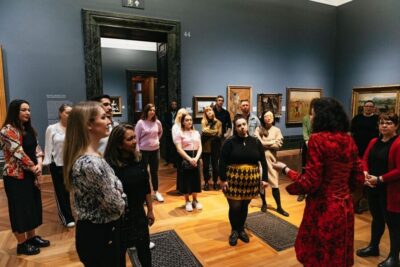
National Gallery Guided Tour with Art Expert Guide
Read our review →
Tickets for Moco Modern & Contemporary Art Museum
Read our review →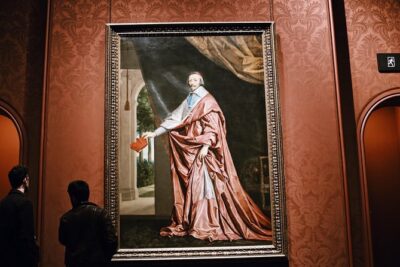
National Gallery of London Museum Tour Semi-Private 8ppl Max
Read our review →
Day Trip to Paris with Eiffel Tower, Notre Dame and Louvre Museum
Read our review →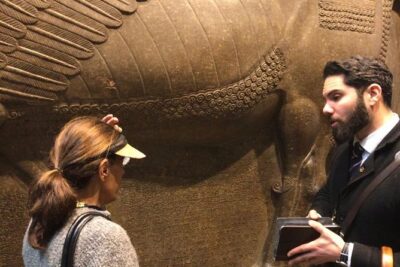
British Museum & National Gallery of London Semi-Private 8ppl Max
Read our review →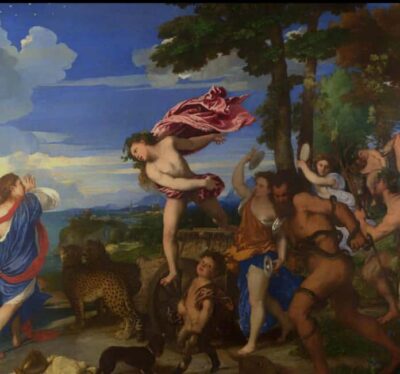
National Gallery + Guided Tour + Priority Entry
Read our review →
Browse the lists this tour appears in