
REVIEW · LONDON
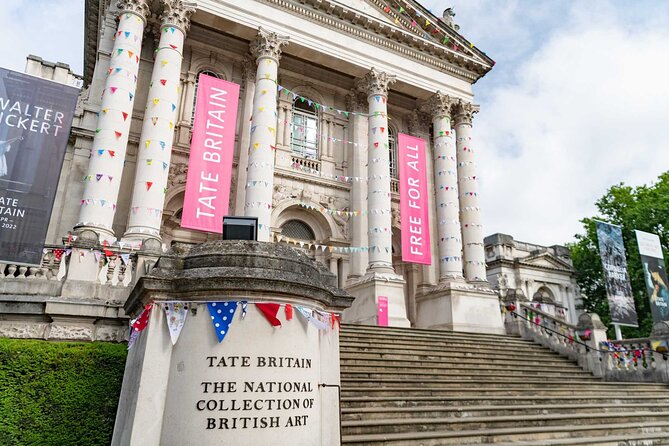
Tate Britain Official Discovery Tour
Tate Britain’s Discovery Tour gives you a fast, focused way to meet the museum’s biggest names, from Turner’s stormy seas to Bridget Riley’s eye-tricking patterns and David Hockney’s bright scenes. In one hour, a Tate guide helps you spot details and connections that are easy to miss when you wander alone.
I like the clear route through a huge collection, and I like that the guide explains not just what you are seeing, but why it mattered. The main drawback is the pace: an hour is enough for highlights, not for a slow look at every room or a full understanding of British art.
- One-hour highlights route: A practical choice when your London schedule is tight.
- Major British artists: Look for Turner, Constable, Riley, Hockney, and other leading figures.
- Art movements explained: The guide introduces subjects such as the Pre-Raphaelites in plain context.
- Changing displays: You may encounter exhibitions such as Now You See Us: Women Artists in Britain, alongside the permanent collection.
- Strong value for guidance: Tate Britain has no general entrance fee, so the $27.77 mainly pays for the guided experience.
- Easy planning: Your mobile ticket includes the Discovery Tour, and free cancellation is available up to 24 hours before the start time.
Why Tate Britain Works Best With a One-Hour Plan
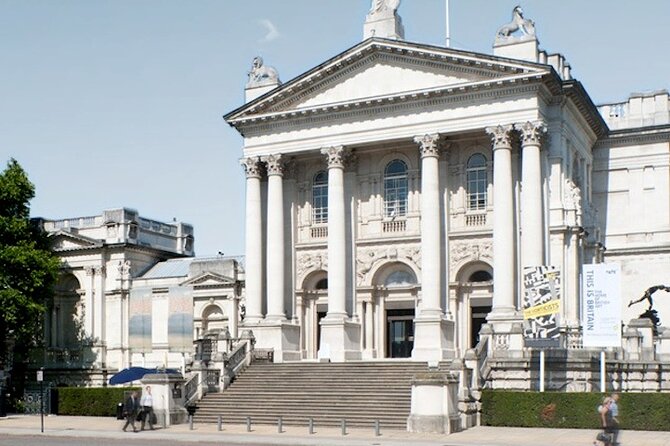
Tate Britain can feel like several museums in one. Its collection covers about 500 years of British art, with old masters, Victorian painting, modern experiments, and works that may leave you wondering what, exactly, you are looking at.
That variety is exciting, but it can also leave you wandering without a plan. The Discovery Tour solves that problem by giving you a short route through the most important names and displays. You are not trying to see everything. You are getting a guided introduction to the collection, then deciding where to spend more time afterward.
I find this format especially useful early in a London visit. You get a framework for British art before returning on your own. If Turner catches your eye, you can go back to his paintings. If the modern galleries are more your speed, you can use the hour to find the rooms worth another look.
The tour lasts about one hour. That is long enough to keep the experience lively, but short enough to fit before lunch, another museum, or an afternoon around Westminster. The trade-off is simple: you will see highlights rather than receive a full museum tour.
Turner, Constable, and the British Tradition
The older collection gives the tour its strongest anchor. J. M. W. Turner is one of the artists most closely associated with Tate Britain, and his seascapes offer an immediate lesson in how British painting changed over time.
Turner’s work can look loose and almost unfinished at first glance. A guide can point out how color, weather, light, and movement do the real work. You begin to see that the blur is not carelessness. It is a way of showing a world in motion.
John Constable provides a useful contrast. His paintings are more grounded and closely observed, with a different approach to countryside, sky, and weather. Seeing Turner and Constable in the same museum gives you a practical comparison between two major British painters.
This is where the tour earns its fee. You can read a label on your own, but a guide can direct your eye to a brushstroke, a figure, or a small visual choice that changes how the whole painting feels. The aim is not to load you down with dates. It is to help you look better.
Do not expect every classic painting to be on the route every time. Museum displays change, and the exact works shown can vary. Still, Turner and Constable are central names to look for, especially if older British art is your main reason for coming.
More Art Museum Tours in London
- Official tickets: Moco Modern & Contemporary Art Museum
★ 4.5 · 1,157 reviews - London: National Gallery Guided Tour with Art Expert Guide
★ 4.7 · 440 reviews - London: Tickets for Moco Modern & Contemporary Art Museum
★ 4.7 · 391 reviews
The Pre-Raphaelites and Other British Movements
A major strength of the Discovery Tour is its attention to movements, not just individual artists. The Pre-Raphaelites are a good example.
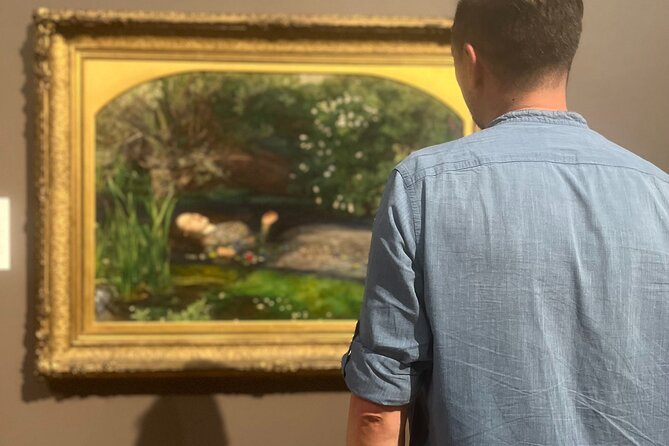
The Pre-Raphaelite Brotherhood reacted against the formal academic painting of its day. Its members favored intense detail, bright color, literary subjects, and close attention to nature. You may find the pictures beautiful, strange, overly dramatic, or all three at once.
A guide helps place those choices in their period. That context matters because the paintings can look merely decorative if you see them without explanation. Once you understand the argument behind the movement, the details begin to feel deliberate rather than excessive.
The wider collection also lets you see how British art moves from traditional portraiture and painting toward modern ideas. Portraits, countryside scenes, industrial subjects, abstract works, and optical experiments all appear within the museum’s broad story.
I appreciate that this kind of tour can correct a common mistake: assuming British art means only old paintings. Tate Britain connects earlier work with modern artists, showing how ideas about color, subject, and technique changed over time.
Bridget Riley and the Art That Tricks Your Eyes
Bridget Riley brings a very different energy to the route. Her optical works can make flat patterns seem to shimmer, shift, or move. You may know the basic idea already, but standing in front of the work is more revealing than seeing a reproduction on a screen.
The guide’s role here is to help you pay attention to your own reaction. How close are you standing? Does the pattern change as your eyes move? Which colors appear to advance or recede? These are simple questions, but they turn a quick glance into active looking.
Riley is also a useful bridge between older painting and modern art. Her work asks you to think about perception itself, rather than a recognizable scene or story. That makes her section a good counterpoint to Turner’s weather or Constable’s fields.
Not every modern work will appeal to you. Some pieces may seem clever, some confusing, and some simply unattractive. That is part of the experience, but it can also be a drawback if you came expecting a museum filled only with traditional British painting.
David Hockney’s Bright View of Modern Britain
David Hockney’s work provides another accessible stop. His bright colors and direct style are easy to recognize, yet the pictures can still reward a closer look.
Hockney’s presence helps keep the tour from becoming a march through Victorian art. His work feels more immediate, and it gives you another way to think about color, place, and everyday life. A guide can show how his choices differ from the artists who came before him.
The contrast between Hockney and Turner is useful. Turner creates atmosphere through light and paint. Hockney can make a scene feel clear, bold, and almost graphic. Both artists care deeply about how you see, but they take very different routes.
You should not expect the same number of works from each artist. The tour is designed around the museum’s main highlights, not a complete study of one painter. If Hockney is your priority, use the guided hour to locate his work, then ask at the end where you can spend extra time.
More modern and contemporary art in London:
- London: Tate Modern Official Guided Tour
★ 4.6 · 154 reviews - Tate Modern Museum London Guided Tour Semi-Private 8ppl Max
★ 5.0 · 41 reviews - The Tate Modern London – Exclusive Guided Museum Tour
★ 5.0 · 41 reviews - Tate Modern Official Discovery Tour
★ 4.0 · 39 reviews
A Changing Museum, From Women Artists to Unusual Installations
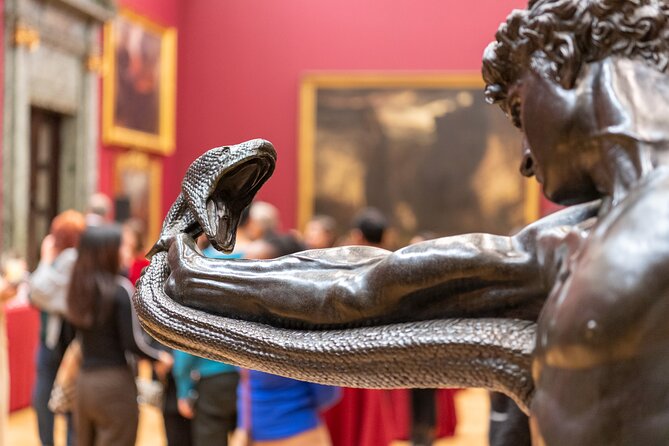
Tate Britain’s program changes, and that can alter the feel of your visit. A presentation such as Now You See Us: Women Artists in Britain adds an important view of British art through the work of women artists.
That kind of display can take you beyond the usual list of famous male painters. It may include portraits, countryside scenes, industrial subjects, and works by artists such as Artemisia Gentileschi. Gentileschi’s Susanna and the Elders is a particularly notable work to seek if it is on view during your visit.
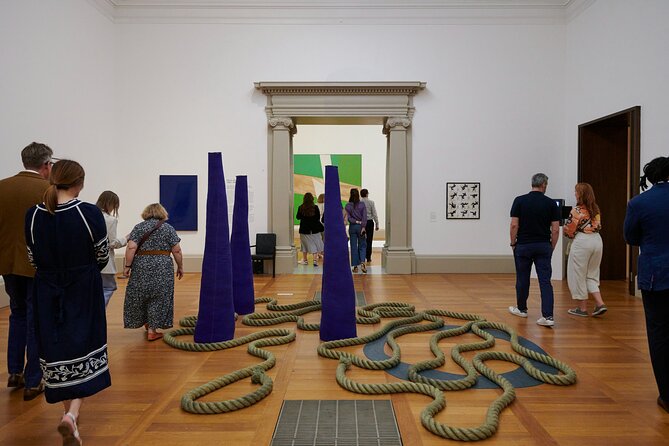
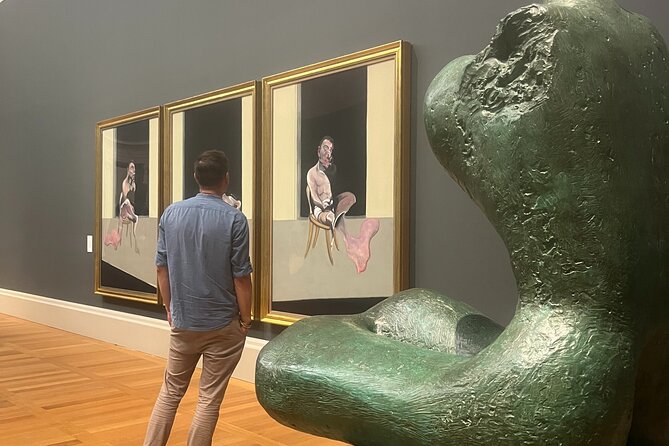
The museum also includes newer and more experimental art. You might encounter an installation involving a smashed piano or another piece that seems baffling at first. The explanatory boards try to provide the ideas behind such works, but not every visitor will find the result convincing.
I would not treat that disagreement as a reason to skip Tate Britain. It is a reason to allow yourself permission not to like everything. The museum is more useful when you see it as a record of changing ideas, not a room full of universally beautiful objects.
The permanent collection gives you familiar anchors such as Turner and Constable. Temporary displays and modern rooms add debate. That mixture may be exactly what you want, or it may persuade you to focus your extra time on the older galleries.
What the Guide Adds to the Experience
The guide is the heart of this tour. The museum itself is free, so you are paying $27.77 for direction, explanation, and a better first look.
A good guide can prevent three common museum problems. First, you might walk past an important work without realizing it. Second, you might spend too long in one room and miss the collection’s wider range. Third, you might look at a difficult piece and leave before understanding what the artist was trying to do.
The guide points out details you could easily overlook. That might mean a background figure, an unusual technique, a reference to literature, or the way a modern work changes as you move around it. These small observations add up.
You also get a clearer sense of sequence. Instead of seeing unrelated pictures, you begin to understand how one artistic idea leads to another. The tour does not replace a full art-history course, but it gives you enough structure to make the museum less intimidating.
No guide names are provided for this experience, so you should not book it expecting a particular presenter. The benefit comes from Tate’s own guide-led format rather than a named individual.
Is $27.77 Good Value at a Free Museum?
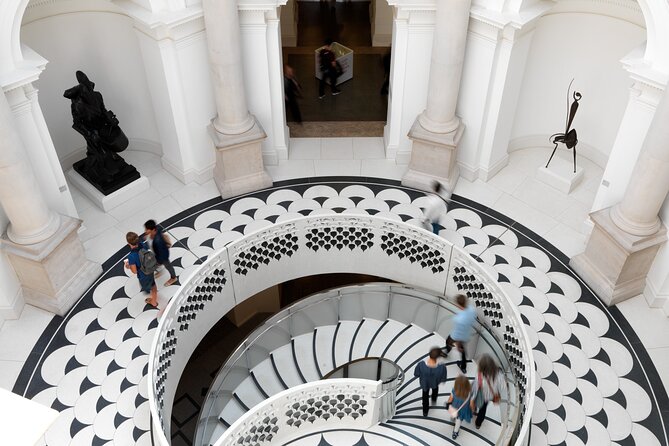
At first glance, paying to enter a museum with no general admission fee may seem odd. The price makes more sense when you separate the building from the service.
You are not paying $27.77 for access to Tate Britain itself. You are paying for a one-hour guided introduction. If you already know the collection well, or if you enjoy reading labels and setting your own route, you may prefer to visit without the tour.
For a first visit, the price is reasonable if you value your time. London museum days can become tiring, and a planned hour gives you a useful start without requiring a full afternoon. You can then return to the rooms that interest you most, or move on to another sight.
The value is also stronger for people who feel unsure about modern art. The guide can give you enough context to make your own judgment instead of dismissing a work because it seems odd. You may still dislike the smashed piano or another installation, but at least you will know what kind of question the artist is asking.
Timing, Tickets, and Who Should Book
The mobile ticket keeps the arrangement simple. Confirmation is provided at booking, and the Discovery Tour is included in the price. Tate Britain is near public transportation, so you can fit it into a wider day in London.
The tour is suitable for most people, and service animals are allowed. The supplied details do not specify group size, meeting-point instructions, or whether the route includes seating, so check the final booking information if those details matter to you.
You can cancel for a full refund up to 24 hours before the experience starts. Changes or cancellations made less than 24 hours before the start time are not accepted for a refund, and the cut-off follows local London time.
I would choose this tour if you have one hour, want the major works explained, and prefer a planned introduction to a large museum. It also suits families, first-time art visitors, and anyone who wants help moving from Turner and Constable into Riley and Hockney.
I would skip it if you want to linger over a small number of paintings, build your own route, or avoid paying for guidance at a museum with free entry. In that case, visit independently and divide the collection across more than one visit.
Should You Book the Tate Britain Discovery Tour?
Book it if you want a brisk, useful orientation rather than an exhaustive museum visit. The guide-led route gives you the major artists, explains movements such as the Pre-Raphaelites, and helps you notice details that a quick solo walk can miss.
The strongest plan is to take the tour near the beginning of your Tate Britain visit. Afterward, return to Turner, Constable, Riley, Hockney, or any temporary display that caught your attention. At $27.77, the experience is best understood as a focused guide fee, not an entrance ticket.
If you are curious about both classic and modern British art, and you like having someone explain the odd parts without telling you what you must admire, this is a sensible booking.
FAQ
How long is the Tate Britain Official Discovery Tour?
The tour lasts approximately one hour.
What does the tour include?
The price includes the one-hour Discovery Tour led by a Tate art guide.
Is admission to Tate Britain included?
Tate Britain has no general entrance fee. Some special exhibitions may charge an additional fee.
How much does the tour cost?
The listed price is $27.77 per person.
Which artists might I see?
The tour focuses on famous artists and works in the collection, including Turner, Bridget Riley, and David Hockney. Turner and Constable are also important names to look for.
Does the tour cover art movements?
Yes. The guide discusses movements such as the Pre-Raphaelites and provides context for major works and artists.
Is a mobile ticket available?
Yes. The experience includes a mobile ticket, and confirmation is provided at the time of booking.
Can I cancel for a full refund?
Yes. You can cancel at least 24 hours before the experience start time for a full refund. Cancellations or changes made less than 24 hours before the start time are not accepted for a refund.
Just added around London
- A Guided Tour at the National Gallery in London★ 3.5 · 2 reviews
- The Shard Viewing Gallery & Westminster Walking Tour★ 4.0 · 12 reviews
- Women in Art Walking Tour★ 5.0 · 13 reviews
- Best of Westminster Abbey with Upper Gallery & Buckingham Palace★ 4.5 · 15 reviews
- Private Guided Tour of the National Gallery in London★ 4.0 · 8 reviews
- Tate Modern Museum London Guided Tour Semi-Private 8ppl Max★ 5.0 · 41 reviews
- The Tate Modern London – Exclusive Guided Museum Tour★ 5.0 · 41 reviews
- Tate Modern Private Tour in London with Blue Badge Guide★ 5.0 · 3 reviews
Art Museum Tours in London, compared.
Official tickets: Moco Modern & Contemporary Art Museum
Read our review →
National Gallery Guided Tour with Art Expert Guide
Read our review →
Tickets for Moco Modern & Contemporary Art Museum
Read our review →
National Gallery of London Museum Tour Semi-Private 8ppl Max
Read our review →
Day Trip to Paris with Eiffel Tower, Notre Dame and Louvre Museum
Read our review →
British Museum & National Gallery of London Semi-Private 8ppl Max
Read our review →
National Gallery + Guided Tour + Priority Entry
Read our review →
Browse the lists this tour appears in