
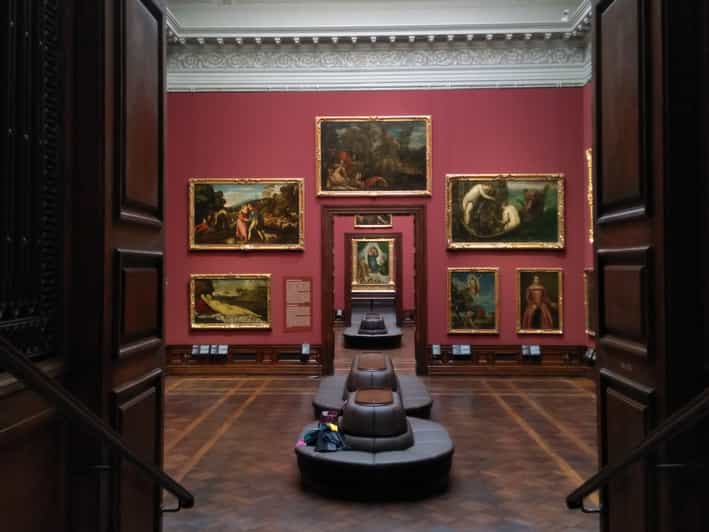
REVIEW · GERMANY
Dresden: Ticket + Tour Gallery Old Masters
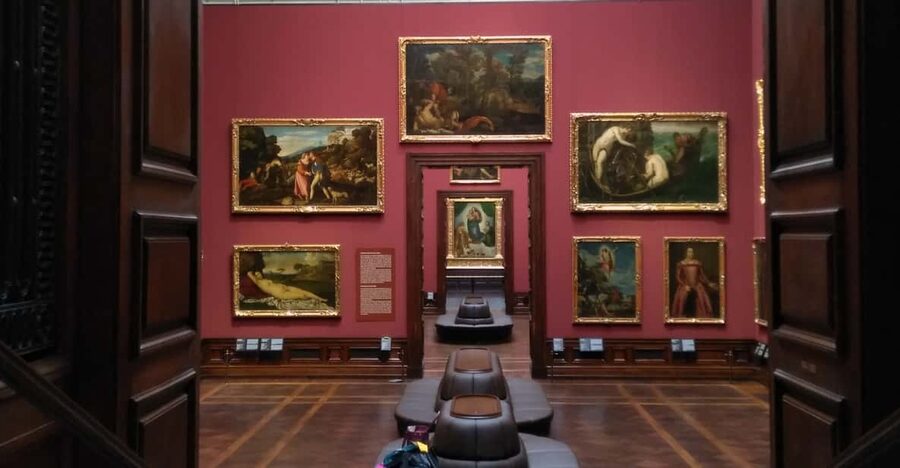
The clever part of this Old Masters tour is that it shows you what a painting hides. You will not only look at Raphael, Titian, Rembrandt, and other famous names. You will see X-ray images, examine technical details, and handle samples of rare historic pigments. I like the quick opening survey of five paintings, and I like the way the tour connects art technique with the reasons a work was created. The main catch is simple: the tour is German only, and the exact paintings can change if the gallery removes a work for restoration or lends it elsewhere.
Key things to know
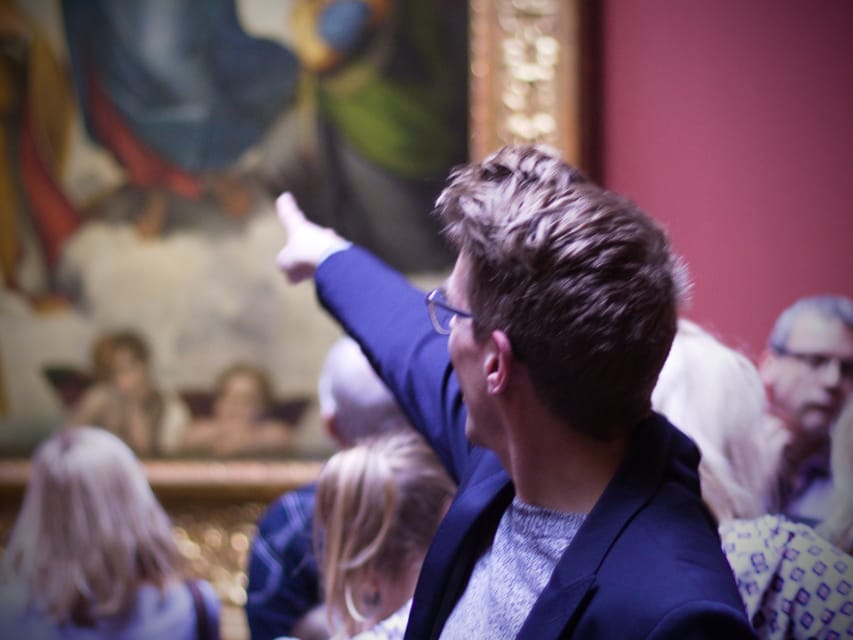
- X-rays reveal the hidden painting: See how technical images can expose changes beneath a finished surface.
- Raphael’s Madonna gets careful attention: The tour moves beyond name recognition and teaches you how to look.
- Titian and Giorgione share the spotlight: Dresden’s Sleeping Venus becomes a lesson in Renaissance painting and the female nude.
- You handle historic color samples: Rare pigment examples make the science of painting easier to grasp.
- The tour begins and ends in the gallery: Meet in the cloakroom, downstairs from the ticket point, and arrive about 10 minutes early.
- Thomas has earned special praise: His lively explanations link artists, techniques, and art history without turning the visit into a dry lecture.
Why this two-hour tour changes the way you see paintings
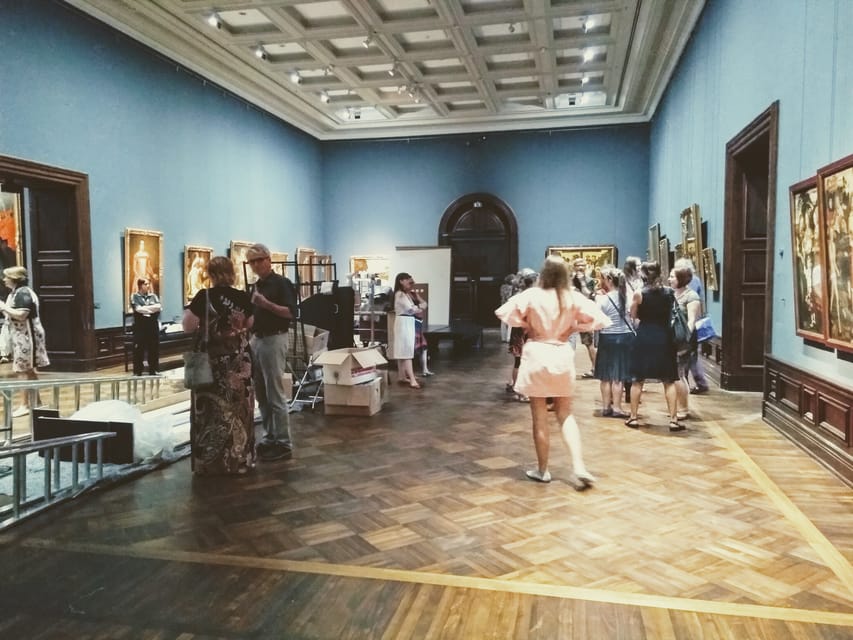
The Old Masters Picture Gallery is packed with famous art. That can be a problem. You walk in, recognize a Raphael or Rembrandt, take a quick look, and move on before understanding what makes the work important.
This tour slows the process down without asking you to spend all day in the museum. You begin with a short orientation to the building, the collection, and classic art in general. Then you look at five paintings for only a few minutes each. This may sound brief, but it gives you a useful visual map before the tour settles on a smaller group of major works.
I like this approach because it teaches you how to look before asking you to admire. You get a taste of different types of painting, including early oil works and paintings made with gold. You also meet artists from several traditions, including Botticelli, Raphael, Jan van Eyck, Rembrandt, and Vermeer.
The guide explains the practical side of art: how a painter built an image, why certain materials mattered, and how the subject affected the way a picture was made. You are not expected to arrive with a degree in art history. The explanations are designed to be clear, entertaining, and useful at the same time.
That combination matters. A painting can be famous and still feel distant. Once you understand the tools, symbols, and choices behind it, the picture becomes easier to read.
A few more gallery visits around Germany worth comparing
- Berlin: The Wall Museum East Side Gallery Ticket
★ 4.1 · 292 reviews - Berlin: 3D Trick Art Museum — Tickets
★ 4.6 · 178 reviews - Dresden: 2 day ticket for museums of the Dresden State Art Collections
★ 4.7 · 54 reviews
Starting downstairs in the Old Masters Picture Gallery
The meeting point is inside the Old Masters Picture Gallery, in the cloakroom. From the ticket point, go downstairs, take a right through the door, and then use the stairs on the right-hand side. Arrive around 10 minutes before the scheduled start.
This is not a tour that takes you across Dresden. You remain in the gallery for the full two hours, and the activity finishes back at the same meeting point. That makes it easy to fit into a day of sightseeing, especially if you are staying near the historic center.
The gallery admission is included, as are the guide and license fees. You also skip the ticket line. Large bags and luggage are not allowed, so leave bulky items elsewhere before you arrive. A wheelchair-accessible option is available, though you should still check the booking details for the selected time.
Once everyone is gathered, the guide gives a short orientation. You learn how the building and exhibits are organized, then get a broad introduction to classic art. This opening is useful because it prepares you for the tour’s main idea: a painting is not just an image on a wall. It is also a physical object, a technical project, and a product of its time.
Five paintings, five ways to look
The first main section moves quickly. You look at five paintings, each for just a couple of minutes, with each work representing a different type or category.
Do not expect a long lecture at every stop. This section is more like a visual warm-up. The guide points out things you might otherwise miss and gives you a set of questions to carry through the rest of the tour.
You may consider:
- What material did the artist use?
- How was the picture assembled?
- What clues show the date or tradition?
- Why was the subject chosen?
- What was the painting meant to do for its original audience?
Among the works discussed are some of the first paintings made in oil paint, along with examples created on gold. You also encounter Italian painting through Botticelli and Raphael, Dutch and Northern European traditions through Jan van Eyck, and later masters such as Rembrandt and Vermeer.
This range is one of the tour’s strengths. You do not study one artist in isolation. You see how styles and methods connect across countries and generations. A detail in one painting may help you understand a different picture later in the visit.
The pace can feel brisk if you want long, quiet time in front of every work. That is the trade-off. This is a guided lesson, not an open-ended museum visit. If you prefer to stare at one painting for 20 minutes in silence, save extra time before or after the tour for that.
Learning to read religious paintings
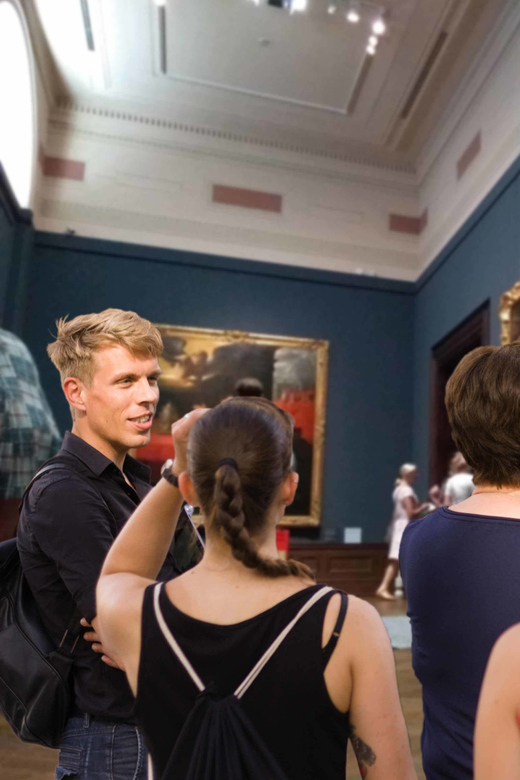
After the opening survey, the tour turns to religious art in more detail. This is where the guide helps you spot elements that may seem mysterious at first.
Religious paintings are often full of gestures, objects, colors, and figures with a specific purpose. A book, flower, piece of fabric, or hand position can carry meaning. Once you know what to watch for, a scene that first seems crowded or formal starts to make more sense.
I appreciate that the tour does not treat art as a list of dates and names. It asks why a picture exists and what the artist wanted the viewer to notice. You learn to separate the subject of a painting from the technical decisions that bring it to life.
The guide also adds digital imagery and videos. These tools help explain details that are hard to see from the gallery floor. They are especially useful when discussing a painting’s construction or showing what lies beneath the visible surface.
This part should suit you if religious art has always felt difficult to approach. You do not need to know biblical stories or Renaissance history in advance. The tour gives you enough context to follow the main ideas without burying you in academic language.
Same city, a completely different collection:
- Dresden: Church of Our Lady Guided Tour of Gallery
★ 4.7 · 2,421 reviews - Berlin: East Side Gallery Spree Cruise in a Solar Catamaran
★ 4.1 · 1,086 reviews - Cold War, Berlin Wall, Spies and the East Side Gallery
★ 5.0 · 1,024 reviews - Berlin: Berlin Wall & East Side Gallery Walking Tour
★ 4.9 · 264 reviews
Raphael’s Madonna and the value of close looking
Raphael’s Madonna is one of the tour’s key works. You examine it after learning some basic ways to read art, so the painting receives more than a quick glance.
The value here is not simply seeing a celebrated Raphael in person. You learn to consider composition, technique, and the choices that shape your response to the image. The guide also places the work within wider artistic connections, showing how one painter’s approach relates to other Old Masters.
Thomas, one of the guides associated with this experience, has received particular praise for making those connections clear. His explanations link artists rather than treating each painting as a separate island. That helps you understand why Raphael matters and how his work fits into the larger story of European painting.
You should expect the guide to adjust the amount of time spent on each work according to what is on display and how the group is progressing. The named paintings are central examples, but the museum can remove a picture for restoration or loan it to another institution. The exact selection is not guaranteed.
That is worth keeping in mind if you are booking mainly to see one specific work. The tour provider can substitute an equivalent or additional item when needed, but no museum tour can promise that every famous picture will be hanging on the day you visit.
Titian, Giorgione, and the Sleeping Venus
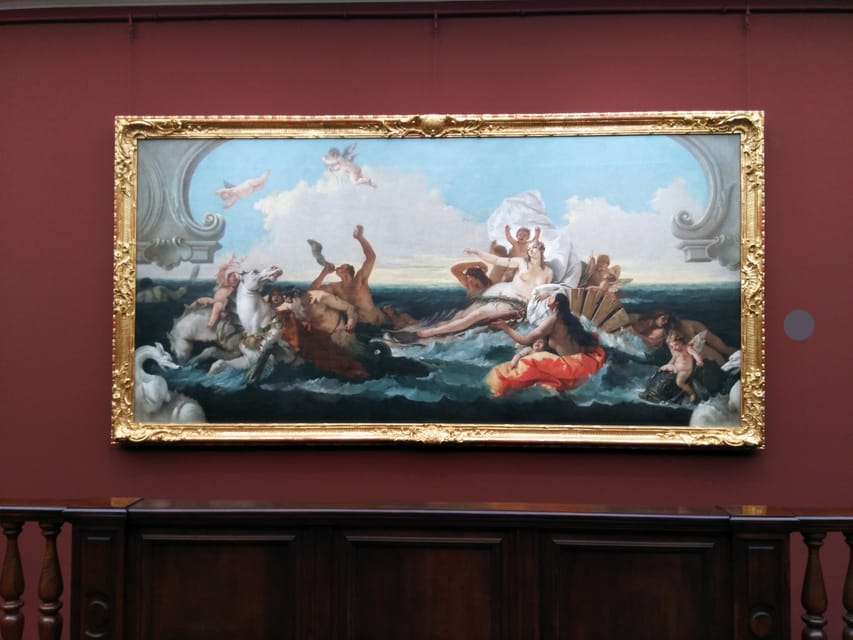
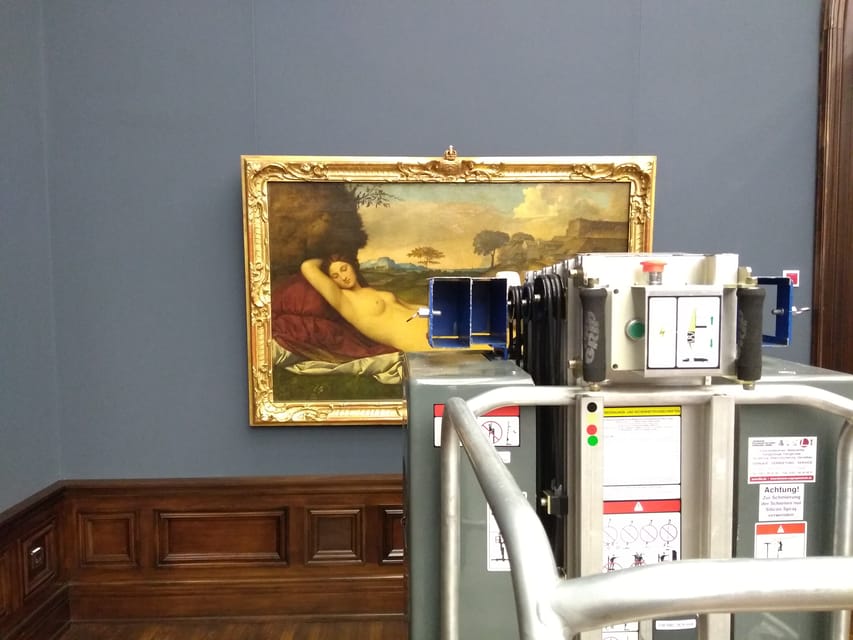
The tour then turns to two major Renaissance painters, Titian and Giorgione. Their work offers a chance to see how artists handled color, mood, the human body, and the relationship between painter and subject.
The Dresden Sleeping Venus receives special attention. The tour presents it as a landmark in the development of the female nude in modern Western art. You hear about the background of the work and the surprising details that make it more than a beautiful reclining figure.
The painting is particularly useful for understanding how art can influence later artists. The guide helps you see the image as part of a larger chain of ideas, not just a single famous canvas.
The X-ray material adds another layer. You see the painting from the inside, or at least gain a view of changes and decisions hidden beneath the visible surface. That shift in perspective can be eye-opening. A finished painting may look fixed and certain, but technical evidence can show revisions, adjustments, and a working process.
For me, this is the strongest reason to choose the guided visit over a casual gallery walk. You get access to information that is difficult to gather by simply reading a label. The X-rays turn art history into a bit of detective work.
Pigment samples and the science behind the beauty
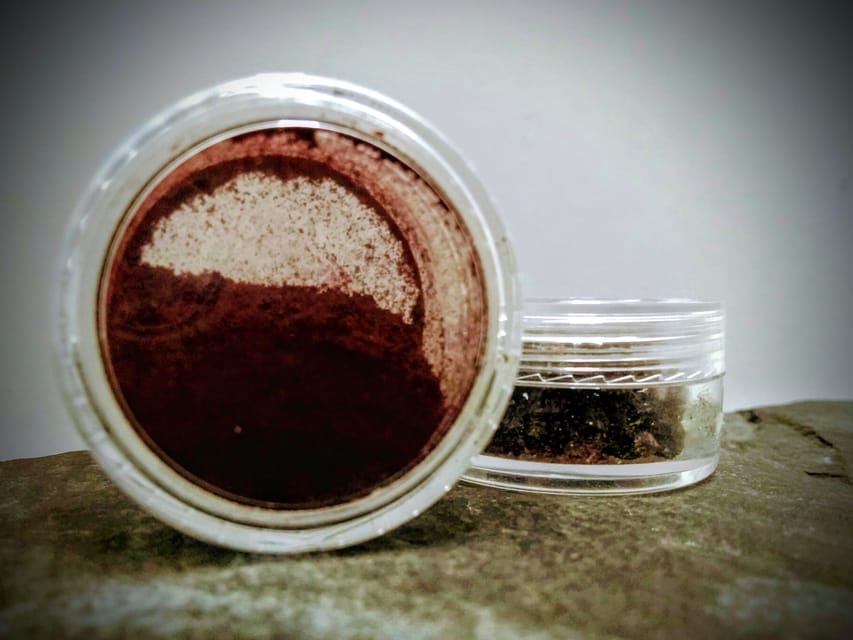
The tour includes samples of rare historic color pigments that you can touch. This is a small detail, but it gives the visit a physical quality. You are reminded that Old Master paintings were made from materials that had to be found, prepared, mixed, and applied.
Color was never just decoration. Pigments could affect cost, status, durability, and the mood of a scene. The guide uses scientific information in a straightforward way, so you can understand how material choices shaped the final picture.
This is also where the tour balances art and science well. You do not need to be interested in laboratory work to benefit from it. A technical explanation can answer simple questions that often make a painting more interesting: Why does this color look different? Why has part of the picture changed over time? How can experts tell what happened beneath the surface?
Digital images and video support these explanations. They make the material easier to grasp than a spoken description alone.
If you enjoy museums mainly for atmosphere, this section adds a useful change of pace. If you already like conservation and painting technique, it may be the part you remember best.
The guide makes the difference
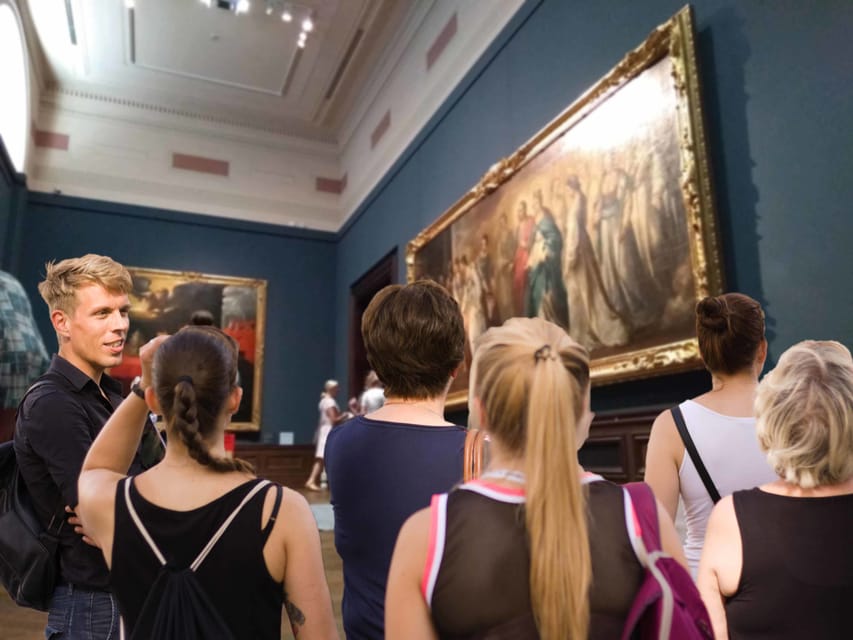
A museum tour lives or dies by the guide. Here, the most praised quality is the way the guide brings together art history, humor, and clear explanations.
Thomas is specifically named as a guide who presents the history of the museum and the featured works with energy. He also draws links between different artists, which helps you follow the development of ideas across the collection. That approach is more useful than a string of disconnected facts.
The guide is German-speaking, and the tour takes place in German only. This is not a minor detail. You should be comfortable following a full museum discussion in German to get the value of the experience. If you need an English tour, this is not the right choice.
The format is designed to be entertaining and easy to follow, but it still covers complex scientific and artistic material. That balance should appeal to you if you want more than a basic introduction but do not want a formal university lecture.
The tour lasts two hours. That is long enough for a focused look at major works, yet short enough to leave you with time for lunch, another museum, or a return to paintings that caught your eye.
Is $44 a fair price?
At $44 per person, this is not the cheapest way to enter an art museum. The price makes more sense if you value interpretation, skip-the-line entry, and the chance to see technical material that you might not encounter on your own.
Admission is included, so you are paying for both access and a structured two-hour lesson. You also avoid spending time figuring out which works to prioritize in a large collection. For a first visit to Dresden, that guidance can be worthwhile.
The value is weaker if you already know the gallery well, speak German only with difficulty, or mainly want free time with the collection. In those cases, the fixed pace may feel restrictive.
You can reserve now and pay later, and cancellation is free up to 24 hours before the activity for a full refund. Those policies help if your Dresden schedule is still shifting.
Who should book this Dresden art tour?
I would choose this experience for:
- First-time visitors who want a clear introduction to the gallery
- People curious about how paintings are made, restored, and examined
- Museum-goers who enjoy links between artists and periods
- Visitors comfortable with a German-speaking guide
- Anyone who wants a focused two-hour activity rather than a full-day museum visit
- Art lovers interested in Raphael, Titian, Giorgione, Rembrandt, and related Old Master traditions
I would think twice if you need an English-language tour, want guaranteed access to one particular painting, or dislike guided pacing. The gallery retains the right to remove works for restoration or loan, so even a well-planned visit cannot promise every named picture.
Should you book it?
Book this tour if you want the Old Masters Picture Gallery to make more sense, not simply to check famous names off a list. The X-rays, pigment samples, digital images, and connections between artists give you tools you can use for the rest of your museum visit.
The best match is a German-speaking visitor who enjoys learning how art works from the inside. At $44, it offers solid value for a focused gallery lesson with admission included. Just arrive early at the downstairs cloakroom, leave large bags behind, and treat the named paintings as likely highlights rather than guaranteed stops.
FAQ
Where does the tour begin?
It begins at the Old Masters Picture Gallery. Your guide waits in the cloakroom downstairs from the ticket point.
How do I reach the meeting point?
From the ticket point, go downstairs, take a right through the door, and then use the stairs on the right-hand side.
How early should I arrive?
Arrive about 10 minutes before the activity starts.
How long does the tour last?
The guided tour lasts two hours.
What language is the tour in?
The tour takes place in German only, with a German-speaking guide.
Is admission to the gallery included?
Yes. Gallery admission and all license fees are included.
Does the tour skip the ticket line?
Yes, skip-the-line entry is included.
Will I definitely see every painting named in the tour description?
No. The museum may remove paintings for restoration or lend them to another museum. The guide can add equivalent or additional works when needed.
Are large bags allowed?
No. Luggage and large bags are not allowed.
Is the activity wheelchair accessible?
Yes, the activity is listed as wheelchair accessible.
Can I cancel for a full refund?
Yes. You can cancel up to 24 hours in advance for a full refund.
Just added around Germany
- Ticket for The Wow Gallery Berlin★ 4.5 · 7 reviews
- Berlin’s Gallery Scene★ 5.0 · 4 reviews
- Berlin: Comedy in an Art Gallery (Mitte) – Saturday 7pm★ 5.0 · 2 reviews
- East side Gallery Tour★ 5.0 · 11 reviews
- Hamburg: Port des Lumières Vermeer & Van Gogh★ 4.7 · 91 reviews
- Hamburg: 3-Day Art Exhibition & Gallery Ticket★ 4.6 · 34 reviews
- East side Gallery Tour★ 4.8 · 4 reviews
- Dresden: 2 day ticket for museums of the Dresden State Art Collections★ 4.7 · 54 reviews
Art Museum Tours in Germany, compared.
Dresden: Church of Our Lady Guided Tour of Gallery
Read our review →
East Side Gallery Spree Cruise in a Solar Catamaran
Read our review →
Cold War, Berlin Wall, Spies and the East Side Gallery
Read our review →

Bus Tour to Sachsenhausen, East Side Gallery, & Berlin Story Bunker
Read our review →Cold War, Berlin Wall, Spies and the East Side Gallery
Read our review →
Browse the lists this tour appears in