
REVIEW · BERLIN
Berlin’s Gallery Scene
Berlin’s gallery scene hides in former schools, old industrial spaces, and unassuming doors. This three-hour private walk takes you into that changing world, with an art historian explaining how Berlin became a major center for contemporary art after the Wall fell in 1989. I especially like the mix of serious gallery visits and local history, plus the chance to see places you might miss on a standard city tour.
The private format gives your group room to ask questions, and the route shifts with current exhibitions and major art events. Guides Justin and Laureline have both led this experience, and the feedback points to their ability to connect individual works with larger questions about Berlin, German artists, and the city’s changing identity. The main consideration is that one key stop, KW Institute, charges an extra admission fee and is closed on Tuesdays.
Key points at a glance
- A private art walk for up to 10 people: Your group has its own professional art historian rather than sharing the guide with strangers.
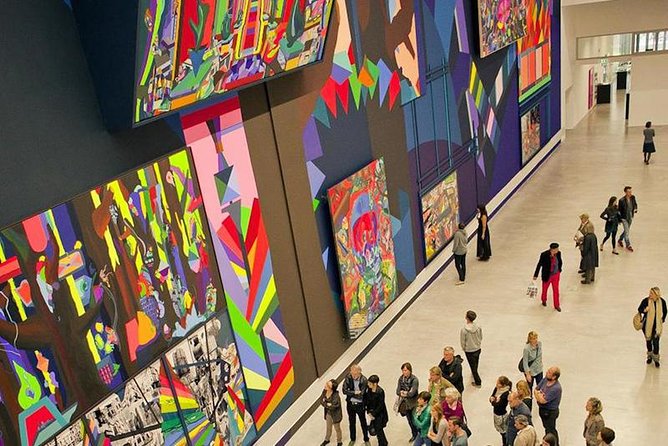
- Five gallery-area stops: The route includes KW Institute, Auguststraße, Potsdamer Straße, and several important contemporary galleries.
- Berlin after 1989 explained: You learn how the fall of the Wall helped create the city’s current art scene.
- Former school buildings become exhibition spaces: Michael Fuchs Galerie and Galerie Eigen + Art offer a look at Berlin’s unusual gallery settings.
- The art changes: The route can shift according to current exhibitions and major art events.
- A three-hour walking experience: Pickup is offered, and the listed starting point is at Schöneberger Ufer 65.
Why Berlin’s gallery scene makes a good walking tour
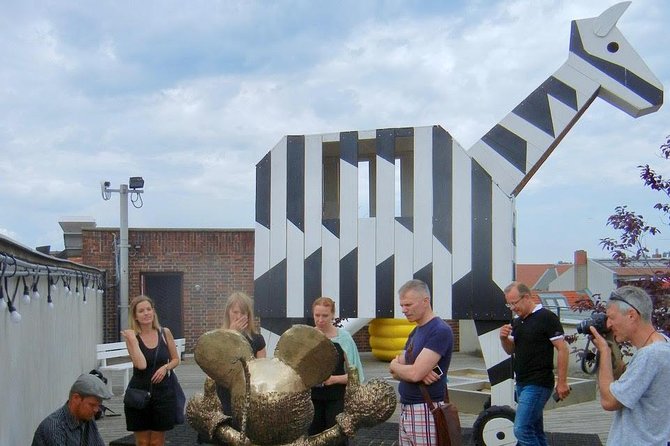
Berlin is not a city where all the important art sits in one grand museum. The gallery scene is spread through districts and buildings with their own stories. A former Jewish girls’ school, old classrooms, and converted institutional spaces now hold changing exhibitions by contemporary artists.
That setting is part of the lesson. You are not only looking at paintings, installations, or new media work. You are also seeing how Berlin’s past has been reused and given a new purpose.
The tour focuses on the years after 1989, when the Wall fell and Berlin became a magnet for artists, galleries, and creative groups. The guide puts the art into that political and urban setting. That matters because contemporary work can be hard to read without some sense of the place that produced it.
I like this approach for another reason: you are not expected to arrive with a degree in art history. The guide can explain why a work matters, what an artist may be trying to do, and how German painters and newer artists fit into the wider story. You still need to bring your own reactions, but you are given useful tools for looking.
More Art Museum Tours in Berlin
- Berlin: East Side Gallery Spree Cruise in a Solar Catamaran
★ 4.1 · 1,086 reviews - Cold War, Berlin Wall, Spies and the East Side Gallery
★ 5.0 · 1,024 reviews - Berlin: The Wall Museum East Side Gallery Ticket
★ 4.1 · 292 reviews
A private three-hour route through Mitte and beyond
The tour lasts about three hours and includes several gallery stops. The schedule gives roughly 40 minutes to KW Institute, 30 minutes at Auguststraße, and about 20 minutes at each of the three later galleries.
Those times are long enough to look carefully without turning the outing into a full museum day. They also leave room for walking between sites, listening to the guide, and noticing Berlin’s streets and buildings along the way.
Because this is a private tour, the pace can work better for your group. If one exhibition raises questions, you can ask them. If your group prefers a quicker look at one gallery and more time at another, the guide may be able to adjust, although the route is subject to current shows and events.
The listed start is Schöneberger Ufer 65, 10785 Berlin. Pickup is offered, and the activity is near public transportation. The end point is given simply as Berlin, so you should confirm the exact arrangements before setting out.
KW Institute: 40 minutes at Berlin’s contemporary art laboratory
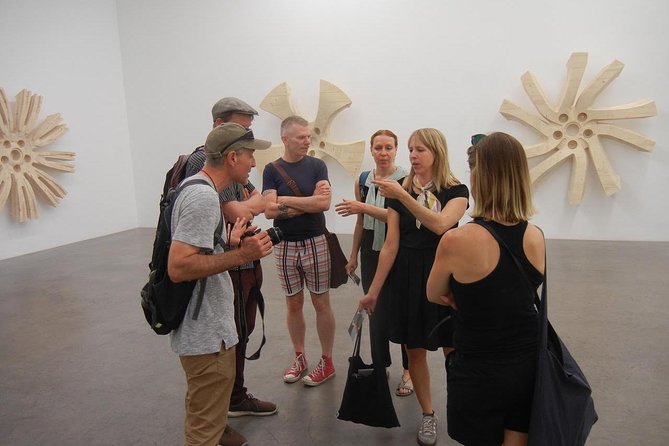
KW Institute for Contemporary Art is the most substantial stop on the route. It is known as one of Germany’s important contemporary art institutions, but it does not maintain a permanent collection. Instead, it operates as a changing place for exhibitions, artist studios, and cultural events.
That lack of a fixed collection changes how you visit. You are not moving through a familiar sequence of famous objects. The experience depends on the current program, which may include national and international artists working in different forms.
The guide’s role is especially useful here. Contemporary art can be direct, puzzling, political, or deliberately uncomfortable. A strong explanation can help you see the choices behind the work without telling you what you must think.
Allow for the extra cost. Admission to KW is not included and is listed at €10 for adults and €6 for seniors and students. The fee is modest compared with many private experiences, but it is important when you are comparing the total price.
KW is closed on Tuesdays. The tour still operates as a walking tour on that day, but you should not expect to enter the institute. If this stop matters most to you, choose another day.
Auguststraße and the former Jewish girls’ school
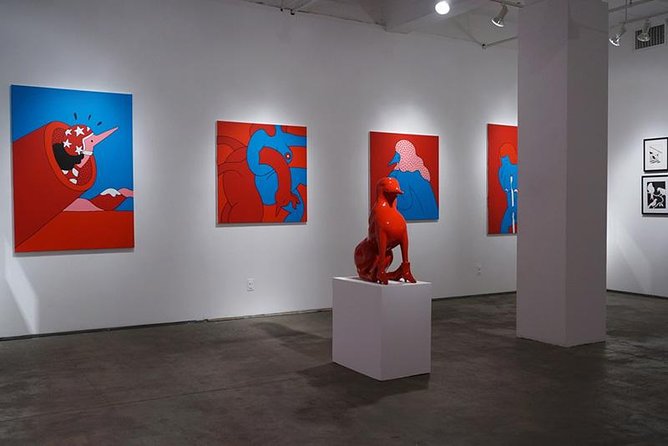
The Auguststraße stop gives the tour one of its most distinctive settings. Michael Fuchs Galerie uses the former assembly hall and two classrooms of a former Jewish girls’ school in Berlin.
The building adds a layer of meaning before you even begin looking at the current exhibition. The gallery presents contemporary art along with classical modernist works, using solo and group shows that change over time.
You can expect the guide to connect the building, its past, and the works now shown inside. That combination is one reason this tour is more useful than simply following a list of gallery addresses. The rooms themselves help explain how Berlin’s art world makes use of old spaces.
Admission here is free. The scheduled visit lasts about 30 minutes, a sensible amount of time for a gallery with a focused exhibition. The exhibition may be different from the one described when you book, so think of this as a chance to see the current program rather than a promise of one specific artist or work.
A few more gallery visits around Berlin worth comparing
- Berlin: Berlin Wall & East Side Gallery Walking Tour
★ 4.9 · 264 reviews - Berlin: Bus Tour to Sachsenhausen, East Side Gallery, & Berlin Story Bunker
★ 4.5 · 262 reviews - Cold War, Berlin Wall, Spies and the East Side Gallery
★ 4.8 · 254 reviews - Berlin: 3D Trick Art Museum — Tickets
★ 4.6 · 178 reviews
Potsdamer Straße: galleries in a changing district
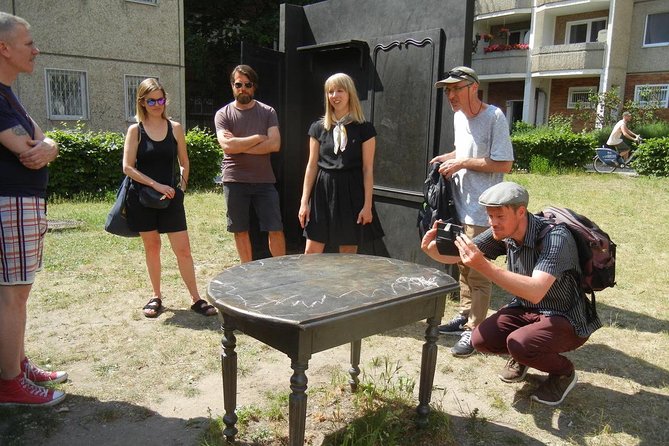
The tour then moves toward Potsdamer Straße, one of the city’s established gallery areas. At Esther Schipper, you visit a Berlin gallery devoted to contemporary art.
The planned time is about 20 minutes. That may sound short, but it works if the guide helps you focus on a small number of works instead of trying to absorb every room. It also keeps the overall walk moving.
Galeries change their shows, and contemporary exhibitions can range from visually pleasing to challenging. You may find work that is immediately appealing, or you may need the guide’s explanation before it begins to make sense. The value here is not only the number of galleries visited. It is learning how galleries select artists, frame exhibitions, and take part in Berlin’s larger art network.
Admission at Esther Schipper is free. As with the other commercial galleries, the exact presentation depends on the current show.
Galerie Eigen + Art in a former school
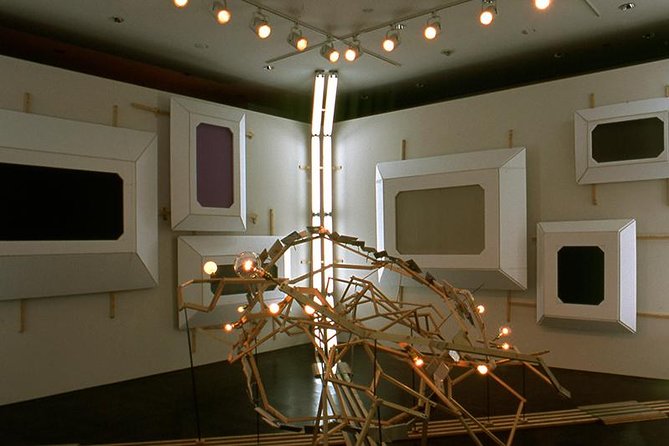
Galerie Eigen + Art adds another unusual building to the route. The gallery occupies a former school and presents temporary exhibitions by international contemporary artists.
The repeated use of former schools is not accidental decoration. These spaces show how Berlin’s art scene often grows in buildings that once served another purpose. Their rooms can feel less formal than a purpose-built museum, and that can change the way you look at the work.
You have about 20 minutes here. That is enough for a focused introduction, especially when the guide explains the artist and the exhibition’s main ideas. If you are new to contemporary art, this is a good place to ask how a commercial gallery differs from a museum or a public art institution.
The short stop also keeps expectations in check. This is not a chance to study every piece in detail. It is a guided look at the gallery and its current program, with the wider Berlin story kept in view.
Galerie Giti Nourbakhsch and Berlin’s gallery network
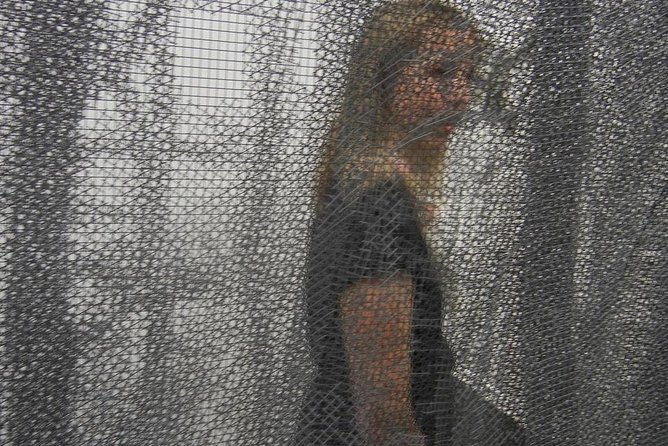
The final named gallery is Galerie Giti Nourbakhsch, associated with the Potsdamer Platz gallery district. Giti Nourbakhsch is also identified as a founding member of Berlin Gallery Weekend, which gives the stop a clear connection to the city’s organized gallery network.
That detail helps explain why Berlin’s art scene is more than a collection of isolated rooms. Galleries, artists, collectors, institutions, and citywide events all support one another. A gallery weekend can turn separate exhibitions into a larger public event, bringing attention to both established and newer artists.
The scheduled visit lasts about 20 minutes. Admission is not included, so check the current arrangements when you book. As with KW, the extra cost may be small, but it belongs in your planning.
The gallery’s current show will shape your experience. You may see work that is visually inviting, or you may encounter art that asks more difficult questions. The guide helps give those choices a setting in Berlin’s modern art story.
What the art historian adds
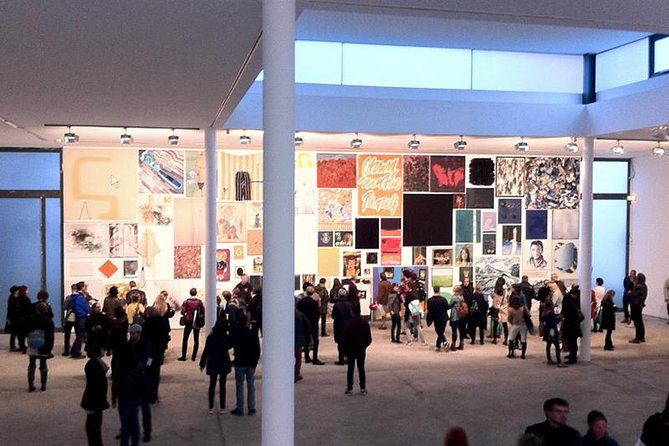
This is not a gallery crawl where you simply follow a guide from one address to the next. The art historian is the main reason to book it.
The strongest part of the experience is the connection between artwork and place. Guides Justin and Laureline have both been praised for explaining local artists, well-known German painters, individual artworks, and the city’s changing center. Laureline has also led groups through buildings in historic East Berlin, including unusual upper-level spaces, so the route can offer more than ground-floor gallery visits when current access allows.
You should still expect a discussion rather than a lecture. Contemporary art leaves room for disagreement. A good guide gives you context, but you do not have to like every piece or accept one interpretation.
The best questions to ask are practical ones: Why is this work shown here? How does this artist fit into Berlin’s art scene? What changed after reunification? How does a commercial gallery differ from KW Institute? The private setting makes these questions easier to bring up.
Price, group size, and overall value
The price is $330 per group of up to 10 people. For a full group, that works out to $33 per person before any gallery admission. For two people, the effective price is $165 per person, so the value depends heavily on group size and your interest in art.
Compared with a standard group walk, this costs more. You are paying for a private guide with art-history training, a route built around current exhibitions, and a level of conversation that a large group rarely allows.
I think the price makes the most sense for a family, group of friends, or small organization that can divide the fee. It is also easier to justify if you want a serious introduction to Berlin’s art world rather than a general sightseeing walk.
Budget for KW’s €10 adult admission or €6 senior and student admission. Galerie Giti Nourbakhsch also lists admission as not included, while the other named gallery stops list free entry. Food and drinks are not included, and the three-hour schedule does not present itself as a meal outing.
Who should book this experience
You should book this if you already enjoy art, want to understand contemporary work, or have visited Berlin’s major museums and now want to see the gallery side of the city. It also suits anyone who likes city history told through buildings and neighborhoods instead of only through monuments.
This is a good choice for a private group with mixed levels of art experience. A beginner can ask basic questions without feeling exposed, while an informed art fan can focus on artists, exhibitions, and Berlin’s gallery system.
You may want something else if you prefer famous masterpieces, long museum visits, or a fixed list of specific artworks. The galleries change their shows, the route can change with major events, and Tuesday visitors will not enter KW Institute.
Wear comfortable shoes and allow time for walking. The tour is near public transportation, most people can participate, and pickup is offered, but you should confirm the meeting details since the listed start and final point are not described in equal detail.
Cancellation and timing notes
You can cancel up to 24 hours before the start time for a full refund. Changes made less than 24 hours before the start time are not accepted, and the cutoff follows Berlin local time.
Confirmation is sent within 48 hours of booking, subject to availability. Since the route depends on current exhibitions, the exact gallery schedule may change. That is a normal part of this experience, but it means you should not book it only to see one particular exhibition unless the provider confirms it.
Should you book Berlin’s Gallery Scene?
Book it if you want a thoughtful introduction to Berlin’s contemporary art world, especially in a private group that can share the $330 cost. The mix of KW Institute, former school galleries, Potsdamer Straße spaces, and an art historian’s context gives you a useful look at how the city’s creative life developed after 1989.
The clearest drawbacks are the extra admission fees, the short time at some galleries, and the Tuesday closure at KW. If those points work for your schedule, this tour gives you something a normal museum visit cannot: a sense of how Berlin’s art scene operates across real streets, old buildings, changing shows, and people who help shape the city’s cultural life.
FAQ
How long does Berlin’s Gallery Scene last?
The experience lasts approximately three hours.
How much does the tour cost?
The price is $330 per group, with up to 10 people included.
Is this a private tour?
Yes. Only your group participates in the activity.
Who leads the tour?
A professional art historian leads the tour. Guides who have led this experience include Justin and Laureline.
What galleries and art spaces are visited?
The route includes KW Institute for Contemporary Art, Michael Fuchs Galerie on Auguststraße, Esther Schipper on Potsdamer Straße, Galerie Eigen + Art, and Galerie Giti Nourbakhsch. The exact route may change with current exhibitions and major art events.
Is admission included?
No. Admission to KW Institute is not included and costs €10 for adults and €6 for seniors and students. Galerie Giti Nourbakhsch also lists admission as not included, while the other named gallery stops list free entry.
Does the tour operate on Tuesdays?
The walking portion operates on Tuesdays, but KW Institute for Contemporary Art is closed that day, so you will not enter KW.
Can I cancel for a full refund?
Yes. You can cancel at least 24 hours before the experience start time for a full refund. Cancellations or changes made less than 24 hours before the start time are not accepted.
Just added around Berlin
- Ticket for The Wow Gallery Berlin★ 4.5 · 7 reviews
- Berlin: Comedy in an Art Gallery (Mitte) – Saturday 7pm★ 5.0 · 2 reviews
- East side Gallery Tour★ 5.0 · 11 reviews
- East side Gallery Tour★ 4.8 · 4 reviews
- Berlin: East Side Gallery Photoshoot★ 5.0 · 2 reviews
- Berlin: Comedy in an Art Gallery (Mitte)★ 4.2 · 4 reviews
- Berlin: East Side Gallery and Cold War Segway Tour★ 4.6 · 20 reviews
- Berlin: 3D Trick Art Museum — Tickets★ 4.6 · 178 reviews
Art Museum Tours in Berlin, compared.
East Side Gallery Spree Cruise in a Solar Catamaran
Read our review →
Cold War, Berlin Wall, Spies and the East Side Gallery
Read our review →
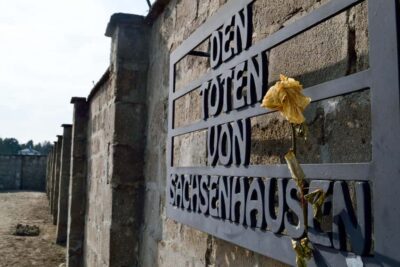
Bus Tour to Sachsenhausen, East Side Gallery, & Berlin Story Bunker
Read our review →Cold War, Berlin Wall, Spies and the East Side Gallery
Read our review →

Browse the lists this tour appears in