
REVIEW · FLORENCE
Exclusive Uffizi Gallery Private Visit
The Uffizi is not simply a room full of famous paintings. It is Florence’s story told through art, from Giotto’s early religious scenes to the daring work of Caravaggio. A three-hour private visit gives you time to make sense of that story instead of racing past every masterpiece with a map in your hand.
I like the choice of a morning or afternoon start, and I like that the guide can shape the visit around your interests. Guide Giacomo has been praised for bringing energy and humor to a long museum visit, while Mike has been noted for asking which painting or artist mattered most to the group. The drawback is the price: at $299.30 per person, this makes the most sense for a small group that values personal attention, not for a quick first look.
Key points to know before booking
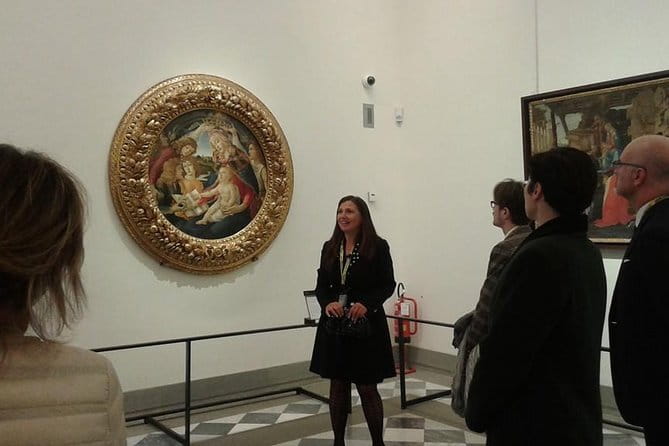
- See Florence’s major Renaissance names together: Botticelli, Leonardo, Michelangelo, Raphael, Titian, Caravaggio, and Giotto all feature in the visit.
- Meet in Piazza della Signoria: The tour begins near the Uffizi and ends at the same meeting point, with no hotel transportation.
- Three hours is a serious museum visit: You will have time for explanation and questions, but the gallery can feel crowded and noisy.
- Private means only your group attends: Your guide can adjust the emphasis and pace more easily than on a large group tour.
- Skip-the-line entry is included: This saves useful time at one of Italy’s most visited museums.
- English is the offered language: Guide quality can vary, so clear communication matters to your enjoyment.
Why a private Uffizi visit can be worth three hours
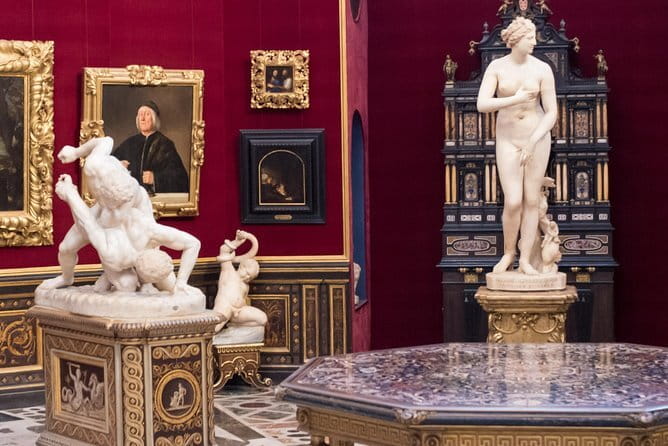
The Uffizi is one of those museums where a little guidance changes everything. Without context, you may see a row of solemn Madonnas, elaborate portraits, and mythological scenes. With a good guide, you begin to notice how artists changed the way they handled space, emotion, anatomy, light, and movement.
The collection focuses mainly on the 12th through 17th centuries. That span covers the development of Italian painting from the medieval period through the Renaissance and into the dramatic Baroque style. The museum’s arrangement follows a roughly chronological path, which helps you watch artistic ideas develop rather than treating every famous painting as an isolated object.
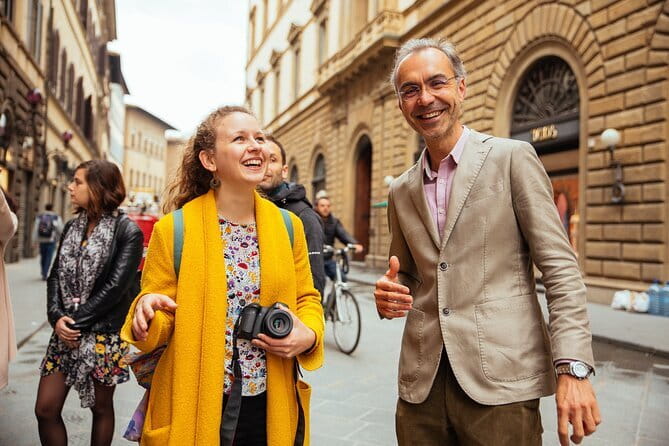
A private format matters here because you can ask basic questions without holding up a group. You can also spend more time on an artist you care about. Mike, one of the guides named in the feedback, reportedly began by asking which artist or painting was a must-see, then shaped the morning around that preference. That is exactly the sort of small adjustment that makes a private tour useful.
The cost deserves a clear look. At $299.30 per person, this is not a budget museum entry. You are paying for a private professional guide, skip-the-line access, and about three hours of focused attention. If your group is two people, the per-person cost is hard to ignore. If several family members or friends share the experience, the value improves because the guide’s time is dedicated to your party.
More Art Museum Tours in Florence
- Florence: Skip-The-Line Uffizi Gallery Timed Entry Ticket
★ 4.5 · 27,832 reviews - Florence: Uffizi Priority Ticket & Masterpieces Audio App
★ 4.2 · 6,402 reviews - Florence Accademia Gallery Tour with Entrance Ticket Included
★ 4.5 · 6,148 reviews
Meeting at Piazza della Signoria
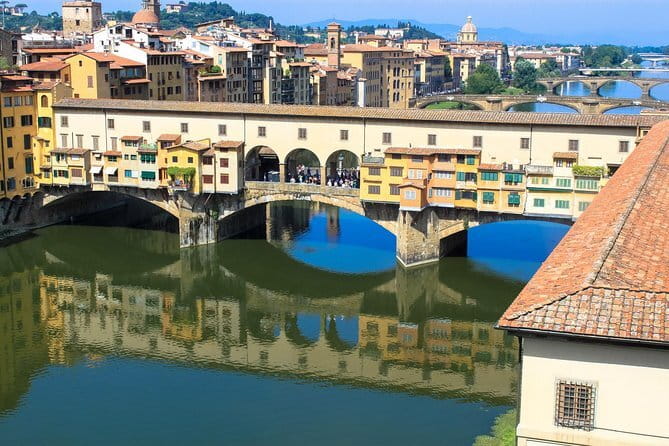
The experience begins at Piazza della Signoria, the grand public square beside the Uffizi. This is a practical meeting point because it places you directly in Florence’s historic center, close to the museum entrance and surrounded by major landmarks.
You will not receive hotel pickup or drop-off. Plan to reach the square on your own and allow enough time to find the exact meeting arrangement. The activity ends back at the meeting point, so you can continue exploring the square, walk toward the Arno, or stop for lunch nearby.
The choice of a morning or afternoon departure gives you useful flexibility. A morning visit can help you get through the museum before the day feels fully crowded. One particularly positive experience began on a Sunday just as the gallery opened, allowing two people and their guide to look at major works with less interference. That early timing cannot guarantee an empty museum, but it is a sensible choice if you want the calmest possible start.
An afternoon tour may fit better if you prefer a slower morning or have other plans first. The main point is to choose carefully. Three hours in an art museum is much easier when it fits your natural energy and schedule.
Entering the former Medici offices
The Uffizi began as offices for the Medici government, a useful reminder that this was not originally built as a modern museum. As you move through its decorated halls and rooms, the setting itself becomes part of the experience.
The building can feel grand, formal, and busy. Noise is a real concern. One person found the gallery crowded and loud and wished for earphones, while still appreciating the guide’s punctuality and warmth. A private guide usually helps by positioning your group and speaking directly to you, but no guide can remove the general sound of a heavily visited museum.
This is also why three hours should be treated as an approximate visit rather than a promise that every room will receive equal attention. The collection is large. A good guide will choose representative works and explain why they matter instead of trying to recite every label.
Giotto and the early stages of change
The tour includes Giotto’s Maestà, an important stop for understanding the shift from medieval conventions toward a more natural presentation of sacred figures. You might notice how the work still carries the formal religious character of its time, yet begins to suggest greater weight, presence, and human feeling.
This early section gives the later Renaissance paintings more meaning. Botticelli, Leonardo, and Michelangelo did not appear out of nowhere. Their work developed through a long sequence of experiments with composition, bodies, perspective, and expression.
If you are new to Renaissance art, this historical order is especially helpful. You do not need an art degree or a stack of guidebooks. Your guide’s job is to point out the changes in plain terms and connect one work to the next.
More Uffizi tours and tickets:
- Uffizi Gallery: Renaissance Masterpieces Guided Tour
★ 4.6 · 6,070 reviews - Uffizi Gallery Small Group Tour with Guide
★ 4.5 · 4,923 reviews - Uffizi & Accademia Timed Entry: Small Group Duomo Walking Tour
★ 4.5 · 3,630 reviews - Florence: Uffizi Gallery Timed Entry Ticket & Audio Guide
★ 4.2 · 2,794 reviews
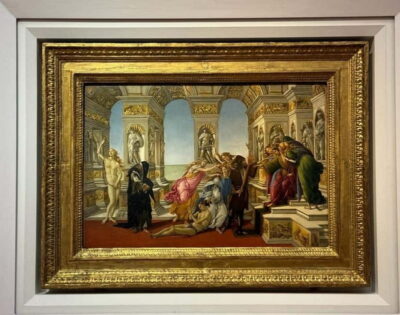
Botticelli’s Birth of Venus and Primavera

Botticelli is the star attraction for many first-time visitors, and the tour includes both The Birth of Venus and Primavera. These are not small, easily overlooked pictures. They demand attention, especially because their subjects draw from classical mythology rather than straightforward Christian storytelling.
The Birth of Venus presents the goddess arriving on the shore, while Primavera brings together a group of mythological figures in a scene full of symbolic detail. You can spend a long time trying to identify every figure and interpret every gesture, but a guide helps prevent the experience from becoming a hunt for obscure names.
I particularly like having both paintings discussed together. You can compare Botticelli’s elegant lines, graceful figures, and decorative treatment across two major works. You may also appreciate how different these mythological scenes feel from the religious paintings earlier in the museum.
These rooms can be among the busiest parts of the visit. If Botticelli is your priority, tell your guide at the beginning. The private format makes that request easier to accommodate, although crowd levels remain beyond the tour’s control.
Leonardo, Michelangelo, and Raphael
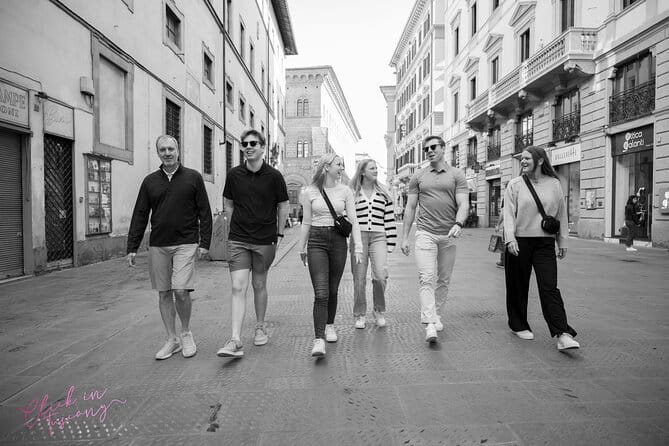
Leonardo’s Annunciation offers a chance to consider the young artist’s handling of landscape, figures, and subtle expression. The painting belongs to an earlier phase of his career, so it is interesting to see it within a wider sequence rather than treating Leonardo as a lone genius detached from his artistic surroundings.
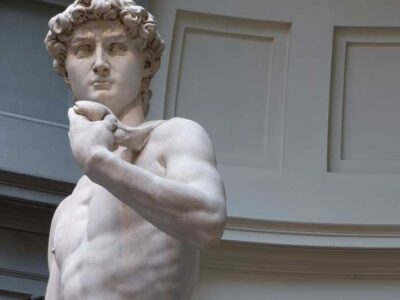
Michelangelo is represented by the Doni Tondo, a colorful and forceful painting that feels different from the soft elegance associated with Botticelli. Its strong forms and energetic composition give your guide plenty to explain about Michelangelo’s approach to the human body and sacred subjects.
Raphael’s works bring another kind of balance and refinement. The exact emphasis may depend on your guide and the works available during your visit, but Raphael is one of the major names included in the experience.
This section is where a private guide can earn the fee. You can ask why these artists are grouped together, how their styles differ, or what makes one painting more influential than another. The best guides do not just list dates and names. They help you see the decisions inside the picture.
Several guides have received strong praise for this part of the experience. Giacomo was described as passionate, entertaining, and able to make a long visit enjoyable. Viktoria Tröger was praised for bringing the stories behind the artworks to life and holding attention for the full three hours. Those names give you a sense of the guide quality possible, but guide assignment is not guaranteed.
Titian and Caravaggio bring a different mood
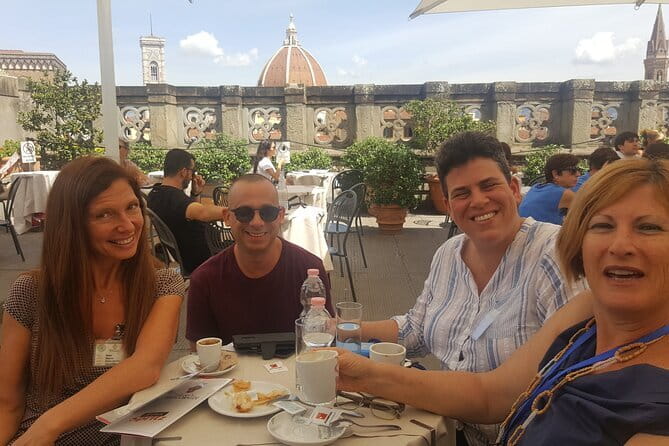
Titian’s Venus of Urbino shifts the focus toward Venetian color, sensuality, and the reclining female nude. It is a painting that can prompt questions about patronage, looking, and the role of the viewer. A guide can also help you place Titian’s approach beside the more linear style of Florentine artists.
Caravaggio’s Medusa brings a sharper, more theatrical mood. The subject is dramatic, and Caravaggio’s treatment of light and emotional impact feels far removed from the calm balance of earlier Renaissance works.
Seeing these paintings within one visit is one of the Uffizi’s great strengths. You are not looking at a single school or period. You are following changing ideas across centuries, regions, and artistic personalities.
The museum’s scale can also become tiring. Three hours is long enough to learn a great deal, but you may feel ready for a pause before the end. Wear comfortable shoes, keep your expectations realistic, and tell the guide if you need a brief adjustment in pace.
What the private format changes
A private tour means only your group participates. That offers three clear advantages.
First, you can ask questions as they come to you. Second, your guide can spend more time on Botticelli, Leonardo, or another favorite. Third, you are less likely to feel rushed simply because a large group is waiting for the next stop.
This format also gives you a better chance to connect the art to your own interests. A teenager who already likes Renaissance painting may want a different explanation from someone seeing an art museum for the first time. One family found the experience memorable for a 14-year-old, which suggests that the right guide can make the material accessible beyond the usual adult art audience.
The tradeoff is cost. A private guide is a luxury, and the price may not suit someone who only wants to see The Birth of Venus and leave. If you plan to spend only an hour inside, a private three-hour visit may feel excessive.
English is the offered language. Most of the feedback describes guides who explain art clearly and answer questions well, but one person found the guide’s English difficult to understand. If precise spoken explanation is central to your decision, keep that possibility in mind.
Timing, access, and practical details
Skip-the-line access is included, which can protect valuable sightseeing time. It does not mean the museum will be quiet or that you can ignore the meeting time. You still need to arrive at Piazza della Signoria and join the guide as instructed.
The experience lasts about three hours and includes admission. It does not include hotel transportation. The activity is near public transportation, and most people can participate. Service animals are allowed.
You receive confirmation at booking, and free cancellation is available if you cancel at least 24 hours before the scheduled start. Cancellations or changes made less than 24 hours before the start time are not accepted for a refund.
The tour is offered in English and is available as a morning or afternoon visit. Since the group is private, you should use the start-time choice to match your own energy and the rest of your Florence plans.
Who should book this Uffizi visit
I would choose this experience if you care about art but do not want to spend hours trying to decode the museum alone. It is also a good fit for families, couples, and small groups with different levels of interest, since a private guide can explain the works without assuming everyone already knows the background.
It is especially suitable if you want to see more than Botticelli. The visit connects Giotto, Botticelli, Leonardo, Michelangelo, Raphael, Titian, and Caravaggio in one clear route through Italian art.
I would hesitate if your main goal is the lowest possible price, if you dislike long museum visits, or if you prefer wandering independently. The Uffizi can be loud and crowded, and a private guide does not change that basic reality.
Should you book it?
Book this tour if you want the Uffizi to make sense, not merely to check off a few famous paintings. The strongest reason to choose it is the guide’s personal attention, especially when the guide asks what you most want to see and adjusts the visit accordingly.
The price is high, but the value improves for a small group sharing the private experience. Choose an early morning slot if quiet viewing matters to you, tell the guide your priorities at the start, and allow the full three hours. For serious first-time visitors to Florence, this is a focused and rewarding way to meet the city’s great art.
FAQ
How long does the private Uffizi tour last?
The visit lasts approximately three hours.
What language is the tour offered in?
The tour is offered in English.
Where does the tour begin?
It begins at Piazza della Signoria, near the Uffizi Gallery in Florence.
Where does the tour end?
The activity ends back at the meeting point in Piazza della Signoria.
Is admission to the Uffizi included?
Yes. Admission to the Uffizi Gallery is included.
Is skip-the-line access included?
Yes. Skip-the-line access is included with the private tour.
Is the tour private?
Yes. Only your group participates in the activity.
Does the tour include hotel pickup and drop-off?
No. Hotel pickup and drop-off are not included.
Can I cancel for a full refund?
Yes, if you cancel at least 24 hours before the experience start time. Cancellations or changes made less than 24 hours before the start time are not accepted for a refund.
Just added around Florence
- Skip the line: Uffizi small group and walking tour of Florence★ 4.5 · 17 reviews
- Florence Private Walking Tour Including Uffizi and Accademia★ 3.5 · 4 reviews
- Uffizi Gallery Italian guided Tour semi private★ 4.5 · 9 reviews
- Private Tour: Accademia Gallery and City Tour★ 5.0 · 10 reviews
- Private Tour: The Academy Gallery★ 5.0 · 6 reviews
- Uffizi Express Entrance -private tour★ 5.0 · 9 reviews
- Uffizi and Palazzo Vecchio Combo Private Tour★ 5.0 · 3 reviews
- VIP Priority Access: Uffizi Gallery- Guided Experience★ 4.5 · 94 reviews
Art Museum Tours in Florence, compared.
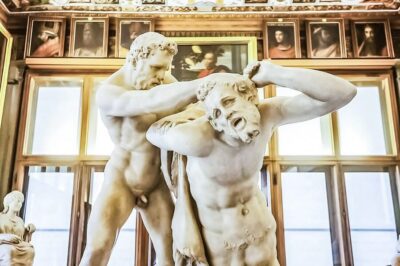
Skip-The-Line Uffizi Gallery Timed Entry Ticket
Read our review →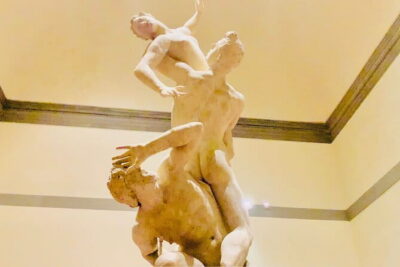
Florence Accademia Gallery Tour with Entrance Ticket Included
Read our review →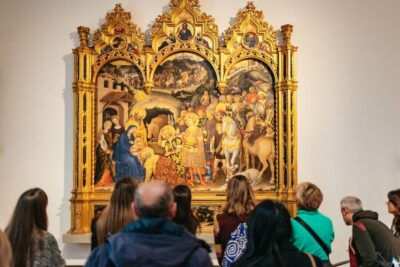
Uffizi Gallery: Renaissance Masterpieces Guided Tour
Read our review →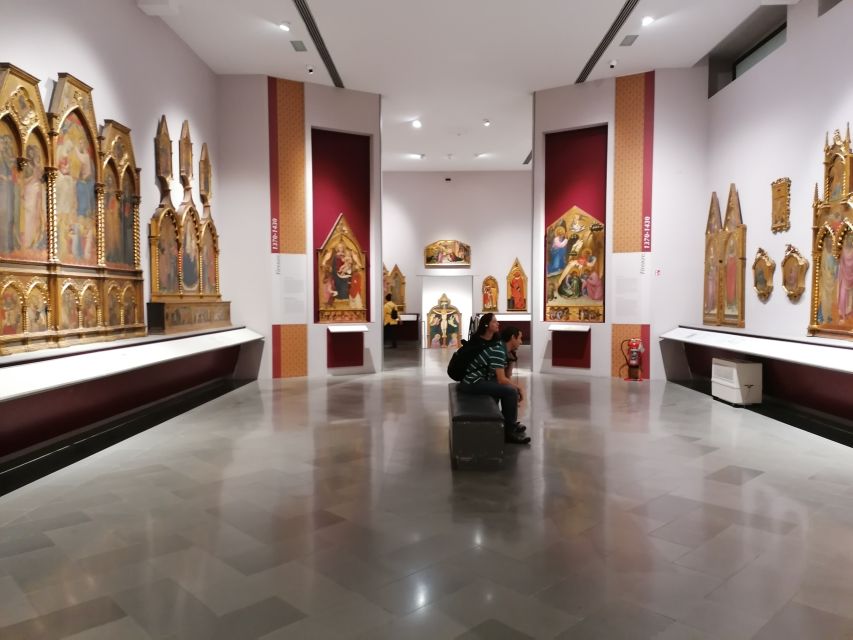
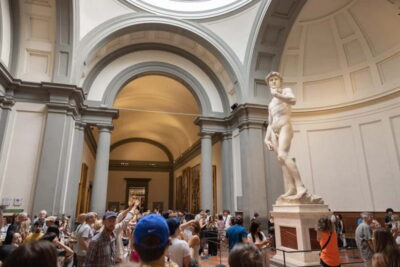
Uffizi Gallery Timed Entry Ticket & Audio Guide
Read our review →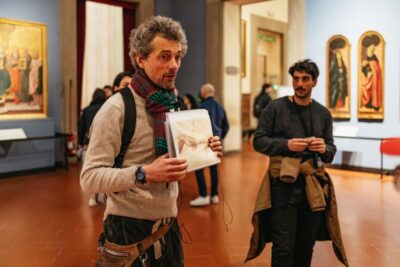
Accademia Gallery Guided Tour with Entry Ticket
Read our review →Browse the lists this tour appears in