
REVIEW · FLORENCE
Florence: Private guided tour to the Accademia Gallery
Michelangelo’s David is the prize here, and this one-hour visit gets you into the Accademia Gallery without committing half a day to a museum. Your guide puts the statue in context, explains its tense pose and original purpose, then points out Michelangelo’s unfinished Slaves and works by Botticelli, Ghirlandaio, and Giambologna.
I like the short, focused format, especially if you have only a few hours in Florence. I also like the fast-track admission, since the Accademia entrance can become a serious bottleneck. The main concern is timing: a few bookings have suffered delays, ticket problems, or headset trouble, so keep some breathing room after the tour.
Key points at a glance
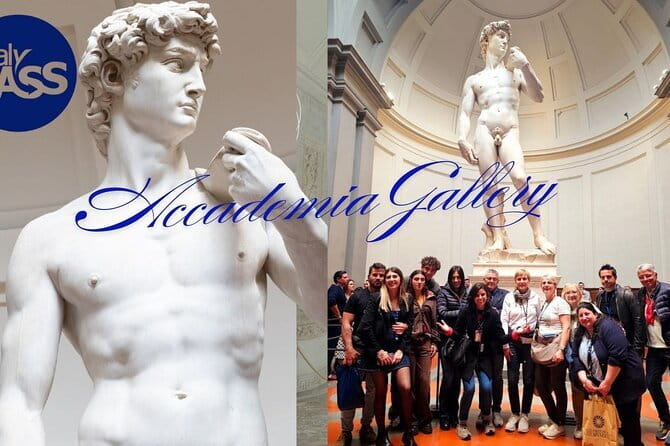
- David is the clear centerpiece: Learn why Michelangelo showed the young hero before battle, tense and watchful rather than triumphant.
- One hour keeps the visit manageable: You get the major rooms without spending an entire morning indoors.
- Fast-track tickets save real time: This matters most when regular admission slots are sold out or the queue stretches down the street.
- Guides add useful context: Amadeus, Alex, Martina, Olga, and other guides have led visits praised for clear art explanations and lively storytelling.
- Headsets help in crowded rooms: Radios are supplied, although some visits have had poor audio or delays.
- The private-tour label needs checking: The booking is described as private, but some groups have included 15 to 20 people.
Why this short tour works for Florence
The Accademia is not a huge museum, but it contains one of the world’s most famous sculptures. That combination makes a guided one-hour visit sensible. You can see the key works, hear why they matter, and still have most of the day for the Duomo, Uffizi, churches, markets, or a long Tuscan lunch.
I would not book this as a full museum study session. The tour is built around Michelangelo, with time for a few important side rooms. The best guides explain what you are looking at without turning the visit into a university lecture. One guide, Amadeus, has been especially good at mixing practical advice, humor, and art history. Alex has also been praised for making Renaissance subjects easy to follow.
The experience is offered in English, with several departure times. That flexibility is useful in Florence, where a museum visit often has to fit between a morning church booking and an afternoon train. The published duration is about one hour, so you can plan around it with reasonable accuracy, provided the group enters on schedule.
The meeting point is at Via de’ Pucci 37, near public transportation. You return to the same meeting point when the activity ends. There is no hotel pickup, hotel drop-off, food, or drink included.
More Art Museum Tours in Florence
- Florence: Skip-The-Line Uffizi Gallery Timed Entry Ticket
★ 4.5 · 27,832 reviews - Florence: Uffizi Priority Ticket & Masterpieces Audio App
★ 4.2 · 6,402 reviews - Florence Accademia Gallery Tour with Entrance Ticket Included
★ 4.5 · 6,148 reviews
Meeting David inside the Accademia
The visit begins with admission to the Galleria dell’Accademia. The fast-track ticket is the practical reason many people choose this arrangement. It does not always mean walking straight through the door. During the high season, you may wait 10 to 15 minutes, and the group may need to collect tickets or pass through the entrance process together.
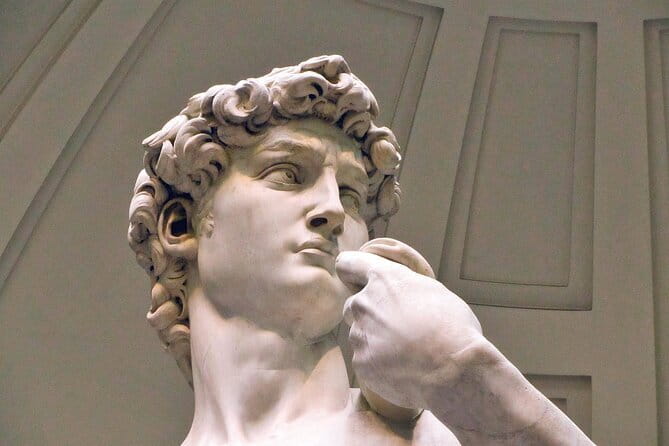
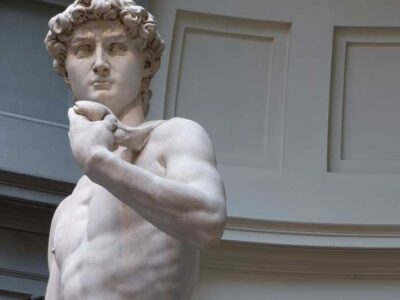
Once inside, the guide usually makes David the main stop. The sculpture is displayed in a tall gallery where you can see it from several angles. Your guide explains the work’s scale, the careful balance of the body, and the alert expression that gives the figure so much force.
The pose matters. David is not shown after defeating Goliath, with the enemy’s head at his feet. He appears before the fight, ready and focused. That choice gives the statue its feeling of controlled strength. It also helps explain why David became such a potent symbol for Florence.
You should have time to take photographs in front of the statue, though the exact amount depends on the group and the museum’s pace. If photography is important to you, stay close to the guide and listen for instructions rather than drifting to the edge of the room.
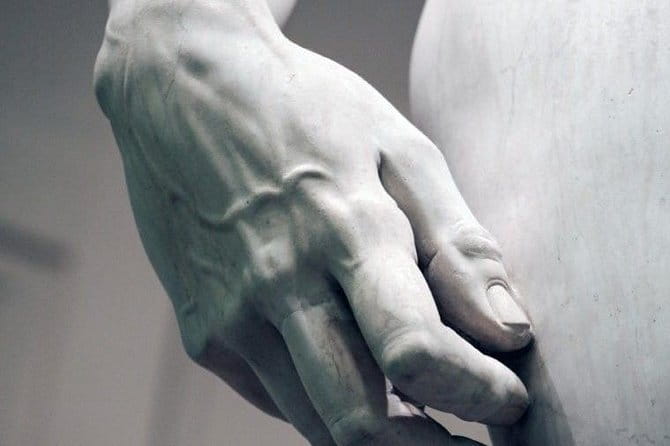
A guide can also help you notice details that are easy to miss when you are staring at the whole figure. The large hands and feet reinforce David’s youth and power, while the slight turn of the body creates tension. You do not need an hour-long lecture to appreciate the sculpture, but a few well-placed explanations can change the way you see it.
Michelangelo’s unfinished Slaves
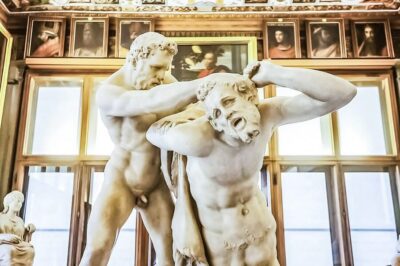
After David, the guide introduces Michelangelo’s Slaves, a series of unfinished sculptures intended for the tomb of Pope Julius II. Their incomplete surfaces are part of their appeal. You can see figures appearing to push out of the marble, with some areas more developed than others.
This is a useful contrast with David. David looks complete and controlled. The Slaves leave you looking at the act of carving itself. Your guide may explain the difficult history behind their creation and the original plan for Julius II’s tomb.
The unfinished figures also show how much of Michelangelo’s work depended on the stone. The partially revealed bodies make the marble feel active rather than blank. For many people, this is the best supporting section of the tour because it gives you another way to think about Michelangelo’s skill.
The museum’s arrangement lets you compare the polished finish of David with the rougher, more mysterious surfaces of the Slaves. That comparison is worth your attention, even if David is the reason you bought the ticket.
Botticelli, Ghirlandaio, and Giambologna
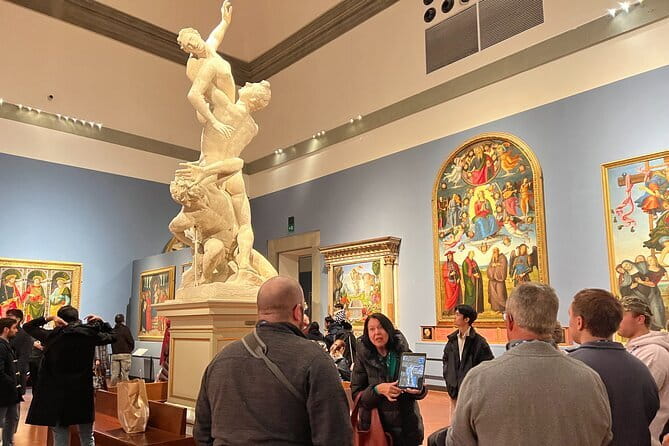
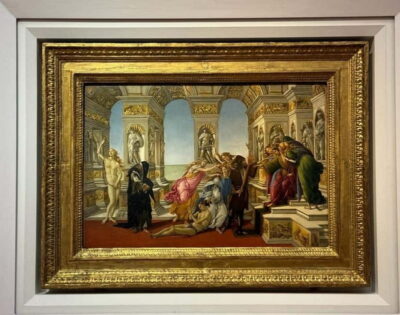
The Accademia is not only a Michelangelo museum. Your route can include paintings by Botticelli and Ghirlandaio, along with sculpture by Giambologna. The amount of time spent on these works depends on the guide and the group, but a good tour will give you more than a quick walk to David.
Botticelli brings a different mood and visual language from Michelangelo. Ghirlandaio helps place the museum’s art within the wider Florentine tradition of painting. Giambologna adds another example of the city’s long interest in movement, anatomy, and sculptural balance.
One of the strongest aspects of this tour is the guide’s ability to connect these works rather than treat them as isolated objects. Martina, for example, has led visits that included the museum’s musical instruments as well as the better-known paintings and sculptures.
The museum of musical instruments is not always the reason people come to the Accademia, but it can be a pleasant extra. If it is open during your visit, your guide may explain the objects and their place in the collection. It gives the museum a broader feel and prevents the visit from becoming simply a march toward David.
More ways to see the David:
- Florence: Accademia Gallery Guided Tour
★ 4.6 · 4,156 reviews - Uffizi & Accademia Timed Entry: Small Group Duomo Walking Tour
★ 4.5 · 3,630 reviews - Florence: Accademia Gallery Skip-the-Line Guided Tour
★ 4.8 · 3,044 reviews - Florence: Art Tour, Accademia Gallery and David
★ 4.5 · 2,407 reviews
Fast-track entry and the value of time

At $240.29 per person, this is expensive for a one-hour museum visit. The price needs to be judged against what you are buying: an English-speaking licensed guide, admission, fast-track access, and a planned route through one of Florence’s busiest museums.
If standard tickets are sold out, this may be practical rather than luxurious. One booking saved an estimated four to five hours compared with waiting in ordinary lines. That kind of time matters if you are in Florence for a short stay, traveling with children, or trying to fit several major sights into one day.
The value is weaker if you can secure a regular Accademia ticket at a convenient time and are happy to explore alone. In that case, you are paying mainly for the guide and the convenience of an organized entry. The tour makes the most financial sense when direct museum tickets are unavailable or when you want someone to explain the art.
The fast-track promise also needs a realistic reading. It does not guarantee instant entry during the busiest periods. A 10 to 15 minute wait can occur, and ticket collection may add more time. That is still much better than a long public line, but you should not schedule a train departure immediately after the visit.
The guide and headset experience
The guide can make or break a short museum visit. When the guide is clear and engaged, one hour is enough to give David a real setting. When the guide is rushed, hard to hear, or poor at managing the group, the visit feels like an expensive admission escort.
The supplied radio and headset system is meant to solve the noise problem. In theory, you can hear the guide while standing several feet away in a crowded gallery. In practice, the equipment has not always worked well. Some visitors have found the microphone difficult to understand, while others have had no trouble following guides such as Olga.
Before entering the museum, check that your headset is receiving sound. If it is faint or broken, speak up early. Once the group is moving, it may be harder to fix the problem. Stay near the guide when possible, even with the radio, because visual cues and pointing are important in a museum.
Group size may vary. The booking is described as a private activity for your group alone, but some visitors have been placed in groups of roughly 15 to 20 people. Another booking had only six people. That is a major difference in feel. A small group allows more questions and easier movement. A larger group can still work, but you may spend more time watching the guide’s position than looking at the art.
Timing problems to plan around
Most visits run well, but the schedule has had weak spots. One poorly managed morning began 20 minutes late, then lost more time while the group waited for tickets and tried to enter after missing its original time window. The group eventually waited close to an hour and did not receive the promised one-hour visit.
That kind of problem is particularly serious because the tour itself is so short. A 20 minute delay removes a third of the planned museum time. If you have a hard stop, tell the guide or meeting staff at the start, but do not assume a delayed entry can be made up.
I would schedule this early in a day with no immediate commitment afterward. Avoid putting it just before a timed train, lunch reservation, or another ticketed attraction. Florence rewards loose planning, and this is one place where an extra cushion is wise.
The meeting instructions ask you to arrive 20 minutes before departure. Take that seriously. The office or meeting staff must organize tickets and the group before walking to the museum. Arriving at the last minute can put you behind even if the museum itself is operating normally.
Who will get the most from this visit
I would recommend this tour to you if David is high on your Florence list and you want an informed introduction without spending half a day in a museum. It is also useful if Accademia tickets are sold out, if you dislike queueing, or if you are visiting during a busy season.
Families can benefit from the short length. A one-hour route is easier for children than a long museum wander, and the guide can turn David’s story into a simple human drama about courage, risk, and preparation. The supplied headsets also help children hear the guide in a crowded room, assuming the equipment works properly.
First-time visitors who know little about Renaissance art will get the most from the explanations. You do not need to recognize every painter before arriving. The guide supplies the basic context, then points you toward the details that make each work worth your attention.
I would choose a different plan if you want quiet, extended time with the collection or if you prefer to read labels at your own pace. The guide controls the route, and the one-hour format leaves limited time for lingering. You might also skip it if the price feels too high compared with a direct museum ticket.
Practical details before you book
The tour is conducted in English and lasts about one hour. It begins and ends at Via de’ Pucci 37 in Florence. Confirmation is provided at booking, and the meeting point is near public transportation.
The experience is open to most people, though the information supplied does not give a detailed mobility assessment. The museum, entrance process, and group movement may require standing and walking. If you have specific access needs, confirm them before paying.
Free cancellation is available if you cancel at least 24 hours before the scheduled start time. Changes or cancellations made less than 24 hours before the start are not refunded. Cutoff times follow local Florence time.
The tour is often booked well ahead, with an average booking lead time of 43 days. That figure tells you something useful: popular morning and high-season spaces can disappear early. If David is essential to your Florence plans, do not leave this until the final day.
Should you book the Accademia tour?
Book it if you want a fast, guided introduction to David and cannot find convenient museum tickets on your own. The strongest reasons are the saved queue time, the focused route, and the chance to hear useful explanations from guides such as Amadeus, Alex, Martina, or Olga.
Think carefully before paying $240.29 per person if you only want entry and a quick photograph. The cost is high for one hour, and occasional delays or headset problems can reduce the value. Arrive early, allow extra time afterward, and confirm the expected group setup if the private format matters to you.
For most short-stay visitors, this is a practical way to see Florence’s most famous sculpture without losing an entire morning in line. Just treat the schedule as a guide rather than a guarantee, and keep your expectations focused: David, a handful of major works, and a compact dose of Renaissance art.
FAQ
How long does the Accademia Gallery tour last?
The guided visit lasts approximately one hour.
What language is the tour offered in?
The tour is offered in English.
Is admission to the Accademia Gallery included?
Yes. Fast-track admission tickets are included.
Is a guide included?
Yes. A licensed guide leads the visit.
Are headsets provided?
Yes. Radios and headsets are provided so you can hear the guide inside the museum.
Where does the tour begin?
The meeting point is Via de’ Pucci 37, 50122 Florence, Italy.
Where does the tour end?
The activity ends back at the meeting point.
Is hotel pickup included?
No. Hotel pickup and drop-off are not included.
Can I cancel for a full refund?
Yes, if you cancel at least 24 hours before the experience start time. Cancellations made less than 24 hours in advance are not refunded.
Can I expect immediate entry during high season?
Not always. A wait of approximately 10 to 15 minutes can occur during high season, even with fast-track tickets.
Just added around Florence
- Skip the line: Uffizi small group and walking tour of Florence★ 4.5 · 17 reviews
- Florence Private Walking Tour Including Uffizi and Accademia★ 3.5 · 4 reviews
- Uffizi Gallery Italian guided Tour semi private★ 4.5 · 9 reviews
- Private Tour: Accademia Gallery and City Tour★ 5.0 · 10 reviews
- Private Tour: The Academy Gallery★ 5.0 · 6 reviews
- Uffizi Express Entrance -private tour★ 5.0 · 9 reviews
- Uffizi and Palazzo Vecchio Combo Private Tour★ 5.0 · 3 reviews
- VIP Priority Access: Uffizi Gallery- Guided Experience★ 4.5 · 94 reviews
Art Museum Tours in Florence, compared.
Skip-The-Line Uffizi Gallery Timed Entry Ticket
Read our review →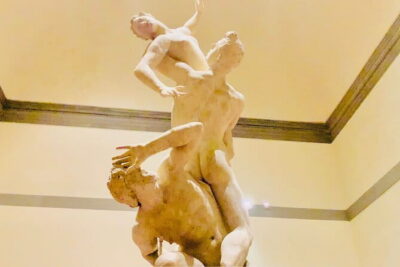
Florence Accademia Gallery Tour with Entrance Ticket Included
Read our review →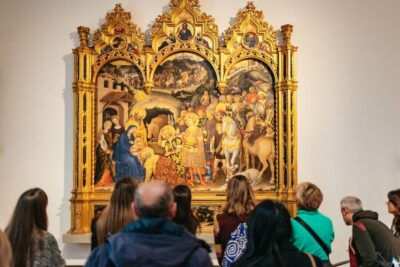
Uffizi Gallery: Renaissance Masterpieces Guided Tour
Read our review →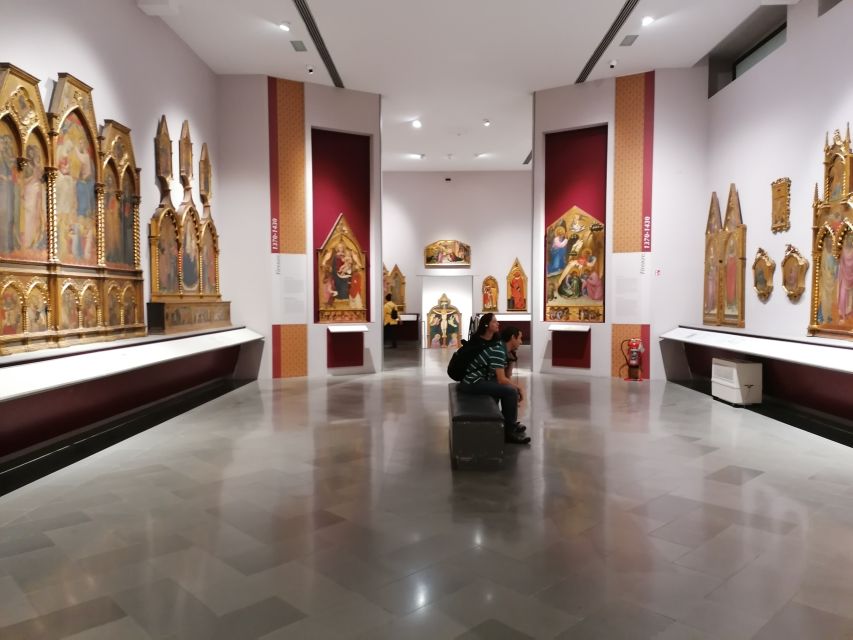
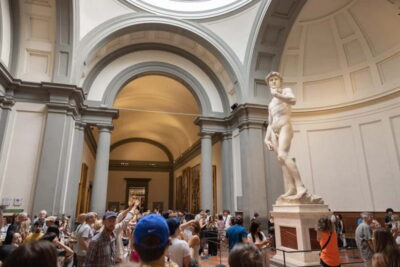
Uffizi Gallery Timed Entry Ticket & Audio Guide
Read our review →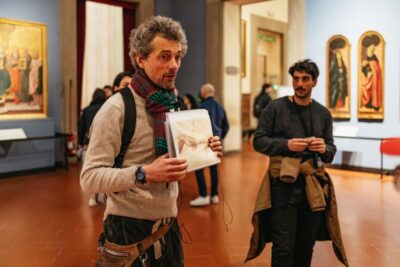
Accademia Gallery Guided Tour with Entry Ticket
Read our review →Browse the lists this tour appears in