
REVIEW · FLORENCE
Florence: Accademia Gallery Guided Tour with Entry Ticket
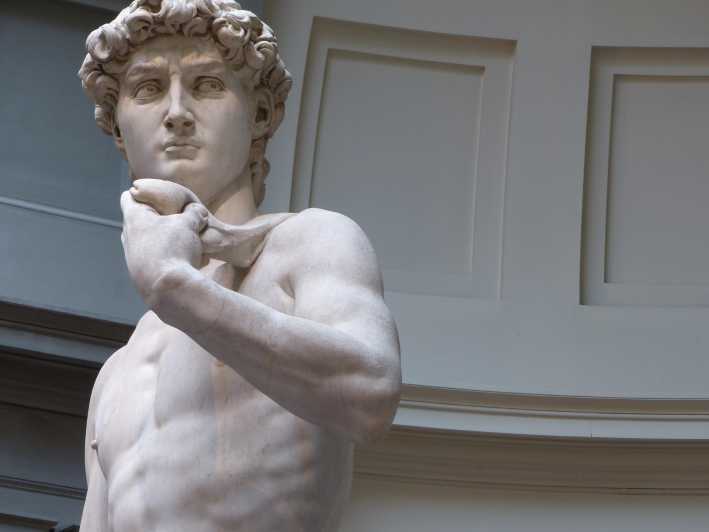
Michelangelo’s David is the reason most people come to Florence’s Accademia Gallery, and this 75-minute tour puts the statue at the center of your visit. A good guide adds far more than dates and names, showing you how to look at David from different angles and explaining details you could easily miss.
I like the reserved entry because the regular queue can stretch for two or three hours. I also like the headsets, which let you hear the guide in a crowded room. The main drawback is that the tour is short and focused, so the rest of the museum gets less attention than David.
Key points to know before booking
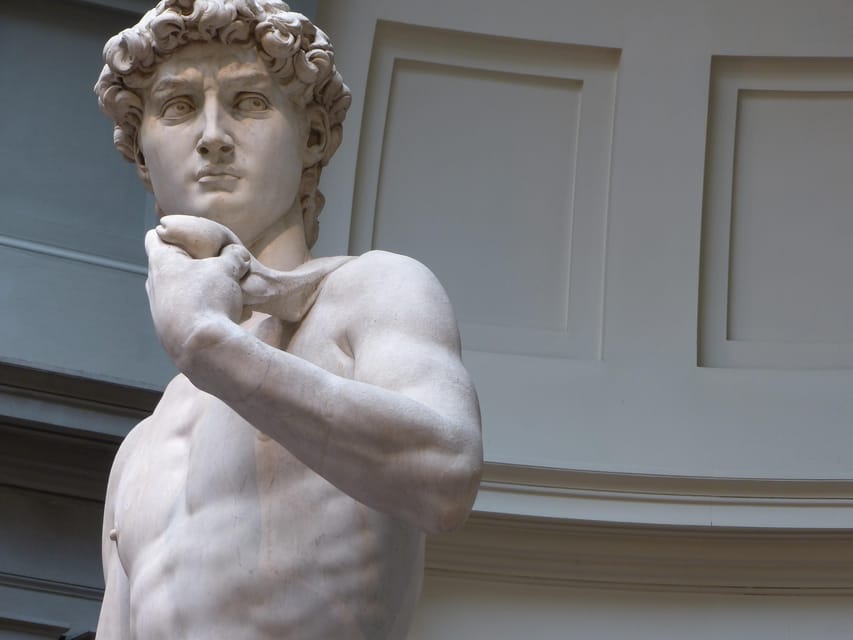
- David gets the star treatment: Expect most of the tour to focus on Michelangelo’s famous marble statue and the stories behind it.
- Reserved entry saves serious time: You avoid the general admission line, though you still need to arrive 15 minutes early and follow the group’s entry process.
- Guides shape the experience: Martina, Stefano, Alfonso, Vicky, Pam, and others have been praised for clear explanations, humor, and enthusiasm.
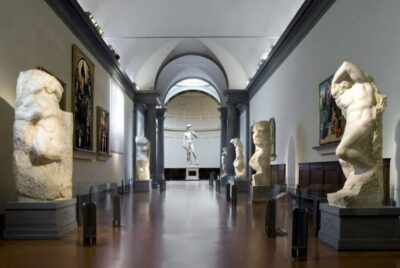
- The unfinished sculptures matter: Michelangelo’s rough, partly formed figures help you understand his working method and make a strong counterpoint to David.
- You may stay after the tour: Once the guided portion ends, you can continue looking around on your own.
- Pack light: Food, drinks, pets, large bags, and flash photography are not allowed.
Meeting near Via Ricasoli 41

Your starting point is Via Ricasoli 41, at the black street number, near the Accademia. Look for the THINGS TO DO IN assistant standing outside. This is not an office, so do not ring the bell. Stay in front of the door and wait for the assistant to identify you.
Arrive 15 minutes before your scheduled time. That early arrival matters in Florence, where the pavement outside major museums can become a knot of tour groups, ticket holders, and people trying to work out where they belong.
The meeting point is practical because the Accademia is at the end of the tour. Still, give yourself time to find the correct number. The instructions refer to the black number, which is useful in Florence because street numbering can be less obvious than you expect.
The staff will help organize the group, distribute the radios and headsets, and handle the reserved entry process. One family described a hectic moment when a child’s age-related ticket had to be handled separately. Bring valid identification for children aged 6 to 17, and keep the family together during this part.
More Art Museum Tours in Florence
- Florence: Skip-The-Line Uffizi Gallery Timed Entry Ticket
★ 4.5 · 27,832 reviews - Florence: Uffizi Priority Ticket & Masterpieces Audio App
★ 4.2 · 6,402 reviews - Florence Accademia Gallery Tour with Entrance Ticket Included
★ 4.5 · 6,148 reviews
Entering the Accademia without the long public queue
The chief practical value here is the reserved admission. The general entry line can take two to three hours, especially during the high season and Florence’s busy Jubilee period. Cutting out that wait gives you more time for the rest of the city, and it prevents a museum visit from swallowing half your day.
Reserved entry does not mean you should arrive late. You still need to meet the group, receive your equipment, and enter with the guide. There can also be crowding around the doorway, so think of this as a faster organized entry rather than a private doorway with no waiting at all.
At $49 per person, the price makes the most sense if you value time and want help making sense of the art. An ordinary ticket may cost less, but it does not provide the same guidance or the same protection from the long general queue. If you are happy to study the museum alone and can secure a suitable ticket, you may prefer the cheaper route.
For many people, though, the time saved is worth the difference. In Florence, an extra two hours can mean seeing another church, sitting down for lunch, or simply avoiding a long wait in the sun.
Michelangelo’s David, seen from several angles
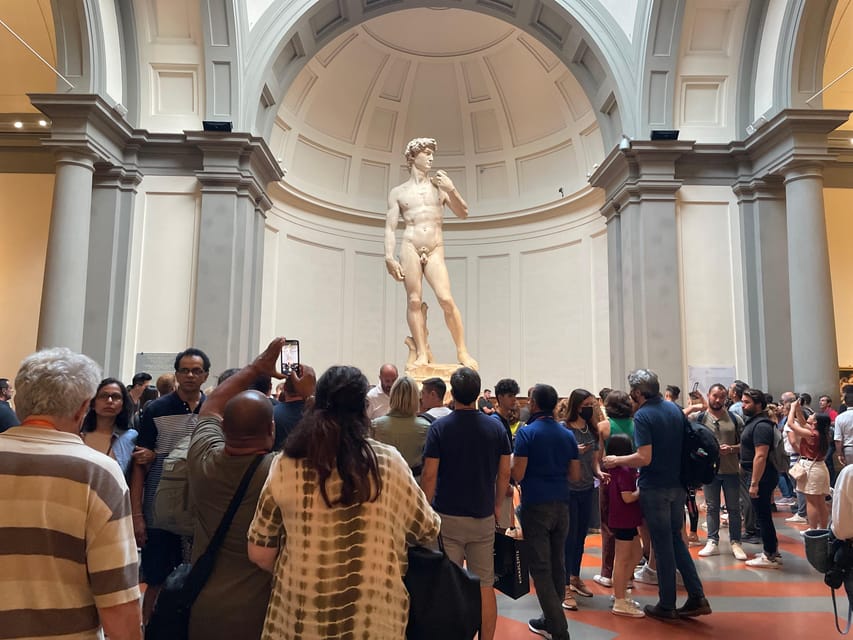
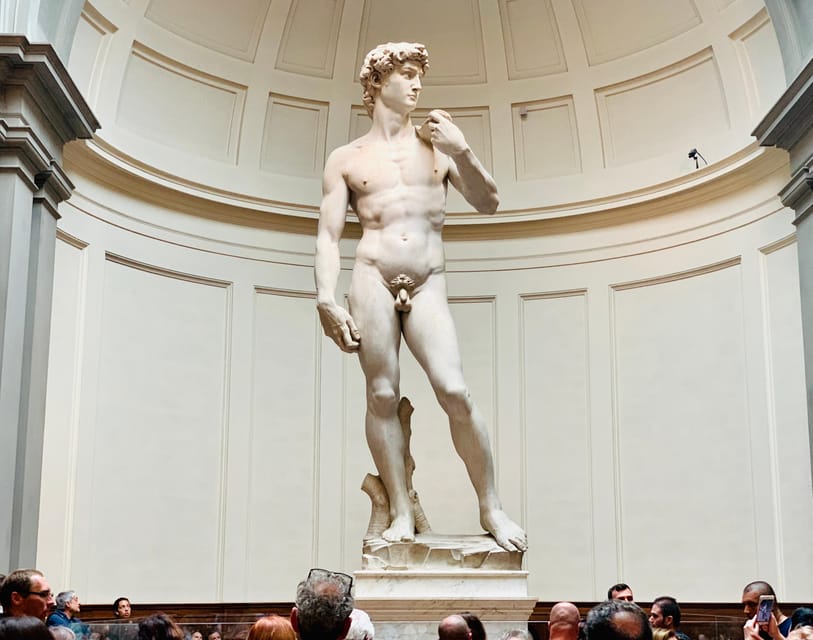
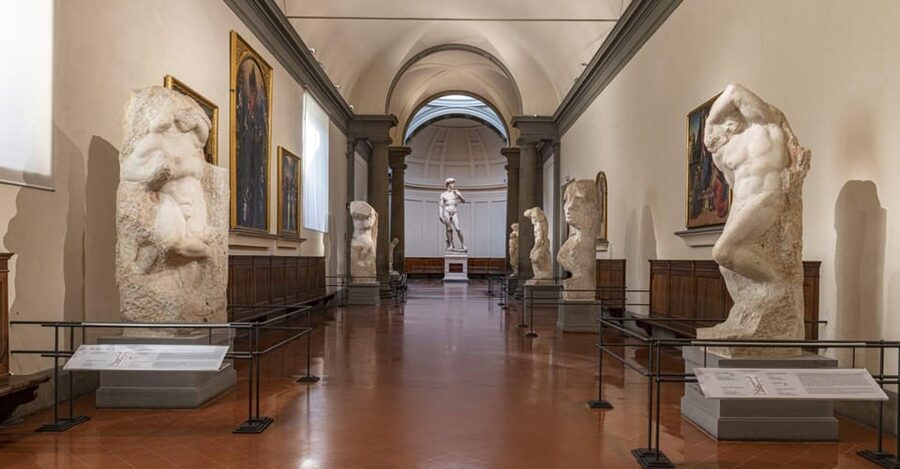
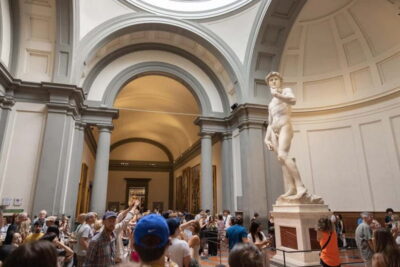
David is displayed in a high central gallery, and the first sight is powerful even if you have seen countless photographs. The statue is far larger than many first-time visitors expect, and the space gives you room to walk around it and view the figure from different sides.
The guide’s job here is not simply to point and say there is David. The strongest part of the visit is learning how the statue was made, what Michelangelo was trying to express, and why the work became such a powerful symbol for Florence.
Stefano, one of the guides praised for this tour, made a point of showing the statue from several angles while finding good viewing positions in a crowded room. That small service matters. In a busy museum, you can easily end up behind a taller person or squeezed into one position, seeing only one side of the sculpture.
You will hear discussion of Michelangelo’s technique, the figure’s proportions, and the details that make David feel alert rather than static. The tour also connects the sculpture to the period in which it was made, giving you a clearer sense of why this particular image mattered so much to Florence.
Guide style varies. Martina has been singled out for combining humor with a strong command of Michelangelo and Renaissance art. Alfonso is described as clear, thoughtful, and careful with questions. Other guides, including Vicky, Pam, Anna, Olga, and Chiara, have also been praised for bringing energy and detail to the visit.
That variety is worth keeping in mind. You cannot normally choose a particular guide when booking, and different guides will have different personalities and accents. One person found a guide slightly difficult to understand, while another felt a guide’s opening manner was too forceful. These were exceptions in an otherwise very strong set of responses, but a headset cannot solve every language or presentation issue.
The unfinished sculptures and Michelangelo’s working method
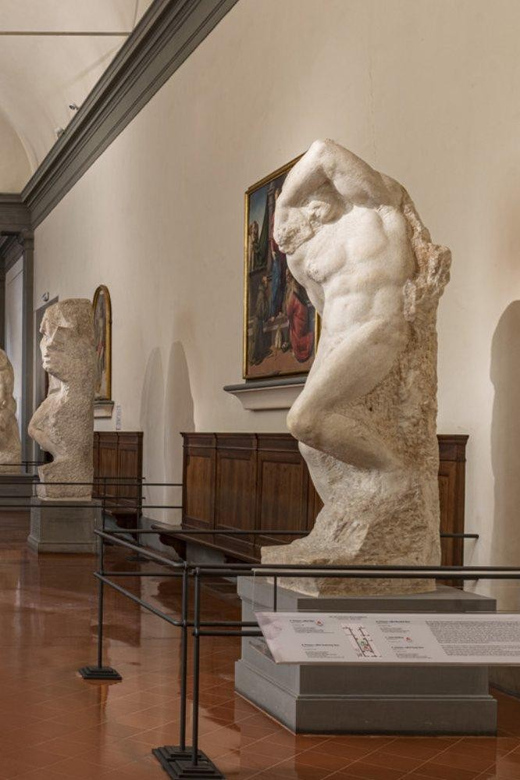
After David, the guide turns attention to other Michelangelo works, including the unfinished sculptures. These rough marble figures are especially useful because they show the stone at different stages of work.
You can see how much remains block-like and how the human form seems to emerge from the marble. The effect changes your view of Michelangelo. Instead of treating him as a distant genius who produced perfect statues by magic, you begin to see the labor, decisions, and physical process behind the finished result.
This section is a highlight for anyone interested in sculpture. It also gives the tour a needed second act after David. Still, the museum’s main attraction remains clear. One visitor felt that David was the only truly magnificent work on display and found the rest repetitive. That is a fair warning if you are expecting a museum packed with one famous masterpiece after another.
The Accademia is not the Uffizi. It does not offer the same long parade of household-name paintings. Its appeal is more concentrated: David, Michelangelo’s unfinished figures, a selection of Florentine art, and other collections that are easy to overlook if you rush.
More ways to see the David:
- Florence: Accademia Gallery Guided Tour
★ 4.6 · 4,156 reviews - Uffizi & Accademia Timed Entry: Small Group Duomo Walking Tour
★ 4.5 · 3,630 reviews - Florence: Accademia Gallery Skip-the-Line Guided Tour
★ 4.8 · 3,044 reviews - Florence: Art Tour, Accademia Gallery and David
★ 4.5 · 2,407 reviews
What else you can see inside
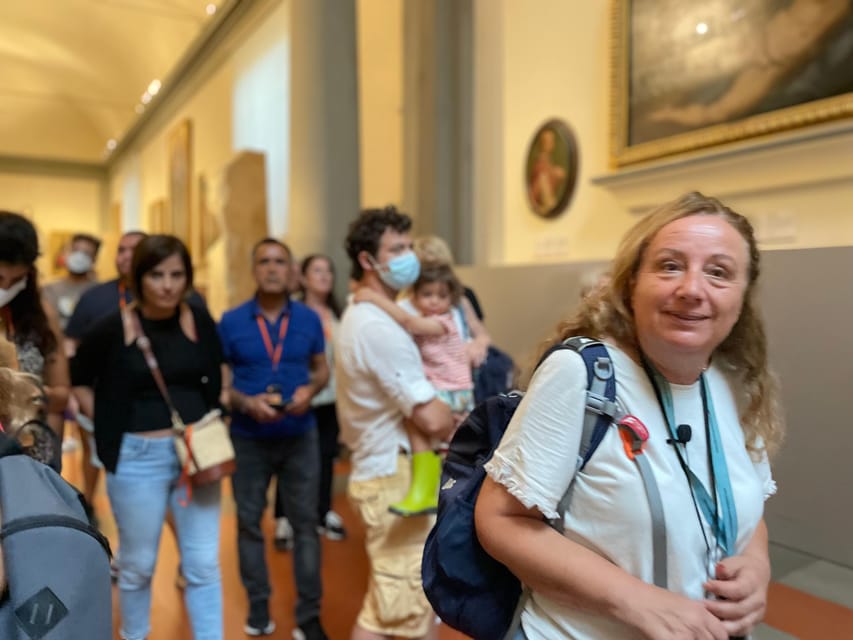
The guided route covers the main highlights, but the Accademia contains more than the David gallery. Depending on the guide’s route and the day’s conditions, you may hear about other sculptures, paintings, and works connected with Florence’s artistic tradition.
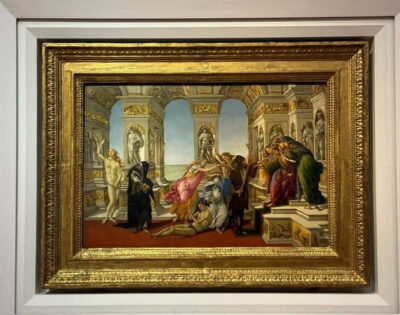
Some guides bring in references to other major artists and the culture of the period. One guide was praised for explaining Michelangelo alongside Botticelli, while another made connections to ancient Greece. The exact balance depends on the person leading your group and the time available.
There is also a musical instruments section that several people found worth seeing. It may not form part of the main guided route, so ask your guide about it before the tour ends if you want to include it. This is a good example of why the visit should not end the moment the formal commentary stops.
Once the 70-minute guided portion is over, you can remain in the gallery and look around independently. The advertised experience lasts 75 minutes, while some visitors described a tour lasting about 90 minutes. Allow some flexibility rather than planning a second appointment immediately afterward.
Radios, group comfort, and crowded rooms
The provided radios and headsets are a real advantage. Accademia’s central galleries can be noisy, and a guide speaking to a group without equipment quickly becomes hard to follow. With the headset, you can stand a little apart, look at the sculpture, and still hear the explanation.
The system is not perfect. One family reported hearing only parts of the commentary during a confusing entry moment. Another person found the guide difficult to understand. Check that your headset is working before the group gets moving, and tell the guide or assistant quickly if the sound cuts out.
There is no group size stated in the activity information, so you should not expect a private experience unless you book the private group option. On busy days, the guide may need to gather everyone tightly and repeat instructions. One useful improvement would be a visible flag or sign to help the group find the guide in a crowded street or gallery.
The tour is listed as wheelchair accessible. That is helpful, but you should still confirm the practical details for your own needs when booking, since the museum entry process and crowd levels can affect movement.
Languages, children, and who will enjoy it
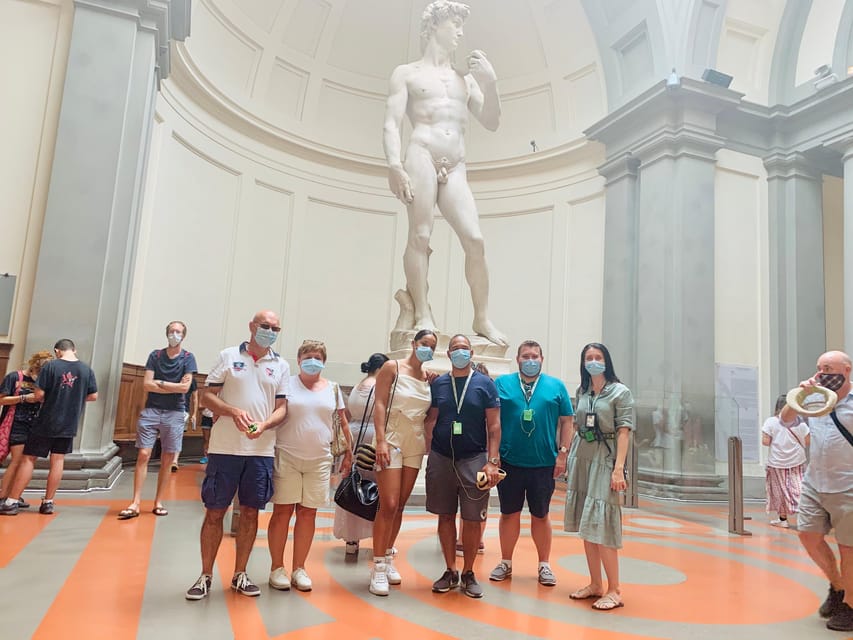
Guided commentary is offered in German, English, Portuguese, Spanish, French, Italian, and Russian. Choose the language that lets you follow art vocabulary without effort. The more you understand, the more useful the short tour becomes.
Children aged 6 to 17 need valid identification to prove their age. The tour can work well for older children because David gives the visit a clear focus, and several guides have been praised for humor and for keeping families involved. Younger children may find the art discussion long, especially if the group spends a great deal of time on technique and historical context.
I would recommend this experience to:
- First-time visitors who want to see David without risking a very long queue.
- People who prefer stories and explanation to reading labels alone.
- Families who want a short, organized museum visit.
- Travelers with limited time in Florence.
- Art lovers who want to understand Michelangelo’s choices, not just take a photograph.
I would think twice if you want hours of quiet, independent viewing. You will be moving with a group for most of the visit, and the guide decides the pace. Likewise, if David is not a major priority, the $49 price may feel high for a museum that some people find focused and relatively small.
What to bring and what to leave behind
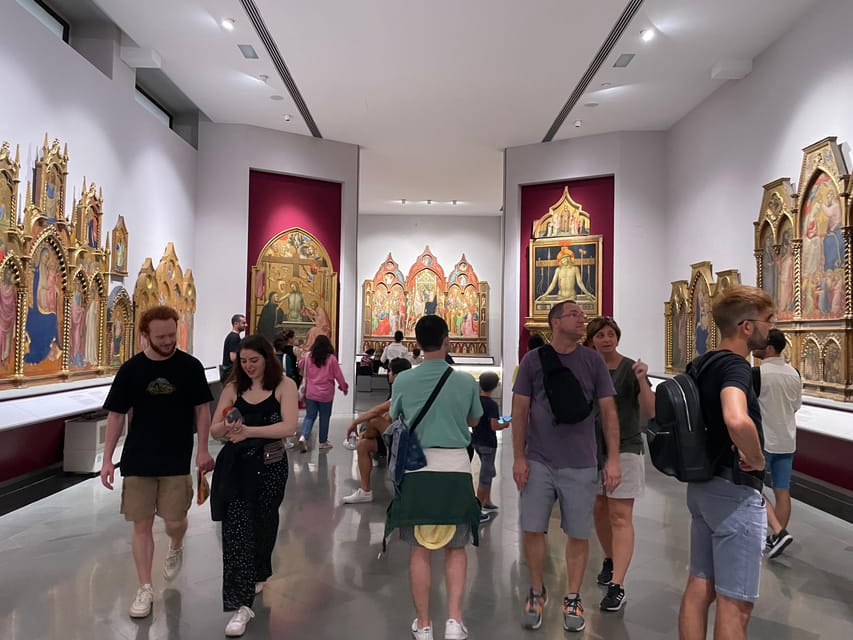
Keep your belongings light. Large bags and luggage are not allowed, and food and drinks cannot come inside. Pets are also not permitted. Flash photography is forbidden, so use your phone or camera without flash if photography is allowed in the room.
Bring identification for children in the 6 to 17 age range. Wear something comfortable for standing and walking, since the tour does not include pickup and begins at the meeting point on Via Ricasoli.
The gallery can be crowded around David, so patience helps. You may need to wait briefly for a clear view, even after bypassing the outside ticket queue. The reserved entry solves the biggest time problem, but it does not remove the normal museum crowd.
Cancellation and booking flexibility
You can cancel up to 24 hours before the activity for a full refund. The reserve-now-and-pay-later option also gives you some breathing room when your Florence schedule is still changing.
Private groups are available if you want a more personal format. The standard tour is the better value for many people, especially solo visitors and couples, while a private booking may suit families or friends who want more control over the pace and questions.
Should you book this Accademia tour?
Book it if you want David plus useful explanation, and especially if your Florence visit falls during a crowded period. The combination of reserved entry, a live guide, and headsets makes the experience efficient without turning it into a rushed photo stop.
Do not book it expecting a full-day art course or a museum filled with famous works at every turn. The tour is built around Michelangelo, and David is clearly the centerpiece. That focus is its strength for most first-time visitors, but it can feel narrow if you want the breadth of the Uffizi.
At $49, I see the best value in the saved time and the guide’s interpretation. Martina, Stefano, Alfonso, Vicky, Pam, and the other guides praised for humor and clear teaching show how much personality can add to a short museum visit. If you have only one chance to see David, this is a sensible, low-stress way to do it.
FAQ
How long does the Accademia Gallery tour last?
The activity lasts 75 minutes. The guided portion is listed as about 70 minutes, and you may be able to stay inside and continue exploring afterward.
Where does the tour meet?
Meet the THINGS TO DO IN assistant at Via Ricasoli 41, black number, 50122 Florence. It is not an office, so do not ring the bell. Wait in front of the door.
How early should I arrive?
Arrive 15 minutes before the scheduled start time.
Does the tour include entry to the Accademia Gallery?
Yes. The price includes a reserved Accademia Gallery entry ticket.
Does the tour skip the public ticket line?
Yes. Reserved entry lets you bypass the general admission line, which can take two to three hours. You still need to meet the assistant and enter with the group.
Is Michelangelo’s David included?
Yes. The guided visit includes Michelangelo’s David and focuses heavily on the statue.
Can I stay in the museum after the guided tour?
Yes. After the guided portion, you can continue exploring the gallery independently.
Are headsets provided?
Yes. Radios and headsets are included so you can hear the guide in crowded areas.
Which languages are available?
The live tour guide may speak German, English, Portuguese, Spanish, French, Italian, or Russian.
Can children join the tour?
Yes. Children aged 6 to 17 must bring valid identification to prove their age.
Is the tour wheelchair accessible?
Yes, the activity is listed as wheelchair accessible.
What is not allowed inside?
Pets, food, drinks, luggage, and large bags are not allowed. Flash photography is also prohibited.
Just added around Florence
- Skip the line: Uffizi small group and walking tour of Florence★ 4.5 · 17 reviews
- Florence Private Walking Tour Including Uffizi and Accademia★ 3.5 · 4 reviews
- Uffizi Gallery Italian guided Tour semi private★ 4.5 · 9 reviews
- Private Tour: Accademia Gallery and City Tour★ 5.0 · 10 reviews
- Private Tour: The Academy Gallery★ 5.0 · 6 reviews
- Uffizi Express Entrance -private tour★ 5.0 · 9 reviews
- Uffizi and Palazzo Vecchio Combo Private Tour★ 5.0 · 3 reviews
- VIP Priority Access: Uffizi Gallery- Guided Experience★ 4.5 · 94 reviews
Art Museum Tours in Florence, compared.
Skip-The-Line Uffizi Gallery Timed Entry Ticket
Read our review →
Florence Accademia Gallery Tour with Entrance Ticket Included
Read our review →
Uffizi Gallery: Renaissance Masterpieces Guided Tour
Read our review →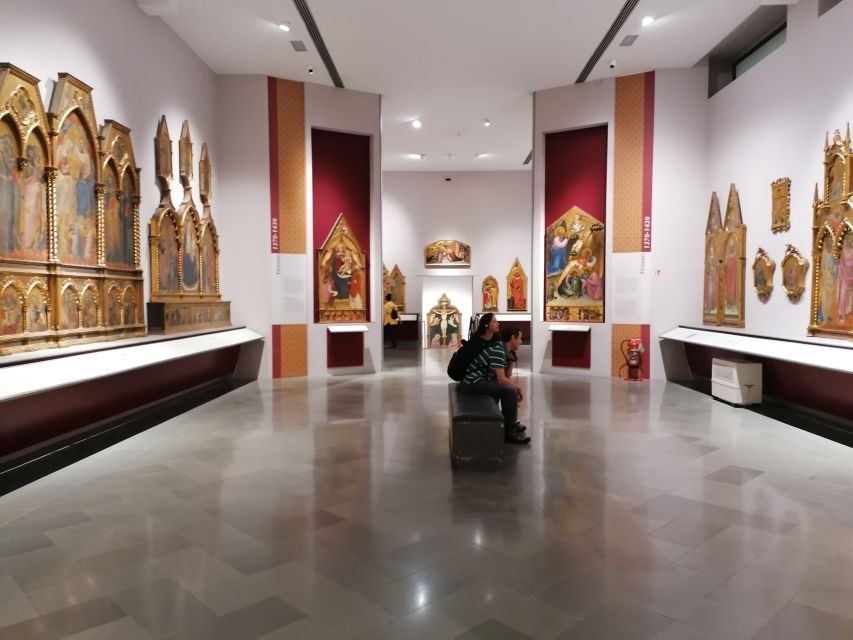
Uffizi Gallery Timed Entry Ticket & Audio Guide
Read our review →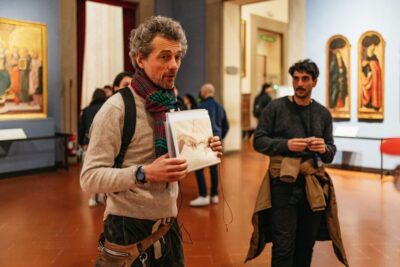
Uffizi Gallery and Accademia Gallery Guided Tour
Read our review →Browse the lists this tour appears in