
REVIEW · ROME
Borghese Gallery Small group tour and skip.the-line entrance
The Borghese Gallery gives you an unusually close look at some of Italy’s greatest art in a palace built to show it off. Bernini’s marble figures, Caravaggio’s sharp light, Raphael’s graceful portraits, and Canova’s daring Paolina Borghese all appear in rooms made for spectacle. The art is the star, but the setting is nearly as memorable.
I like the small group limit of 15 people, which makes it easier to hear the guide and ask questions. I also like having an art historian lead you through the collection, since this is a museum where a short explanation can change the way you see a face, gesture, or fold of marble. The main caution is the meeting point: finding the guide can be difficult, and one recent tour began well after its scheduled time.
Key points to know
- Bernini takes center stage: See The Truth, Scipione Borghese’s Bust, self-portraits, and other major works by the sculptor.
- Caravaggio has a powerful presence: The gallery holds an unusually large group of his paintings, including David with the Head of Goliath and Boy with a Basket of Fruit.
- You enter with a reserved ticket: The booking includes priority access through a separate entrance, though the timing still needs careful attention.
- The group is limited to 15 people: This is more personal than a large museum walk-through and gives you a better chance to hear the guide.
- The tour lasts two hours: It is focused and manageable, but not long enough to study every room at leisure.
- English is the tour language: Headsets and radios help, though clear communication can vary by guide.
Why the Borghese Gallery feels different
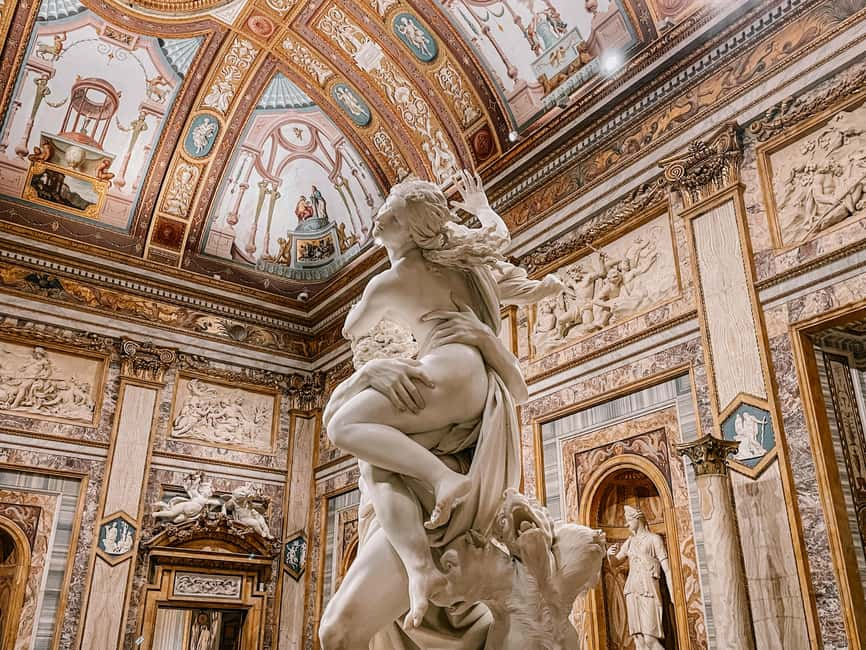
Many great museums grew over centuries and gathered their collections piece by piece. The Borghese Gallery began with a more direct purpose: Scipione Borghese, nephew of Pope Paul V, built the villa in the early 17th century to house his art.
That background matters. You are not simply walking through a series of neutral exhibition rooms. The building, decoration, and collection were planned together to impress visitors and display the taste, wealth, and ambition of the Borghese family.
The villa was once known as the Villa outside Porta Pinciana. It is now part of Villa Borghese, Rome’s large central park. The meeting point is at Piazzale del Museo Borghese, in front of the museum entrance. Since the tour starts there, I would allow extra time to locate the entrance and identify the guide before the scheduled start.
The museum is often described as Rome’s first museum, even though that modern idea did not yet exist when the villa was created. That is a useful way to understand the place. It was a private collection opened for public appreciation in spirit, but the art still feels arranged for a powerful family’s pleasure.
More Art Museum Tours in Rome
- Vatican Museums, Sistine Chapel & St. Peter’s Basilica Tour
★ 4.3 · 73,970 reviews - Vatican Museums, Sistine Chapel & St Peter’s Basilica Guided Tour
★ 4.5 · 39,149 reviews - Rome: Vatican Museums, Sistine Chapel and Basilica Tour
★ 4.3 · 16,039 reviews
A two-hour route through Villa Borghese
The itinerary is simple. You meet at the museum entrance, enter with your reserved ticket, tour the gallery with an English-speaking guide, and return to the same general area after two hours.
That sounds straightforward, and inside the museum it is. The tour does not include a long transfer or extra stop. You spend your time where the value is highest, among the paintings, sculptures, decorated rooms, and family rooms.
The two-hour length is a good fit if you want a focused art visit rather than a full day in a museum. You will see the main works and hear the stories that connect the artists to the Borghese family. You will not have unlimited time to linger in every room, so I would treat this as an introduction with strong highlights, not a complete study visit.
The group size of 15 is important here. In a crowded art museum, a guide can easily become a distant voice surrounded by heads. A smaller group keeps the commentary closer and makes it easier to see the work being discussed. Headsets and radios are included, which should help you follow along in busy rooms.
Bernini’s marble figures
Bernini is the main reason many people book this visit, and the gallery gives him plenty of space. You will see works such as The Truth, the bust of Scipione Borghese, and several self-portraits.
The bust of Scipione is especially useful for understanding Bernini’s gift. A portrait bust can be stiff and official, but Bernini often made stone feel alert and alive. Look at the expression, the turn of the head, and the way the clothing frames the face. The subject appears ready to speak.
Bernini’s self-portraits add another layer. They show the artist thinking about his own public image while working for one of Rome’s most influential families. A guide can help you connect the sculptor’s personal story with the larger world of papal Rome and elite collecting.
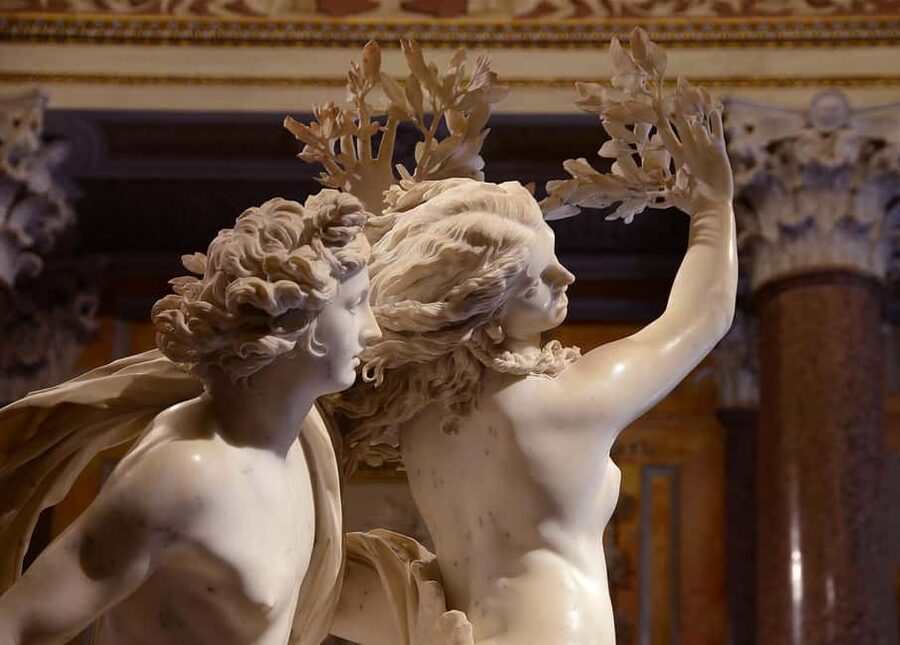
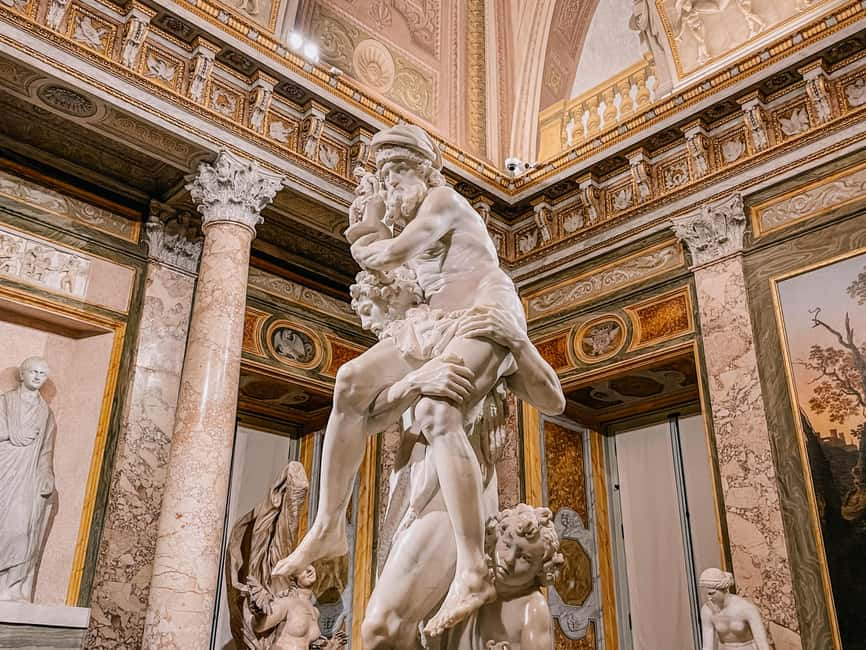
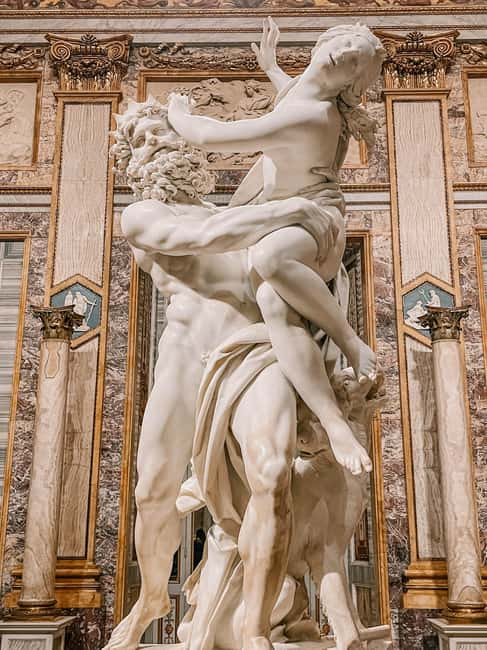
You will also see why Bernini’s sculptures reward close viewing. From a distance, you notice the overall pose. Up close, the details become the point: hair, fabric, skin, and the tension of a body caught in motion. The gallery’s rooms let you see these effects without the scale of a vast public hall swallowing them.
I would not rush past the sculpture rooms simply to reach the paintings. Even if you came for Caravaggio, Bernini gives the visit its physical drama.
Canova’s Paolina Borghese
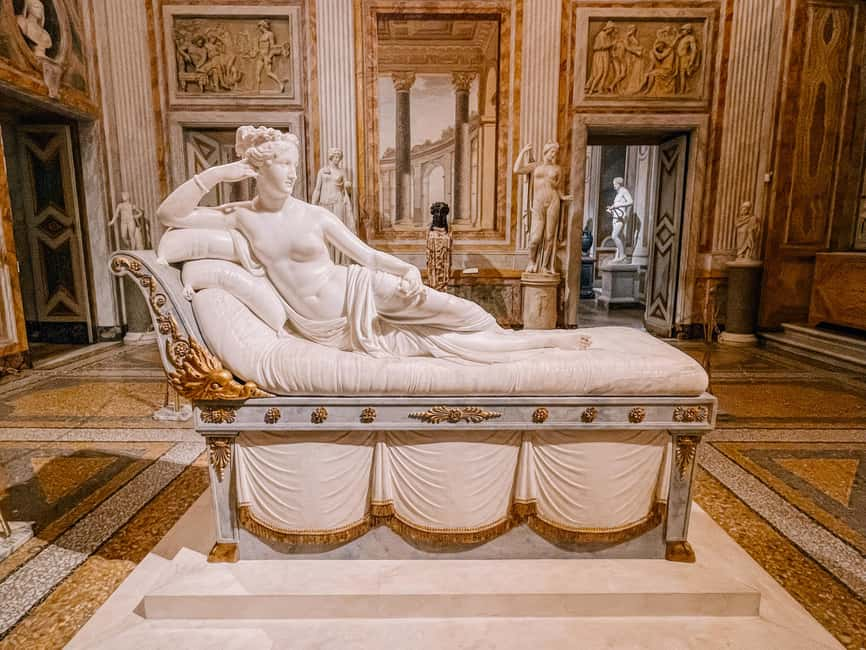
In the Paolina Room, Antonio Canova’s Paolina Borghese appears as Venus, reclining on a dormeuse. The statue caused a stir when it was first shown because Paolina is portrayed almost naked.
That detail is not just gossip. It tells you something about the culture surrounding the sculpture. Paolina Borghese was a princess and the wife of Camillo Borghese, yet Canova presents her as a classical goddess. The work blends private portrait, ancient mythology, social power, and calculated display.
The pose looks relaxed, but the effect is carefully controlled. Her body rests on the couch, while her head turns toward the viewer. The smooth marble invites you to look closely at skin, hair, and fabric, even as the subject’s status reminds you that this was a portrait of a real woman from a powerful family.
This is one of the gallery’s best examples of how the building and collection work together. The sculpture is not hidden in a spare white room. It appears in a lavish setting that suits its theatrical purpose. I would pause here longer than you might expect, since the statue raises questions about beauty, public image, and the way aristocratic families wanted to be seen.
More Borghese Gallery slots:
- Rome: Borghese Gallery Skip-the-Line Ticket & Audioguide
★ 4.3 · 4,318 reviews - Rome: Borghese Gallery Ticket + Audioguide or Guided Tour
★ 4.6 · 3,219 reviews - Rome: Borghese Gallery Guided Tour with Skip-the-Line Entry
★ 4.8 · 2,649 reviews - Rome: Borghese Gallery Skip-the-Line Tickets with Audioguide
★ 4.6 · 2,562 reviews
Caravaggio’s dramatic paintings
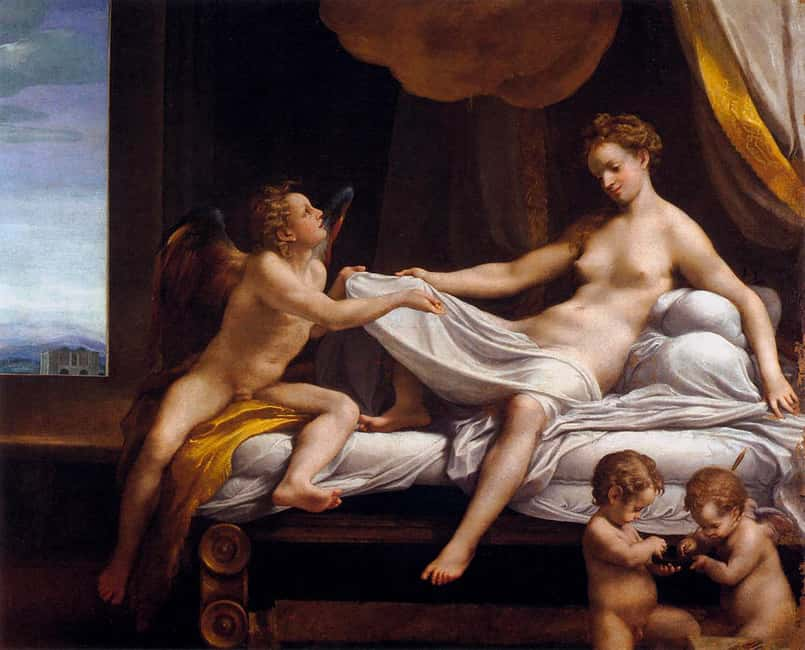
The Borghese Gallery has one of the largest single-collection groupings of Caravaggio’s work. That makes the museum especially rewarding for anyone drawn to his strong light, direct faces, and charged scenes.
You can see David with the Head of Goliath, Boy with a Basket of Fruit, St. Jerome, and Self-Portrait as Bacchus, among other works. These paintings do not feel distant or decorative. Their people appear close enough to confront you.
Caravaggio’s David with the Head of Goliath has an added personal edge because the severed head is often understood as a self-portrait of the artist. The painting’s subject is biblical, but the emotional tone feels immediate and uneasy. A guide can point out how the light directs your eye and how the expressions complicate the victory.
Boy with a Basket of Fruit shows another side of the artist. The basket, fruit, skin, and clothing are painted with close attention, but the image is more than a still-life exercise. The boy looks directly outward, giving the picture a human presence that can be easy to miss if you only admire the fruit.
St. Jerome offers a quieter mood. The old scholar, the skull, and the surrounding darkness turn the painting toward reflection and mortality. Seeing several Caravaggios together helps you compare the artist’s use of light across different subjects instead of judging each painting in isolation.
The inclusion of a guide is most useful in these rooms. Caravaggio’s paintings can grab you at once, but the details often reward a second look. You might notice a gesture, a symbolic object, or a self-reference only after someone directs your attention to it.
Raphael and the Old Masters
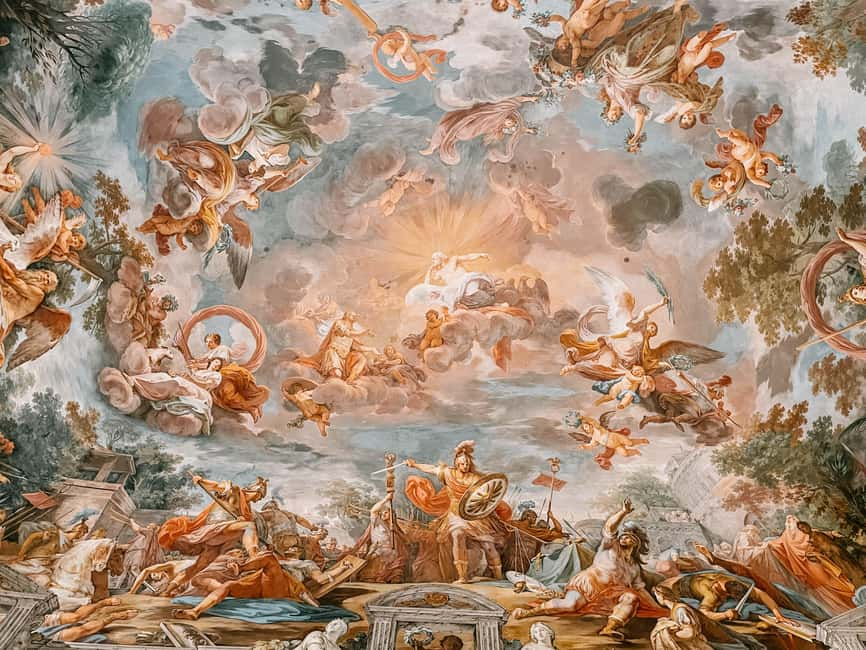
Raphael’s Lady with a Unicorn and Portrait of Pope Julius II bring a different mood to the visit. Compared with Caravaggio’s forceful realism, Raphael offers poise, balance, and controlled expression.
Lady with a Unicorn is a particularly interesting work because the sitter’s identity and the painting’s symbolism invite questions. The unicorn is not simply an unusual accessory. It belongs to a larger system of ideas about purity, virtue, and portrait symbolism. The exact reading can be complicated, which is one reason a guide’s explanation adds value.
The Portrait of Pope Julius II shows Raphael working within the formal demands of a papal portrait. The pope appears powerful, but the image is not merely a rigid official record. The pose, clothing, and expression create a more human presence.
These paintings help prevent the visit from becoming only a Bernini and Caravaggio showcase. The collection covers different artistic aims: sculpture that seems to move, religious and mythological drama, aristocratic portraiture, and images designed to project authority.
What the guide adds to the visit
An art historian guide can change the pace of your museum visit. Without guidance, you may spend most of your time on the names you already know. With guidance, you can begin to understand why a less familiar work matters and how it fits the collection.
The strongest part of the experience is likely to be the explanation of connections: Scipione Borghese’s collecting habits, the family’s role in Rome, Bernini’s relationship with powerful patrons, and the way Caravaggio’s paintings were gathered into the villa.
Several guides have received warm praise for their preparation and care, including Sylvia, Lia, and Vincenza. Sylvia has been described as especially strong at explaining the art, while Lia and Vincenza have also been singled out for making the visit memorable. At the same time, clear English is not guaranteed with every guide. One tour had an attentive guide whose English was difficult to follow.
That is a fair reason to keep expectations sensible. The guide may be excellent on the art but less easy to understand in a noisy room or when speaking quickly. The included headsets should help with volume, but they cannot solve every language issue.
The meeting point and timing matter
The practical weakness here is not the museum itself. It is the start of the tour.
You meet in front of the museum entrance at Piazzale del Museo Borghese. There have been problems with identifying the guide, locating the exact person near the meeting spot, and receiving late changes to the scheduled time. One recent group gathered well after its ticketed entry time and began roughly an hour after the original plan.
That kind of delay can affect the rest of your day, especially if you have booked a restaurant, another museum, or a timed attraction. I would check your messages before leaving for the meeting point and arrive early enough to sort out any confusion. Look for the guide or group representative rather than assuming the first person near the entrance is connected with the tour.
The reserved ticket is still useful. Borghese Gallery visits depend on timed entry, and having a place held for you is more practical than hoping to obtain a ticket at the door. The separate entrance is meant to provide priority access, but the experience may still involve waiting if the group is not assembled or if the museum controls entry at that moment.
Is $88 a fair price?
At $88 per person, this is not the cheapest way to see the Borghese Gallery. You are paying for more than admission: a two-hour guided visit, an art historian guide, a small group limited to 15 people, headsets, and reserved entry.
I think the price makes sense if you want context and do not feel confident making your own route through the collection. Bernini, Caravaggio, Raphael, and Canova can all be appreciated without a guide, but a good explanation helps you see more in less time. The price is also easier to justify if regular entry is difficult to arrange during your dates.
The value is less clear if you prefer to stand in front of one painting for a long time or read every label at your own pace. Two hours passes quickly, and the guided format sets the rhythm. You can still appreciate the art, but this is not an open-ended museum afternoon.
Free cancellation up to 24 hours before the tour and the option to reserve now and pay later add useful flexibility. Bring a passport or identity card, as identification is listed as required.
Who should book this tour?
I would choose this experience if you have a limited amount of time in Rome and want a strong introduction to the Borghese collection. It suits first-time visitors who want the main works explained in plain terms, as well as art lovers who want to place Bernini and Caravaggio within the Borghese family setting.
It is also a good choice for people who dislike large tour groups. Fifteen people is not private, but it is small enough to feel manageable, especially with the audio equipment.
I would think twice if your schedule is tightly packed or if you need a tour that always starts exactly on time. The meeting point and communication deserve extra care. I would also check the guide language expectations, since the tour is offered in English and the clarity of delivery may vary.
Should you book the Borghese Gallery tour?
Book it if you want the gallery’s major works explained by a guide and value reserved entry more than complete freedom. The combination of Bernini’s sculpture, Caravaggio’s intense paintings, Raphael’s portraits, and Canova’s Paolina makes this one of Rome’s most rewarding art stops.
Go independently if you already know the collection well, prefer a slow personal visit, or are unwilling to risk a schedule change. If you do book, arrive early at the entrance, confirm the guide’s identity, watch for messages, and keep the rest of your day flexible.
FAQ
How long does the Borghese Gallery tour last?
The guided tour lasts two hours. It begins and ends near Piazzale del Museo Borghese.
Where do I meet the guide?
You meet in front of the Borghese Gallery entrance at Piazzale del Museo Borghese.
What language is the tour offered in?
The live tour guide speaks English. Headsets and radios are included so you can hear the guide more clearly.
How many people are in the group?
The group is limited to a maximum of 15 people.
What does the tour ticket include?
The price includes an art historian local guide, a skip-the-line entry ticket through a separate entrance, and headsets with radios.
What should I bring?
Bring a passport or identity card. You should also allow extra time to find the guide at the museum entrance and check for any messages about the meeting time.
Just added around Rome
- Colosseum,Vatican Museum & Sistine Chapel in One Day Guided Tour★ 3.5 · 9 reviews
- Vatican Museums and Sistine Chapel last entry Guided Tour★ 5.0 · 3 reviews
- Private Tour Of Rome Highlights And Vatican Museums Skip-The-Line all included★ 5.0 · 4 reviews
- Borghese Gallery Admission Ticket with Audioguide★ 4.0 · 64 reviews
- Caravaggio Art Walking Tour of Rome with Pantheon Visit★ 4.5 · 35 reviews
- Borghese Gallery Skip the Line Guided Tour★ 4.5 · 23 reviews
- Borghese Gallery Ticket with Audioguide★ 3.5 · 51 reviews
- Borghese Gallery VIP Tour – Skip the Line Tickets★ 5.0 · 2 reviews
Art Museum Tours in Rome, compared.
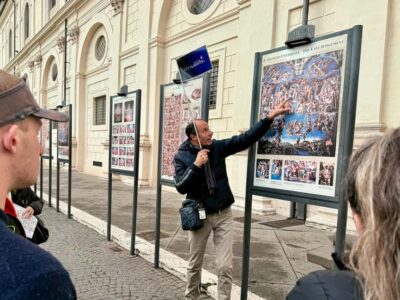
Vatican Museums, Sistine Chapel & St. Peter’s Basilica Tour
Read our review →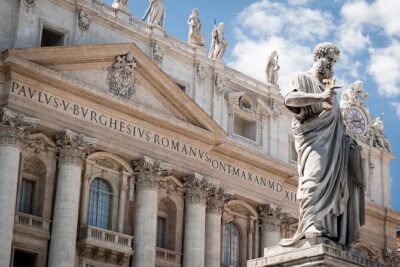
Vatican Museums, Sistine Chapel & St Peter’s Basilica Guided Tour
Read our review →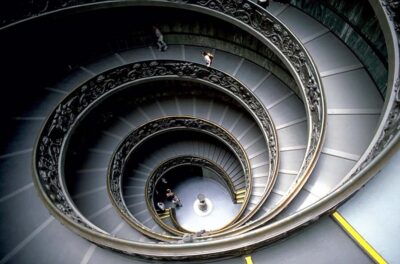
Vatican Museums, Sistine Chapel and Basilica Tour
Read our review →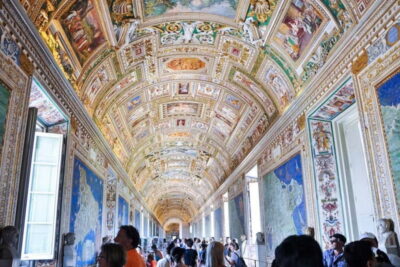
Vatican Museums & Sistine Chapel Skip-the-Line Entry Ticket
Read our review →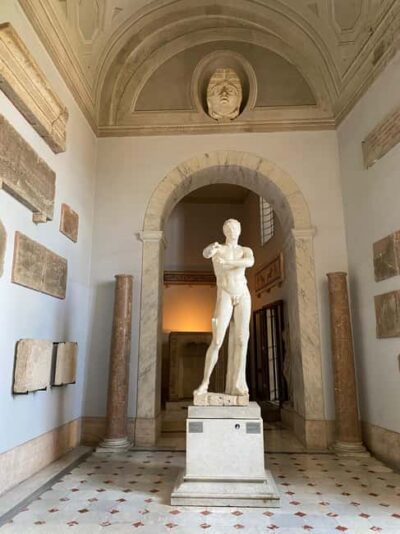
Vatican Museums, Sistine Chapel & Basilica Tour
Read our review →
Vatican Museums & Sistine Chapel Guided Tour
Read our review →
Vatican Museums & Sistine Chapel Skip-the-Ticket-Line Tour
Read our review →
Vatican Museums, Sistine Chapel and St. Peter’s Basilica Tour
Read our review →Browse the lists this tour appears in