
REVIEW · PARIS
Paris: Louvre and Musée d’Orsay Private Tour
The smart idea here is simple: pair the Louvre and Musée d’Orsay in one day, then let a private guide decide how much time each collection deserves. You begin with two hours at the Louvre, continue after lunch at the old Orsay railway station, and finish with a broad look at French art from ancient Greece through late 19th-century painting.
I like the private format, since your guide can focus on the artists and works you care about instead of following a fixed script. I also like the efficient entry plan, especially for first-time visitors who would rather spend their limited Paris time looking at art than sorting out museum lines. The main drawback is the price: $1,017 per group up to one person is a serious outlay, even though private groups can include up to six people.
Key points to know before booking
- Two essential museums in six hours: The Louvre takes the morning, followed by the Musée d’Orsay after lunch.
- A flexible private tour: Your guide can adjust the focus and timing to suit your interests.
- Priority entry included: You skip the standard ticket line, though security or busy-day queues can still occur.
- Major works are covered: Expect the Mona Lisa, Venus de Milo, Rembrandt, Delacroix, Monet, Renoir, Van Gogh, Gauguin, Rodin, and Maillol.
- Central Paris pickup: Hotel pickup is available from postal codes 75001 through 75020.
- Bring only a small bag: Museum rules prohibit luggage and any item larger than 55 by 35 by 20 centimeters.
Why pair the Louvre with Musée d’Orsay?
These museums give you two very different views of European art. The Louvre is vast, grand, and spread across centuries. The Musée d’Orsay is more focused, with its greatest strength in French art from the second half of the 19th century.
That contrast makes the day worthwhile. At the Louvre, you move from ancient sculpture and Renaissance painting to major French works. At Orsay, the story shifts toward artists who changed how people saw modern life, light, color, and movement.
I would not describe six hours as enough to see the Louvre. The museum is far too large for that. Six hours is enough for a guided introduction to two key collections, with the guide helping you avoid the common mistake of wandering until your feet give out.
The private setup matters here. A general group tour needs to keep everyone moving at the same pace. This one can spend more time on Leonardo da Vinci, French Romantic painting, Impressionism, or sculpture, depending on what catches your interest.
More Art Museum Tours in Paris
- Paris: Louvre Museum Timed-Entrance Ticket
★ 4.6 · 71,977 reviews - Paris: Orsay Museum Entry Ticket
★ 4.7 · 25,647 reviews - Paris: Louvre Guided Tour with Reserved Access & Boat Cruise
★ 4.3 · 16,353 reviews
Starting at the Louvre and the Carrousel entrance
The meeting point is the Equestrian Statue of Louis XIV in front of the Louvre Museum. Hotel pickup is also included for addresses in postal codes 75001 to 75020, so you should confirm the arrangement when booking rather than assume the guide will collect you from any Paris address.
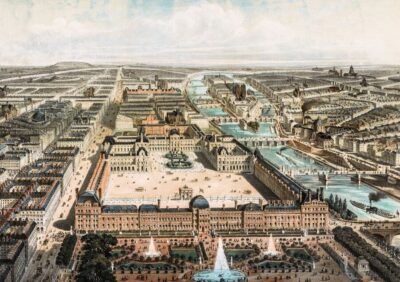
The tour begins at the Carrousel du Louvre. Before entering the galleries, you get a look at the museum’s grand architecture. This is more than a quick photo stop. The Louvre began as a royal fortress and palace before becoming a museum, and its scale helps explain why first-time visits can feel confusing.
Your priority entrance ticket lets you avoid the regular ticket line. That is useful, but keep your expectations practical. On busy days, you may still wait for security or other museum controls. Priority entry reduces one major delay, but it does not create a private entrance into every room.
You cannot bring luggage or large bags inside. Any item larger than 55 by 35 by 20 centimeters is not allowed, so leave suitcases at your hotel. This is especially important if you are changing hotels or arriving in Paris with bags in tow.
Two focused hours with the Louvre’s greatest works
The Louvre portion lasts about two hours. That is a sensible length for a guided introduction, since the museum’s size can make a longer first visit tiring and unfocused.
You can expect attention on the Mona Lisa, Leonardo da Vinci’s famous portrait. The painting itself is modest in size compared with the room and crowds around it. Your guide can add useful context and help you understand why the work matters instead of reducing the stop to a quick photograph.
The Venus de Milo is another central stop. This ancient Greek statue has no arms, and that missing detail is part of its lasting appeal. You can look at the idealized form, the balance of the pose, and the way the sculpture has become one of the Louvre’s best-known symbols.
The tour also includes works by Rembrandt and Delacroix. These artists offer a useful change of pace. Rembrandt’s portraits and scenes reward close attention to expression and light, while Delacroix brings the drama and force of French Romantic painting.
Because the visit is private, you can ask your guide to spend more time on a certain period or artist. If you already know the Mona Lisa and Venus de Milo are your priorities, say so. If you prefer painting, sculpture, French art, or Renaissance works, mention that before the tour begins.
One verified assessment of the experience praised the guide’s command of the material and clear delivery. That is the quality I would value most here. The Louvre can overwhelm you with famous names, but a guide who explains why a work matters gives the visit a clear shape.
Free time for lunch between the museums
After the Louvre, you have free time for lunch before meeting your guide again at 1:30 p.m. Lunch is not included, and neither are food or drinks.
This break is useful. Six hours of museum viewing is demanding, and a short pause gives you time to sit down, eat, and reset before the Impressionist collection. It also means the day does not force you through both museums without a breath between them.
Transportation costs are not included. The experience is built around walking between meeting points and museums or using your own preferred transport, so you should allow time and budget for getting to the afternoon meeting point in front of the Musée d’Orsay.
The itinerary describes the two museum visits as a full-day experience, but the stated tour duration is six hours. Treat the schedule as a structured six-hour day with a lunch interval, not as an open-ended museum visit.
More Orsay tours and tickets:
- Paris: Orsay Museum Entry Ticket and Digital Audio Guide App
★ 4.4 · 3,170 reviews - Paris in a Day: Louvre or Orsay, Eiffel Tower, City Walk & Cruise
★ 5.0 · 1,956 reviews - Paris: Musée d’Orsay Skip-the-Line Tour with Expert Guide
★ 4.5 · 1,145 reviews - Musée d’Orsay Skip-the-Line Tour with Expert Guide
★ 4.8 · 1,088 reviews
Entering Musée d’Orsay, the former train station
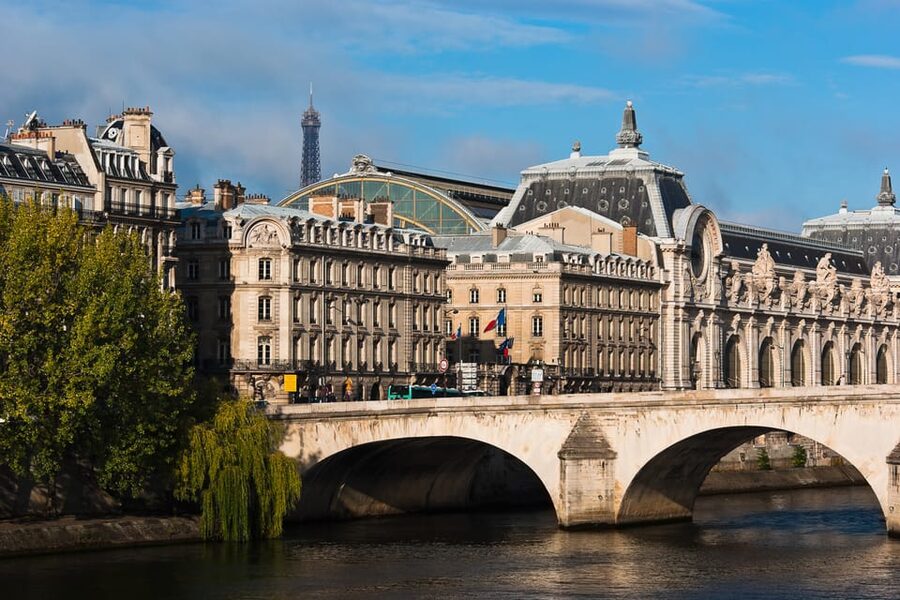
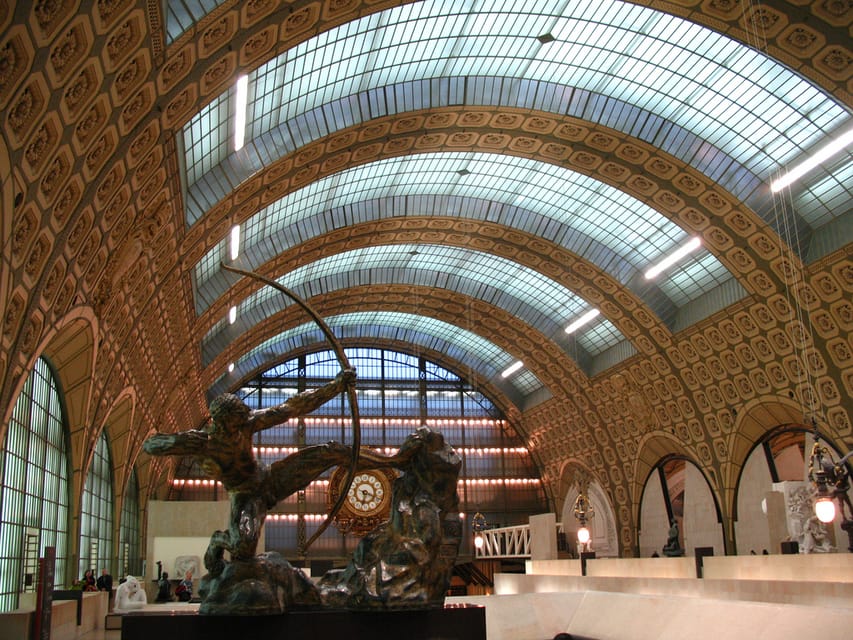
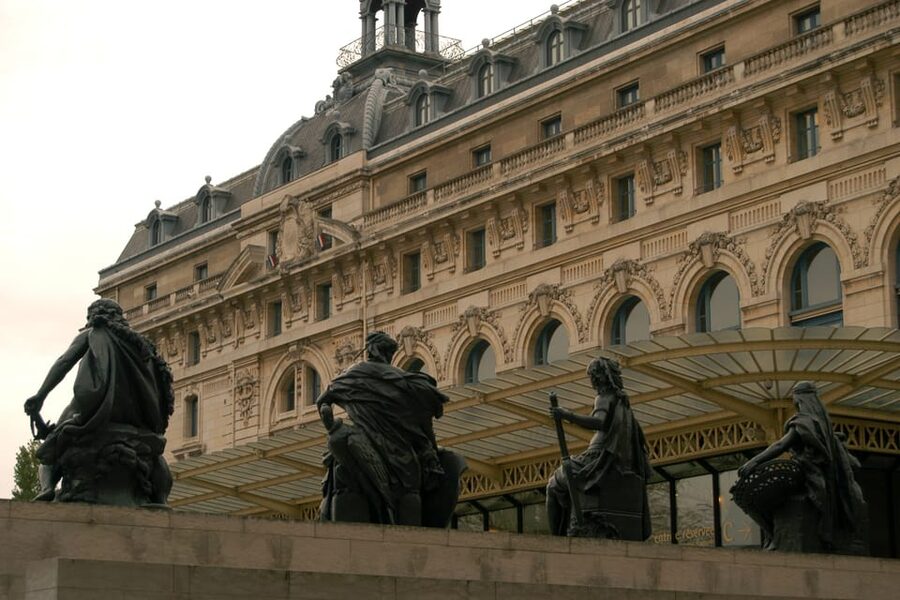
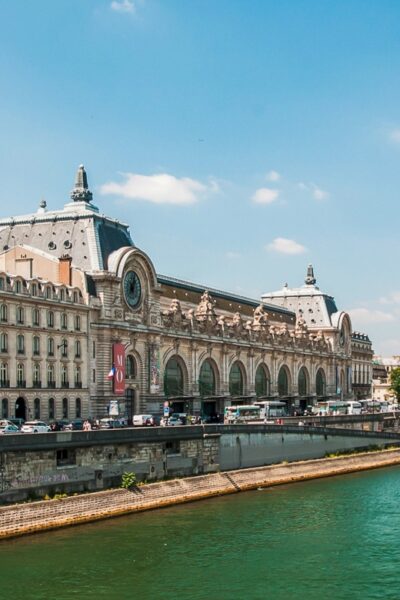
The afternoon begins at the Musée d’Orsay, housed in a former train station. The building gives the visit a different feel from the Louvre. Its original railway setting helps frame the period on display, when rail travel, urban growth, industry, and new forms of leisure were changing French life.
The collection includes more than 4,000 works from the second half of the 19th century. That does not mean you will examine all 4,000 pieces. It means the museum offers a broad field of painting, sculpture, and other works, with the guide selecting the pieces that fit your interests.
This is the stronger half of the tour for anyone drawn to Impressionism and Post-Impressionism. Renoir, Monet, Van Gogh, and Gauguin are included, along with Rodin and Maillol. You can compare the loose brushwork and changing light of the painters with the physical presence of the sculptors.
The guide’s stories are important here. Impressionist paintings can look familiar because their images are so widely reproduced. Seeing the original works, then hearing about the artists and their methods, gives you more to consider than color and pleasant scenery.
You might focus on Monet’s treatment of light, Renoir’s people and social scenes, Van Gogh’s intense brushwork, or Gauguin’s strong color choices. Since the emphasis is flexible, tell your guide what interests you instead of waiting for a fixed sequence.
What the private format really adds
A private guide is not automatically better for every visitor. If you enjoy wandering alone, reading labels, and stopping wherever you like, you may prefer separate museum tickets and a self-guided plan.
I see the value in this tour for first-time visitors, art lovers with limited time, and families or small groups with different interests. The guide can explain the basic story without assuming you already know European art, while also adjusting the pace when a particular work catches your attention.
The private group limit is six people. That keeps the experience personal, but the published price is listed as $1,017 per group up to one person. You should check the final price for your party before booking and compare it with the cost of separate museum admission, a guide, and transport.
For one person, the price is difficult to justify unless you place a high value on expert planning and personal attention. For a group sharing the cost, the calculation can look better, provided the final booking terms allow your full party and the total remains acceptable.
The languages offered are English, Spanish, French, German, Italian, Japanese, and Portuguese. That gives you a good chance of requesting a guide in your preferred language, though you should confirm availability for your chosen date.
How tiring is this six-hour museum day?
You spend much of the day walking, standing, and concentrating. The two-hour Louvre visit is followed by a lunch break and another museum visit, so comfortable shoes matter more than stylish ones.
The schedule is not designed for a relaxed, stop-and-start museum day. It is designed to give you a strong introduction to two major collections in one outing. If you want to study every gallery, this will feel rushed. If you want a guided route through major works, the pace makes sense.
The experience is wheelchair accessible. Still, you should discuss any specific mobility needs when booking, since the museums are large and the tour covers two separate buildings with an outdoor break between them.
The tour focus and times are flexible. That is one of its better features, but flexibility works best when you use it. Tell the guide at the start what you hope to see, how much walking you can manage, and if you want more painting, sculpture, or historical explanation.
Practical details that can make or break the day
You can cancel up to 24 hours in advance for a full refund, and the reserve-now, pay-later option helps if your Paris schedule is still changing. The tour includes priority entrance tickets and a private guide, but not lunch, drinks, or transport.
Meetings are tied to specific locations: the Louvre portion begins at the Equestrian Statue of Louis XIV, and the afternoon meeting is in front of the Musée d’Orsay at 1:30 p.m. Confirm the exact meeting instructions before the day of the tour.
Leave large bags at your hotel. Museum rules prohibit luggage and oversize items, with a maximum permitted size of 55 by 35 by 20 centimeters. This is a small detail, but ignoring it can cause a real problem at the entrance.
Allow extra time to reach the starting point. Even with hotel pickup available in central postal codes 75001 through 75020, traffic, metro connections, and finding a large museum entrance can slow you down.
Who should book this Louvre and Orsay tour?
I would recommend it to you if this is your first serious art visit in Paris and you want help making sense of two enormous institutions. It also suits couples, families, and small groups who want a guide to adjust the day around their interests.
It is a good match for someone who values an efficient route and priority entry more than independent wandering. The guide can give you context for famous works, point out major paintings, and stop the day from becoming a long search for the Mona Lisa.
I would hesitate if you are traveling on a tight budget, dislike fixed meeting times, or want to explore the Louvre slowly. The price is high, and the six-hour schedule cannot cover every important room.
The strongest reason to book is the combination of personal guiding and two major collections. The main caution is to make sure that convenience and expert attention are worth the cost for your group.
FAQ
How long does the tour last?
The stated duration is six hours, including visits to both the Louvre and Musée d’Orsay with a break for lunch.
Which museums are included?
The tour includes priority entrance to the Louvre Museum and the Musée d’Orsay.
Is hotel pickup available?
Hotel pickup is available from Paris postal codes 75001 through 75020. The stated Louvre meeting point is the Equestrian Statue of Louis XIV in front of the museum.
What famous works can I expect to see?
The tour includes the Mona Lisa, the Venus de Milo, works by Rembrandt and Delacroix, and Impressionist and later works by Renoir, Monet, Van Gogh, Gauguin, Rodin, and Maillol.
Is lunch included?
No. You have free time for lunch, but food and drinks are not included.
Can the guide adjust the tour?
Yes. The focus and timing are flexible, so you can request more attention to particular artists, periods, or types of art.
How many people can join the private tour?
Private tours are for a maximum of six people. The listed price is shown per group up to one person, so check the final price for your party.
Is the tour wheelchair accessible?
Yes, the activity is listed as wheelchair accessible.
What bags can I bring?
Luggage and large bags are not allowed. Items larger than 55 by 35 by 20 centimeters cannot enter the museums.
What languages are available?
Guiding is available in English, Spanish, French, German, Italian, Japanese, and Portuguese.
Can I cancel the booking?
Yes. You can cancel up to 24 hours in advance for a full refund.
Should you book it?
Book this tour if you want a guided, efficient introduction to the Louvre and Musée d’Orsay and are comfortable paying for private attention. It gives you the essential highlights, a flexible focus, priority entry, and a useful break between museums.
Skip it if you want to spend a whole day in one museum or if the $1,017 group price strains your budget. For the right small group, though, this is a practical way to turn two potentially confusing museum visits into one clear Paris art day.
More Louvre Tours in Paris
- Louvre Museum Masterpieces Guided Tour with Access
★ 4.5 · 12,023 reviews - Paris: Louvre Overview, Exploration tour and Reserved Entry
★ 4.1 · 10,145 reviews - Paris: Louvre Museum Entry Ticket With Host and River Cruise
★ 4.6 · 9,926 reviews - Mona Lisa & Louvre Masterpieces Tour with Reserved Access
★ 4.6 · 6,812 reviews
Just added around Paris
- Paris Day Tour with Eiffel Tower, Louvre and Cruise Max 6 People★ 4.5 · 29 reviews
- d’Orsay Museum Paris entry ticket★ 3.5 · 31 reviews
- visiting the masterpieces of impressionists at Orsay museum★ 5.0 · 7 reviews
- PRIVATE Louvre Wonders & Hidden Treasures Visit★ 5.0 · 65 reviews
- Louvre Museum with private guide★ 5.0 · 3 reviews
- Louvre Wheelchair-Accessible Private Tour – Stress-Free & Easy★ 5.0 · 16 reviews
- LOUVRE, Small Group Guided Tour in French (TOP SALES)★ 4.5 · 9 reviews
- Musée d’Orsay Highlights Tour with Gourmet Lunch★ 4.5 · 11 reviews
Art Museum Tours in Paris, compared.
Louvre Guided Tour with Reserved Access & Boat Cruise
Read our review →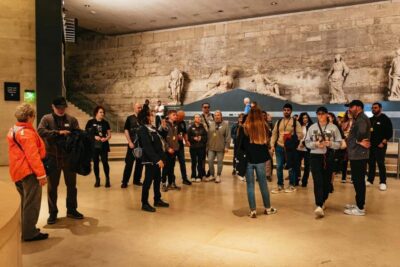
Louvre Overview, Exploration tour and Reserved Entry
Read our review →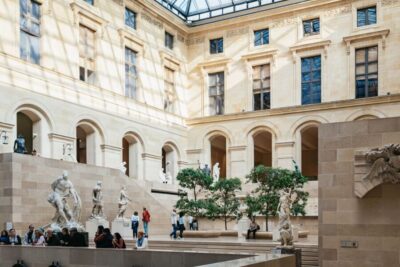
Louvre Museum Entry Ticket With Host and River Cruise
Read our review →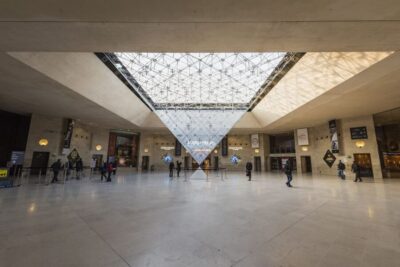
Mona Lisa & Louvre Masterpieces Tour with Reserved Access
Read our review →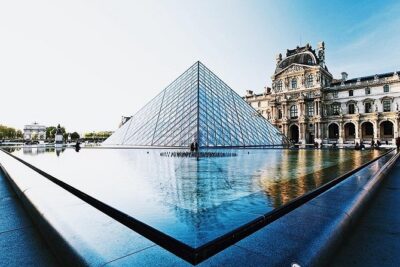
Louvre Museum – Exclusive Guided Tour (Entry Included)
Read our review →
Louvre Museum Hosted Entry and Mona Lisa Audioguide
Read our review →Browse the lists this tour appears in