
REVIEW · BERLIN
Berlin: Berlin Wall & East Side Gallery Walking Tour
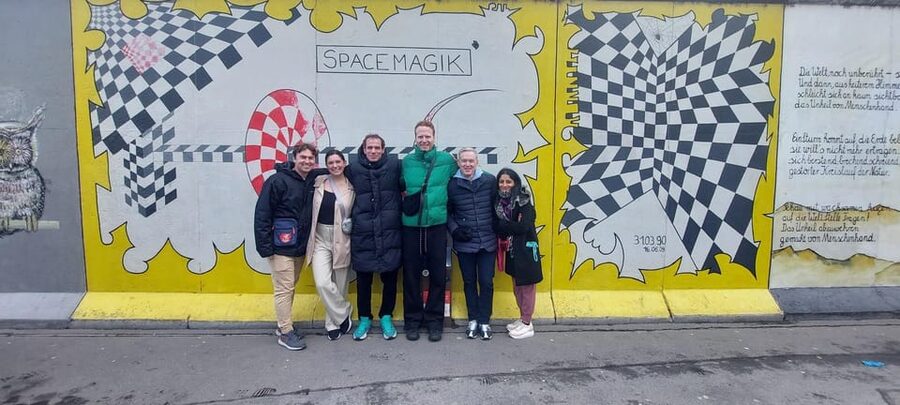
The East Side Gallery is where Berlin’s Cold War past meets its street-art present. On this two-hour walk, you follow the remaining Wall, study murals painted after its fall, and connect the art to the politics and social changes of the 1990s. Guide Cristobal, often called Cris, brings a strong interest in art, architecture, and Berlin’s modern history.
I like two things in particular: the close reading of the murals, which goes well beyond pointing out famous pictures, and the route through Friedrichshain, Kreuzberg, and across Oberbaumbrücke. Cris also offers photography tips and can suggest places to eat or have coffee after the walk.
The main consideration is pace. Two hours is enough for a sharp introduction, but not enough to examine every mural or spend long at each Wall site. One recent participant felt the art received more time than the Wall history, so book this for a blended art-and-history experience rather than a full Cold War study tour.
Key points at a glance
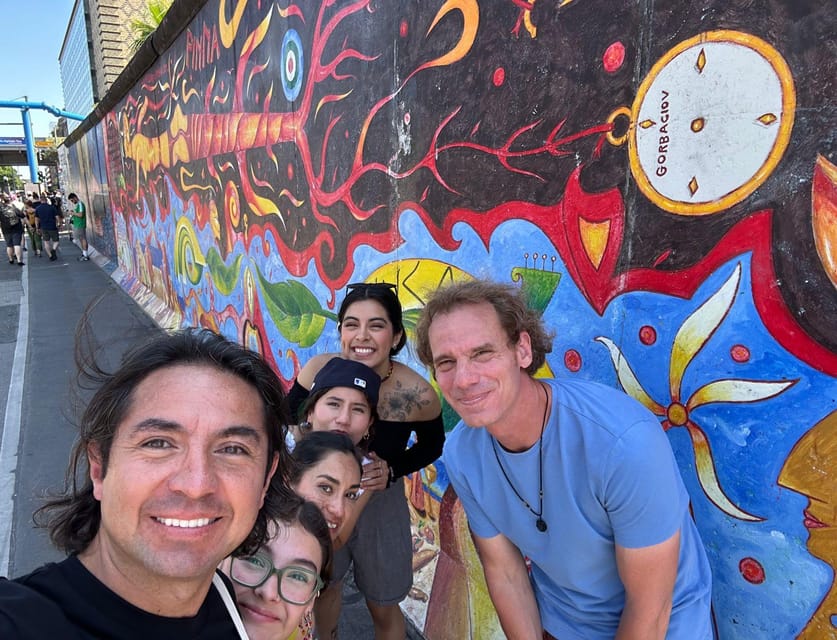
- East Side Gallery with context: Spend about an hour looking at the murals, their symbolism, and the artists behind them.
- A useful Cold War route: Walk from Friedrichshain toward Oberbaumbrücke and Kreuzberg, finishing near Schlesisches Tor.
- A guide with a clear specialty: Cristobal, or Cris, focuses on the links between art, architecture, politics, and Berlin’s past.
- Good for photographs: Expect suggestions for picture locations and help with family or couple photos.
- Small-group feel may be possible: Several bookings had only a few people, though group size is not fixed in the supplied details.
- Bring serious weather gear: The entire experience is outdoors, and Berlin’s cold, wind, rain, or snow can make a real difference.
Why the East Side Gallery is more than a long wall of paintings
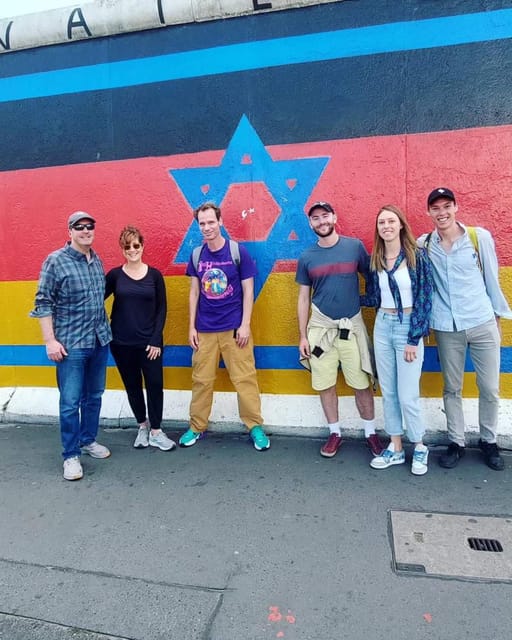
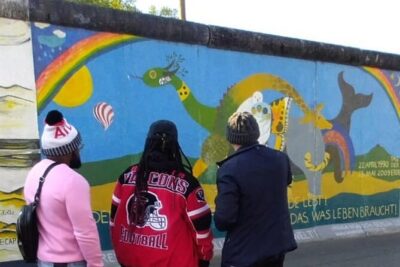
Many first-time visitors see the East Side Gallery as a colorful photo stop. That is fair, but incomplete. The murals are also tied to the moment after the Berlin Wall fell, when artists from different places used a remaining section of the former barrier to express hope, anger, humor, political ideas, and views on a newly changing Europe.
Cris treats the gallery as both an outdoor art collection and a political document. He explains how artists use images, symbols, color, and public space. That makes the walk useful even if you know little about street art. You do not need to arrive with an art vocabulary. The guide encourages you to form your own interpretation, then adds historical and artistic context.
This approach is one of the strongest reasons to choose the tour. You will not simply take a picture beside a famous mural and move on. You will be asked to look at what the image suggests, why it appeared at that moment, and how Berlin’s changing society shaped the work.
The East Side Gallery is also exposed and busy with ordinary city life. You may encounter bikes, traffic noise, interruptions, or passing groups. That is part of the setting, but it can make close listening harder. Cris has been praised for keeping people involved even when sirens or motorcycles interrupt the conversation.
More Art Museum Tours in Berlin
- Berlin: East Side Gallery Spree Cruise in a Solar Catamaran
★ 4.1 · 1,086 reviews - Cold War, Berlin Wall, Spies and the East Side Gallery
★ 5.0 · 1,024 reviews - Berlin: The Wall Museum East Side Gallery Ticket
★ 4.1 · 292 reviews
Starting in Friedrichshain and Kreuzberg
The meeting point is listed as East Side Bäckerei at Warschauer Str. 34-36, though the exact meeting point can vary with the option booked. Check your booking details carefully before setting out.
The opening section takes about 20 minutes and introduces Friedrichshain and Kreuzberg. This matters because the Wall was never an isolated monument. It cut through neighborhoods, transport routes, housing areas, and communities. The surrounding streets help you see Berlin as a city shaped by separation and reunification, not just as a collection of memorials.
The guide also brings in architecture and street art beyond the formal gallery. You may see how older buildings, painted walls, and newer creative spaces sit beside one another. The tour description promises additional points connected to Berlin’s art and street-art scenes, but the precise stops can vary.
This first section is also a useful warm-up for Cris’s style. His strongest subjects are not limited to dates and names. He connects art with society and current geopolitics, and he often invites discussion. That can make the walk more engaging for adults and older children who enjoy asking questions.
If you prefer a tightly scripted tour with only major historical facts, this may feel less direct. If you like a guide who moves between history, art, architecture, and present-day questions, the opening should suit you well.
The East Side Gallery: one hour with Berlin’s painted Wall
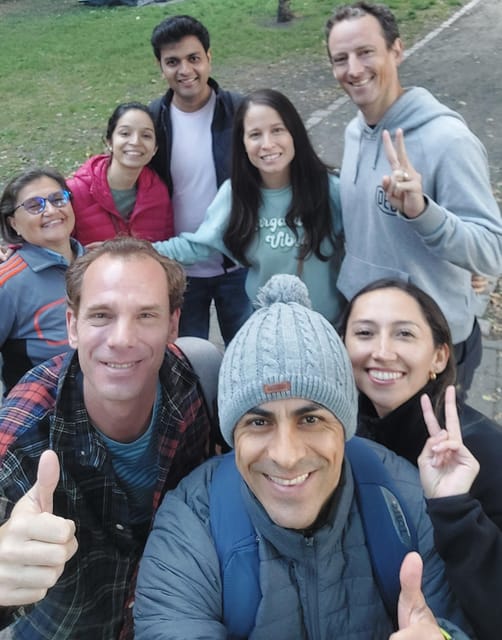
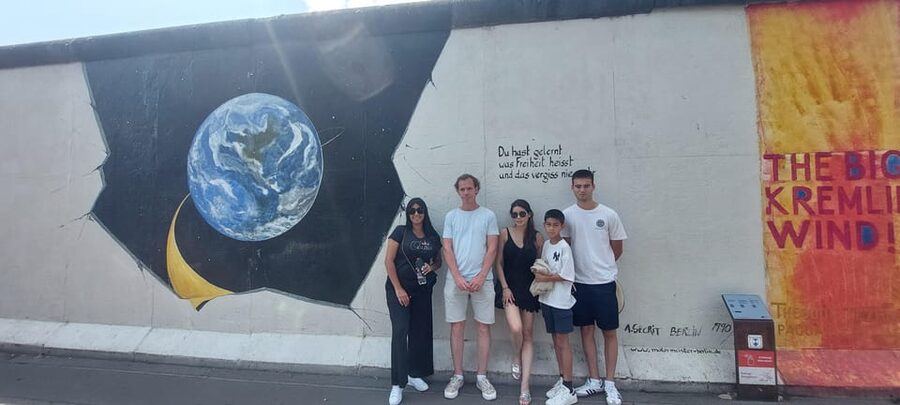
About half of the tour is devoted to the East Side Gallery. That is the right amount of time for a meaningful introduction, though not enough for every mural. The gallery is described as the world’s largest open-air gallery, and its long run of painted Wall makes it one of Berlin’s most distinctive public spaces.
The value here lies in the explanation. Cris discusses artists, artistic influences, techniques, and the symbolism contained in the images. He also explains the historical events that led to the murals and the cultural meaning they acquired after the Wall fell.
Expect the focus to move in several directions:
- The creation of the murals in the period after the Wall’s fall
- The relationship between political change and public art
- The ideas and influences behind particular works
- The way street art can act as a record of social attitudes
- The links between Berlin’s past and current events
The guide’s interest in the art is especially helpful because some murals are easy to treat as simple backdrops. A photograph shows you the surface. A good explanation gives you a reason to stop and look again.
You will also have chances to take photographs. Cris offers practical advice about where to stand and how to use the art and older architecture as backgrounds. He has taken family photos and helped participants get better pictures during the walk. This is a nice extra, though the activity is not presented as a dedicated photography workshop.
There is a tradeoff. The stronger the art discussion becomes, the less time remains for broad Wall history. One participant specifically preferred the art but noted that less time was spent on the Wall than expected. If your main goal is the political history of the Berlin Wall, you may want a separate museum visit or a tour devoted solely to Cold War sites.
The Berlin Wall Museum and the memorial stops
The Berlin Wall Museum is included among the landmarks associated with the experience, along with the Cengaver Katranci Memorial. The supplied route gives the longest clearly defined stop to the East Side Gallery, while the detailed timing lists Friedrichshain-Kreuzberg, the gallery, Oberbaumbrücke, and Kreuzberg.
Because the walking tour lasts only two hours, do not assume you will receive a long indoor museum visit. The activity is primarily an outdoor route, and the precise balance between the museum, memorial points, and surrounding streets may depend on the starting option and the group.
The museum and memorial references add useful depth. They signal that the tour is not only about attractive murals. Berlin’s Wall story includes loss, separation, escape attempts, political pressure, and the human cost of the border. Ask Cris questions if you want more attention on those subjects.
The tour’s strength is its connection between the human story and the public art. Its limit is time. Two hours can give you a clear framework, but it cannot cover every memorial, personal story, and political development in detail.
More art walks around Berlin:
- Uffizi & Accademia Timed Entry: Small Group Duomo Walking Tour
★ 4.5 · 3,630 reviews - Paris in a Day: Louvre or Orsay, Eiffel Tower, City Walk & Cruise
★ 5.0 · 1,956 reviews - Florence: Uffizi & Accademia Small Group Walking Tour
★ 4.7 · 1,380 reviews - Florence in a Day: Michelangelo’s David, Uffizi and Guided City Walking Tour
★ 4.5 · 1,048 reviews
Oberbaumbrücke and the walk toward Kreuzberg
The route continues to Oberbaumbrücke, with about 20 minutes of guided explanation. The bridge is one of the best visual points on this part of Berlin. It connects the Friedrichshain and Kreuzberg sides and gives the walk a strong sense of place.
Here, the history becomes easier to picture because the route links neighborhoods that were once separated. The bridge also works well for photographs, with its distinctive architecture and the river setting creating a change from the flat Wall panels.
The bridge section is not presented as a long architectural lecture. Instead, it forms part of the larger story of movement, division, and reconnection. You can expect Cris to use the setting to discuss Berlin’s changing identity and the way old political boundaries still affect how the city is understood.
Allow for ordinary city interruptions. Oberbaumbrücke is not a quiet museum courtyard. Traffic, bicycles, pedestrians, and street noise can make it harder to hear. Stay close to the guide and ask for repetition if needed.
Kreuzberg and the finish near Schlesisches Tor
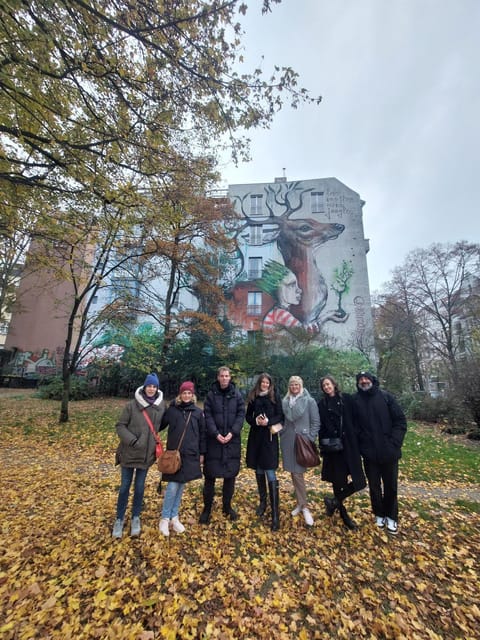
The final 20 minutes take you through Kreuzberg and finish near Schlesisches Tor. This gives the tour a useful ending in a neighborhood known in the activity description for its art, architecture, food, and local character.
Cris offers suggestions for restaurants, coffee, other landmarks, and shopping in the area. That advice can be especially handy because the walk finishes at a practical point for continuing your day. One participant specifically praised the food recommendations, while another ended the tour with a highly recommended local coffee stop.
The finish also keeps the experience from feeling like a simple out-and-back walk along the gallery. You begin near Warschauer Strasse and end in Kreuzberg, with the route crossing between several parts of the city. That gives you a better sense of how the districts connect.
Do not expect a grand final monument or formal conclusion. The tour ends in the neighborhood, which is useful if you want to continue exploring, but less satisfying if you prefer every walk to finish at a major landmark.
What the guide adds to the experience
The clearest strength is Cris’s enthusiasm for art and Berlin. His explanations cover not only what happened, but also how an artist might communicate an idea through an image. He has been described as animated, precise, passionate, and willing to discuss alternative interpretations.
That style will appeal to you if you enjoy conversation. The tour is not simply a stream of memorized facts. Cris invites questions and gives you room to express your own reading of the art. He also connects Berlin’s past to present-day politics, which can make the subject feel current rather than sealed away in a history book.
His art background is particularly useful at the East Side Gallery. Several participants appreciated learning about artistic influences, techniques, and the reasons behind the murals. Others valued the way he linked art and architecture to Berlin’s history.
There is one language point to keep in mind. The tour is offered in English and Spanish, and the activity asks participants to speak good English or Spanish. One English-language participant who was not a native speaker found Cris spoke too quickly at times. If you need a slower pace, tell the guide at the beginning and ask questions when something is unclear.
Is $29 a fair price for two hours?
At $29 per person, this is a reasonable price for a focused walking tour with a specialist guide. You are paying for more than access to the East Side Gallery, which is an outdoor public site. The value comes from the route, the interpretation of the murals, the Wall and Cold War context, photography help, and neighborhood suggestions.
I would judge the price differently depending on your goals. For a first introduction to East Side Gallery, it offers good value because it combines several subjects in one outing. For a detailed study of Berlin’s Wall history, two hours may feel short, and you may need to add another museum or memorial visit.
The small-group experience can add value when numbers are low. Some bookings had only four people or even one participant, allowing plenty of questions and personal attention. Group size is not guaranteed, so do not book solely on the expectation of a private walk.
Free cancellation up to 24 hours before the activity and the reserve-now, pay-later option make the booking less rigid. The practical issue is weather. This is an outdoor walk with no promise of indoor shelter, so the price is only good value if you come prepared to stay outside for the full two hours.
Clothing, walking conditions, and access
Wear comfortable shoes. The route covers several neighborhoods and includes outdoor stops, so you will be on your feet for the full activity.
Berlin can be cold, wet, windy, or snowy. Bring warm, thermal, or snow clothing in winter, and check the forecast before leaving. Participants have completed the walk in icy weather, but the guide had to adjust the pace and approach to keep the group engaged. Good clothing will make a bigger difference than an extra layer of sightseeing plans.
The activity is wheelchair accessible, though the supplied information does not describe the exact pavement or crossing conditions at every stop. It is still a walking tour, so contact the provider if you need specific access details.
The activity states that it is not suitable for people over 95. It also says that people with hearing loss or an injury such as a broken foot should not attend because there is no sign-language interpreter and the route requires walking. Those limits are worth taking seriously before booking.
Who should choose this Berlin Wall walk?
I would recommend it most strongly if you fit one or more of these descriptions:
- You want Berlin Wall history explained through public art.
- You enjoy street art, architecture, and political discussion.
- You are visiting Berlin for the first time and want an orientation to Friedrichshain and Kreuzberg.
- You like taking photographs and want help finding useful backgrounds.
- You prefer an enthusiastic guide who welcomes questions and personal interpretation.
- You want neighborhood food and coffee suggestions after the walk.
Families can also find plenty to discuss, especially if children are old enough to connect images with ideas about freedom, borders, and social change. The walk is less suitable if you want a quiet, indoor museum experience or a strictly chronological account of the Cold War.
Should you book it?
Book this tour if you want the East Side Gallery to make sense, not just look good in photographs. Cristobal’s main strength is explaining the connection between the Wall, the artists, the city, and the political mood of the period after 1989.
Choose another or an additional experience if the Berlin Wall itself is your only priority. The two-hour format gives substantial attention to art and neighborhood culture, and one section can feel more interpretive than purely historical.
For most visitors who want a lively introduction to East Berlin’s art and Wall story, $29 is a fair price. Bring warm clothes, comfortable shoes, and an open mind. You will leave with better photographs, a clearer sense of the districts, and more to think about than a simple mural checklist.
FAQ
How long does the Berlin Wall and East Side Gallery tour last?
The activity lasts two hours. The route includes guided time in Friedrichshain-Kreuzberg, about one hour at the East Side Gallery, Oberbaumbrücke, and Kreuzberg.
What languages is the tour offered in?
The live tour is available in English and Spanish. Participants should be able to speak and understand one of those languages well.
Where does the tour start and finish?
One listed starting point is East Side Bäckerei at Warschauer Str. 34-36, but the meeting point may vary with the option booked. The route finishes near Schlesisches Tor.
How much does the tour cost?
The listed price is $29 per person.
Is the tour wheelchair accessible?
Yes, the activity is listed as wheelchair accessible. It is still an outdoor walking tour, so contact the provider if you need detailed information about the route.
What should I wear or bring?
Bring comfortable shoes and clothing suited to the weather. Warm, thermal, snow, and weather-appropriate clothing are recommended, especially during Berlin’s colder months.
Just added around Berlin
- Ticket for The Wow Gallery Berlin★ 4.5 · 7 reviews
- Berlin’s Gallery Scene★ 5.0 · 4 reviews
- Berlin: Comedy in an Art Gallery (Mitte) – Saturday 7pm★ 5.0 · 2 reviews
- East side Gallery Tour★ 5.0 · 11 reviews
- East side Gallery Tour★ 4.8 · 4 reviews
- Berlin: Comedy in an Art Gallery (Mitte)★ 4.2 · 4 reviews
- Berlin: East Side Gallery Photoshoot★ 5.0 · 2 reviews
- Berlin: East Side Gallery and Cold War Segway Tour★ 4.6 · 20 reviews
Art Museum Tours in Berlin, compared.
East Side Gallery Spree Cruise in a Solar Catamaran
Read our review →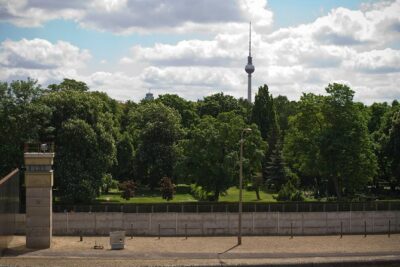
Cold War, Berlin Wall, Spies and the East Side Gallery
Read our review →
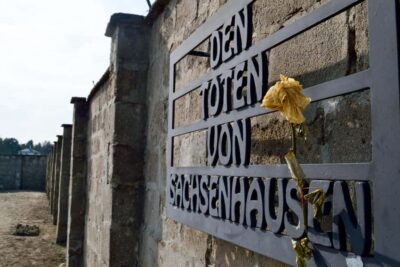
Bus Tour to Sachsenhausen, East Side Gallery, & Berlin Story Bunker
Read our review →Cold War, Berlin Wall, Spies and the East Side Gallery
Read our review →
Browse the lists this tour appears in