
REVIEW · ROME
Rome: Turning the Lights on at the Vatican Museums
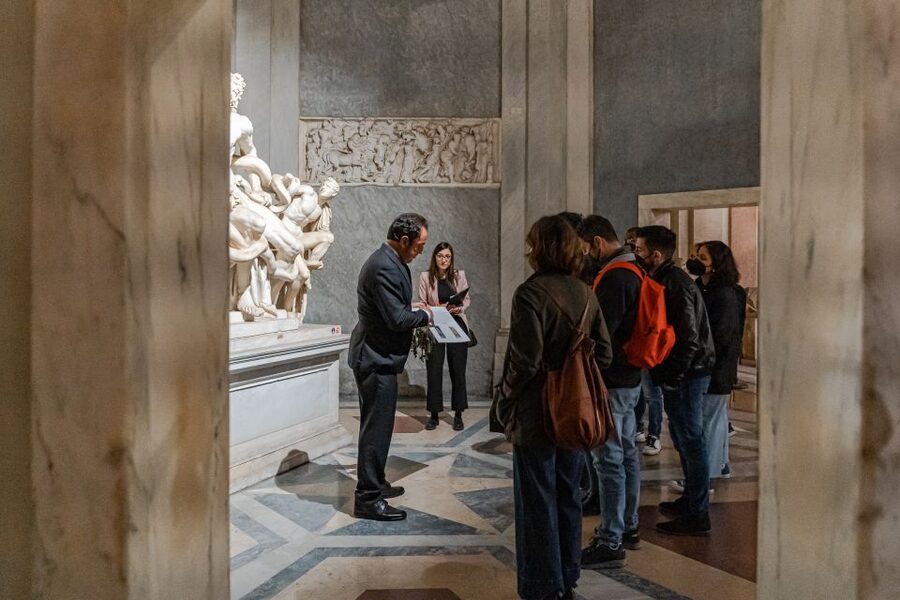
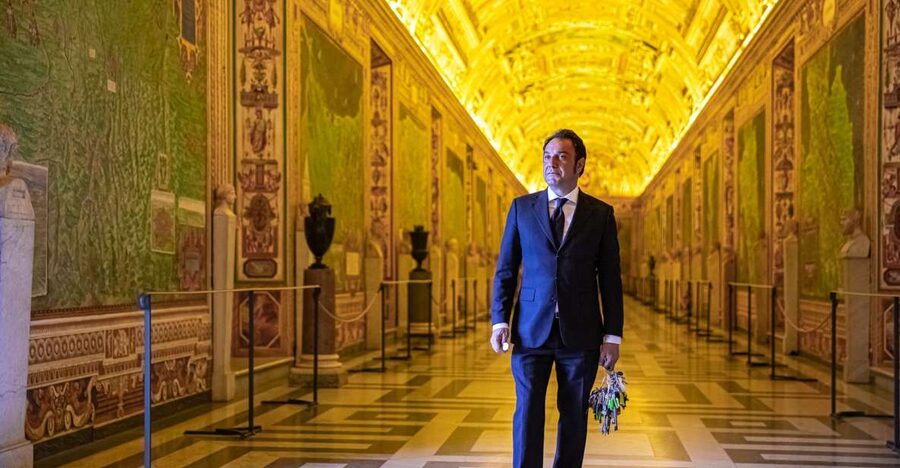
The Vatican Museums are at their most powerful before the crowds arrive. On this early-morning outing, head key keeper Gianni Crea leads a small group through the ritual of opening the 500-year-old museums, with participants taking turns using old keys and switching on lights. You see the galleries change from darkness to illuminated masterpieces, then enter the Sistine Chapel while it is still quiet.
I especially like two things here: the rare chance to watch the Vatican wake up, and the peaceful time inside the Sistine Chapel. The main consideration is the price, $396.50 per person, plus the early start and a fast-moving two-and-a-half-hour schedule.
Key points at a glance
- Open the museums with the head key keeper: Gianni Crea shares his morning routine and lets the group take part in opening selected doors and turning on lights.
- See the Sistine Chapel before public opening: The chapel is experienced in a small group, before the usual mass of people fills the room.
- Visit rooms that may not be part of a standard route: The morning can include staff areas, work spaces, and rooms not normally open to the public.
- Use your time wisely afterward: Once the regular opening begins, you may be able to continue through the museums on your own.
- Finish with breakfast in the Cortile della Pigna: The meal includes a pastry, pancakes, juice, and tea or coffee.
- Plan carefully for Vatican rules: Wear long trousers and a shirt covering your shoulders, arrive early, and bring only a small bag.
Opening the Vatican before dawn
This is not a routine museum visit. You meet at the main entrance to the Vatican Museums before opening time, when the area is far calmer than it will be later in the morning.
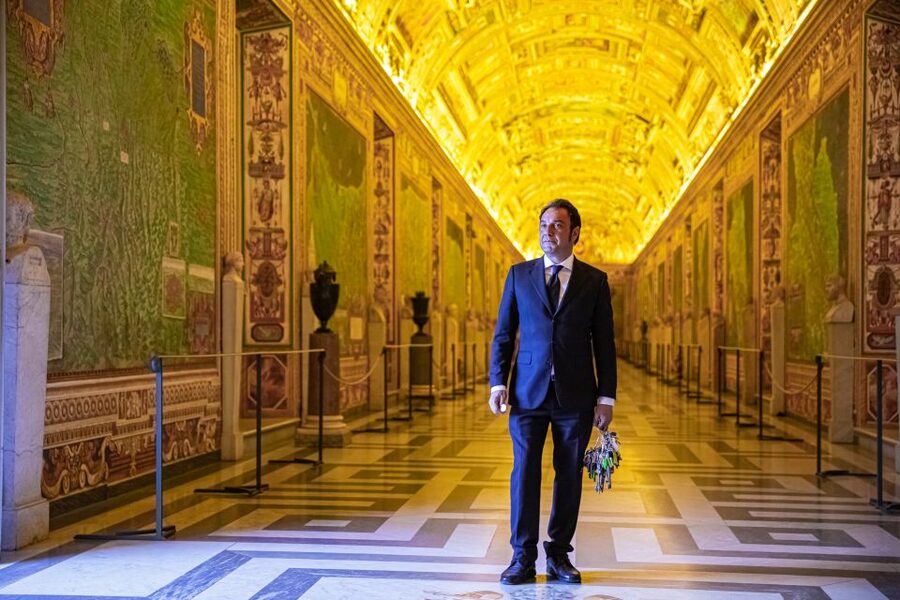
After security, the group joins Gianni Crea, the head clavigero, or key keeper. For about a decade, he has led the morning team responsible for opening the Vatican Museums, a vast system of 24 connected galleries, museums, and chapels.
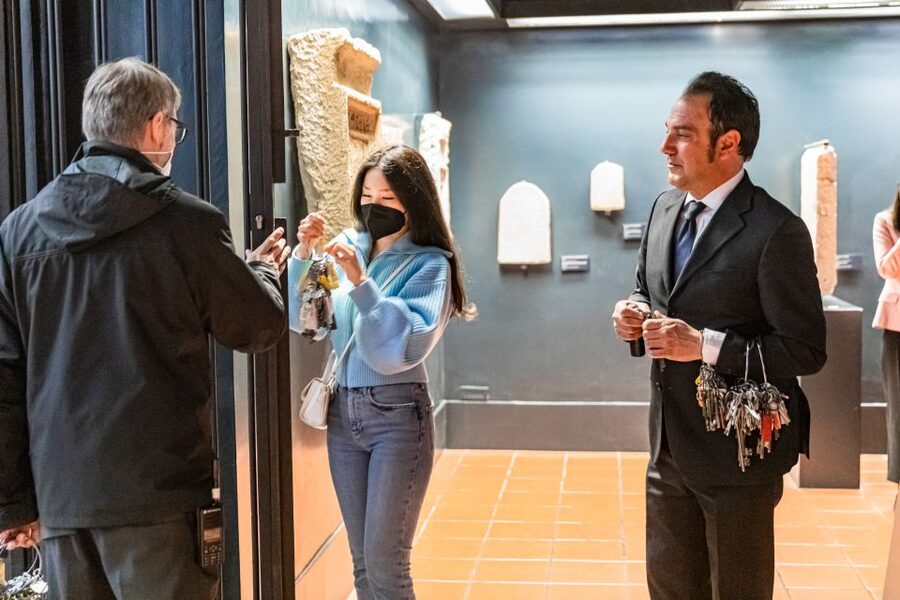
The appeal is partly visual and partly theatrical. You hear old locks turn, watch doors swing open, and see dark rooms come to life as the lights go on. A person from the group may get to hold a key or operate a switch, making this feel more personal than simply following a guide through a finished display.
The exact order can vary, but the basic idea remains the same: you are seeing the museums during their daily change from closed institution to public museum. That behind-the-scenes rhythm is what gives the experience its character.
More Art Museum Tours in Rome
- Vatican Museums, Sistine Chapel & St. Peter’s Basilica Tour
★ 4.3 · 73,970 reviews - Vatican Museums, Sistine Chapel & St Peter’s Basilica Guided Tour
★ 4.5 · 39,149 reviews - Rome: Vatican Museums, Sistine Chapel and Basilica Tour
★ 4.3 · 16,039 reviews
What Gianni Crea adds to the morning
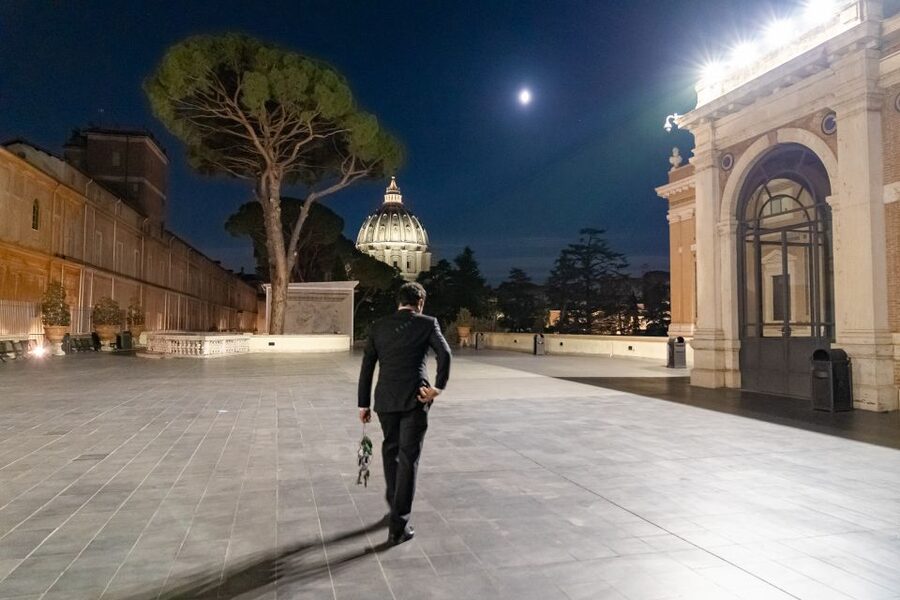
Gianni is not simply there to pose with a large ring of keys. He explains the practical work involved in opening such an enormous complex and shares stories from his years as head key keeper.
You also hear about the artworks along the way. The Vatican Museums contain around 20,000 pieces on display, so no two-and-a-half-hour visit can cover everything. The guide and interpreter instead focus on the most striking spaces, the objects that fit the route, and details that help you understand what you are seeing.
The tour is conducted in Italian by Gianni, with an English interpreter translating for the group. That arrangement is worth understanding before you book. You are not receiving every comment directly in English, and the pace includes pauses for translation, but it also lets you hear Gianni speak in the setting where he works.
Several guides may lead different departures. Assunta and Elena have been praised for their friendly, helpful approach, while Eric has served as an interpreter on some outings. Pietro and Antonio have also taken part in the morning welcome and museum opening. The exact staff lineup is not guaranteed, but the format gives you both the key keeper’s personal view and a guide’s explanation of the art.
The galleries in darkness and light
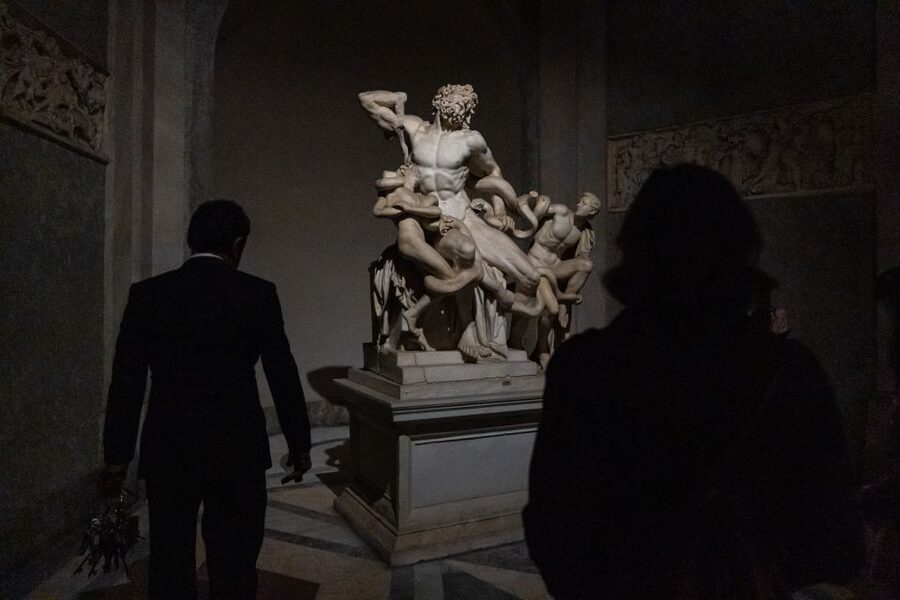
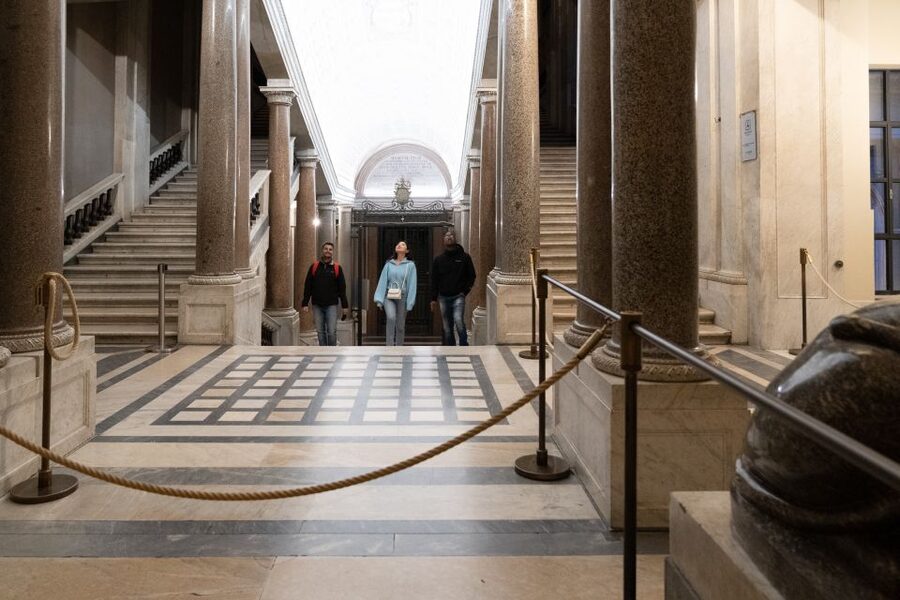
The first rooms are special because you see them in an unusual state. Instead of entering beneath full lights and amid a stream of people, you watch each space appear gradually.
That may sound like a small detail, but it changes how you look. A quiet gallery gives you time to notice its proportions, doorways, floors, and ceiling decorations before your attention is pulled toward the next person trying to pass. The sound of the keys and the click of switches become part of the memory.
You may also enter rooms used by museum staff or areas that are not normally available during a standard admission. Some groups have seen restoration work in progress, private rooms, and views of the Cortile della Pigna from above. These moments cannot be promised as a fixed checklist, so book this for the access and atmosphere rather than for one specific secret room.
A small group helps. Group sizes can vary, but one outing had only seven people, while another had around 13 participants. That is far different from the full public flow later in the day. Still, you may need to share the best photo position when a newly opened room becomes available. My practical advice is simple: let the eager people move ahead, then take your photograph after they cross the room. You will often get a clearer view that way.
The Sistine Chapel before the crowds
For most people, the Sistine Chapel is the emotional center of the morning. Michelangelo’s ceiling, including The Creation of Adam, is familiar from countless photographs, but the room feels different when it is not packed with people.
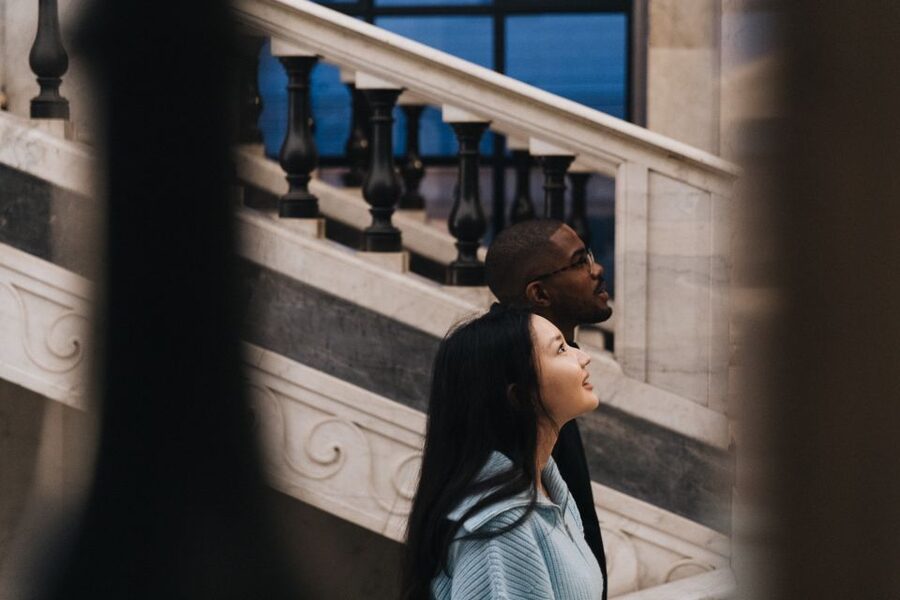
You enter with the small group and have time to look upward without the usual wall of bodies around you. The quiet makes it easier to study the ceiling scenes, the scale of the chapel, and the connection between the painted architecture and the figures.
Photography rules in the Sistine Chapel can be strict, so do not assume you can photograph freely simply because the room is quiet. Follow the instructions given on the day.
The private feeling does not last forever. Public opening eventually changes the atmosphere completely, which makes the contrast especially clear. Some people find the early visit so valuable that they return through the museums after breakfast, seeing the same rooms again once regular admissions begin.
That second pass can be a smart use of the ticket. The guided route does not cover every museum room. One person specifically noted that the Raphael Rooms were not part of the early route, but the chance to continue independently afterward made it possible to see more of the collection. Check the exact arrangements on the day, since access and timing can vary.
More ways into the Vatican Museums:
- Vatican Museums & Sistine Chapel Skip-the-Line Entry Ticket
★ 4.4 · 13,838 reviews - Rome: Vatican Museums, Sistine Chapel & Basilica Tour
★ 4.7 · 13,217 reviews - Rome: Vatican Museums & Sistine Chapel Guided Tour
★ 4.3 · 12,117 reviews - Vatican Museums & Sistine Chapel Skip-the-Ticket-Line Tour
★ 4.3 · 10,486 reviews
What the two-and-a-half-hour schedule really means
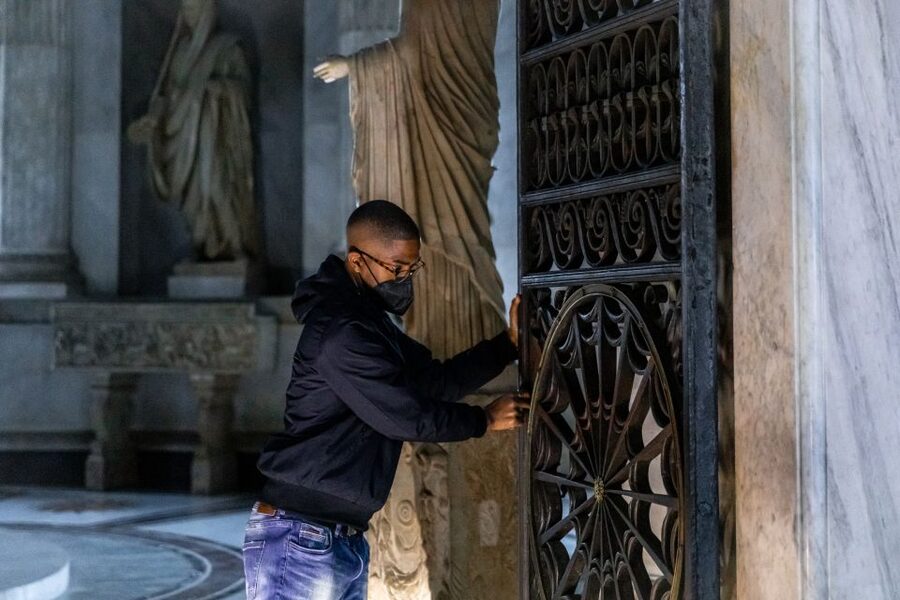
The listed duration is 2.5 hours. That includes meeting, security, interpretation, the opening routine, the museum route, the Sistine Chapel, and breakfast.
This is enough time for a memorable introduction, not a full survey of the Vatican Museums. You will not see all 24 interconnected areas in depth, and the guide cannot stop for long at every artwork. The experience works best if you accept that limitation.
I would think of it as two separate opportunities:
- A guided early-morning visit focused on atmosphere, access, and the key keeper’s routine.
- Extra independent museum time afterward, if the arrangements on the day allow you to remain inside as the public opening begins.
If you want a detailed art-history lesson covering every major room, this is not the ideal format. If you want to see the Vatican in a way that feels personal and unusual, the short schedule is more satisfying.
Breakfast in the Cortile della Pigna
The experience ends in the Cortile della Pigna, the Vatican’s Pinecone Courtyard. Breakfast includes a croissant or pain au chocolat, pancakes with peanut butter or marmalade, orange or apple juice, and tea or coffee.
The meal is a pleasant finish, especially after an early start. It gives you a chance to sit down, talk with the group, and let the morning settle before deciding what to do next.
Keep your priorities straight, though. The breakfast is included, but it is not the reason to pay this price. One person found it merely fine and preferred to return immediately to the galleries. If you want to make every minute count, you may choose the museum over the meal, depending on how the day’s access works.
Do not expect breakfast to include a full restaurant service or a long leisurely break. It is a simple American-style meal, useful and welcome, but secondary to the museum opening and Sistine Chapel visit.
Price and value at $396.50
At $396.50 per person, this is a serious splurge. A standard Vatican admission costs far less, and a regular guided visit gives you access to many of the same famous artworks.
The extra money pays for a very different setting. You are paying for early access, a small group, the key keeper’s participation, special areas when available, the interpreter, and the chance to see the Sistine Chapel before the public crowd arrives.
I think the price makes sense for three types of people:
- You have one short visit to Rome and want one major experience to feel truly special.
- You have already seen the Vatican and want a new angle.
- You care more about quiet, access, and atmosphere than about covering every room.
The value is weaker if you are mainly looking for the largest possible amount of museum time. You may get more art for less money with a regular ticket and a self-guided visit. You also need to accept that some of the itinerary is about the act of opening doors, not about extended explanations beside every masterpiece.
For a once-only Rome trip, I would compare this cost with the rest of your museum plans. If paying for this means cutting several other important activities, choose carefully. If the Vatican is one of your main reasons for visiting Rome, this is one of the rare ways to make the visit feel genuinely distinct.
Practical clothing and security rules
The Vatican dress code is enforced. Your shoulders and knees must be covered, so wear long trousers or another garment that covers the knees and a shirt with sleeves. A long-sleeved shirt is specifically recommended.
Comfortable shoes matter. You will be walking through several museum areas, and the early hour is not the time to discover that your footwear is unsuitable.
Bring a passport or identification card. Everyone must pass through airport-style security. Pets are not allowed, and you cannot bring luggage, large bags, backpacks, umbrellas, shorts, short skirts, or sleeveless shirts.
Only small backpacks and handbags are allowed inside the museums. Pack lightly. A small bag makes security easier and keeps you from worrying about where to leave larger items.
Late arrivals are not accommodated. The morning schedule depends on the group entering together, so treat the meeting time as firm, not approximate.
The meeting point is the main entrance to the Vatican Museums, and the activity finishes back at the meeting point. Hotel pickup and drop-off are not included, so you arrange your own way there.
St. Peter’s Basilica is separate
This tour includes the Vatican Museums and Sistine Chapel, not St. Peter’s Basilica.
Entry to St. Peter’s Basilica is free, but getting inside can be difficult because of the large number of people. You should not assume that the museum visit gives you a direct or guaranteed route into the basilica.
This matters when planning your day. If St. Peter’s is a priority, allow separate time for it and be prepared for security and possible lines. Do not build your schedule around a quick transfer from the museum.
The same caution applies to other areas, such as the Vatican Gardens. They are not part of the stated experience, and access to one part of the Vatican does not mean you can freely move into every other area.
Accessibility and who should book
This experience is not suitable for wheelchair users. Multiple areas are not wheelchair accessible, so anyone with mobility concerns should confirm suitability before paying.
I would recommend the tour to art lovers, repeat Rome visitors, couples marking a special occasion, and anyone who values quiet more than a low ticket price. It also suits people who enjoy seeing how a historic institution works, not just looking at finished displays.
Families can find the key-opening idea exciting, but the early start, security rules, translation, and steady pace may be tiring for young children. The experience is best for people who can arrive on time, walk comfortably, and stay focused through a tightly scheduled morning.
If you are sensitive to crowds, this is particularly appealing. You still encounter the public later if you continue into the museum, but the first part gives you a calm period that ordinary opening hours cannot provide.
My verdict on the key keeper’s tour
I like this experience because it offers something a normal Vatican ticket cannot: a sense of the building before it becomes a public attraction. Turning keys with Gianni Crea, watching galleries brighten, and standing in the Sistine Chapel with only a small group creates a strong memory.
The drawbacks are real. The price is high, the route does not cover everything, the English is delivered through an interpreter, and breakfast is pleasant rather than remarkable. You also need to follow strict clothing, bag, and arrival rules.
Book it if the Vatican is a centerpiece of your Rome visit and you are willing to pay for quiet and access. Skip it if you mainly want the cheapest way to see the museums or need a fully accessible route. For the right person, this is not just an early ticket. It is a rare look at the Vatican before the lights come on for everyone else.
FAQ
How long does the Vatican key keeper’s tour last?
The activity lasts 2.5 hours. Starting times vary, so check availability when booking.
Where does the experience begin and end?
It begins at the main entrance to the Vatican Museums and ends back at the meeting point.
Is the tour conducted in English?
Gianni Crea conducts the tour in Italian. An English interpreter translates for the group, and live tour support is available in Italian and English.
Is breakfast included?
Yes. Breakfast in the Cortile della Pigna includes a croissant or pain au chocolat, pancakes with peanut butter or marmalade, orange or apple juice, and tea or coffee.
Can I visit St. Peter’s Basilica on this tour?
No. St. Peter’s Basilica is not included. Entry is free, but access may be difficult because of the large number of people.
What should I wear and bring?
Wear comfortable shoes, long trousers, and a shirt covering your shoulders. Bring a passport or identification card. Large bags, luggage, backpacks, umbrellas, shorts, short skirts, and sleeveless shirts are not allowed. Only small backpacks and handbags may enter the museums.
Just added around Rome
- Colosseum,Vatican Museum & Sistine Chapel in One Day Guided Tour★ 3.5 · 9 reviews
- Vatican Museums and Sistine Chapel last entry Guided Tour★ 5.0 · 3 reviews
- Private Tour Of Rome Highlights And Vatican Museums Skip-The-Line all included★ 5.0 · 4 reviews
- Borghese Gallery Admission Ticket with Audioguide★ 4.0 · 64 reviews
- Caravaggio Art Walking Tour of Rome with Pantheon Visit★ 4.5 · 35 reviews
- Borghese Gallery Skip the Line Guided Tour★ 4.5 · 23 reviews
- Borghese Gallery Ticket with Audioguide★ 3.5 · 51 reviews
- Borghese Gallery VIP Tour – Skip the Line Tickets★ 5.0 · 2 reviews
Art Museum Tours in Rome, compared.
Vatican Museums, Sistine Chapel & St. Peter’s Basilica Tour
Read our review →
Vatican Museums, Sistine Chapel & St Peter’s Basilica Guided Tour
Read our review →
Vatican Museums, Sistine Chapel and Basilica Tour
Read our review →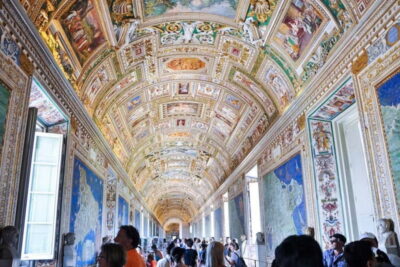
Vatican Museums & Sistine Chapel Skip-the-Line Entry Ticket
Read our review →
Vatican Museums, Sistine Chapel & Basilica Tour
Read our review →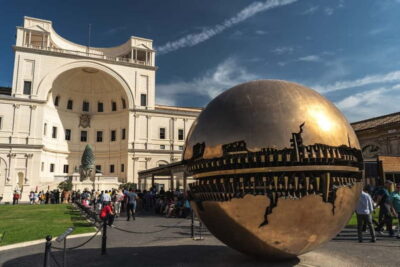
Vatican Museums & Sistine Chapel Guided Tour
Read our review →
Vatican Museums & Sistine Chapel Skip-the-Ticket-Line Tour
Read our review →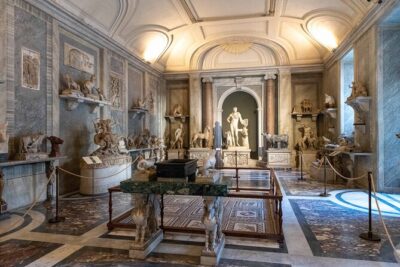
Vatican Museums, Sistine Chapel and St. Peter’s Basilica Tour
Read our review →Browse the lists this tour appears in