
REVIEW · ROME
Rome: Borghese Gallery Skip-the-line Entry with Greeter
Rome’s Borghese Gallery packs an extraordinary amount of art into 20 rooms. Caravaggio’s sharp-eyed saints and streetwise youths share the house with Bernini’s marble gods, Raphael’s Deposition, and Canova’s polished portrait of Pauline Bonaparte. The collection is small enough to feel manageable, yet important enough to reward serious art lovers.
I like the limited entry of 360 people at a time, which gives you more breathing room than Rome’s biggest museums. I also like the simple access plan: meet an English-speaking greeter outside, complete the required check-in and security process, then explore on your own. The main consideration is price. At $175 per person, you are paying largely for a reserved, assisted entry, not for a guided museum tour.
Key points to know before you book
- Only 360 people enter at once: The controlled admission helps keep the 20-room gallery relatively calm.
- The greeter is not a gallery guide: Your host helps with tickets, administration, and security, but does not lead the art visit.
- Caravaggio gets strong attention: You can see David with the Head of Goliath and Boy with a Basket of Fruit.
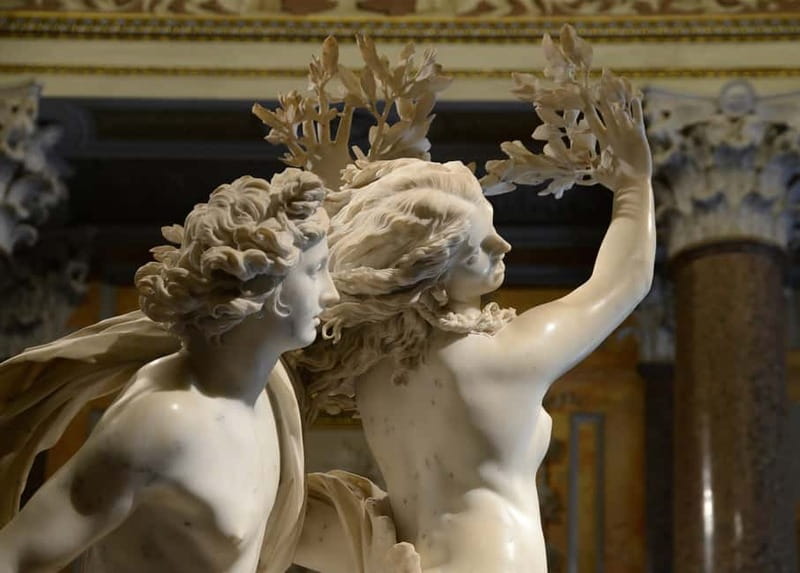
- Bernini’s marble works are a major draw: Look for Apollo and Daphne and David.
- The visit lasts two hours: That is enough for a focused look, but you will need to choose your priorities.
- Small groups are capped at six: This keeps the arrival process personal and easy to follow.
Why the Borghese Gallery is worth your Rome time
The Borghese Gallery is not a giant museum where you spend half a day marching from room to room. It is housed in the former Villa Borghese Pinciana, a 17th-century villa surrounded by the gardens of Villa Borghese. The scale makes a difference. You can see major works without the fatigue that often comes with Rome’s largest collections.
The art is also unusually concentrated. In one visit, you can move from Caravaggio’s forceful painting style to Bernini’s lively sculpture, then on to Raphael, Dosso Dossi, and Canova. That mix gives you a useful cross-section of Italian art rather than one narrow subject or period.
I especially like the way the gallery makes sculpture feel active. Bernini’s figures are not simply posed objects. Apollo and Daphne captures a moment of change, while David shows the biblical hero in the middle of his action. The surrounding rooms give you a chance to see these works at close range, although the exact viewing experience depends on the room arrangement and crowd level during your entry.
More Art Museum Tours in Rome
- Vatican Museums, Sistine Chapel & St. Peter’s Basilica Tour
★ 4.3 · 73,970 reviews - Vatican Museums, Sistine Chapel & St Peter’s Basilica Guided Tour
★ 4.5 · 39,149 reviews - Rome: Vatican Museums, Sistine Chapel and Basilica Tour
★ 4.3 · 16,039 reviews
Meeting the greeter outside the main entrance
You meet the LivTours representative outside the main entrance to the Borghese Gallery. Look for a person holding a LivTours sign. The host speaks English and helps you get through the administrative steps before you enter.
That assistance matters because the booking is not designed as a traditional guided tour. You are not meeting a historian who will lead you from painting to painting. You are meeting a coordinator who gets you into the building, helps with access requirements, and guides you through the mandatory security check.
This can be useful if you want to avoid confusion at the entrance. A language barrier, an unclear meeting point, or a last-minute ticket problem can waste precious time in Rome. Here, the host gives you direct instructions and helps you reach the gallery without handling the process alone.
Still, set your expectations correctly. The greeter’s job ends once your entry is organized. If you want detailed explanations of Caravaggio’s technique or Bernini’s symbolism, you will need to study the works independently or arrange a separate guide. An audio guide is not included, and any audio option costs extra.
Inside 20 rooms of concentrated art
Once you pass security, you can explore the gallery at your own pace. The two-hour duration gives you a clear window for seeing the collection, but it is not unlimited. If you stop for long periods in every room, you may need to return to your top choices rather than inspect every piece equally.
Begin by getting a sense of the villa itself. The setting is part of the experience. This was built as an elegant residence, not as a plain modern museum box, so the rooms frame the art in a more intimate way. The decorative interiors can compete for your attention, but they also explain why the collection feels like a palace filled with art rather than a standard exhibition hall.
You will see both paintings and sculpture. That change of medium keeps the visit moving. Paintings reward quiet observation, while Bernini’s sculptures ask you to walk around them and study the way the marble creates motion, cloth, skin, and hair.
The controlled capacity is one of the most useful features here. Only 360 people are allowed inside at a time. That does not mean every room will be empty, but it helps prevent the packed conditions common at Rome’s busiest sights. You have a better chance of standing in front of a work for a moment without immediately being pushed aside.
Caravaggio’s paintings: drama without distance
Caravaggio is one of the strongest reasons to visit. His paintings often feel close to the viewer, both physically and emotionally. He used intense light and shadow, ordinary-looking faces, and moments of sudden tension to make religious and mythological scenes feel immediate.
David with the Head of Goliath is one of the key works to seek out. The subject is familiar, but Caravaggio gives it a serious emotional charge. David is not presented as a simple victorious hero. The painting asks you to look at the relationship between the young man and the severed head, and to consider the mood behind the act.
Boy with a Basket of Fruit shows another side of the artist. Instead of a violent or sacred scene, you get a young figure and a still-life arrangement. The fruit, skin, leaves, and basket invite close attention, while the boy’s expression keeps the painting from becoming a mere study of objects.
I recommend giving Caravaggio more than a quick glance. First look at the overall effect, then study the light, faces, hands, and background. His paintings often work quickly from a distance, but the small details reward a slower look.
More Borghese Gallery slots:
- Rome: Borghese Gallery Skip-the-Line Ticket & Audioguide
★ 4.3 · 4,318 reviews - Rome: Borghese Gallery Ticket + Audioguide or Guided Tour
★ 4.6 · 3,219 reviews - Rome: Borghese Gallery Guided Tour with Skip-the-Line Entry
★ 4.8 · 2,649 reviews - Rome: Borghese Gallery Skip-the-Line Tickets with Audioguide
★ 4.6 · 2,562 reviews
Bernini’s Apollo and Daphne and David
The sculpture rooms bring some of the gallery’s greatest drama. Bernini’s Apollo and Daphne is a highlight because it captures transformation in progress. Daphne is not simply shown before or after the change. Her body and limbs appear to be turning into a laurel tree, while Apollo reaches toward her.
Walk around it if the space allows. The view from one angle gives you the main action, but other positions reveal the work’s careful balance and the changing relationship between the two figures. You can see why Bernini’s sculpture is so effective when viewed from several sides.
Bernini’s David has a different energy. This is not a calm portrait of the biblical hero after the battle. The figure is caught in the act, with the body twisted and the face focused on the target. The sculpture encourages you to imagine the missing opponent just beyond the marble.
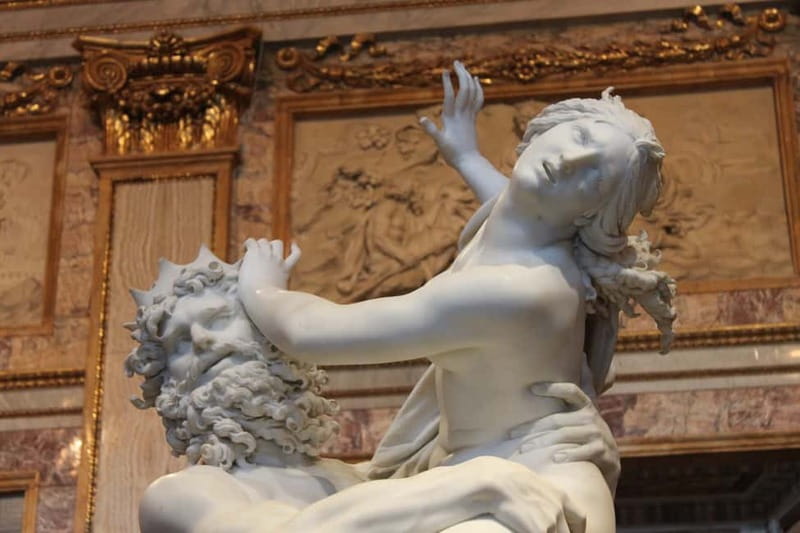
These works are especially valuable if you are trying to understand why Roman Baroque art feels so physical. The figures occupy your space. Their gestures, expressions, and movement connect directly with the room around them.
Raphael, Dosso Dossi, and Canova
Raphael’s The Deposition gives the painting collection a different tone. Raphael is known for balance, clarity, and graceful arrangement, so this work provides a useful contrast with Caravaggio’s stronger light and emotional immediacy. Take time to look at how the figures are arranged and how the scene guides your eye across the surface.
Dosso Dossi’s Melissa adds another unusual note. The painting is less instantly familiar than the works by Raphael or Caravaggio, which makes it worth seeking out rather than passing by. You can use it as a reminder that the Borghese collection is not built only around the most famous names.
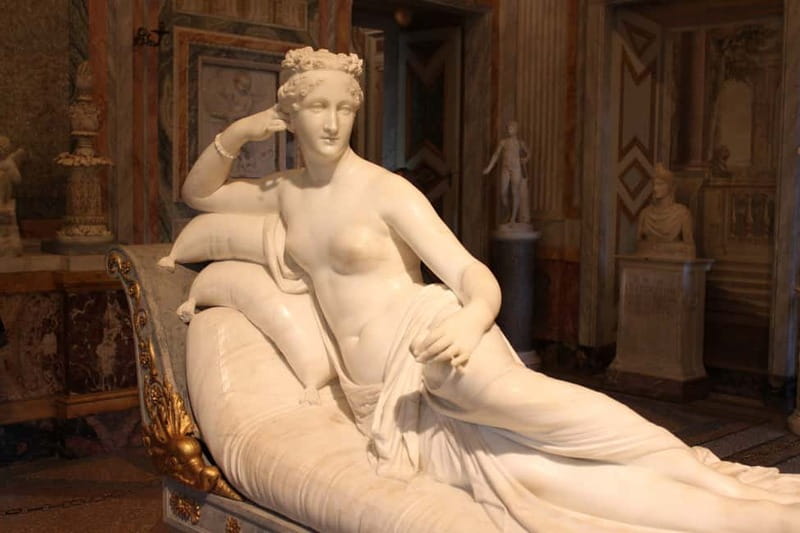
Canova’s Pauline Bonaparte as Venus Victrix is one of the gallery’s best-known sculptures. Pauline is shown as Venus, the goddess of love, reclining on a couch. The polished marble and idealized pose create a different mood from Bernini’s action scenes. Here, the appeal is controlled elegance and surface finish.
Together, these works make the gallery feel varied without becoming scattered. You can compare the calm beauty of Canova with Bernini’s movement, Raphael’s composition with Caravaggio’s drama, and the painting techniques of different periods within a short walk.
What two hours really gives you
Two hours is a sensible length for this gallery. You have enough time to see the major works and spend meaningful moments with your favorites. You probably will not study every painting in equal depth, especially if you stop for photographs, read labels, or linger in the sculpture rooms.
I suggest choosing a short list before you enter:
- Caravaggio’s David with the Head of Goliath
- Caravaggio’s Boy with a Basket of Fruit
- Bernini’s Apollo and Daphne
- Bernini’s David
- Raphael’s The Deposition
- Dosso Dossi’s Melissa
- Canova’s Pauline Bonaparte as Venus Victrix
Once inside, find these works first. Then use the remaining time to explore nearby rooms. This approach protects you from leaving with the frustrating feeling that you missed the main pieces.
The visit is self-guided, so your pace is your own. You can spend ten minutes on a Bernini sculpture or move more quickly through a room that does not interest you. That freedom suits independent museumgoers, but it also means you need to take responsibility for planning your time.
Is $175 a fair price?
At $175 per person, this is an expensive way to visit a museum if you only want a ticket. The value depends on how much you care about assisted entry and how difficult it is for you to secure access on your own.
You are paying for skip-the-line entry, help from a coordinator, and a small group limited to six people. The host handles the administrative requirements and mandatory security process, which can be useful if you want a straightforward arrival. You also benefit from the gallery’s limited capacity once inside.
You are not paying for a guided art lesson. There is no included museum guide, food, drink, or hotel transportation. If you need context for every work, this arrangement may feel thin for the price. A direct entry option could make more sense if you are comfortable managing the museum on your own.
The price makes the most sense for a short Rome visit when your schedule is tight and getting into the Borghese Gallery is a top priority. It makes less sense for a flexible visitor who can arrange entry independently and does not need a greeter.
Who should book this experience?
I would choose this option if you want the Borghese Gallery on a fixed schedule and prefer having someone meet you at the door. It suits first-time visitors who want help with access but do not need a full guided tour.
It also works well for a small party. With no more than six participants, the meeting process should be easier to follow than in a large group. The activity is wheelchair accessible, which is useful for visitors who need that feature confirmed before booking.
Art lovers who already know Caravaggio, Bernini, Raphael, or Canova may enjoy the freedom to create their own route. You can focus on the works that matter most to you instead of following another person’s timetable.
I would hesitate if you expect a guide to explain the collection. The greeter gets you inside, but the gallery visit is independent. One practical warning is that an audio guide costs extra, and its quality may not meet your expectations. Bring your own background knowledge or plan to read the gallery labels carefully.
The booking also gives you some flexibility: you can cancel up to 24 hours in advance for a full refund, and you can reserve now and pay later. Those terms are useful when your Rome schedule is still shifting.
My recommendation for the Borghese Gallery
Book this experience if reliable assisted entry is more important to you than getting the lowest possible price. The collection is exceptional, the two-hour format is manageable, and the 360-person limit helps protect the visit from the worst crowding.
Skip it if you are buying it for a guided interpretation of the art. In that case, the lack of an included gallery guide is a serious gap. You would be better served by a tour that includes an art specialist, even if the group is larger.
For the right visitor, this is a practical access service wrapped around one of Rome’s finest art collections. Go in with a clear plan, seek out Caravaggio and Bernini first, and treat the greeter as an entry coordinator rather than a museum teacher.
FAQ
How long does the Borghese Gallery experience last?
The experience lasts two hours.
Where do I meet the host?
You meet the host outside the main entrance to the Borghese Gallery. The representative will be holding a LivTours sign.
What does the greeter help with?
The greeter helps you access the gallery, complete the administrative requirements, and pass through the mandatory security check.
Is a guided tour of the gallery included?
No. The activity includes an English-speaking host who helps with entry, but not a guide who explains the artworks inside.
Which languages are available?
The host or greeter service is available in English.
How many people can join the small group?
The group is limited to six participants.
Is the Borghese Gallery wheelchair accessible through this activity?
Yes. The activity is listed as wheelchair accessible.
Can I cancel for a refund?
Yes. You can cancel up to 24 hours in advance for a full refund.
More Skip-the-Line Tickets in Rome
- Vatican Museums & Sistine Chapel Skip-the-Line Entry Ticket
★ 4.4 · 13,838 reviews - Rome: Vatican Museums & Sistine Chapel Skip-the-Line Ticket
★ 4.3 · 8,103 reviews - Skip the Line: Vatican Museum, Sistine Chapel + Optional Basilica
★ 4.5 · 6,181 reviews - Skip the line: Vatican Museums, Sistine Chapel & St Peters Tour
★ 4.5 · 1,888 reviews
Just added around Rome
- Colosseum,Vatican Museum & Sistine Chapel in One Day Guided Tour★ 3.5 · 9 reviews
- Vatican Museums and Sistine Chapel last entry Guided Tour★ 5.0 · 3 reviews
- Private Tour Of Rome Highlights And Vatican Museums Skip-The-Line all included★ 5.0 · 4 reviews
- Borghese Gallery Admission Ticket with Audioguide★ 4.0 · 64 reviews
- Caravaggio Art Walking Tour of Rome with Pantheon Visit★ 4.5 · 35 reviews
- Borghese Gallery Skip the Line Guided Tour★ 4.5 · 23 reviews
- Borghese Gallery Ticket with Audioguide★ 3.5 · 51 reviews
- Borghese Gallery VIP Tour – Skip the Line Tickets★ 5.0 · 2 reviews
Art Museum Tours in Rome, compared.
Vatican Museums, Sistine Chapel & St. Peter’s Basilica Tour
Read our review →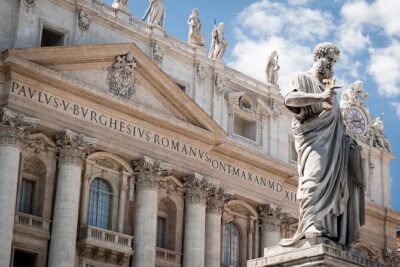
Vatican Museums, Sistine Chapel & St Peter’s Basilica Guided Tour
Read our review →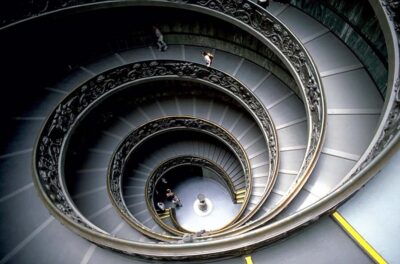
Vatican Museums, Sistine Chapel and Basilica Tour
Read our review →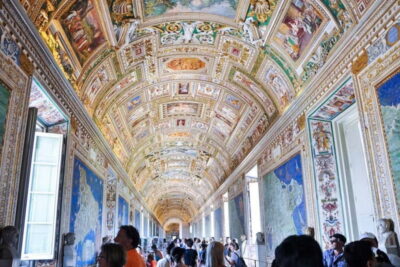
Vatican Museums & Sistine Chapel Skip-the-Line Entry Ticket
Read our review →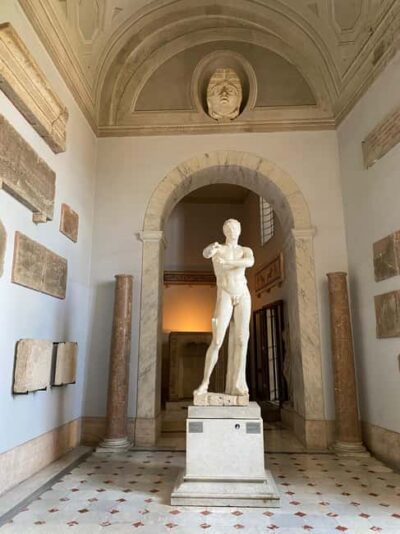
Vatican Museums, Sistine Chapel & Basilica Tour
Read our review →
Vatican Museums & Sistine Chapel Guided Tour
Read our review →
Vatican Museums & Sistine Chapel Skip-the-Ticket-Line Tour
Read our review →
Vatican Museums, Sistine Chapel and St. Peter’s Basilica Tour
Read our review →Browse the lists this tour appears in