
REVIEW · FLORENCE
Florence: David’s Accademia Gallery Guided Tour
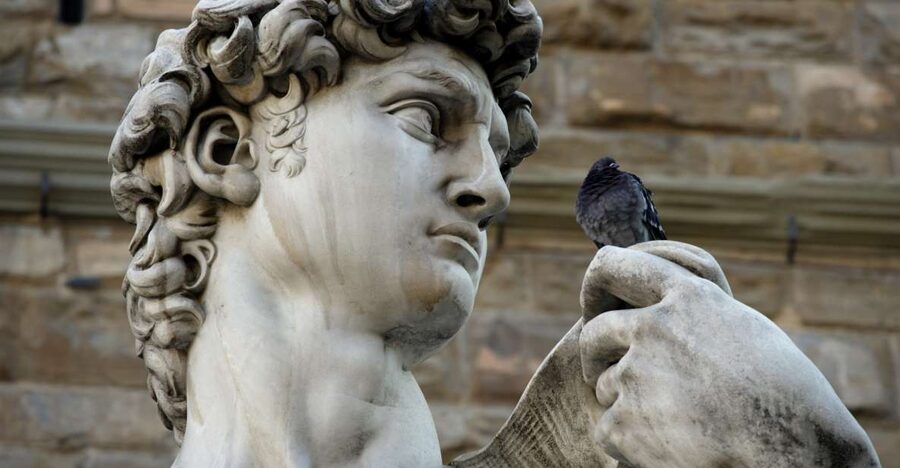
Michelangelo’s David is the star here, and rightly so. The Accademia Gallery gives you a close look at the famous marble figure, plus Michelangelo’s unfinished Prisoners and paintings by Botticelli, Ghirlandaio, and other Florentine artists. A guide helps turn a quick statue stop into a lesson about Renaissance art, politics, and technique.
I like the priority entry and the one-hour format. You spend your limited Florence time inside the museum rather than standing in the regular line, and the short tour suits a busy day. I also like the focus on details you could miss alone, such as how Michelangelo’s unfinished figures appear to struggle out of the stone.
The main caution is timing. Some visitors waited after the scheduled start because of late arrivals or delays at the entrance. The meeting point can also change, so check your messages before setting off, and arrive with only a small bag.
Key points to know before booking
- David gets the full explanation: Learn why Michelangelo’s sculpture looks so lifelike and how the work came to be.
- The Prisoners add depth: These unfinished sculptures offer a useful look at Michelangelo’s carving method.
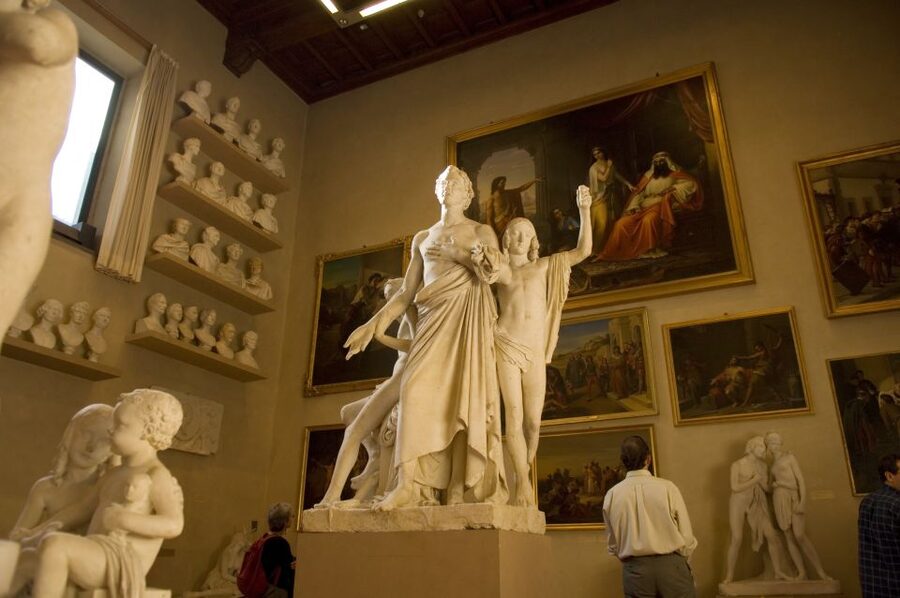
- Guides make the paintings easier to read: The tour covers Gothic works and Renaissance art by Botticelli, Ghirlandaio, and others.
- The visit lasts one hour: It is a concentrated introduction, not a slow museum afternoon.
- Priority entry saves effort: You enter through a separate entrance, subject to security checks and museum procedures.
- Guide quality can vary by assignment: Past guides praised by name include Rosa, Martina, Glenda, Giacomo, Mario, Christian, and Steffania.
Why this short Accademia visit works
Florence has enough art to fill several days, but many people have only a morning or afternoon. This tour targets one of the city’s most important museums without asking you to commit half a day.
At $53 per person, the cost is higher than entering a museum alone, assuming you can secure an ordinary ticket and manage the line. The value comes from combining a priority ticket with a live guide and audio equipment. If you want only a quick look at David, the price may feel steep. If Renaissance art is unfamiliar to you, the explanation can make the visit far more rewarding.
The one-hour length keeps the pace brisk. You will see the principal works, hear the main stories, and leave with a clearer idea of how Florentine Gothic art differs from the Renaissance. You will not have unlimited time for every room, so this is best viewed as an introduction rather than a full museum study.
The tour is offered in English or Spanish. It may be shared with other people or arranged privately, depending on the option you choose. A private visit should appeal to families or couples who want to ask more questions, while a shared tour generally makes more sense if you want the guided experience at the simplest possible cost.
More Art Museum Tours in Florence
- Florence: Skip-The-Line Uffizi Gallery Timed Entry Ticket
★ 4.5 · 27,832 reviews - Florence: Uffizi Priority Ticket & Masterpieces Audio App
★ 4.2 · 6,402 reviews - Florence Accademia Gallery Tour with Entrance Ticket Included
★ 4.5 · 6,148 reviews
Meeting your guide near the Accademia
Your meeting point depends on the booking option. Do not assume every departure gathers in exactly the same place. Check the confirmation and any message from the provider before leaving your hotel.
Arrive early. One past departure lost time when late arrivals held up the group, while another visitor waited about 45 minutes because the guides were delayed. Those reports do not define every departure, but they show why you should avoid scheduling a train, museum, or dinner immediately afterward.
The entrance area can be crowded, and clear directions matter. One visitor found the guide difficult to locate because the signage could have been better. Keep your phone available, watch for a staff member or guide, and allow extra time before the scheduled start.
Bring your passport or identity card. The museum can require identification, and security checks are part of the entry process.
Getting inside with priority admission
The tour uses a separate entrance for priority access. That is useful at the Accademia, where David draws a steady stream of people. Priority entry does not mean you skip every step. You still pass through security, and the museum controls entry according to its own procedures.
Pack lightly. Large bags, large backpacks, helmets, scissors, blades, and other metal objects that could pose a danger are not allowed. The museum does not have a cloakroom, so you cannot count on leaving oversized items at the entrance.
A water bottle is allowed if it holds no more than 0.5 liters. That small rule is easy to miss, especially on a warm Florence day.
The tour includes audio equipment so you can hear the guide in the museum. This matters in crowded rooms, where a soft voice can disappear quickly. Stay close enough to follow the explanation, especially when the group moves between works.
First look at Michelangelo’s David
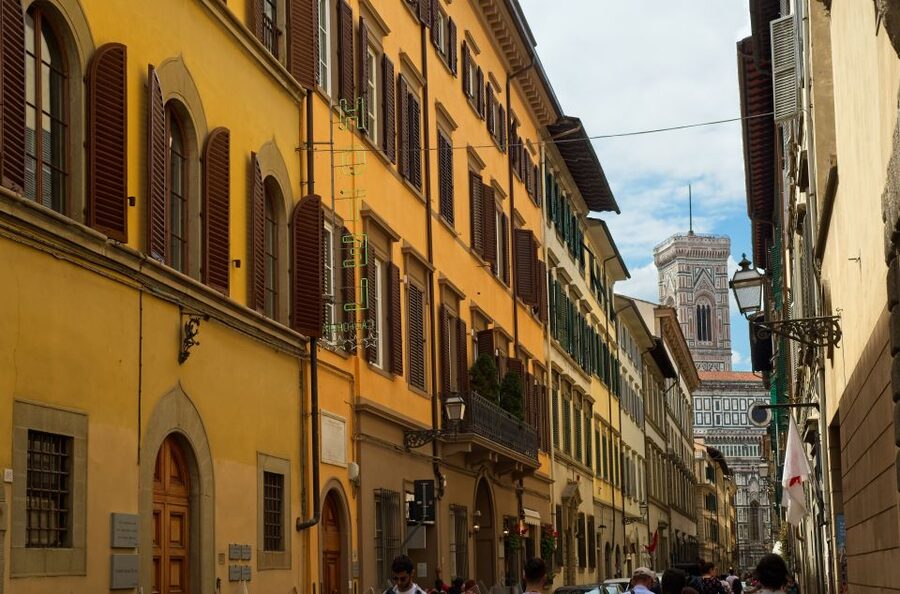
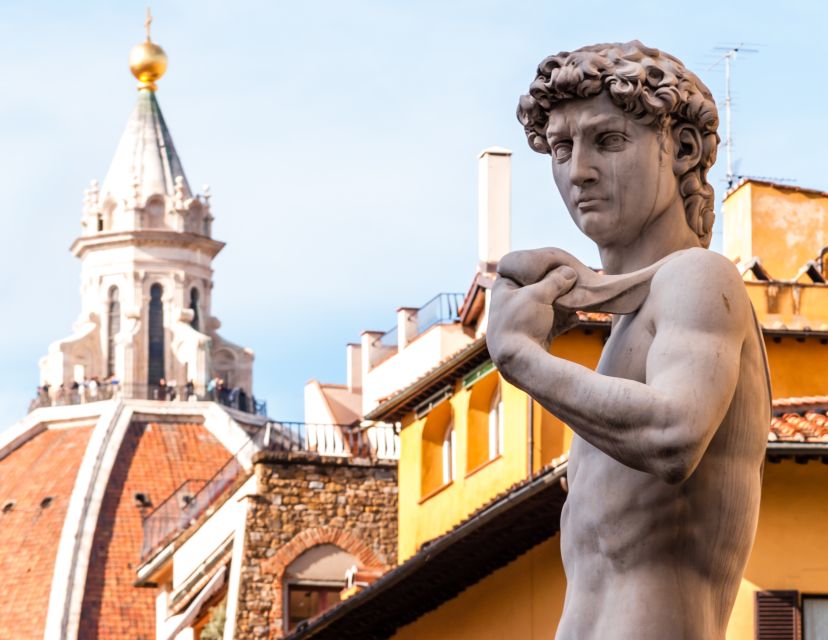
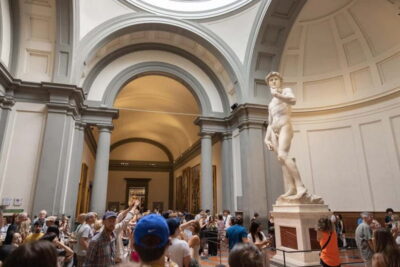
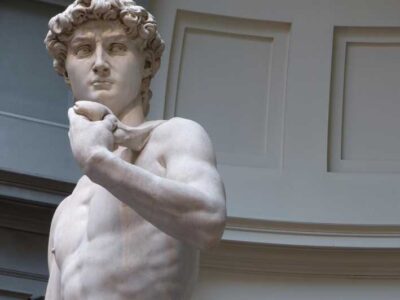
The main corridor opens your view toward David, and the first sight is still powerful even after seeing countless photographs. The sculpture is more than a large marble figure. Its pose captures the moment before action, with the body alert and the face focused.
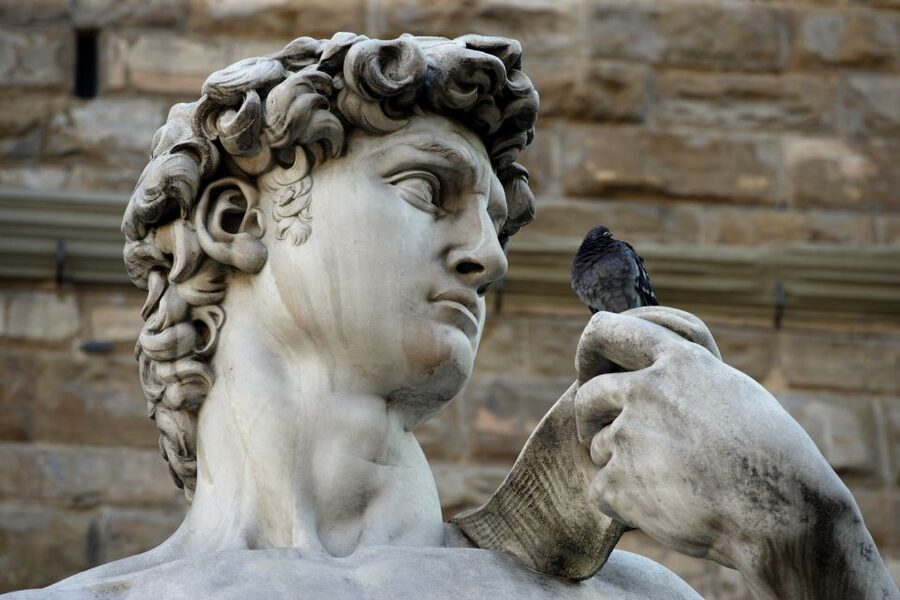
Your guide explains why the statue is often praised for its lifelike quality. You can look at the balance of the body, the turn of the head, the hands, and the way Michelangelo created the sense of a living person from a single block of stone.
This is where a guide earns the fee. Alone, you may recognize David but miss the reasons the work feels so convincing. The explanation gives you a way to look beyond the famous name and notice proportion, tension, and expression.
The tour also places David in the setting of Renaissance Florence. The sculpture reflects a period that valued the human body, close observation, and the idea that art could express intelligence as well as beauty. You receive this context without needing to read a long museum panel or guidebook.
The room is a major stop, but it is not a private viewing. Other people will be there, and you may need to shift position as the group gathers. If you want uninterrupted photographs or a quiet period with the statue, plan to return on your own if your admission arrangements allow it. The guided hour is built around explanation, not extended solitude.
More ways to see the David:
- Florence: Accademia Gallery Guided Tour
★ 4.6 · 4,156 reviews - Uffizi & Accademia Timed Entry: Small Group Duomo Walking Tour
★ 4.5 · 3,630 reviews - Florence: Accademia Gallery Skip-the-Line Guided Tour
★ 4.8 · 3,044 reviews - Florence: Art Tour, Accademia Gallery and David
★ 4.5 · 2,407 reviews
Michelangelo’s Prisoners and the marks of the chisel
The Prisoners, also called the Slaves, are among the most useful works on this visit because they show Michelangelo’s process. These figures remain incomplete, with bodies that seem to emerge from the marble.
Your guide uses them to explain carving technique and the idea of forms being released from stone. The unfinished surfaces make the sculptures easier to study than a polished figure. You can see how much of the final effect depends on removing material, shaping the body, and deciding what to leave visible.
For me, this part gives David a stronger connection to the craft behind the masterpiece. You are not just looking at a finished result. You are seeing the rough stages and the tension between the stone and the intended figure.
The Prisoners also slow the tour down in a useful way. David is so famous that it can swallow the rest of the museum. These works remind you that the Accademia is not simply a one-statue stop.
Gothic paintings and the turn toward the Renaissance
The Accademia also holds paintings from Florence’s Gothic and Renaissance periods. A guide helps you compare the ornate Gothic style with the later humanist approach.
Gothic works may place greater emphasis on decoration, formal poses, patterned surfaces, and religious symbolism. Renaissance artists became more interested in believable bodies, space, proportion, and the individual presence of their subjects. The change did not happen overnight, and seeing the works together helps you follow the shift.
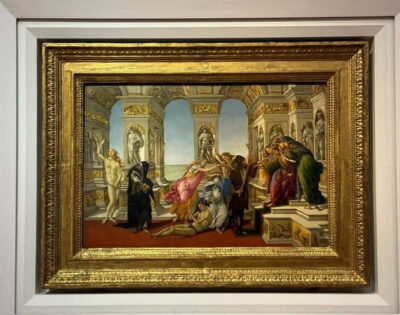
The tour includes paintings by Botticelli and Ghirlandaio, along with other important Florentine artists. You may recognize Botticelli’s name from works elsewhere in Florence, but the guide’s explanation helps you place these paintings within the wider development of Renaissance art.
This portion is especially useful if your knowledge of Italian art begins and ends with David. It gives you a wider frame, even though the visit remains short. You will not receive a full survey of Florentine painting, but you should leave with a clearer sense of the artistic changes taking place around Michelangelo’s time.
The guide’s role makes the difference
The strongest part of the experience depends on the person leading it. Past departures were led by guides named Rosa, Martina, Glenda, Giacomo, Mario, Christian, Steffania, and others. Giacomo was praised for storytelling, while Mario was described as entertaining as well as informative. Rosa and Martina received particularly warm comments for their command of the museum and Michelangelo’s work.
Guide assignments can change, so you should not book expecting a specific person unless the provider confirms that directly. Still, the range of positive names suggests that the company has several guides who can bring personality to the visit.
The best guides do more than recite dates. They explain why a sculpture looks the way it does, connect the art to Florentine culture, and point out details that are easy to miss. One guide helped a family understand the philosophy behind Renaissance art, not just the story of David. That is the kind of added value you want from a paid museum tour.
There is also a practical benefit. Art museums can become tiring when every label demands your attention. A live guide filters the collection, giving you a path through the most important pieces and saving you from reading every wall panel.
What the one-hour schedule really means
An hour is enough for the central works, but it goes quickly. Expect the tour to concentrate on David, the Prisoners, selected Gothic paintings, and Renaissance works. You will not have time to examine every gallery at length.
That short schedule is a strength if you are building a full day in Florence. You can fit the Accademia between other sights without giving up an entire morning. It also works well for first-time museum visitors who want a clear introduction rather than a long academic lecture.
The drawback is that you may feel rushed if you want to sketch, take extensive notes, or study minor works. The guide must keep the group moving, especially when the museum is busy. If you prefer to set your own pace, consider treating the guided hour as your orientation, then spending additional time alone if your ticket conditions permit.
One past visitor said the actual museum entry began later than planned, but the guide then delivered a very strong art history lesson. Build a cushion into your schedule so a late start does not create stress.
Who should book this tour

I would recommend it to first-time visitors to Florence, people who want historical context, and anyone who recognizes David but wants to understand why the sculpture matters. Families can also benefit because a guide gives children and adults something specific to look for.
It is a good choice if you want a compact museum stop in English or Spanish. The separate entrance and included audio equipment reduce some of the practical friction, while the guide keeps the visit focused.
Independent art students and museum regulars may find the hour too limited. You may prefer a longer, self-directed visit if you already know the Accademia well or want to explore every room.
The accessibility information needs careful checking. The activity details describe the tour as wheelchair accessible, but the same information also says it is not suitable for wheelchair users. Those statements conflict, so contact the provider before booking if you use a wheelchair or have specific mobility needs.
Free cancellation is available up to 24 hours before the start, and you can reserve now and pay later. Those policies help if your Florence plans are still shifting, but they do not remove the need to verify the meeting point and start time.
Should you book the Accademia guided tour?
Book this if David is high on your Florence list and you want more than a photograph. The one-hour format, priority entry, and live explanation make it a practical introduction, especially when you are short on time.
I would not choose it solely to avoid all waiting, since security and meeting delays can still affect the schedule. I would choose it for the guide’s interpretation of David, the Prisoners, and the paintings around them.
At $53, the tour is best value for you if the story behind the art matters as much as seeing the statue itself. Arrive early, carry only a small bag, confirm the meeting point, and leave space in your day for an occasional delay. Do that, and this can turn a famous Florence stop into a much more satisfying lesson in how Renaissance art works.
FAQ
How long does the Accademia Gallery tour last?
The tour lasts one hour. Starting times vary, so check availability when booking.
What language is the tour offered in?
The live guide is available in English or Spanish.
Is Michelangelo’s David included?
Yes. The tour focuses on Michelangelo’s David and explains the sculpture’s history, appearance, and artistic importance.
Will I see Michelangelo’s Prisoners?
Yes. The tour includes Michelangelo’s Prisoners, also called the Slaves, and discusses their unfinished forms and carving techniques.
Which other artists are covered?
The tour includes Renaissance and Gothic works, with paintings by Botticelli, Ghirlandaio, and other artists.
Does the price include museum admission?
Yes. Priority, skip-the-line tickets are included, along with the tour guide and audio equipment.
Do I need to bring identification?
Yes. You should bring a passport or identity card.
Can I bring a large backpack?
No. Large bags and backpacks are not allowed, and the museum does not have a cloakroom. Sharp or potentially dangerous metal items may be collected during security screening.
Is the tour wheelchair accessible?
The activity information gives conflicting guidance. It lists the tour as wheelchair accessible but also says it is not suitable for wheelchair users, so contact the provider before booking to confirm whether the current arrangement meets your needs.
Just added around Florence
- Skip the line: Uffizi small group and walking tour of Florence★ 4.5 · 17 reviews
- Florence Private Walking Tour Including Uffizi and Accademia★ 3.5 · 4 reviews
- Uffizi Gallery Italian guided Tour semi private★ 4.5 · 9 reviews
- Private Tour: Accademia Gallery and City Tour★ 5.0 · 10 reviews
- Private Tour: The Academy Gallery★ 5.0 · 6 reviews
- Uffizi Express Entrance -private tour★ 5.0 · 9 reviews
- Uffizi and Palazzo Vecchio Combo Private Tour★ 5.0 · 3 reviews
- VIP Priority Access: Uffizi Gallery- Guided Experience★ 4.5 · 94 reviews
Art Museum Tours in Florence, compared.
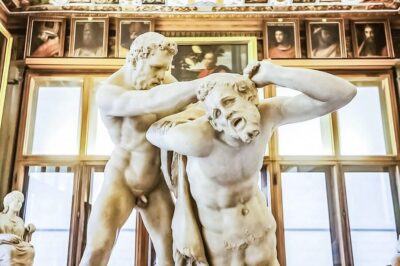
Skip-The-Line Uffizi Gallery Timed Entry Ticket
Read our review →
Florence Accademia Gallery Tour with Entrance Ticket Included
Read our review →
Uffizi Gallery: Renaissance Masterpieces Guided Tour
Read our review →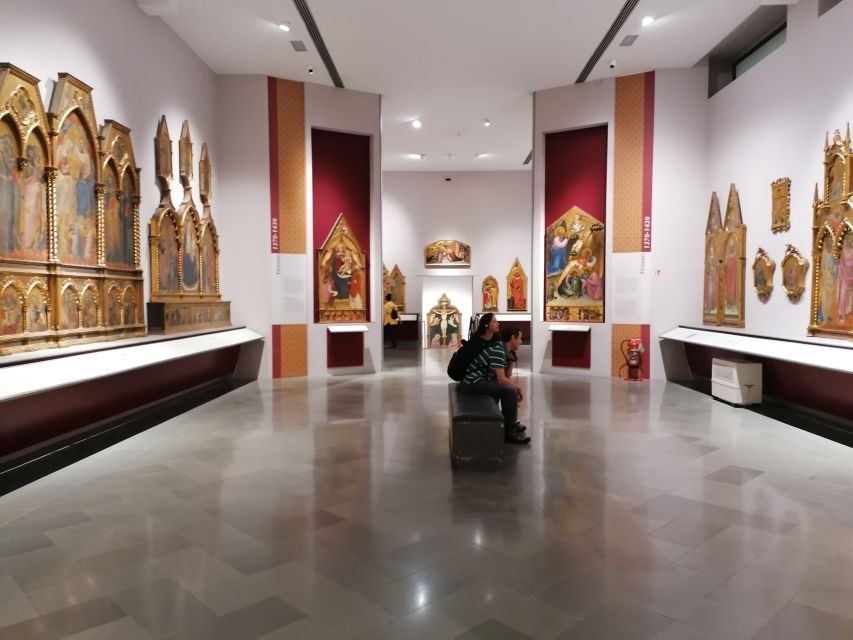
Uffizi Gallery Timed Entry Ticket & Audio Guide
Read our review →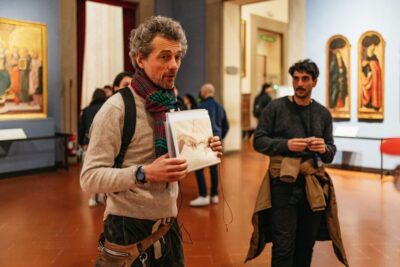
Accademia Gallery Guided Tour with Entry Ticket
Read our review →Browse the lists this tour appears in