
REVIEW · ITALY
Rome: Private Borghese Gallery Tour
The Borghese Gallery packs an astonishing sweep of art into a small, lavish palace. In one room, you may face an ancient Hermaphrodite sculpture; in another, Bernini’s marble seems ready to breathe. The collection is the work of Cardinal Scipione Borghese, a powerful 17th-century prince of the Church who gathered art with ambition, money, and sometimes ruthless force.
I like the private format, which gives you room to ask why Bernini’s figures look so alive or how Caravaggio turned a criminal exile into a subject for art. I also like the focused 2.5-hour route: long enough for major works, short enough to leave you with energy for Rome. The main caution is the price, $321.73 per person, which makes this a serious splurge rather than a casual museum stop.
Key points
- See Raphael’s Deposition, a famous painting Cardinal Borghese had removed from its altar in Perugia for his own collection.
- Study Bernini’s astonishing marble portraits, including the pair that captures Scipione Borghese’s broad face and piercing stare.
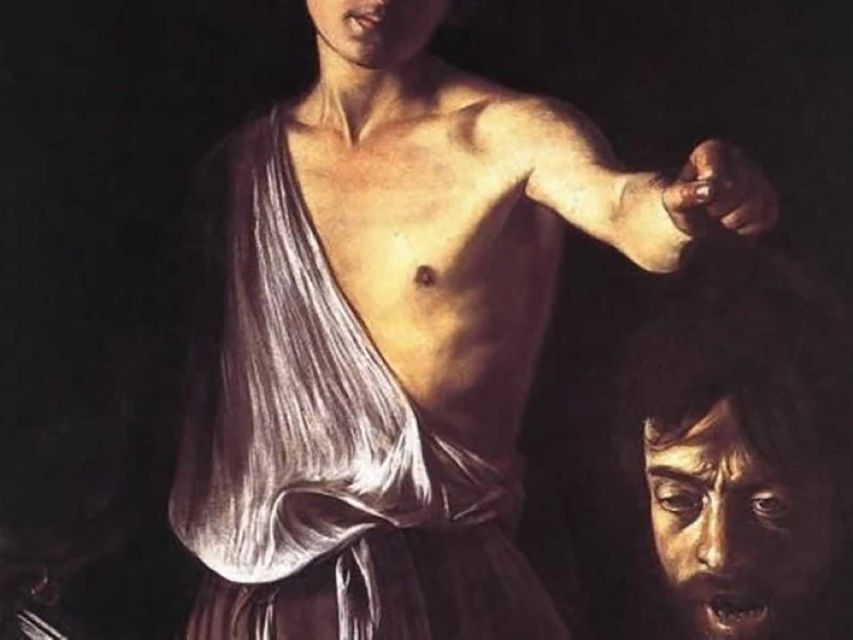
- Follow Caravaggio’s rise and fall through Boy with a Basket of Fruit, Saint Jerome, and David with the Head of Goliath.
- Enter through a skip-the-line route, with all admission fees and taxes included.
- Get a private English or Italian-speaking guide, so the visit can match your interests and questions.
- Meet at the gallery entrance in Villa Borghese, not at a city-center transportation hub.
Why the Borghese Gallery feels different from Rome’s bigger museums
The Borghese Gallery is not simply a room full of famous paintings. It was built around the tastes and ambitions of one collector, Cardinal Scipione Borghese. He wanted the finest sculpture and painting he could obtain, then placed it inside a palace that advertised his wealth.
That setting changes how you see the art. You are not moving through a giant public museum with hundreds of unrelated rooms. You are walking through a princely home where ancient sculpture, Renaissance painting, and Baroque drama were assembled to impress.
Scipione was a cardinal, but luxury interested him more than modesty. His desire for great art could be aggressive. He had artists imprisoned so he could take their works, and he arranged for Raphael’s Deposition to be removed from a church altar in Perugia.
A good guide brings out this tension. The gallery is beautiful, but its story is also about power. Art here was not only made for devotion or public admiration. It was collected to strengthen status, display taste, and show that one man could command the best works in Rome and beyond.
More Borghese Gallery slots:
- Rome: Borghese Gallery Skip-the-Line Ticket & Audioguide
★ 4.3 · 4,318 reviews - Rome: Borghese Gallery Ticket + Audioguide or Guided Tour
★ 4.6 · 3,219 reviews - Rome: Borghese Gallery and Gardens Guided Small-Group Tour
★ 4.6 · 2,783 reviews
Meeting at the Villa Borghese entrance
You meet your guide at the entrance of the Borghese Gallery in Villa Borghese Park. Look for a Through Eternity sign or flag. This is a useful detail because Villa Borghese is a large park, and arriving at the general park area is not enough.
Transportation to the meeting point is not included, so you arrange your own way there. The tour also ends at the gallery entrance, making it easy to continue through Villa Borghese or head elsewhere in Rome after the visit.
Give yourself time to find the entrance. The meeting point is not described as a hotel lobby or central piazza, and a late arrival could be stressful when your admission is tied to a timed museum visit.
You should also wear comfortable shoes. The tour lasts 2.5 hours and takes place on foot inside the museum. Food, drinks, luggage, large bags, backpacks, and umbrellas are not allowed, so pack lightly.
Skip-the-line entry and a private pace
Admission fees, taxes, and skip-the-line tickets are included. The separate entrance matters because the Borghese Gallery operates with timed access, and waiting around outside can cost you valuable time in a museum that already limits each visit.
The private group format is the real reason to consider this experience instead of entering independently. You get one guide assigned to your group, rather than sharing an explanation with a large crowd. You can ask about a particular artist, slow down at a favorite work, or move on when a subject is less important to you.
Headsets are included for groups of six or more. Smaller private groups may not need them, since your guide is speaking directly to you.
The guide is available in English or Italian. The available information does not give the individual guide’s name, so you cannot request a named guide based on this description. What you can expect is a live specialist who explains the collection in person rather than sending you through with an audio recording.
Raphael’s Deposition and the cost of private collecting
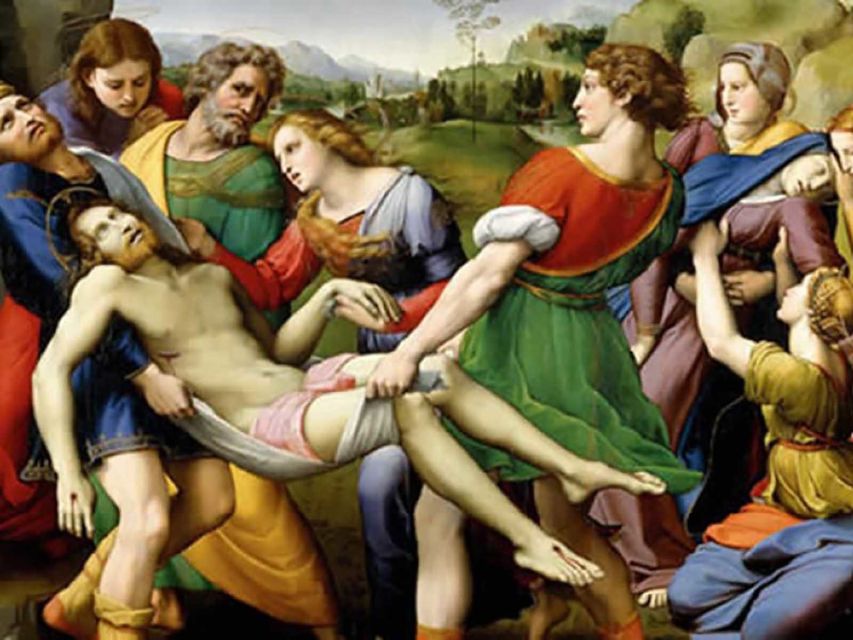
Raphael’s Deposition is one of the key works on the route. The painting shows the removal of Christ from the cross, combining grief, movement, and carefully arranged figures.
The work also carries a story that reveals Scipione’s methods. He had the painting forcibly removed from its altar in Perugia so it could be displayed at his villa. That act gives the painting a second layer of meaning. You are not only looking at Raphael’s skill. You are also seeing the result of a cardinal’s determination to own what he admired.
This is where a private guide can add real value. Without context, you might note the graceful figures and strong composition, then move on. With an explanation of the painting’s history, you can connect the image to the collector who claimed it and to the wider contest for art in Baroque Rome.
The guide’s job is not just to name the artist and date. The strongest part of this tour should be helping you see why these works mattered to the people who commissioned, stole, bought, and displayed them.
More private gallery tours in Italy:
- Private Vatican Museums and St. Peter’s Basilica Early Bird Tour
★ 5.0 · 980 reviews - Florence: Uffizi Gallery Discovery Private Guided Tour
★ 4.5 · 658 reviews - Florence: Uffizi Highlights, In-Depth Masterclass or Private Tour
★ 4.5 · 641 reviews - Private Vatican Museums Tour with Sistine Chapel & St. Peter’s Basilica
★ 4.5 · 547 reviews
Bernini’s marble people
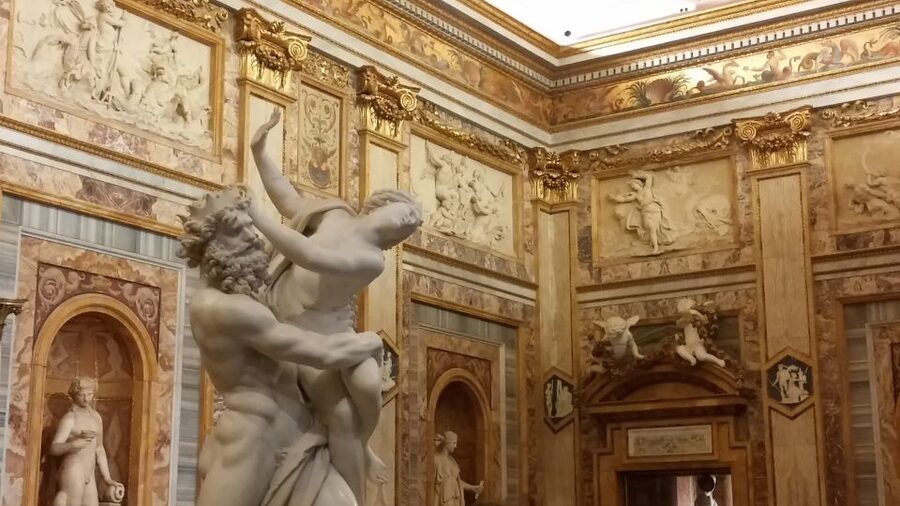
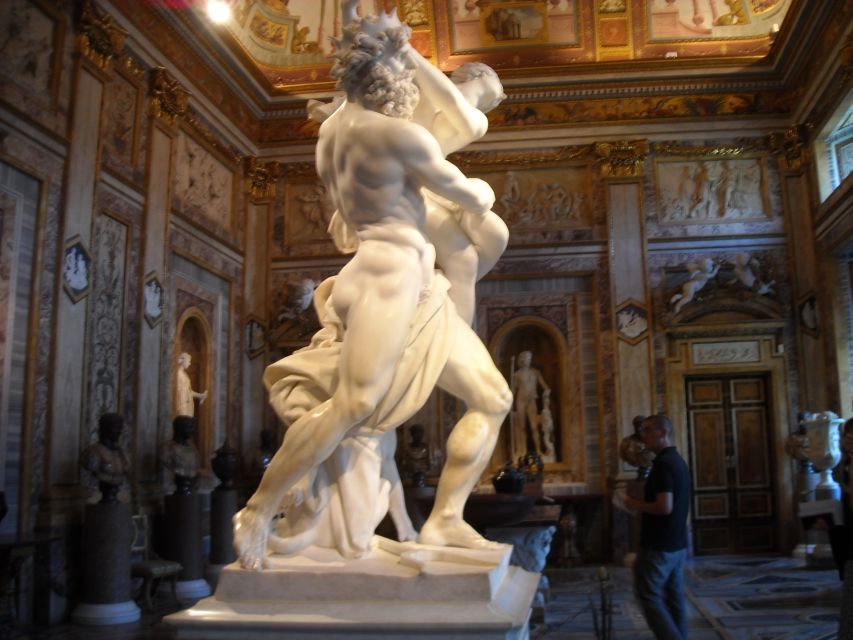
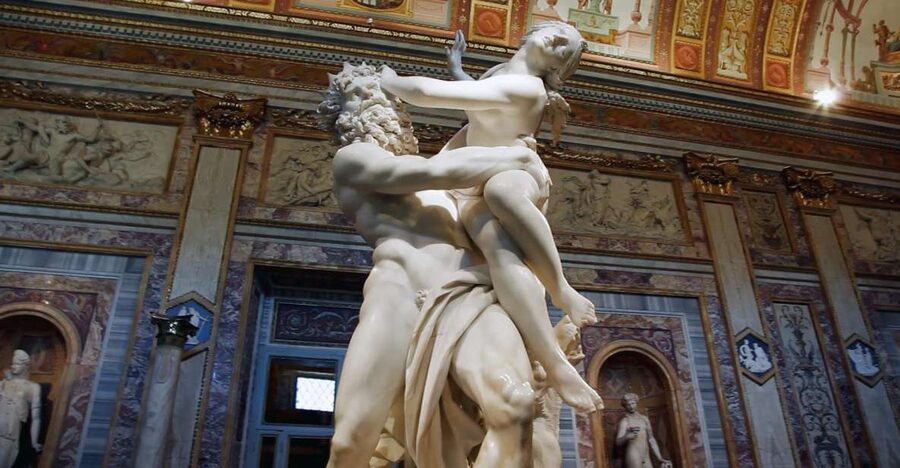
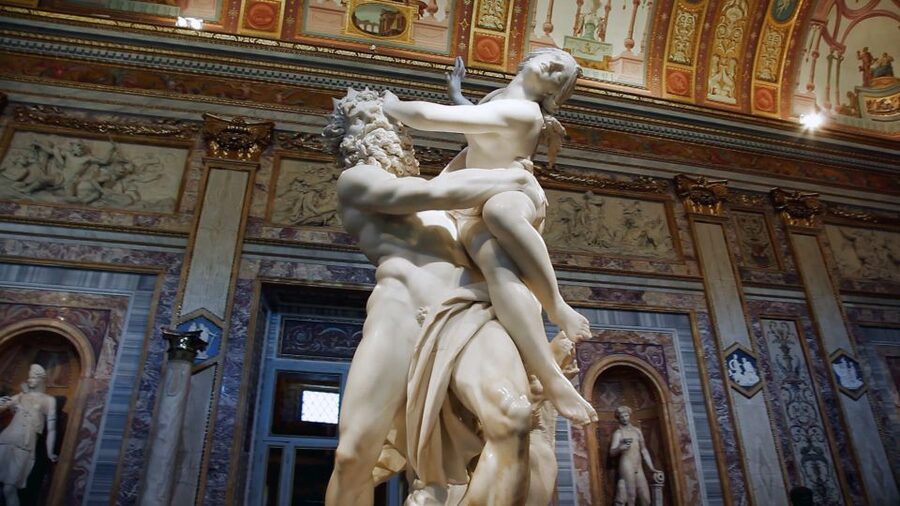
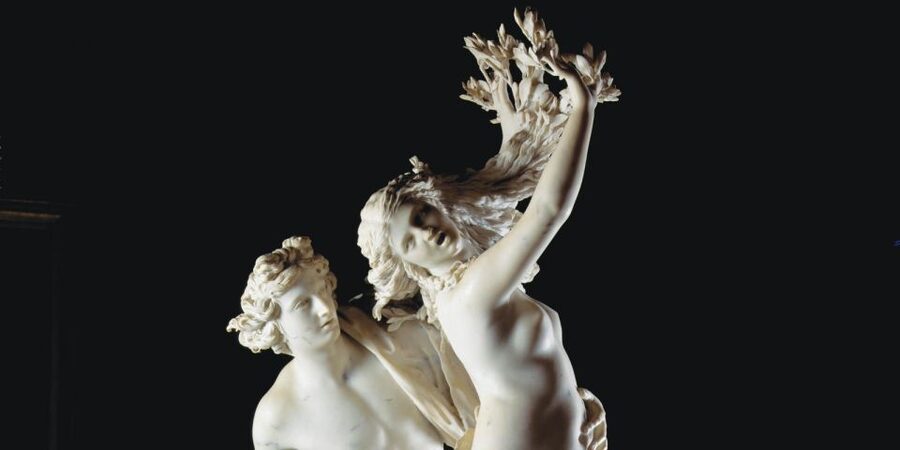
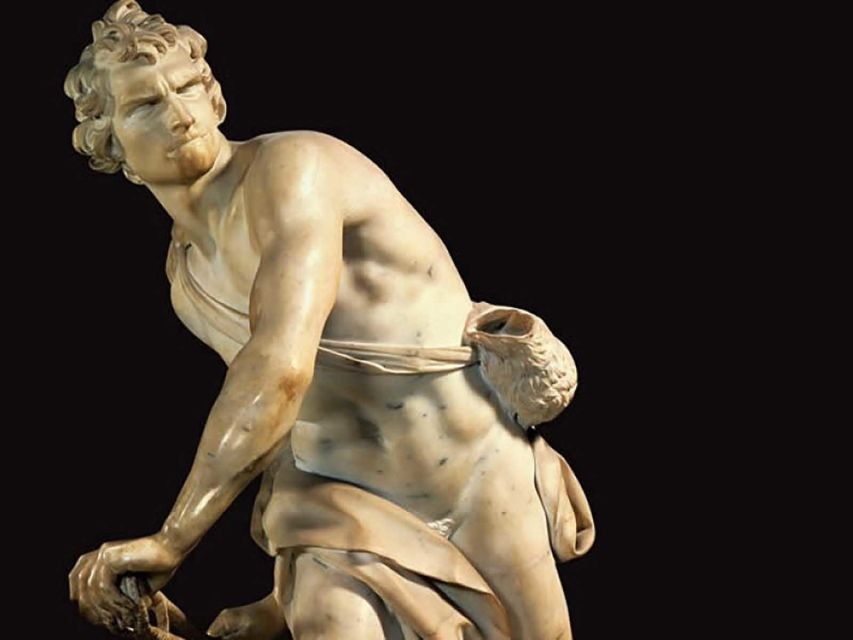
Bernini is the gallery’s great showman. His sculptures are famous for technical skill, but the important point is how much feeling he pulls from hard stone.
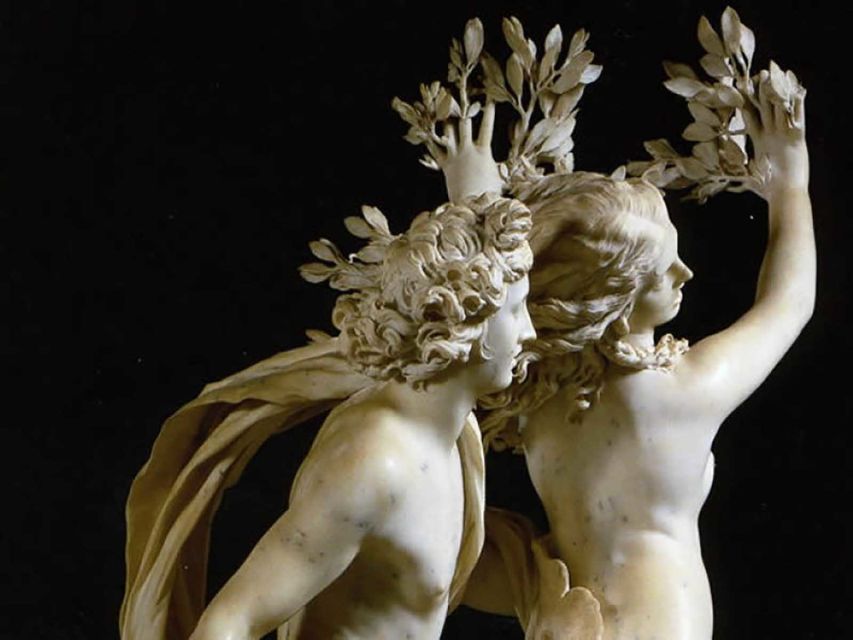
The pair of Bernini portraits of Scipione Borghese is especially revealing. The cardinal appears with a portly face and a penetrating stare. The two versions capture subtle changes in expression, making the marble feel less like a formal likeness and more like a person caught in a moment.
Look closely at the face. Bernini’s talent is not only in polished surfaces or realistic details. It is in the sense that the subject is thinking, reacting, and about to speak. That illusion of life is central to the Baroque style.
The gallery also gives you the chance to see Bernini’s virtuosity in a setting connected directly to his patron. Scipione did not collect Bernini as a distant historical figure. He helped create the environment in which the sculptor’s ambition could flourish.
A guide can help you notice the practical details that are easy to miss on your own: the direction of a gaze, the twist of a body, and the way the sculpture changes as you move around it. In a private group, you can take a moment to look from different angles without worrying about holding up a large party.
Caravaggio’s climb and collapse
Caravaggio’s paintings form one of the most dramatic threads in the gallery. The works show an artist who could make ordinary people and biblical figures feel startlingly immediate.
Boy with a Basket of Fruit belongs to the artist’s earlier successes. The image appears direct and almost innocent, but Caravaggio’s realism gives it unusual force. The fruit, the face, and the physical presence of the boy draw you close to the picture.
Saint Jerome presents a more mature Caravaggio. The mood is darker and more inward, with the saint absorbed in serious work. You can see how the artist used strong contrasts and unpolished human detail to create drama without filling the canvas with action.
Then comes David with the Head of Goliath, one of the gallery’s most disturbing paintings. The severed head of Goliath has the artist’s own features. Caravaggio appears to place himself inside the image as the defeated man, connecting the biblical scene to his own fall from favor and forced exile.
That personal connection gives the painting its punch. It is not simply a story of victory. The severed head suggests shame, punishment, and the loss of the fame and security Caravaggio once enjoyed in Rome.
Caravaggio had powerful supporters despite his difficult behavior. Scipione Borghese recognized the force of his work and paid heavily to obtain it. Your guide can connect the paintings to that relationship, showing how taste, patronage, scandal, and ambition shaped what ended up on the gallery walls.
Ancient sculpture beside Renaissance and Baroque art
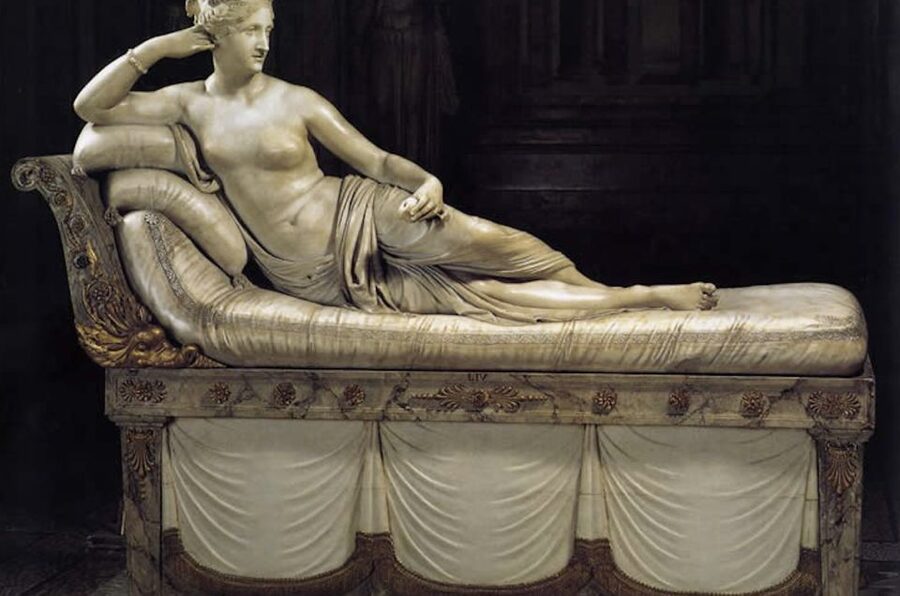
The collection reaches back roughly 2,000 years. The 1st-century BC Hermaphrodite is one of the ancient works you may see, and it provides a useful contrast to the later art.
Ancient sculpture often asks you to look at the body as an ideal form, while Bernini turns the body into a vehicle for movement and emotion. Seeing the works in the same collection lets you compare artistic goals across centuries rather than treating each object as an isolated masterpiece.
This range is one of the gallery’s greatest strengths, but it can also feel like a lot in a short visit. You are moving from ancient mythology to Christian painting, then into the theatrical world of the Baroque. A private guide helps set priorities so the collection does not become a blur of names and dates.
The tour promises an exploration of 2,000 years of art through its greatest masterpieces. That is not a claim that you will study every object in the building. The value is in using the best-known works as a clear path through changing ideas about the body, faith, power, and emotion.
What $321.73 per person buys you
At $321.73 per person, this is expensive for a 2.5-hour museum visit. You should book it for the private attention and expert interpretation, not simply for entry.
The price includes the museum fees, taxes, skip-the-line admission, and a private English or Italian-speaking guide. It does not include transportation, food, or drinks. If you already understand Renaissance and Baroque art well and are comfortable planning your own route, independent admission may offer better value.
I see the strongest case for this tour if you have limited time in Rome, care about the major artists, or want a clear explanation of the collection rather than a quick look at famous rooms. The guide can connect Scipione Borghese’s collecting habits to Raphael, Caravaggio, and Bernini in a way that is difficult to reproduce from labels alone.
The experience also suits couples, families with art-minded older children, and small groups who want to keep their own pace. It is less appealing if your main goal is a cheap museum ticket or a long, leisurely day with every artwork.
Two available ratings describe the guide as very well versed in the museum’s art and praise the visit for covering the collection in an all-encompassing way. That matches the main selling point: you are paying for a strong explanation of the works, not a ride or a meal.
Timing, mobility, and practical limits
The tour lasts 2.5 hours, but starting times depend on availability. Check the schedule before building the rest of your Rome day around it.
The Borghese Gallery is wheelchair accessible. If you use a personal wheelchair, the museum requires you to leave it and use the wheelchair provided by the gallery. Tell the operator about mobility concerns in advance so the visit can be arranged as well as possible.
Strollers are allowed only for children up to two years old. The ban on large bags and backpacks also means you should not treat this as a place to store belongings while sightseeing.
Because the tour is inside a museum and involves walking, comfortable shoes are a practical must. The route is not a food stop, so eat beforehand and bring only what the museum permits.
You can cancel up to 24 hours in advance for a full refund, and you can reserve now while paying later. Those terms help if your Rome plans are still shifting, though the fixed museum availability remains the key factor.
Who should book the Borghese Gallery tour?
Book it if you want to see Bernini, Caravaggio, and Raphael with a guide who can explain the personalities and power struggles behind the collection. The private setting is especially useful if one person in your group loves sculpture, another prefers painting, and you want the visit adjusted to both interests.
It is also a strong pick for a first serious art visit in Rome. You get a manageable route through ancient, Renaissance, and Baroque works without having to prepare a museum plan yourself.
Think twice if the $321.73 price feels uncomfortable. The gallery itself is the attraction, and the tour does not include transport, refreshments, or any activity beyond the guided museum visit. Independent entry may suit you better if you prefer to read labels, use your own guidebook, and spend your money elsewhere.
For me, the tour makes the most sense when the collection is high on your Rome list and you want the stories behind the objects. The art is exceptional, but the guide is what turns a beautiful palace into a coherent visit.
FAQ
Where does the Borghese Gallery tour meet?
You meet your guide at the entrance of the Borghese Gallery in Villa Borghese Park. Look for a Through Eternity sign or flag.
Where does the tour end?
The activity ends back at the Borghese Gallery meeting point.
How long does the private tour last?
The guided museum visit lasts 2.5 hours. Starting times depend on availability.
What is included in the price?
The price includes all fees and taxes, skip-the-line entrance tickets, and an expert English or Italian-speaking private guide. Headsets are included for groups of six or more.
Is transportation included?
No. Transportation to and from the meeting and end point is not included.
What languages are available?
The live guide is available in English or Italian.
Is the Borghese Gallery tour wheelchair accessible?
Yes. Wheelchair users must leave their personal wheelchairs with the museum and use the wheelchair provided by the Borghese Gallery. You should advise the operator about mobility concerns in advance.
Can I bring a backpack, food, or drinks?
No. Food, drinks, luggage, large bags, backpacks, and umbrellas are not allowed. Comfortable shoes are recommended, and strollers are allowed only for children up to two years old.
Just added around Italy
- Colosseum,Vatican Museum & Sistine Chapel in One Day Guided Tour★ 3.5 · 9 reviews
- Vatican Museums and Sistine Chapel last entry Guided Tour★ 5.0 · 3 reviews
- Private Tour Of Rome Highlights And Vatican Museums Skip-The-Line all included★ 5.0 · 4 reviews
- Borghese Gallery Admission Ticket with Audioguide★ 4.0 · 64 reviews
- Caravaggio Art Walking Tour of Rome with Pantheon Visit★ 4.5 · 35 reviews
- Borghese Gallery Skip the Line Guided Tour★ 4.5 · 23 reviews
- Borghese Gallery Ticket with Audioguide★ 3.5 · 51 reviews
- Borghese Gallery VIP Tour – Skip the Line Tickets★ 5.0 · 2 reviews
Art Museum Tours in Italy, compared.
Vatican Museums, Sistine Chapel & St. Peter’s Basilica Tour
Read our review →
Vatican Museums, Sistine Chapel & St Peter’s Basilica Guided Tour
Read our review →
Skip-The-Line Uffizi Gallery Timed Entry Ticket
Read our review →
Vatican Museums, Sistine Chapel and Basilica Tour
Read our review →
Vatican Museums & Sistine Chapel Skip-the-Line Entry Ticket
Read our review →
Vatican Museums, Sistine Chapel & Basilica Tour
Read our review →
Vatican Museums & Sistine Chapel Guided Tour
Read our review →
Vatican Museums & Sistine Chapel Skip-The-Line Ticket
Read our review →Browse the lists this tour appears in