
REVIEW · PARIS
Paris: Best of Orsay Museum Small Group Tour with Tickets
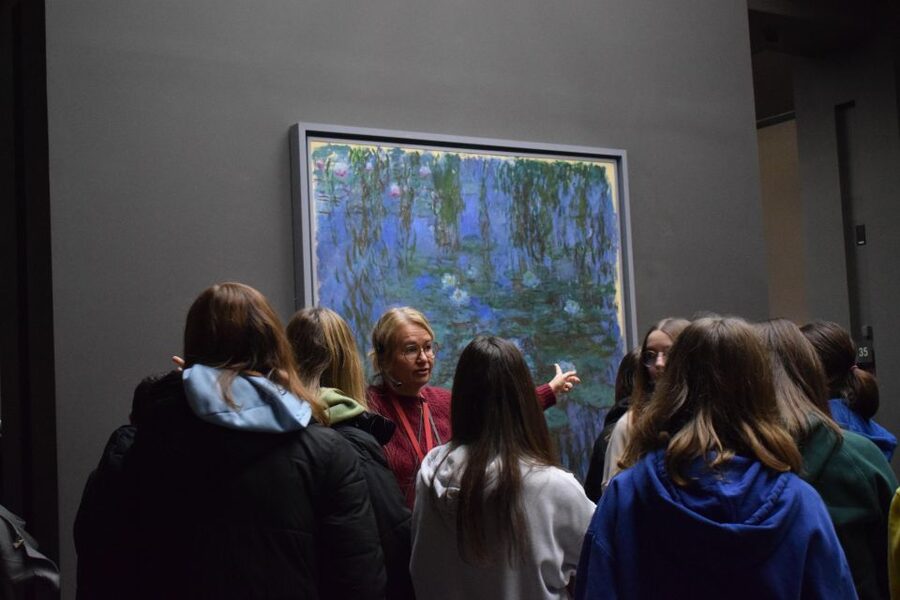
The most rewarding part of this Musée d’Orsay tour is its clear story: you begin with the strict rules of academic painting, then watch artists such as Manet, Monet, Degas, and Renoir break them. The former railway station gives the visit an unusual setting, and the collection carries you from Realism through Impressionism, post-Impressionism, Art Nouveau, and early modern art.
I like the small groups, which make it easier to hear and ask questions, and I like the way strong guides connect paintings to political and social change. The main drawback is the museum crowd. Even with quick access to the collections, you still pass through security, and packed galleries can make close viewing and conversation harder.
Key points to know before you go
- Two hours with a focused route: You see major works without trying to cover every room in the museum.
- A former railway station: The building itself is part of the tour, not just a container for paintings.
- Impressionist essentials: Expect Monet, Renoir, Degas, Pissarro, Sisley, Cézanne, Van Gogh, Gauguin, and Matisse.
- Small groups matter: Groups of three to six have allowed guides such as Blerta, Olga, and Marine to answer questions and adjust explanations.
- Quick collection access, not a security bypass: Your ticket helps save time, but all visitors still pass security.
- Best for art-curious visitors: You do not need an art degree, but you should be ready to walk and keep pace with a shared group.
Why the Orsay works so well with a guide
The Musée d’Orsay can be a difficult museum to tackle cold. Its galleries cover a concentrated but crucial period, roughly from the middle of the 19th century to the early 20th century. You will find famous paintings, major sculptures, decorative arts, and a building with its own story.
The problem is not a lack of things to see. It is deciding what matters and understanding why it matters. A guide gives you a route through the artistic changes, instead of leaving you to wander from one celebrated canvas to the next without a connecting thread.
The best guides begin before Impressionism. They explain the academic system, its strict standards, and the kind of painting favored by official institutions. From there, the rebellious choices of Manet and his successors become easier to understand. A rough brushstroke, an everyday subject, or an unusual point of view no longer looks accidental. It becomes part of a deliberate argument about what art could be.
That approach received especially strong praise from visitors who toured with Blerta, Olga, Vanina, Marine, Miriam, Patrick, and others. Their styles differ, but the useful pattern is consistent: clear background first, close attention to selected works, and room for questions.
More Art Museum Tours in Paris
- Paris: Louvre Museum Timed-Entrance Ticket
★ 4.6 · 71,977 reviews - Paris: Orsay Museum Entry Ticket
★ 4.7 · 25,647 reviews - Paris: Louvre Guided Tour with Reserved Access & Boat Cruise
★ 4.3 · 16,353 reviews
Meeting beside the elephant statue
Your meeting point is in front of the museum at 1 Rue de la Légion d’Honneur, by the large elephant statue. Look for a guide holding a Connecting France sign.
This is a practical meeting spot, but do not cut your arrival too close. The museum area can be busy, and you need to find the guide before the group moves toward entry. Have your passport or ID card with you. Tickets are personal, and anyone up to age 17 needs a photo ID card.
The ticket gives you quick access to the collections, but it does not let you skip security. That distinction matters on a crowded day. You may avoid a long ticket queue, yet still wait while bags and visitors are checked.
Large luggage, backpacks, and umbrellas are not allowed. Plan your museum visit with a light bag, or make separate arrangements for anything that cannot enter.
The railway station that became a museum
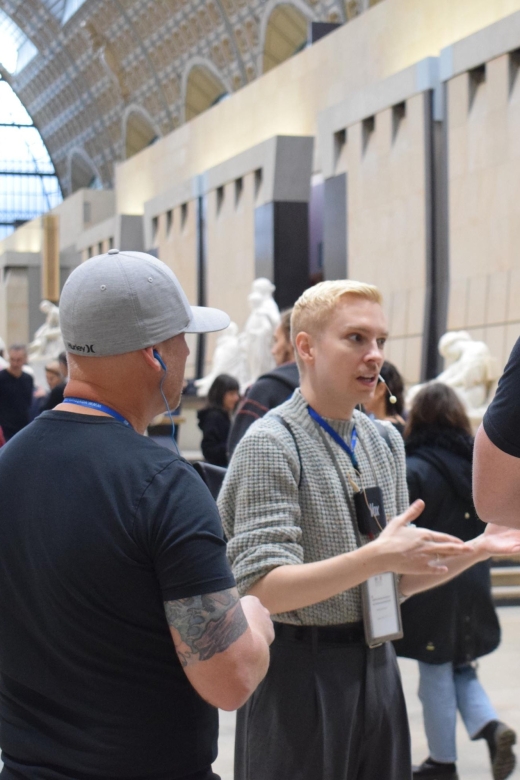
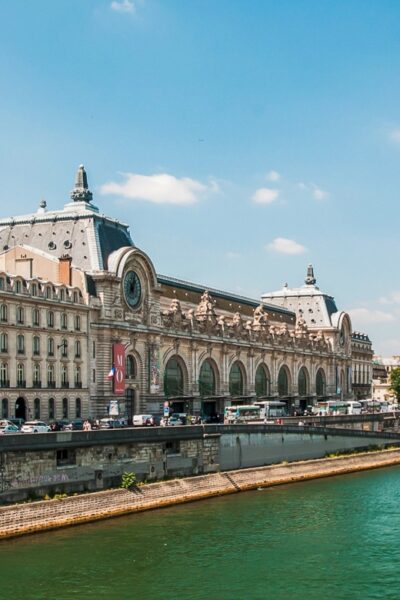
Before the paintings take over, the building deserves attention. Musée d’Orsay occupies a former railway station, and the architecture helps explain the museum’s unusual character.
The building’s great interior scale, former platforms, and prominent clock details create a contrast with the intimate paintings displayed inside. A guide can point out architectural features as well as artworks, which is useful because many visitors rush straight toward the famous canvases.
The station’s transformation into a fine arts museum also fits the tour’s larger theme. Paris changed, technology changed, and artists responded to a changing city and society. You are not simply moving through a collection of pretty pictures. You are looking at art made during a period of rapid change, displayed inside a building created for another kind of modern life.
A guide such as Crystall has drawn attention to the building’s design as well as the paintings. That balance improves the visit. You get a sense of place before focusing on individual artists.
From Manet to the Impressionists
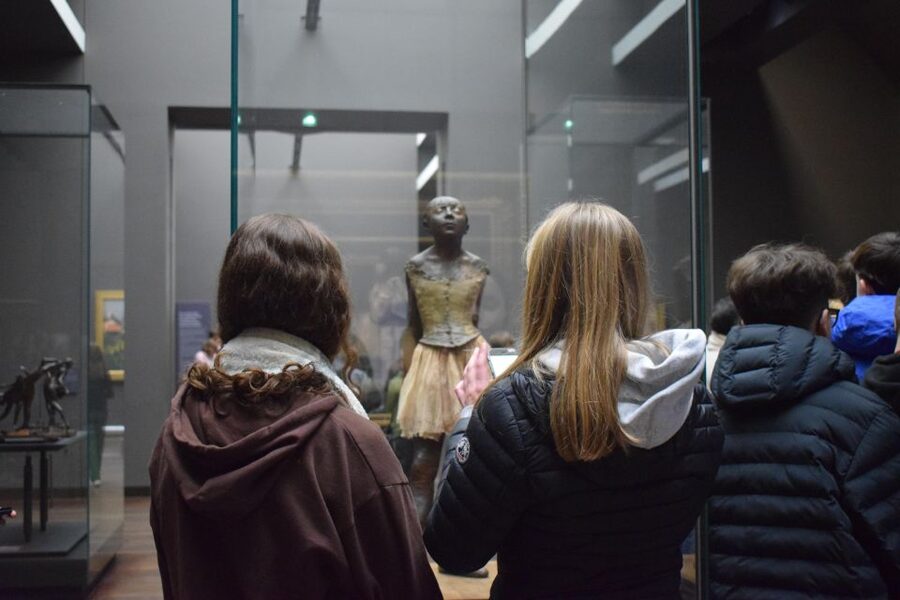
The tour’s central path usually begins with Realist and academic painting, including Édouard Manet. Manet helped push art away from polished historical scenes and toward modern subjects, direct observation, and less conventional technique.
That shift matters because Impressionism did not appear from nowhere. Degas, Pissarro, Renoir, Monet, and Sisley took earlier challenges further, changing how they handled light, color, movement, and ordinary life.
At this point, the guide’s ability to tell a story becomes more useful than a list of dates. Guides such as Vanina have framed the period as a rebellion against rigid academic standards, while Olga has connected art to the practical and political pressures affecting painters.
Look closely at how a painting is built. Instead of treating every surface with the same smooth finish, these artists often let brushwork remain visible. Instead of arranging every figure in a formal pose, they might show a modern crowd, a performer, a street scene, or a moment that feels caught rather than staged.
You will likely encounter Renoir’s Dance at Le Moulin de la Galette, one of the museum’s best-known works. It rewards more than a quick photograph. Notice the sense of movement, the shifting light, and the crowded social setting. A guide can help you see how the painting functions both as an image of pleasure and as a record of modern Parisian life.
More Orsay tours and tickets:
- Paris: Orsay Museum Entry Ticket and Digital Audio Guide App
★ 4.4 · 3,170 reviews - Paris in a Day: Louvre or Orsay, Eiffel Tower, City Walk & Cruise
★ 5.0 · 1,956 reviews - Paris: Musée d’Orsay Skip-the-Line Tour with Expert Guide
★ 4.5 · 1,145 reviews - Musée d’Orsay Skip-the-Line Tour with Expert Guide
★ 4.8 · 1,088 reviews
Reading the famous paintings without getting lost
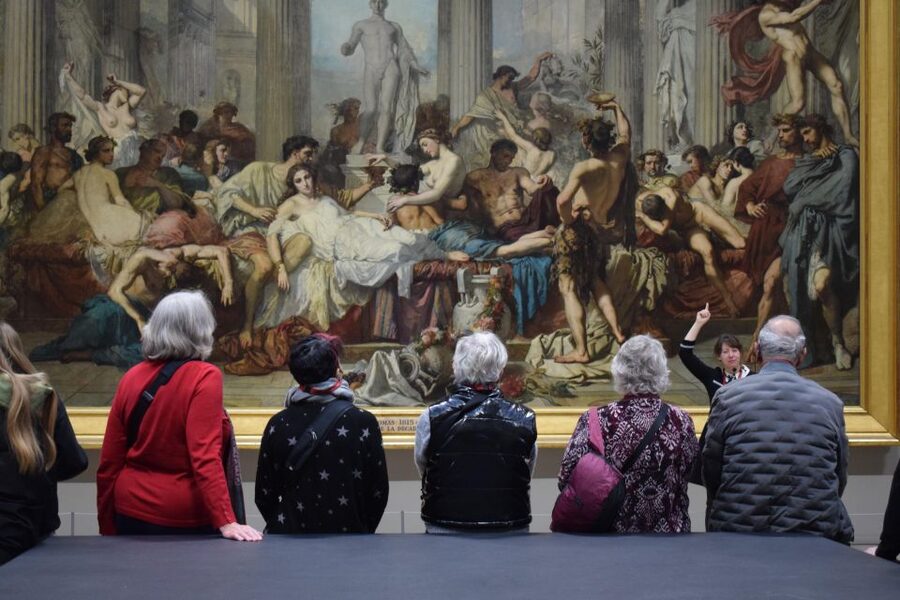
A two-hour tour cannot cover every important work in the museum. That is a strength, not a flaw, as long as you understand the route is selective.
A good guide chooses paintings that explain a wider change. One work may show a new approach to light. Another may reveal a challenge to academic composition. A third may connect painting to leisure, politics, class, or the changing role of women artists.
Alison’s guide, Marine, has been praised for pointing out symbols and clues that are easy to miss. That kind of explanation is particularly useful at Orsay, where a painting can seem familiar from reproductions but feel different in person.
You may also get help with comparisons. A guide can place Manet next to the artists he influenced, or connect Monet’s handling of light with later developments. Several guides have used tablets to show extra information, while others have encouraged visitors to offer their own interpretations.
That interaction is valuable. You are not expected to memorize art terms. You are encouraged to look, form an opinion, and then test it against the historical context.
Cézanne, Van Gogh, Gauguin, and the move toward modern art
The tour continues beyond classic Impressionism into post-Impressionist work. Cézanne, Van Gogh, and Gauguin each responded to Impressionism in different ways, and those differences help explain the path toward modern art.
Cézanne’s work can prompt a discussion about structure, form, and the way an image is organized. Van Gogh brings intense brushwork, color, and personal expression. Gauguin raises questions about symbolism and the search for subjects beyond the conventions of Parisian art.
The guide should help you see these artists as part of a conversation, not as isolated geniuses. The period is full of crosscurrents. Artists borrowed from one another, rejected one another, and pushed familiar ideas in new directions.
You may also encounter Matisse and other works that point toward the next phase of modern art. The tour does not treat Impressionism as the final destination. Instead, it shows how experiments with color, brushwork, viewpoint, and subject matter opened the door to later movements.
This is where a strong guide earns the fee. Without context, Van Gogh is easy to reduce to a familiar name and a striking style. With context, you can look at technique, intention, influence, and the pressures surrounding the artist.
Sculpture, Art Nouveau, and the Lady Liberty connection
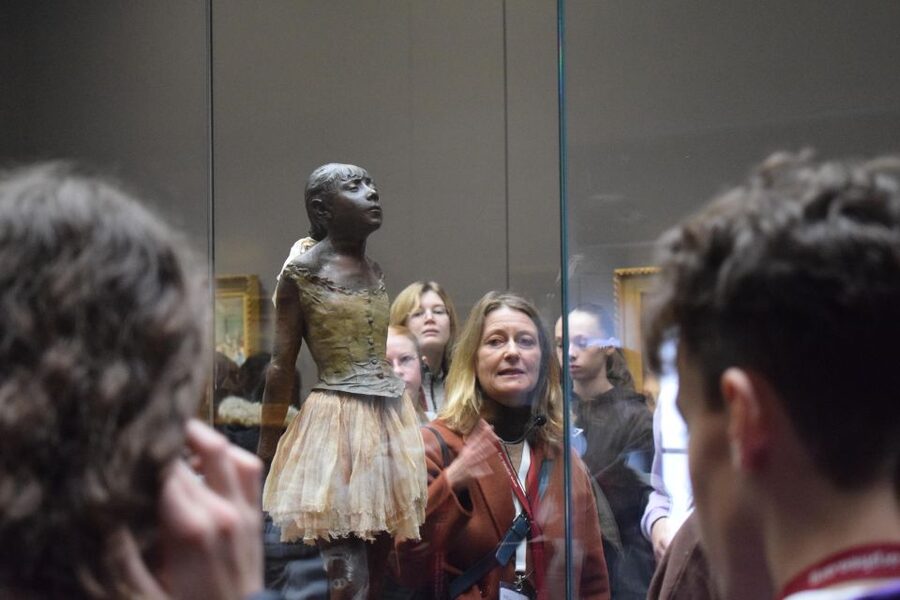
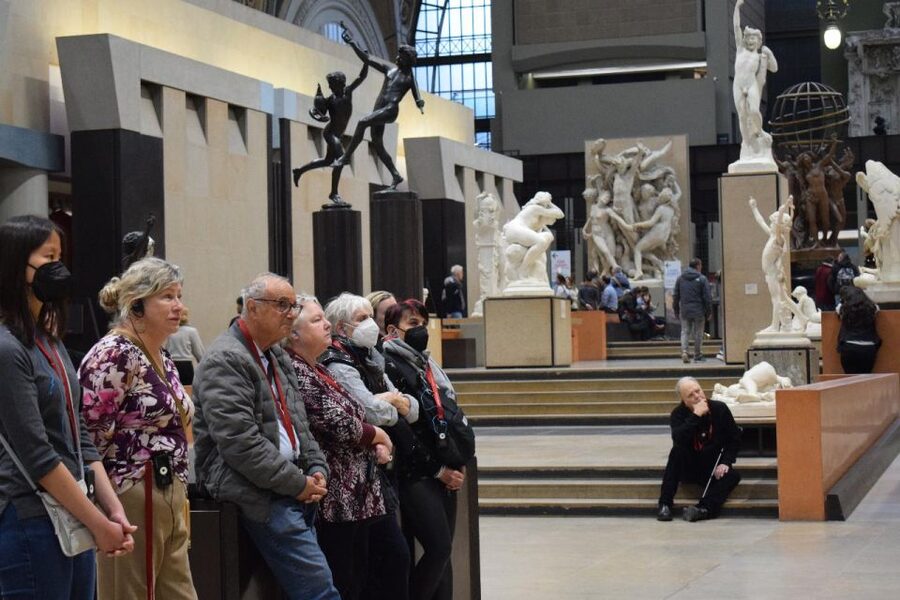
Paintings receive the most attention, but the museum is not limited to Impressionist canvases. The route may also include Art Nouveau, sculpture by Rodin, and an original version of Lady Liberty.
These additions broaden the visit. You get a better sense of how the period’s interest in new forms affected more than painting. Decorative design, sculpture, architecture, and public monuments all took part in the same changing cultural climate.
Rodin’s work offers a useful contrast with the paintings. You can consider how movement, emotion, and unfinished surfaces operate in three dimensions rather than on a flat canvas.
The Lady Liberty connection is another memorable detail. It gives the museum a link to a familiar monument while reminding you that major works often have more than one version, setting, or purpose.
Do not expect a full tour of every department in two hours. The guide has to protect time for the major painting rooms. Still, these short stops can make the museum feel broader and more coherent.
What the small group changes
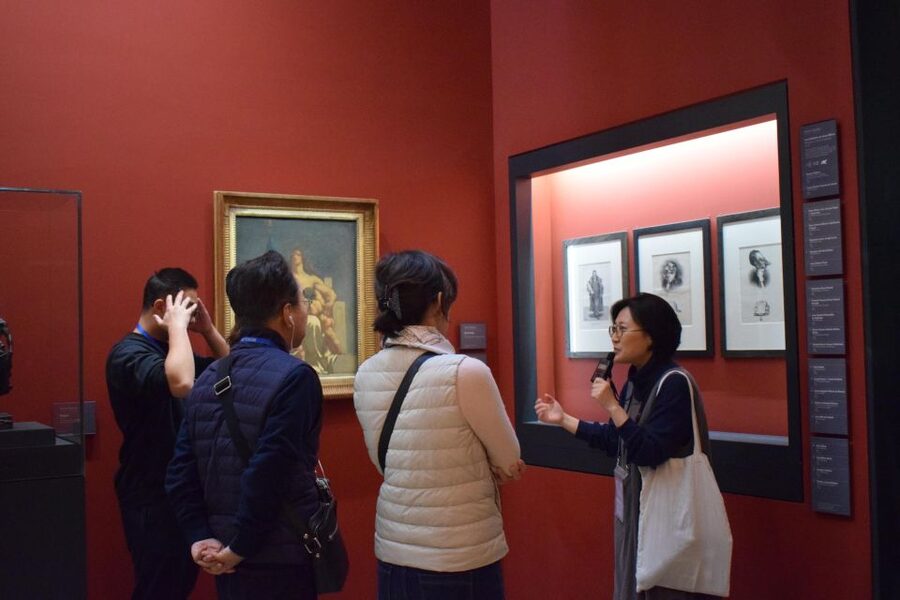
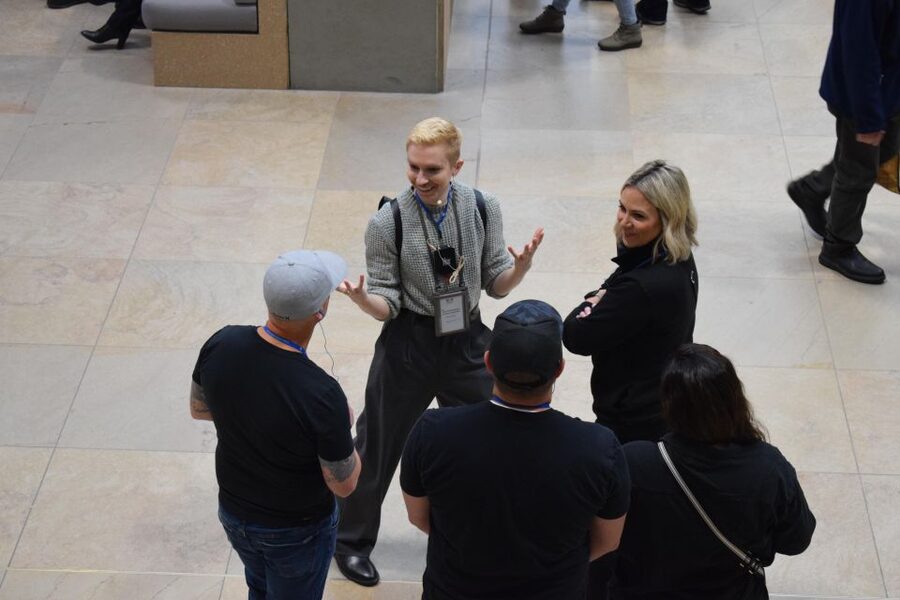
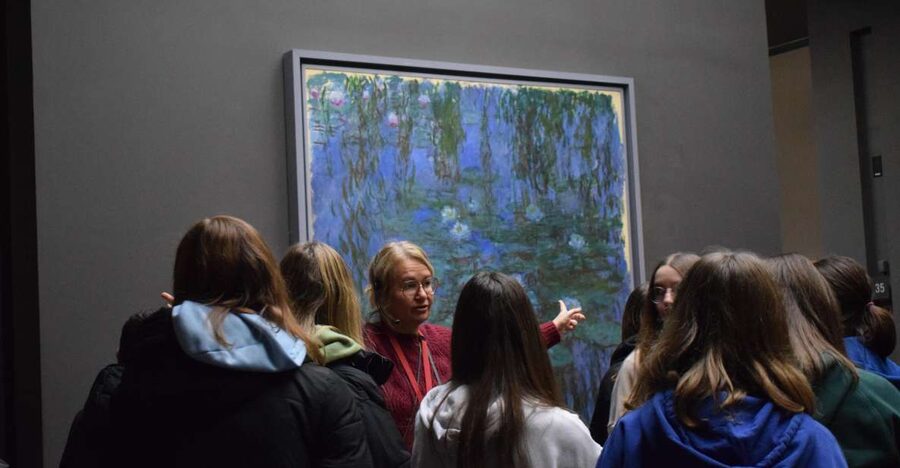
The shared tour is offered for private or small groups, and the small format is one of its strongest practical features. Groups of three or six have been especially comfortable for listening, moving between rooms, and asking questions.
In a large group, the guide may need to repeat basic instructions and position everyone before each painting. In a small group, you can usually stay close and hear the explanation more clearly. One guide even ended up leading a private visit when no other people had booked that time.
The experience is not completely private by default, so you should not expect the route to revolve entirely around your personal interests. Still, the compact group allows some adjustment. Guides such as Emily and Max have tailored explanations to the people present, while others have taken extra time with children or answered questions from first-time museum visitors.
Crowds remain the weak point. The museum can become shoulder to shoulder, especially during holidays or on a Tuesday when another major Paris museum is closed. Olga received praise for navigating busy rooms and getting the group close to important works, but no guide can create space where none exists.
Museum noise can also affect the tour. One visitor found a speaking device would have helped. The small group reduces this problem, but you may still need to stand close and concentrate when the galleries are full.
Is $102 a fair price?
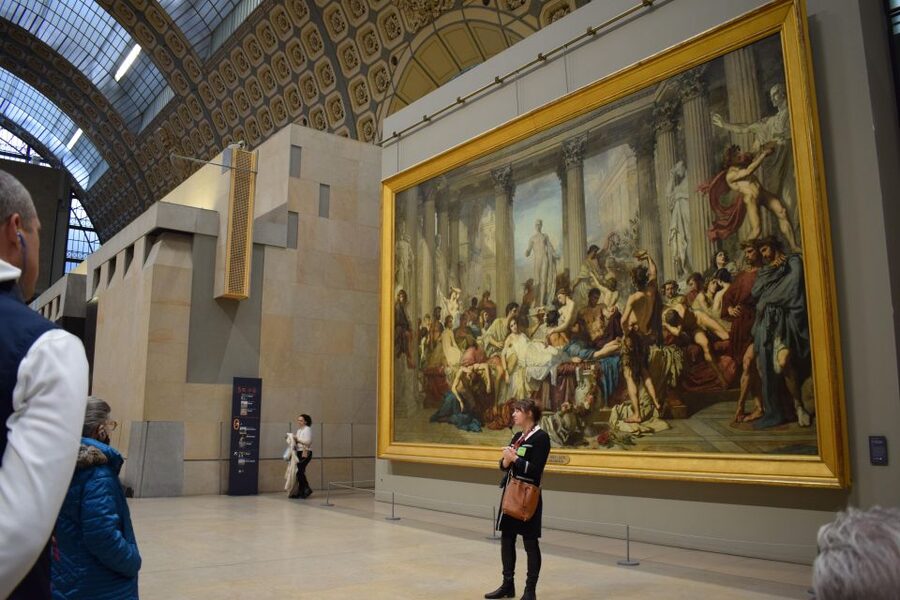
At $102 per person, this is not the cheapest way into Musée d’Orsay. You are paying for the entry ticket, a live guide, and a carefully chosen two-hour route.
The value depends on how you would use the museum on your own. If you already know the collection well and enjoy reading labels at your own pace, independent entry may suit you better. If you are visiting for the first time, the guide can save you from spending half your visit deciding where to go.
The price also buys time. A two-hour visit is short enough to fit into a busy Paris day, yet long enough to establish a meaningful story. You finish with the option to continue looking around at your own pace when the guided portion ends, as happened on some visits.
I consider the fee reasonable for visitors who want structure, historical context, and help finding the major works. It is less compelling if you want a slow study of every gallery or prefer total freedom.
Free cancellation up to 24 hours before the start and reserve-now, pay-later booking add flexibility. Museum closures or strikes can affect the plan. In that case, alternatives may include another available time or a walking tour, with a refund if the replacement does not work for you.
Who should book this Orsay visit
I would recommend it to first-time Orsay visitors, couples, families with older children, and anyone who likes art but wants help making sense of it. It is also useful if your Paris schedule gives you only two hours and you want those hours to have a clear purpose.
The tour suits English, French, Spanish, Italian, and German speakers. The guides have been praised for warmth, humor, strong art training, and the ability to explain difficult ideas in plain language. Some, including Blerta, are artists themselves, while others bring formal art history backgrounds.
It is not suitable for wheelchair users or people with mobility impairments. The shared semi-private tour cannot change its pace for individual mobility needs, though a private tour may be available for some visitors. Ask before booking if this is important for your group.
Final verdict: book it if you want the museum to make sense
Book this tour if you want more than a fast look at Monet and Van Gogh. The real benefit is the sequence: academic painting, Realism, Impressionism, post-Impressionism, and the road toward modern art.
The small group, advance entry, and strong guides make the $102 price easier to justify. Just arrive prepared for security, crowds, and a brisk two-hour route. If you want quiet, lengthy study of individual paintings, visit independently. If you want the Orsay’s famous works placed in a clear story, this is a smart choice.
FAQ
How long is the Musée d’Orsay tour?
The guided tour lasts two hours.
What is included in the price?
The price includes admission to Musée d’Orsay, a local guide, and the guided museum tour.
Where do I meet the guide?
Meet in front of the museum at 1 Rue de la Légion d’Honneur, beside the large elephant statue. The guide will hold a Connecting France sign.
What languages are available?
The tour is available in English, French, Spanish, Italian, and German.
Is this a private tour?
Private and small-group options are available. The shared option is designed for a small group rather than a fully private visit.
Can I skip the security line?
The ticket provides quick access to the collections, but you cannot skip the museum security line.
Do I need identification?
Yes. Bring a passport or ID card. Tickets are personal, and anyone up to age 17 must have a photo ID card.
Can I bring a backpack or large bag?
No. Luggage, large bags, backpacks, and umbrellas are not allowed.
Is the tour suitable for wheelchair users?
No. The activity is not suitable for wheelchair users or people with mobility impairments. A private tour may be available for some mobility needs.
What happens if the museum closes because of a strike?
You may be offered another available time or a walking tour. If the alternative does not suit you, the booking can be canceled and refunded.
Just added around Paris
- Paris Day Tour with Eiffel Tower, Louvre and Cruise Max 6 People★ 4.5 · 29 reviews
- PRIVATE Louvre Wonders & Hidden Treasures Visit★ 5.0 · 65 reviews
- d’Orsay Museum Paris entry ticket★ 3.5 · 31 reviews
- visiting the masterpieces of impressionists at Orsay museum★ 5.0 · 7 reviews
- Louvre Museum with private guide★ 5.0 · 3 reviews
- Louvre Wheelchair-Accessible Private Tour – Stress-Free & Easy★ 5.0 · 16 reviews
- LOUVRE, Small Group Guided Tour in French (TOP SALES)★ 4.5 · 9 reviews
- Visit to the Louvre Paris museum★ 5.0 · 2 reviews
Art Museum Tours in Paris, compared.
Louvre Guided Tour with Reserved Access & Boat Cruise
Read our review →
Louvre Overview, Exploration tour and Reserved Entry
Read our review →
Louvre Museum Entry Ticket With Host and River Cruise
Read our review →
Mona Lisa & Louvre Masterpieces Tour with Reserved Access
Read our review →
Louvre Museum – Exclusive Guided Tour (Entry Included)
Read our review →
Louvre Museum Hosted Entry and Mona Lisa Audioguide
Read our review →Browse the lists this tour appears in