REVIEW · PARIS
Paris: Louvre Last Entry or Morning Tour with Entry Ticket
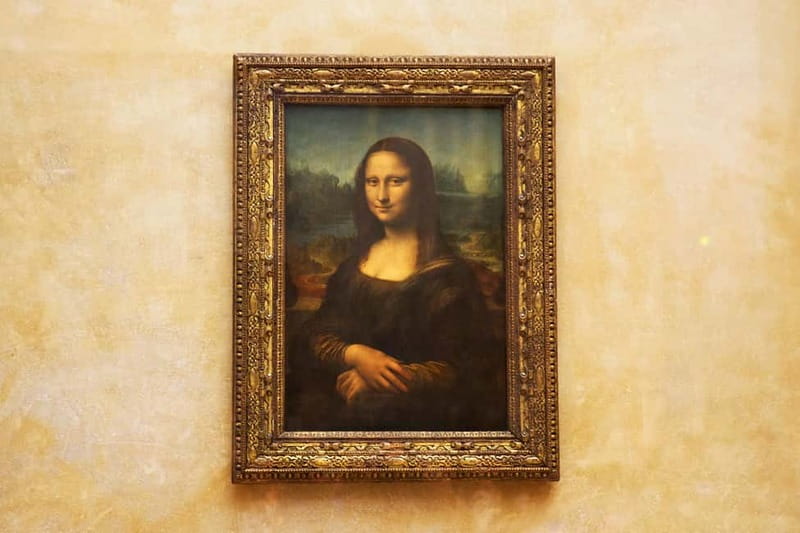
The clever idea here is timing. The late-entry option brings you to the Louvre when the daytime rush is easing, with the Mona Lisa as the grand finale. A morning departure is available too, but the closing-time visit is the more unusual choice.
I like two things right away: a guide keeps you from wasting half your visit finding the right staircase, and the tour gives the art a story instead of leaving you to stare at labels. Guides such as Adam, Antoine, Hugo, Felix, Violette, and Claudia have been especially praised for their energy, humor, and command of art history.
The main drawback is simple: three hours only scratches the surface of the Louvre. Some rooms may close during your visit, and the tour moves at a moderate pace, so it is not a good match if you need frequent rests or use a wheelchair or stroller.
Key points to know before you book
- Late timing helps with the Mona Lisa: The final part of the visit is planned around Leonardo’s famous portrait, when the gallery can feel calmer than it does earlier in the day.
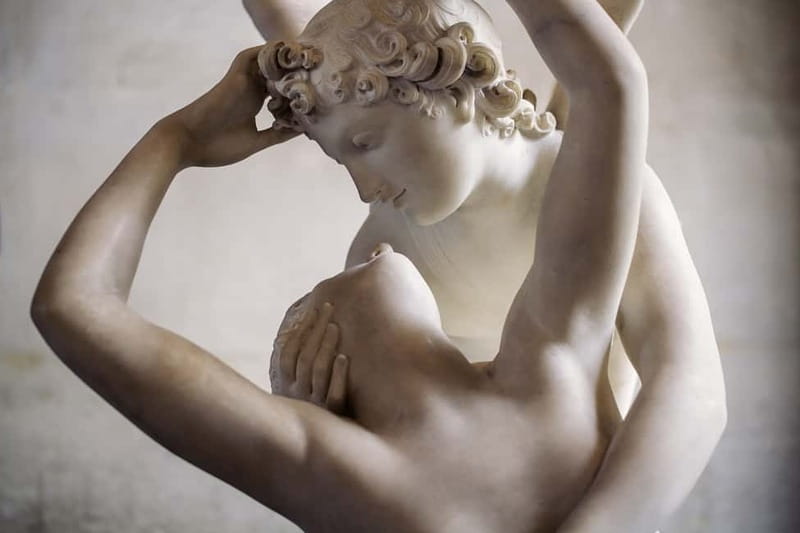
- The route covers essential Louvre sights: Expect Winged Victory, Venus de Milo, Michelangelo’s Slaves, works by Raphael and Delacroix, and the museum’s grand interiors.
- Your guide does the navigating: The Louvre is enormous, and the route links major works without making you guess which corridor to take.
- Headsets keep the commentary audible: You can hear the guide while moving through busy galleries, though one participant reported a headset that was too loud.
- The group can reach 20 people: Smaller departures may feel more personal, while a full group will feel less intimate.
- The meeting point needs care: Meet at the Arc du Carrousel, not the Arc de Triomphe at the end of the Champs-Elysées.
Why the Louvre is easier with a three-hour plan
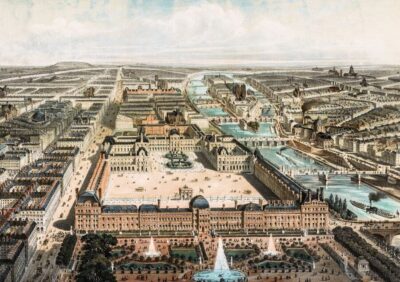
The Louvre is not a museum you casually wander through and finish. It is a former fortress, royal palace, and enormous art collection spread through several wings. Without a plan, you can spend precious time on corridors, escalators, and crowded galleries before reaching the works you came to see.
This tour gives you a sensible first visit. You see the famous pieces, but you also get enough background to understand why they matter. A good guide can explain how a sculpture was made, why a painting caused a stir, or how the building changed as Paris changed.
I like that the emphasis is not only on the Mona Lisa. Leonardo’s portrait is the headline act, but the route also gives time to major sculpture, large historical paintings, and the palace itself. That mix keeps the visit from becoming a single-photo mission.
The three-hour length is well judged for a first look. It is long enough to create a clear mental map of the museum, but short enough that you are unlikely to reach the final hour with tired feet and an overloaded brain. You will not see everything. That is not a flaw in the tour. No three-hour visit can cover the Louvre fully.
More Art Museum Tours in Paris
- Paris: Louvre Museum Timed-Entrance Ticket
★ 4.6 · 71,977 reviews - Paris: Orsay Museum Entry Ticket
★ 4.7 · 25,647 reviews - Paris: Louvre Guided Tour with Reserved Access & Boat Cruise
★ 4.3 · 16,353 reviews
Meeting at the Arc du Carrousel
Your starting point is outside at the Arc du Carrousel, the triumphal arch directly across from the Louvre and opposite the pyramid at the Tuileries Gardens. When you face the arch, look for the winged statue on the left. The guide will be holding a green Walks sign.
This is the detail to get right. Do not head toward the Arc de Triomphe de l’Etoile on the Champs-Elysées. That is a completely different monument and a very bad place to discover your mistake 15 minutes before departure.
Arrive 15 minutes early. The location is open and easy to recognize once you know which arch is meant, but one person found the guide difficult to locate at first because the meeting point is away from the museum entrance itself. Give yourself time to identify the statue and check the guide’s sign.
There is no hotel pickup or drop-off. You make your own way to the Louvre, then finish inside the museum. Bring a passport or identity card, and wear comfortable shoes. Large bags, luggage, oversized luggage, baby strollers, and wheelchairs are not suitable for this experience.
What happens after you enter the Louvre
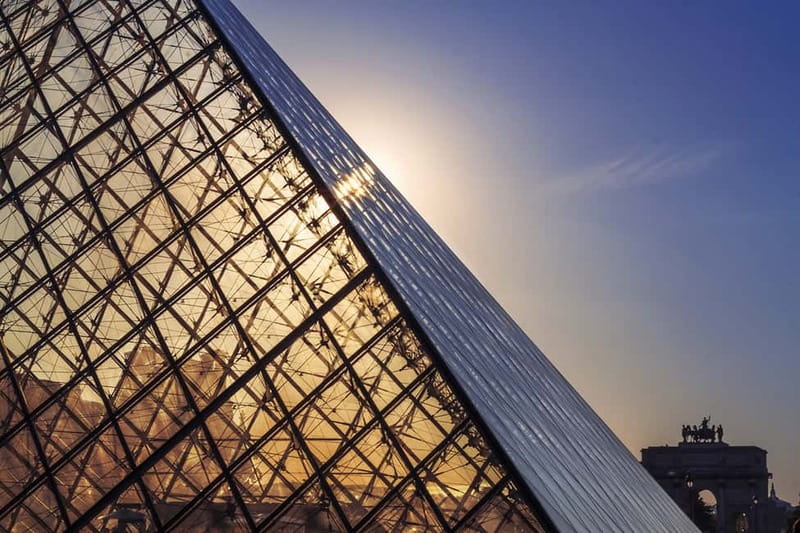
The skip-the-ticket-line access is one of the tour’s practical strengths. It does not mean every step of entry is instant, since museums can still have security procedures and crowd control, but you avoid the ordinary ticket queue and enter with a planned group.
Once inside, you follow a route through the museum’s major sections. The guide uses a personal headset, which matters in rooms where a normal speaking voice would disappear under the sound of other groups. You can keep walking while still hearing the explanation.
The route is not designed for you to linger at every painting. It is a moving tour, and the guide needs to keep the group together. That tradeoff is worthwhile for a first Louvre visit, especially if you are unsure which works deserve your limited time.
The best guides add context without turning the visit into a classroom lecture. Adam has been praised for combining art knowledge with humor and enthusiasm. Antoine is known for keeping the information flowing while making the three hours feel short. Hugo and Felix have also been singled out for lively delivery and clear explanations.
Your guide will vary, so do not book on the assumption that a particular person is guaranteed. Still, the pattern is clear: the success of this tour depends heavily on the person leading it. The strongest guides do more than point at famous objects. They help you notice composition, symbols, technique, politics, and the human stories behind the work.
Winged Victory and the drama of sculpture
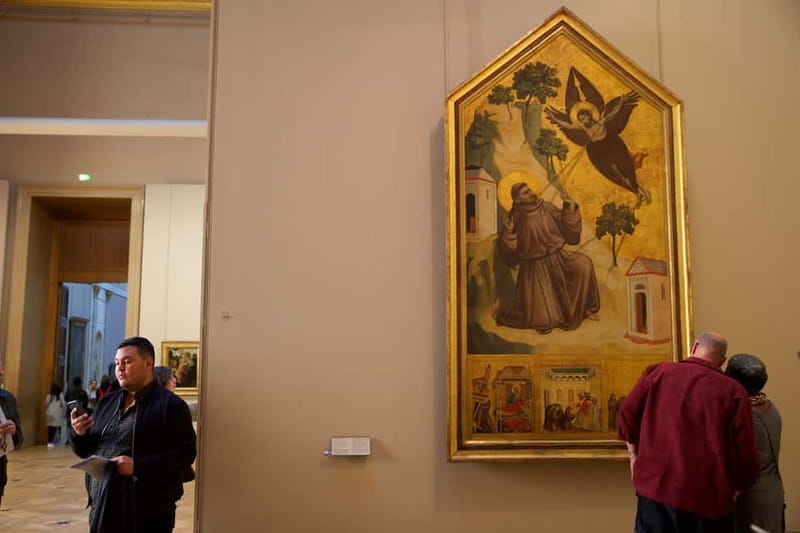
Winged Victory of Samothrace is one of the first major stops and one of the most memorable. This second-century BC sculpture represents Nike, the Greek goddess of victory, poised on the prow of a ship. The figure has no head or arms, yet the missing parts do not weaken the impression of movement.
The placement matters as much as the statue. You approach it from below, up the Daru staircase, and the figure seems to surge forward above you. A guide can point out how the carved fabric suggests wind and wet cloth, making stone appear to move.
The tour also includes Michelangelo’s Slaves. These unfinished figures are useful for showing a different side of sculpture. Instead of presenting a polished body, they seem to struggle out of the marble, raising questions about intention, process, and what unfinished art can express.
These stops give the tour some variety. You are not only looking at framed paintings in long galleries. You are also considering scale, weight, surface, and the way a sculpture interacts with architecture.
More Louvre tours and timed tickets:
- Louvre Museum Masterpieces Guided Tour with Access
★ 4.5 · 12,023 reviews - Paris: Louvre Overview, Exploration tour and Reserved Entry
★ 4.1 · 10,145 reviews - Paris: Louvre Museum Entry Ticket With Host and River Cruise
★ 4.6 · 9,926 reviews - Mona Lisa & Louvre Masterpieces Tour with Reserved Access
★ 4.6 · 6,812 reviews
Venus de Milo and the art of the missing detail
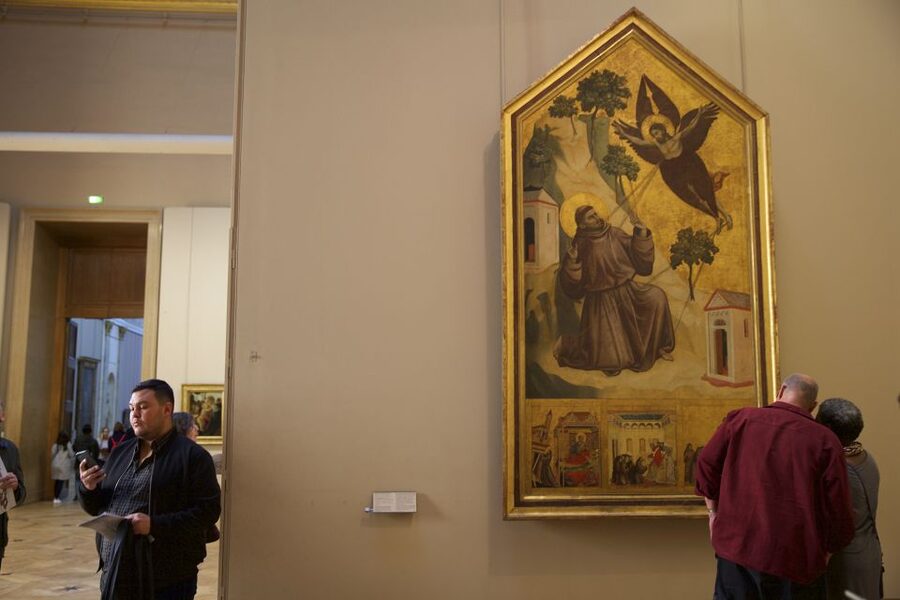
The Venus de Milo is another essential stop. This ancient Greek statue is famous partly because her arms are missing, leaving you to wonder how the original pose looked. That gap can lead to a more useful discussion than a simple list of dates and names.
Your guide can help you look at the figure’s stance, the turn of the body, and the way the drapery falls. The statue is often surrounded by people, so having someone position the group and direct your attention makes the visit more focused.
The Louvre’s major sculptures are easy to photograph and easy to rush past. The value of the tour is the pause. You get a reason to look for balance, movement, idealized form, and the choices made by the sculptor.
Paintings, palace rooms, and royal drama
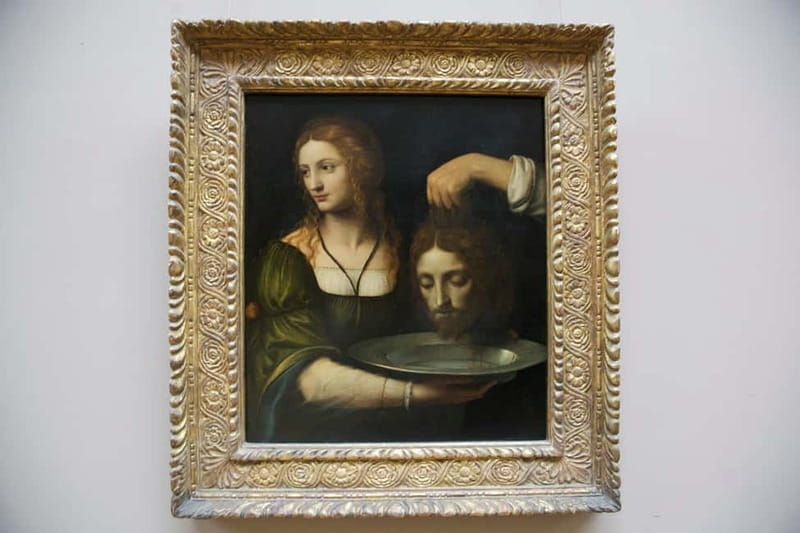
The route brings in painters such as Leonardo da Vinci, Raphael, Jacques-Louis David, Théodore Géricault, and Eugène Delacroix. You will not receive a full survey of each artist, but you will get a set of useful connections between art and the period in which it was made.
David’s work opens a window onto revolutionary and imperial France. Géricault’s dramatic painting can lead into questions of politics, suffering, and public reaction. Delacroix brings another kind of energy, with bold movement and color tied to the political mood of nineteenth-century France.
The guide also explains the Louvre as a building. It began as a fortress, grew into a royal residence, and later became a public museum. As you move through its halls, the stonework, painted ceilings, and formal rooms make more sense when you know they were built for power, ceremony, and royal life.
I particularly like this part of the experience because the museum is not just a container for art. The rooms have their own story. You may walk past lavish interiors without noticing their purpose, but a guide can connect them to palace life and the dramas once played out there.
Some visitors have enjoyed seeing newly opened rooms, including the former Financial Minister’s Apartments. Access to individual rooms can change, however, and the route may be altered if an area closes.
The Mona Lisa at the end
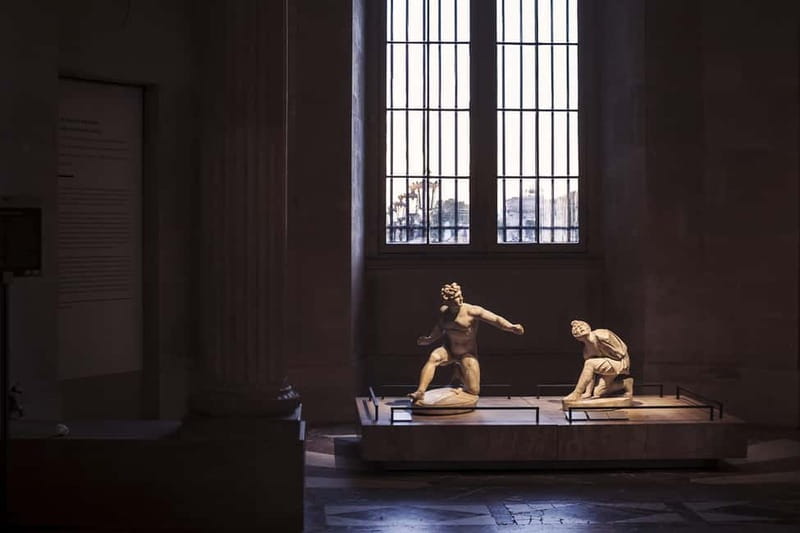
The Mona Lisa receives about 30 minutes of the planned visit, including a photo stop and guided explanation. The guide explains why Leonardo’s portrait became so important, how its reputation grew, and why the expression continues to invite debate.
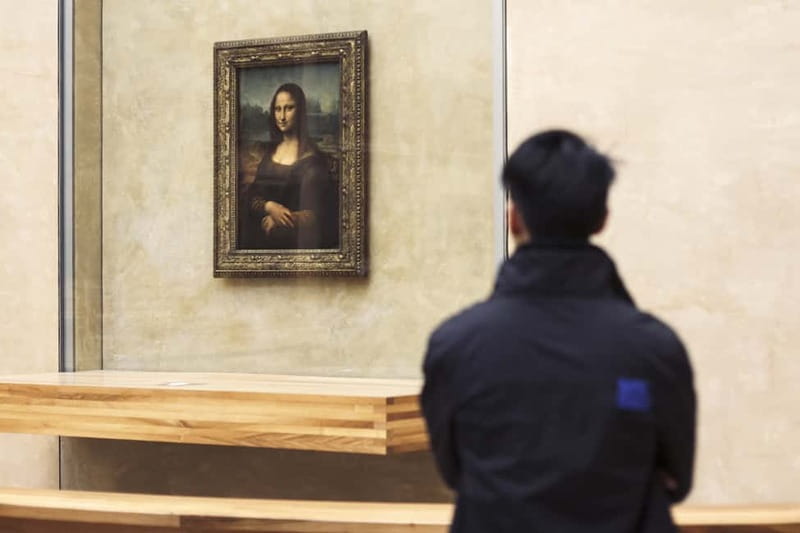
Do not expect private access or a completely empty room every time. The late visit is intended to avoid the heaviest daytime crowds, and several people have found the Mona Lisa easier to appreciate at that hour. Still, popular works can remain busy, and museum conditions change from day to day.
The late timing is also useful in summer. One person specifically liked visiting later, when the museum was cooler and less crowded. If you choose the morning option, you trade some of the closing-time atmosphere for an earlier start and a full day afterward.
The Mona Lisa is kept behind a barrier, so you will not stand nose to nose with the painting. The point of the stop is to see the work, hear the explanation, and understand its place in Western art, not to spend a long silent stretch alone in front of it.
Morning tour or last entry?
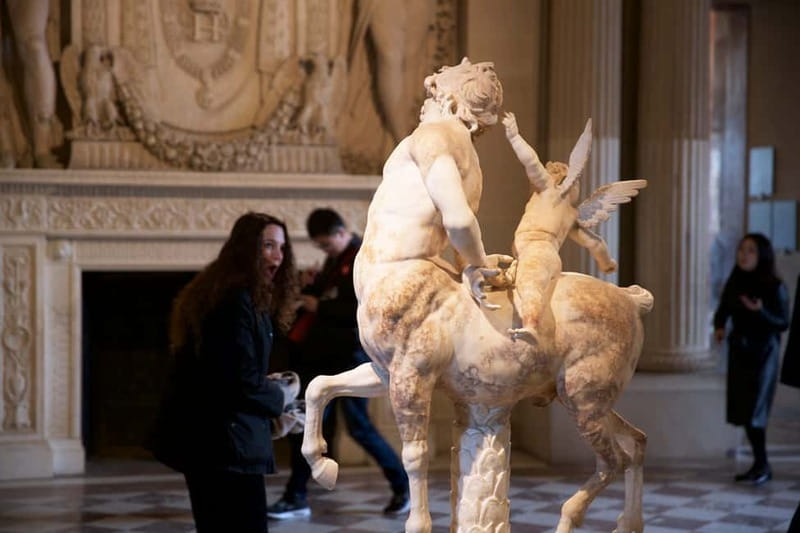
The choice depends on how you plan your day.
Choose the late-entry tour if you want the best chance of a calmer visit and like finishing with the Louvre’s most famous painting. It works well after a day in central Paris, though you should remember that some sections may close earlier than your tour.
Choose the morning option if you prefer to start fresh, have a full afternoon available, or do not want to finish your museum visit near closing time. The morning departure still gives you the same broad selection of major works and the benefit of a guide.
Neither option can cover every gallery. The Louvre is simply too large. The real question is whether you want a guided introduction to the main sights or several unstructured hours to follow your own interests.
Group size, pace, and the headset
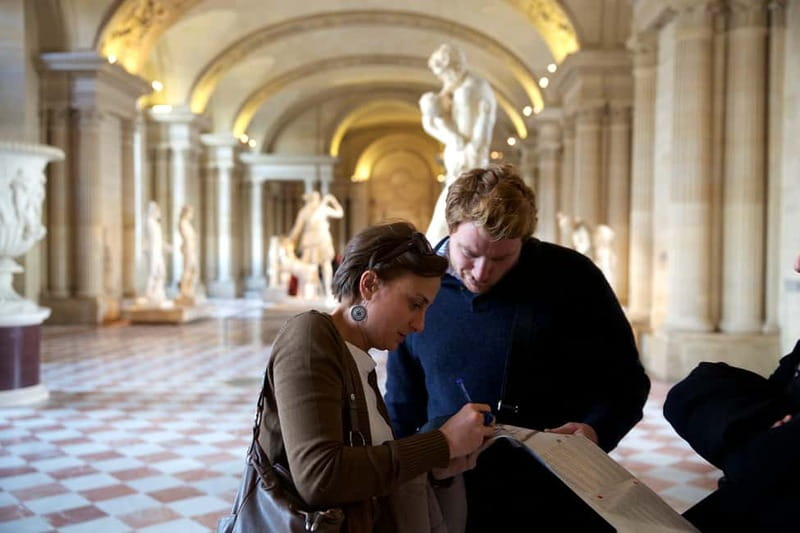
The maximum group size is 20. That is small enough for a guide to keep the group moving as one, but it is not a private tour. A departure with six people will feel much more personal than a full group, particularly during questions and crowded gallery stops.
The pace is moderate and involves substantial walking. You should be comfortable standing, climbing through the museum, and walking between galleries without difficulty. The experience is not suitable for people with mobility impairments, wheelchair users, or strollers.
The headset is a good idea in theory and usually a useful feature in practice. It lets you hear the guide without everyone clustering around one person. Check the volume early, since one person found the sound level uncomfortable throughout the visit.
Bring only what you need. Large bags and luggage are not allowed, and carrying less makes the route easier. Comfortable shoes matter more than stylish ones here.
Is $99 a fair price?
At $99 per person, this is not the cheapest way to enter the Louvre. You are paying for more than admission, though. The fee includes skip-the-ticket-line entry, an English-speaking local guide, the headset, and a three-hour route through the museum’s major works.
The value is strongest for a first visit, a short stay in Paris, or anyone who finds giant museums confusing. A guide can save you time and help you see why the objects matter. Several people who had visited the Louvre independently preferred this approach because the explanations and route gave their visit more shape.
The value is weaker if you already know exactly which galleries you want and prefer to set your own pace. You may want to linger with one artist, sit quietly in a room, or spend an entire hour on a small collection. A group tour will not give you that freedom.
I would also factor in the guide’s quality. The strongest departures, led by people such as Adam, Antoine, Felix, Violette, or Hugo, can make the price feel justified through vivid stories and clear art instruction. The guide is the heart of the purchase, not just the person holding the entry tickets.
Free cancellation is available up to 24 hours before the start, and you can reserve now and pay later. Those terms are useful if your Paris schedule is still shifting.
Who should book this Louvre tour?
I would choose this tour for a first-time Louvre visit, especially if you have only a few days in Paris. It is also a good fit for families with older children and teenagers, since the better guides use humor, stories, and questions rather than speaking in a dry lecture style.
It suits you if the Mona Lisa, Venus de Milo, Winged Victory, Michelangelo, and the palace interiors are your priorities. It also helps if you want someone else to handle navigation and give you an efficient introduction.
I would look elsewhere if you need wheelchair access, stroller access, or a slow pace. I would also skip it if your main goal is to explore one narrow department at length. For that, a self-guided visit may serve you better.
For most first visits, though, the structure is sensible. You see the Louvre’s essential works, understand the building’s long transformation, and finish with Leonardo’s famous portrait at a less frantic hour. That is a lot of Paris art in three hours.
FAQ
How long does the Louvre tour last?
The experience lasts three hours. The main guided visit is planned for about two and a half hours, with around 30 minutes focused on the Mona Lisa.
Is the Mona Lisa included?
Yes. The tour includes a visit, guided explanation, and photo stop at the Mona Lisa.
Can I choose a morning tour?
Yes. The experience is offered as either a morning tour or a last-entry visit, depending on availability.
What language is the tour in?
The tour is conducted in English.
Where do I meet the guide?
Meet at the Arc du Carrousel, at the statue next to the arch in front of the Louvre. When facing the arch, use the winged statue on the left.
Is the meeting point at the Arc de Triomphe on the Champs-Elysées?
No. The meeting point is the Arc du Carrousel beside the Louvre, not the Arc de Triomphe de l’Etoile.
How early should I arrive?
Arrive 15 minutes before the scheduled start time. Look for a guide holding a green Walks sign.
What is included in the price?
The price includes the local guide, skip-the-ticket-line Louvre entry, headsets, and a group of up to 20 people.
Can I bring luggage or a stroller?
No. Luggage, large bags, oversized luggage, and baby strollers are not allowed for this tour.
Is the tour suitable for wheelchair users?
No. The tour is not suitable for wheelchair users, people with mobility impairments, or strollers. It involves walking at a moderate pace.
More Morning in Paris
- Louvre & Mona Lisa Morning Tour with Reserved Access
★ 4.0 · 15 reviews - Rome: Early-Morning Vatican Museums and Sistine Chapel Tour
★ 4.7 · 1,778 reviews - Uffizi Gallery Early Morning Entry – Guided Small Group Tour
★ 4.5 · 742 reviews - Exclusive Early Morning Uffizi: Semi-Private with Private Option
★ 5.0 · 107 reviews
Just added around Paris
- Paris Day Tour with Eiffel Tower, Louvre and Cruise Max 6 People★ 4.5 · 29 reviews
- visiting the masterpieces of impressionists at Orsay museum★ 5.0 · 7 reviews
- PRIVATE Louvre Wonders & Hidden Treasures Visit★ 5.0 · 65 reviews
- d’Orsay Museum Paris entry ticket★ 3.5 · 31 reviews
- Louvre Museum with private guide★ 5.0 · 3 reviews
- Louvre Wheelchair-Accessible Private Tour – Stress-Free & Easy★ 5.0 · 16 reviews
- LOUVRE, Small Group Guided Tour in French (TOP SALES)★ 4.5 · 9 reviews
- Musée d’Orsay Highlights Tour with Gourmet Lunch★ 4.5 · 11 reviews
Art Museum Tours in Paris, compared.
Louvre Guided Tour with Reserved Access & Boat Cruise
Read our review →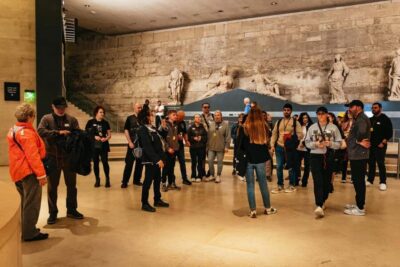
Louvre Overview, Exploration tour and Reserved Entry
Read our review →
Louvre Museum Entry Ticket With Host and River Cruise
Read our review →
Mona Lisa & Louvre Masterpieces Tour with Reserved Access
Read our review →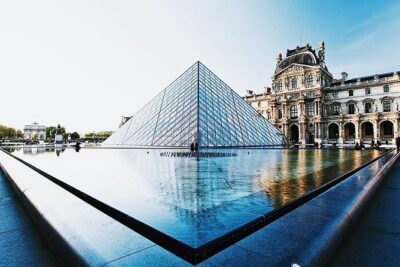
Louvre Museum – Exclusive Guided Tour (Entry Included)
Read our review →