REVIEW · PARIS
Paris: Best of the Louvre Guided Tour with Pre-booked Ticket
The clever part of this Louvre tour is its small size. With a maximum of six people, your guide can keep the group together through crowded galleries and still answer questions. I also like the clear focus on the museum’s three headline figures, Venus, Mona Lisa, and Nike, plus the way guides such as Flo, Jerome, Patrick, and Matteo connect paintings to the Louvre’s long life as a fortress and palace. The drawback is pace: two hours gives you a strong first look, not a full visit.
I like the pre-booked timed ticket and the separate entrance after security, especially at a museum this large. You also get practical direction for what to see next, but note an important change from January 2026: you cannot re-enter the Louvre after the guided tour ends, so plan your extra museum time before you leave the galleries.
Key points to know before booking
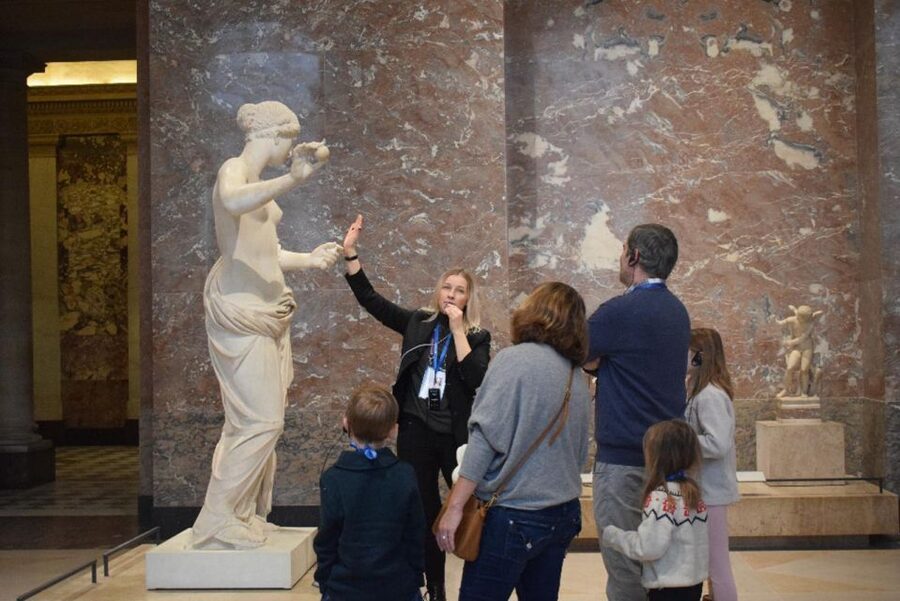
- A six-person maximum keeps the tour personal, with more room for questions than on a large group walk.
- The route covers the Mona Lisa, Venus de Milo, and Winged Victory, along with major paintings, sculpture, royal rooms, and Napoleon’s apartments when the route allows.
- Your guide supplies the museum’s context, from medieval fortress to royal residence to modern museum.
- Two hours is efficient but brisk, ideal for a first visit or a short stay in Paris.
- The $130 price pays for direction and time saved, not an all-day Louvre experience.
- Large bags, backpacks, strollers, and oversize luggage are not allowed, and the tour is not suitable for wheelchair users or people with mobility impairments.
Meeting at Place Colette beside the colorful glass sculpture
Your meeting point is Place Colette, between Le Kiosque des Noctambules and the Comédie Française. Look for the very colorful glass-ball sculpture and a guide holding a sign marked Connecting France.
This is a useful meeting point because the Louvre is so large that simply finding the correct entrance can eat into your morning. Still, give yourself time to arrive. One group had its meeting point changed, but the update came by WhatsApp and text, which helped prevent a wrong turn.
Bring your passport or ID card and wear comfortable shoes. The museum does a security check, and the tour then uses a separate entrance with a timed ticket. Skip-the-line does not mean you skip security, so allow for that step.
Do not bring a large bag, backpack, oversize luggage, or baby stroller. These restrictions matter more than they might on a normal city walk because you will be moving through tightly managed museum areas.
More Art Museum Tours in Paris
- Paris: Louvre Museum Timed-Entrance Ticket
★ 4.6 · 71,977 reviews - Paris: Orsay Museum Entry Ticket
★ 4.7 · 25,647 reviews - Paris: Louvre Guided Tour with Reserved Access & Boat Cruise
★ 4.3 · 16,353 reviews
From fortress to palace, the Louvre gets a useful introduction
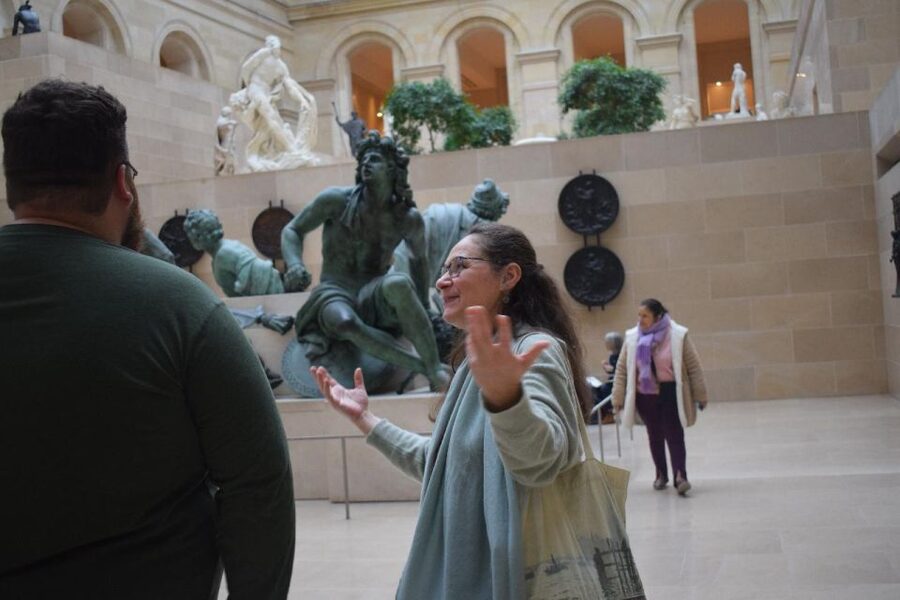
The Louvre is easier to understand once you know what kind of building you are walking through. Your guide explains its evolution from a medieval fortress into a Renaissance royal residence, then into a museum shaped and enlarged by two emperors.
That background gives the galleries a logical order. You are not simply moving from one famous object to another. You begin to see how royal power, collecting, architecture, and national identity shaped the building over roughly 800 years.
The glass Pyramid is part of this story, but you only pass by it on this itinerary rather than stopping for a full architectural discussion. It remains a handy visual marker and a reminder that the Louvre is both an old palace and a modern museum entrance.
The museum contains more than 35,000 works, so no two-hour route can represent everything. The guide’s job is to make sensible choices. That is the real value here: you spend less time studying a map and more time looking at art with some idea of why it matters.
The three ladies: Venus, Mona Lisa, and Nike
The route centers on three of the Louvre’s best-known works. The Venus de Milo is listed as a dedicated visit, while the Mona Lisa and Winged Victory of Samothrace form the main sculpture and painting highlights.
The Venus is useful for showing how much attention can gather around one object, but the guide adds the setting and artistic context that a quick photograph cannot. You may also see other Greek sculpture along the route, giving the famous statue a wider frame.
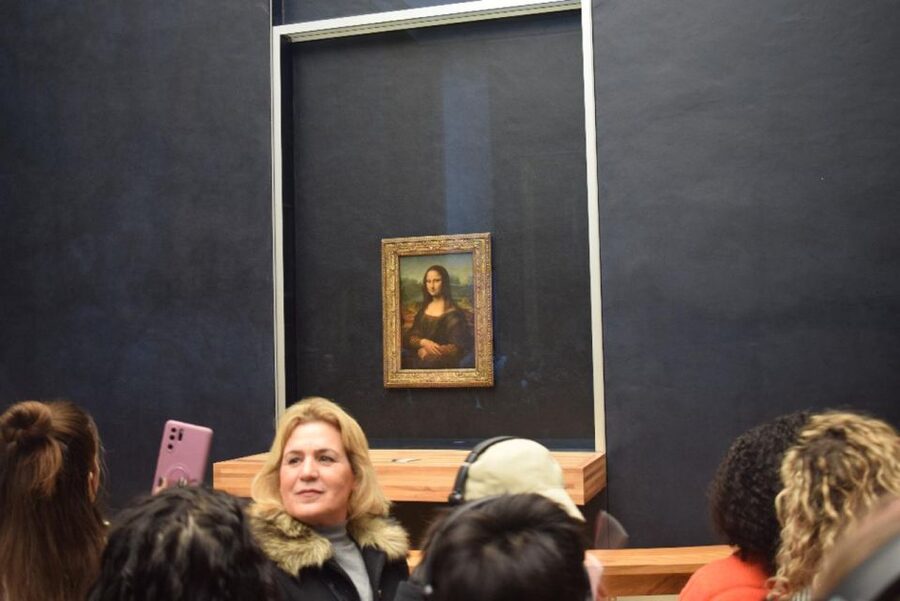
The Mona Lisa is the unavoidable centerpiece for many first-time visitors. Expect crowds around it, even on a guided visit. The main advantage of having a guide is not a private view. It is getting there as part of a planned route, hearing the key points, and avoiding the feeling that you have wandered through half the museum without finding the painting.
Winged Victory offers a different experience. It is a large sculpture placed dramatically at the top of a staircase, and it gives the tour a strong change of scale after the intimacy of a portrait. Your guide can also help you notice how the work is presented, not just what it depicts.
One practical point matters here: the tour can get crowded, and guides must keep moving. Several visitors found that their guide handled the crowds well, but you should still expect a brisk walk and short viewing periods at the most popular works.
Paintings by Leonardo, Caravaggio, Botticelli, and Géricault
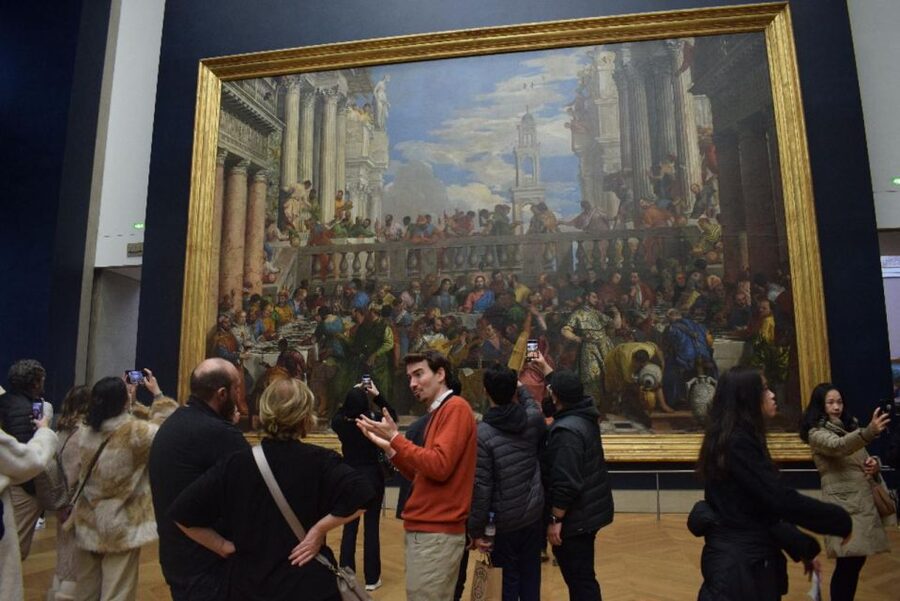
The painting portion reaches beyond the Mona Lisa. The advertised route includes work connected with Leonardo da Vinci, Caravaggio, Botticelli, and Théodore Géricault, along with French painting and Italian Renaissance art.
This variety is one of the tour’s strengths. You are not spending two hours on a single corridor of famous names. Instead, you get a quick sense of different periods, subjects, and styles. A good guide can explain what changes from one room to the next, so the collection feels less like a wall of unrelated pictures.
The quality of the explanation depends partly on the guide’s approach. Patrick was praised for tying art to historical setting and adding humor. Matteo was described as especially good at bringing familiar works to life through stories and questions. Clara received praise for arranging the route from older objects toward the major highlights.
Those details point to an important benefit of a small group. You can ask why a painting matters, what you are looking at, or how it fits the period. In a group of six, the guide has a better chance of hearing you than in a crowd of 20 or 30.
You should not expect a full art-history class. The route is designed to give you the essential works and enough context to continue on your own. If you already know the Louvre well, you may prefer a specialist tour devoted to one collection. For a first visit, this broad selection makes sense.
More Louvre tours and timed tickets:
- Louvre Museum Masterpieces Guided Tour with Access
★ 4.5 · 12,023 reviews - Paris: Louvre Overview, Exploration tour and Reserved Entry
★ 4.1 · 10,145 reviews - Paris: Louvre Museum Entry Ticket With Host and River Cruise
★ 4.6 · 9,926 reviews - Mona Lisa & Louvre Masterpieces Tour with Reserved Access
★ 4.6 · 6,812 reviews
Sculpture, royal rooms, and Napoleon’s apartments
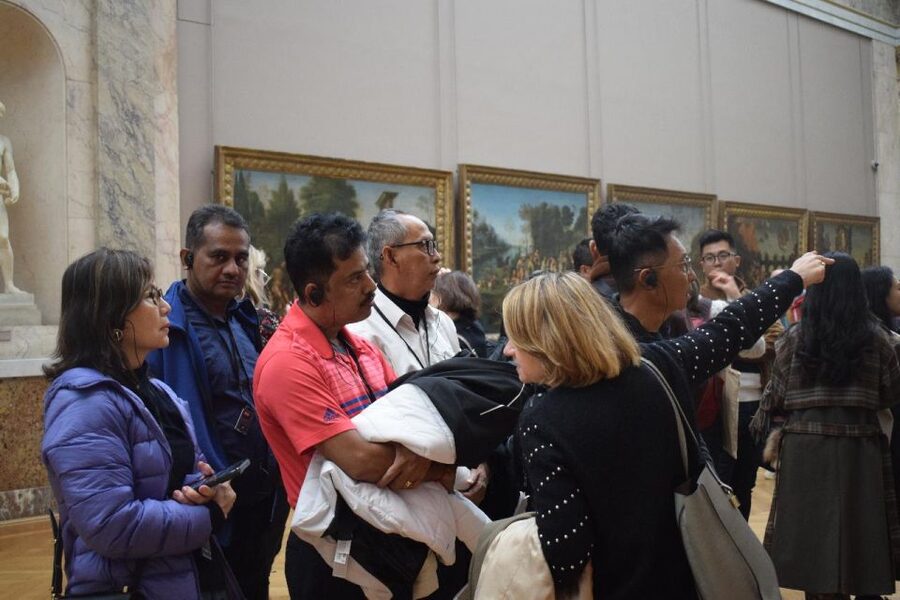
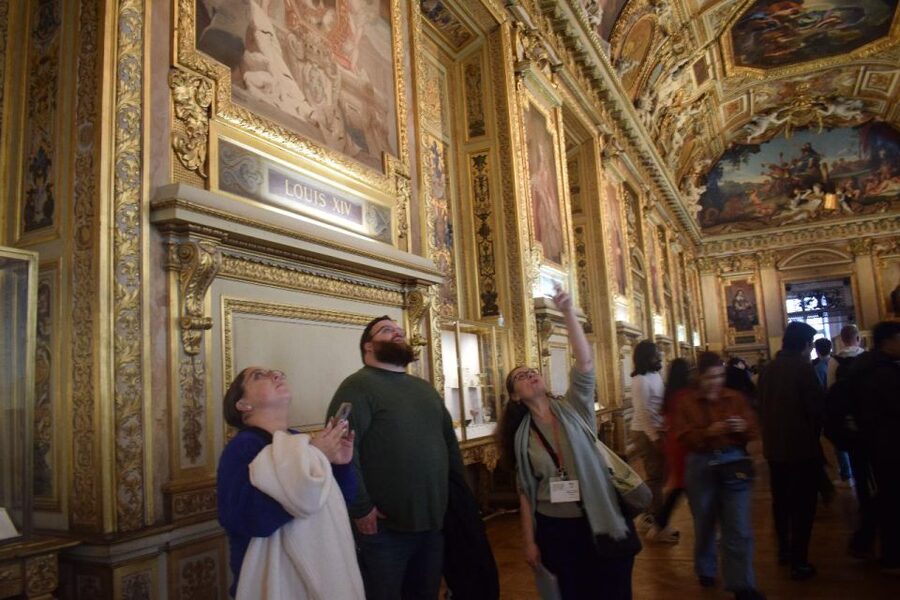
The advertised highlights focus on painting and Greek sculpture, but the route can also include royal interiors, tapestries, jewelry, and Napoleon’s apartments. These rooms help break up the artwork and show you how lavishly the building once functioned as a residence.
Napoleon’s apartments were singled out as a memorable part of one route. Their ornate decoration offers a welcome change after a long run of paintings. You see the Louvre not only as a place that stores art, but as a building made for ceremony, power, and display.
Because the exact path depends on crowd levels, access, and the guide’s judgment, no two tours should be treated as identical. Your guide may adjust the order to reach the most important works efficiently. That flexibility is useful in a museum where a blocked corridor or a heavy crowd can change the plan.
The route may also include sculptures in the courtyard. This can give you a quick look at the Louvre’s architecture and outdoor spaces without turning the tour into a separate building tour.
Why two hours works, and where it falls short
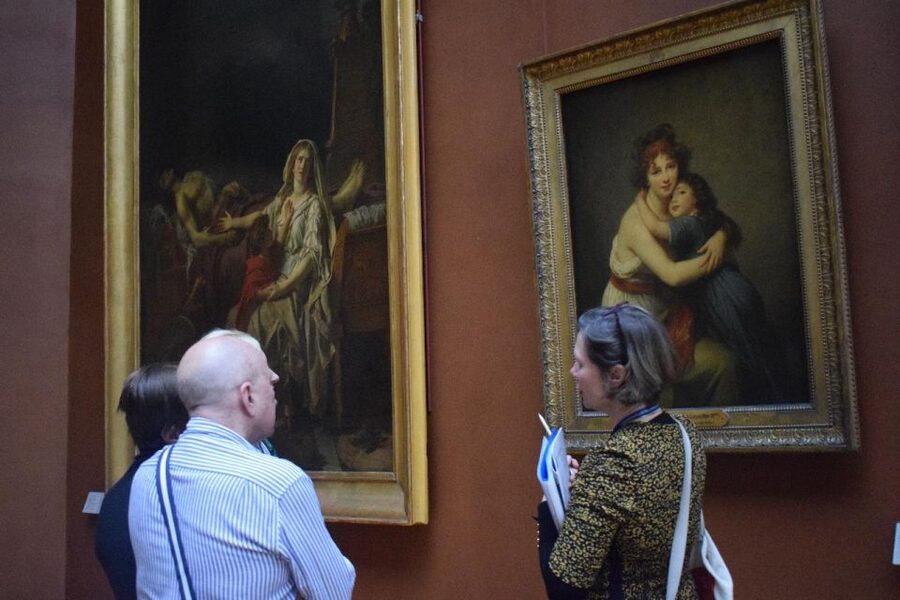
Two hours is a good length for a first orientation. The museum is enormous, and a longer first session can leave you tired before you know what you want to see. This tour gives you a clear starting point, then leaves you with a list of rooms and works worth returning to.
The pace is the tradeoff. You will walk, stop, listen, and move on. If you want to study every brushstroke or sit quietly in front of one sculpture, this route may feel too fast. Several people called it a whirlwind, but also said they learned a great deal and appreciated the tips for handling the crowds.
The new January 2026 ticket rule changes how you should plan your day. You can continue independently only while you remain inside. Once you leave the museum, you cannot re-enter with the tour ticket. If you want coffee, lunch, or a break, take it after you are finished with the Louvre, not between the guided portion and your independent visit.
That rule also makes the guide’s final advice more important. Listen for suggestions about which galleries to visit next, and decide before the tour ends where you want to spend your remaining time.
The guide is the main reason to pay more
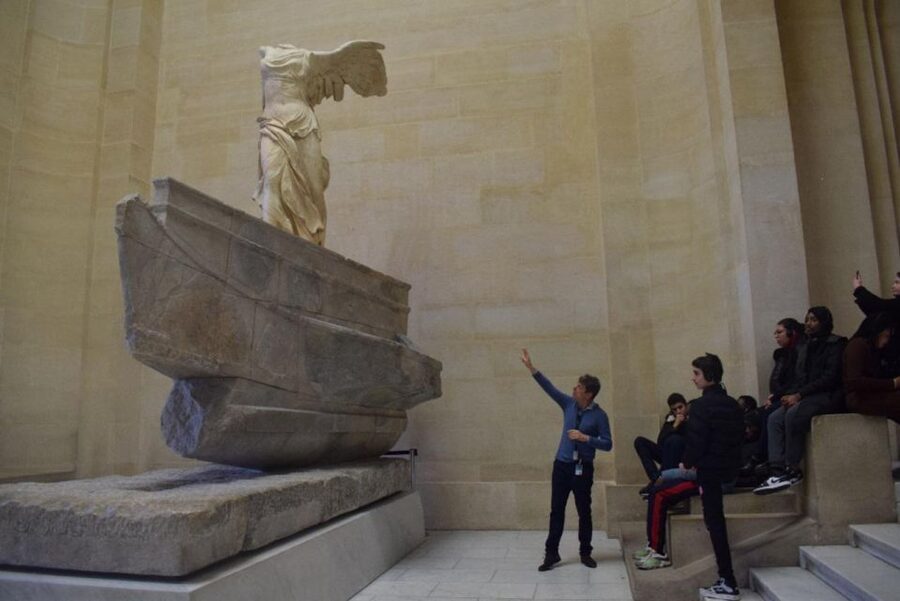
At $130 per person, this is not a cheap admission ticket. You are paying for a timed museum entry, a small group, a separate entrance after security, and a guide who builds a route through an often confusing building.
The value is strongest if you have limited time or feel uneasy about making sense of the Louvre alone. The tour can save you from missing the major works, taking the wrong corridor, or spending too much time in one wing. It also gives you historical context that a basic admission ticket does not provide.
A general admission ticket may cost less if you are confident with museums, have several hours, and enjoy wandering without a plan. You might also prefer it if you want to focus on a narrow collection or move at a very slow pace.
For a first Louvre visit, the price is easier to justify. The most praised guides, including Flo, Floriane, Jerome, Patrick, Marine, Victor, and Matteo, were described as warm, funny, organized, and able to explain difficult material in clear language. The strongest pattern is not one particular script. It is the guide’s ability to adjust the route, keep people together, and make the art feel connected to its setting.
Small groups help families and first-time museum visitors
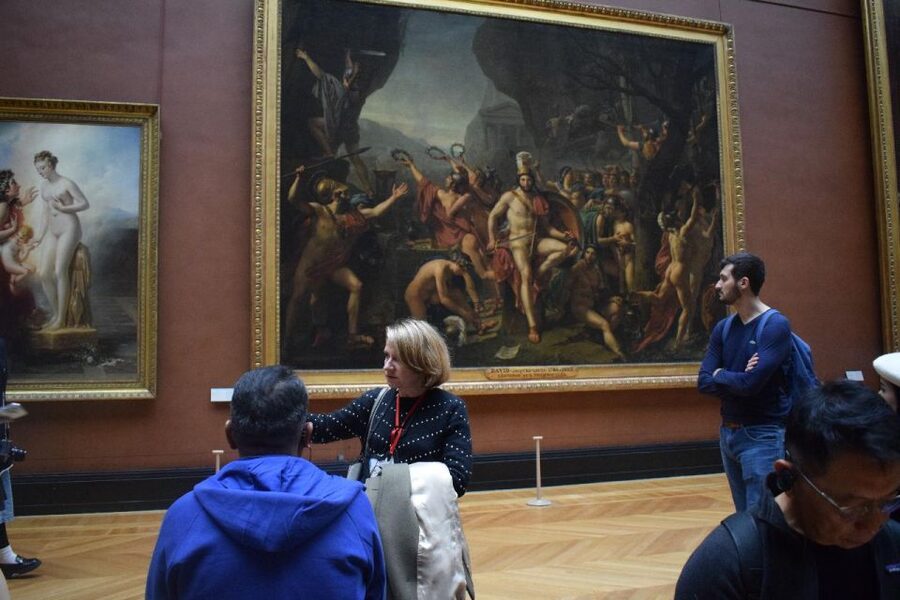
The six-person maximum suits families particularly well. One family with children aged eight and ten enjoyed the format, and another parent said a 14-year-old found the tour engaging. That does not mean every child will enjoy two hours of art, but the route has enough famous paintings, dramatic sculpture, palace rooms, and stories to hold attention better than an unplanned visit might.
The tour also works for adults who do not consider themselves art experts. You do not need to arrive with background reading. A guide can point out what to notice and explain why an object became important.
The experience is less suitable if you need a wheelchair or have a mobility impairment. The activity is specifically not suitable for wheelchair users or people with mobility impairments. Comfortable shoes are essential for everyone, since the route involves walking through the museum for two hours.
Language choices are broad. Live guiding is available in English, French, German, Spanish, Italian, Arabic, and Chinese. Private and small-group options are offered, though the stated format for this experience is semi-private with a maximum of six people.
A practical plan for your Louvre day
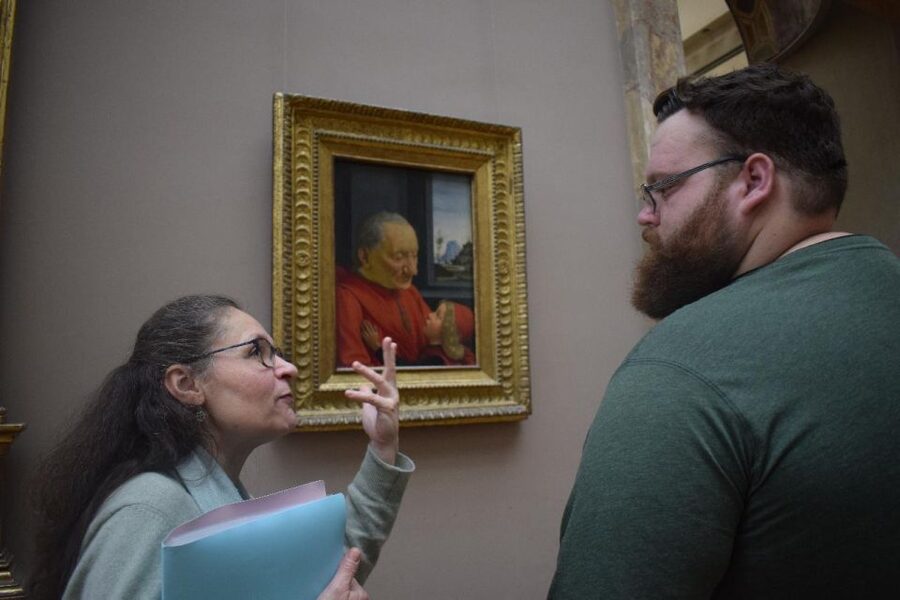
Arrive at Place Colette with your identification ready and no prohibited luggage. Find the guide holding the Connecting France sign, then stay close during the move toward the museum entrance.
After security, use the guided route as your orientation. Pay attention not only to the masterpieces but also to the names of galleries and the direction you are walking. The best souvenir from a short Louvre tour is knowing where to go next.
During the tour, tell the guide if one of the major works matters most to you. Guides such as Zack were praised for asking at the beginning what the group wanted to see, then making sure those priorities appeared in the route. You should still expect the guide to manage the whole group, but speaking up early can help.
At the end, do not walk out automatically. Since re-entry is no longer allowed from January 2026, use the remaining time inside if you want to see additional rooms. After you leave, the same ticket will not let you return.
Cancellation is flexible up to 24 hours before the start for a full refund, and you can reserve now and pay later. Those terms help if your Paris plans are still shifting, but the museum visit itself needs a firm time because the ticket is timed.
Should you book this Louvre tour?
Book it if this is your first Louvre visit, your Paris schedule is tight, or you want the famous works explained instead of simply photographed. The six-person format, strong guide feedback, and focused route make it a sensible way to get oriented without losing half a day to navigation.
Think twice if you want a slow, independent museum day or plan to concentrate on one specialized collection. At $130, the tour only earns its price when you value direction, context, and time saved.
For most first-time visitors, I would choose the guided option, then use the rest of the two-hour museum window to explore one area that caught your interest. Just remember the January 2026 no-re-entry rule and plan your break after you leave.
FAQ
How long does the Louvre tour last?
The guided visit lasts two hours.
What is the maximum group size?
The semi-private tour has a maximum of six people.
Where do I meet the guide?
Meet at Place Colette, between Le Kiosque des Noctambules, the colorful glass-ball sculpture, and the Comédie Française. The guide will hold a Connecting France sign.
Does the ticket include Louvre entry?
Yes. The experience includes a timed ticket to the Louvre Museum, a guide, and skip-the-line access through a separate entrance after security.
Which Louvre highlights are included?
The route includes the Venus de Milo, Mona Lisa, Winged Victory of Samothrace, Napoleon’s coronation, and selected works connected with Leonardo da Vinci, Caravaggio, Botticelli, and Géricault. It can also include sculpture, royal rooms, jewelry, tapestries, and Napoleon’s apartments.
Can I re-enter the Louvre after the tour?
No. From January 2026, you cannot re-enter the Louvre after the tour ends. If you want to continue independently, remain inside the museum.
Is the tour suitable for wheelchair users?
No. The activity is not suitable for wheelchair users or people with mobility impairments. Oversize luggage, large bags, backpacks, baby strollers, and luggage are also not allowed.
Just added around Paris
- Paris Day Tour with Eiffel Tower, Louvre and Cruise Max 6 People★ 4.5 · 29 reviews
- PRIVATE Louvre Wonders & Hidden Treasures Visit★ 5.0 · 65 reviews
- d’Orsay Museum Paris entry ticket★ 3.5 · 31 reviews
- visiting the masterpieces of impressionists at Orsay museum★ 5.0 · 7 reviews
- Louvre Museum with private guide★ 5.0 · 3 reviews
- Louvre Wheelchair-Accessible Private Tour – Stress-Free & Easy★ 5.0 · 16 reviews
- LOUVRE, Small Group Guided Tour in French (TOP SALES)★ 4.5 · 9 reviews
- Musée d’Orsay Highlights Tour with Gourmet Lunch★ 4.5 · 11 reviews
Art Museum Tours in Paris, compared.

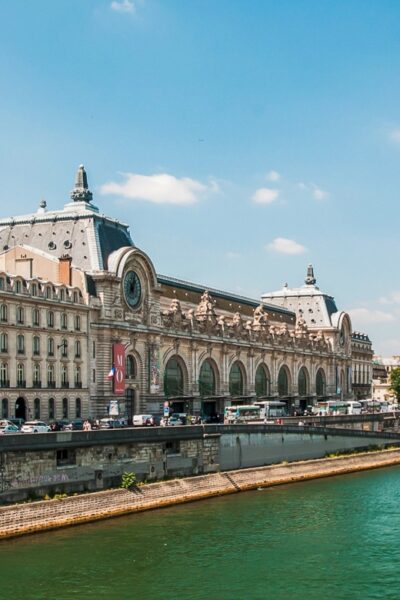
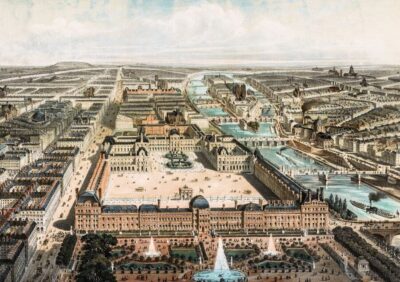
Louvre Guided Tour with Reserved Access & Boat Cruise
Read our review →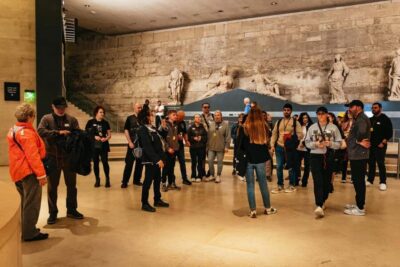
Louvre Overview, Exploration tour and Reserved Entry
Read our review →
Louvre Museum Entry Ticket With Host and River Cruise
Read our review →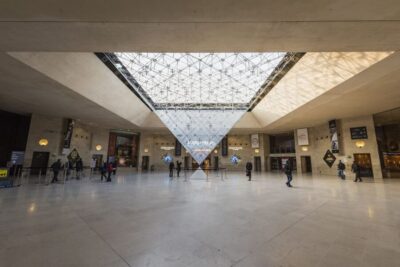
Mona Lisa & Louvre Masterpieces Tour with Reserved Access
Read our review →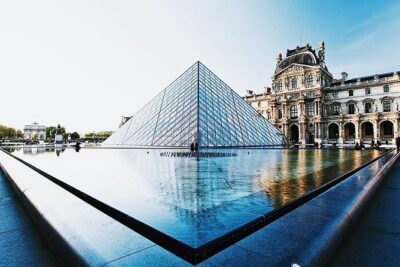
Louvre Museum – Exclusive Guided Tour (Entry Included)
Read our review →