
REVIEW · WASHINGTON DC
National Archives + National Portrait Gallery Tour 6ppl Max
The most powerful moment here comes early: you stand before the original Declaration of Independence and Constitution in the National Archives Rotunda. These are not reproductions behind a screen. They are the fragile documents that shaped the country, presented with a guide who can explain the arguments, compromises, and limits behind the famous words.
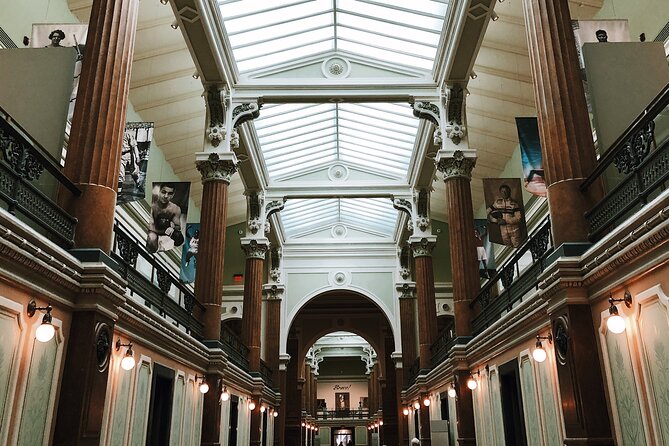
I like two things right away. The group is capped at eight people, and the day links two very different museums rather than stopping after the founding documents. I also like the choice of the National Portrait Gallery, where presidential portraits, Obama’s portraits, Andy Warhol, sculpture, video, and American art give the day a wider human frame.
The main drawback is the length. At about five and a half hours, including a lunch break, this is a serious museum day with plenty of walking and standing. The tour is not suitable for wheelchair users or people with walking disabilities, and the advertised details specify a maximum of eight people, despite the title suggesting six.
Key points at a glance
- The original founding documents: See the Declaration of Independence, Constitution, and Bill of Rights in the National Archives Rotunda.
- A 1297 Magna Carta: The Rubenstein Gallery connects American citizenship debates to an older document about law and political rights.
- Two Smithsonian collections in one stop: The National Portrait Gallery and American Art Museum share the same building.
- Modern figures alongside presidents: Expect the Obama portraits, Andy Warhol, and other notable Americans in several artistic forms.
- Small-group storytelling: The tour never exceeds eight people, allowing more room for questions and a better chance to hear the guide.
- A full half-day commitment: The 10:00 a.m. start runs about 5.5 hours and finishes near the United States Capitol.
Why the National Archives makes a strong first stop
The National Archives is the emotional anchor of this tour. You begin at 10:00 a.m. at 701 Constitution Avenue NW, a convenient location near the National Mall. The first two hours focus on the documents that explain the creation of the United States.
The Rotunda is built for drama. The original Declaration of Independence, Constitution, and Bill of Rights sit at the center of the visit. A guide adds something a display case cannot: context. You hear about the circumstances that produced the documents and the tension between their ideals and the question of who counted as a citizen.
That distinction matters. It is easy to read a line such as all men are created equal and move on. A good guide makes you pause over the gap between the words and the society that produced them. The tour’s stated focus on citizenship and inclusion gives the visit a useful direction instead of treating the documents as untouchable national souvenirs.
The skip-the-line entry is another practical advantage. It does not mean you will face no security or no waiting at all. Museum security can create lines, and occasional restrictions may affect the visit. Still, avoiding the regular admission process can save time in a busy Washington day.
The building also offers more than the famous three documents. In the Rubenstein Gallery, you see a 1297 copy of the Magna Carta. That older document helps place American constitutional ideas in a longer political story. You are not simply looking at an old piece of parchment. You are considering how ideas about law, rights, government, and citizenship developed over time.
Two hours is a sensible amount of time here. You have enough space to see the main galleries without racing, but the guide must choose what to explain. That is where the small group helps. The guides named in the experience information include Annemarie and Brenda. Annemarie is described as professional, personable, and especially good at making history understandable across three generations. Brenda is noted for making the material fun and holding the attention of a parent and teenage daughter for the full five-plus hours.
Those details point to an important strength: this is not meant to be a silent museum escort. The guide’s stories and choices shape the visit. You will not hear every fact in the building, but you should come away with a clearer sense of why these objects matter.
More Art Museum Tours in Washington DC
- The National Gallery of Art DC – Exclusive Guided Museum Tour
★ 5.0 · 166 reviews - DC National Gallery of Art Guided Tour Semi-Private 8ppl Max
★ 5.0 · 85 reviews - Curated Tour – National Gallery of Art with French Art Historian
★ 5.0 · 31 reviews
The lunch break keeps the day from becoming a museum marathon
After the Archives, the schedule includes a break for lunch. The supplied details do not name a restaurant or include the meal in the price, so plan to buy your own food and use the pause to rest.
This break is essential. The tour runs around 5.5 hours, and both museums involve walking and time on your feet. If you are visiting Washington with children, older family members, or anyone who tires easily, treat the meal stop as part of the pacing rather than lost sightseeing time.
It also gives you a chance to process the first museum before moving to a different kind of collection. The Archives asks you to think about laws and national beginnings. The afternoon stop asks how a country chooses to picture its leaders, artists, public figures, and cultural life.
Presidential portraits and the human side of national history
The National Portrait Gallery occupies a shared Smithsonian building with the Smithsonian American Art Museum. The two collections connect around the Kogod Courtyard, described as one of downtown Washington’s calmer indoor spaces.
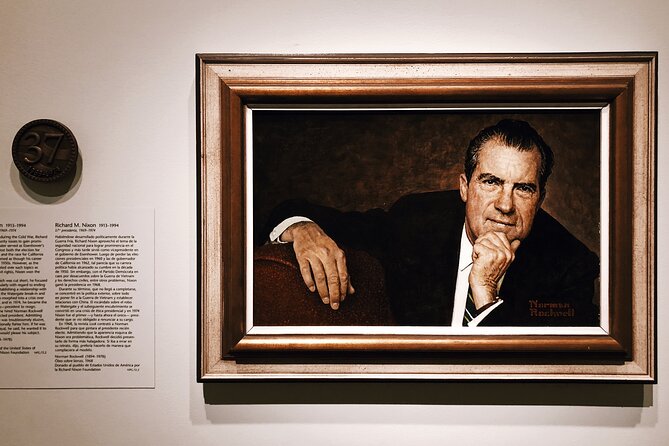
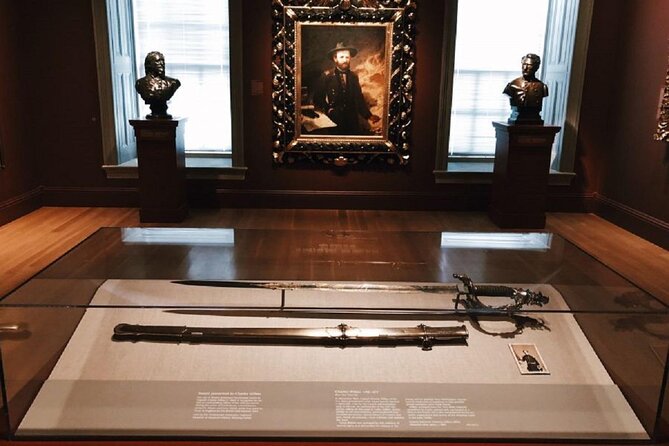
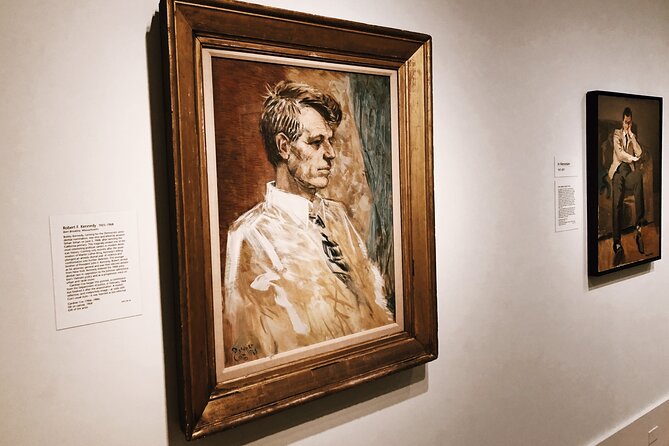
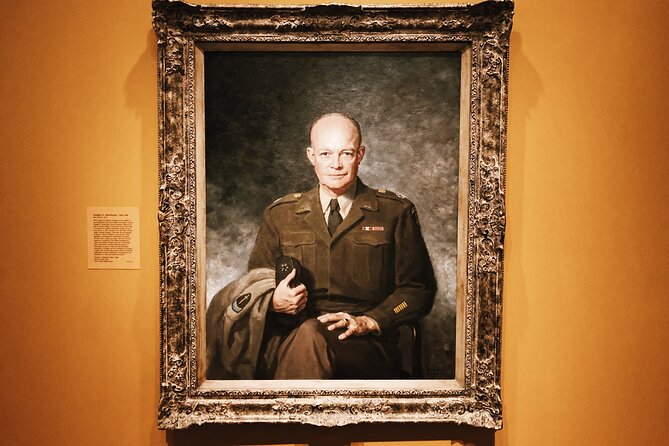
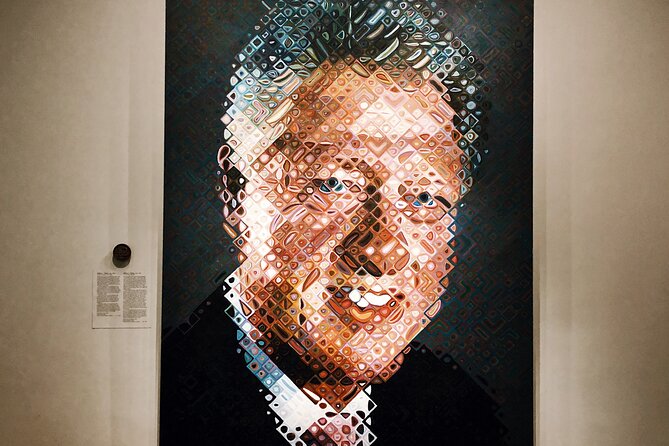
This setting changes the rhythm of the tour. Instead of reading original documents, you look at faces and ask how public figures wanted to be seen. The presidential portrait collection is the main draw for many people. A guide can point out details in the paintings and explain the personalities and political moments attached to them.
The portrait format also makes the material more personal. The Archives shows the language of government. The Portrait Gallery shows the people who carried, challenged, or symbolized that government. You see famous Americans in painting, sculpture, and video, so the experience is not limited to traditional framed portraits.
The Obama portraits are a major highlight listed for this experience. They offer a modern contrast to older presidential images and give the tour a chance to discuss changing ideas of leadership, public image, and representation. If your interest is mainly contemporary American culture, this part may be more engaging than the Archives.
The building itself deserves attention. The Kogod Courtyard provides a break from gallery walls, and the route between the portrait and American art collections makes the second half feel varied. The American Art Museum portion includes the Luce Center, and the tour may also take you near the Lunder Conservation Center, where you can get a glimpse into the work of preserving art.
That conservation element is easy to overlook, but it adds useful depth. Museums are not just storage rooms for finished masterpieces. Paintings and objects need constant care, research, cleaning, and repair. Seeing conservation spaces, when available on the route, helps you understand the work behind the exhibitions.
Andy Warhol, American art, and unexpected turns
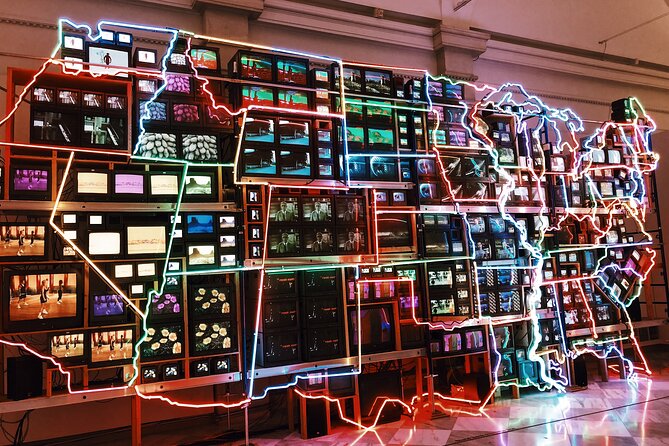
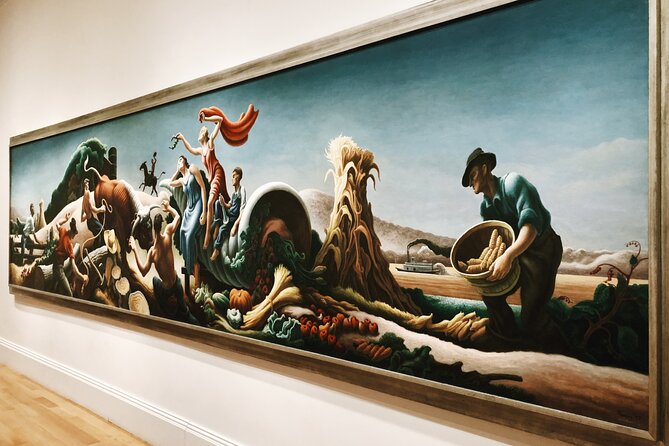
The American art portion broadens the day beyond presidents. Andy Warhol is one of the named highlights, but the collection also includes art in several forms and figures who may appear in less expected corners of the building.
I like this part because it prevents the tour from becoming a single subject lesson. You begin with political documents, move to presidents, then encounter artists and other Americans who shaped the country’s public culture. The connections are not always obvious, which is exactly why a guide can help.
The phrase criminally overlooked is used in the experience description, and that is fair as a practical observation. Many people plan Washington around the National Mall museums and skip this shared Smithsonian space. The Portrait Gallery is centrally placed, easy to pair with other downtown sights, and offers a quieter change from the major memorial route.
You should not expect to see every room. A five-hour tour with two museums still requires selection. Collections change during the year, and some rooms or exhibits can close without warning. The guide will focus on major works and themes rather than provide a complete survey of both institutions.
A few more gallery visits around the USA worth comparing
- NYC: Museum of Modern Art (MoMA) Entry Ticket
★ 4.6 · 12,540 reviews - NYC: Guggenheim Museum Entry Ticket
★ 4.4 · 2,201 reviews - Medieval Torture Museum with Ghost Hunting and Tiny Art Gallery
★ 5.0 · 2,011 reviews - NYC: MoMA Before-Hours Tour with Art Expert
★ 4.8 · 418 reviews
What the small group changes
The maximum group size is eight, which is small enough to feel more personal than a standard coach or large walking tour. The title mentions six people, but the detailed conditions state that the maximum is eight, so confirm the current group limit when booking if that distinction matters to you.
A small group is most useful inside museums. You can hear the guide more clearly, ask a question without stopping a large crowd, and keep moving through narrow galleries. It also lets the guide adjust the pace somewhat, though this remains a scheduled tour with fixed museum stops.
The guide quality matters more than the number of exhibits. Annemarie and Brenda are specifically associated with strong storytelling, clear explanations, and a personable approach. The material suits a guide who can speak to both adults and teenagers, not someone who simply recites dates.
The tour requires at least two people to operate. If that minimum is not met, an alternative or full refund is offered. The experience runs rain or shine, which is useful in Washington, where a wet day can make outdoor sightseeing unpleasant but has little effect on a museum itinerary.
Price and practical value at $166.15
At $166.15 per person, this is not a low-cost museum visit. The museums themselves have free admission, so you are paying for the guide, planning, small group format, and skip-the-line access at the National Archives.
The value depends on how you like to visit museums. If you prefer reading every label at your own speed, the price may be hard to justify. You can enter these Smithsonian institutions without paying a tour fee, and independent visitors can spend as long as they like.
I see stronger value if you want the founding documents explained rather than simply viewed. The Archives can be emotionally powerful but intellectually dense. A guide helps connect the Magna Carta, the founding texts, and the question of citizenship. The Portrait Gallery also benefits from interpretation because the collection is broad and the important works are not all obvious at first glance.
The five-and-a-half-hour schedule adds value for a first Washington visit. Instead of spending time deciding which galleries matter, you have a prepared route through two major institutions. Group discounts may also be available, though the provided details do not specify the discount amount or eligibility.
Admission to the museums is listed as free, but that does not make the guided experience free. Think of the cost as an investment in structure and explanation. It is most worthwhile for first-time visitors, families with mixed interests, and anyone who wants a strong introduction to American political and cultural symbols.
Getting there, what to carry, and who should book
The tour starts at the National Archives Museum and ends near the United States Capitol. Hotel pickup and drop-off are not included, so use public transportation, a taxi, or Uber to reach the start point. The meeting location is near public transportation and is centrally placed for a day of sightseeing.
Bring a mobile phone and provide the operator with your full mobile number, including country code. You should also wear suitable clothing for museum entry and avoid large bags or suitcases. Only handbags or small, thin backpacks are allowed through security.
The walking requirement is moderate, but the five-hour format makes comfortable shoes a sensible choice. The experience is not available for people with walking disabilities or those using a wheelchair. Some museum rooms require quiet or limit speaking, so the guide will explain the rules before you enter.
Book at least a day ahead if your plans may change. Cancellation is free up to 24 hours before the local start time. Inside that window, the payment is not refunded, and changes are not accepted.
This tour suits you best if you:
- Want the founding documents explained in context
- Prefer a guide-led museum visit to exploring alone
- Are interested in both politics and American art
- Can manage several hours of walking and standing
- Like a small group rather than a large sightseeing crowd
It may not suit you if you need wheelchair access, dislike fixed schedules, or want a slow, highly independent museum visit.
Should you book this Washington DC tour?
Book it if you want the National Archives to mean more than a quick look at famous documents. The combination of the original Declaration and Constitution, the Magna Carta, presidential portraits, Obama’s portraits, Warhol, and American art gives you a broad introduction to the country’s public story.
The strongest reason to choose it is the guide. Annemarie and Brenda are singled out for clear, engaging storytelling, and that matters during a long museum day. The chief caution is price: the museums are free, so you need to value the explanation, planning, and small group enough to spend $166.15.
For a first visit to Washington, especially with several generations traveling together, I think the structure is useful. For repeat visitors who already know these museums and prefer to set their own pace, spend the money elsewhere. Either way, reserve early if your dates are fixed, since this experience is booked an average of 98 days in advance.
FAQ
How long does the tour last?
The experience lasts approximately 5.5 hours, including a lunch break.
What time does the tour begin?
The start time is 10:00 a.m.
Where does the tour start?
It starts at the National Archives Museum at 701 Constitution Ave. NW, Washington, DC 20408.
Where does the tour end?
The tour ends near the United States Capitol in Washington, DC 20004.
What museums are included?
The tour includes the National Archives Museum and the Smithsonian National Portrait Gallery, along with the Smithsonian American Art Museum collection in the shared building.
What can I see at the National Archives?
You can see the original Declaration of Independence, Constitution, and Bill of Rights, plus a 1297 copy of the Magna Carta in the Rubenstein Gallery.
Is admission included?
Skip-the-line entry to the National Archives is included. The museum admission tickets listed for the stops are free.
How many people can join the tour?
The detailed tour conditions state that a maximum of eight people can join, with a minimum of two required for the tour to operate.
Can I cancel for a refund?
Yes. You can cancel at least 24 hours before the local start time for a full refund. Cancellations or changes made within 24 hours are not accepted for a refund.
Just added around the USA
- NYC Combo: Statue of Liberty Cruise, St Patrick’s Cathedral & Moma entrance★ 4.0 · 8 reviews
- New York City Art Gallery Tour★ 5.0 · 7 reviews
- Skip the Line Tickets for MoMA and Whitney Museum Combo★ 3.0 · 2 reviews
- Chelsea Galleries and High Line; Art, Architecture and History★ 5.0 · 14 reviews
- Visit The Guggenheim Museum & 3h Manhattan Walking Tour★ 4.5 · 3 reviews
- Tribeca Contemporary Art Tour with NYC Art Critic★ 5.0 · 5 reviews
- American Museum of Natural History and MOMA Combo Tickets★ 4.5 · 3 reviews
- Chelsea Architecture and Art Tour with Award Winning NYC Guide★ 5.0 · 9 reviews
Art Museum Tours in Washington DC, compared.
The National Gallery of Art DC – Exclusive Guided Museum Tour
Read our review →
DC National Gallery of Art Guided Tour Semi-Private 8ppl Max
Read our review →
Curated Tour – National Gallery of Art with French Art Historian
Read our review →
DC National Gallery of Art Guided Tour with 8ppl Max
Read our review →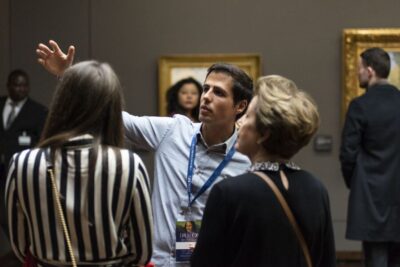
National Portrait Gallery & American Art Museum Tour 8ppl
Read our review →
DC Masterpieces: National Gallery & Portrait Gallery Tour
Read our review →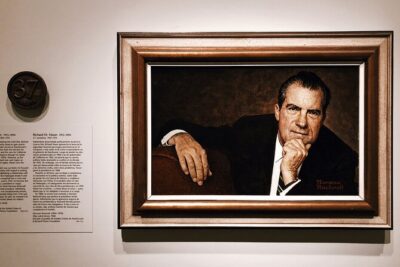
National Archives + National Portrait Gallery Tour 6ppl Max
Read our review →Browse the lists this tour appears in