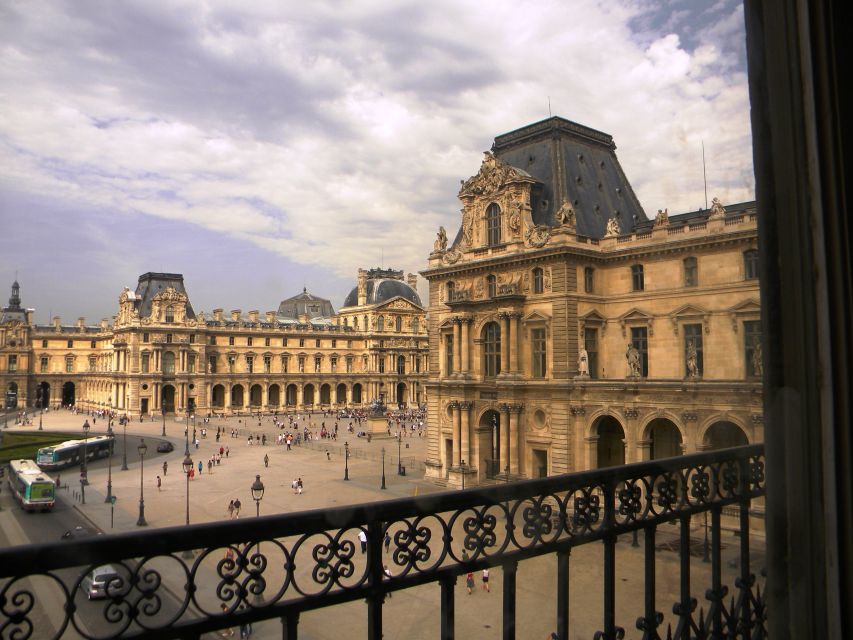
REVIEW · PARIS
Murders and Mysteries of the Louvre Museum
The Louvre is more than a parade of famous paintings. This two-hour mystery tour uses its medieval fortress, ancient rituals, royal scandals, and disturbing artworks to give the museum a sharper edge. You will still see the Mona Lisa, Venus de Milo, Egyptian collections, French masterpieces, and crown jewels, but with stories that make the grand rooms feel less tidy and more human.
I like the small group, limited to eight participants, and the fact that your ticket lets you remain in the Louvre after the guided visit. I also like the focus on overlooked corners and strange backstories. The main caution is communication: one guide received praise for expertise and warmth, but another visitor found the guide’s English difficult to hear in the crowded galleries.
Key points
- Medieval Louvre remains: Begin with the old fortress beneath the modern museum and trace the building’s change into a royal residence.
- Famous works with darker stories: See the Mona Lisa, Venus de Milo, French masterpieces, and Egyptian objects through tales of ritual, violence, and scandal.
- Small group of eight: A limited group can make it easier to follow the guide and ask questions in busy rooms.
- Skip the ticket line, not security: The guide helps you bypass the ticket queue, but everyone must still wait for the security check.
- Stay after the tour: Your admission remains valid, so you can continue exploring the Louvre on your own.
- $200 value question: The price is high for two hours, but it includes museum admission, a live guide, and a focused route through a very large museum.
Meeting beneath the Louvre Pyramid

You meet at the Statue of Louis XIV in front of the Louvre Pyramid, on Rue de Rivoli. The exact meeting instructions appear on your voucher, so read them before leaving for the museum.
The meeting point is outside the ticketed museum area but after the security check. That distinction matters. Your guide provides skip-the-line access for the museum entrance, but you do not skip the initial security queue. Arrive ready to wait with other museum visitors before you reach the guide.
Bring a passport or identity card. Large bags and luggage are not permitted, and anything larger than 55 by 35 by 20 centimeters cannot enter. For a museum this busy, traveling light is more than a rule-following exercise. It keeps your hands free and makes it easier to stay with the group.
Once everyone is together, the guide leads you into the museum and begins the route. The experience is offered in English or French, and the group size is capped at eight. That is a useful number at the Louvre, where a larger party can quickly become scattered between doorways, staircases, and crowded viewing areas.
More Art Museum Tours in Paris
- Paris: Louvre Museum Timed-Entrance Ticket
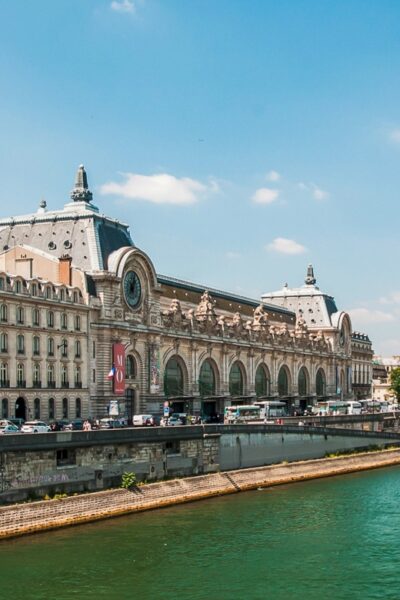
★ 4.6 · 71,977 reviews - Paris: Orsay Museum Entry Ticket
★ 4.7 · 25,647 reviews - Paris: Louvre Guided Tour with Reserved Access & Boat Cruise
★ 4.3 · 16,353 reviews
The medieval fortress under today’s museum
The tour begins with the Louvre’s oldest layer, the remains of the medieval royal fortress. Before it became a palace and then a public museum, this site had a defensive purpose. You see the physical traces of that earlier building and learn how the Louvre changed as French kings expanded and reshaped it.
This opening gives the rest of the visit a needed sense of place. Without it, the Louvre can feel like an endless sequence of galleries. With it, you can read the building itself as part of the story, moving from fortress to royal residence to one of the world’s largest art museums.
The murder and mystery theme fits especially well here. The old walls connect the museum to stories of betrayal, royal power, scandal, and violence. The guide does not treat the Louvre as a neutral box for paintings. Instead, the building becomes part of the drama.
Egyptian galleries, magic, and forgotten rituals
The ancient world collections add a different kind of mystery. Here, your guide explains magic and long-forgotten rituals while placing objects in the context of ancient beliefs and practices.
The value of this section is not simply seeing another famous collection. The Louvre’s Egyptian rooms contain objects that can seem remote when viewed without explanation. A good guide gives you a way to ask what these objects were meant to do, who used them, and what fears or hopes they reflect.
The subject can also be darker than a standard art tour. You will hear about rituals and ancient ideas that may feel strange or unsettling to modern eyes. This is one of the places where the tour’s title makes the most sense, since the mystery comes from belief and practice rather than only from bloody scenes in paintings.
Venus de Milo and the art of the unexpected
The Venus de Milo is one of the Louvre’s most recognizable sculptures, yet the tour places it within a route that also seeks out less obvious works. That balance is important. You get the major sight you came to Paris to see, but you are not limited to a checklist of famous names.
The guide also discusses artistic techniques and connections between artists. That kind of explanation can turn a quick look at a sculpture or painting into a more useful lesson in how art is made and understood.
The route may appeal to you if you have limited time. One visitor with a tight schedule found the highlights format a good fit, and that is a fair assessment of the itinerary. Two hours cannot cover the Louvre fully, but it can give you a clear first pass through its most important areas.
More Louvre tours and timed tickets:
- Louvre Museum Masterpieces Guided Tour with Access
★ 4.5 · 12,023 reviews - Paris: Louvre Overview, Exploration tour and Reserved Entry
★ 4.1 · 10,145 reviews - Paris: Louvre Museum Entry Ticket With Host and River Cruise
★ 4.6 · 9,926 reviews - Mona Lisa & Louvre Masterpieces Tour with Reserved Access
★ 4.6 · 6,812 reviews
Royal jewels and the darker side of palace life
The crown jewelry collection brings the Louvre’s royal past into sharper focus. Jewels are easy to admire as objects of beauty, but they also raise questions about power, wealth, ownership, and the people who wore them.
This is where stories of royal life, betrayal, and scandal add useful context. The collection is not only about precious materials. It reflects the world of the French court, where status could be displayed in spectacular form and where political and personal danger often sat close together.
You may find this section less overtly mysterious than the ancient collections or violent paintings. That is part of the tour’s varied pace. The experience moves between objects, architecture, and stories rather than forcing every stop into the same kind of horror tale.
French masterpieces and violence on the canvas
The French painting galleries provide the strongest setting for the tour’s darker artistic theme. Your guide points out works that depict violence, death, conflict, or other grim events, then explains the stories behind them.
The important question is how much interpretation you receive. The best version of this tour connects the painting’s subject to artistic choices, historical setting, and the people involved. One strong guide was praised for explaining techniques and relationships between artists, which is exactly the kind of detail that can make a famous painting feel newly alive.
There is a possible mismatch between the advertised theme and the actual experience. One participant felt the guide selected several gory paintings but did not always build much intrigue around them. If you expect an elaborate detective-style investigation, you may find the approach more like a highlights tour with a dark angle.
That does not make the paintings less worthwhile. It simply means you should book this for unusual stories and a focused museum overview, not for a fully theatrical murder mystery.
Seeing the Mona Lisa from a different angle
The Mona Lisa is the tour’s most predictable stop, yet the guide uses it to discuss the famous smile and the questions surrounding the painting’s expression. You will not be discovering the painting for the first time, but you may look at it with a better sense of why it continues to hold attention.
The room can be crowded, and your time in front of the painting may be brief. Keep your expectations sensible. This is not a private viewing, and the tour cannot remove the crowds around one of the Louvre’s most popular works.
Still, guided context helps. Rather than simply joining the line, taking a photo, and moving on, you get a framework for considering the painting’s mood and mystery. The Mona Lisa becomes part of the larger theme: art can hide as much as it reveals.
What the two hours are really worth
At $200 per person, this is an expensive Louvre visit. The fee includes museum admission, a live English or French guide, and skip-the-ticket-line access. The group is small, and you can stay in the museum after the guided portion, which improves the value.
The price makes less sense if you only want entry to the Louvre. You could not reasonably expect a full museum visit in two hours, and the guided route will not cover every major department. You are paying for interpretation, structure, and time saved, not simply for a ticket.
I see the strongest value for a first-time visitor who wants help finding the major sights without losing the museum’s stranger side. It also suits you if you have limited time and would rather follow a clear route than study a map and choose among thousands of objects.
The after-tour access is important. Once the two-hour visit ends, you can continue through the collections independently. Use that time to return to a favorite work, explore another department, or see areas the guide did not have time to include.
Guide quality matters more than usual
A Louvre tour depends heavily on the person leading it. The most praised qualities are clear explanation, enthusiasm, friendliness, and the ability to connect major works with less familiar pieces. Several participants found their guides highly engaging and appreciated the effort to make the route personal.
Small groups help, but they cannot solve every communication problem. One guide was difficult for a participant to understand because of a soft voice and the noise inside the museum. Two people were reportedly separated from the group in the crowds, which shows why you should stay close and keep checking for the guide.
An audio microphone would be useful in loud rooms, but it is not listed as part of the activity. If you have hearing concerns, ask about this before booking. You should also tell the guide early if you cannot hear well, rather than waiting until the group has moved on.
The language choice is English or French. If you book the English tour, clear communication is central to the experience because the appeal comes from the stories and explanations, not just the route.
Who should book this Louvre experience
I would choose this tour if you want the Louvre’s major works with a darker, more unusual frame. It suits first-time visitors, couples, families with older children, and anyone who finds standard art commentary too dry.
It is especially practical for a short stay in Paris. The guide takes you to the medieval remains, Egyptian collection, Venus de Milo, crown jewels, French masterpieces, and Mona Lisa in two hours. You will not know the whole museum afterward, but you will have a strong starting point.
You may want a different option if you prefer to move at your own pace, spend a long time with a single painting, or avoid a fixed route. You should also think twice if a soft-spoken guide or unclear English would make the experience frustrating.
Book with the understanding that the murder and mystery theme is a lens, not a promise of a staged crime story at every stop. Some sections focus on ancient ritual, others on royal scandal, artistic technique, or the atmosphere of a work.
Practical details that can make or break the visit
Book only if you can arrive at the correct meeting point and pass through security with a small bag. The guide cannot remove the security wait, and the museum will not admit luggage or oversized items.
The activity allows cancellation up to 24 hours before the start for a full refund. You can also reserve now and pay later, which is useful when your Paris schedule is still shifting.
Tips are optional and not included. Since the tour is only two hours, wear something comfortable enough for museum walking and keep your belongings to a minimum. The more quickly you can pass through the entrance process, the more attention you can give to the guide once the tour starts.
The overall rating is 4.6 from 28 ratings, with praise focused mainly on the guides’ expertise, friendliness, and ability to cover major exhibits in a small group. The lower experience came from hearing and language issues, so those are the clearest risks to consider.
Should you book the Murders and Mysteries of the Louvre?
Book it if you want a short, guided Louvre introduction that mixes famous art with medieval walls, ancient rituals, royal jewels, and troubling stories. The small group and continued museum access afterward make the $200 fee easier to justify for a first visit or a packed Paris itinerary.
Skip it if you want a slow, self-directed museum day or expect a tightly scripted murder investigation. The tour’s strongest feature is the guide’s interpretation, so ask yourself how much you value expert context and a ready-made route. If the answer is a lot, this can be a memorable way to meet the Louvre without getting lost in its enormous scale.
FAQ
Where does the Louvre tour meet?
Meet your guide at the Statue of Louis XIV in front of the Louvre Pyramid, at the Louvre Museum on Rue de Rivoli, 75001 Paris. The precise meeting instructions will be shown on your voucher.
How long does the Murders and Mysteries of the Louvre tour last?
The guided visit lasts two hours.
What language is the tour offered in?
The tour is available in English or French.
How many people are in the group?
The activity is limited to eight participants.
Does the ticket include Louvre admission?
Yes. Museum entrance fees are included in the ticket price.
Does skip-the-line access include security?
No. Skip-the-line access applies to the museum entrance queue, but you must still wait for the security check.
Can I stay inside the Louvre after the tour?
Yes. Your ticket allows you to remain in the Louvre and explore the rest of the museum independently after the two-hour guided visit.
What can I bring into the museum?
Bring a passport or identity card. Luggage and large bags are not allowed, and items larger than 55 by 35 by 20 centimeters cannot enter.
Just added around Paris
- Paris Day Tour with Eiffel Tower, Louvre and Cruise Max 6 People★ 4.5 · 29 reviews
- PRIVATE Louvre Wonders & Hidden Treasures Visit★ 5.0 · 65 reviews
- d’Orsay Museum Paris entry ticket★ 3.5 · 31 reviews
- visiting the masterpieces of impressionists at Orsay museum★ 5.0 · 7 reviews
- Louvre Museum with private guide★ 5.0 · 3 reviews
- Louvre Wheelchair-Accessible Private Tour – Stress-Free & Easy★ 5.0 · 16 reviews
- LOUVRE, Small Group Guided Tour in French (TOP SALES)★ 4.5 · 9 reviews
- Musée d’Orsay Highlights Tour with Gourmet Lunch★ 4.5 · 11 reviews
Art Museum Tours in Paris, compared.

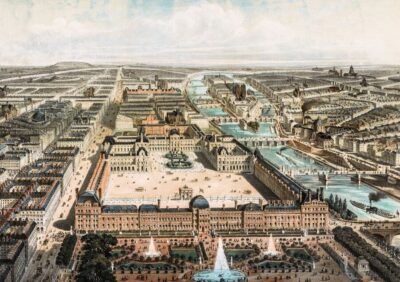
Louvre Guided Tour with Reserved Access & Boat Cruise
Read our review →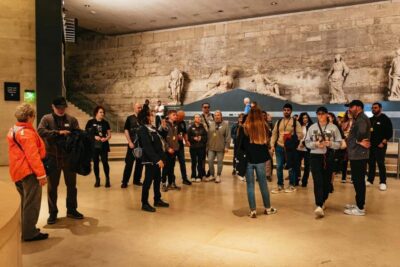
Louvre Overview, Exploration tour and Reserved Entry
Read our review →
Louvre Museum Entry Ticket With Host and River Cruise
Read our review →
Mona Lisa & Louvre Masterpieces Tour with Reserved Access
Read our review →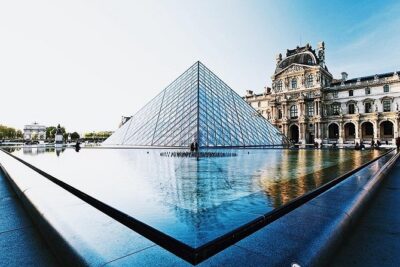
Louvre Museum – Exclusive Guided Tour (Entry Included)
Read our review →