
REVIEW · MALAGA
Malaga: Alcazaba, Picasso and more, walking tour with 5 VR experiences !
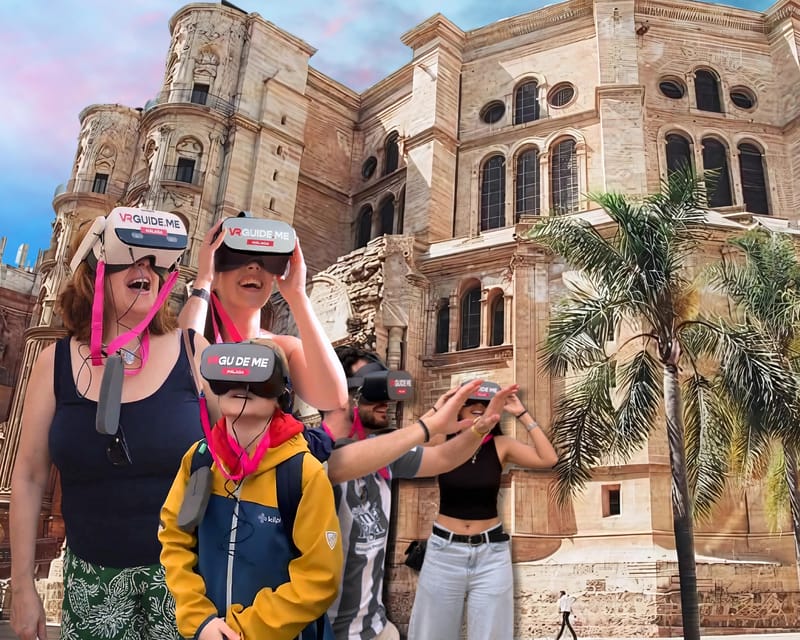
Malaga’s old center becomes a kind of open-air time machine on this 90-minute walking tour with five VR scenes. You stand beside surviving monuments, put on the provided goggles, and see 360-degree recreations of earlier Malaga, including the Phoenician settlement, Roman Theater, the Christian takeover, and Picasso’s world. Guides such as Paulo and Sergio add the human detail that technology cannot provide.
I like two things in particular: the tour packs a useful first look at Malaga into a short route, and the VR scenes give ruined or altered places a clear visual shape. You also get thoughtful explanations in Spanish or English, with audio support in several languages. The main consideration is that this is a walking introduction, not a full museum visit. The Picasso Museum itself is not explored in depth, and some travelers may prefer more time inside the Alcazaba or cathedral.
Key points to know before booking
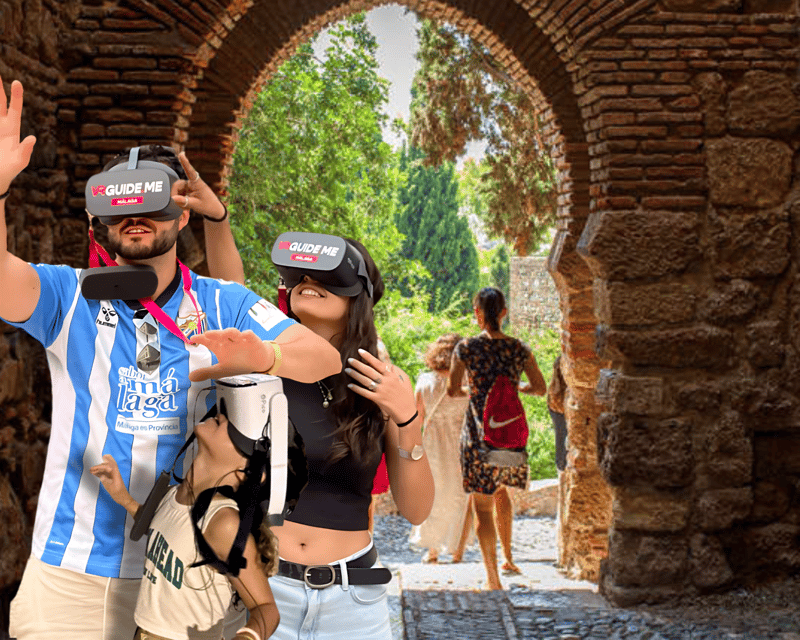
- Five 360-degree VR scenes: Historic moments are recreated where they took place, including the Phoenician, Roman, Christian, and Picasso chapters of Malaga.
- A compact old-center route: The tour links the cathedral, Malaga Museum area, Roman Theater, Alcazaba, and Picasso landmarks in 90 minutes.
- Strong live guiding: Paulo and Sergio are among the guides who have led this experience, with clear explanations, questions, humor, and useful historical context.
- A good first-day activity: The route helps you understand Malaga’s main sights before you return to them on your own.
- Wheelchair accessible: The activity is listed as wheelchair accessible, though you should still confirm current route conditions when booking.
- Important limits: It is not suitable for children under seven, pregnant women, or people with visual impairments.
Why the VR format works in Malaga
Malaga’s old center is full of layers. A Phoenician trading settlement came before Roman rule. The Romans built a theater. Islamic rulers developed the fortress and city. The Catholic monarchs later took control, and Picasso was born here centuries after those earlier chapters.
The difficulty is that much of this past is now partial. You may see foundations, walls, arches, and altered streets, but it can be hard to picture the original city. The VR goggles address that problem directly. At selected points, you look through a 360-degree recreation and compare the scene in front of you with an earlier version of the same place.
I find that useful because you are not simply being shown a detached historical animation. You are standing beside the monument while the guide explains what you are seeing. That connection between real stone and digital reconstruction is the central reason to choose this walk instead of a standard history tour.
The technology is not the whole show, though. The strongest parts depend on the guide. Paulo has been praised for adding plenty of historical context and for keeping children interested. Sergio has been described as friendly, funny, clear in English, and generous with extra detail. One guide also made a point of asking questions and checking that everyone was following the story.
That human element matters. VR can show you an old street, but a good guide explains why the street mattered and how the city changed.
More Art Museum Tours in Malaga
- Malaga: Picasso Museum Guided Tour with Skip-the-Line Ticket
★ 4.8 · 485 reviews - Málaga: Picasso Birthplace Museum Ticket & City Audio Guide
★ 4.1 · 158 reviews - Paint your own Picasso
★ 5.0 · 61 reviews
Starting at C. Císter, 5
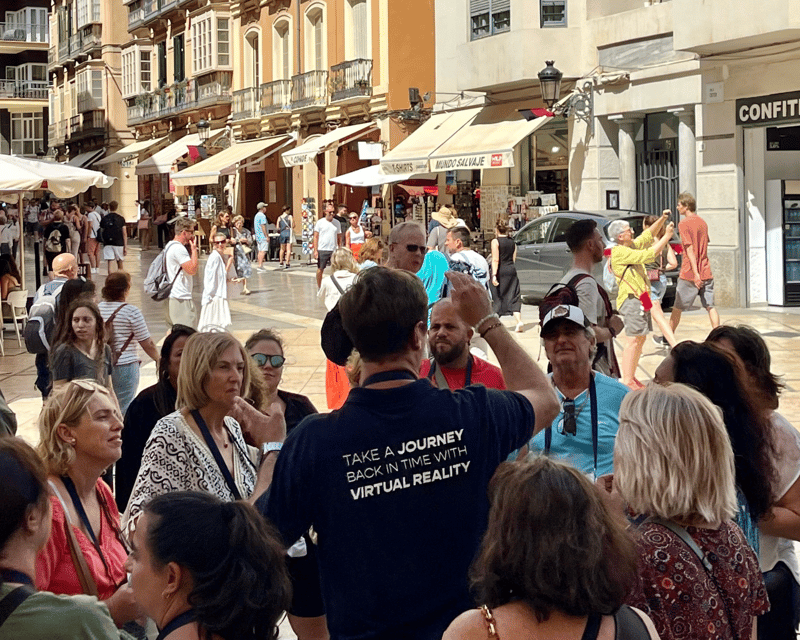
The meeting point is at C. Císter, 5, in the historic center. Look for the companion holding a blue umbrella and wearing VR goggles around the neck. You should introduce yourself when you arrive and come a few minutes early because the tour starts promptly.
The supplied route information also refers to the Plaza de los Naranjos as the opening setting. In practical terms, expect to begin near Malaga’s principal historic sights and then move through the old center on foot. Check the exact meeting instructions and map on the day you book, since the listed meeting point is C. Císter, 5.
This is a sensible area for a walking tour because the cathedral, Roman Theater, Alcazaba, museums, and Picasso sites sit close together. You do not need a bus or taxi between stops. The trade-off is that the streets can be busy, and 90 minutes leaves little room for long stops, private museum visits, or a leisurely coffee break.
The goggles are supplied for the tour, along with a specialized technical escort. That means you are not expected to bring or operate your own equipment. The escort helps keep the VR portion moving, which is useful when a group is changing from street viewing to digital scenes several times.
Malaga Cathedral and the Patio de los Naranjos
The cathedral is one of the first major landmarks on the route, with about 15 minutes of guided attention listed for the stop. The nearby Patio de los Naranjos adds another layer to the story, linking the Christian cathedral setting with the earlier Islamic city.
You should think of this as an orientation stop rather than a full cathedral visit. The activity includes guided commentary, but it does not promise interior admission or an extended examination of the building. If you want to study the chapels, climb the tower, or spend quiet time inside, plan a separate visit.
The VR element can help you make sense of changes that are otherwise easy to miss. Malaga’s central monuments did not appear all at once. The guide uses the physical surroundings and historical recreations to show how different cultures shaped the same part of the city.
For a first visit, this is valuable. You start to see Malaga not as a collection of separate attractions, but as one center rebuilt and reused over many centuries.
The Malaga Museum and the city’s earlier chapters
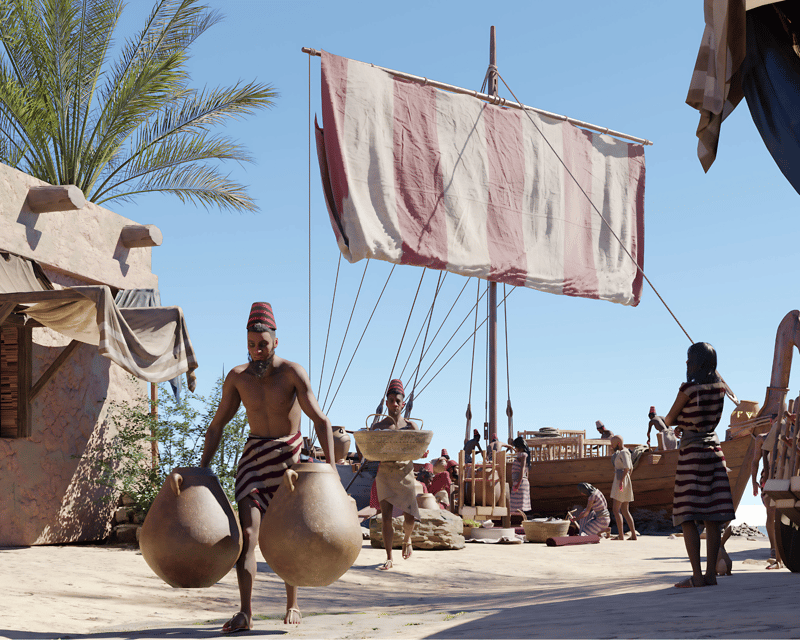
Another 15-minute guided stop is assigned to the Malaga Museum. The route uses this area to discuss the civilizations that shaped the city, including the Phoenician legacy and the settlement at Cerro del Villar.
The Phoenician material is one of the more distinctive parts of the tour. Many short city walks focus only on Roman and Moorish Malaga, but this experience reaches further back to the earliest settlement story. The VR presentation gives you a way to picture a period that otherwise leaves little visible evidence in the modern center.
You should not expect a detailed museum tour. The format is a city walk with selected stops, not a room-by-room visit to the collections. Still, the stop gives you a useful framework for understanding why Malaga developed where it did and how its role changed over time.
This is also where the guide’s skill becomes important. A list of dates would be easy to forget. A clear explanation of how Phoenician, Roman, Islamic, and Christian periods relate to one another gives you a mental map for the rest of the walk.
More Picasso museum visits:
- Málaga: Picasso Museum Tour with an Expert Art Guide for Small Groups
★ 4.8 · 58 reviews - Málaga: Paint your own Picasso
★ 5.0 · 49 reviews - Malaga: Old Tour Walking Tour w/Cathedral & Picasso Museum
★ 4.7 · 49 reviews - Picasso’s Birthplace Museum Entrance Ticket
★ 3.5 · 47 reviews
The Roman Theater, where the ancient city comes into view
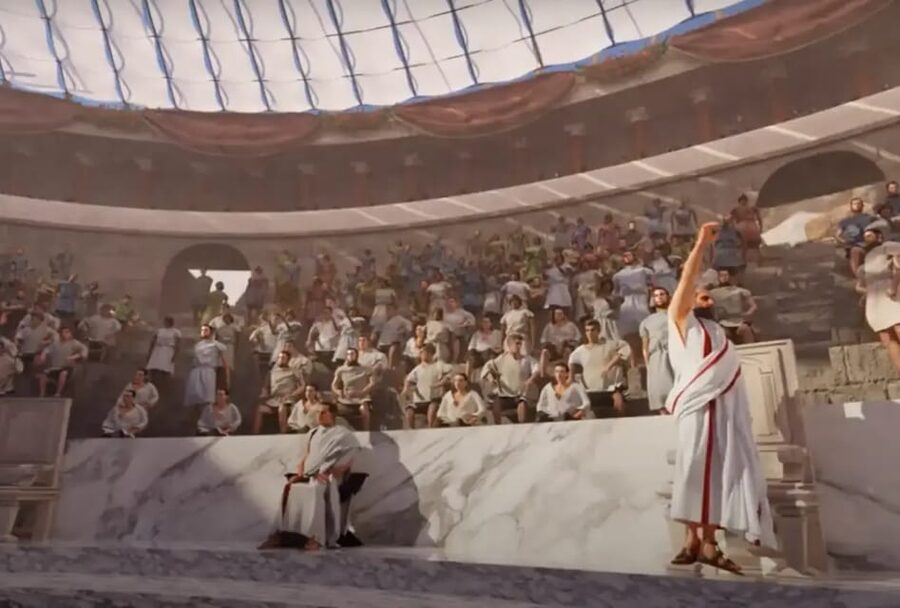
The Roman Theater receives about 15 minutes of guided attention. It is one of the clearest physical links to Roman Malaga, and its surviving structure makes a natural setting for a VR recreation.
The tour explains the theater as a cultural center of its time, not merely as a pile of ancient stones. With the goggles on, you get a visual suggestion of how the space functioned in the Roman period. That makes the ruins easier to read when you remove the headset and look at what remains.
I especially like this kind of stop because the technology has a clear job. It fills in missing walls, activity, and scale, while the real monument keeps the scene anchored. The digital view is most helpful when you immediately compare it with the archaeological remains.
The limitation is time. Fifteen minutes goes quickly, especially if the guide is explaining the site and the group is taking turns with equipment. If Roman history is your main interest, return later for a slower look.
The Alcazaba and the handover of the city
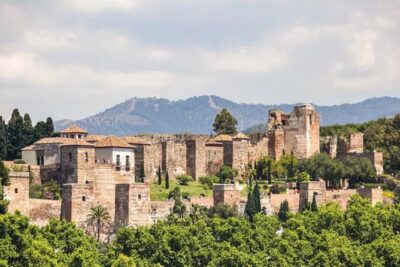
The Alcazaba is the route’s major fortress stop, also listed with roughly 15 minutes of guided explanation. Its walls and gates provide one of the best places in Malaga to connect the medieval city with the wider story of conquest and political change.
One of the featured VR scenes recreates the handing over of Malaga’s keys to Isabella the Catholic. This is a strong use of the format because a ceremonial event is difficult to understand from architecture alone. The digital scene gives the moment people, movement, and a sense of occasion, while the guide explains what it meant for the city.
You should be aware that this tour does not promise a full exploration of the Alcazaba interior. It ends on Alcazabilla Street in front of the Alcazaba Gate, and the route information describes the fortress as a guided stop. If you want the courtyards, gardens, viewpoints, and upper sections at a relaxed pace, buy or arrange a separate visit according to the current admission details.
Even with that limit, the Alcazaba section is likely to be one of the most memorable parts of the walk. The physical gate gives you a strong sense of place, and the VR scene adds a dramatic historical event without asking you to imagine every detail from scratch.
Picasso’s Malaga, without turning it into a museum tour
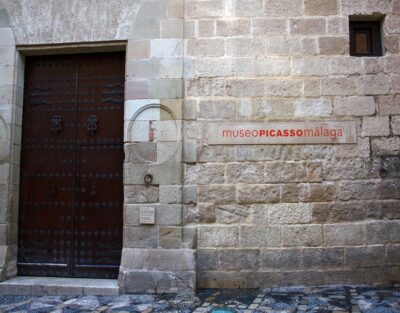
The tour also covers Picasso’s connection with Malaga. A 10-minute guided stop is listed at the Picasso Birthplace Museum, and the route includes the Picasso Museum among its key landmarks.
This section is best understood as a short introduction to the artist and his local connection. You can expect context about Picasso’s life and work, along with a VR element that places him within the story of Malaga. You should not book this walk expecting a complete visit to the Picasso Museum or a detailed discussion of individual paintings.
That distinction is important. One clear criticism of the experience is that the route does not continue into the Picasso Museum, even for an added fee. If Picasso is your main reason for visiting Malaga, you will need to schedule the museum separately.
For everyone else, the stop works well as part of a broader city overview. It shows that Malaga’s story did not end with the Roman or Islamic periods. The city also shaped one of the most influential artists of the modern era.
What the five VR scenes are like in practice
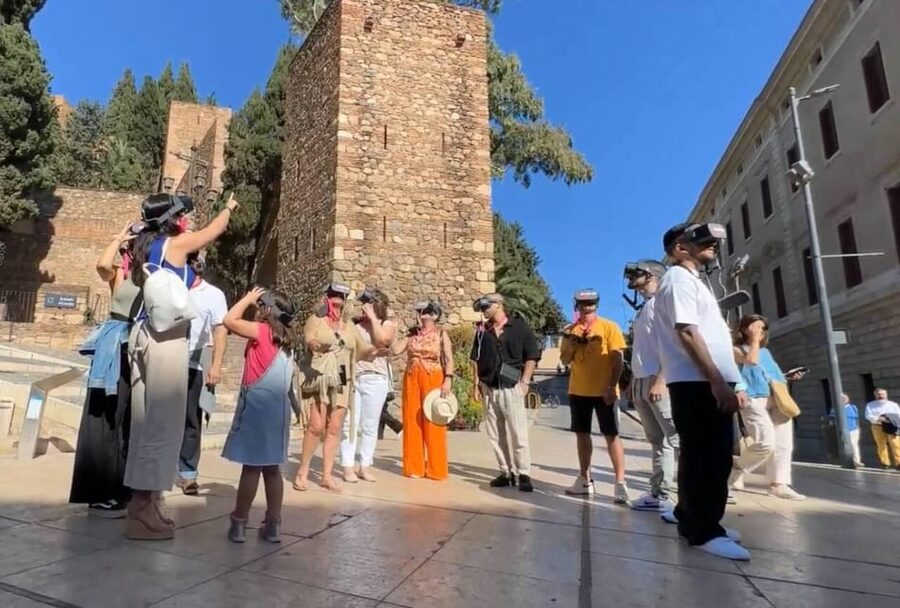
The goggles are used at key points rather than continuously. That is a good choice. You spend most of the walk looking at the real city, listening to the guide, and moving between stops. Then the headset changes your view for a short historical reconstruction.
The promised scenes cover different periods and subjects:
- The Phoenician settlement and Malaga’s earliest urban story
- The Roman Theater and its cultural role
- The Christian takeover and the handover of the city’s keys
- The Alcazaba and its medieval setting
- Picasso and the modern artistic chapter of Malaga
The 360-degree format lets you look around rather than watch a flat video. The historical recreations are presented as high-quality material, and the technical escort stays with the group throughout the route.
There are practical limits. People with visual impairments cannot use the activity, and pregnant women are advised not to participate. Children under seven are not accepted. If you wear glasses, the supplied information does not explain how the goggles fit over them, so ask the provider before booking if that matters to you.
The headset also adds a little stop-and-start rhythm. You may prefer a completely traditional walk if you like to keep moving. I would choose this version if you learn best by seeing a place rebuilt in front of you.
Guide quality and language support
The live guide speaks Spanish or English. An audio guide is also available in Spanish, English, French, Italian, and German, though the supplied information repeats French in its language list and does not clarify the exact audio setup.
The strongest praise for this activity centers on the guides. Paulo is noted for strong historical context and for holding children’s attention. Sergio is described as friendly, funny, clear in English, and willing to add insights beyond the basic route. Another guide handled a last-minute replacement and made sure the group understood each section.
That suggests a tour where the person leading it can shape the experience. Ask questions as you go. The route is short, so a guide who keeps explanations focused while still adding detail is a real advantage.
Is $23 a fair price?
At $23 per person, I consider this a reasonable price for a compact introduction to Malaga. You are paying for a live 90-minute guide, equipment rental, five VR scenes, technical support, and a route that links several major landmarks without separate transport.
The value is strongest if you are new to the city or have only a short time here. The tour can help you decide which monuments deserve a longer return visit. It is less valuable if you already know Malaga well or want admission and extended time inside every museum and fortress.
Food and drinks are not included, but that is not a serious issue for a short city-center walk. The activity ends back at the meeting point, making it easy to continue sightseeing or stop for a meal afterward.
Free cancellation is available up to 24 hours before the start, and you can reserve now and pay later. Those terms give you some flexibility, but check the final booking conditions for your chosen time.
Who should book this walk?
I would recommend it to first-time visitors, families with children aged seven and older, and anyone who enjoys learning through images rather than lectures. It is also a useful choice if you want a quick historical framework before spending more time at the Alcazaba, cathedral, or Picasso sites.
It suits visitors who speak Spanish or English, with extra audio support listed in French, Italian, and German. The route is wheelchair accessible according to the activity details, though it is still sensible to confirm the current path and any access limits at the monuments.
I would choose something else if you want a long museum visit, a slow architectural study, or a specialist art tour. The 90-minute schedule gives you breadth, not depth. You see many important places, but the tour keeps moving.
Final verdict: a smart first look at Malaga
Book this tour if you want Malaga’s major historical chapters explained in one efficient walk, with VR scenes that make difficult-to-picture moments easier to understand. The best parts are the Roman Theater, the Alcazaba story, and the clear guidance from leaders such as Paulo and Sergio.
Do not book it as a substitute for visiting the Alcazaba, cathedral, or Picasso Museum on your own. Use it as your orientation, then return to the places that catch your interest. At $23, it offers a lively and practical start to Malaga, especially when you want more than a standard walk but less than a full-day history course.
FAQ
How long does the Malaga VR walking tour last?
The tour lasts 1.5 hours, or 90 minutes. Starting times depend on availability.
Where does the tour start?
The meeting point is C. Císter, 5. Look for a companion with a blue umbrella and VR goggles around the neck. The tour ends back at the same meeting point.
Which languages are available?
The live guide speaks Spanish and English. Audio guide support is listed for English, Spanish, French, Italian, and German.
Are the VR goggles included?
Yes. VR goggles are provided as part of the activity, along with five immersive experiences and a technical escort throughout the tour.
Does the tour enter the Picasso Museum?
The tour includes a guided stop at Picasso’s Birthplace Museum and covers Picasso’s life and work, but the activity does not promise a full visit inside the Picasso Museum.
Is the tour wheelchair accessible?
Yes, the activity is listed as wheelchair accessible. You should still confirm current access details when booking.
Who cannot take this activity?
The experience is not suitable for children under seven, pregnant women, or people with visual impairments. Alcohol and drugs are not allowed.
More Art Walks in Malaga
- Malaga: History of Picasso Guided Walking Tour
★ 4.9 · 10 reviews - Picasso roots Private Walking Tour in Central Malaga
★ 5.0 · 9 reviews - Uffizi & Accademia Timed Entry: Small Group Duomo Walking Tour
★ 4.5 · 3,630 reviews - Paris in a Day: Louvre or Orsay, Eiffel Tower, City Walk & Cruise
★ 5.0 · 1,956 reviews
Just added around Malaga
- Malaga Tour with VR Stops: Alcazaba, Roman Theatre, Picasso &more★ 5.0 · 4 reviews
- Visit the Picasso Museum with an Accredited Guide★ 4.0 · 10 reviews
- Torremolinos with Picasso Clues Self Guided Treasure Hunt★ 5.0 · 2 reviews
- Malaga Private Tour: Alcazaba, Market, Catedral & Picasso★ 4.5 · 11 reviews
- Private visit to Picasso Museum in Malaga with official tour guide★ 4.5 · 2 reviews
- Picasso roots Private Walking Tour in Central Malaga★ 5.0 · 9 reviews
- Picasso’s Birthplace Museum Entrance Ticket★ 3.5 · 47 reviews
- Málaga Picasso Museum Private Guided Tour★ 4.5 · 26 reviews
Art Museum Tours in Malaga, compared.
Picasso Museum Guided Tour with Skip-the-Line Ticket
Read our review →
Picasso Birthplace Museum Ticket & City Audio Guide
Read our review →
Picasso Museum Tour with an Expert Art Guide for Small Groups
Read our review →
Old Tour Walking Tour w/Cathedral & Picasso Museum
Read our review →
Private Malaga: Alcazaba, Museum, Market, Cathedral & Picasso
Read our review →Browse the lists this tour appears in