REVIEW · PARIS
Louvre Museum Must-Sees Exclusive Guided Tour Entry Included
The big appeal here is simple: you get a two-hour route through the Louvre’s essential masterpieces without trying to conquer every corridor of this enormous former palace. With no more than six people, the guide can keep the group together, explain what you are seeing, and help you find a useful view of the Mona Lisa.
I like the pre-booked timed entry and the small group size. I also like that your ticket remains valid for the rest of the day, giving you time to return to nearby galleries after the guided visit. The main concern is meeting the guide: one recent booking involved a one-hour wait when the guide could not be found, so arrive early and confirm the meeting point carefully.
Key points to know before booking
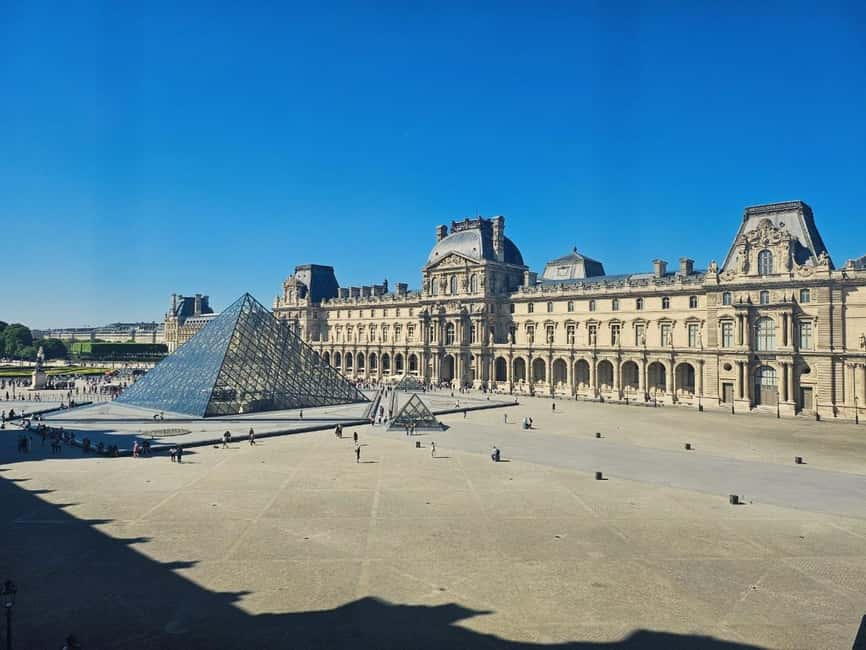
- Meet three minutes from the Louvre: Start at the France Tourisme Agency, 6 Rue de l’Amiral de Coligny, then walk about five minutes to the museum entrance.
- See the Louvre’s greatest hits: The route includes the Venus de Milo, Winged Victory of Samothrace, Mona Lisa, and selected French masterpieces.
- Small means genuinely small: The group is limited to six participants, a useful advantage in crowded galleries.
- Your ticket lasts all day: After the two-hour tour, you can continue exploring within the same wing of the museum.
- The price is $99 per person: That includes admission, a licensed English-speaking guide, and a focused introduction to the museum.
- Check mobility details first: The activity information calls the tour wheelchair accessible but also says it is not suitable for wheelchair users or people with mobility impairments.
A short route through a very large museum
The Louvre can swallow half a day before you have found the room you wanted. This tour takes a different approach. It gives you a guided introduction to the main works, then leaves you with time to choose your next stop.
That matters most if you have limited time in Paris, or if the Louvre is your first large European museum. You will not see every department, and you should not expect a complete survey of Egyptian art, Islamic art, decorative arts, or every major painting. Instead, you get a clear path through several famous sections.
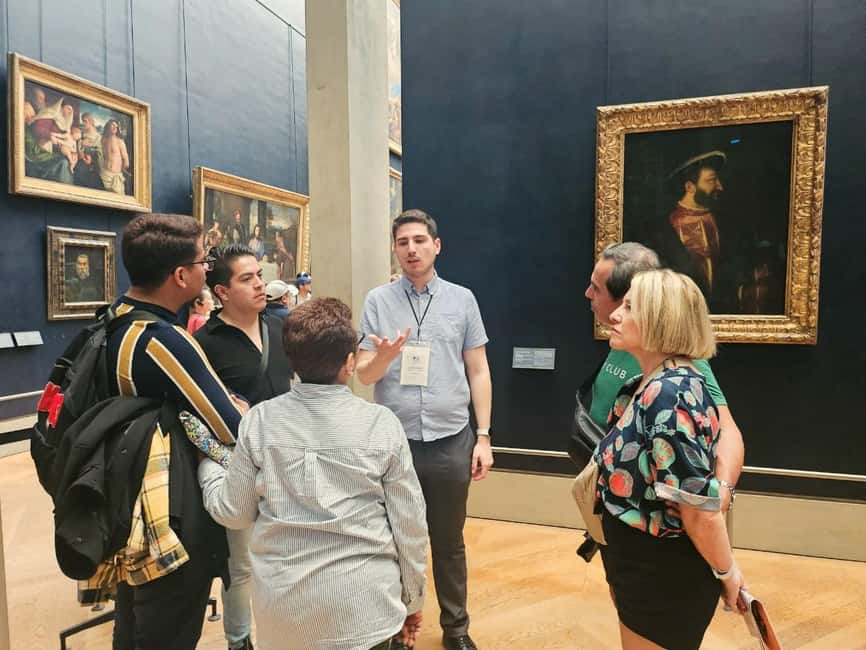
The guide speaks English and leads a maximum of six people. That small size should make it easier to hear explanations, ask a quick question, and keep moving when the galleries fill up. One recent rating praised a guide who handled the crowds well and gave a useful overall introduction. Another noted that the guide welcomed requests for particular works, a helpful feature in a museum with such a wide range of art.
The tour lasts about two hours. That is long enough for context and key stops, but short enough to fit around lunch, another museum, or an afternoon walk along the Seine.
More Art Museum Tours in Paris
- Paris: Louvre Museum Timed-Entrance Ticket
★ 4.6 · 71,977 reviews - Paris: Orsay Museum Entry Ticket
★ 4.7 · 25,647 reviews - Paris: Louvre Guided Tour with Reserved Access & Boat Cruise
★ 4.3 · 16,353 reviews
Meeting at France Tourisme Agency
Your starting point is 6 Rue de l’Amiral de Coligny, at the France Tourisme Agency. The agency is about a three-minute walk from the Louvre, and the walk to the museum entrance takes roughly five minutes.
This arrangement has one practical benefit: you do not begin by wandering around the Louvre’s vast exterior trying to find the right person. You meet first at a nearby address, receive your pre-booked ticket, and hear a short introduction to the museum and its past as a royal palace.
I would arrive early. The meeting point is close to the museum, but a missed guide can ruin the morning. One booking resulted in a one-hour wait because the guide could not be located. The information does not give a guide’s name, so check your confirmation carefully and make sure you know exactly where the agency entrance is before the start time.
After the group forms, you walk together to a separate entrance lane. This is not a promise of instant entry. You still pass through security, and busy periods can slow everyone down. The useful part is that you avoid buying a ticket on the spot and enter with a timed admission already arranged.
Greek and Roman sculpture: beginning with Venus de Milo
The first major section features Greek and Roman antiquities. This is a sensible opening because the sculptures give you a visual introduction to ancient ideas of proportion, balance, and the human body before you move into later European art.
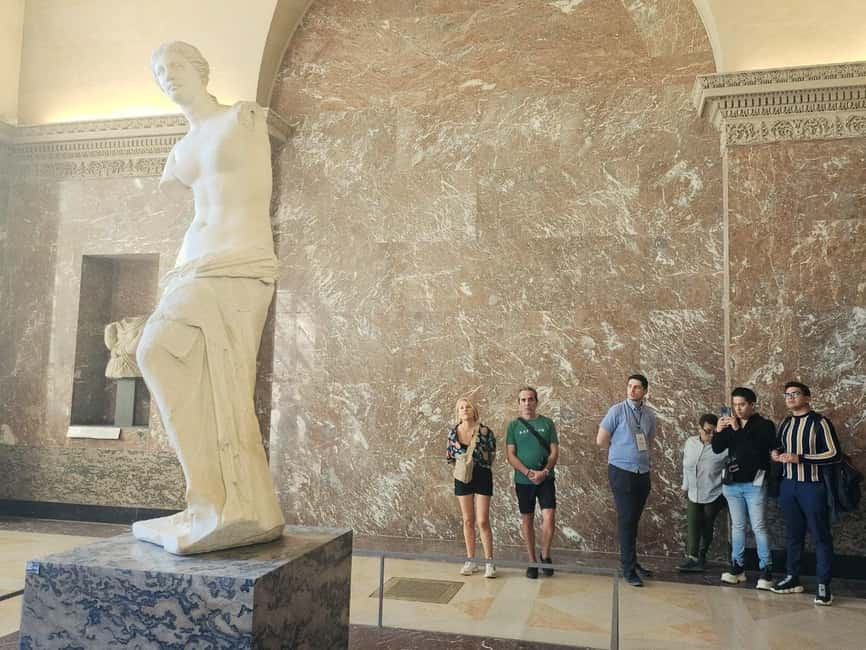
The main draw is the Venus de Milo, one of the Louvre’s most famous ancient sculptures. Your guide can point out how the missing arms shape the way you look at the statue, and how its pose and proportions connect to the ideals that later artists studied.
The value of seeing Venus with a guide is not just finding the statue. The Louvre presents so many objects that it is easy to glance at a famous work and move on. A good explanation gives you a reason to pause, look at the posture, and understand why the piece has remained so influential.
This portion also sets the scale of the museum. You may see other classical works along the way, but the route is built around key examples rather than every gallery. If ancient art is your main interest, you will probably want to return after the tour and spend more time here.
Winged Victory at the Daru staircase
Next comes the Winged Victory of Samothrace, placed at the top of the grand Daru staircase. The setting is part of the experience. You approach the sculpture from below, and its wings and forward movement make it seem ready to advance into the space.
The guide explains how the statue was found and why its placement is so effective. Even without knowing every detail, you can see the force of the arrangement: the figure appears to have arrived on the prow of a ship, with clothing pressed by wind and the body leaning into motion.
This is one of the tour’s best stops for visitors who want to understand how a museum display changes an artwork. The sculpture is not tucked into a quiet corner. The staircase gives it height, drama, and a natural approach.
There is a practical catch. The Louvre is crowded, and the staircase is a major passage through the museum. You may not get a long, quiet look. A six-person group gives the guide a better chance of gathering everyone in a useful spot, but you should still expect other people around you.
More Louvre tours and timed tickets:
- Louvre Museum Masterpieces Guided Tour with Access
★ 4.5 · 12,023 reviews - Paris: Louvre Overview, Exploration tour and Reserved Entry
★ 4.1 · 10,145 reviews - Paris: Louvre Museum Entry Ticket With Host and River Cruise
★ 4.6 · 9,926 reviews - Mona Lisa & Louvre Masterpieces Tour with Reserved Access
★ 4.6 · 6,812 reviews
Mona Lisa and the Italian Renaissance rooms
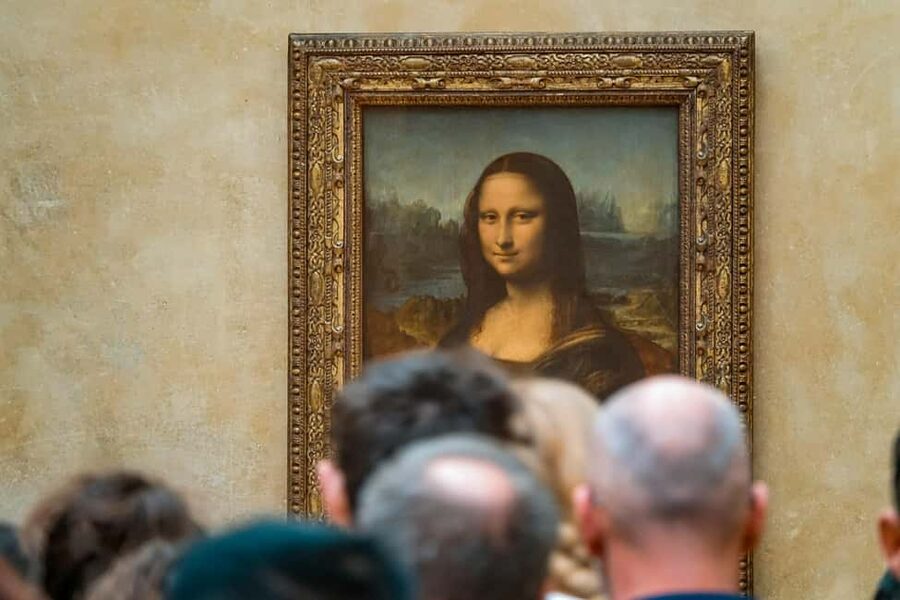
The tour then moves into the Italian Renaissance galleries for the Louvre’s most famous painting, Leonardo da Vinci’s Mona Lisa. This is the moment most people are waiting for, and it can also be the most hectic part of the visit.
The small-group format is especially useful here. Your guide can help you move through the crowd and find a reasonable viewing position. You should not expect a private look or a long period of silence, but you will have someone to explain what to notice while you are there.
The guide discusses Leonardo’s sfumato technique, the soft transitions between light and shadow that help give the face its uncertain expression. You will also hear about the famous smile and the way the painting’s mood changes as you study it.
The tour does not treat Mona Lisa as an isolated celebrity. Nearby works by other Italian masters help place Leonardo in a wider artistic setting. That context improves the visit. You see that the painting is part of a period of experimentation in portraiture, light, composition, and human expression, not simply a famous face behind glass.
The Mona Lisa room may be the least relaxed stop of the day. If you want to linger, sketch, or look closely at the painting, the guided portion may feel brief. The advantage is that the guide gets you there efficiently and helps you understand what you are looking at before moving on.
French painting, power, and revolution
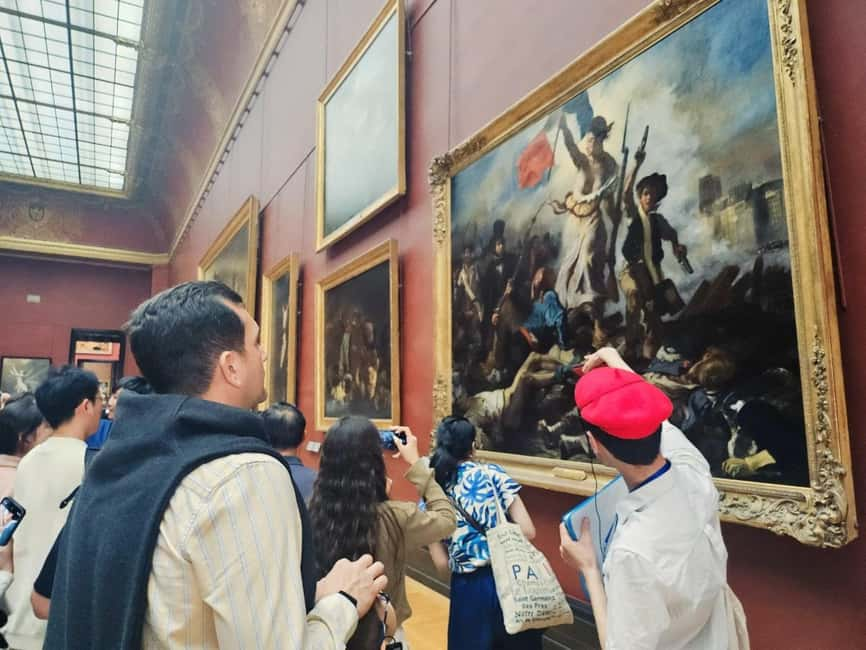
The final part of the route turns to important rooms of French painting and large historical canvases. Here the subject changes from ancient ideals and private portraits to public power.
Depending on gallery access that day, the guide may focus on Neoclassical and Romantic works. These paintings often use large scale, strong gestures, dramatic light, and carefully arranged figures to tell stories about kings, emperors, military events, and political change.
This is where the former royal palace becomes especially relevant. The paintings are not only pictures on a wall. They show how art helped present authority, celebrate victories, shape public memory, and give political events an emotional force.
You might see works associated with Napoleon and French state power, including Le Sacre de Napoléon when the route and access allow. The exact selection can change, so do not book this tour expecting one guaranteed painting beyond the named main highlights. The advertised focus includes the Mona Lisa and Venus de Milo, or Le Sacre de Napoléon and related major works.
I like this flexible approach because a guide can respond to gallery conditions. The drawback is that you cannot plan the final section with the precision of a private appointment. Ask at the beginning if there is one French painting you particularly want to see.
What the two-hour format does well
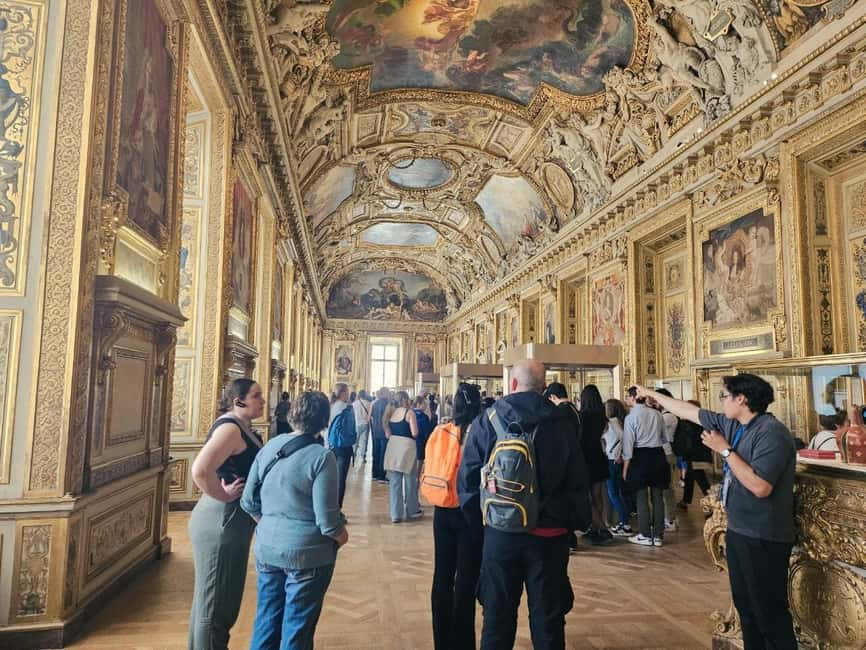
Two hours is a useful length for a first visit. The Louvre has more than enough material to fill several days, but an unlimited route can leave you tired and confused. This tour gives you a structure, several major works, and a basic sense of how the collections fit together.
The guide shares anecdotes, symbols, and viewing tips rather than asking you to absorb a long lecture. That style suits the museum. You can learn why a sculpture is displayed in a certain way, how a painting tells its story, and where to look for details that might otherwise slip past you.
The route also avoids a common Louvre problem: spending too much time searching for a famous work. You move from classical sculpture to Renaissance painting and then to French historical art with someone who knows the intended path.
Still, two hours is not enough for a full museum visit. You will leave with a useful first layer, not a complete understanding of the Louvre. The free time afterward is important. Your ticket remains valid for the whole day, though the supplied details specify continued exploration within the same wing of the building. Use that time for the work that caught your attention, rather than trying to repeat the entire guided route.
Is $99 a fair price?
At $99 per person, this is not the cheapest way into the Louvre. The price includes the museum ticket, a licensed English-speaking guide, timed entry, and a two-hour small-group experience for no more than six people.
The value depends on what you need. If you already know the Louvre, speak enough French to manage the museum, and enjoy building your own route, a standard entry ticket may be better. If you have only a short stay in Paris, the guide and efficient path can justify the extra cost.
The group limit is the key part of the price. A large walking group can make a museum visit feel like crowd management. Six people gives you more room to ask questions and makes it easier for the guide to keep everyone together near Mona Lisa and Winged Victory.
There is also a possible saving for younger visitors. The child rate applies to EU citizens under 26 and non-EU visitors under 18, with an identity document required. You must provide the first and last names of every participant and the ages of children when booking.
Free cancellation is available up to 24 hours in advance for a full refund, and you can reserve now and pay later. Those terms help if your Paris schedule is still shifting.
Who should book this Louvre visit?
I would choose this tour if you are visiting the Louvre for the first time and want the major works explained without spending five hours inside. It also suits you if you prefer a small group to a large guided crowd, or if you want to see Mona Lisa without wasting time finding the right galleries.
It is a good match for adults, older children, and art-curious visitors who want a clear introduction rather than a specialist lecture. The guide can sometimes respond to particular requests, so tell the guide early if you care most about Italian painting, French art, sculpture, or Napoleon.
I would hesitate if your main goal is slow, independent study. The two-hour route moves at a steady pace, and the Mona Lisa stop will be crowded. I would also confirm the mobility arrangements before paying. The activity details say both that the tour is wheelchair accessible and that it is not suitable for wheelchair users or people with mobility impairments. That conflict needs a direct answer from the provider.
The published score is 3.6 out of 5 from five ratings. One serious meeting problem lowered confidence, while the stronger comments praised the guide’s handling of crowds, clear explanations, and willingness to adjust the route. That mix tells me the experience can be very good once the meeting works properly, but the starting arrangements deserve care.
Should you book this tour?
Book it if you want a focused introduction to the Louvre, value a group of six or fewer, and like having the Mona Lisa, Venus de Milo, Winged Victory, and major French paintings placed in context.
Skip it if you prefer total independence, need a fully confirmed accessible route, or plan to spend the entire day studying one department. If you book, arrive early at France Tourisme Agency, keep your confirmation handy, and ask about any must-see painting before the group enters. At $99, the tour earns its price through time saved and personal attention, not through the number of rooms covered.
FAQ
Where does the Louvre tour begin?
The meeting point is the France Tourisme Agency at 6 Rue de l’Amiral de Coligny. It is about a three-minute walk from the Louvre, followed by roughly five minutes on foot to the museum.
How long does the guided visit last?
The guided portion lasts about two hours. Afterward, you can continue exploring with your ticket for the rest of the day within the same wing of the building.
Which Louvre artworks are included?
The route includes the Mona Lisa, Venus de Milo, and Winged Victory of Samothrace. Depending on gallery access, the guide may also focus on Le Sacre de Napoléon and other major French paintings.
How large is the group?
The group is limited to six participants. The guide speaks English and leads the visit in English.
Does the tour include Louvre admission?
Yes. A pre-booked timed entrance ticket is included, and the ticket is valid for the whole day. You still need to pass through security.
Can I cancel or pay later?
You can cancel up to 24 hours in advance for a full refund. The reservation option also allows you to book your place and pay later.
Just added around Paris
- Paris Day Tour with Eiffel Tower, Louvre and Cruise Max 6 People★ 4.5 · 29 reviews
- PRIVATE Louvre Wonders & Hidden Treasures Visit★ 5.0 · 65 reviews
- d’Orsay Museum Paris entry ticket★ 3.5 · 31 reviews
- visiting the masterpieces of impressionists at Orsay museum★ 5.0 · 7 reviews
- Louvre Wheelchair-Accessible Private Tour – Stress-Free & Easy★ 5.0 · 16 reviews
- LOUVRE, Small Group Guided Tour in French (TOP SALES)★ 4.5 · 9 reviews
- Louvre Museum with private guide★ 5.0 · 3 reviews
- Musée d’Orsay Highlights Tour with Gourmet Lunch★ 4.5 · 11 reviews
Art Museum Tours in Paris, compared.
Louvre Guided Tour with Reserved Access & Boat Cruise
Read our review →
Louvre Overview, Exploration tour and Reserved Entry
Read our review →
Louvre Museum Entry Ticket With Host and River Cruise
Read our review →
Mona Lisa & Louvre Masterpieces Tour with Reserved Access
Read our review →
Louvre Museum – Exclusive Guided Tour (Entry Included)
Read our review →