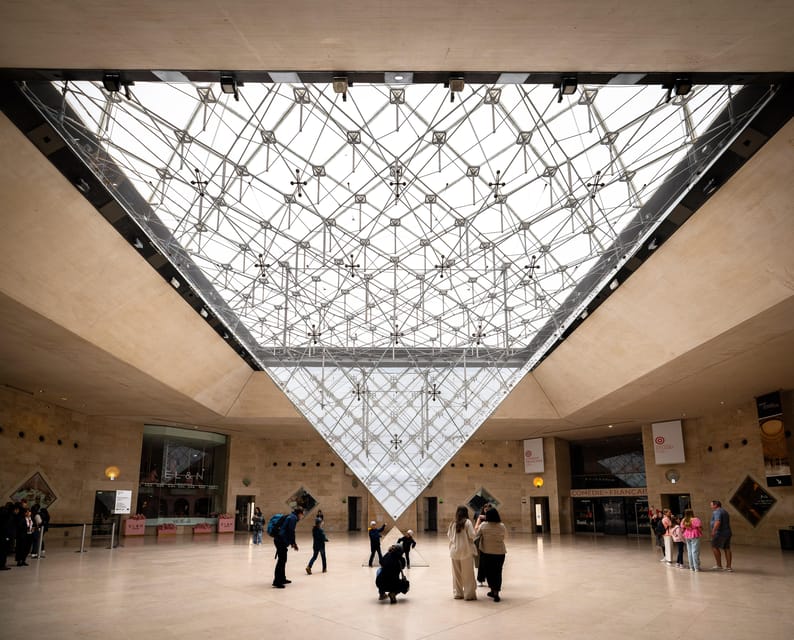
REVIEW · PARIS
Louvre & Mona Lisa Small Group Tour with Reserved Entry
The clever part of this Louvre visit is its three-hour focus. Instead of wandering through one enormous gallery after another, you follow an English-speaking guide from ancient sculpture to Renaissance painting, royal treasures, and the Mona Lisa. Guides such as Omar, Maxim, Addie, Caroline, and Severine have been praised for making the museum’s art and history easier to follow.
I like the reserved entry and the small-group format. You avoid the ticket line, receive a headset, and have a better chance of hearing the guide among school groups and busy galleries. I also like the route’s range, from the Louvre’s medieval foundations to Delacroix’s Liberty Leading the People. The main caution is pace: three hours is efficient, but some guides explain a great deal, and part of the Mona Lisa visit may be spent waiting in a crowded queue.
Key points to know before you book
- You meet beside the Arc de Triomphe du Carrousel: Look for staff in blue to the left of the arch, along the wall railing.
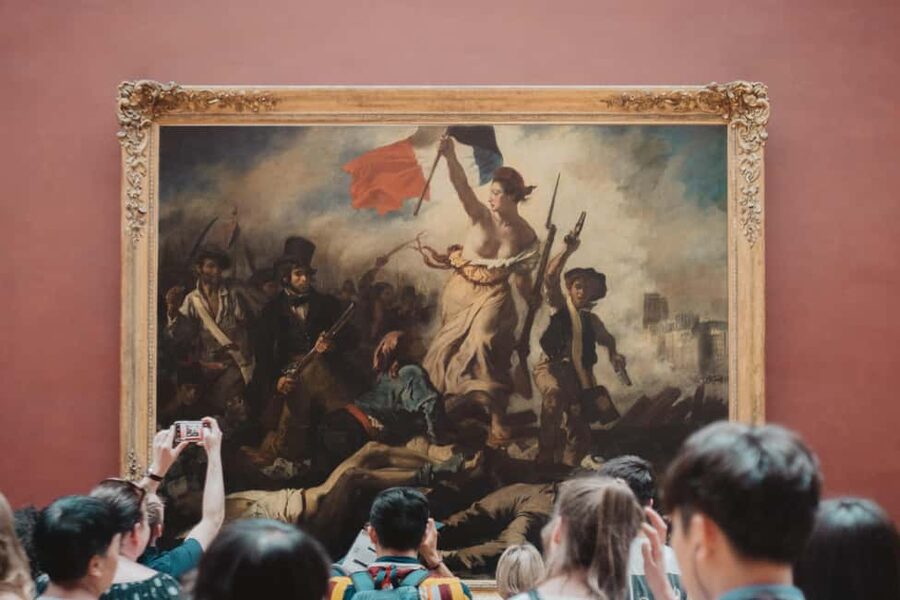
- You see the Louvre’s headline works: The route includes Mona Lisa, Winged Victory, Psyche and Cupid, and Liberty Leading the People.
- You get reserved museum access: The ticket and reservation fee are included, but everyone still passes through security.
- You follow a guide for three hours: The tour is in English, with headsets so you can hear in crowded rooms.
- You walk a lot: The Louvre is huge, and one earlier participant specifically advised taking an open seat when you find one.
- You need to pack lightly: Bags larger than 55 by 35 by 20 centimeters, luggage, oversize bags, and baby strollers are not allowed.
Meeting the group at the Arc de Triomphe du Carrousel
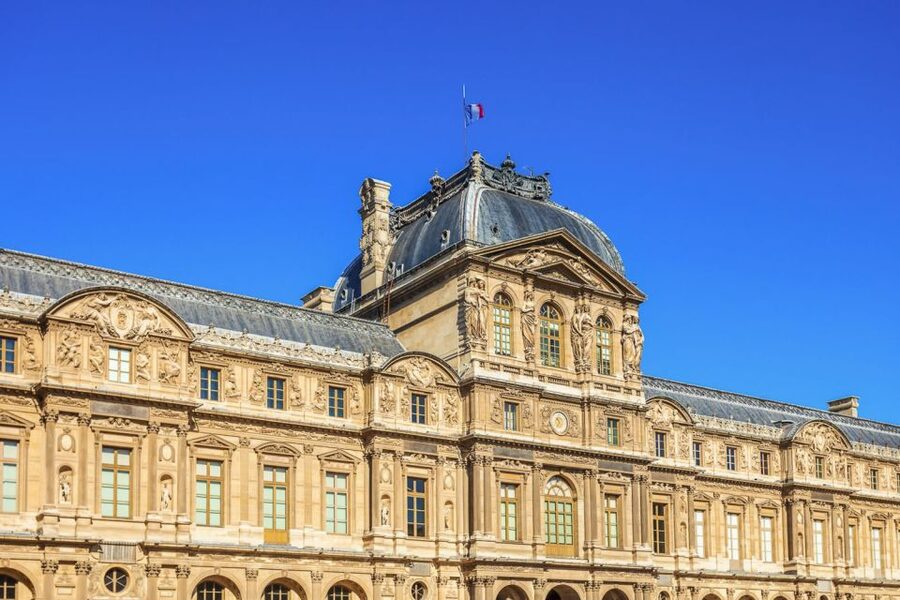
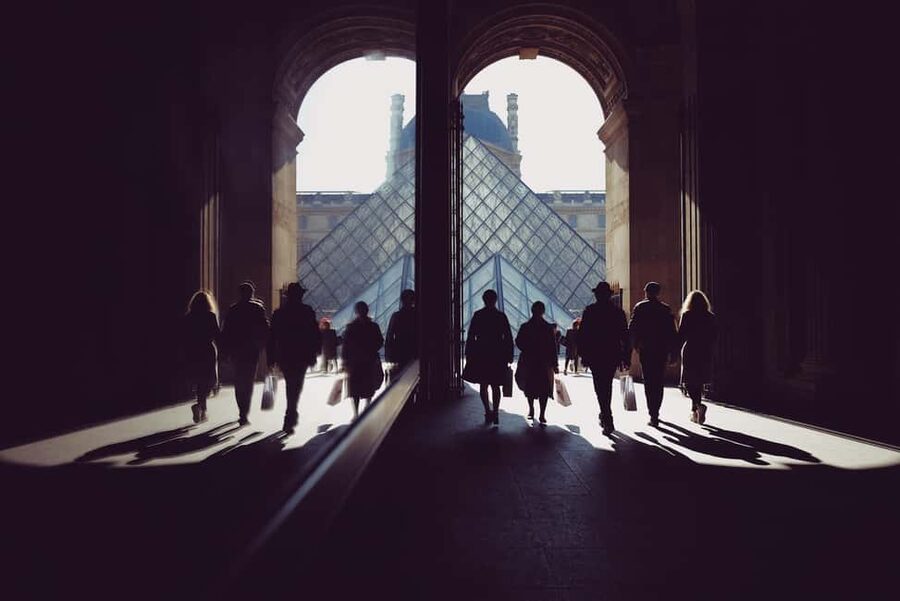
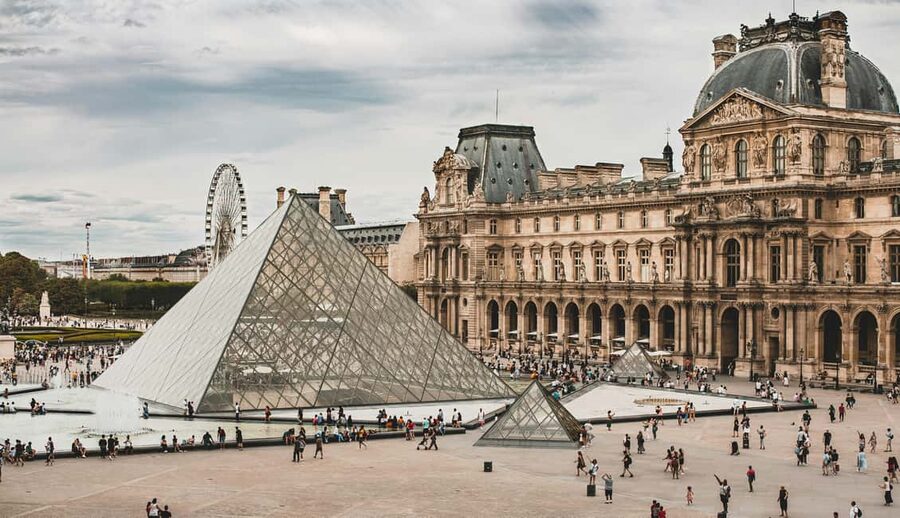
The tour begins outside, not at the famous Louvre Pyramid entrance. Stand with your back to the Pyramid and look across the road toward the Tuileries Garden. The Arc de Triomphe du Carrousel is the prominent arch topped by a horse-drawn chariot.
Your meeting point is to the left of the arch, beside the wall railing. Staff wear blue clothing, which helps in a busy public space. I would arrive early enough to identify the arch and staff without rushing. The tour does not include hotel pickup, so you must make your own way there.
This location makes sense for the route. You begin in the open space between the Louvre and the Tuileries, then head into the museum with the group. It also gives you a useful first look at the former royal setting before you enter the galleries.
Bring your passport or ID card. Large bags and umbrellas must go to the free bag check, and anything above 55 by 35 by 20 centimeters is not permitted. Baby strollers are also not allowed. These rules matter because a bag problem at the entrance can delay you and the rest of the group.
More Art Museum Tours in Paris
- Paris: Louvre Museum Timed-Entrance Ticket
★ 4.6 · 71,977 reviews - Paris: Orsay Museum Entry Ticket
★ 4.7 · 25,647 reviews - Paris: Louvre Guided Tour with Reserved Access & Boat Cruise
★ 4.3 · 16,353 reviews
Reserved entry, with security still required
The reserved access is the tour’s most practical feature. It lets you avoid the regular ticket line and enter with a museum ticket and reservation already arranged. That is valuable at a museum where the sheer number of visitors can eat into a short Paris itinerary.
Reserved access does not mean walking straight into the galleries without checks. All visitors pass through security, and you should allow time for that process. The tour includes the entrance ticket, listed at 22 euros, and a 70-euro reservation fee per group. At $115 per person, you are paying not only for admission, but also for the guide, the advance arrangements, and the efficient use of your three hours.
EU visitors aged 18 to 26 can enter the Louvre free of charge, according to the tour information. Even so, the reservation fee, guide, and headset remain part of the experience. If you qualify for free museum admission, compare the total price carefully against your alternatives.
Why a guide helps inside a huge museum

The Louvre can be confusing even before you reach the art. It occupies a former royal palace, includes medieval foundations, and spreads across vast wings. On your own, you can easily spend an hour looking for a famous painting, then miss the nearby sculpture or architectural detail that gives the room its meaning.
A guide gives the visit a clear thread. You move through works from around 450 B.C. to the 19th century rather than treating the museum as a random collection of rooms. The guide explains the artists, the building, and the stories behind the works, then keeps the group moving.
That personal explanation is especially useful if you are not deeply interested in art history. Omar has been praised for combining strong subject knowledge with passion and humor. Maxim was described as keeping the tour moving while still offering plenty of information. Caroline helped a group stay calm during a strike and heavy school-group traffic, explaining both the art and how the museum works.
The headset matters more than it may sound. The Louvre is often noisy, and you may be standing several steps away from the guide. With an earpiece, you can look at a painting while still hearing the explanation. One participant found this much preferable to trying to navigate a handheld museum device.
Ancient sculpture and the Winged Victory of Samothrace
The route includes major Greek and Roman sculpture, beginning with works from the ancient world. The Winged Victory of Samothrace is one of the tour’s strongest stops.
This marble figure dates from the 2nd century B.C. and is displayed at the top of a grand staircase. Its missing head and arms do not lessen its force. The forward movement of the body, wings, and drapery gives the sculpture a sense of arrival, as if the figure has just landed on a ship’s prow.
A guide can help you look beyond the famous name. You can pay attention to the way the fabric appears to respond to wind, the dramatic placement of the statue, and the relationship between the sculpture and the staircase. The setting is part of the experience, not just a backdrop.
You also see Canova’s Psyche and Cupid, a graceful neoclassical sculpture with a very different mood. Placing it alongside ancient works helps show how later artists borrowed from Greek and Roman ideas while developing their own style. This mixture of periods is one reason the guided route works well: you are not simply ticking off famous objects, you are seeing how artistic ideas change.
More Louvre tours and timed tickets:
- Louvre Museum Masterpieces Guided Tour with Access
★ 4.5 · 12,023 reviews - Paris: Louvre Overview, Exploration tour and Reserved Entry
★ 4.1 · 10,145 reviews - Paris: Louvre Museum Entry Ticket With Host and River Cruise
★ 4.6 · 9,926 reviews - Mona Lisa & Louvre Masterpieces Tour with Reserved Access
★ 4.6 · 6,812 reviews
The medieval foundations beneath the palace
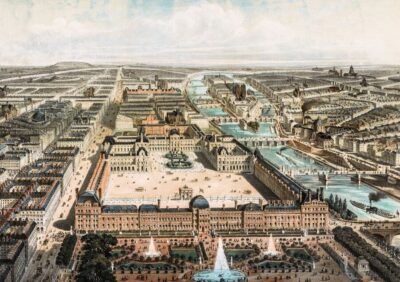
The Louvre was not always the grand museum you see today. Part of the visit takes you to the medieval foundations, a reminder that this site once served as a fortress and later a royal residence.
This stop gives the building a physical timeline. Instead of viewing the Louvre as a collection of elegant rooms only, you see traces of its earlier purpose below the palace. One past participant called this lower section a special secret, which is a useful warning not to rush through it.
The foundations also help explain why the museum can feel like several buildings joined together. Corridors, stairways, and wings reflect centuries of changes. If you are visiting without a guide, this architectural story can be easy to miss while heading from one masterpiece to another.
The Mona Lisa and the crowded reality
Of course, the Mona Lisa is central to the tour. You get time to look at Leonardo da Vinci’s famous portrait and consider the expression that has kept people guessing for centuries.
The practical issue is crowd control. A previous tour used about 20 minutes of its time waiting in the Mona Lisa line on a busy day. The guide continued talking to the group, but standing in a queue is not the same as looking at art. This is the clearest drawback of a fixed three-hour visit.
The painting itself is smaller than many first-time visitors expect, and the room can be crowded. Your view may be brief, and you may need to wait for a clear position. The reserved museum entry does not guarantee a private viewing or a way around the internal crowd near the painting.
I would treat the Mona Lisa as one important stop, not the whole reason for the tour. If the line is long, listen to the guide and save your energy for the many other works you will see. If the tour ends near the painting, you can ask whether there is time to remain afterward, but the supplied details do not promise extra independent time.
French painting and Liberty Leading the People
The French Wing brings a different scale and mood. Here you see Delacroix’s Liberty Leading the People, a major 19th-century painting known for its dramatic figures, movement, and political meaning.
A guide’s explanation is useful here because the image is easy to recognize but harder to place. You can look at the central allegorical figure, the people following her, and the tense scene around them while hearing how the painting connects to French history and national identity.
This section also gives the tour a strong finish after the ancient sculpture and Renaissance works. You move from myth and religion to monarchy, revolution, and the public life of France. The selection is broad enough to give you a sense of the Louvre’s range, even though three hours cannot cover the entire museum.
Royal rooms, Napoleon, and Louis XV
The tour also includes the royal side of the Louvre. You see the treasures connected with King Louis XV and Napoleon’s crown, along with the grand spaces that recall the building’s palace years.
These objects are useful anchors for understanding the museum as a former seat of power. The art is not isolated from politics, ceremony, and wealth. A crown, a royal room, or a decorated interior tells you how rulers presented themselves and how the palace functioned.
This part will appeal to you if you enjoy French history as much as painting and sculpture. It also breaks up the parade of masterpieces. The Louvre is not only a place to see individual works. It is a place where the building, its former occupants, and its collection overlap.
Three hours, twelve people, and a lot of walking
The advertised group size is 12 people or fewer. That is small enough for questions and personal contact without the price of a private tour. Headsets help keep the group together because you can hear the guide even if you are not standing shoulder to shoulder.
One participant found the actual group larger than expected, though the earpieces reduced the problem. I would keep that possibility in mind if a very intimate experience is your main goal. The stated format is still much more manageable than a large coach group.
Expect plenty of walking and standing. The museum is vast, the route covers several wings and periods, and the tour keeps moving to fit the three-hour limit. Take an open seat when one appears. Wear comfortable shoes, and do not plan a demanding activity immediately afterward if you know long museum visits tire you.
The pace can also vary by guide. Addie was praised for being engaging and clear, while Severine brought energy and enthusiasm to the Louvre’s history and art. Some participants loved the amount of explanation. One person felt there was too much art history and wanted more time simply to look.
That is the key choice here. If you want stories, context, and a guided path, the talk adds value. If you prefer silent viewing and long pauses before each work, a self-guided visit may suit you better.
Is $115 a fair price?
At $115 per person, this is not the cheapest way into the Louvre. You are paying for the museum ticket, a group reservation, an English-speaking guide, a headset, and a fixed route through the highlights.
The value is strongest when your Paris schedule is tight. Reserved access saves you from arranging the museum entry yourself, while the guide reduces the risk of getting lost or spending your whole visit searching for the Mona Lisa and Winged Victory. You also gain explanations that a basic admission ticket does not provide.
The value is weaker if you already know the Louvre well, qualify for free admission, or prefer to choose every gallery at your own pace. The tour cannot remove the crowds inside, and the Mona Lisa queue may still take time. You should also consider that the price does not include transportation or hotel pickup.
Free cancellation up to 24 hours before the start and a reserve-now, pay-later option make the booking less rigid. Check the available starting times before committing, since the tour lasts three hours and requires a firm meeting time.
Who should book this Louvre tour?
I would choose this tour for a first visit, especially if you want the major works without trying to plan a museum route yourself. It is also a good fit if someone in your group is unsure about art museums. A lively guide can turn a long series of rooms into a story with a beginning, middle, and end.
Families with older children and adults who enjoy history should find the mix appealing. The headset is helpful in crowded rooms, and the group size is limited to 12 people or fewer. The route also works well for anyone with only one Paris morning or afternoon available.
I would hesitate if you need wheelchair access, since the tour is not suitable for wheelchair users. I would also skip it if you dislike guided commentary, want to linger for ten minutes at every painting, or have a strict plan to see lesser-known galleries.
Should you book it?
Book it if you want an efficient first look at the Louvre, clear explanations, and the comfort of reserved entry. The strongest features are the focused route, the range of major works, and guides who can explain both the art and the building.
Go in with realistic expectations. You will walk a lot, pass through security, share the museum with crowds, and may spend part of your limited time waiting near the Mona Lisa. For a first-time visit, though, the $115 price can make sense because it buys structure in one of Paris’s easiest places to get lost.
FAQ
How long does the Louvre tour last?
The guided visit lasts three hours.
Where does the tour begin?
Meet beside the Arc de Triomphe du Carrousel, to the left of the arch along the wall railing.
How do I identify the meeting staff?
The coordinators wear blue clothing. The arch has a horse-drawn chariot on top and sits across from the Louvre Pyramid, just before the Tuileries Garden entrance.
Where does the tour finish?
The tour finishes at the Louvre Pyramid.
Is the Louvre entrance ticket included?
Yes. The entrance ticket and reservation fee are included in the tour price.
Is the tour in English?
Yes. The tour includes a live English-speaking guide.
How many people are in the group?
The advertised group size is 12 people or fewer.
Does the tour include a headset?
Yes. Headsets are provided so you can hear the guide in the museum.
Do I need identification?
Yes. Bring a passport or ID card.
Can I bring luggage or a large bag?
No. Luggage, oversize luggage, and bags larger than 55 by 35 by 20 centimeters are not permitted. Large bags and umbrellas must be left at the free bag check, and baby strollers are not allowed.
Is the tour suitable for wheelchair users?
No. The experience is not suitable for wheelchair users.
Can I cancel the booking?
Yes. You can cancel up to 24 hours in advance for a full refund.
Just added around Paris
- Paris Day Tour with Eiffel Tower, Louvre and Cruise Max 6 People★ 4.5 · 29 reviews
- PRIVATE Louvre Wonders & Hidden Treasures Visit★ 5.0 · 65 reviews
- d’Orsay Museum Paris entry ticket★ 3.5 · 31 reviews
- visiting the masterpieces of impressionists at Orsay museum★ 5.0 · 7 reviews
- Louvre Museum with private guide★ 5.0 · 3 reviews
- Louvre Wheelchair-Accessible Private Tour – Stress-Free & Easy★ 5.0 · 16 reviews
- LOUVRE, Small Group Guided Tour in French (TOP SALES)★ 4.5 · 9 reviews
- Musée d’Orsay Highlights Tour with Gourmet Lunch★ 4.5 · 11 reviews
Art Museum Tours in Paris, compared.

Louvre Guided Tour with Reserved Access & Boat Cruise
Read our review →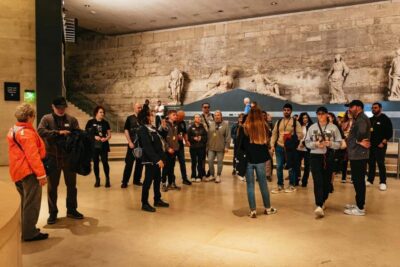
Louvre Overview, Exploration tour and Reserved Entry
Read our review →
Louvre Museum Entry Ticket With Host and River Cruise
Read our review →
Mona Lisa & Louvre Masterpieces Tour with Reserved Access
Read our review →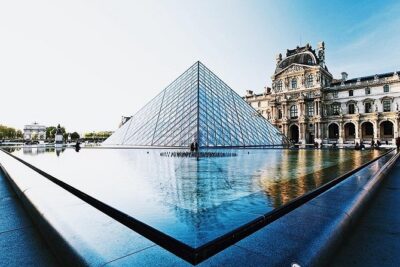
Louvre Museum – Exclusive Guided Tour (Entry Included)
Read our review →