REVIEW · PARIS
Louvre Highlights & Mona Lisa Access with Expert Guide
The Louvre’s greatest challenge is not getting inside. It is knowing where to go once you are there. This two to two-and-a-half-hour guided visit takes you directly to major works, from the ancient Great Sphinx of Tanis to Leonardo’s Mona Lisa, while your guide explains why they matter.
I like the reserved museum access, which saves precious Paris time, and I like that the visit ends inside the Louvre. You can keep exploring at your own pace after the guided portion. The main drawback is the pace: this is a highlights tour, not a quiet, room-by-room look at the museum, and it requires a moderate amount of walking.
Key points to know before booking
- The Mona Lisa is part of the planned route, along with the Venus de Milo and Winged Victory of Samothrace.
- English-speaking guides bring the art to life, with Saeed, Sabrine, Elsie, Monty, and Sam receiving especially warm praise for clear explanations and friendly guidance.
- You finish inside the Louvre, so you can continue visiting after the formal tour ends, until museum closing time.
- The group can have up to 20 people, small enough for a more personal visit but not a private tour.
- Multiple departure times make it easier to fit the Louvre around other Paris plans.
- The tour costs $161.77 per person, a high price that makes the guide and time-saving access especially important to the value.
Why a guided Louvre visit helps
The Louvre is not simply a large museum. It is a former royal palace with an enormous collection spread across several wings and floors. You can spend hours walking and still miss the works you most wanted to see.
That is where this tour earns its keep. Your guide gives you a route through the museum’s major sights instead of leaving you to make sense of a huge map and a crowd of visitors. The focus is on famous works, but the useful part is the explanation around them: who made them, what they show, and why they became so important.
I especially like this approach for a first Louvre visit. You get a firm starting point and a clear sense of the museum’s main artistic periods. Afterward, you can decide if you want more paintings, ancient sculpture, French history, or simply a break.
This is also a good choice if you have only part of a day in Paris. The scheduled visit lasts about two hours to two hours and 30 minutes, rather than taking over an entire morning or afternoon. You still need time to arrive at the meeting point and pass through the museum, but the format is efficient.
More Art Museum Tours in Paris
- Paris: Louvre Museum Timed-Entrance Ticket
★ 4.6 · 71,977 reviews - Paris: Orsay Museum Entry Ticket
★ 4.7 · 25,647 reviews - Paris: Louvre Guided Tour with Reserved Access & Boat Cruise
★ 4.3 · 16,353 reviews
Meeting at the Louvre Pyramid
The meeting point is at the statue of Louis XIV as Marcus Curtius in the Cour Napoléon, near the Louvre Pyramid. Look for the guide in the open courtyard around the pyramid, not inside the museum galleries.
The pyramid is more than a meeting landmark. Designed by architect I. M. Pei, its glass and metal structure creates a sharp contrast with the old Louvre Palace around it. It is one of Paris’s clearest examples of old and new architecture sharing the same space.
Allow enough time to find the meeting point. The Louvre complex is large, and the courtyard can feel confusing if you are rushing from another appointment. The tour is offered at several start times, so you have some choice, but you should still treat the booked start as firm.
The tour includes a reserved entrance and the adult museum ticket, listed at €28. That matters because you are not paying only for an escort through the building. You are also paying for access arrangements, a planned route, and an English-speaking guide who helps you use your limited time well.
The ancient Great Sphinx of Tanis
One of the early highlights is the Great Sphinx of Tanis, an imposing ancient Egyptian sculpture. It gives you a very different view of the Louvre from the European paintings most people expect to see.
The Sphinx helps set the scale of the collection. The Louvre is not only a home for the Mona Lisa. It covers ancient civilizations, sculpture, decorative arts, painting, and royal collections gathered over centuries.
Your guide can give this kind of object a useful frame. Without context, an ancient statue can become another impressive shape in a crowded gallery. With an explanation of its age, purpose, and cultural setting, you have a better reason to pause.
The trade-off is that the tour cannot spend long at every object. The Louvre contains far more ancient Egyptian material than can fit into this route. Think of the Sphinx as an important introduction, not a full Egyptian art visit.
Venus de Milo and Winged Victory
The Venus de Milo is one of the Louvre’s most famous sculptures. Its missing arms are part of its mystery, but the important point is how the figure’s posture, balance, and polished form continue to draw attention even in a busy room.
Winged Victory of Samothrace offers a different kind of drama. Positioned high on a grand staircase, the sculpture is designed to be seen from a distance as you approach. The sweeping folds of fabric and the sense of movement make it one of the museum’s most memorable displays.
These two works are especially useful on a guided visit because your guide can help you look beyond the familiar names. You will hear why each sculpture matters, not simply be told to take a photograph and move on.
The staircase and gallery areas can be crowded. You may not get a long, silent look at either sculpture. Still, the route gives you a sensible introduction to major Greek sculpture without asking you to search for the works on your own.
More Louvre tours and timed tickets:
- Louvre Museum Masterpieces Guided Tour with Access
★ 4.5 · 12,023 reviews - Paris: Louvre Overview, Exploration tour and Reserved Entry
★ 4.1 · 10,145 reviews - Paris: Louvre Museum Entry Ticket With Host and River Cruise
★ 4.6 · 9,926 reviews - Mona Lisa & Louvre Masterpieces Tour with Reserved Access
★ 4.6 · 6,812 reviews
The Mona Lisa and the Louvre’s famous paintings
The Mona Lisa is the stop many people care about most. The painting is smaller than some first-time visitors expect, and the room can be busy. The value of seeing it with a guide is not just reaching the painting. It is getting some context before or after the viewing so the visit feels like more than a quick look at a famous face.
Leonardo da Vinci’s painting draws a large crowd, so you should expect this part of the tour to feel less calm than other galleries. Your guide can help keep the group together and explain the painting’s place in art history, but no guide can remove the crowds around it.
The route also includes several major French paintings:
- The Coronation of Napoleon, a grand work filled with ceremony, clothing, political theater, and detail.
- The Raft of Medusa, a powerful painting with a grim subject and strong emotional force.
- Liberty Leading the People, a famous image of revolution and national identity.
These paintings give you a good sense of how art can record power, tragedy, and political change. You are not simply moving from one famous title to another. You are seeing different ways artists used scale, movement, color, and symbolism to make a public statement.
I like that the painting list is not limited to the most photographed works. The Mona Lisa brings you to the Louvre, but the French history paintings can become the more memorable part of the visit.
Michelangelo’s Dying Slave and Rebellious Slave
The two Michelangelo sculptures, Dying Slave and Rebellious Slave, add another strong stop to the route. They show the artist working with the human body as both physical form and emotional expression.
These sculptures are valuable on a highlights tour because they offer a change of pace after the large French paintings. You move from public events and national history to figures that feel more personal and inward.
A guide can point out how the unfinished or constrained quality of the figures affects the way you read them. You may find that the sculptures reward a slower look than the schedule allows, which is one reason the extra time inside the museum matters.
The guided portion gives you the starting explanation. Once the tour ends, you can return to works that caught your attention and examine them for longer.
What the guides add to the visit
The guide is the most important variable in this experience. The tour is built around interpretation, not just entry, and the strongest guide can turn a list of famous objects into a connected story.
Saeed has been praised for humor, strong command of the Louvre’s major works, and keeping children ages seven and 11 engaged. That is useful information for families. Young children may not enjoy a long museum visit on their own, but a guide who explains art with energy can give them a reason to keep looking.
Sabrine has been praised for her English and Mandarin language skills, along with a patient approach for someone who walked slowly. She also helped with a shopping request after the tour. That does not mean every departure includes the same personal assistance, but it suggests the experience can feel attentive when the guide has room to respond to individual needs.
Elsie has been described as friendly and full of interesting facts. Monty has been praised for a smooth, well-organized visit. Sam has been noted for helping the group avoid wasted time and making the route easy to follow.
Guide assignments can change, so you should not book solely on the hope of getting one particular person. Still, these names give you a clear idea of the qualities to value: good organization, understandable explanations, patience, and the ability to adjust to a family or mixed-age group.
Finishing inside the Louvre
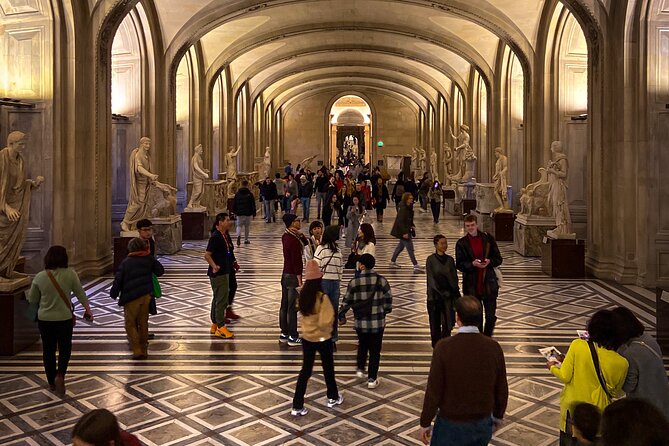
The formal tour concludes inside the museum. This is one of the best features of the experience because you do not have to leave just when you have found your rhythm.
Use the remaining time to revisit a favorite work, see another nearby gallery, or follow your own interests. You might want more ancient art, additional French paintings, or simply a slower look at the sculptures introduced by the guide.
The exact amount of extra time depends on the museum’s closing schedule and when your tour begins. The important point is that you are allowed to continue at your own pace rather than being escorted out with the group.
The Carrousel of the Louvre is directly beneath the museum. Its shops, cafes, and inverted pyramid make it a convenient place for a break before or after your visit. It is more commercial than the galleries, but it can be handy for food, shopping, or a short rest.
Price, group size, and practical limits
At $161.77 per person, this is not a budget museum entry. The adult museum admission is listed as €28, so most of the remaining cost reflects the guide, reserved access, organization, and the convenience of a planned route.
I would consider the price reasonable for someone who values time and explanation, especially on a first visit or a short Paris stay. If you are happy to navigate the Louvre alone and already know which rooms you want, buying admission independently will cost less.
The maximum group size is 20 people. That is not intimate in the way a private tour would be, but it is manageable. You will still need to stay near the guide, particularly in crowded galleries, and the experience will not feel like a private art lesson.
The tour is offered in English. Visitors under 18 and residents of the European Economic Area under 26 may qualify for free museum admission with valid identification and proof of residency. Since the tour price and access arrangements may still involve other costs, check the booking terms carefully if you qualify for free entry.
You should have moderate physical fitness. The tour is not recommended if you have walking difficulties, and Sabrine’s reported patience with a slower walker should not be taken as a guarantee that every departure can move at the same pace. Wear comfortable shoes and expect to spend much of the visit on your feet.
Booking timing and cancellation
This experience is often booked about 33 days ahead. That tells you it can fill well before a Paris trip, especially for popular dates and start times.
You can cancel for a full refund up to 24 hours before the scheduled start. Inside that window, the payment is not refunded, and changes are not accepted. The cut-off uses local Paris time.
The activity also requires good weather and a minimum number of participants. If the provider cancels for either reason, you are offered another date or experience, or a full refund. That policy is worth remembering when you build a tightly timed Paris itinerary.
Is this Louvre tour right for you?
Book it if you want to see the Louvre’s headline works without spending your first hour figuring out the building. It is especially useful for first-time visitors, families, short-stay visitors, and anyone who wants art explained in plain English.
I would also choose it if the Mona Lisa, Venus de Milo, Winged Victory, and major French paintings are your priorities. The chance to continue exploring inside the museum adds real value.
Skip it if you prefer quiet, unstructured museum visits or already know the Louvre well. At $161.77, the tour only makes financial sense if you will use the guide and the time-saving route.
For most first-time visitors, the combination of a focused highlights route, reserved access, and extra museum time makes this a practical way to meet the Louvre without letting its size wear you down.
FAQ
How long does the Louvre tour last?
The guided experience lasts approximately two hours to two hours and 30 minutes.
Is the museum admission ticket included?
Yes. The experience includes reserved access and the €28 adult entrance ticket to the Louvre.
Is the Mona Lisa included?
Yes. The route includes the Mona Lisa along with other famous paintings and sculptures.
Which other artworks are included?
The planned highlights include the Great Sphinx of Tanis, Venus de Milo, Winged Victory of Samothrace, The Coronation of Napoleon, The Raft of Medusa, Liberty Leading the People, Michelangelo’s Dying Slave, and Rebellious Slave.
What language is the tour offered in?
The tour is offered in English with an English-speaking expert guide.
Can I remain in the Louvre after the tour?
Yes. The tour concludes inside the Louvre, and you can continue exploring at your own pace until the museum closes.
What happens if I need to cancel?
You receive a full refund if you cancel at least 24 hours before the start time. Cancellations or changes made less than 24 hours before the start are not refunded or accepted.
Just added around Paris
- Paris Day Tour with Eiffel Tower, Louvre and Cruise Max 6 People★ 4.5 · 29 reviews
- PRIVATE Louvre Wonders & Hidden Treasures Visit★ 5.0 · 65 reviews
- d’Orsay Museum Paris entry ticket★ 3.5 · 31 reviews
- visiting the masterpieces of impressionists at Orsay museum★ 5.0 · 7 reviews
- Louvre Museum with private guide★ 5.0 · 3 reviews
- Louvre Wheelchair-Accessible Private Tour – Stress-Free & Easy★ 5.0 · 16 reviews
- LOUVRE, Small Group Guided Tour in French (TOP SALES)★ 4.5 · 9 reviews
- Musée d’Orsay Highlights Tour with Gourmet Lunch★ 4.5 · 11 reviews
Art Museum Tours in Paris, compared.

Louvre Guided Tour with Reserved Access & Boat Cruise
Read our review →
Louvre Overview, Exploration tour and Reserved Entry
Read our review →
Louvre Museum Entry Ticket With Host and River Cruise
Read our review →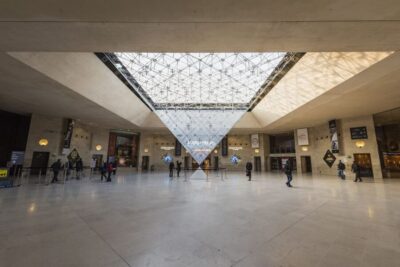
Mona Lisa & Louvre Masterpieces Tour with Reserved Access
Read our review →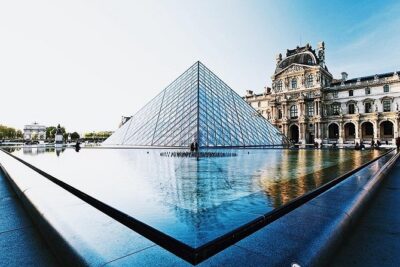
Louvre Museum – Exclusive Guided Tour (Entry Included)
Read our review →