REVIEW · PARIS
Louvre Essential Private tour
The most useful thing about this Louvre tour is its private format. For about three hours, your own guide leads you through the museum’s biggest sights, from the 800-year-old fortress rooms to the Mona Lisa, while you ask questions and adjust the pace to suit your group. You do not have to keep up with strangers or follow a fixed script.
I like two things right away: entry tickets are included, and the route reaches far beyond the usual Mona Lisa stop. You will see Greek, Egyptian, Italian, French, Mesopotamian, and Dutch art in one visit. The main drawback is the price, $357.42 per person, which makes the tour a serious splurge unless your group values personal attention and a well-planned introduction.
Key points at a glance
- A private three-hour route: Only you and your party take part, so the guide can answer questions and adjust the focus.
- More than the Mona Lisa: The visit includes the Venus de Milo, Victory of Samothrace, French masterworks, Mesopotamian sculptures, and Dutch paintings.
- A surprising start: You see the Louvre’s medieval origins, including a room nearly 800 years old.
- Personal guides: Olga, Vincent, Auriel, and Miguel are among the guides praised for clear explanations, patience, and strong art knowledge.
- Five language choices: Tours are offered in English, German, Italian, Spanish, and French.
- A fixed afternoon departure: The tour begins at 2:00 pm at the Arc de Triomphe du Carrousel and returns there.
Why a Private Louvre Tour Can Make Sense
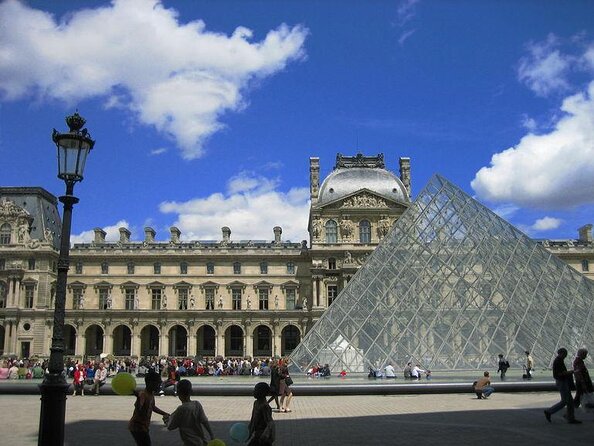
The Louvre is not a single gallery that you can simply walk through from one end to the other. It is a vast museum with many departments, famous paintings, lesser-known sculpture rooms, and layers of history under one roof. Without a plan, three hours can disappear while you search for the works you most want to see.
This tour gives you that plan. Your guide is expected to explain the museum’s story as well as its art, linking the building’s past to the objects inside it. That matters because the Louvre began as a fortress, not a museum. Seeing the old foundations and rooms first gives you a clearer sense of how the institution grew.
The private setup also changes the mood. You can ask why a painting matters, pause over a sculpture, or request more time in a department that interests you. One guest specifically valued being able to name areas of interest so the guide could shape the visit around them. That flexibility is hard to get on a large group tour.
Still, private does not mean leisurely in every room. The Louvre has a lot to cover, and three hours is enough for a strong overview, not a complete museum visit. You will need to accept that some galleries receive only a quick explanation while the group moves toward the next major work.
More Art Museum Tours in Paris
- Paris: Louvre Museum Timed-Entrance Ticket
★ 4.6 · 71,977 reviews - Paris: Orsay Museum Entry Ticket
★ 4.7 · 25,647 reviews - Paris: Louvre Guided Tour with Reserved Access & Boat Cruise
★ 4.3 · 16,353 reviews
Meeting the Louvre at the Arc de Triomphe du Carrousel
The tour starts at the Arc de Triomphe du Carrousel, at Place du Carrousel, 75001 Paris. The meeting point is near public transportation, and the activity ends back there after the museum visit.
The 2:00 pm start is useful if you want a relaxed morning elsewhere in Paris. It also gives you time to reach the meeting point without turning the Louvre into your first task of the day. I would still arrive with time to spare. A private tour depends on the guide finding your party promptly, and a famous museum is not the place to add a last-minute navigation problem.
Your mobile ticket and included admission remove one important chore. You are not left to arrange separate entry while the guide waits. The exact entry process can depend on museum conditions, but the practical promise is clear: the guide handles the visit with your group rather than sending you off to work out the main route alone.
The tour is for your party only. That could mean a couple, a family, or a group of friends, but the supplied details do not state a maximum group size. If your party is larger, check the final booking details carefully before paying, especially because the per-person price makes group composition important.
The Medieval Fortress Beneath the Museum
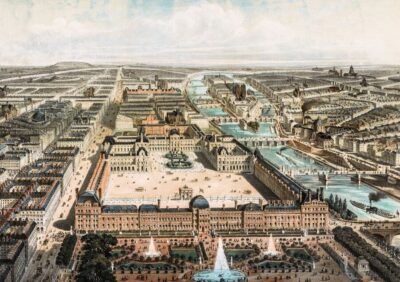
The first major surprise is the Louvre’s medieval beginning. Your guide takes you to the oldest room in the museum, described as nearly 800 years old. This section gives you a physical reminder that the Louvre was once a defensive fortress.
I like this opening because it prevents the visit from becoming a parade of famous names. You begin with the building itself. The stonework and older rooms help you picture the Louvre before royal collections and grand galleries filled it with art.
Your guide can also explain how a fortress became a palace and then a museum. The information provided for this tour does not give a detailed architectural route, so you should not expect every stage of the building’s development. What you can expect is a short historical foundation that makes the later galleries easier to understand.
For families and first-time visitors, this part may be especially helpful. Children who are less interested in paintings often respond better to a fortress, old rooms, and stories of the building’s past. It gives the museum a sense of place before the tour moves into its art collections.
Egyptian Antiquities and the Sphinx of Tanis
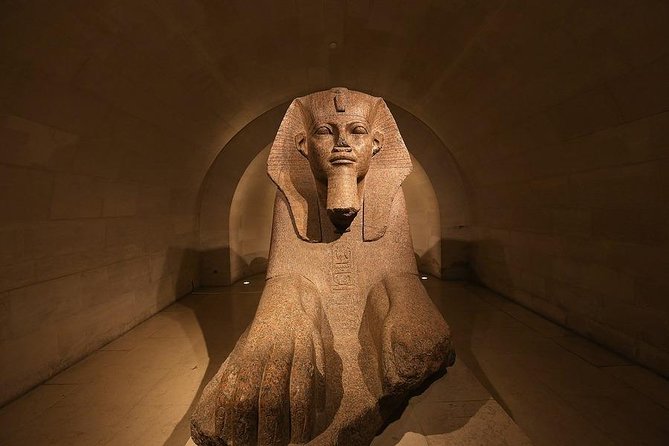
The Great Sphinx of Tanis is one of the tour’s early highlights. It gives your guide a chance to talk about ancient Egypt and the long connection between Egypt and Paris.
The Sphinx is also a useful change of scale. After seeing the Louvre’s old rooms, you move from French architecture to a major ancient object. A good guide can help you read the sculpture, explain its setting, and connect it to the museum’s wider collecting history.
The itinerary names the Sphinx of Tanis but does not promise a full tour of the Egyptian department. Keep that distinction in mind. You will see a major Egyptian work, but the tour is designed to cover several civilizations, so it cannot spend the full three hours in one area.
This broad approach is best for a first Louvre visit. You get a taste of the museum’s range instead of spending the whole afternoon on one collection. If ancient Egypt is your main interest, tell the guide at the start. The private format gives you the best chance of shifting the emphasis, though the tour still aims to cover its main route.
More Louvre tours and timed tickets:
- Louvre Museum Masterpieces Guided Tour with Access
★ 4.5 · 12,023 reviews - Paris: Louvre Overview, Exploration tour and Reserved Entry
★ 4.1 · 10,145 reviews - Paris: Louvre Museum Entry Ticket With Host and River Cruise
★ 4.6 · 9,926 reviews - Mona Lisa & Louvre Masterpieces Tour with Reserved Access
★ 4.6 · 6,812 reviews
Venus de Milo, Victory of Samothrace, and Greek Mythology
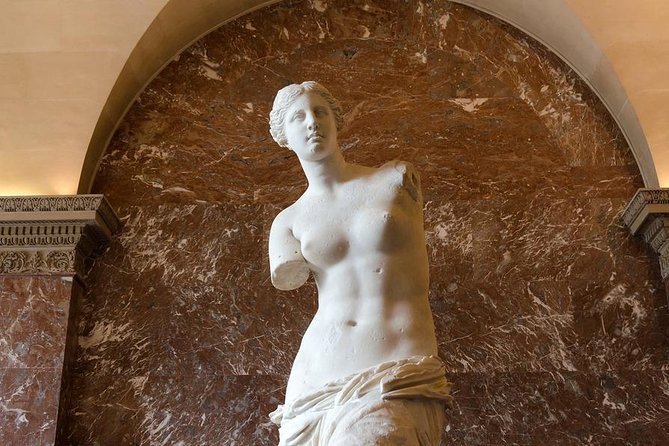
The Greek antiquities department is another central part of the route. It includes the Venus de Milo and the Winged Victory of Samothrace, two of the Louvre’s best-known sculptures.
These works are not simply famous objects to tick off. The value of a guide here is the explanation around them. Your guide can place the sculptures in Greek mythology and discuss how viewers interpret their poses, missing elements, and dramatic presentation.
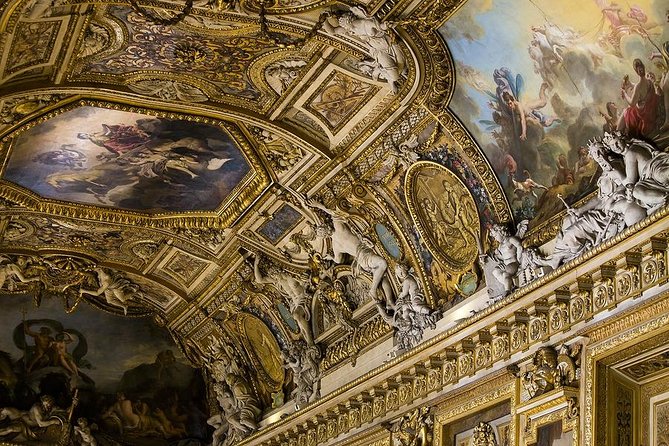
The tour also includes the Caryatides room, described as an old ballroom of the castle. This setting gives the sculpture visit a different character from a standard white gallery. Your guide tells stories from mythology there, adding narrative to the stone figures.
This is one of the places where a private guide earns their keep. If you have studied Greek mythology, you can ask for more detail. If the names and stories are new to you, the guide can provide a simpler explanation without holding up a large group.
The limitation is time. The Greek collection is one of the Louvre’s major departments, and three hours does not allow a long look at every important piece. Think of this as a focused introduction built around the main sculptures, not a specialist tour of ancient Greece.
The Long Italian Gallery and the Mona Lisa
The Italian gallery is described as roughly 800 meters long, which gives you a sense of the Louvre’s scale. Here you see works by Mantegna, Raphael, Caravaggio, and Veronese, along with Leonardo da Vinci’s Mona Lisa.
The Mona Lisa will likely draw the most attention, but the surrounding Italian collection is an important reason to book a guide. Without context, it is easy to spend all your energy reaching the famous portrait and miss the artists displayed nearby. A guide can point out how different painters handled light, composition, religious subjects, and portraiture.
One guide, Vincent, was praised for moving efficiently through the museum while keeping the visit orderly and at the group’s pace. That sort of direction matters in the Italian galleries, where the number of major works can feel overwhelming. You need someone who can help you stop at the right places rather than simply walk past room after room.
Expect the Mona Lisa to be a brief part of a much larger section. The tour includes it, but the museum’s appeal is not limited to one portrait. If the painting is your chief reason for coming, your guide can give you background and help you understand its place within the Italian collection. You should not expect a quiet, extended viewing in front of it.
French Painting on a Grand Scale

The French department adds some of the museum’s largest paintings. The Sacre de Napoleon and La Mort de Sardanapale are named as key examples, and their size is part of the experience. They are described as larger than many Paris apartments, an exaggeration that captures the visual shock of standing before them.
These paintings reward a guide who can explain what you are seeing beyond the surface. Large historical canvases can contain many figures, gestures, symbols, and political messages. A clear explanation helps you know where to look first and why the work was made on such a grand scale.
This section also gives the tour a strong French focus after the ancient and Italian collections. You move from mythology and Renaissance painting into works tied to French power, ceremony, and artistic ambition.
The tradeoff is that big paintings can take time to explain properly. If your group asks many questions here, another department may receive less attention. That is not necessarily a problem, but it is worth telling the guide which subjects matter most to you before the route gets underway.
Mesopotamia and the Code of Hammurabi
The tour also reaches Mesopotamian sculpture, including the Khorsabad Bulls and the Code of Hammurabi. These works add a completely different chapter to the visit.
The Khorsabad Bulls are impressive for their size and protective role, while the Code of Hammurabi offers a direct link to early written law. Together, they show that the Louvre is not only a place for European paintings and famous Greek statues.
This part may be especially valuable if you want your Louvre visit to cover early civilizations. It also breaks up the familiar route that focuses only on the Mona Lisa, Venus de Milo, and French royal art.
The information supplied does not specify how long the tour spends in the Mesopotamian galleries. Treat this as a planned stop within a wide route. If these objects are high on your list, mention that at the beginning so the guide can give them suitable attention.
A Quieter Look at Rubens, Vermeer, and Rembrandt
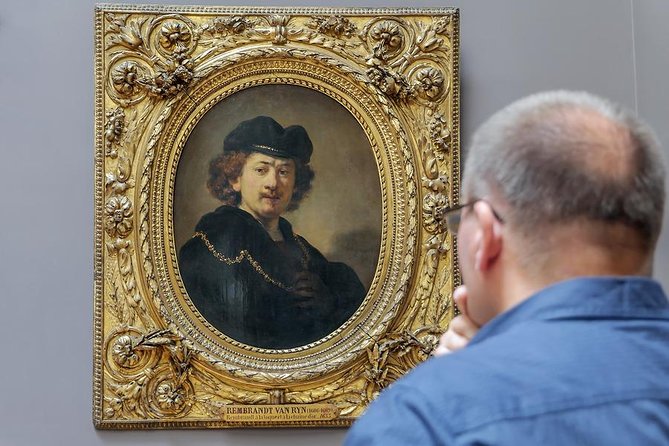
The Dutch department is described as less crowded and especially rewarding. It includes Rubens, Vermeer, and Rembrandt, giving you a chance to see major northern European painting away from the museum’s most famous bottlenecks.
This could be one of the most pleasant sections of the afternoon. After the attention around the Mona Lisa and the large French canvases, a less crowded gallery may let you look more closely and listen without as much distraction.
The Dutch masters also offer a useful contrast in style. Rubens is known for large, energetic compositions, while Vermeer and Rembrandt invite closer attention to light, faces, and quiet interior detail. Your guide can help you see those differences rather than treating the department as a quick name-check.
Again, the private format helps. If one painting catches your eye, you can ask about it. A large group often has to move on because of the schedule, while a private guide can decide how much time your party wants to spend, within the limits of the three-hour route.
Guides Who Shape the Experience
The guide is the main reason to choose this tour over simply entering the Louvre with a map. The supplied information names Auriel, Olga, Vincent, and Miguel as guides who have led this experience.
Auriel is described as attentive to the needs of a group and especially good at bringing insight to the Louvre’s three famous women, likely the Mona Lisa, Venus de Milo, and Winged Victory. Olga is praised for careful explanations, kindness, and a calm voice that helped make details memorable well after the visit. Vincent is noted for managing the route efficiently and adapting it to the group’s pace. Miguel is described as helpful in explaining the museum’s approach to displaying art.
Those details suggest different strengths, but you should not assume you can select one of these guides when booking unless the booking system specifically allows it. The important point is to use the private format well. Tell your guide your interests, your group’s pace, and whether you want more art history, architecture, mythology, or famous highlights.
Tours are available in English, German, Italian, Spanish, and French. The general tour information lists English, while the full language details add the other four choices. Confirm your preferred language at booking.
Is $357.42 Per Person a Fair Price?
At $357.42 per person, this is not a budget museum visit. The price needs to be judged against what you receive: a private tour of about three hours, professional guiding, and Louvre admission.
For a solo visitor, the cost is hard to justify unless personal instruction is your top priority. For a couple or small group, the total price can still be high, but the private format may feel more reasonable because the guide’s attention is shared only among your party. Group discounts are listed, so larger parties should check how the rate changes before booking.
I see the value in three situations. First, you have only one Louvre visit and want someone to organize the essentials. Second, your group has mixed interests and needs a flexible explanation rather than a standard lecture. Third, you feel uneasy about navigating a huge museum and want an expert to create a sensible route.
The price is less attractive if you enjoy wandering alone, already know the Louvre well, or want to spend an entire day in one department. You are paying for direction, context, and time saved, not for unlimited museum access or a specialist study of every collection.
Practical Details Before You Book
Confirmation is provided when you book, and the experience uses a mobile ticket. Admission is included, which keeps the arrival process simpler. The meeting point is the Arc de Triomphe du Carrousel, and the tour returns there.
Most people can take part, and the museum is near public transportation. The information does not provide a detailed accessibility assessment, so contact the provider directly if your group has specific mobility needs.
Admission is free for visitors under 18 and residents of the European Economic Area under 26, provided they show valid identification and proof of residency. Since the listed price is per person, eligible members of your group should check how the free admission is handled when booking.
You can cancel for a full refund up to 24 hours before the 2:00 pm start time. Changes or cancellations inside that 24-hour window are not accepted for a refund. The activity also requires a minimum number of participants, and if that minimum is not met, you are offered another date or experience, or a full refund.
Who Should Book This Louvre Experience?
I would recommend this tour to first-time Louvre visitors who want the major works explained in a clear order. It also fits families, art-curious couples, and groups with limited time in Paris. The private setting is a strong advantage when your party has its own interests or needs a flexible pace.
I would think twice if you want a slow, specialist visit to Egyptian antiquities, Dutch painting, or French art alone. Three hours gives you a broad survey, and the $357.42 price is substantial. You are also committing to a 2:00 pm start and a route that returns to the original meeting point.
Book it if you want the Louvre’s greatest hits placed in context, with enough freedom to ask questions and change the emphasis. Skip it if you prefer to wander independently and are happy to trade expert guidance for a lower-cost, less structured visit.
FAQ
How long does the Louvre Essential Private tour last?
The tour lasts approximately three hours.
What time does the tour start?
The tour starts at 2:00 pm.
Where does the tour meet?
The meeting point is the Arc de Triomphe du Carrousel at Place du Carrousel, 75001 Paris, France.
Where does the tour end?
The activity ends back at the meeting point.
Are Louvre admission tickets included?
Yes. Louvre admission is included in the tour price.
Is this a private tour?
Yes. Only your group takes part in the activity.
Which languages are available?
Tours are available in English, German, Italian, Spanish, and French.
Is admission free for younger visitors?
Visitors under 18 and residents of the European Economic Area under 26 can receive free admission when they present valid identification and proof of residency.
Can I cancel for a full refund?
Yes. You can cancel at least 24 hours before the experience start time for a full refund. Cancellations or changes made less than 24 hours before the start time are not refunded or accepted.
Just added around Paris
- Paris Day Tour with Eiffel Tower, Louvre and Cruise Max 6 People★ 4.5 · 29 reviews
- PRIVATE Louvre Wonders & Hidden Treasures Visit★ 5.0 · 65 reviews
- d’Orsay Museum Paris entry ticket★ 3.5 · 31 reviews
- visiting the masterpieces of impressionists at Orsay museum★ 5.0 · 7 reviews
- Louvre Museum with private guide★ 5.0 · 3 reviews
- Louvre Wheelchair-Accessible Private Tour – Stress-Free & Easy★ 5.0 · 16 reviews
- LOUVRE, Small Group Guided Tour in French (TOP SALES)★ 4.5 · 9 reviews
- Musée d’Orsay Highlights Tour with Gourmet Lunch★ 4.5 · 11 reviews
Art Museum Tours in Paris, compared.

Louvre Guided Tour with Reserved Access & Boat Cruise
Read our review →
Louvre Overview, Exploration tour and Reserved Entry
Read our review →
Louvre Museum Entry Ticket With Host and River Cruise
Read our review →
Mona Lisa & Louvre Masterpieces Tour with Reserved Access
Read our review →
Louvre Museum – Exclusive Guided Tour (Entry Included)
Read our review →