REVIEW · PARIS
Guided tour of the Louvre Museum with tickets included
The best thing about this Louvre tour is its focus. In roughly two hours, you move from the museum’s medieval foundations to the Mona Lisa and major French paintings, instead of losing half your visit to corridors, maps, and wrong turns. Guide Matteo Allavena leads a small group of no more than six people, which makes it easier to ask questions and adjust the pace.
I like the skip-the-line entry and the way the tour connects famous works to the building around them. I also like the family-friendly approach: Matteo has kept children engaged, answered unexpected questions, and taken time to explain how to look at art rather than simply naming each object.
The main consideration is timing. Two hours is enough for a strong introduction, not a complete Louvre visit. A ticket snafu and one serious scheduling mistake were also reported, so confirm the meeting details carefully and avoid booking at the last minute if this guided experience is central to your Paris plans.
Key points at a glance

- A six-person maximum keeps the tour personal and makes questions practical.
- The route covers ancient, medieval, Renaissance, and modern French art in one compact visit.
- The 13th-century Louvre walls give you a glimpse of the fortress beneath today’s grand museum.
- The Mona Lisa comes with context, not just a quick stop in a crowded gallery.
- Admission and skip-the-line access are included, with the listed entrance value of 28 euros.
- Matteo Allavena leads the English tour, and his clear explanations are a major part of the experience.
Why a guided Louvre visit helps
The Louvre is not merely a large museum. It is a former fortress, royal residence, and immense collection spread across grand wings and several floors. You can easily spend hours walking without reaching the works you came to see.
That is where this tour earns its keep. Matteo builds a route around major works, but he also explains how the Louvre developed and why its rooms look the way they do. You get a working map of the museum in your head, along with enough art context to make the paintings and sculptures more than a checklist.
The tour is offered in English and lasts about two hours. With a maximum of six people, it has the feel of a private introduction without the price of a fully private guide. The overall rating is 4.8 from 150 reviews, and 95 percent of customers recommend it. Those numbers suggest a dependable experience, though they do not remove the need to check the meeting instructions before you set out.
More Art Museum Tours in Paris
- Paris: Louvre Museum Timed-Entrance Ticket
★ 4.6 · 71,977 reviews - Paris: Orsay Museum Entry Ticket
★ 4.7 · 25,647 reviews - Paris: Louvre Guided Tour with Reserved Access & Boat Cruise
★ 4.3 · 16,353 reviews
Meeting Matteo at Café Marly
The starting point is Le Café Marly at 93 Rue de Rivoli, 75001 Paris. The activity ends back at the meeting point, so you should plan your next stop from there rather than assuming the guide will leave you at another Louvre exit.
The meeting area can be busy, and one customer found it hard to identify Matteo in the crowd. Another missed messages sent through WhatsApp and the booking app because of poor phone service. My practical advice is simple: read the confirmation carefully, arrive early, and agree on a clear way to identify the guide before you reach the café.
This matters because the tour is short. Losing fifteen minutes at the start cuts directly into your time with the art. A visible sign at the meeting point would help, but you can reduce the risk by keeping your phone available and checking messages before entering an area with weak service.
Beneath the Louvre: the medieval walls
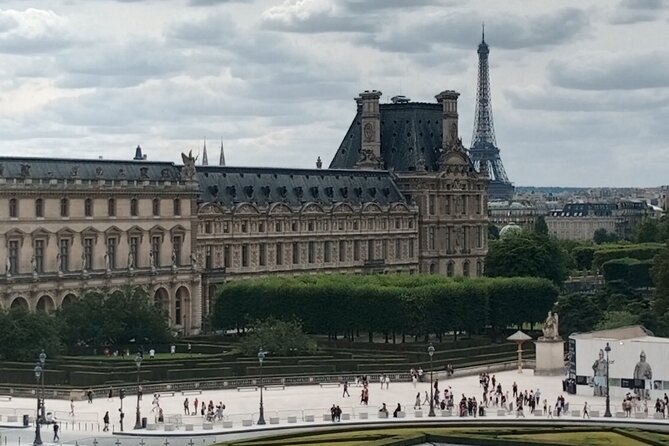
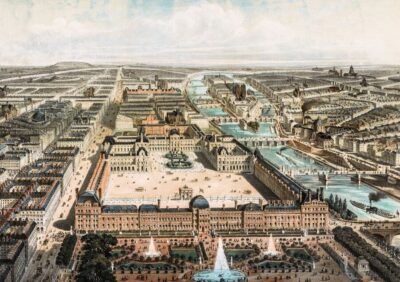
The visit begins with a look at the 13th-century walls of the Medieval Louvre. This is an important opening because it changes your sense of the building. The Louvre did not begin as a polished palace filled with paintings. Its earliest form was a defensive fortress.
You might otherwise walk through the modern museum without realizing how many layers sit below and around you. Matteo’s explanation helps connect the stone remains to the grand royal building above. For first-time visitors, this is a useful reminder that the museum is also an architectural and political story.
The drawback is that the Louvre’s medieval remains may not have the instant fame of the Mona Lisa or Venus de Milo. Still, I would keep this stop. It gives the rest of the tour a clearer shape and helps you understand why the Louvre can feel like several places joined together.
Ancient Egypt and Greece in one route
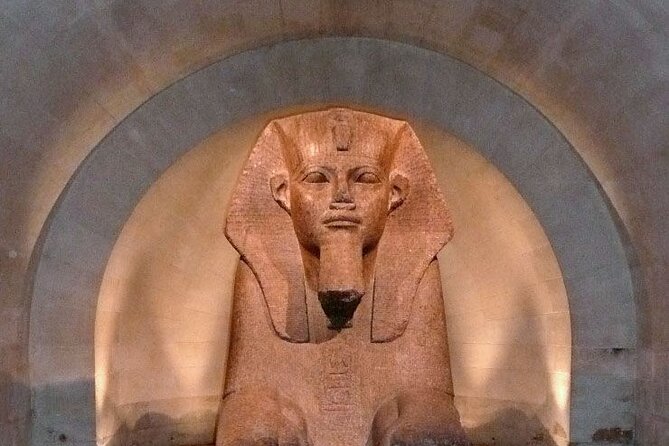
The Tanis Sphinx brings you face to face with an object about 4,000 years old. It is one of the tour’s strongest changes of pace. After seeing the fortress foundations, you move into a much older world, where the scale and age of the collection become clear.
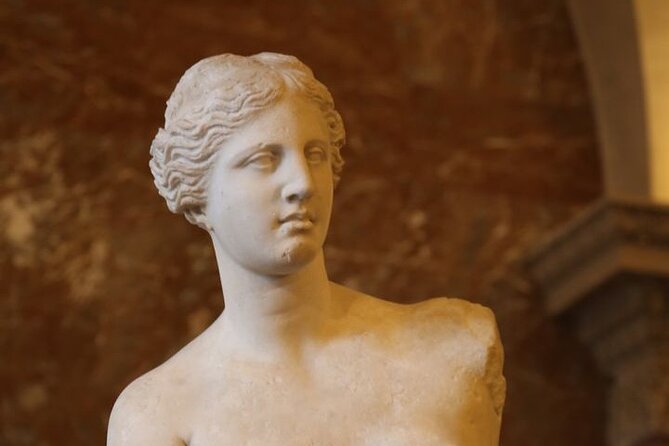
The Greek section then supplies three essential stops: the Athena of Velletri, the Venus de Milo, and the Victory of Samothrace. Each is famous, but fame alone does not explain why the sculptures matter. A guide can point out posture, movement, missing pieces, placement, and the way these objects were meant to be seen.
The Victory of Samothrace is especially powerful because of its position and sense of motion. The Venus de Milo is quieter and more self-contained. Athena gives you another way to read the ideals of the Greek sculptural tradition. In a self-guided visit, you might see all three and remember only their names. Here, you get a short set of tools for looking at them.
More Louvre tours and timed tickets:
- Louvre Museum Masterpieces Guided Tour with Access
★ 4.5 · 12,023 reviews - Paris: Louvre Overview, Exploration tour and Reserved Entry
★ 4.1 · 10,145 reviews - Paris: Louvre Museum Entry Ticket With Host and River Cruise
★ 4.6 · 9,926 reviews - Mona Lisa & Louvre Masterpieces Tour with Reserved Access
★ 4.6 · 6,812 reviews
Galerie Apollon and the road to Versailles
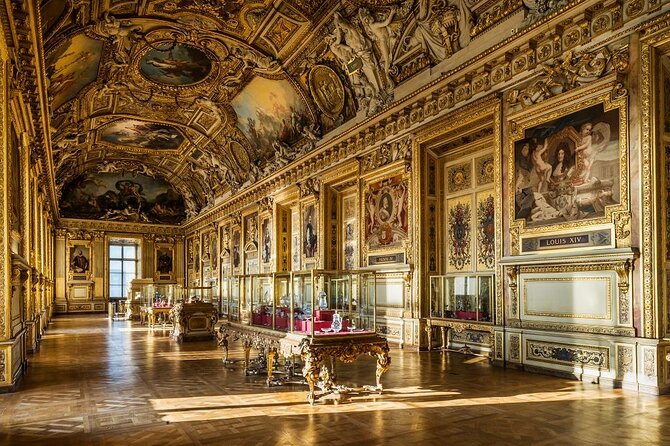
Galerie Apollon is one of the Louvre’s grandest decorative rooms. It is presented on this tour as the museum’s finest piece and as an inspiration for Versailles. That connection is useful because it shows how royal taste, palace decoration, and museum display overlap.
You are not just looking at isolated art objects. The room itself is part of the story. Its ornament helps explain the scale and ambition of French royal interiors, and it prepares you for the later sections devoted to Napoleon and French painting.
This stop may appeal especially to anyone planning a Versailles visit. The tour does not take you to Versailles, but it gives you a point of comparison for the style and display culture associated with the palace.
Giotto and the Italian painting rooms
The Italian section includes Saint Francis Receiving the Stigmata by Giotto. Matteo uses this work to discuss one of the key turning points in Western art. Giotto’s paintings are often taught as a bridge toward more natural human figures and emotional storytelling, so this is a worthwhile pause before the later Renaissance masterpieces.
The value here is not simply learning the title. You get a way to place the painting within a larger sequence of artistic change. That makes the work easier to remember after you leave.
The Louvre contains far more Italian art than this tour can cover. That is both the strength and the limit of the route. You receive a useful introduction, but you will not get a full survey of Italian painting in two hours. If you already have a favorite artist or period, tell Matteo at the start. Several customers appreciated his willingness to shape the visit around personal interests.
The Grande Galerie and the Mona Lisa
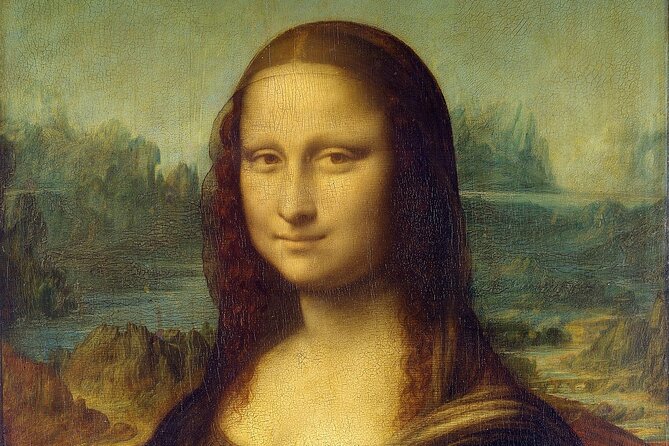
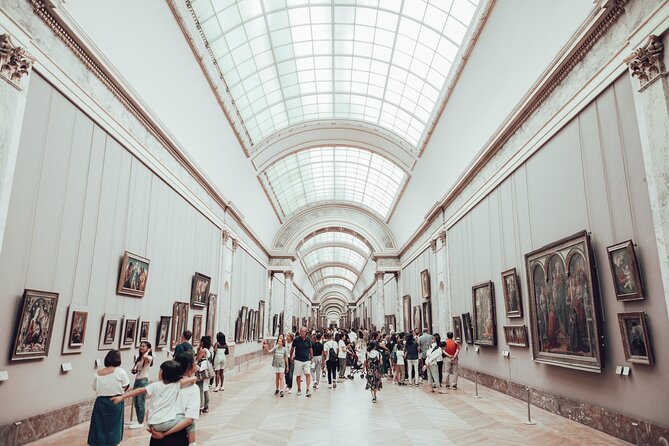
The Grande Galerie is one of the tour’s central stretches. Its scale gives you a direct sense of how enormous the Louvre is, and it provides the setting for works such as Ghirlandaio’s L’Enfant et l’ancien and Veronese’s The Wedding at Cana.
The Wedding at Cana is particularly important because of its size and its crowded, theatrical scene. A guide helps you find structure in all those figures and details. Ghirlandaio offers a smaller and more intimate counterpoint.
Then comes Leonardo da Vinci’s Mona Lisa. You will not need anyone to tell you where the crowd is headed, but the painting can be hard to appreciate as a quiet work of art when so many people are gathered around it. Matteo’s role is valuable here because he gives you context about the painting rather than treating the stop as a quick photo opportunity.
Expect this part to be busy. Skip-the-line access gets you through the museum entry process more efficiently, but it does not turn the Mona Lisa gallery into a private room. Keep your expectations realistic: the tour helps you reach and understand the painting, not control the crowd around it.
French masterpieces from Napoleon to Delacroix
The Classicism room brings two major works by Jacques-Louis David: The Coronation of Napoleon and Leonidas at Thermopylae. These paintings reward explanation because their scale, gestures, symbols, and political messages can be easy to miss when you stand in front of them alone.
The Coronation of Napoleon is also a good place to consider how art serves power. It presents a public ceremony with careful choices about who appears, where figures stand, and how authority is shown. Leonidas at Thermopylae turns an ancient battle into a statement about courage and sacrifice.
The Romanticism room then shifts the mood. Géricault’s The Raft of the Medusa and Eugène Delacroix’s Liberty Guiding the People bring drama, suffering, movement, and political feeling into the route. These paintings are visually intense, but the guide’s context keeps them from becoming mere spectacle.
This sequence is one of the tour’s best teaching moments. You see how French painting changes from controlled, official Classicism to the emotional force of Romanticism. It is a lot to absorb, but the contrast makes the development easier to follow.
What the two-hour pace feels like
The pace is efficient by design. You move through several departments and periods, stopping at selected works rather than lingering everywhere. Customers have praised the organization and said they saw much more than they would have managed alone.
That efficiency has a price. You cannot study every painting, return to a favorite room, or spend ten minutes reading each label. If you want a slow museum day, this is not the right format. If you want a strong first pass that removes the confusion, it is a smart choice.
I would book this early in your Paris schedule if possible. The tour gives you a useful framework, and you may want to return later to a department that caught your attention. The average booking lead time is 57 days, which suggests planning ahead is sensible.
Families should give this option serious thought. One 11-year-old enjoyed the visit and stayed interested throughout, and another family appreciated Matteo’s ability to handle children’s unexpected questions. The small group also makes it easier to pause briefly when someone needs clarification.
Price, group size, and overall value
The price is $114.93 per person. That includes the guide, the museum entrance fee listed as 28 euros, and skip-the-line access. Food, drinks, coffee, tea, and transportation are not included.
For a solo visitor or couple, the price is not minor. You are paying for the guide’s route, explanations, and time savings as much as for the ticket. I think the value is strongest if you have only one Louvre visit, dislike navigating large museums, or want someone to make the art readable for your family.
The six-person limit improves the experience compared with a large group where you may struggle to hear or ask questions. It also explains why the cost is higher than simply buying an entrance ticket. If you already know the Louvre well and prefer to wander, the extra expense may not suit you.
There was one serious booking error in which a customer arrived from Disneyland Paris only to learn that the scheduled guided visit could not take place because of a conflicting French booking. The guide helped with faster entry and provided a full refund, but the customer still lost time and taxi money. It appears to have been an isolated scheduling failure, yet it is a useful warning: confirm your booking and avoid relying on a last-minute reservation for an important museum day.
Who should book this Louvre tour?
I would recommend it most strongly for a first Louvre visit, families, and anyone with limited time in Paris. It is also a good fit if you want the famous works but need help understanding why they matter.
The tour suits you less if you want to explore Egyptian art at length, focus only on sculpture, or spend a full day with one painter. Its strength is range. You see the medieval building, Egyptian antiquity, Greek sculpture, Italian painting, and major French works in a clear sequence.
Matteo’s style seems especially useful for people who want both facts and conversation. He has answered family questions, adjusted to requests, and helped people see lesser-known works along with the headline pieces. His explanations focus on meaning, time period, and ways of looking, not just dates.
Practical details before you book
Admission is free for people under 18 and for residents of the European Economic Area under 26, with valid identification and proof of residency. Since the listed price includes a 28 euro entrance ticket, eligible visitors should confirm how the booking handles free admission before paying.
Service animals are allowed, and the meeting point is near public transportation. Most people can participate. The activity is offered in English, and the confirmation arrives when you book.
Free cancellation is available up to 24 hours before the start time. Cancellations or changes made less than 24 hours before the start are not accepted for a refund. If the minimum number of people is not reached and the activity is canceled, you will be offered another date or experience, or a full refund.
Should you book it?
Book this tour if you want a well-planned first look at the Louvre, need to save time, or would rather learn from Matteo than decode the museum on your own. The combination of a six-person maximum, skip-the-line access, and a route that reaches the Louvre’s major artistic periods gives you a lot in two hours.
Do not book it expecting a relaxed, exhaustive museum day. You will see highlights, not every room, and the Mona Lisa area may still be crowded. Confirm the meeting details in advance, arrive early, and treat the tour as your orientation to the Louvre. For most first-time visitors, that is exactly where its value lies.
FAQ
How long does the Louvre tour last?
The tour lasts approximately two hours.
What language is the tour offered in?
The tour is offered in English.
Where does the tour begin?
The meeting point is Le Café Marly, 93 Rue de Rivoli, 75001 Paris, France.
Where does the activity end?
The activity ends back at the meeting point.
What is included in the price?
The price includes the speaker guide, Louvre admission, and skip-the-line access. The listed entrance ticket value is 28 euros.
How many people can join the tour?
The tour has a maximum of six participants.
Can children or EEA residents under 26 enter the Louvre for free?
Free admission applies to visitors under 18 and EEA residents under 26 when they present valid identification and proof of residency.
Can I cancel for a full refund?
Yes. You can cancel at least 24 hours before the experience begins for a full refund. Cancellations or changes made less than 24 hours before the start are not accepted for a refund.
Just added around Paris
- Paris Day Tour with Eiffel Tower, Louvre and Cruise Max 6 People★ 4.5 · 29 reviews
- visiting the masterpieces of impressionists at Orsay museum★ 5.0 · 7 reviews
- PRIVATE Louvre Wonders & Hidden Treasures Visit★ 5.0 · 65 reviews
- d’Orsay Museum Paris entry ticket★ 3.5 · 31 reviews
- Louvre Museum with private guide★ 5.0 · 3 reviews
- Louvre Wheelchair-Accessible Private Tour – Stress-Free & Easy★ 5.0 · 16 reviews
- LOUVRE, Small Group Guided Tour in French (TOP SALES)★ 4.5 · 9 reviews
- Musée d’Orsay Highlights Tour with Gourmet Lunch★ 4.5 · 11 reviews
Art Museum Tours in Paris, compared.
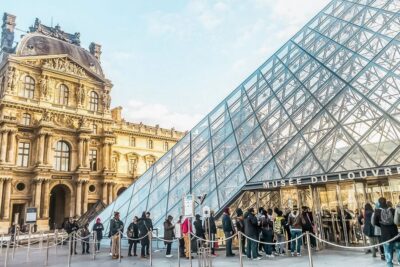
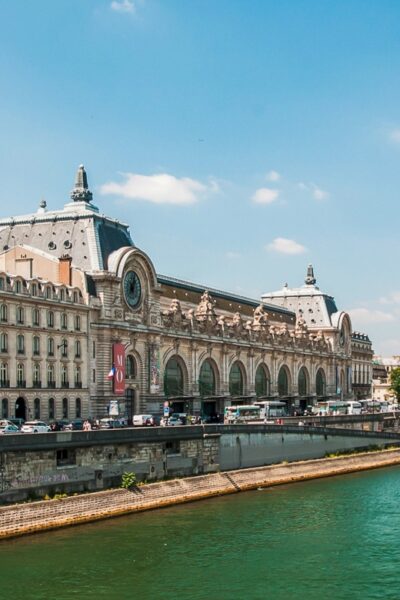
Louvre Guided Tour with Reserved Access & Boat Cruise
Read our review →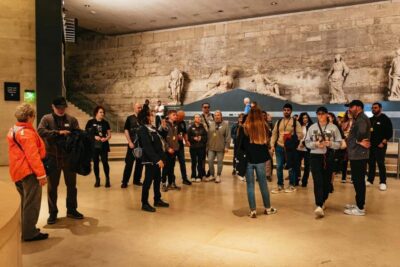
Louvre Overview, Exploration tour and Reserved Entry
Read our review →
Louvre Museum Entry Ticket With Host and River Cruise
Read our review →
Mona Lisa & Louvre Masterpieces Tour with Reserved Access
Read our review →
Louvre Museum – Exclusive Guided Tour (Entry Included)
Read our review →