
REVIEW · BILBAO
Guided tour of the Guggenheim Museum Bilbao in Spanish
The Guggenheim Bilbao is as much an architectural experience as an art museum. This Spanish-language tour begins outside, then moves through Frank Gehry’s striking building, its sculptures, and selected exhibitions with a local art historian. Ane, the guide praised in the tour feedback, is known for making contemporary art easier to understand.
I like two things here: you get the building explained from several angles, and your ticket lets you return to the museum later the same day. The small group, capped at 15 people, should also make it easier to ask questions. The main drawback is time: one hour and 40 minutes is not enough for the whole museum, so you need to continue alone afterward if you want a fuller visit.
Key points to know before booking
- The tour begins outdoors: You learn why Bilbao was chosen for the museum before entering the building.
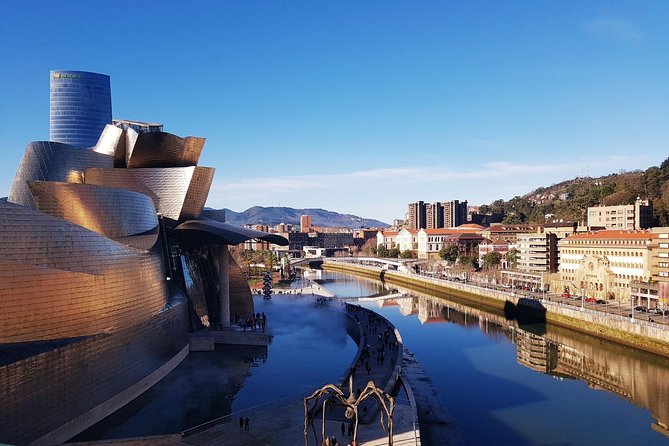
- Frank Gehry’s architecture gets proper attention: The route uses the atrium and exterior views to show how the museum works as a sculpture in its own right.
- Spanish is the tour language: This suits Spanish speakers who want discussion rather than a quick audio guide.
- Ane is the guide to look for: Her art history training and warm, clear explanations receive the strongest praise.
- Your admission lasts beyond the guided visit: You can keep exploring the museum, visit the shop, or collect belongings from the cloakroom afterward.
- The group stays small: A maximum of 15 people is a useful balance between personal attention and a lower price than a private tour.
Why this Guggenheim tour is different
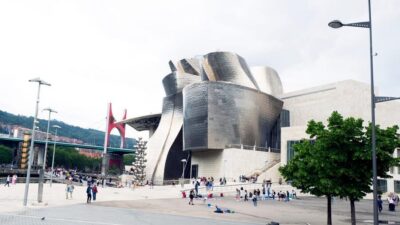
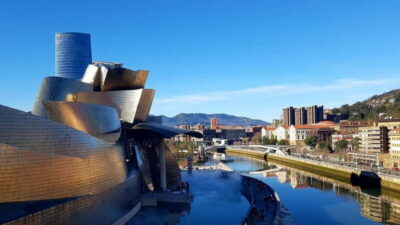
Many people first approach the Guggenheim Bilbao as a giant silver structure beside the Nervión River. That first impression matters, but it does not explain why the museum changed Bilbao or how its unusual forms relate to the art inside.
This tour starts with that missing context. Before you settle into gallery rooms, you hear about Bilbao’s origins, the city’s selection as the site for the museum, and the decision to build one of the major museums of the late twentieth century here. That gives the building a role in the story rather than treating it as a backdrop for photographs.
The guide is licensed in Art History by the University of the Basque Country. The information provided for the experience identifies Ane as the guide praised most often in the feedback. Her job is not simply to point at paintings and name their creators. She explains artistic movements, the ideas behind works, and ways to approach contemporary art when it does not offer an obvious subject.
That is useful in a museum where a large metal form, a room-sized installation, or an abstract painting may leave you unsure where to begin. You are encouraged to look carefully, ask questions, and form your own response.
More Art Museum Tours in Bilbao
- Bilbao: Guggenheim VIP Experience. Small Group. Expert Guide
★ 4.7 · 528 reviews - Bilbao: Guggenheim Secrets & Savor the Sea’s Treasures. VIP
★ 4.6 · 458 reviews - Bilbao: Private & Exclusive Guggenheim Museum Guided Tour
★ 4.8 · 296 reviews
Starting at Mazarredo Zumarkalea
The meeting point is Mazarredo Zumarkalea, 62, in Bilbao’s Abando area. The tour then reaches the Guggenheim Museum Bilbao at Abandoibarra Etorbidea, 2, where the visit ends inside the museum.
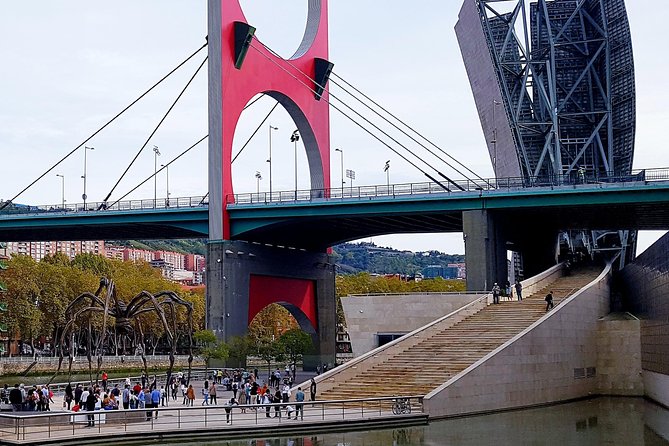
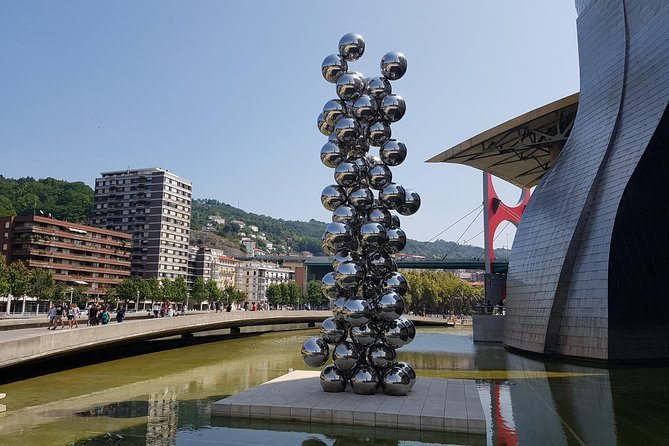
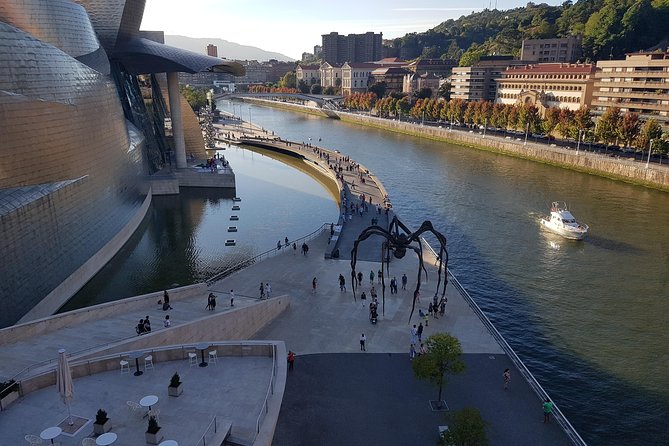
The opening outdoor portion is not filler. You look at the building from different positions and discuss the relationship between its curved metal surfaces, the surrounding city, and the sculptures placed around it. This is the right order for the visit. If you enter first and only later look at the exterior, you may miss how much the building shapes your experience of the art.
The introduction also covers why Bilbao became the home of this major museum. That detail gives the tour a civic angle. You are not only learning about an architect and a collection. You are considering how a city presented itself through a bold cultural project.
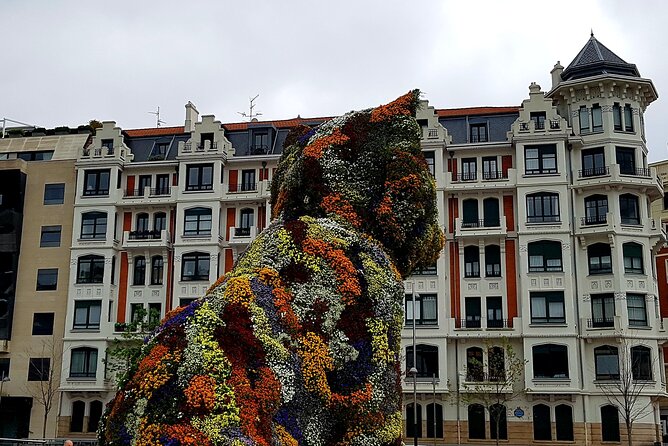
The tour data does not promise a specific list of outdoor sculptures, and the displays can change. You should expect discussion of the works currently visible around the museum rather than a fixed sculpture itinerary. That flexibility is helpful, since outdoor art and exhibitions can change over time.
Seeing Frank Gehry’s building from the inside
Once inside, the guide discusses Frank Gehry and the museum’s spectacular atrium. The building is difficult to grasp from one viewpoint, so the route uses different places to show its interior image and structural drama.
This part will suit you if you care about architecture but do not want a separate architecture lecture. The guide connects the atrium to the wider building, then returns your attention to the art. You get a clearer sense of why the museum is designed as a sequence of large, unusual spaces rather than a simple set of rectangular galleries.
There is also a practical benefit to having the building explained early. Contemporary art often depends on scale, light, distance, and the room around it. Knowing how the museum’s spaces work can help you understand why certain pieces are placed where they are.
Still, keep your expectations sensible. The tour is not a full architectural study, and the 100-minute duration limits the amount of detail possible. You will get a guided introduction to the building and its key features, not a room-by-room architectural survey.
Moving through permanent and temporary collections
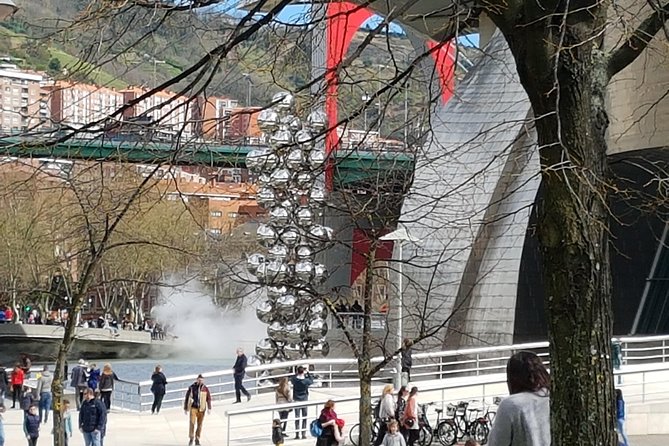
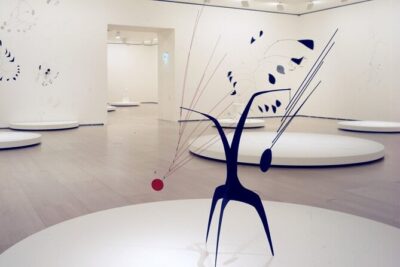
The indoor portion includes the museum’s permanent and temporary collections, with extra attention to the exhibitions showing during your visit. The guide discusses selected works, their makers, artistic tendencies, and points that may help you read the displays.
The strength of this approach is selection. A museum of this scale can become tiring if you try to see every room with equal attention. A guide helps you pause at works that offer a useful way into contemporary art, then keeps the visit moving.
You should not expect every gallery or every object to receive equal treatment. The experience specifically explains that the complete museum cannot be covered in the guided time. The purpose is to make the art less remote and give you a structure for looking, not to provide an inventory of everything on display.
That limitation is important for planning. If you want a quick introduction before a later independent visit, this tour works well. If you have already studied the current exhibitions and want a long, detailed analysis of many individual works, you may find the schedule too short.
The exhibitions can also vary. The guide’s comments are most useful when connected to what is actually on view, but a future booking may not cover exactly the same artists or rooms described in earlier feedback. Think of the art discussion as dependent on the museum’s current program.
More Guggenheim visits:
- Bilbao: Guggenheim Like Never Before: VIP Access. Small Group.Top
★ 4.5 · 190 reviews - Guggenheim Bilbao Museum Private Tour
★ 4.5 · 98 reviews - Bilbao Guggenheim Museum Entry Ticket
★ 3.5 · 69 reviews - Guggenheim: Art explained by artists
★ 5.0 · 69 reviews
Ane’s teaching style and why it matters
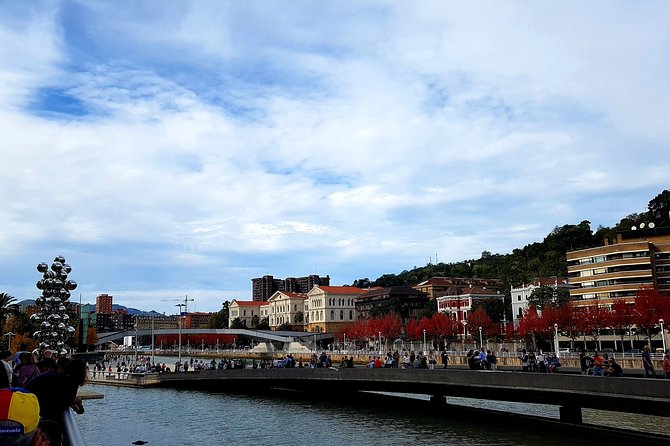
The strongest praise is directed at Ane’s ability to connect art with ordinary human reactions. The feedback describes her as a translator of sensations into understandable ideas, with a gift for making painting approachable to different levels of experience.
That distinction matters. A guide can recite dates and labels without helping you see more. Here, the emphasis is on explanation and dedication. Ane is also credited with helping participants when practical problems arose during the visit, which suggests a hands-on approach beyond simply delivering commentary.
The language is Spanish, so you should be comfortable following a sustained conversation in Spanish. If you are studying the language, art can give the discussion useful context, but this is not described as a language lesson.
The small-group limit of 15 supports this style. It is not a private visit, and the group could still feel full, but the size is more manageable than a large museum crowd. You have a better chance of hearing the guide clearly and asking about a work that puzzles you.
What happens after the guided visit
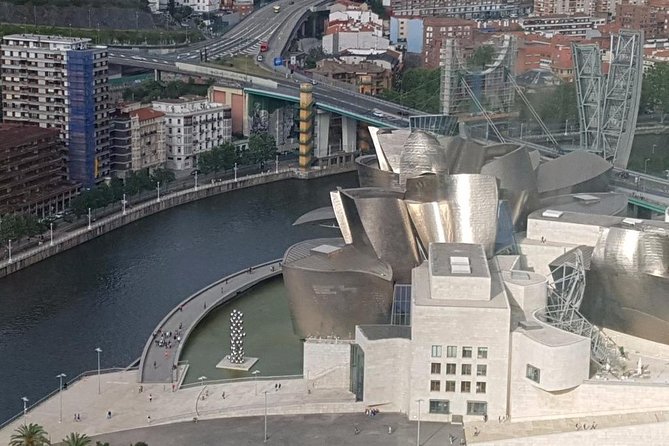
The tour finishes inside the Guggenheim. That arrangement is one of its best practical features. You do not have to leave just as you begin to understand the museum.
Your admission allows you to visit the museum again during the same day. You can take a break, have more time with a gallery, or return to a work that received only brief attention during the guided portion. You can also see the shop and collect your belongings from the cloakroom at the end.
This makes the short guided route feel more useful. You receive orientation and interpretation first, then have the freedom to choose what deserves more of your time. I would plan on staying after the official tour if you care about the museum itself.
The visit information says only two of the three floors were displaying exhibitions during one past visit. That kind of change is possible, so do not assume every level will be open or filled on your date. The same-day return helps soften that uncertainty, since you can explore at your own pace after the guide leaves.
Is $54.37 a fair price?
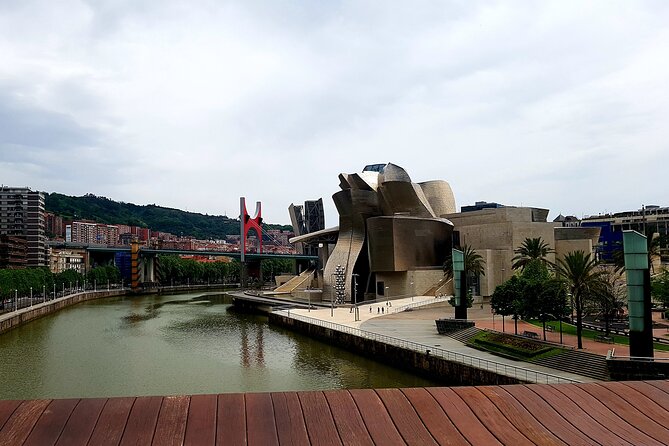
The listed price is $54.37 per person and includes Guggenheim admission. Transport is not included, so you need to reach the meeting point and museum on your own. The location is near public transportation, which keeps the logistics fairly simple.
The value depends on what you want from the museum. If you mainly want to photograph the building and see a few outdoor sculptures, the price may feel high. One piece of feedback refers to a €12 adult admission for a museum visit without a guide, which shows why a self-guided visit can be much cheaper.
The comparison is not exact, since admission prices and exchange rates can change, and this tour includes professional commentary in Spanish. Still, the difference is worth considering. You are paying for the art history guide, the exterior introduction, the architectural explanation, and help making sense of selected works.
For someone new to contemporary art, that added context may be the point of the visit. For someone who prefers to read labels and move alone, the admission-only option may offer better value. The same-day reentry is also meaningful if you plan to spend several hours at the museum, since the guided portion can serve as a focused beginning rather than the entire experience.
Who should book this experience?
I would recommend this tour to Spanish-speaking visitors who want more than a quick look at the Guggenheim’s famous exterior. It is especially suitable if contemporary art feels unfamiliar and you would like a guide to give you a starting point without turning the visit into an academic lecture.
It also suits people who want architecture and art together. The outdoor introduction, the atrium, the sculptures, and the gallery visit form one connected experience. You are not forced to choose between seeing the building and seeing the collections.
The tour may also work well for couples, families with older children, and small groups who appreciate a set route. Children under five are not recommended out of respect for the rest of the group, so this is not the best choice for a family with very young children.
You should think twice if you want to move at your own speed from the moment you enter. A guide determines the route and selects the works for discussion. The museum allows independent exploration later, but the first portion follows the guide’s rhythm.
Practical details that affect your visit
Confirmation is provided when you book, and the experience uses a mobile ticket. You do not need transport as part of the package, and the meeting point is near public transportation.
The group maximum is 15 people. Most people can participate, according to the supplied tour information, but the visit includes movement through both the exterior and interior of the museum. Wear something comfortable enough for standing and walking during the 100-minute route.
Free cancellation is available if you cancel at least 24 hours before the local start time. Changes or cancellations made inside that 24-hour window are not accepted for a refund. The tour also requires a minimum number of participants, and if that minimum is not reached, you are offered another date or experience, or a full refund.
The experience is often booked about 36 days ahead. That does not guarantee that every date will sell out, but it is a useful sign if your Bilbao schedule is fixed. I would reserve early if you specifically want a Spanish-language visit or need a certain day.
My recommendation: book it for interpretation, not just entry
Book this tour if you want the Guggenheim to make more sense. The best part is not simply getting inside. It is the way the visit links Bilbao’s decision to host the museum, Gehry’s architecture, the outdoor sculptures, and the art shown in the galleries.
Ane’s reported approach is another strong reason to choose it. Her explanations focus on making art understandable, and the feedback gives special attention to her patience, passion, and ability to help with unexpected snags.
Do not book it expecting a complete museum tour. One hour and 40 minutes goes quickly, and some floors or exhibitions may not be open on your date. Plan to continue alone afterward, using the included same-day admission.
For a first visit, especially in Spanish, I think the combination of guidance and free time offers solid value. If your only goal is a low-cost look at the building and sculptures, visit independently instead.
FAQ
What language is the Guggenheim Bilbao tour conducted in?
The experience is a guided tour in Spanish. The guide is a local professional licensed in Art History by the University of the Basque Country.
How long does the guided visit last?
The guided experience lasts approximately 1 hour and 40 minutes.
What is included in the price?
Admission to the Guggenheim Museum Bilbao is included. Transport is not included.
Where does the tour begin?
The meeting point is Mazarredo Zumarkalea, 62, in the Abando area of Bilbao, Bizkaia, Spain.
Where does the tour finish?
The visit finishes inside the Guggenheim Museum Bilbao at Abandoibarra Etorbidea, 2. You can continue seeing the museum, visit the shop, or collect belongings from the cloakroom.
Can I visit the museum again after the guided tour?
Yes. The admission allows you to visit the museum again during the same day, so you can continue exploring independently after the guided portion.
What is the cancellation policy?
You can cancel for a full refund up to 24 hours before the experience begins. Cancellations or changes made less than 24 hours before the local start time are not accepted for a refund.
Just added around Bilbao
- Guggenheim Bilbao Museum Private Tour★ 4.5 · 98 reviews
- Guggenheim Museum guided tour★ 5.0 · 26 reviews
- Bilbao & Guggenheim Museum Private Walking Tour with guide★ 5.0 · 4 reviews
- Rioja & Txakoli Wine Tasting in Bilbao with a Local Sommelier★ 5.0 · 40 reviews
- Private Guggenheim Museum Bilbao Tour with Official Guide★ 5.0 · 21 reviews
- Bilbao Guggenheim Museum Entry Ticket★ 3.5 · 69 reviews
- Full-day private Bilbao tour (Guggenheim museum & full pintxo lunch included)★ 5.0 · 5 reviews
- Guggenheim Museum and tasting of traditional Basque products★ 4.0 · 15 reviews
Art Museum Tours in Bilbao, compared.
Guggenheim VIP Experience. Small Group. Expert Guide
Read our review →
Guggenheim Secrets & Savor the Sea’s Treasures. VIP
Read our review →
Guggenheim Like Never Before: VIP Access. Small Group.Top
Read our review →
Guggenheim Bilbao museum in spanish Ticket included
Read our review →Browse the lists this tour appears in