REVIEW · PARIS
Egypt at the Louvre
The most compelling part of this private Louvre tour is its focus: 3,000 years of ancient Egypt, from the Old Kingdom to Cleopatra. Instead of trying to make sense of the museum’s enormous collection alone, you follow a guide through galleries filled with pharaohs, funerary objects, writing, and daily life.
I like the private format, since your group can ask questions and choose to spend more time on Egyptian objects. I also like the range of subjects, from mummification and hieroglyphs to Napoleon’s campaign and Jean-François Champollion’s work on the Rosetta Stone. The main concern is the price, especially if your guide’s subject knowledge or the time spent inside the galleries falls short.
Key points to know
- A private three-hour visit: Only your group participates, with an English-speaking professional guide.
- More than 3,000 years of Egypt: The route covers the Old Kingdom through the fall of Cleopatra.
- Major names and objects: Look for Amenophis III, Akhenaton, Ramses II, Sethi, Hathor, and the 4,500-year-old Scribe.
- Mummification and hieroglyphs: The guide explains burial customs and Champollion’s role in reading Egyptian writing.
- A large collection to navigate: The Louvre holds more than 55,000 Egyptian masterpieces, making guidance useful.
- A costly choice: The listed price is $350.72 per person, so the quality of the guide matters greatly.
Why the Louvre’s Egyptian collection deserves its own tour
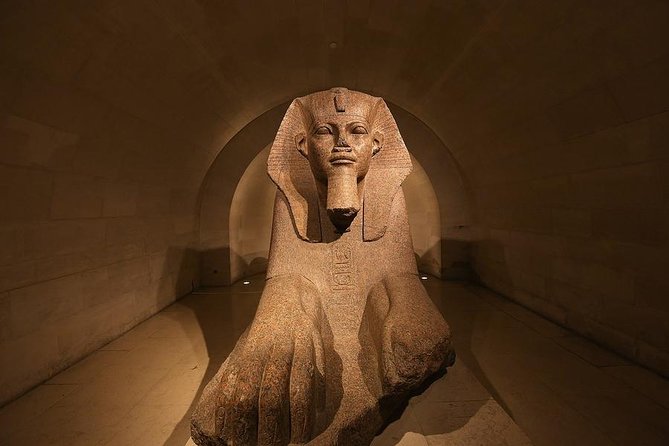
The Louvre is too large to treat as one simple museum visit. Its Egyptian collection alone contains more than 55,000 masterpieces, making it the second-largest Egyptian collection in the world after Cairo. That scale is impressive, but it can also leave you wandering from one display to another without seeing how the pieces fit together.
This tour gives you a clear subject to follow. You are not simply checking off famous rooms. You are tracing how Egyptian art, religion, government, and writing changed across thousands of years.
I especially like the chance to see the collection in chronological terms. The tour begins with the Old Kingdom and moves toward the period of Cleopatra, giving you a broad outline before focusing on individual works. That approach helps you understand why a royal statue, a tomb object, and a written inscription belong to the same story.
The private arrangement also matters. Only your group takes part, so you can ask about an object that catches your eye instead of waiting for a large group to move on. The experience is offered in English, and the start time is 9:00 a.m.
More Art Museum Tours in Paris
- Paris: Louvre Museum Timed-Entrance Ticket
★ 4.6 · 71,977 reviews - Paris: Orsay Museum Entry Ticket
★ 4.7 · 25,647 reviews - Paris: Louvre Guided Tour with Reserved Access & Boat Cruise
★ 4.3 · 16,353 reviews
Beginning with pharaohs, royal power, and familiar names
The first major section introduces several of ancient Egypt’s most important rulers. You are scheduled to see objects connected with Amenophis III, Akhenaton, Ramses II, and Sethi.
These names are not just a list of famous pharaohs. They represent different moments in Egyptian rule and different ways kings used art to present power. A guide can point out how royal images communicate status, divine connection, and permanence.
Akhenaton is particularly useful for comparison because his period is associated with a distinctive artistic style. Ramses II, by contrast, is one of the best-known royal figures in Egyptian history, and objects linked to him offer a chance to discuss how kingship was presented to the public.
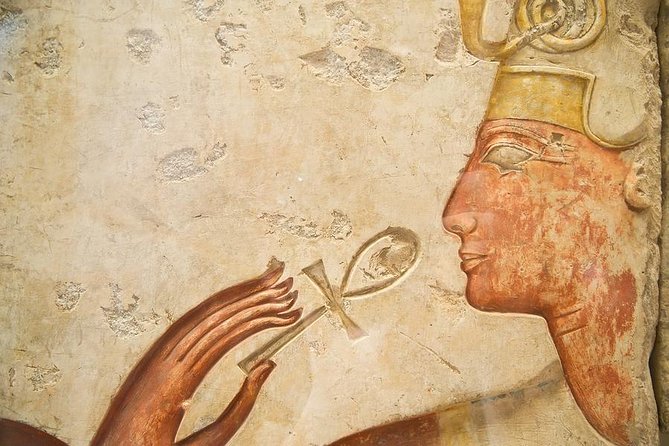
You will also see a relief associated with Sethi and Hathor on the second floor of the Egyptian section. This detail is worth keeping in mind because the route may not end with the first group of galleries. If you want the full Egyptian focus, clearly tell your guide that you prefer to continue to the additional Egyptian objects rather than switch to another department.
Meeting the Louvre’s 4,500-year-old Scribe
One of the collection’s most memorable works is the seated Scribe, an ancient figure whose painted eyes still give him an alert, almost present expression. The object is about 4,500 years old, yet the face can feel remarkably direct.
This is a good example of why a guided visit can help. The Scribe is not famous because of its size or royal setting. Its appeal comes from its human expression and careful details. A guide can help you look at the figure as a portrait of a working official rather than simply another statue in a long corridor.
The Scribe also gives the tour a useful change of pace. After discussing kings and monuments, you see how Egyptian art could represent a person outside the royal family. That contrast helps make the collection feel less like a parade of rulers and more like a record of a whole society.
Mummification explained without guesswork
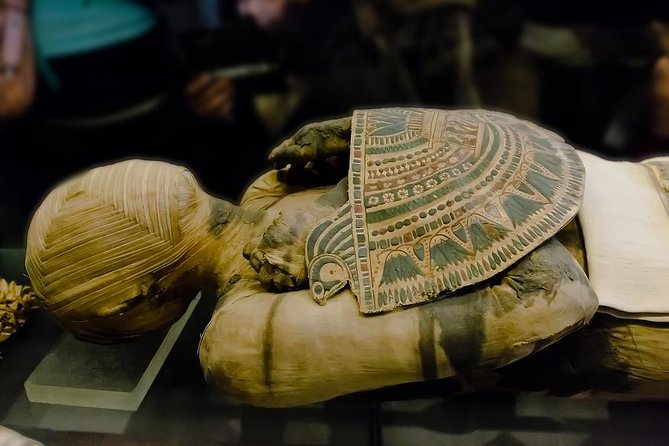
Mummification is one of the subjects most people hope to understand better, and it forms a central part of the visit. Your guide explains the customs and beliefs surrounding the preservation of the body.
The value here is context. Egyptian burial objects can look mysterious when seen without an explanation. Once you understand the connection between the body, the afterlife, religious practice, and the objects placed in a tomb, the displays become easier to read.
The tour is not advertised as a technical laboratory session, so you should expect a museum explanation rather than specialist archaeological training. Still, mummification is a natural subject for a guide to connect with sculpture, funerary equipment, and inscriptions.
If you have specific questions about materials or construction, ask them early. One guide identified basalt correctly when discussing a black column, explaining that it is volcanic rock, although the museum uses a broader catalog title. That exchange shows how precise questions can lead to useful answers, but it also reminds you that guide quality and communication style are important parts of this purchase.
More Louvre tours and timed tickets:
- Louvre Museum Masterpieces Guided Tour with Access
★ 4.5 · 12,023 reviews - Paris: Louvre Overview, Exploration tour and Reserved Entry
★ 4.1 · 10,145 reviews - Paris: Louvre Museum Entry Ticket With Host and River Cruise
★ 4.6 · 9,926 reviews - Mona Lisa & Louvre Masterpieces Tour with Reserved Access
★ 4.6 · 6,812 reviews
Hieroglyphs, Champollion, and the Rosetta Stone connection
The tour also explains hieroglyphs and Jean-François Champollion, the scholar who deciphered the writing associated with the Rosetta Stone.
This section gives you a key piece of modern Egyptian history. The objects in the galleries are ancient, but our ability to read their inscriptions is comparatively recent. Champollion’s work helps explain how Egyptian names, titles, religious ideas, and royal achievements became accessible to modern scholars.
You may not spend the entire visit studying inscriptions closely, but this part of the tour adds meaning to the carved signs you see throughout the galleries. It is one thing to recognize hieroglyphs as decorative symbols. It is another to understand that they carry language, names, and records of power.
For anyone interested in archaeology, languages, or the history of museums, this is likely one of the strongest parts of the itinerary.
Napoleon’s Egyptian campaign and the Louvre’s wider story
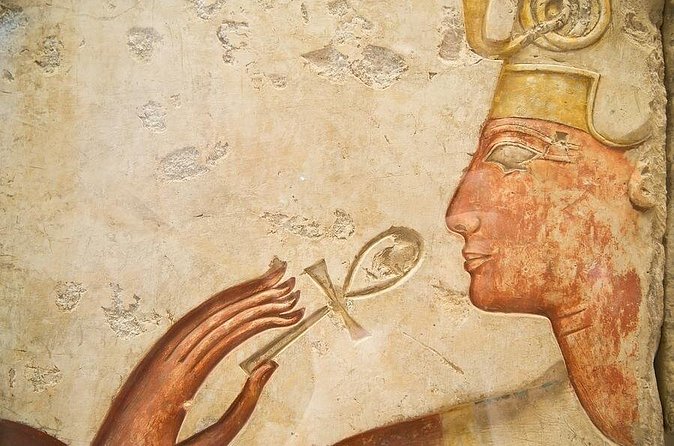
The Louvre’s Egyptian collection is not only about ancient objects. The tour also covers Napoleon’s Egyptian campaign and its repercussions.
That topic helps explain why Egypt became such a major subject in European scholarship and collecting. It also places the Louvre’s galleries within a larger story about military campaigns, study, public fascination, and the movement of antiquities.
This historical angle is valuable because it keeps the visit from becoming a simple celebration of ancient Egypt. You get some sense of how the collection reached Paris and how European interest shaped the study and display of Egyptian material.
If you are visiting the Louvre for the first time, this context may also help you understand why the museum connects ancient art with later political and cultural events. The tour is therefore broader than a room-by-room look at statues.
The second-floor decision matters
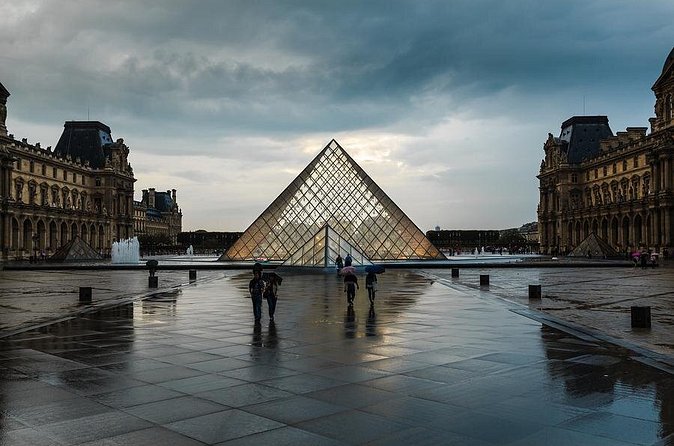
The itinerary allows for a choice later in the visit. You may continue with more Egyptian objects on the second floor, visit Mesopotamian art to compare cultures, or see selected Louvre highlights.
For this particular experience, I would choose the additional Egyptian galleries. You are paying for an Egypt-focused visit, and the second-floor route includes the Sethi and Hathor relief mentioned above.
A guide may suggest Mesopotamia because comparison can clarify what is distinctive about Egyptian art. That is a reasonable option, especially if you are interested in the wider ancient Near East. But if your main goal is Egyptology, say so plainly at the beginning and again when the choice arises.
You may also be offered a look at major Louvre highlights, including the Mona Lisa. That can be useful if this is your first visit and you want a quick orientation to the museum. Still, it reduces the time devoted to Egyptian objects. One dissatisfied customer was left near the Mona Lisa with about 20 minutes remaining, while the guide later stated that this happened at the group’s request after the Egyptian section was completed.
The practical lesson is simple: confirm the route before you start. Ask how much time will remain for the Egyptian galleries if you choose another department or a famous highlight.
Timing, entry, and the value of a private guide
The experience lasts about three hours and begins at 9:00 a.m. It starts and ends at the listed meeting point in Paris, near public transportation. Confirmation is issued when you book, and the activity is private.
The duration sounds generous, but entry time matters. One account described the entrance as taking more than 30 minutes, while the guide reported entering the Richelieu wing in less than five minutes on another occasion after arriving early and avoiding a crowded entrance near the inverted pyramid. That difference is significant.
A three-hour museum tour can feel satisfying if most of the time is spent inside the galleries. It feels expensive if much of the appointment is lost before entry. Since conditions can vary, ask your guide where you will meet and how the group plans to enter. Arriving on time is especially important for a morning appointment.
The private format is most useful for people who want a focused explanation rather than a standard audio guide. It is also helpful for families or small groups with mixed interests, since the guide can adjust the pace. The tradeoff is cost. A private tour gives you attention, but the listed price of $350.72 per person is high for a three-hour museum visit.
Group discounts may be available, which could improve the value for a larger party. You should still compare the total price with the cost of visiting independently and hiring a specialist guide only if needed.
What kind of guide experience should you expect?
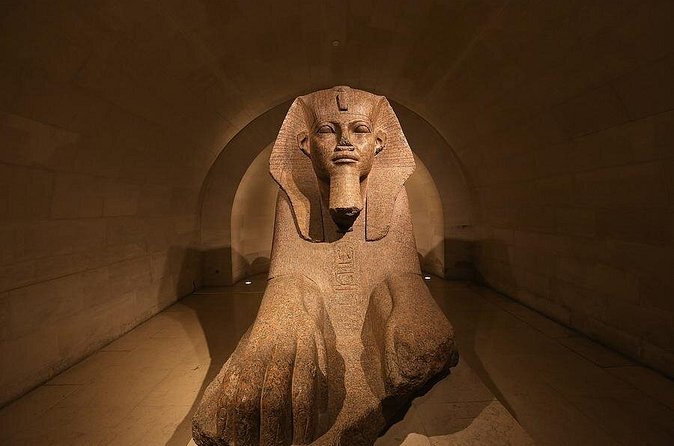
The provider is Awesome Guide, and the tour is led by a professional licensed guide. One guide explained that they studied Egyptology at the École du Louvre and had guided in the Louvre’s Egyptian section. The same guide said they had prepared art history lessons that included ancient Egypt for an art school in Paris.
Those qualifications sound relevant, but a credential alone does not guarantee the right experience for you. A strong museum guide needs both subject knowledge and the ability to answer questions in clear, useful language.
I would come prepared with two or three questions. Ask about materials, the purpose of an object, how scholars interpret it, or why a particular style changed. The answers will quickly show whether the tour matches your expectations.
The two published ratings are sharply different, one excellent and one very poor, so I would treat the guide as the central variable. The positive account praised the guide’s punctuality, Egyptology background, and effort to cover the full collection. The negative account raised concerns about unanswered basic questions, time spent entering the museum, and a route that appeared to move away from Egypt.
That split does not make the tour impossible to recommend, but it does make communication important. State your priorities before the tour begins and confirm that the full appointment will focus on Egyptian art.
Who will get the most from this experience?
I would recommend this tour most strongly to:
- Someone with a serious interest in ancient Egypt who wants a private route through a huge collection
- A first-time Louvre visitor who feels overwhelmed by the museum’s size
- A small group that wants to ask questions and set its own pace
- Anyone curious about mummification, hieroglyphs, Champollion, and Napoleon’s connection to Egypt
- Families or friends who prefer a guide to an impersonal audio tour
I would be more cautious if you mainly want to see the Mona Lisa, the Louvre’s broad collection, or a quick list of famous works. This experience is designed around Egypt, and the price is hard to justify if you spend much of the time on other departments.
Most people can participate, and the museum is near public transportation. No special physical requirements are listed, so you should still consider the length of a three-hour museum visit for your own group.
Cancellation and booking details worth noting
You can cancel for a full refund up to 24 hours before the 9:00 a.m. start time. Changes made less than 24 hours before the appointment are not accepted, and cancellations inside that window are not refunded.
The activity is offered in English, includes admission, and is available with a mobile ticket. It is commonly booked about seven days ahead, so booking earlier may be sensible if your Paris schedule is tight.
Is the Louvre Egypt tour worth booking?
Book it if you want a private, Egypt-focused route and are willing to pay for personal guidance through one of the Louvre’s largest collections. The coverage is appealing: pharaohs, the Scribe, mummification, hieroglyphs, Champollion, Napoleon, and additional Egyptian works on the second floor.
Before paying $350.72 per person, confirm three things with the provider: how much time will be spent inside the Egyptian galleries, whether the second-floor Egyptian section is included, and what happens if you prefer not to visit the Mona Lisa or Mesopotamia.
My verdict is cautiously positive for committed Egyptology fans, but not for casual Louvre visitors. The subject matter is excellent and the private format can be very effective. The price leaves little room for a rushed entrance or a guide who cannot answer basic questions, so clear expectations are essential.
FAQ
Where does the Egypt at the Louvre tour take place?
The tour takes place at the Louvre Museum in Paris, France, beginning at the listed meeting point in the Île-de-France area.
How long does the tour last?
The tour lasts approximately three hours.
What time does the tour start?
The scheduled start time is 9:00 a.m.
Is admission to the Louvre included?
Yes, the admission ticket is included in the tour.
Is this a private tour?
Yes. Only your group participates in the activity.
What language is the tour offered in?
The tour is offered in English.
What does the tour cover?
It covers the Louvre’s Egyptian collection, including more than 3,000 years of history from the Old Kingdom through the fall of Cleopatra.
Will the tour explain Egyptian mummification?
Yes. The guide explains the secrets and practices associated with Egyptian mummification.
Can I see the Mona Lisa during the tour?
A Mona Lisa visit may be offered as one of the route choices, along with Mesopotamian art or additional Egyptian objects. Tell your guide if you want to keep the focus on Egypt.
What is the cancellation policy?
You can cancel up to 24 hours before the start time for a full refund. Cancellations or changes made less than 24 hours before the start time are not accepted for a refund.
Just added around Paris
- Paris Day Tour with Eiffel Tower, Louvre and Cruise Max 6 People★ 4.5 · 29 reviews
- PRIVATE Louvre Wonders & Hidden Treasures Visit★ 5.0 · 65 reviews
- d’Orsay Museum Paris entry ticket★ 3.5 · 31 reviews
- visiting the masterpieces of impressionists at Orsay museum★ 5.0 · 7 reviews
- Louvre Museum with private guide★ 5.0 · 3 reviews
- Louvre Wheelchair-Accessible Private Tour – Stress-Free & Easy★ 5.0 · 16 reviews
- LOUVRE, Small Group Guided Tour in French (TOP SALES)★ 4.5 · 9 reviews
- Musée d’Orsay Highlights Tour with Gourmet Lunch★ 4.5 · 11 reviews
Art Museum Tours in Paris, compared.


Louvre Guided Tour with Reserved Access & Boat Cruise
Read our review →
Louvre Overview, Exploration tour and Reserved Entry
Read our review →
Louvre Museum Entry Ticket With Host and River Cruise
Read our review →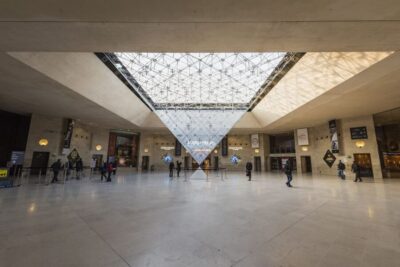
Mona Lisa & Louvre Masterpieces Tour with Reserved Access
Read our review →
Louvre Museum – Exclusive Guided Tour (Entry Included)
Read our review →