REVIEW · PARIS
Closing Time at the Louvre: The Mona Lisa at her Most Peaceful
The best reason to book this Louvre tour is its timing. You enter late in the day, follow a brisk route through the museum’s greatest rooms, and reach the Mona Lisa near closing, when the crowd may be thin enough to see her without craning over a wall of phones. Guides such as Adam, Julie, Nancy, and Felix have earned praise for making the art clear, lively, and memorable.
I like the small-group format, which can make a huge museum feel manageable, and the included group entrance, which helps you avoid wasting precious time in line. I also like the guide’s focus on meaning, not just names and dates. The catch is simple: peaceful is not guaranteed. In June, during holidays, or in peak season, the Mona Lisa room can still be hot and packed.
Key points to know before you book
- Late entry changes the mood: The museum may feel calmer near closing, but crowd levels depend on the season and day.
- A guide gives you a plan: You see major works by Leonardo, Caravaggio, Raphael, Géricault, and others without wandering aimlessly.
- The Mona Lisa is the finale: You reach her late in the visit, often with a better view than during the busiest hours.
- The pace is brisk: Three hours covers a lot, so this is a highlights tour rather than a slow survey of the Louvre.
- Small groups feel more personal: The maximum is 20 people, though some departures are much smaller.
- The price includes admission: The $101.58 fee includes the €22 adult museum ticket, guide, and headset, but not transportation.
Why the late Louvre visit matters
The Louvre is not a museum you casually pop into for an hour. It is a former royal palace with miles of galleries and enough famous art to fill several days. Without a plan, you can spend half your visit figuring out where you are.
This tour solves that problem with a three-hour route built around the museum’s essential sights. You enter late, move at a purposeful pace, and let an art historian decide what deserves your attention. That matters most if this is your first Louvre visit, or if you have only one afternoon in Paris.
The late hour is the tour’s main selling point, but keep your expectations sensible. The Louvre can remain busy until the doors close. One afternoon at 3:30 in June was still crowded and warm, while a winter evening visit had so few people that the group could sit in front of works and talk. Your result will depend heavily on the date.
Still, even a moderately busy late visit has an advantage. You are not trying to see every room. You are moving toward the collection’s central highlights while the clock works in your favor.
More Art Museum Tours in Paris
- Paris: Louvre Museum Timed-Entrance Ticket
★ 4.6 · 71,977 reviews - Paris: Orsay Museum Entry Ticket
★ 4.7 · 25,647 reviews - Paris: Louvre Guided Tour with Reserved Access & Boat Cruise
★ 4.3 · 16,353 reviews
Meeting at the Carrousel
The tour starts at the Arc de Triomphe du Carrousel, at Place du Carrousel near the Louvre. This is an outdoor meeting point in the central palace area, not a hotel pickup, so give yourself time to find it before the appointed start.
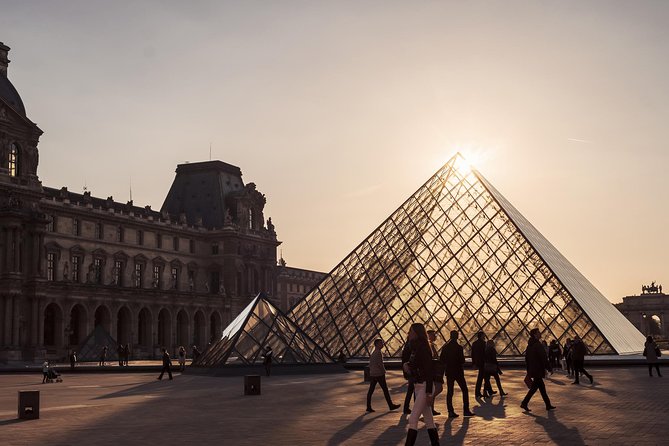
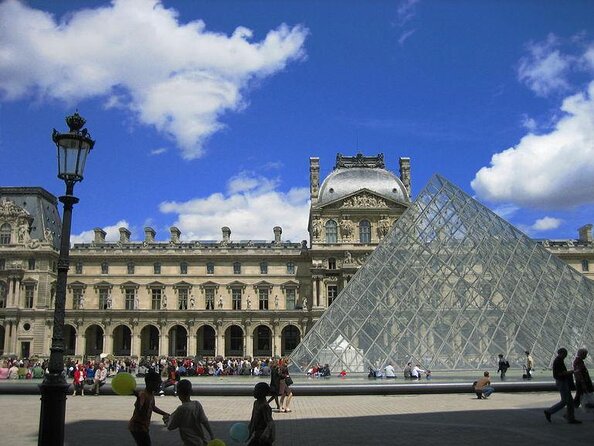
The nearby Louvre Pyramid is the glass landmark most people recognize. The Arc de Triomphe du Carrousel and the surrounding Place du Carrousel can feel confusing when you are trying to spot a guide, especially if the courtyard is busy. Check your confirmation carefully and arrive early. One person missed the tour after searching between the Louvre and the meeting area, so this is not the moment to rely on a vague sense of direction.
Once the group is together, the guide leads you toward the museum entrance. The included group access can save time, and several guides have also helped groups through security without the usual confusion. You still pass through security, so do not treat a guided entrance as a way around every checkpoint.
The maximum group size is 20. That is not tiny, but it is far more workable than a large bus group. Some departures have only six people, which gives you more room to ask questions and linger. A headset is included, and that small piece of equipment matters in echoing galleries where a guide’s voice can disappear quickly.
Beneath the palace at the Louvre moat
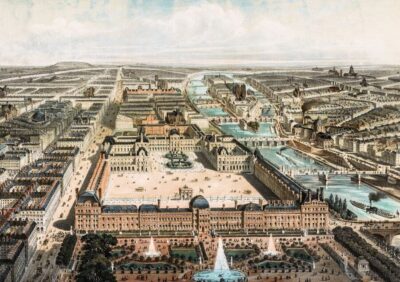
The Louvre began as a fortress, and the tour starts by giving you a sense of that older building. In the palace foundations and moat area, you can see traces of the medieval Louvre beneath the grand museum visitors know today.
This stop helps the rest of the visit make sense. The Louvre is not merely a container for paintings. Its rooms, courtyards, stairways, and layers of construction are part of the story. One particularly useful point made by the guides is that the building’s past can help you understand the art displayed inside it.
Do not expect a long architectural lecture here. The tour has a lot to cover, and the pace remains purposeful. But even a short look at the foundations gives you an anchor before you move toward sculpture and painting.
Greek sculpture and the Winged Victory
The route then turns to the museum’s classical sculpture. The Venus de Milo is the obvious star, but the surrounding collection rewards a closer look if your guide gives you time to notice details in posture, missing limbs, clothing, and expression.
The Winged Victory of Samothrace is another major stop. Set high on its staircase, it has the kind of dramatic placement that makes it difficult to walk past without stopping. The guide can help you look beyond its fame and notice how the sculpture suggests movement, wind, and triumph.
This section is one reason a guide helps. In a museum this large, you could locate the famous statues on your own, take a photograph, and move on. A strong guide gives you a reason to pause and shows you details you might otherwise miss.
The style of the individual guide makes a real difference. Aurelia has been praised for using humor while moving through works from different countries and periods. Daniel, from Ireland, has been especially good at keeping children and teenagers involved. For families, that ability to keep the group alert can matter as much as the art itself.
More Louvre tours and timed tickets:
- Louvre Museum Masterpieces Guided Tour with Access
★ 4.5 · 12,023 reviews - Paris: Louvre Overview, Exploration tour and Reserved Entry
★ 4.1 · 10,145 reviews - Paris: Louvre Museum Entry Ticket With Host and River Cruise
★ 4.6 · 9,926 reviews - Mona Lisa & Louvre Masterpieces Tour with Reserved Access
★ 4.6 · 6,812 reviews
Renaissance masters and the crowded Mona Lisa
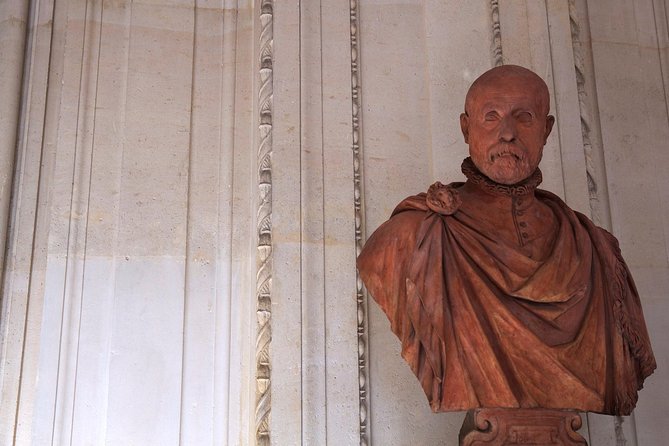
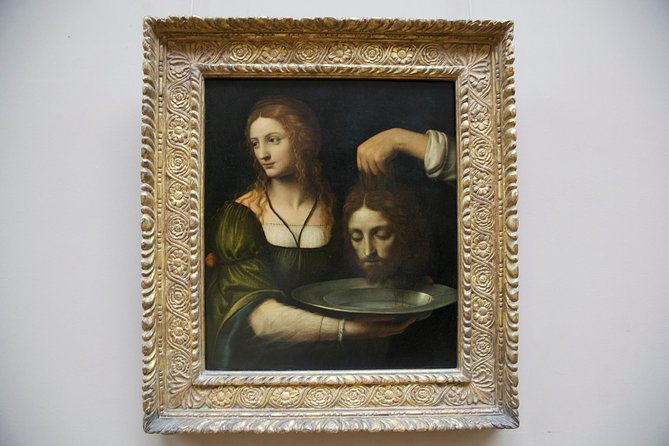
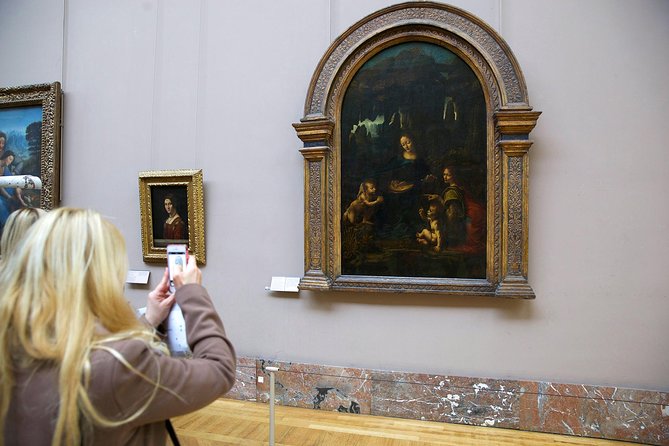
The painting galleries bring the tour toward Leonardo da Vinci and the Mona Lisa. You will also study works connected with artists such as Caravaggio and Raphael, with the guide explaining what to look for rather than simply pointing out famous names.
The Mona Lisa is usually the emotional high point. She is smaller than many first-time visitors expect, and the rules prevent you from getting right up against the painting. The late timing can still make a major difference. When the crowd is light, you may reach the front barrier and get a clean view instead of seeing her from behind a dense cluster of people.
Do not count on having the room to yourself. One summer visit had a heavy crowd in front of the painting, and another late afternoon was still busy and hot. The useful promise is not total solitude. It is a better chance at a direct look than you might get during the busiest part of the day.
The guide’s commentary also gives this moment more meaning. Adam has been praised for asking questions that make you think about the art rather than delivering a string of facts. Ahmed has been praised for getting a visitor close to the front when the room was relatively quiet. Those details point to the real value of the tour: your guide can help you use the conditions you find on that day.
Photography is possible, but you should expect restrictions around the painting and the crowd. The best photograph may be the one you take quickly after actually looking at her.
Caravaggio, Raphael, and The Raft of Medusa
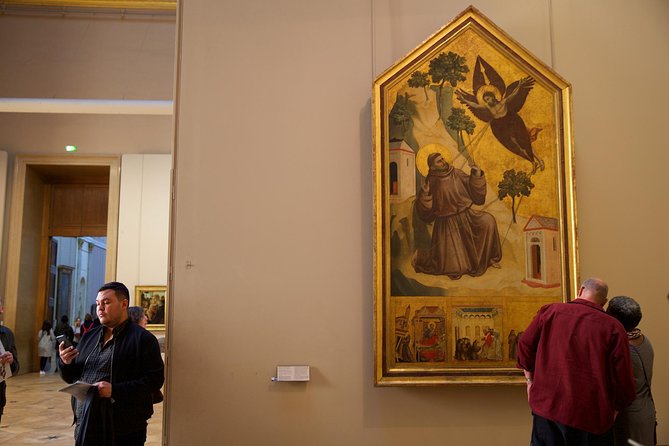
The route does not stop with the Mona Lisa. The tour includes major works by Caravaggio and Raphael, along with Théodore Géricault’s The Raft of Medusa, one of the Louvre’s most powerful French Romantic paintings.
Géricault’s painting is enormous and emotionally demanding. A guide can point out the diagonal movement, the figures’ gestures, and the way hope and despair compete across the canvas. This is the sort of work that can blur into the background when you are racing toward the Mona Lisa. With a guide, it becomes one of the visit’s strongest moments.
You will also see other important treasures along the way. The exact rooms can change because parts of the Louvre may close without warning, and the guide may adjust the route. That flexibility is useful, but it means you should not treat every listed artwork as guaranteed on every departure.
Guides have used an iPad to show related images and examples during the visit. That can be helpful when a painting detail is hard to see or when the guide wants to compare a work with another example. A good guide also leaves enough time to look, rather than turning the museum into a rapid-fire lecture.
The value of a three-hour highlights tour
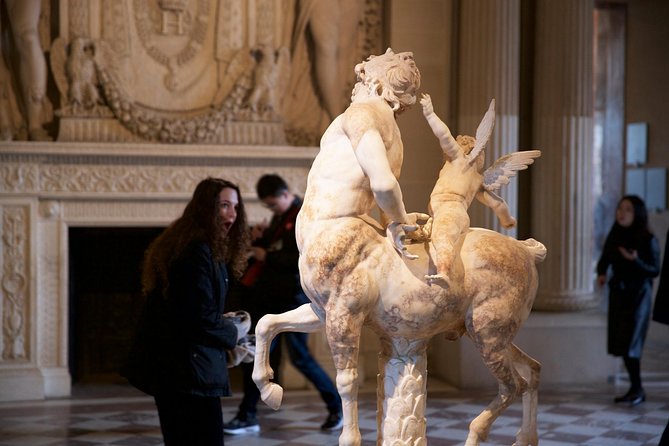
Three hours is long enough to see the Louvre’s main icons but too short to explore the whole museum. That is not a flaw if you understand what you are buying. This is a guided introduction, not a complete art education.
I like the focused approach for a first visit. You get the palace foundations, classical sculpture, Renaissance painting, major French works, and the Mona Lisa without exhausting yourself by attempting every wing. The tradeoff is speed. One guide was described as a fast walker, and the group had to keep up.
You should be comfortable walking at a moderate pace and standing for parts of the visit. Some guides stop for the restroom and check that nobody has been left behind. Foldable stools provided by the museum may be available in some galleries, which can make longer explanations easier on your legs, but you should not count on sitting throughout.
The tour ends at closing time, so you generally do not have extra time afterward to wander alone. If you want a slow, private look at a particular room, book a separate Louvre visit or plan another museum day.
Is $101.58 a fair price?
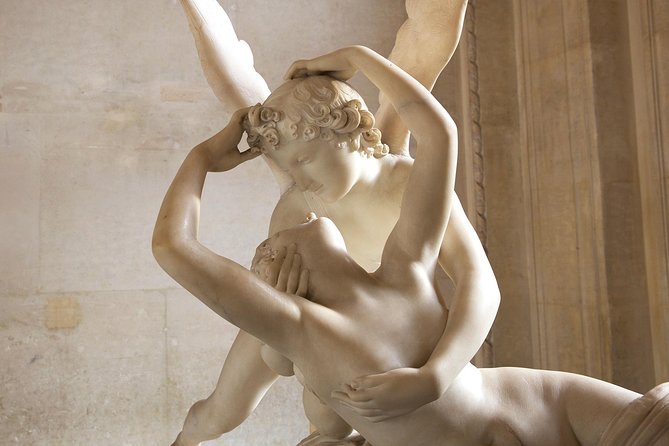
The advertised price is $101.58 per person, and it includes the adult museum ticket, listed at €22, an English-speaking local guide, a headset, and the guided walk. The price is much higher than entering the Louvre alone, so the value depends on how much structure you need.
You are paying for access to a plan, not just admission. A good guide can help you avoid wrong turns, move through the group entrance, explain the building, and select works that would be hard to find on your own. If you have one Louvre visit and want the major sights handled efficiently, that can be money well spent.
The value drops if you already know the museum well or prefer to spend an hour studying one artist. You may also find the timing less special during a crowded summer afternoon. The guide can explain the art and help you reach the front, but cannot control the number of people inside.
The 93 percent recommendation rate and 4.7 rating from 513 evaluations suggest a dependable experience, with the strongest praise going to the guides. Adam, Julie, Felicia, Nancy, Nazli, Omar, Stephanie, and others have been singled out for clear explanations, humor, patience, and strong group management. The guide is the part of the tour most likely to determine whether the price feels justified.
Who should book this Louvre experience?
I would choose this tour for a first-time Paris visitor who wants the Louvre’s greatest hits without spending a full day inside. It also suits families, couples, and solo visitors who prefer to ask questions instead of reading labels alone.
Families may appreciate guides who keep younger people engaged. Teenagers have enjoyed the storytelling and humor, while parents benefit from not having to plan every turn through the building.
Art lovers should book it if they want context and discussion, not just access. The strongest guides explain why a work matters, point out small details, and connect the palace to the collection.
I would hesitate if your top priority is a genuinely empty museum. The name suggests a peaceful visit, but June, holidays, and peak season can still bring crowds, heat, and noise. I would also think twice if you walk slowly or want plenty of unstructured time, since the route can move fast.
Free admission is available to visitors under 18 and residents of the European Economic Area under 26 with valid identification and proof of residency. In those cases, compare the tour price carefully against the value of the guide and group access.
Practical details that can make or break the visit
The tour is offered in English only. It lasts about three hours and finishes at the Louvre Museum. Public transportation is nearby, but hotel pickup and drop-off are not included.
Confirm your meeting point before leaving. Arrive early, use the Arc de Triomphe du Carrousel as your reference, and keep your phone available in case the operator needs to communicate a change.
The Louvre can close areas because of strikes or other unexpected issues. The route may be changed on the day, and last-minute closure information may be given at the meeting point. That is frustrating, but it is a normal risk when visiting a major public museum.
You can cancel for a full refund up to 24 hours before the start time. Changes or cancellations inside that window are not accepted for a refund.
Should you book it?
Book this tour if you want the Louvre explained, organized, and finished with a serious attempt at a better Mona Lisa view. The strongest benefit is not a magical empty museum. It is a smart route, a group entrance, and a guide who can turn famous objects into memorable art.
I would book it for a first visit, especially outside the busiest summer periods. If you are visiting in June or during a holiday rush, expect crowds even at the late hour. Go in ready to walk quickly, listen closely, and enjoy the quieter moments when they appear.
FAQ
How long does the Louvre tour last?
The tour lasts approximately three hours and ends at the Louvre Museum near closing time.
Is the museum admission included?
Yes. The adult entrance ticket, listed as €22, is included in the tour price.
What language is the tour offered in?
The tour is offered in English and includes a local English-speaking guide.
Where does the tour begin?
It begins at the Arc de Triomphe du Carrousel at Place du Carrousel, 75001 Paris.
Where does the tour end?
The tour ends at the Louvre Museum.
How large is the tour group?
The maximum group size is 20 people. Some departures may be smaller.
Is hotel pickup included?
No. Hotel pickup and drop-off are not included.
Just added around Paris
- Paris Day Tour with Eiffel Tower, Louvre and Cruise Max 6 People★ 4.5 · 29 reviews
- PRIVATE Louvre Wonders & Hidden Treasures Visit★ 5.0 · 65 reviews
- d’Orsay Museum Paris entry ticket★ 3.5 · 31 reviews
- visiting the masterpieces of impressionists at Orsay museum★ 5.0 · 7 reviews
- Louvre Museum with private guide★ 5.0 · 3 reviews
- Louvre Wheelchair-Accessible Private Tour – Stress-Free & Easy★ 5.0 · 16 reviews
- LOUVRE, Small Group Guided Tour in French (TOP SALES)★ 4.5 · 9 reviews
- Musée d’Orsay Highlights Tour with Gourmet Lunch★ 4.5 · 11 reviews
Art Museum Tours in Paris, compared.

Louvre Guided Tour with Reserved Access & Boat Cruise
Read our review →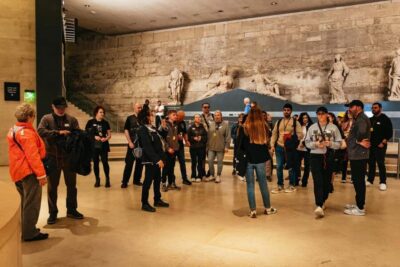
Louvre Overview, Exploration tour and Reserved Entry
Read our review →
Louvre Museum Entry Ticket With Host and River Cruise
Read our review →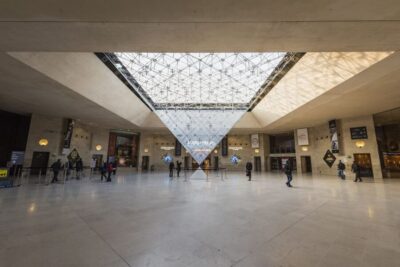
Mona Lisa & Louvre Masterpieces Tour with Reserved Access
Read our review →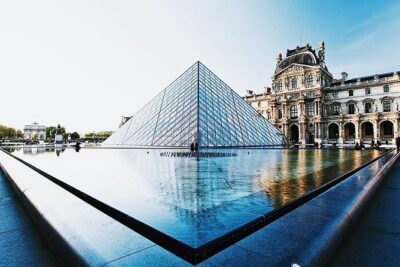
Louvre Museum – Exclusive Guided Tour (Entry Included)
Read our review →