REVIEW · PARIS
Best of the Louvre Museum Private Tour with Monalisa
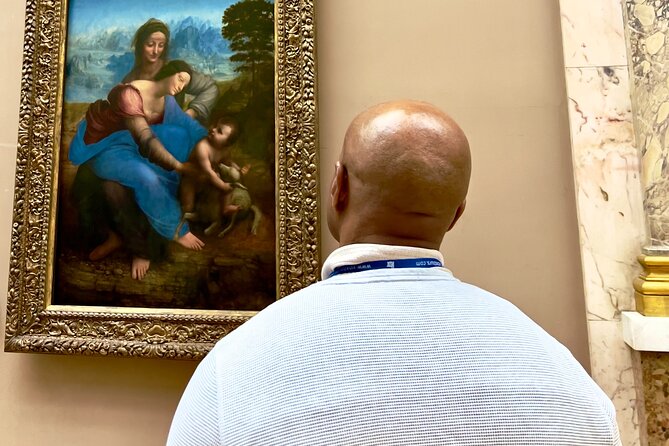
The best thing about this Louvre tour is its clear route through a museum that can otherwise feel like a beautiful maze. In about two hours, your guide connects the old palace, royal rooms, major paintings, sculpture, and the Mona Lisa instead of leaving you to chase signs and crowds.
I especially like the prepaid museum entry and the chance to move at your own pace with a private guide. I also like that guides such as Wei, Vivian, Melina, Blerta, and Mindy have been praised for keeping teenagers and older family members involved. The main caution is price: at $299.57 per person, the private option is a serious splurge, and the semi-private version may offer better value.
Key points before you book
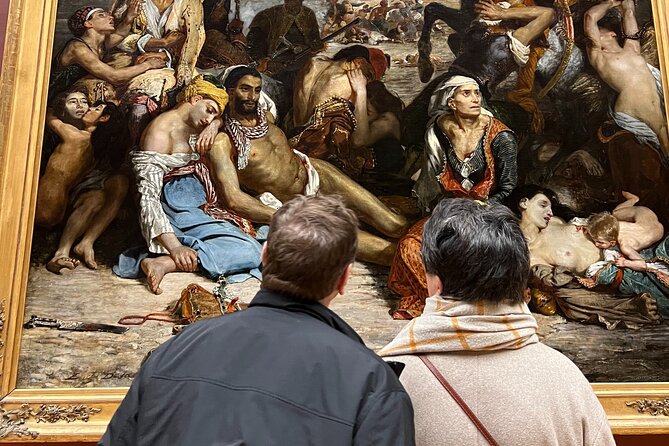
- A chronological route: See the Louvre foundations, palace rooms, royal jewels, and major works in an order that helps the museum make sense.
- Mona Lisa included: The tour focuses on the museum’s best-known sights, including Leonardo’s famous portrait.
- Private or semi-private choices: Your fee and level of personal attention depend on the option you select.
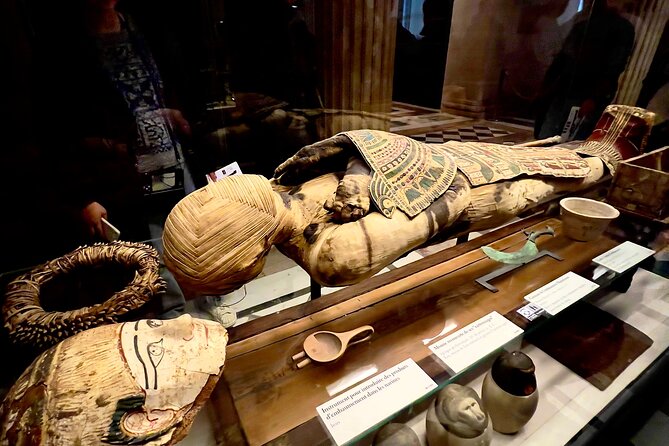
- A three-hour Egyptian upgrade: Add the Egyptian Antiquities collection and an Egyptian mummy if you choose the longer option.
- Guide quality matters: Guides including Wei, Vivian, Melina, Mindy, Blerta, and Avi have been praised for art knowledge, patience, and family-friendly explanations.
- Strict timing: Meet at the Louvre Pyramid 15 minutes early. Time-stamped tickets mean late arrivals are not accommodated.
Why a guided Louvre visit helps
The Louvre is not simply a large museum with a few famous paintings. It is a former royal palace with collections spread through long corridors, grand stairways, and connected wings. You can spend hours here and still miss the works you most hoped to see.
That is where this tour earns its keep. Your guide follows a planned chronological path, beginning with the Louvre foundations and moving through the palace and its art collections. You get a story rather than a random march from one crowded room to another.
I like this approach because art makes more sense when you can place it in time. The guide can explain how the building changed, how royal collections shaped the museum, and why a painting or sculpture matters beyond its fame. You are not expected to arrive with an art-history degree.
The private format also gives you room to ask questions. If you want to spend longer with a particular work, your guide can adjust the pace. That does not mean you can redesign every minute of the route, especially with a large museum and timed admission, but it does mean you are not competing with a large crowd for the guide’s attention.
More Art Museum Tours in Paris
- Paris: Louvre Museum Timed-Entrance Ticket
★ 4.6 · 71,977 reviews - Paris: Orsay Museum Entry Ticket
★ 4.7 · 25,647 reviews - Paris: Louvre Guided Tour with Reserved Access & Boat Cruise
★ 4.3 · 16,353 reviews
Meeting at the Louvre Pyramid
The meeting point is the Louvre Pyramid at 75001 Paris. This is central and near public transportation, but the Louvre’s scale makes a simple meeting point important. Give yourself time to find the pyramid, locate the guide or check-in point, and be ready before the scheduled start.
Arrive at least 15 minutes early. This is not a casual suggestion. The tickets and reservations are time stamped, and late arrivals are not accommodated. No refund is offered if you miss the start.
Bring a valid identification document in case it is required. You should also provide a working phone number when booking so the tour company can contact you on the day.
Large bags and suitcases are not allowed inside. Bring only a handbag or a small, thin backpack that can pass through security. This is useful advice for anyone arriving from a train station or checking out of a hotel. The tour does not include hotel pickup or drop-off, so you must handle your own way to the pyramid.
The Louvre foundations and royal palace
The opening part of the route introduces the Louvre’s foundations and palace spaces. This is one of the most valuable parts of the tour because it gives the building a past beyond its current role as an art museum.
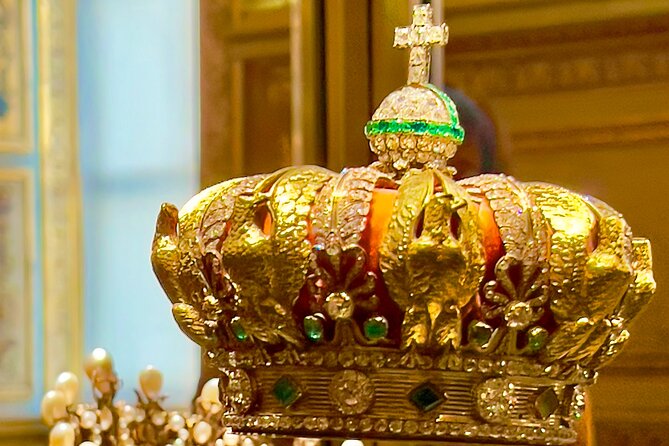
You will see how the Louvre developed from a fortified foundation into a royal residence and then into a public museum. The palace halls and royal jewels help explain the power and ceremony once tied to the building. These rooms are not just grand backdrops for photographs. They show how art, wealth, politics, and royal image-making worked together.
A guide can point out details you might walk past alone, including architectural features and the way collections were displayed. The chronological structure helps you connect the building’s changing purpose to the art around it.
The drawback is that two hours is short for a museum of this size. You will get a focused selection, not every wing and gallery. If you prefer to wander slowly through lesser-known rooms, this tour may feel too directed. If your priority is to understand the main story and see famous works efficiently, the structure is a strong advantage.
The Mona Lisa and the Louvre’s headline works
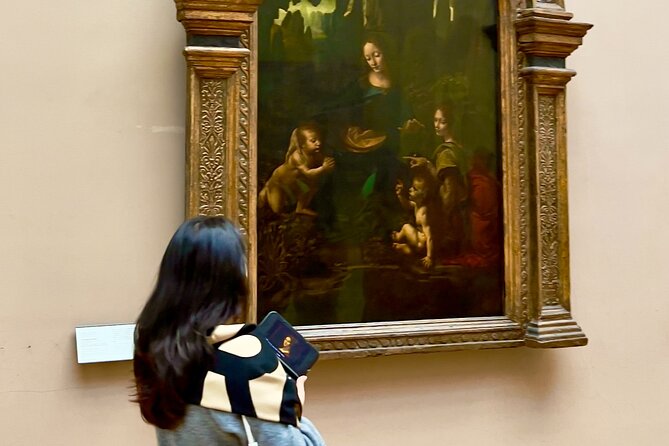
The Mona Lisa is a central stop. Expect crowds, limited time, and a famous painting that is smaller than many first-time visitors expect. Your guide can provide context about Leonardo’s work and help you look beyond the rush to take a photograph.
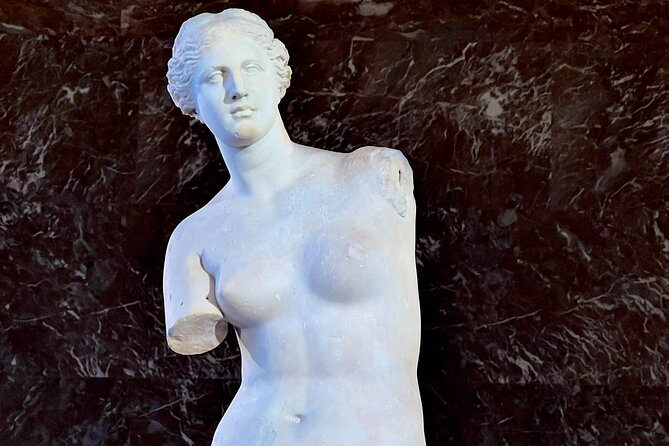
The tour also includes major works such as the Venus de Milo, Michelangelo’s Slaves, The Wedding at Cana, The Raft of Medusa, The Coronation of Napoleon, and Canova’s Cupid and Psyche. That is a lot of ground in a short visit, so the exact pace depends on crowd levels and your guide.
The value here is selection. Instead of spending your first hour trying to figure out which direction leads to the Mona Lisa, you follow someone who knows the museum’s major stops. One guide, Wei, was praised for getting a small group to the best pieces while keeping the visit easy to follow. Other guides have been noted for explaining not only what a work depicts, but also its purpose, setting, and artistic choices.
You should not expect an empty room or a private viewing of the Mona Lisa. The Louvre can be crowded, and increased security may create lines. Some rooms have quiet or restricted speaking rules, so your guide may give explanations before entering or after leaving. That can interrupt the flow a little, but it is part of visiting a busy working museum.
More Louvre tours and timed tickets:
- Louvre Museum Masterpieces Guided Tour with Access
★ 4.5 · 12,023 reviews - Paris: Louvre Overview, Exploration tour and Reserved Entry
★ 4.1 · 10,145 reviews - Paris: Louvre Museum Entry Ticket With Host and River Cruise
★ 4.6 · 9,926 reviews - Mona Lisa & Louvre Masterpieces Tour with Reserved Access
★ 4.6 · 6,812 reviews
Art explained for families and first-time visitors

This tour is well suited to a first Louvre visit. You see the major works without having to build your own plan, and the guide turns a long list of names into a connected story.
Families may find the personal format especially helpful. Mindy was praised for explaining complex material in a way that held teenagers’ attention, asking questions instead of delivering a long lecture. Vivian was also noted for working to engage a teenager. That matters because even a beautiful museum can lose younger visitors if every stop becomes a speech.
The same applies to adults who feel uncertain around art. A strong guide gives you a way into the work. You might hear why a composition draws your eye, what an artist wanted to suggest, or how a sculpture reflects the period in which it was made. The best explanations encourage you to look carefully rather than simply memorize dates.
The guide quality is not identical every time. Some experiences have been praised as warm, funny, and enthusiastic, while one poor experience involved a low-quality audio device and a guide who was hard to hear. Another person found the headset difficult in the crowd. This is a fair reminder to speak up if you cannot hear and to confirm that any listening device is working at the start.
Private or semi-private: which format makes sense?
The private option means only your group participates. This gives you the most control over pace and questions. It makes particular sense if your group includes children, older relatives, or people with different levels of interest in art.
The semi-private option costs less, with a different fee, and can still keep the group small. One reported group had six people, while another had eight. That is a useful middle ground: you get a guide and a planned route without paying the full private-tour price.
The trade-off is attention. In a private tour, your guide can respond directly to your interests. In a shared group, the guide must keep several people together and balance different questions. Still, a small group can work well, especially if the guide uses headsets. Wei was praised for keeping track of the group in the Louvre’s confusion, and the audio equipment helped some people hear him.
At $299.57 per person, the private option is not cheap. The price includes the adult museum ticket, listed as €22, an English-speaking art-history guide, and the convenience of a planned visit. You are paying mainly for time saved, direction, and personal attention.
I would judge the value by your situation. For a couple or family with limited time in Paris, a private guide may be worth the cost. For independent art lovers who are comfortable researching the Louvre in advance, the price may be harder to justify. The semi-private option is the sensible compromise if it is available at a much lower fee.
The optional Egyptian Antiquities hour
The standard experience lasts about two hours. You can choose a three-hour version that adds the Ancient Egyptian collection and an Egyptian mummy. The Egyptian visit is not included in the regular two-hour option.
This upgrade makes sense if Egypt is a major reason you want to visit the Louvre. An extra hour gives your guide time to add another collection without rushing the core route. One guide even spent extra time helping a group see the mummy, though you should not assume that additional time will always be available.
Do not select the two-hour tour expecting the Egyptian collection to be included. Choose the specific three-hour Egyptian option when booking. The additional fee applies, and the mummy visit is only part of that longer choice.
Pace, stairs, and listening conditions

The Louvre requires walking, standing, and negotiating a large museum. Some rooms may involve stairs, and the distance between major works can be tiring. The tour is not a race, though the schedule remains limited.
This format can work for older family members if you communicate their needs clearly. Vivian was praised for allowing a comfortable pace and suggesting seats while explaining the art. Another guide patiently gave elderly parents time to rest. Those examples point to a useful advantage of a private tour: your guide can adjust the rhythm more easily than a large group tour.
Audio equipment can be helpful because the museum is often noisy. Some groups used Vox headsets with one earpiece, and the results were mixed. Several people found them useful, while others struggled with sound quality or crowd noise. Test the device early and tell your guide at once if you cannot hear.
Expect occasional security lines even with prepaid entry. The tickets save you from waiting to buy admission, but they do not guarantee an instant path through every security checkpoint or gallery.
Cancellation and unexpected museum changes
You can cancel for a full refund up to 24 hours before the scheduled start. Cancellations or changes made within 24 hours are not refunded or accepted.
The experience has a minimum number of participants. If that minimum is not met, you may be offered another date or experience, or a full refund. The listed policy also says poor weather can lead to a different date or full refund.
The museum may close a room or delay opening without warning. If opening is delayed by more than one hour, an alternative is offered. Because admission tickets are purchased in advance, the operator does not offer refunds or discounts for some museum changes.
One canceled tour caused serious frustration for a person who had arrived early. The stated response was that the cancellation had been communicated the day before and a full refund was issued. The practical lesson is simple: check your messages before leaving for the Louvre, keep your phone available, and do not rely only on the original meeting instructions.
Who should book this Louvre tour?
I would choose this tour if you have one Louvre visit, limited time, and a clear wish to see the best-known works with context. It also suits families, first-time museum visitors, and anyone who would rather ask a real person than study a floor plan.
The private version is best for groups that want to move slowly, focus on particular interests, or accommodate an older relative. The semi-private version makes more sense if you want guidance but need to control the cost.
I would skip it if you love unplanned wandering, already know the Louvre well, or are prepared to make your own timed-entry plan. At this price, the tour needs to save you more than admission money. It needs to save confusion and help you notice more.
Book it for a focused first visit, choose the Egyptian upgrade only if that collection matters to you, and arrive early. The guide and group format will shape the experience, but the route, included highlights, and personal explanations give you a practical way to handle one of Paris’s biggest cultural challenges.
FAQ
How long does the Louvre tour last?
The main tour lasts approximately two hours. A three-hour option is available if you add the Egyptian Antiquities collection and Egyptian mummy visit.
Is the Mona Lisa included?
Yes. The route includes the Mona Lisa along with major works such as the Venus de Milo, Michelangelo’s Slaves, The Wedding at Cana, The Raft of Medusa, The Coronation of Napoleon, and Canova’s Cupid and Psyche.
Is the tour private?
You can choose a private tour, in which only your group participates, or a shared or semi-private option for a different fee.
Where does the tour begin and end?
It begins at the Louvre Pyramid, 75001 Paris, France, and ends back at the meeting point.
Is museum admission included?
Yes. The adult museum entrance ticket, listed as €22, is included. The Egyptian Antiquities collection and mummy are included only with the three-hour Egyptian option.
What should I bring to the meeting point?
Bring a valid identification document in case it is requested, and keep your phone available. Large bags and suitcases are not allowed inside, so bring only a handbag or small, thin backpack.
How early should I arrive?
Arrive 15 minutes before the scheduled start. The tour begins on time, and late arrivals are not accommodated because tickets and reservations are time stamped.
Can I cancel for a refund?
You can cancel at least 24 hours before the start time for a full refund. Cancellations and changes made less than 24 hours before the tour are not refunded or accepted.
Just added around Paris
- Paris Day Tour with Eiffel Tower, Louvre and Cruise Max 6 People★ 4.5 · 29 reviews
- PRIVATE Louvre Wonders & Hidden Treasures Visit★ 5.0 · 65 reviews
- d’Orsay Museum Paris entry ticket★ 3.5 · 31 reviews
- visiting the masterpieces of impressionists at Orsay museum★ 5.0 · 7 reviews
- Louvre Wheelchair-Accessible Private Tour – Stress-Free & Easy★ 5.0 · 16 reviews
- LOUVRE, Small Group Guided Tour in French (TOP SALES)★ 4.5 · 9 reviews
- Louvre Museum with private guide★ 5.0 · 3 reviews
- Musée d’Orsay Highlights Tour with Gourmet Lunch★ 4.5 · 11 reviews
Art Museum Tours in Paris, compared.

Louvre Guided Tour with Reserved Access & Boat Cruise
Read our review →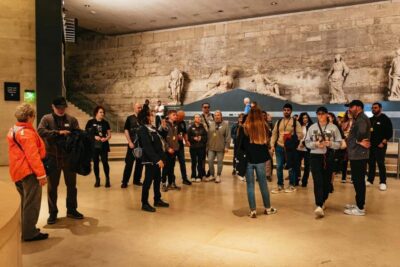
Louvre Overview, Exploration tour and Reserved Entry
Read our review →
Louvre Museum Entry Ticket With Host and River Cruise
Read our review →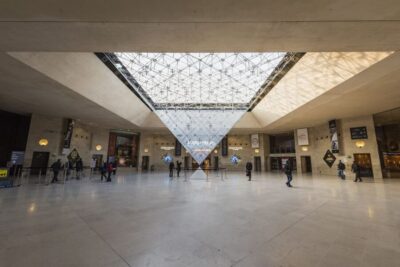
Mona Lisa & Louvre Masterpieces Tour with Reserved Access
Read our review →
Louvre Museum – Exclusive Guided Tour (Entry Included)
Read our review →