

REVIEW · MADRID
Madrid: Prado Museum Masterpieces Tour with Entry Ticket
The best thing about this Prado tour is its clear story. Instead of wandering through hundreds of rooms and hoping you find the famous paintings, you follow European art from the 15th through the 19th century, with special attention to Spain and its royal court. Delfi, an art restorer, links artists, politics, religion, and painting technique in a way that gives the collection a shape.
I like the small group of up to seven and the use of headsets, especially in crowded galleries. I also like the chronological plan, which helps you see how one artist influenced another. The main consideration is time: three hours is useful for the major works, but the Prado is far too large to cover fully, so this is a focused introduction rather than a complete museum visit.
Key points for choosing this Prado tour
- A three-hour route through four centuries: Follow the story from Titian and other Italian masters to El Greco, Rubens, Velázquez, and Goya.
- An art restorer as your guide: Delfi explains not only what you are seeing, but how the paintings work and why their details matter.
- A tiny group: The limit of seven makes it easier to hear, ask questions, and look closely at major works.
- Historical context throughout: Spanish rulers, the Hispanic Monarchy, religious ideas, and changing artistic styles all help explain the collection.
- Headsets for crowded rooms: You can listen while facing the painting instead of gathering tightly around the guide.
- A strong first Prado visit: The route keeps the enormous museum from feeling like a maze of famous names.
Why the Prado needs a plan
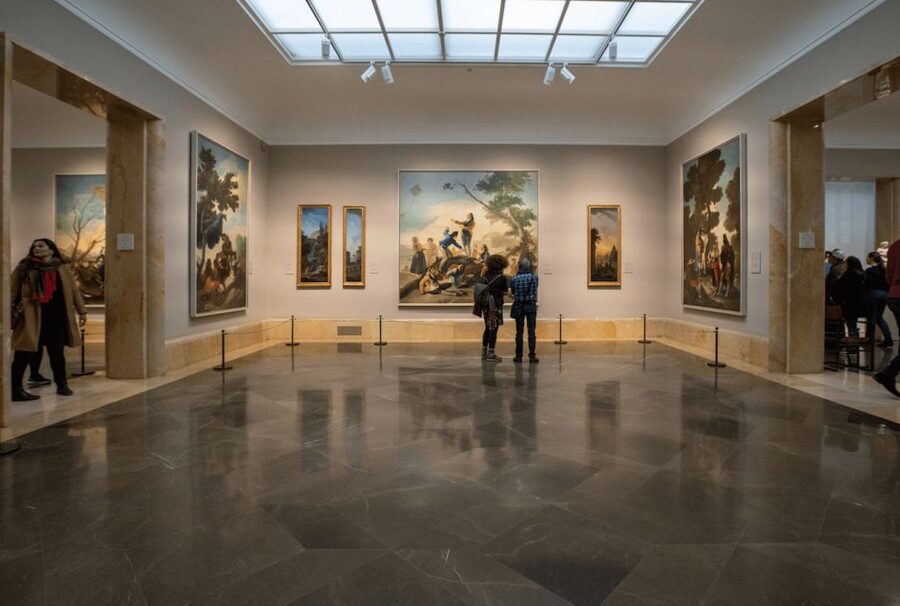
The Prado is one of those museums where a first visit can become exhausting before you reach the paintings you came to see. Its collection covers centuries of European art, and the major works are spread through a large building. A map helps, but a map cannot tell you why one painting matters more than another, or how Velázquez connects to the court painters who came before him.
That is where this tour earns its place. You are not simply led to a famous canvas, given a date, and moved along. The guide builds a sequence. You begin with the building and the origins of the collection, then move forward through time. This gives the museum a plot, with changing tastes, rulers, religious ideas, and painting styles shaping what you see.
I especially like this approach for anyone who knows the names of Goya, El Greco, or Velázquez but feels less sure about how they fit together. The route gives you a working framework, so the paintings become more than isolated masterpieces.
There is a tradeoff. A three-hour tour can show you the museum’s key works, but it cannot cover every important room. If you want a quiet, exhaustive study of Spanish portraits, Flemish painting, or a single artist, you will need extra time after the tour, or another visit altogether.
More Art Museum Tours in Madrid
- Madrid: Prado Museum Entry Ticket
★ 4.6 · 20,699 reviews - Madrid: Small Group of Prado Museum Tour & Optional Tapas
★ 4.6 · 2,437 reviews - Madrid: Prado Museum Guided Tour with Skip-the-Line Ticket
★ 4.5 · 2,018 reviews
Meeting Goya before entering the museum
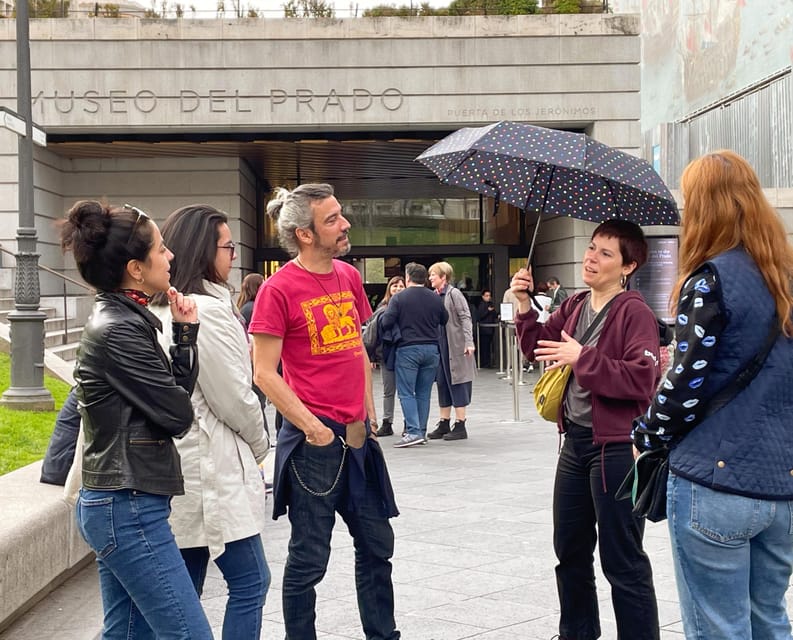
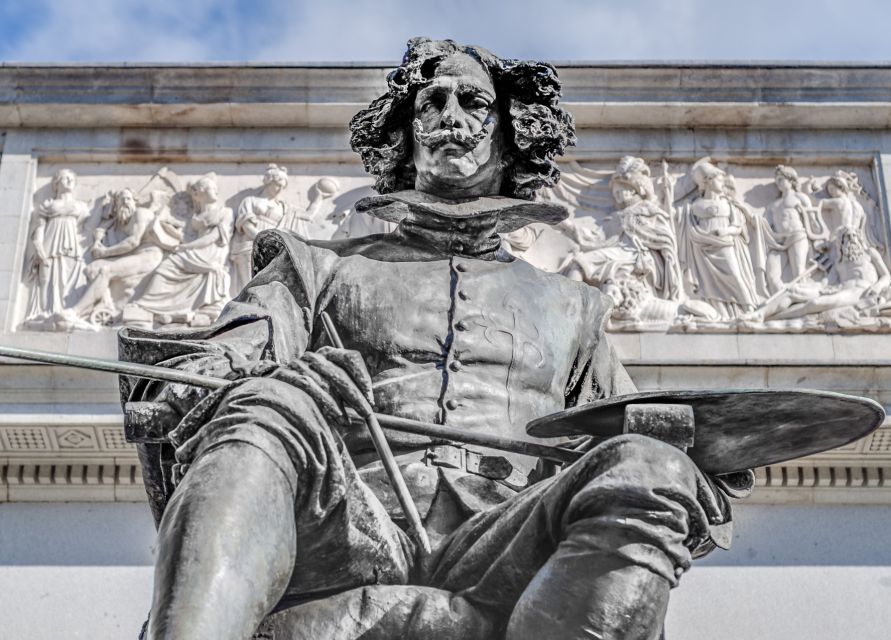
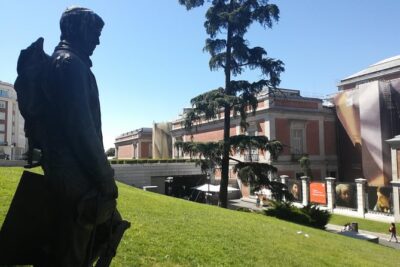
The tour begins beside the Monumento a Goya, outside the Prado. Look for the guide carrying a dark gray umbrella with colorful polka dots. That is a practical detail worth remembering, since the area around a major museum can be busy and several tour groups may gather nearby.
Starting with Goya is more than a convenient meeting point. Goya is one of the Prado’s defining artists, and the monument sets the tone for a visit that pays special attention to artists who worked in Spain or served the Hispanic Monarchy.
Before entering, you learn about the building and the origins of the museum’s collections. This opening matters because the Prado was not assembled as a random collection of attractive pictures. Its holdings are closely tied to Spanish royal collecting and the political and religious world in which many of the paintings were made.
This is also a good moment to ask questions and settle into the group. Since the group is capped at seven, the guide can respond without turning every question into a long delay. A few people have described the small size as a major advantage, particularly for asking about details in individual paintings.
Inside the Prado: a chronological route from the 15th century
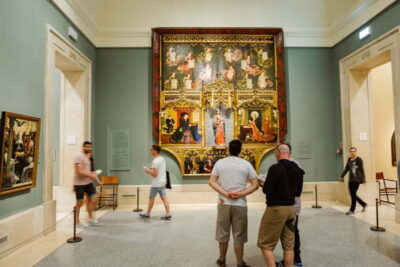
Once inside, the route moves in chronological order through roughly four centuries. That sequence is the backbone of the experience. You see styles change gradually, rather than jumping from one famous painting to another with no connection between them.
The early part of the tour establishes the foundations of European painting represented at the Prado. From there, the focus moves through Italian and Flemish influences, Spanish religious art, court painting, and the later work of Goya.
The exact paintings shown can vary with museum conditions and the guide’s choices, but the stated focus includes Titian, El Greco, Rubens, Velázquez, and Goya. You should expect the emphasis to remain on major works and on paintings that help explain how the collection developed.
The value here is not just seeing a famous name. You are asked to look at composition, symbolism, technique, and the relationship between an artist’s work and the time in which it was made. The guide also connects artists to each other, showing how styles changed and how certain painters responded to earlier traditions.
That makes the tour useful even if you already recognize the main paintings. A first glance may show color, costume, or a dramatic religious scene. A careful explanation can point you toward gesture, visual balance, hidden symbols, or a painter’s use of light. Those details often change what you notice when you look again.
Titian, El Greco, and the movement of ideas
Titian represents an important part of the route because the Prado’s collection is not limited to Spanish artists. His work helps place Spanish painting within the broader European world, especially the connections between Italy and the Spanish court.
From there, El Greco offers a striking change in mood and style. His elongated figures and unusual color choices can seem startling when set beside more naturalistic painting. With historical context, you can see that his work is not simply strange or exaggerated. It reflects a particular artistic language and a particular religious culture.
This is where an art restorer’s training can be useful. The tour is designed to look closely at how paintings are made, not only at who painted them. You may spend time considering brushwork, surfaces, color, and the ways artists guide your eye across a scene.
I like that the tour does not treat art history as a list to memorize. The goal is to make the changes visible. You can compare one period with another, then see how artists borrow, adapt, or reject earlier ideas.
More masterpiece highlights tours in Madrid:
- Prado Museum Masterpieces – 3 hours Full tour – Small group
★ 5.0 · 37 reviews - Louvre Museum Masterpieces Guided Tour with Access
★ 4.5 · 12,023 reviews - Mona Lisa & Louvre Masterpieces Tour with Reserved Access
★ 4.6 · 6,812 reviews - Florence: Uffizi Priority Ticket & Masterpieces Audio App
★ 4.2 · 6,402 reviews
Rubens and the power of the royal collection
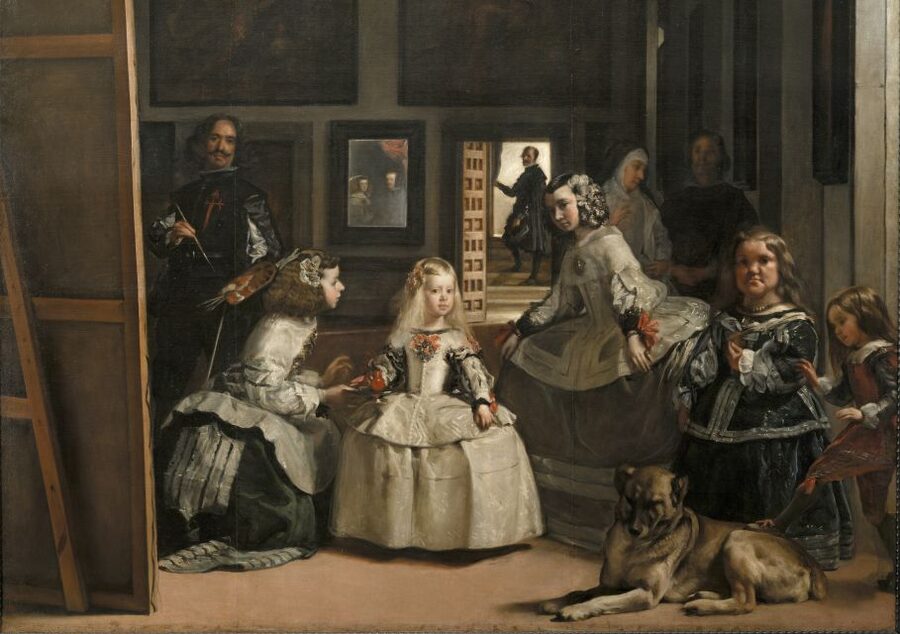
Rubens brings another layer to the story: the relationship between art and power. The Spanish monarchy collected works from across Europe, and the Prado’s international holdings reflect those connections.
The guide places paintings within the world of courts, religion, diplomacy, and royal taste. That context helps explain why certain artists were valued and why their work ended up in Spain. You are not only looking at technique. You are also considering who commissioned a painting, who viewed it, and what it was meant to communicate.
This is one of the tour’s strongest features for people who want more than a quick museum highlight reel. The historical details help explain the collection itself. You begin to see the Prado as a record of power and taste, not merely a storage place for beautiful objects.
At the same time, the art remains central. The history is there to sharpen your eye, not replace the painting. The guide’s approach combines background information with direct looking, so you spend time facing the actual work.
Velázquez and the Prado’s Spanish heart
Velázquez is one of the essential stops on a first Prado visit. His paintings reward time, and it is easy to miss their complexity if you only take a quick photograph or follow the crowd.
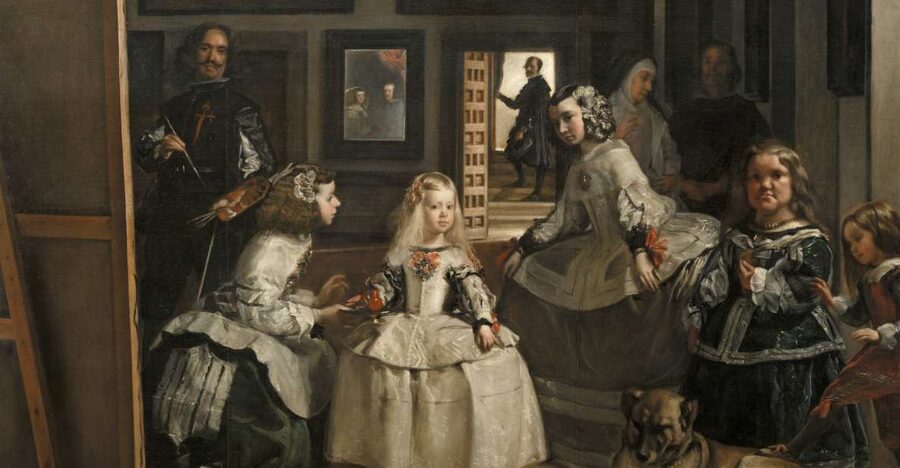
The tour gives you a way to slow down and consider his handling of space, royal identity, gesture, and the act of painting itself. His relationship with the Spanish court becomes part of the explanation, helping you understand why his work is so closely tied to the museum and to Spain’s royal history.
This section is likely to appeal even if you are not an art specialist. The guide explains the pictures in plain, usable terms, and the small group lets you stay close enough to study details while listening through the headset.
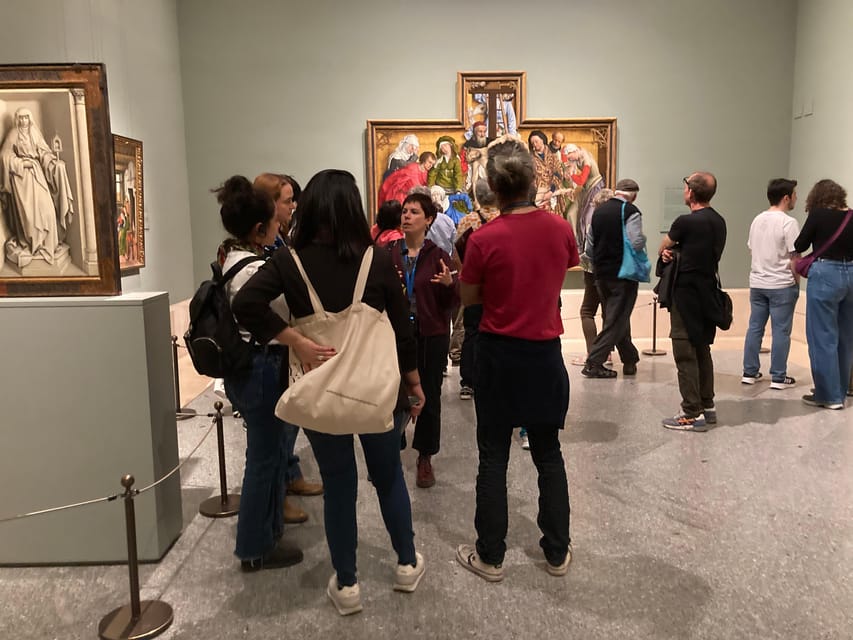
The headset is a small but important feature. In a crowded room, you do not need to stand shoulder to shoulder with the guide. You can look at the painting from a better position and still hear the explanation clearly. Several participants singled out the crisp sound as a practical improvement to the usual museum tour experience.
Goya and the changing face of Spain
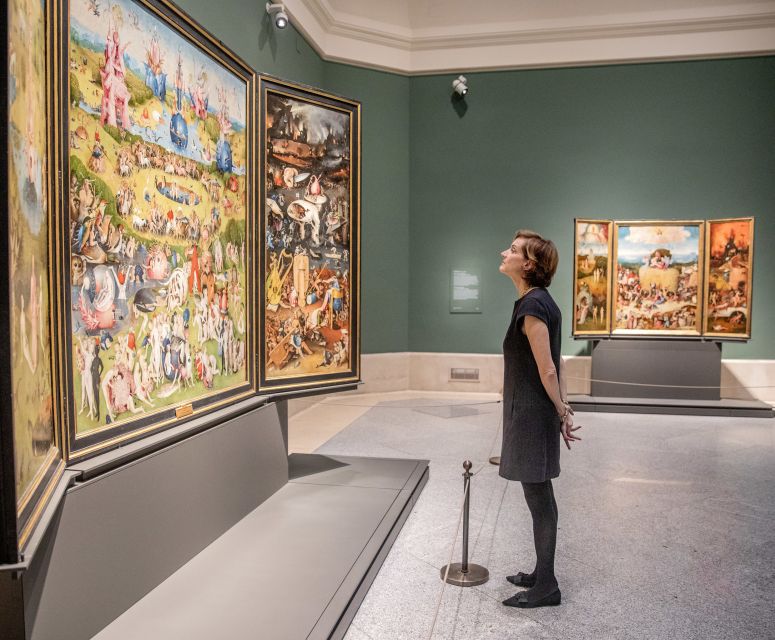
The route ends with Goya, whose work provides a powerful closing chapter. His paintings can be read through art history, but also through the social and political changes of his time.
By reaching Goya after earlier artists, you can see both continuity and rupture. He inherits traditions from the court and from European painting, yet his work also points toward a more unsettled, modern way of seeing.
The guide’s background in art restoration adds another useful angle here. Restoration is not just repair. It involves studying materials, technique, condition, and the marks left by time. That perspective can encourage you to look beyond the subject and notice how a painting has been made and preserved.
You will not leave with every detail of Goya’s career. That would require a separate visit. But you should leave with a stronger sense of why his work matters and how it connects to the artists you have already seen.
The guide’s style and the small-group advantage
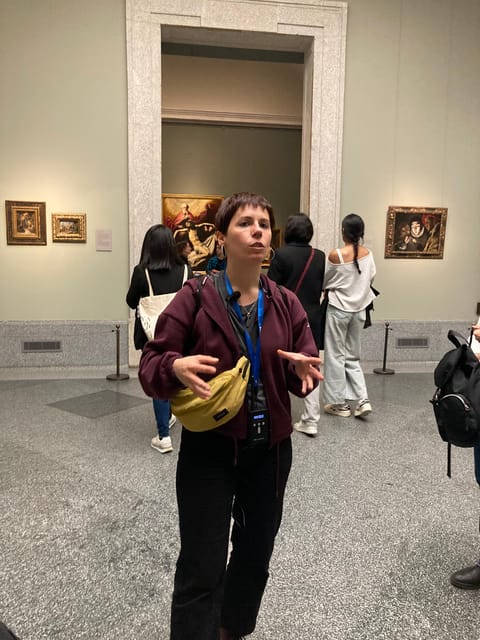
Delfi is the named guide for this experience, and the strongest praise centers on her clear explanations, warmth, and command of both art and Spanish history. She is described as easy to understand, lively, patient, and willing to adjust to the group’s pace.
That flexibility matters in a museum. One group may want to ask about symbolism, while another may care more about the painter’s technique or the politics behind a commission. The small size gives the guide room to respond without losing the main thread.
The experience is limited to seven people, though the exact group size can be smaller. That is a meaningful difference from a large museum group, where it can be hard to hear or ask anything. Here, you have a better chance of looking closely and receiving an answer that fits your question.
A few useful extras have also been associated with the tour. Delfi may offer suggestions for other things to do in Madrid after the visit, and some participants received links or a summary of the works discussed. These are helpful additions, but I would treat them as guide-dependent extras rather than the central promise of the tour.
Is $74 a fair price for three hours?
The price is $74 per person and includes the Prado entry ticket, the guide, and the small-group format. The main value is not simply avoiding the ticket line. It is the structure and interpretation provided inside a very large museum.
If you already have a strong art-history background and enjoy building your own route, you may prefer to buy entry and explore independently. You will have more freedom to linger, skip rooms, or focus on a favorite painter.
For a first visit, the price is easier to justify. Three hours with a specialist guide can prevent a great deal of aimless walking, and the chronological plan helps you remember what you saw. You also get the benefit of headsets and a group small enough for questions.
I would not book this expecting a leisurely, complete survey of every Prado collection. I would book it as a focused orientation that shows you the works most likely to matter on a first visit and gives you the tools to return on your own.
Practical details that affect your visit
Wear comfortable shoes. Three hours inside a museum involves plenty of standing and walking, even though the pace is organized.
Bring a passport or ID card. The museum does not allow food or drinks inside, and large bags or luggage are not permitted. All belongings must pass through an X-ray scanner, so avoid arriving with unnecessary items.
Photography inside is not allowed. That can feel restrictive if you are used to recording every room, but it also keeps the attention on looking. If you want to remember a particular work, note its name or ask the guide for details about it.
The tour is conducted in English and is wheelchair accessible. Starting times vary, so check availability when choosing a date. You can cancel up to 24 hours in advance for a full refund, and the reserve-now, pay-later option gives you some flexibility while your Madrid plans are still changing.
Who should book this Prado experience?
I would recommend it most strongly to first-time Prado visitors, people who want the major paintings explained in context, and anyone who finds large museums tiring or confusing. It also suits mixed groups, including families or couples where one person is more interested in art than the other. The stories and historical connections make the visit easier to follow than a silent march through gallery after gallery.
It is also a good fit for repeat museum visitors who want a fresh route through familiar works. One participant had already visited the Prado several times and still valued the chronological structure and the way the paintings were connected.
You may want another option if your priority is total independence, photography, or a highly specialized study of one artist. The tour has a set structure, and the three-hour format means you must accept selective coverage.
Should you book it?
Book this tour if you want the Prado’s famous works to make sense as part of a larger story. Delfi’s art-restoration background, the seven-person limit, and the clear route from Titian to Goya make the experience more useful than simply ticking off paintings.
Skip it only if you prefer to wander alone or already know exactly which rooms you want to study. For most first visits, $74 is a reasonable price for entry, direction, strong English explanations, and a focused introduction to one of Madrid’s most demanding museums.
FAQ
How long does the Prado Museum tour last?
The tour lasts three hours. Starting times vary, so check availability for your chosen date.
Where does the tour begin?
Meet the guide beside the Monumento a Goya. The guide carries a dark gray umbrella with colorful polka dots to make the meeting point easier to find.
Where does the tour finish?
The tour finishes at the Museo Nacional del Prado.
Is the Prado entry ticket included?
Yes. The Prado Museum entry ticket is included in the $74 price.
How large is the group?
The tour is limited to seven participants, making it a small-group experience.
What language is the tour in?
The live guided tour is conducted in English.
What should I bring and what is not allowed?
Bring a passport or ID card and wear comfortable shoes. Food, drinks, luggage, and large bags are not allowed. Photography inside is also not permitted, and all belongings must pass through an X-ray scanner.
More Prado Tours in Madrid
- Madrid: Prado Museum Guided Tour With Fast Access
★ 4.8 · 1,785 reviews - Prado Museum Small Group Tour with Skip the Line Ticket
★ 5.0 · 1,738 reviews - Royal Palace & Prado Museum Skip the Line Guided Tour
★ 4.5 · 1,347 reviews - Madrid: Prado Museum Ticket with In-App Audio Guide
★ 3.6 · 1,154 reviews
Just added around Madrid
- Retiro Park & Prado Museum Private Tour★ 5.0 · 7 reviews
- Paseo del Arte: Prado, Reina Sofía and Thyssen Museum★ 5.0 · 6 reviews
- Prado, Thyssen-Bornemisza or Reina Sofia Museum Private Tour★ 5.0 · 4 reviews
- Italian Prado Museum Tour | Maximum 7 people | No line★ 5.0 · 13 reviews
- Prado Museum Without the Crowds-Exclusive Guided Pre Opening Tour★ 5.0 · 137 reviews
- Madrid Highlights Private Tour with Prado Museum & Royal Palace★ 4.5 · 6 reviews
- Private Tour of Prado Museum in Madrid★ 4.5 · 28 reviews
- Prado Museum Guided Tour – In Spanish – 7 people per tour maximum★ 5.0 · 67 reviews
Art Museum Tours in Madrid, compared.

Small Group of Prado Museum Tour & Optional Tapas
Read our review →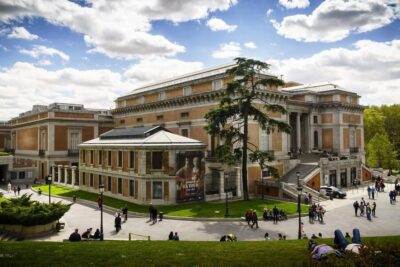
Prado Museum Guided Tour with Skip-the-Line Ticket
Read our review →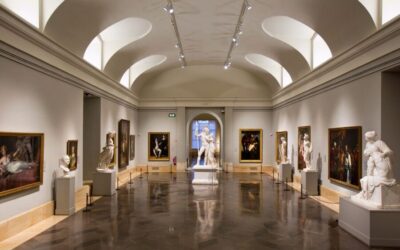
Prado Museum Small Group Tour with Skip the Line Ticket
Read our review →
Royal Palace & Prado Museum Skip the Line Guided Tour
Read our review →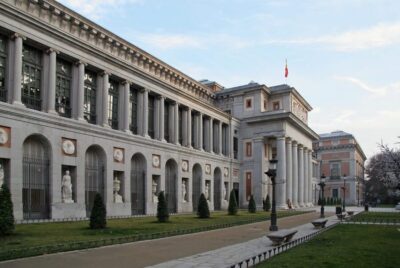

Prado Museum Guided Tour with Skip-the-Line Ticket
Read our review →Browse the lists this tour appears in