
REVIEW · MADRID
Prado Museum Masterpieces – 3 hours Full tour – Small group
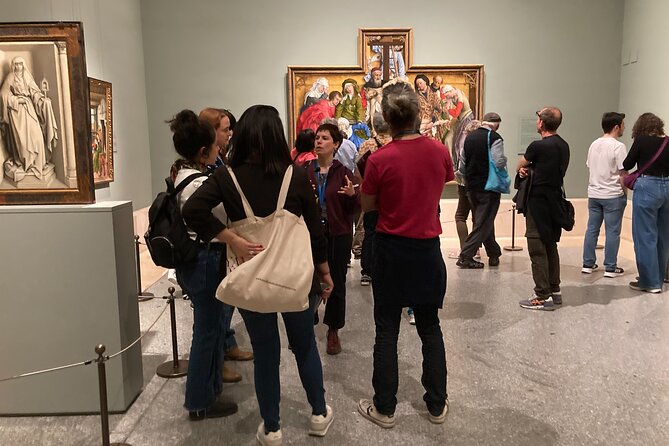
The best thing about this Prado tour is its clear plan. Instead of wandering through room after room, you follow a three-hour route through major works, arranged roughly from the 15th century to the 19th. Delfi, an art historian, practicing artist, and restorer, connects paintings to the Spanish monarchy, changing styles, and the artists who influenced one another. I like the small group, limited to seven people, and the way the tour ends near Goya’s Black Paintings. The main drawback is simple: three hours gives you a strong first look, not a complete visit to a huge museum.
I also like the practical touches. Audio devices help you hear without crowding around the guide, and Delfi sends links to images of the featured works afterward. The tour begins at 10:00 a.m. at the Monument to Goya, includes your museum ticket, and costs $80.28 per person. That is a fair price if you want structure and expert interpretation, but less appealing if you prefer to explore alone at your own pace.
Key points at a glance
- Seven-person maximum: A small group makes it easier to hear Delfi and ask questions inside busy galleries.
- A chronological route: You move from 15th-century painting through Titian, El Greco, Rubens, Velázquez, and Goya.
- Art and Spanish history together: The paintings are explained alongside royal patrons, political change, and the culture that shaped them.
- A restorer’s eye: Delfi can discuss technique, condition, and the visual details that are easy to miss.
- Black Paintings finale: The tour ends in the Prado hall devoted to Goya’s dark late works.
- Useful extras: Admission and audio equipment are included, with image links sent after the visit.
Why the Prado needs a plan
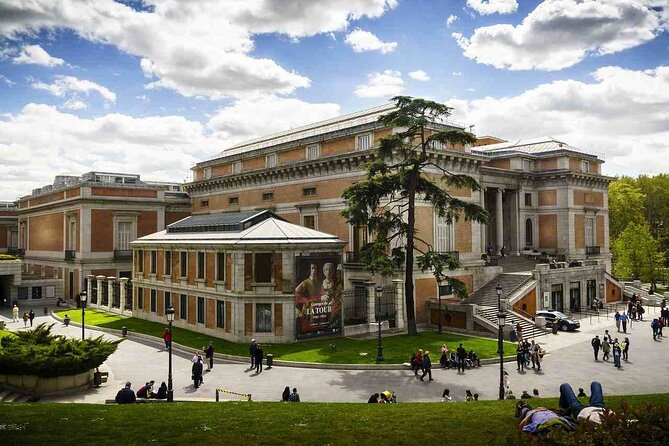
The Prado is not simply a place to check off a few famous paintings. It holds centuries of European art, with an especially strong collection of Spanish painting and works collected by the Spanish monarchy. You can easily spend hours moving through rooms without understanding how one period led to another.
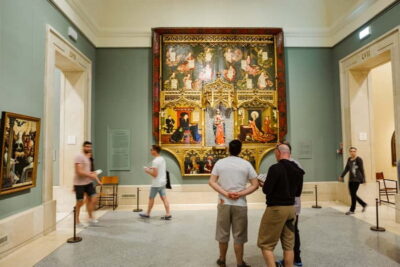
That is where a focused tour earns its keep. Delfi’s route gives you a framework before the details pile up. You begin with the building and the origins of the collection, then move through the centuries in order. The sequence lets you see changes in color, religious imagery, royal taste, portraiture, and storytelling.
I find this approach more useful than a random list of famous names. Titian, El Greco, Rubens, Velázquez, and Goya did not work in isolation. Their paintings reflect different periods, patrons, and ideas about what art should do. A guide who explains those connections can turn a silent gallery into a readable one.
The group size matters here. With no more than seven people, you are not part of a large crowd straining to hear a speech. The audio devices are another practical advantage, especially when other groups are nearby. You can stand at a respectful distance from the painting and still follow the explanation.
More Art Museum Tours in Madrid
- Madrid: Prado Museum Entry Ticket
★ 4.6 · 20,699 reviews - Madrid: Small Group of Prado Museum Tour & Optional Tapas
★ 4.6 · 2,437 reviews - Madrid: Prado Museum Guided Tour with Skip-the-Line Ticket
★ 4.5 · 2,018 reviews
Meeting Goya before entering the Prado
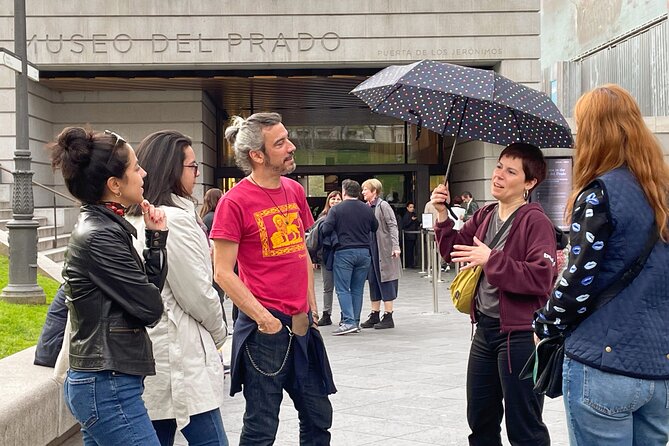
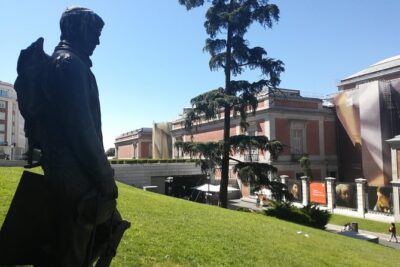
The meeting point is the Monument to Goya on Calle de Felipe IV, near the Prado and Retiro area. The tour starts at 10:00 a.m. This location gives the visit a fitting beginning, since Goya becomes the final major figure on the route.
You should allow enough time to reach the monument without rushing. The area is near public transportation, and the meeting point is outside the museum rather than inside a ticket hall. That makes it easier to find the group, but you still need to identify the guide at the correct statue.
Delfi is the guide named for this experience. Her background as a plastic artist and art restorer shapes the visit. You should expect more than basic dates and artist biographies. The emphasis is on how the works look, how they were made, and what they meant in their setting.
This is also a good tour for anyone who feels uncertain in an art museum. You do not need a degree in art history to follow it. The goal is to give you enough context to look closely without turning every painting into a technical lecture.
From the collection’s origins to the 15th century
The first part covers the building and the collection itself. That background matters because the Prado’s holdings are closely tied to Spanish royal collecting. Many of the museum’s most important works entered through royal commissions, palace collections, and changing dynasties.
From there, the tour moves into the earlier paintings in the collection. The precise route can change with gallery access and museum conditions, but the larger order remains chronological. You begin to see the shift from religious subjects and formal devotional images toward greater realism, richer storytelling, and more complex treatment of space.
One useful feature of Delfi’s approach is that she does not treat each painting as a separate island. A work by one artist can help you recognize what changes in the next room. You may notice how figures become more human, how faces gain individual character, or how painters use light to direct your attention.
The Prado’s earlier art can be challenging if you expect every room to contain instantly familiar names. This tour helps by explaining why those works matter, even when you have not heard of the artist. That is a good reason to choose a guide rather than relying only on a museum map.
Titian, El Greco, and the power of royal taste
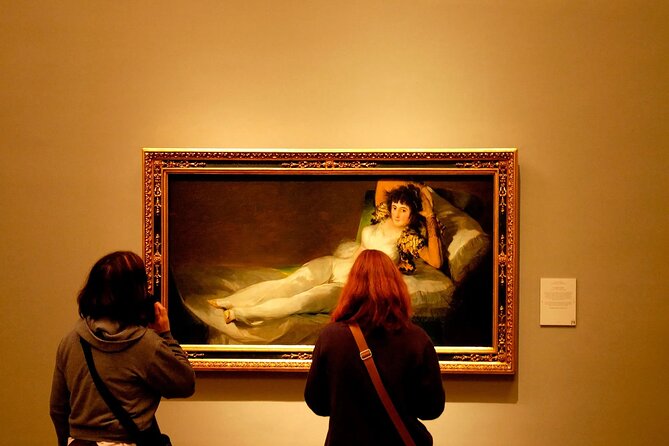
The route places special attention on artists who worked in Spain or served the Spanish monarchy, while also showing how international artists shaped Spanish collections. Titian is an important part of that story. His connection to royal patrons shows how Spanish rulers sought out leading European painters and how those works influenced later art.
El Greco brings a sharp change in mood and style. His elongated figures and intense spiritual energy are easy to recognize, but recognition alone does not explain the paintings. You will get more from them when you understand the period, the artist’s unusual visual language, and his place in Spanish art.
This is one of the strongest reasons to take the tour early in your Madrid visit. Once you know how Delfi explains the art, you can return to the museum later with better eyes. You may notice brushwork, poses, lighting, or symbolic details that would have slipped past you on a first solo visit.
The route also includes works by Rubens, Raphael, Caravaggio, Dürer, Bosch, and Rogier van der Weyden. These names widen the story beyond Spanish masters. The Descent from the Cross by Van der Weyden receives particular attention, and it can be one of the most memorable paintings on the entire route.
The Garden of Earthly Delights by Bosch is another likely highlight. Delfi may spend a substantial amount of time with it, and that is welcome. Bosch’s crowded scenes reward patient looking. A quick photograph or a short caption cannot explain the strange figures, moral warnings, and visual jokes packed into the panels.
More masterpiece highlights tours in Madrid:
- Madrid: Prado Museum Masterpieces Tour with Entry Ticket
★ 5.0 · 278 reviews - Louvre Museum Masterpieces Guided Tour with Access
★ 4.5 · 12,023 reviews - Mona Lisa & Louvre Masterpieces Tour with Reserved Access
★ 4.6 · 6,812 reviews - Florence: Uffizi Priority Ticket & Masterpieces Audio App
★ 4.2 · 6,402 reviews
Velázquez and the Spanish court
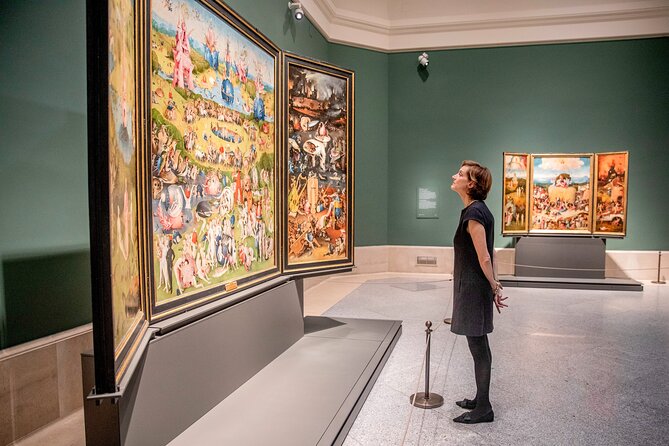
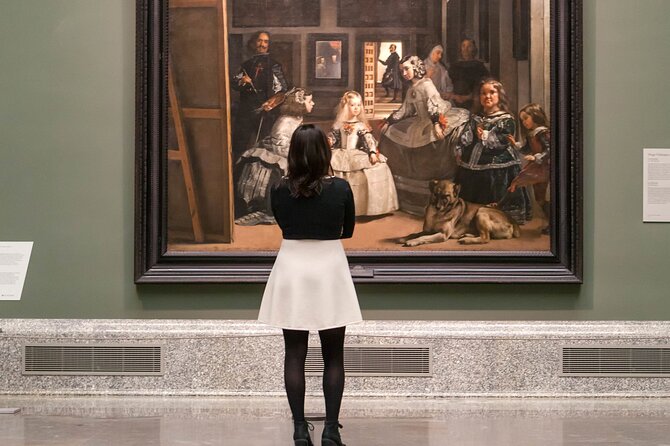
Velázquez is central to any serious first visit to the Prado. His work gives you a direct view into the Spanish court, but the paintings are also exercises in perception, status, gesture, and light.
A guide can help you slow down in front of a Velázquez portrait instead of treating it as another royal face. Look at how the subject is posed, what the clothing communicates, and how the painter makes fabric, skin, metal, and shadow feel different. The point is not just to admire technical skill. It is to understand what the painting was doing for its patron and its audience.
The tour places Velázquez among other artists rather than presenting him as a lone genius. That comparison is valuable. You can see how his methods differ from Rubens or Titian, and how later painters responded to the tradition he helped shape.
The Spanish Baroque section is especially useful for first-time Prado visitors. It brings together the drama of the period, the role of religion and monarchy, and the ways Spanish painters used realism. If your Madrid schedule is short, this part alone can justify the ticket price because it gives you a guided route through works that are difficult to absorb quickly on your own.
Goya and the dark final rooms
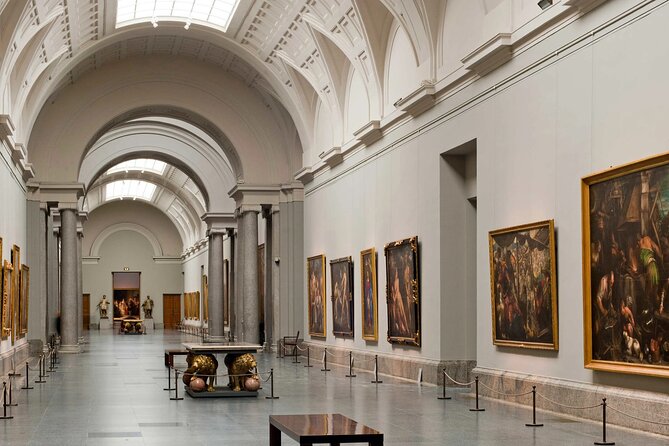
The tour ends in the hall containing Goya’s Black Paintings. That closing point gives the visit a strong arc. You have moved through centuries of commissioned religious and royal art before reaching Goya’s bleak, private, and unsettling late works.
These paintings do not offer an easy final note. Their mood is far removed from court portraiture and polished decoration. Ending here lets you consider how Spanish art changed, and how Goya’s vision became more personal and disturbing.
The Black Paintings are also a practical place to finish. You do not have to find your way back to a meeting point or leave the building with the group. The tour ends in the hall, allowing you to continue on your own if museum rules and opening conditions permit.
Do not expect the last room to explain every mystery. Goya’s late works invite questions, and part of their force comes from their unsettling uncertainty. Delfi’s role is to provide historical and visual context so you can look at the paintings with more than a passing impression.
Three hours, audio devices, and a short coffee break
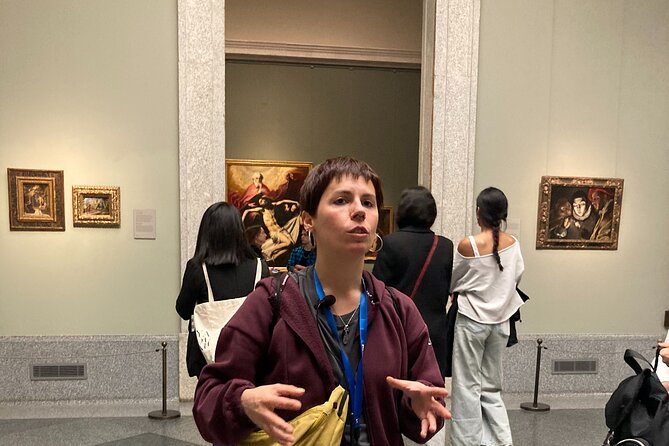
Three hours is a sensible length for the Prado. A shorter tour could feel rushed, while a much longer one might become tiring, especially when you are standing in galleries and concentrating on dense material.
The schedule also leaves room for human needs. A brief coffee break at the Prado cafe has been included on some visits, along with time for biological breaks. These pauses matter more than they may seem. A museum tour that ignores fatigue can turn even great art into a blur.
The audio devices are worth noting. The Prado can contain several groups at once, and a small group does not automatically solve the problem of background noise. With the equipment, Delfi can speak at a normal distance while you remain focused on the painting.
Photography is not permitted at the Prado. Some people may find that inconvenient, but I see a benefit. You are less tempted to view the museum through your phone screen. The image links sent after the tour provide a useful digital record of the paintings discussed, without turning the visit into a race for snapshots.
Because the experience is limited to seven people, questions are more practical than they would be in a large coach group. The format suits you if you want to ask why a work matters, how a technique works, or how two paintings relate.
What $80.28 buys you
At $80.28 per person, this is not the cheapest way to enter the Prado. Your ticket is included, but the real value is the guide’s time and the organized route. You are paying to make three hours count in a museum that can overwhelm first-time visitors.
I would consider the price reasonable for a short Madrid visit, especially if art is one of your main reasons for coming to the city. A knowledgeable guide can save you from spending half a morning on rooms that do not match your interests, then missing the paintings you most wanted to see.
The value is less clear if you already know the Prado well or prefer to read labels and set your own pace. You will have less freedom to stop wherever you wish, and three hours is a fixed commitment. This is a guided experience, not an open-ended museum pass.
Booking demand also matters. The tour is booked about 38 days in advance on average, so I would not leave it until the day before if the 10:00 a.m. time is important to you. Free cancellation is available if you cancel at least 24 hours before the start time. Changes or cancellations inside that window are not accepted for a refund.
Who will get the most from this visit
I recommend this tour to first-time Prado visitors, people with limited time in Madrid, and anyone who wants Spanish art explained through history rather than isolated labels. It is especially suited to adults who enjoy painting, architecture, royal history, or the details behind a famous work.
It also works well for mixed-interest companions. If one person knows art and another feels lost in museums, Delfi’s explanations can give both of you something to follow. The tour moves from major names to less familiar works, so it is not only a parade of famous paintings.
You might choose another approach if you want to spend a full day in one artist’s rooms, sketch quietly, or stop for long stretches at paintings outside the planned route. The chronological structure is a strength, but it also means you accept someone else’s priorities for part of your museum visit.
Most people can participate, and the activity is near public transportation. Still, you should be prepared for three hours inside a major museum, with periods of standing and walking. The schedule includes breaks, but this is not a seated lecture.
Should you book the Prado with Delfi?
Book it if you want the Prado to make sense, not simply to see a list of famous paintings. The small group, included admission, audio devices, and Delfi’s background in art and restoration make this a strong choice for a first visit.
I especially like the route from the collection’s origins through Titian, El Greco, Rubens, Velázquez, and Goya, with room for Bosch, Van der Weyden, Caravaggio, Raphael, and Dürer along the way. You get Spanish art in its European setting, then finish with Goya’s Black Paintings.
Skip it if you strongly prefer complete freedom or already have a detailed Prado plan. For everyone else, $80.28 buys a useful strategy, clear explanations, and a better chance of remembering what you saw after you leave the museum.
FAQ
How long is the Prado Museum Masterpieces tour?
The tour lasts approximately three hours.
What time and where does the tour begin?
It begins at 10:00 a.m. at the Monument to Goya, Calle de Felipe IV, in the Retiro area of Madrid.
Where does the tour end?
The tour ends inside the Museo Nacional del Prado, in the hall where Goya’s Black Paintings are located.
Is Prado Museum admission included?
Yes. The Prado Museum admission ticket and professional guide are included.
How many people can join the tour?
The group has a maximum of seven travelers.
Is the tour offered in English?
Yes. This experience is offered in English.
More 3-Hour Experiences in Madrid
- Madrid: Prado Museum 3-Hour Private Tour
★ 5.0 · 129 reviews - 3h Prado Museum Private Tour Skip the Line & Hotel Pick-up
★ 5.0 · 6 reviews - 3 Hour Morning Market and Art Tour
★ 5.0 · 45 reviews - Louvre: All the stars of museum – Private guided 3h tour & entry
★ 4.5 · 25 reviews
More Prado Tours in Madrid
- Madrid: Prado Museum Guided Tour With Fast Access
★ 4.8 · 1,785 reviews - Prado Museum Small Group Tour with Skip the Line Ticket
★ 5.0 · 1,738 reviews - Royal Palace & Prado Museum Skip the Line Guided Tour
★ 4.5 · 1,347 reviews - Madrid: Prado Museum Ticket with In-App Audio Guide
★ 3.6 · 1,154 reviews
Just added around Madrid
- Retiro Park & Prado Museum Private Tour★ 5.0 · 7 reviews
- Prado, Thyssen-Bornemisza or Reina Sofia Museum Private Tour★ 5.0 · 4 reviews
- Paseo del Arte: Prado, Reina Sofía and Thyssen Museum★ 5.0 · 6 reviews
- Italian Prado Museum Tour | Maximum 7 people | No line★ 5.0 · 13 reviews
- Prado Museum Without the Crowds-Exclusive Guided Pre Opening Tour★ 5.0 · 137 reviews
- Madrid Highlights Private Tour with Prado Museum & Royal Palace★ 4.5 · 6 reviews
- Private Tour of Prado Museum in Madrid★ 4.5 · 28 reviews
- Prado Museum Guided Tour – In Spanish – 7 people per tour maximum★ 5.0 · 67 reviews
Art Museum Tours in Madrid, compared.

Small Group of Prado Museum Tour & Optional Tapas
Read our review →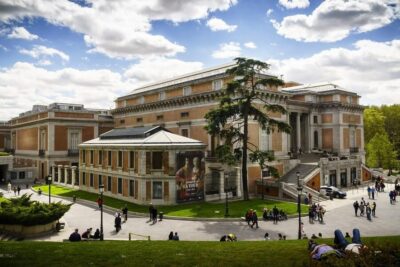
Prado Museum Guided Tour with Skip-the-Line Ticket
Read our review →
Prado Museum Small Group Tour with Skip the Line Ticket
Read our review →
Royal Palace & Prado Museum Skip the Line Guided Tour
Read our review →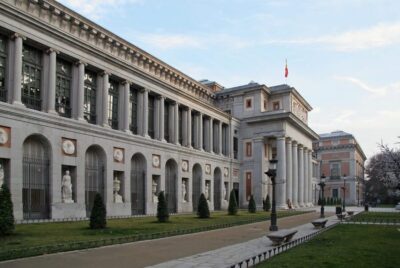

Prado Museum Guided Tour with Skip-the-Line Ticket
Read our review →Browse the lists this tour appears in