
REVIEW · PARIS
Louvre Masterpieces Private Guided Tour with Reserved Access
The most useful thing about this Louvre tour is its tight focus. In two hours, you move from the Pyramid to the Medieval Foundations, the Great Sphinx of Tanis, Venus de Milo, Winged Victory, and finally Mona Lisa, without trying to conquer the entire museum. Reserved entrance helps protect your limited Paris time.
I like the lively approach, which gives famous objects a human story instead of treating them like names on a checklist. I also like the freedom to stay in the Louvre after the tour, using your guide’s tips to continue on your own. The main caution is that the $527-per-person price is steep, and the tour details indicate that the indoor museum portion may be self-guided after an outdoor introduction, so confirm exactly how much gallery guiding is included before booking.
Key points to know before you book
- The route begins at the Louis XIV statue: Meet at the equestrian statue in front of the main Pyramid entrance at 8 Place du Carrousel.
- You see the essential names: The route includes Mona Lisa, Venus de Milo, Winged Victory, the Great Sphinx of Tanis, and the Medieval Foundations.
- The stories are the point: Expect gossip, scandals, murders, cannibalism, and debate about the Louvre Pyramid, not just dates and labels.
- The tour lasts two hours: That is enough for a brisk introduction, not enough for the entire museum.
- You can remain afterward: The experience ends at Mona Lisa, and you may stay in the Louvre to explore more independently.
- Private means pricey: The listed cost is $527 per person, with a private format or a semi-private option for up to six people.
Why this short Louvre tour can work well
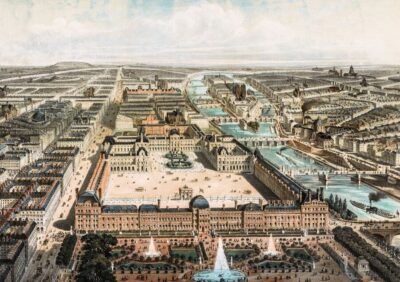
The Louvre is not simply a large museum. It is a former royal palace with long corridors, multiple wings, several floors, and an enormous collection. On a first visit, the hard part is not finding famous art. It is finding the famous art before your legs give out.
This tour tackles that problem with a planned route. You are not left to wander through the galleries hoping to stumble upon Mona Lisa. Instead, the experience aims to connect a series of major works, moving through the building with a guide who supplies context and stories along the way.
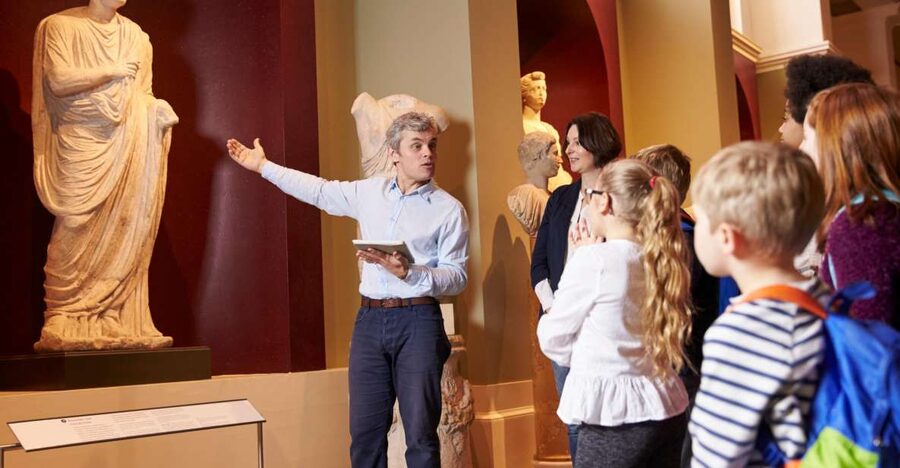
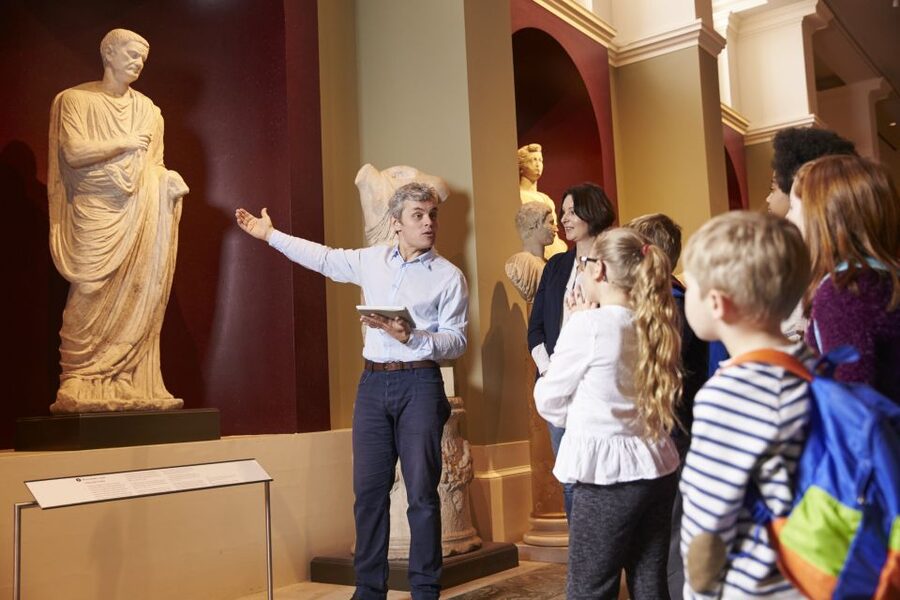
That approach suits you if this is your first Louvre visit or if you want a quick orientation before spending more time alone. It also suits families and mixed-interest groups. One guide, Sébastien Cormier, was specifically praised for being captivating and accessible to children, which matters in a museum where young attention can fade fast.
The tone is designed to be entertaining. The focus on gossip and scandal helps turn art into human drama. You hear about legendary figures, controversial choices, and darker tales involving murder and cannibalism. This is not a quiet academic seminar. It is a lively way to make the museum’s biggest objects easier to remember.
More Art Museum Tours in Paris
- Paris: Louvre Museum Timed-Entrance Ticket
★ 4.6 · 71,977 reviews - Paris: Orsay Museum Entry Ticket
★ 4.7 · 25,647 reviews - Paris: Louvre Guided Tour with Reserved Access & Boat Cruise
★ 4.3 · 16,353 reviews
Starting beneath the Louvre Pyramid
Meet at the statue of Louis XIV on horseback, directly in front of the large Pyramid entrance. The official address is 8 Place du Carrousel, beside the Tuileries Garden.
This is a sensible meeting point, but do not arrive casually at the last minute. The Louvre plaza is wide, crowded, and full of statues, entrances, and people waiting for different tours. Look for the man on horseback in front of the Pyramid, rather than relying only on a general museum entrance.
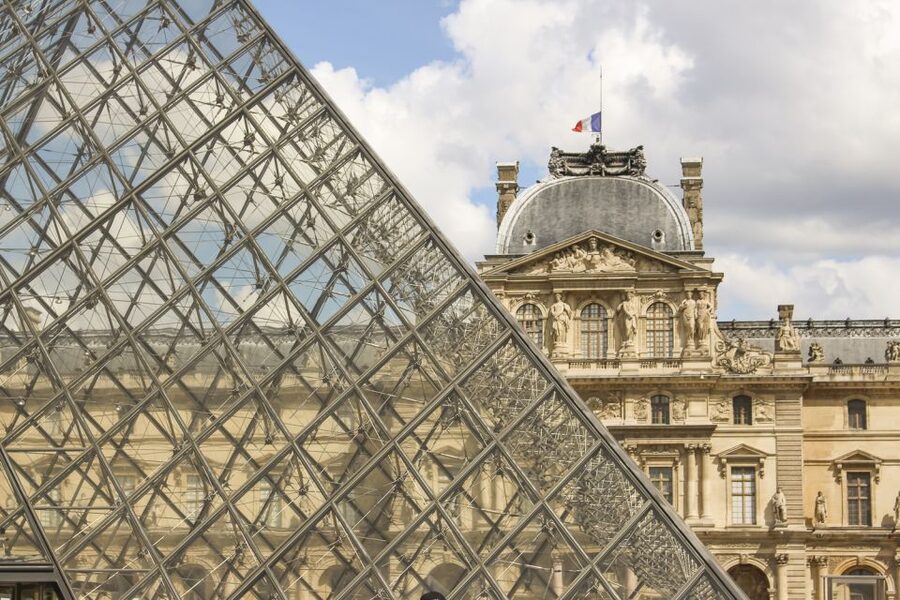
The tour begins with the Pyramid itself. The glass structure is now one of Paris’s best-known symbols, but it was controversial when it was built. Your guide explains the debate surrounding its design and its place in front of a historic palace. That opening gives you an important lesson in how Paris handles old buildings: the city often mixes new architecture with old monuments, and not everyone welcomes the result at first.
There is also a spooky angle. A small red ghost is said to haunt the area, a story tied to the long past of the Louvre. It is a playful start, especially if you prefer your museum tour with a little atmosphere rather than a list of construction dates.
Descending to the Medieval Foundations
After the Pyramid, you go back to the period when the Louvre was a fortress. The Medieval Foundations preserve traces of that earlier building, offering a sharp contrast with the bright glass entrance above.
This stop matters because it changes the way you see the museum. The Louvre was not created as a neutral art gallery. It grew from a defensive structure into a royal residence and later into a public museum. The stone foundations make that shift easier to picture.
The medieval section is also a good use of a short tour. You are not spending your limited time only in front of paintings. You are seeing the building as an object in its own right, with layers of French history under your feet.
The route then carries you toward the Egyptian collection and the Great Sphinx of Tanis.
Meeting the Great Sphinx of Tanis
The Great Sphinx of Tanis is one of the tour’s more unusual stops. Many people arrive at the Louvre focused on Mona Lisa, but the Egyptian sculpture offers a stronger sense of the museum’s scale and age.
The Sphinx has been connected to riddles and mystery for thousands of years, making it a natural fit for a tour built around secrets and stories. Your guide uses this object to shift the mood from medieval Paris to ancient Egypt.
This is also where a guide can save you time and effort. The Louvre contains thousands of objects, and you need help deciding which ones deserve a closer look during a two-hour visit. A planned stop lets you spend a few minutes looking carefully instead of racing past everything.
More masterpiece highlights tours in Paris:
- Louvre Museum Masterpieces Guided Tour with Access
★ 4.5 · 12,023 reviews - Mona Lisa & Louvre Masterpieces Tour with Reserved Access
★ 4.6 · 6,812 reviews - Paris: Louvre Museum Tour Mona Lisa & Iconic Masterpieces
★ 4.7 · 4,536 reviews - Paris: Louvre Masterpieces Tour with Pre-Reserved Tickets
★ 4.8 · 1,445 reviews
The famous sculptures: Venus de Milo and Winged Victory
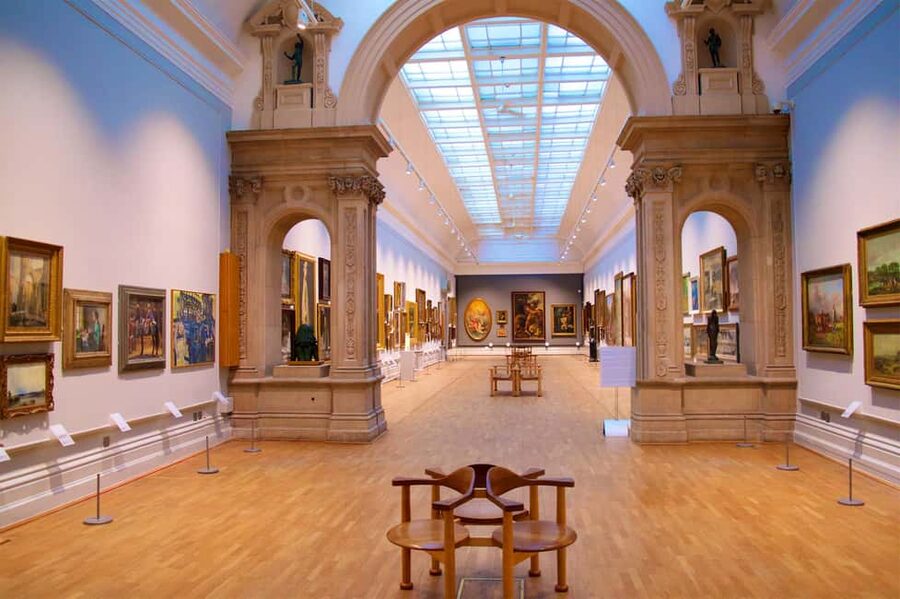
Venus de Milo and Winged Victory are essential stops on almost any first Louvre visit, but they can feel very different when you understand what to look for.
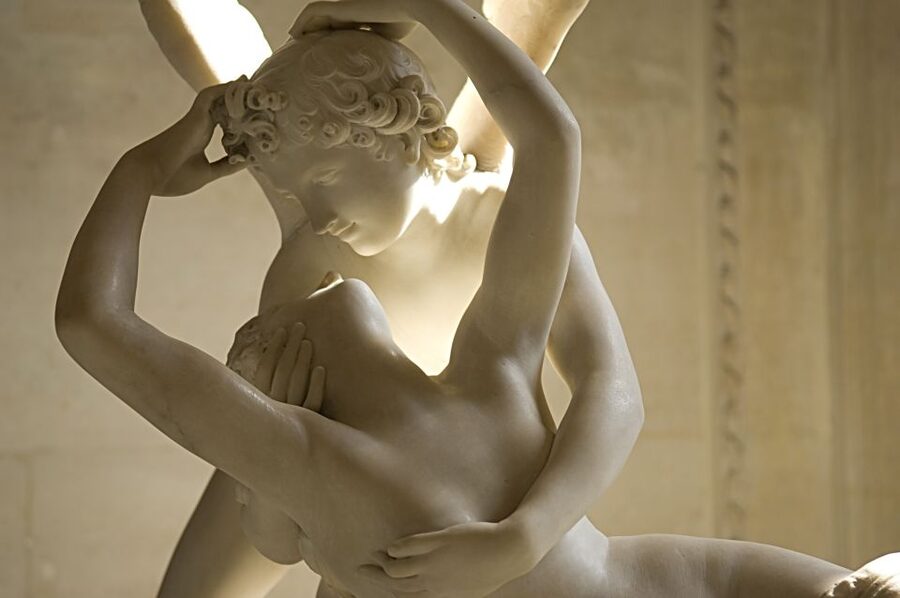
Venus de Milo is famous partly because of what is missing. Her broken arms leave room for questions and speculation, while the sculpture’s pose and expression keep her from feeling like a simple textbook example of ancient art. A guide can point out the details that make the work memorable, then add the stories and debates that surround it.
Winged Victory of Samothrace has a very different effect. The sculpture is presented as a dramatic figure in motion, positioned on a ship’s prow. Even without knowing every detail, you can read the sense of wind, movement, and arrival. It is one of those works that rewards a few quiet moments, and a good guide helps you notice why.
These stops are valuable for another reason: they prevent the tour from becoming a Mona Lisa-only visit. You receive a wider look at sculpture, ancient civilizations, and the Louvre’s grand presentation style.
Following paintings, artifacts, and darker stories
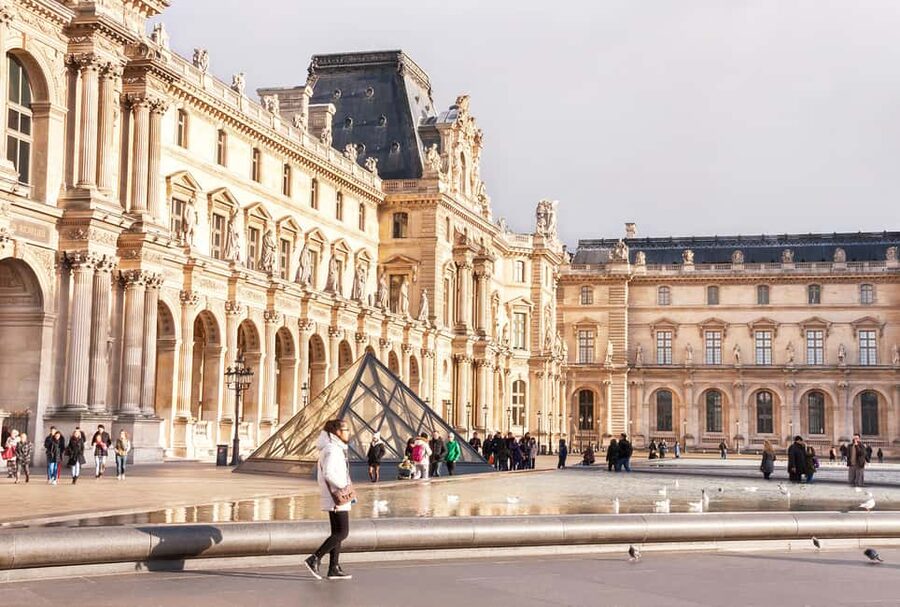
The route passes thousands of paintings, sculptures, and artifacts, but only a select group receives detailed attention. The plan includes more than a dozen famous works, each chosen for a secret, controversy, or piece of gossip.
That storytelling approach is a practical choice. You may not remember every date, school, or technical term, but you are more likely to remember a painting when it comes with a scandal or a strange human detail.
The darker stories add energy, but they also shape your expectations. If you want a traditional art-history lecture with a calm, formal survey of every period, this may not be your ideal format. If you want famous works explained in plain language, with dramatic stories that help you keep the collection straight, the style should fit better.
Guide quality matters greatly here. The strongest feedback names Mariane, Mélina, Sébastien Cormier, and Lea. Mélina was praised for detailed interpretations and explanations that kept the visit fascinating. Lea was described as entertaining, informative, and helpful, including assistance with staying in the museum afterward. These comments point to the personal guide as the main value of the experience, not simply the ticket.
Because the tour is in English, it is best for you if you want all explanations delivered in English rather than through a multilingual audio system. The guide can adjust the pace and explain why a work matters, although the exact amount of individual attention may depend on whether you choose the private format or the semi-private option for six.
Ending with Mona Lisa
The tour concludes at Mona Lisa, the Louvre’s most famous resident. Reaching her at the end gives the route a clear finish, but it also comes with a practical warning: the room can be crowded, and your time in front of the painting may be brief.
Mona Lisa is small, heavily visited, and surrounded by people who want the same quick look. The useful part of the experience is not only seeing the portrait. It is hearing the stories behind her reputation, her expression, and the attention she has attracted for centuries.
The tour’s design lets you approach her with some context instead of making her the first and only goal. You have already seen the building’s fortress remains, ancient sculpture, Egyptian art, and other celebrated works. That broader route makes the final stop feel like part of the Louvre story rather than a standalone photo opportunity.
Afterward, you can stay inside the museum as long as you wish. This is one of the strongest practical features. Two hours is not enough for the Louvre, but it can be enough for a guide-led introduction followed by your own second act.
Ask for suggestions before the tour ends. The guide can point you toward other sections worth seeing, though the supplied information does not promise a detailed custom route for the rest of the day.
Guided tour or self-guided museum visit?
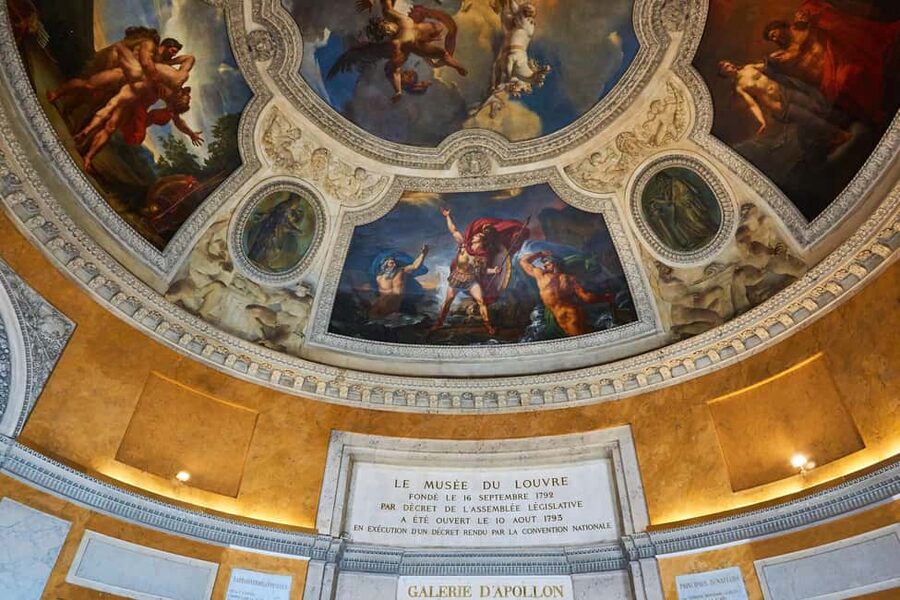
Pay close attention to the wording about the format. The experience includes an English-speaking guide, reserved access, and a two-hour visit. At the same time, the practical notes describe a guided outdoor walking tour followed by a self-guided experience inside the Louvre.
That creates an important question. You should confirm before booking whether your guide accompanies you through the interior galleries and explains each featured work in person, or whether the guide mainly introduces the route outdoors and provides directions for the museum visit.
The description of the route says the tour stops at major works and ends at Mona Lisa, while the operational information says the interior is self-guided. Those details do not line up perfectly. The safest advice is to ask the provider what is included in the current departure you are considering.
This matters especially because the price is high. A reserved entrance ticket and a route plan are useful, but $527 per person makes the most sense when you are also paying for substantial private guiding.
Is $527 per person good value?
At $527 per person, this is not a budget Louvre introduction. The value depends on what you want from your Paris day.
For a private group that wants a focused route, a live English-speaking guide, and a chance to remain inside afterward, the price may be reasonable if the guide’s time and attention are the main priority. A private tour can also make sense when your group has children, older family members, or limited museum stamina.
The semi-private option for up to six people may improve the calculation, depending on the final group price. It gives you a smaller setting without requiring a fully private booking, but the supplied information does not state the exact cost difference.
If your main goal is simply to enter the Louvre and see Mona Lisa, this price is difficult to justify. Less expensive entry, audio guide, host, and small-group options exist. Those alternatives may suit you if you are comfortable navigating on your own.
I would pay the premium for the personal storytelling and efficient route, not for the idea of seeing every important object. You will see highlights, but the Louvre is too large for a complete visit in two hours.
Practical details that affect your visit
The activity lasts two hours, and starting times depend on availability. That short length is useful for a busy Paris schedule, but you should allow extra time for arriving at the meeting point and for continuing inside the museum afterward.
Bring your passport or identity card. Large bags and luggage are not allowed, and anything larger than 55 by 35 by 20 centimeters cannot enter. Pets and smoking are also not permitted.
The information supplied describes the activity as wheelchair accessible in one place, but another section says it is not suitable for wheelchair users. Treat that as a real inconsistency, not a minor detail. If you use a wheelchair, ask the provider to confirm current access arrangements, route conditions, and whether the private tour can be adapted before paying.
The activity is non-refundable, so check the date, time, meeting point, bag size, and accessibility details carefully. Since the tour ends inside the Louvre, you do not need to leave when the two hours are over. You can continue exploring on your own if museum hours and entry rules allow.
Who should book this Louvre experience?
I would recommend it most strongly to a first-time Louvre visitor who wants a clear route and memorable stories rather than a full art-history course. It is also a good match for a family that wants a guide who can keep the pace lively and explain famous works without making the visit feel like school.
It can work well for a short Paris stay. You see several major highlights, hear the story of the building, finish at Mona Lisa, and still have the option to continue alone.
I would hesitate if you are a serious art enthusiast who wants long discussions in front of individual works. Two hours and more than a dozen stops mean the pace must keep moving. I would also hesitate if you are mainly seeking the cheapest way into the museum, or if the self-guided indoor format is confirmed and you expected a guide beside you throughout.
Should you book it?
Book this tour if you value a private English-speaking guide, a planned highlights route, reserved access, and lively stories about famous art. The names associated with the experience, including Mariane, Mélina, Sébastien Cormier, and Lea, suggest that guide personality can make a real difference.
Before paying $527 per person, confirm the exact indoor format and check the accessibility contradiction. If the guide truly leads you through the main galleries and your group wants personal attention, the tour can be a convenient and entertaining Louvre introduction. If you are happy to navigate alone, choose a less expensive ticket or small-group option and put the savings toward more time inside the museum.
FAQ
Where does the Louvre tour meet?
Meet at the statue of Louis XIV, the man on horseback in front of the large Pyramid at the Louvre’s main entrance. The stated address is 8 Place du Carrousel.
How long does the tour last?
The experience lasts two hours. Starting times depend on availability.
What language is the tour in?
The tour is conducted in English by a live English-speaking guide.
Which Louvre works are included?
The route includes Mona Lisa, Venus de Milo, Winged Victory, the Great Sphinx of Tanis, the Medieval Foundations, and more than a dozen famous works.
Does the tour include reserved entrance?
Yes. The experience includes a skip-the-line entrance ticket through a separate entrance.
Can I stay in the Louvre after the tour?
Yes. The tour ends at Mona Lisa, and you are free to remain in the museum afterward and explore independently.
Is the tour private?
The experience is offered as a private group tour, with an option to customize for a semi-private group of up to six people.
What should I bring?
Bring your passport or identity card. Do not bring luggage or a large bag. Items exceeding 55 by 35 by 20 centimeters are not permitted.
Is the tour suitable for wheelchair users?
The information is inconsistent. One section says the activity is wheelchair accessible, while another says it is not suitable for wheelchair users. Contact the provider to confirm the current arrangements before booking.
More Louvre Tours in Paris
- Paris: Louvre Overview, Exploration tour and Reserved Entry
★ 4.1 · 10,145 reviews - Paris: Louvre Museum Entry Ticket With Host and River Cruise
★ 4.6 · 9,926 reviews - Louvre Museum – Exclusive Guided Tour (Entry Included)
★ 5.0 · 6,296 reviews - Paris: Louvre Reserved Ticket and River Cruise Combo
★ 4.0 · 6,054 reviews
Just added around Paris
- Paris Day Tour with Eiffel Tower, Louvre and Cruise Max 6 People★ 4.5 · 29 reviews
- d’Orsay Museum Paris entry ticket★ 3.5 · 31 reviews
- visiting the masterpieces of impressionists at Orsay museum★ 5.0 · 7 reviews
- PRIVATE Louvre Wonders & Hidden Treasures Visit★ 5.0 · 65 reviews
- Louvre Museum with private guide★ 5.0 · 3 reviews
- Louvre Wheelchair-Accessible Private Tour – Stress-Free & Easy★ 5.0 · 16 reviews
- LOUVRE, Small Group Guided Tour in French (TOP SALES)★ 4.5 · 9 reviews
- Musée d’Orsay Highlights Tour with Gourmet Lunch★ 4.5 · 11 reviews
Art Museum Tours in Paris, compared.

Louvre Guided Tour with Reserved Access & Boat Cruise
Read our review →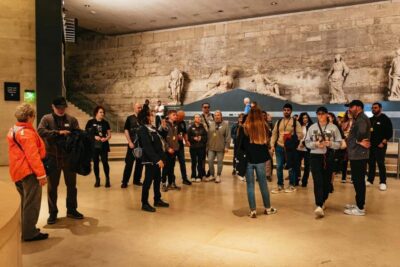
Louvre Overview, Exploration tour and Reserved Entry
Read our review →
Louvre Museum Entry Ticket With Host and River Cruise
Read our review →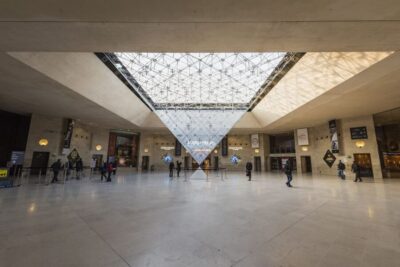
Mona Lisa & Louvre Masterpieces Tour with Reserved Access
Read our review →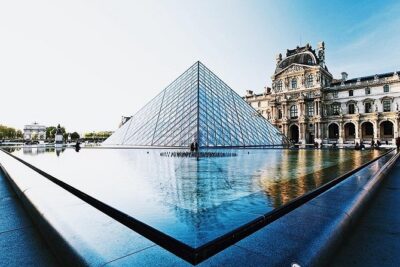
Louvre Museum – Exclusive Guided Tour (Entry Included)
Read our review →
Louvre Museum Hosted Entry and Mona Lisa Audioguide
Read our review →Browse the lists this tour appears in