
REVIEW · FRANCE
Following the steps of Van Gogh
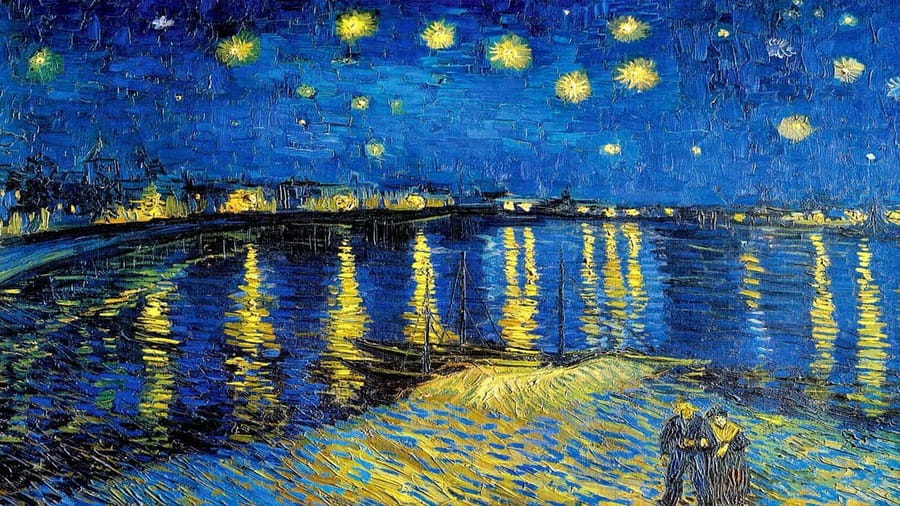
The best part of this five-hour outing is the way Van Gogh’s paintings and Provence’s older past meet on the same walk. In Arles, you’ll look for the places tied to The Yellow House, Hotel-Dieu, and Café Terrace at Night, then switch centuries as your guide points out the Roman amphitheatre and theatre.
I like the small group of no more than eight, which makes a walking tour far easier to follow. I also like the mix of city streets, Saint Rémy’s Saint Paul de Mausole asylum, and the perched village of Les Baux de Provence. It gives you more than a single-artist tour.
The main consideration is time. Five hours covers three destinations and several major sights, so you should expect a brisk route rather than long museum visits or a slow, detailed study of Van Gogh’s life. The tour is also not suitable for wheelchair users.
Key points to know before booking
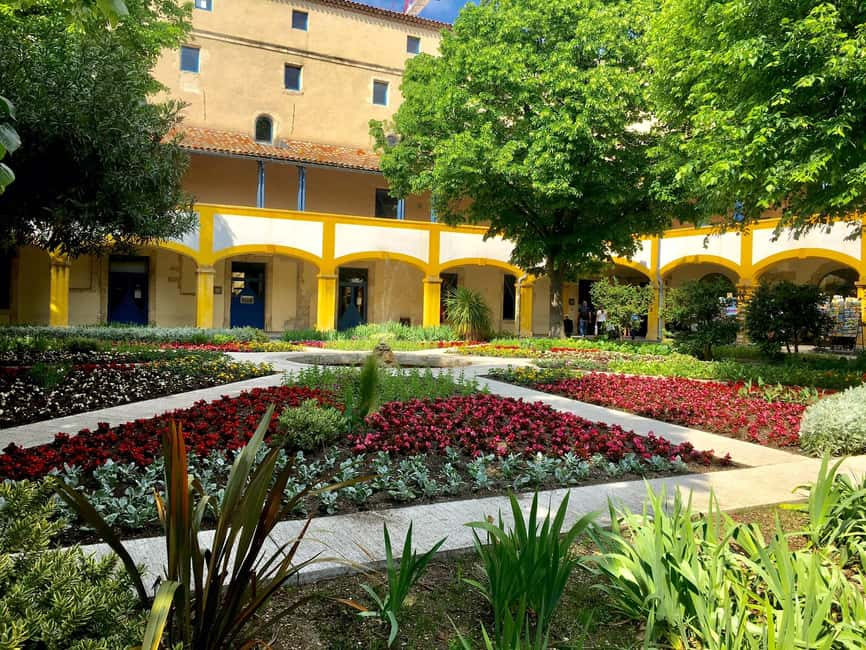
- Van Gogh’s actual painting locations: See the Arles sites connected with The Yellow House, Hotel-Dieu, and Café Terrace at Night.
- A strong Roman side trip: The Arles walking tour includes the amphitheatre, theatre, Forum square, Saint Trophime, and other Roman-era remains.
- Saint Paul de Mausole is included: Entry to the asylum in Saint Rémy is part of the tour price.
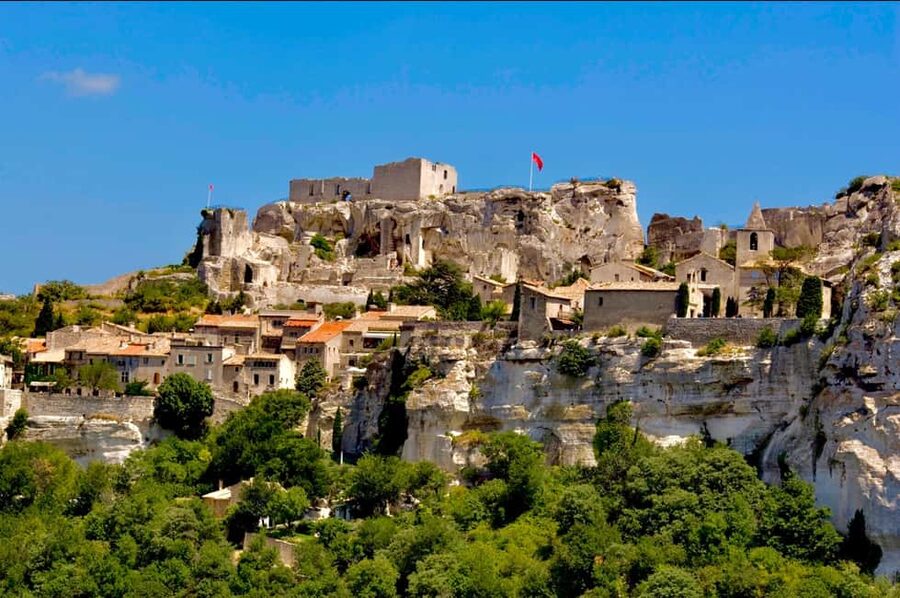
- Les Baux adds a dramatic change of scene: The hilltop village brings stone lanes and Alpilles views to the end of the route.
- A compact English-speaking group: The tour is limited to eight people, with guide Anne praised for her clear pacing and engaging explanations.
- Good value for a packed half-day: At $106 per person, the price covers the guided Arles walk, Les Baux, and entry to Saint Paul de Mausole.
Why Van Gogh’s Provence works so well as a tour
Van Gogh did not paint Provence from a distance. He lived here, walked these streets, stayed in the Saint Rémy asylum, and turned ordinary places into some of his best-known images.
That gives this experience a useful focus. You are not simply looking at old buildings and then hearing a few facts about an artist. You are being shown the relationship between a real place and the image Van Gogh made from it.
Arles is the strongest example. The city offers Roman monuments, medieval church details, and the locations linked with Van Gogh’s stay. That combination helps explain why the town feels more layered than a simple art stop.
You should also keep your expectations clear. This is a guided visit to places connected with Van Gogh, not a full museum program or a long biographical lecture. One person specifically wanted more detail about Van Gogh’s life at Saint Rémy, so I would book this for the places and visual connections first, with the biography as an important extra.
More Van Gogh Museum tickets:
- Giverny Monet’s Garden & Auvers-sur-Oise with Van Gogh House Full Day From Paris
★ 5.0 · 369 reviews - Hiking Adventure in Van Gogh’s Footsteps with 6 miles walk
★ 5.0 · 239 reviews - Small-Group Giverny and Van Gogh’s Room in Auvers from Paris
★ 4.9 · 168 reviews
Walking through Arles, from gladiators to Café Terrace at Night
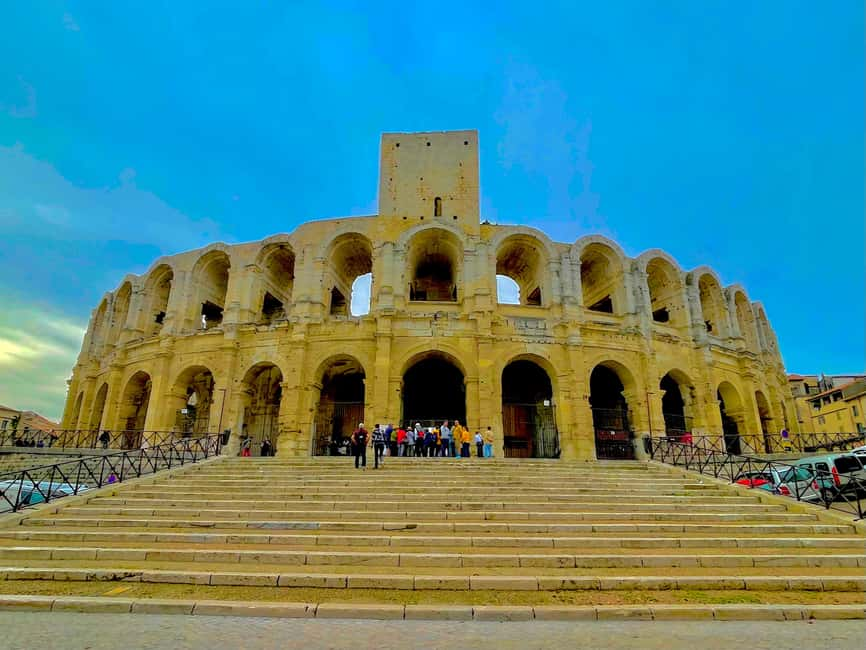
The Arles portion is a walking tour, and it begins with some of the city’s most recognizable remains. The Roman amphitheatre is the headline stop. It is a UNESCO monument and was built for public spectacles, including gladiator fights.
The amphitheatre gives you a quick sense of Arles as an important Roman town. Its scale is easy to understand in person, even if the tour does not include a long archaeological lecture. You’ll also see the Roman theatre, another reminder that this was a city designed for public entertainment.
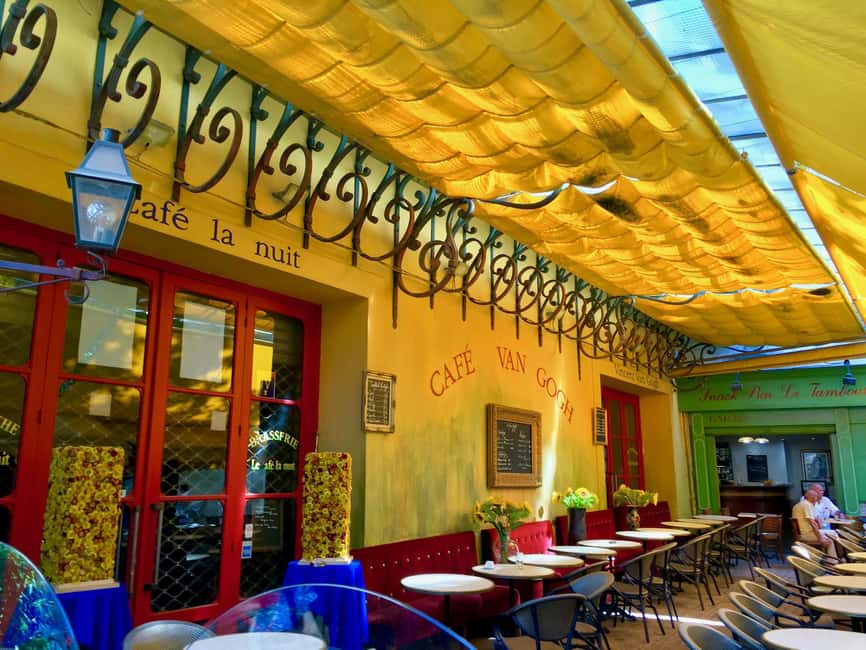
From there, the focus moves toward the streets and squares connected with Van Gogh. The guide points out the setting of The Yellow House and Hotel-Dieu, then brings you to the Forum square and the location associated with Café Terrace at Night.
The Café Terrace at Night reference is especially useful because it links a familiar painting with a real urban corner. The point is not simply to say that Van Gogh painted here. You get to compare the shape of the place with the painted scene and think about what he changed, emphasized, or left out.
Crowds can make this part less tidy than the painting itself. During a busy visit, posted images or viewing points may be hard to see clearly. Guide Anne handled that problem by showing painting images on her phone when crowds blocked the displays. That is a small but practical touch, especially in a compact old town where people gather around the same famous corners.
The route also includes Arles Forum square, the 11th century church, and the 12th century portal gate of Saint Trophime. These details matter because they keep the tour from becoming too narrow. You get Van Gogh, but you also get the medieval city that he was walking through.
I like this balance. A visit devoted only to painting locations could feel repetitive. A visit devoted only to Roman and medieval monuments could miss the reason many people come to Arles. Here, the guide uses both subjects to give the streets more meaning.
Saint Rémy and Saint Paul de Mausole
The next major Van Gogh stop is Saint Rémy de Provence, where he lived and painted at Saint Paul de Mausole. Entry to the asylum is included, which gives this part more substance than a quick roadside view or a passing mention.
Saint Paul de Mausole is central to the story because it is where Van Gogh spent time while receiving care and continuing to paint. The stop helps you connect his work with the setting in which it was made, rather than treating the paintings as isolated objects.
You’ll be shown the specific places connected with his paintings. That is one of the most useful parts of the tour for anyone who already knows a few of his works. The experience becomes a study in location, not just a list of famous titles.
At the same time, this is the stop where you may want more explanation. The available feedback includes a request for more detail about Van Gogh’s life, especially in Saint Rémy. I would treat that as a fair warning: if your main goal is a full account of his illness, treatment, relationships, and artistic development, you may need a separate museum visit or book.
The tour is better suited to someone who wants a guided introduction to the place itself. You’ll learn how Saint Rémy fits into Van Gogh’s story and see the site included in the route, but the exact amount of biography can depend on the guide and the questions your group asks.
Because the group is small, you should have a better chance to ask those questions than on a large coach tour. Eight people is still enough for varied interests, but small enough that a conversation about a painting or a place does not have to stop after one sentence.
Les Baux de Provence brings a different kind of Provence
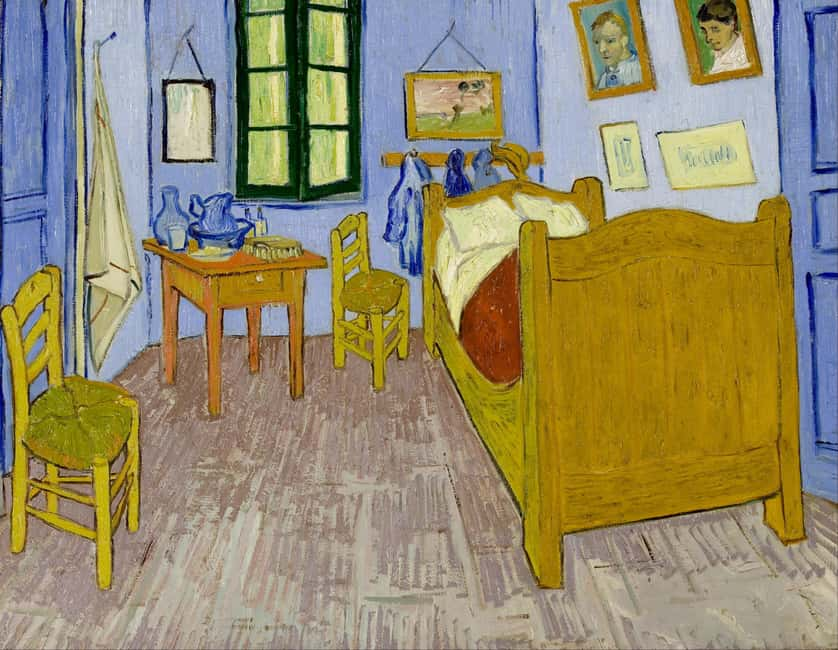
Les Baux de Provence changes the tone of the afternoon. After the Roman remains and Van Gogh sites, you visit an incredible perched village in the Alpilles.
The village is one of the most visited destinations in France, and its hilltop position is a major part of the appeal. You’ll find a setting shaped by stone, height, and open views rather than city squares and painted café scenes.
This stop is valuable because it gives the itinerary variety. The tour does not ask you to spend five straight hours looking at Van Gogh references in Arles and Saint Rémy. Les Baux gives your eyes a break and adds a classic Provençal village to the day.
It is also the stop that may feel shortest if you want a long, relaxed exploration. The full experience lasts five hours and includes Arles, Saint Rémy, and Les Baux. That means you should expect an overview of the village rather than unlimited free time.
I would think of Les Baux as a strong finishing visit. It rounds out the region and makes the outing feel like a Provence tour with a Van Gogh theme, rather than a single-subject art walk.
Same city, a completely different collection:
- Paris: Louvre Museum Timed-Entrance Ticket
★ 4.6 · 71,977 reviews - Paris: Orsay Museum Entry Ticket
★ 4.7 · 25,647 reviews - Paris: Louvre Guided Tour with Reserved Access & Boat Cruise
★ 4.3 · 16,353 reviews - Louvre Museum Masterpieces Guided Tour with Access
★ 4.5 · 12,023 reviews
The pace, group size, and guiding style
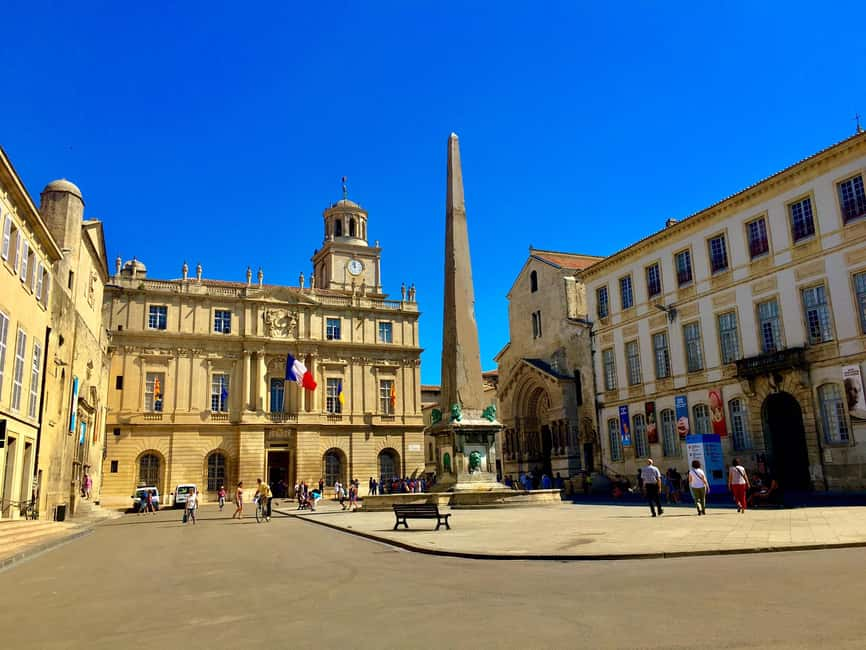
A five-hour duration is efficient, but the route is ambitious. You are covering Arles on foot, visiting Saint Rémy, entering Saint Paul de Mausole, and seeing Les Baux. The exact starting time varies, so check availability before booking.
The group limit of eight is one of the strongest practical features. A small group helps in narrow streets, makes it easier to hear the guide, and reduces the waiting that can slow down a larger party. It also supports the personal side of the tour, since you can ask about a particular painting or monument without trying to catch the guide at the back of a crowd.
English is the tour language. Guide Anne has been praised for keeping the pace moving while balancing Van Gogh with Roman history. One particularly useful quality is her ability to adapt when a sight is crowded, using images on her phone when the painting references around Arles were difficult to see.
You should still prepare for plenty of walking and standing. The route includes an old city, an amphitheatre, a medieval church area, an asylum site, and a hilltop village. The activity is not suitable for wheelchair users, and the provided details do not promise accessible routes or transport arrangements.
The tour does not allow alcohol or drugs. That is a standard rule, but it is worth noting if you are planning a relaxed Provençal day around wine tasting. This particular outing is built around walking, history, and art rather than drinking.
Is $106 a fair price?
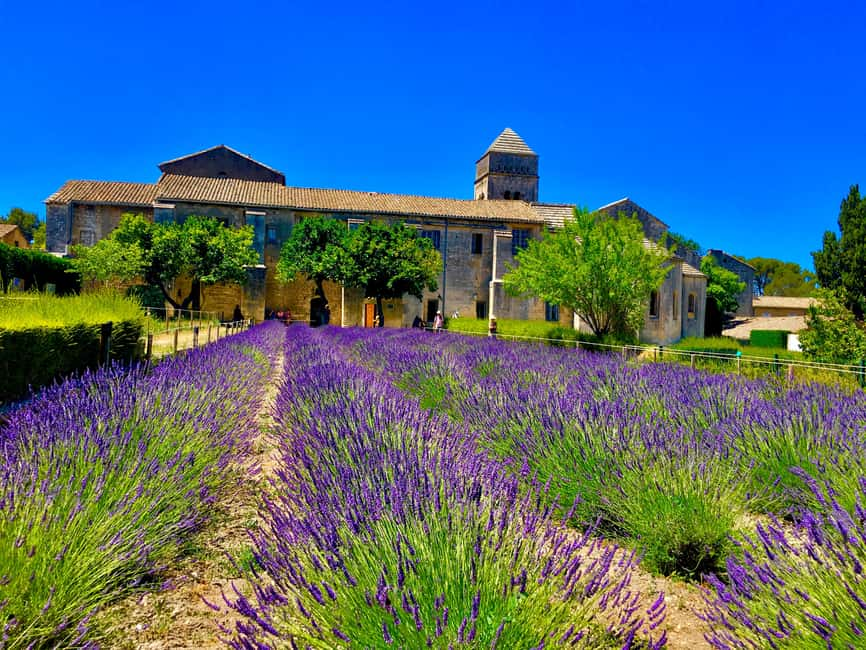
At $106 per person, this is not the cheapest way to see Arles. The value comes from how much is combined in one half-day.
Your price includes a guided walking tour of Arles, a visit to Les Baux de Provence, and entry to Saint Paul de Mausole in Saint Rémy. You are also paying for a small English-speaking group, which usually offers a more useful experience than being one face in a large crowd.
The price makes the most sense if you want a guide to connect the dots. Without one, you could see the amphitheatre, walk through Forum square, visit the church area, and go to Saint Rémy, but you might miss the exact Van Gogh locations or fail to understand how the Roman and medieval sites fit around them.
It is less compelling if you only want to photograph a few Van Gogh locations and spend long stretches exploring independently. The route is tightly packed, and the tour format gives you structure rather than a loose day with plenty of spare time.
I see this as a good value for a first visit to the area, particularly if your time in Provence is limited. It combines three distinct places and includes an important entry ticket. For dedicated Van Gogh enthusiasts, the value will depend on how much biographical detail the guide provides and how much time you want inside each site.
Who will enjoy this experience most?
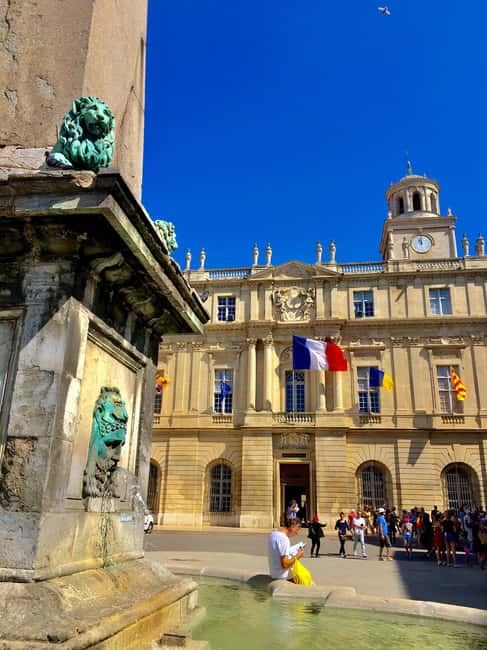
I would choose this tour if you want several Provence highlights in one organized outing. It suits you if you like art but also want Roman ruins, medieval architecture, and a hilltop village.
It is a good match for first-time visitors who may not know how to connect Arles, Saint Rémy, and Les Baux on their own. The guide provides the route and the context, while the small group keeps the day more personal.
You’ll likely enjoy it most if you appreciate a brisk pace. The itinerary has little room for lingering, and each stop has a different purpose. Arles supplies the urban and historic core, Saint Rémy supplies the strongest Van Gogh connection, and Les Baux supplies the scenic village experience.
I would think twice if you need step-free access, want a slow photography day, or are looking for an exhaustive account of Van Gogh’s personal life. The tour can introduce you to those subjects, but it does not promise long, specialist treatment of them.
Should you book Following the steps of Van Gogh?
Book it if you want Van Gogh locations plus the major sights of Arles, not just an art lecture. The mix of the Roman amphitheatre, Saint Trophime, Hotel-Dieu, Saint Paul de Mausole, and Les Baux gives you a solid snapshot of Provence in five hours.
The strongest reasons to go are the small group, the included Saint Paul de Mausole entry, and the practical guiding style shown by Anne in crowded Arles. The main caution is the pace. Ask yourself if you are happy with a well-packed overview, because this route cannot give every stop a long, unhurried visit.
For $106, I think it is a sensible choice for visitors who want a guided introduction to Van Gogh’s Provence and have limited time. If your priority is detailed biography or independent wandering, choose a slower specialist experience instead.
FAQ
How long does the tour last?
The tour lasts five hours.
How much does the tour cost?
The price is $106 per person.
What language is the tour conducted in?
The live tour guide speaks English.
What places connected with Van Gogh are included?
The route includes the locations of The Yellow House, Hotel-Dieu, and Café Terrace at Night in Arles, plus Saint Paul de Mausole in Saint Rémy, where Van Gogh lived and painted.
Is entry to Saint Paul de Mausole included?
Yes. Entry to the Van Gogh asylum at Saint Paul de Mausole is included.
Does the tour include Roman sights?
Yes. The walking tour of Arles includes the Roman amphitheatre and theatre, along with Forum square and the Saint Trophime church and portal area.
Is the tour suitable for wheelchair users?
No. The activity is not suitable for wheelchair users.
Just added around France
- Paris Day Tour with Eiffel Tower, Louvre and Cruise Max 6 People★ 4.5 · 29 reviews
- PRIVATE Louvre Wonders & Hidden Treasures Visit★ 5.0 · 65 reviews
- d’Orsay Museum Paris entry ticket★ 3.5 · 31 reviews
- visiting the masterpieces of impressionists at Orsay museum★ 5.0 · 7 reviews
- Louvre Wheelchair-Accessible Private Tour – Stress-Free & Easy★ 5.0 · 16 reviews
- LOUVRE, Small Group Guided Tour in French (TOP SALES)★ 4.5 · 9 reviews
- Louvre Museum with private guide★ 5.0 · 3 reviews
- Musée d’Orsay Highlights Tour with Gourmet Lunch★ 4.5 · 11 reviews
Art Museum Tours in France, compared.
Louvre Guided Tour with Reserved Access & Boat Cruise
Read our review →
Louvre Overview, Exploration tour and Reserved Entry
Read our review →
Louvre Museum Entry Ticket With Host and River Cruise
Read our review →
Mona Lisa & Louvre Masterpieces Tour with Reserved Access
Read our review →
Louvre Museum – Exclusive Guided Tour (Entry Included)
Read our review →
Louvre Museum Hosted Entry and Mona Lisa Audioguide
Read our review →Browse the lists this tour appears in