REVIEW · PARIS
Treasure Hunt in Paris – From the Panthéon to the Louvre
This Paris treasure hunt turns a walk across the city into a small mystery. You begin beneath the Panthéon, follow clues through the Latin Quarter and past Notre-Dame, then finish by opening a chest in front of the Louvre. It is sightseeing with a puzzle folded into it.
I like the excellent route because it links several major sights without asking you to spend the whole time inside a museum. I also like the paper-based format: you get a booklet, map, answer sheets, and cultural notes, with no app to download or phone battery to worry about.
The main thing to consider is the time limit. The hunt takes about two hours, but it automatically ends after three hours wherever you are. Long stops, a leisurely lunch, or a slow family pace could leave you short of time.
Key points to know before booking
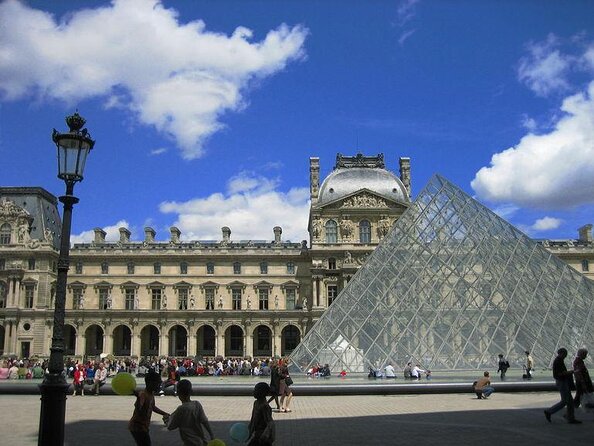
- The route covers central Paris: Start at the Panthéon and finish in front of the Louvre, passing through the Latin Quarter, Île de la Cité, Place Dauphine, Pont Neuf, and Pont des Arts.
- The activity is self-guided: You solve the clues with your own group, though assistance is available if you get stuck.
- Marion is the named host: Her support has been especially useful for families and groups, including one family that arrived late.
- The clues suit mixed ages: Children, teenagers, and adults can work together, with observation and logic rather than specialist knowledge doing most of the work.
- You need to watch the clock: The usual duration is two hours, and the activity ends automatically after three hours.
- The route depends on weather: If poor weather forces cancellation, you can choose another date or receive a full refund.
Why this route works for a first Paris walk
I like the route’s shape. It does not strand you in one square or send you back and forth across town. Instead, it gives you a clear east to west walk through some of central Paris’s most famous settings.
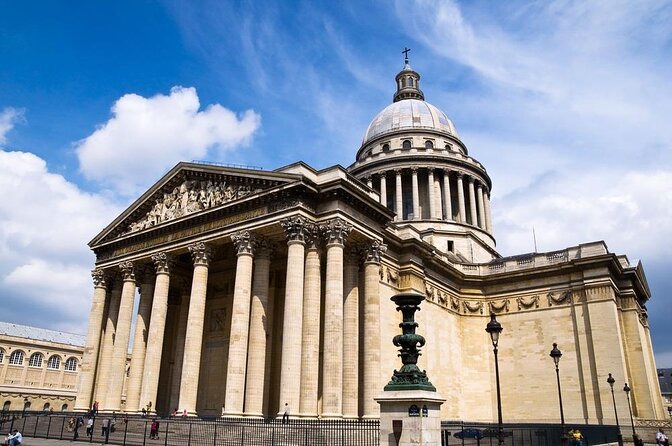
You begin at 1 Rue Soufflot, beside the Panthéon. From there, the trail moves through the Latin Quarter, crosses toward Île de la Cité, passes the Notre-Dame area, and continues through Place Dauphine, across Pont Neuf and Pont des Arts, to the Louvre.
That progression matters. You get a sense of how the old center of Paris fits together, rather than collecting disconnected photo stops. The game gives you a reason to notice doorways, street details, bridges, and public squares that can be easy to pass while following a standard sightseeing route.
You are not entering the Panthéon, Cluny Museum, Notre-Dame, or Louvre as part of this activity. The main value is the walk between them, with the clues directing your attention. If you want detailed interior visits, plan those separately.
More Art Museum Tours in Paris
- Paris: Louvre Museum Timed-Entrance Ticket
★ 4.6 · 71,977 reviews - Paris: Orsay Museum Entry Ticket
★ 4.7 · 25,647 reviews - Paris: Louvre Guided Tour with Reserved Access & Boat Cruise
★ 4.3 · 16,353 reviews
Starting beneath the Panthéon
The Panthéon is a strong place to begin. It is easy to identify, central, and surrounded by the Latin Quarter’s streets. After a short briefing, you receive the booklet and your first clue, then set off in search of the chest’s mysterious owner.
The opening briefing should help you understand how the materials work before you start solving. The booklet includes riddles, a map, cultural notes, and answer sheets. That makes the activity approachable even if your group has never tried a city treasure hunt before.
I would arrive ready to walk rather than expecting a formal guided tour. This is a self-guided investigation, so your group makes the decisions, studies the surroundings, and works through the answers. Assistance is available during the game if you need help, but you are not accompanied step by step by a guide.
The Panthéon area also gives parents a practical advantage. There is a clear landmark for the meeting point, and the first clue begins in a place with plenty to look at while everyone gets organized. The activity is suitable for most people, and the materials are offered in both English and French.
Clues through the Latin Quarter and Cluny Museum
The next section takes you into the Latin Quarter, one of the oldest parts of Paris. Its narrow streets make a good setting for an observation game because the route asks you to look closely rather than simply follow a guide holding up a flag.
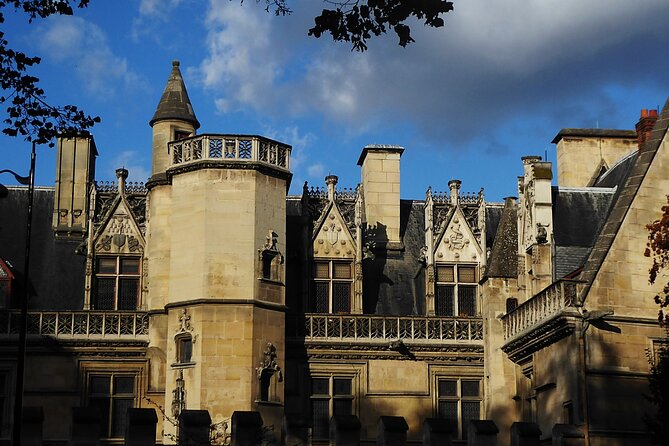
You pass the Cluny Museum, known for its medieval architecture. The museum itself is not listed as an entry, so think of this stop as part of the outdoor route. The surrounding details become part of the puzzle, while the cultural notes add context to what you are seeing.
This is where the activity’s format works best. A normal walk may leave you admiring a facade for a moment and then moving on. A clue gives you a reason to pause, compare details, and talk with the people in your group. The challenge is based on observation and logic, not on knowing every date in French history.
The clues are described as accessible, which makes the hunt a good choice for a mixed-age group. Younger children can search for visual details, teenagers can help with the code and logic, and adults can keep the group moving. The activity does not require everyone to solve every clue alone.
If you visit on a sunny day, bring a hat. You will be outside for the full route, and there is no promise of a shaded break. You can stop during the game, but every pause reduces the time available to finish.
Reaching Notre-Dame and Île de la Cité
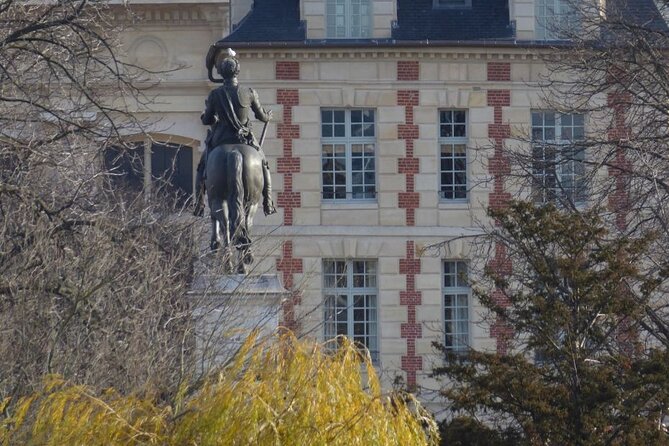
The route then crosses the Seine toward Île de la Cité, the historic center of Paris. The section between Pont Saint-Michel and Notre-Dame gives the hunt one of its most recognizable settings.
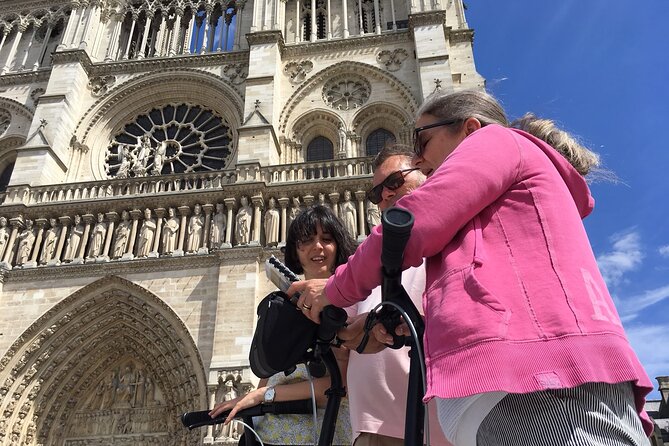
The Notre-Dame area supplies atmosphere without requiring the activity to become a formal cathedral visit. You are still following the mystery of the chest’s owner, but the setting gives the next riddle a strong sense of place. This is a good point to slow down long enough to take in the river and the cathedral exterior, while remembering that the clock continues to run.
The crossing also breaks up the street walking. After the tighter lanes of the Latin Quarter, the Seine opens the route visually. You move from old streets to river views and then into the island’s historic center.
I would keep the group together here. A self-guided game can become less enjoyable if one person races ahead with the booklet while everyone else trails behind. Give different people jobs: one person reads the clue, another studies the map, and someone else checks the surroundings.
More Louvre tours and timed tickets:
- Louvre Museum Masterpieces Guided Tour with Access
★ 4.5 · 12,023 reviews - Paris: Louvre Overview, Exploration tour and Reserved Entry
★ 4.1 · 10,145 reviews - Paris: Louvre Museum Entry Ticket With Host and River Cruise
★ 4.6 · 9,926 reviews - Mona Lisa & Louvre Masterpieces Tour with Reserved Access
★ 4.6 · 6,812 reviews
Place Dauphine, Pont Neuf, and Pont des Arts
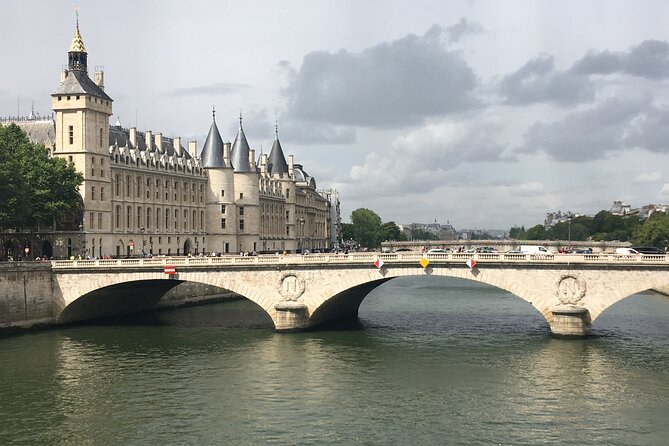
From Île de la Cité, the hunt continues to Place Dauphine. This compact square is one of the more pleasant pauses along the route, with a calmer feel than some of the major thoroughfares nearby.
The trail then reaches Pont Neuf, Paris’s oldest bridge. This is one of the route’s useful historical anchors. You are not just crossing another bridge; you are moving through a part of Paris where the city’s old center, river, and public spaces meet.
Next comes Pont des Arts, long associated with artists and couples. Here the walk points toward the final clues and the Louvre. The route’s last stretch gives you a satisfying sense of progress because you can see the finish line approaching.
These bridge sections are also where weather matters most. Wind, rain, or strong sun can make clue solving less comfortable, particularly for children. The operator requires good weather, and a cancellation caused by poor conditions can be moved to another date or refunded.
The final chest in front of the Louvre
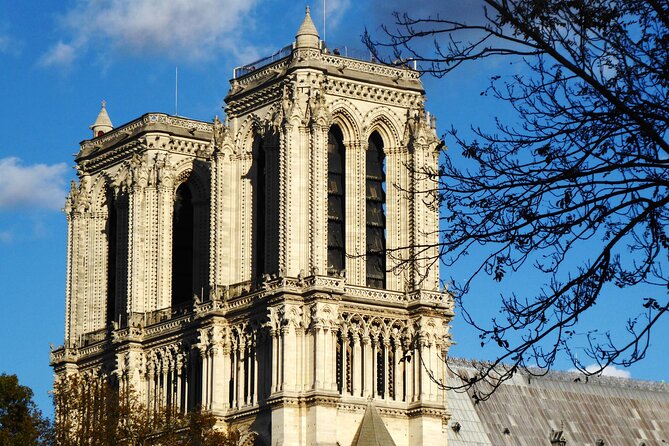
The hunt ends at the Louvre, on Place du Louvre near the Cour Carrée side. The stated end point is in front of the Louvre entrance, with Louvre-Rivoli the closest metro station.
The final chest opening gives the activity a proper ending instead of simply stopping when you reach a famous building. You solve the last clues, crack the code, and discover the story connected with the chest. That final task is likely to be the part younger participants remember most.
Do not confuse the end point with a Louvre ticket. Entry to the museum is not included in the hunt, and the activity ends outside. If you plan to visit the Louvre afterward, schedule that separately and allow enough time for the museum itself.
The finish also makes practical sense for a day of sightseeing. You can continue into the Louvre if you have a reservation, walk toward the Tuileries, or use Louvre-Rivoli for onward transport. The hunt itself does not include food, drinks, hotel pickup, or drop-off.
How the self-guided format feels
The lack of a live guide is both the attraction and the limitation. I like having control over the pace and being able to talk with my own group instead of listening to a fixed speech. The booklet lets you focus on the clues when you want, then pause briefly to look around.
You also need to accept responsibility for the route. The host is available for help, but nobody is leading you from clue to clue. If your group tends to lose maps, wander off, or argue over every answer, a guided walking tour may suit you better.
Marion is the named host connected with the experience. Her help has included accommodating a family that started late, and she is described as flexible and good with children. That matters because treasure hunts can lose their charm quickly when a child gets stuck or a group cannot work out the next step.
The materials are a practical plus. Since there is no app or download, you avoid phone setup, roaming concerns, and the need to keep checking a screen. You still need to manage the paper booklet and answer sheets, so use a small bag or folder if the weather looks uncertain.
Timing, group size, and value at $36.05
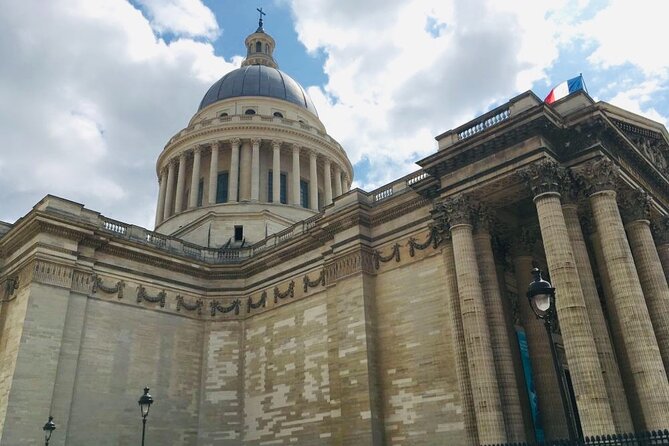
At $36.05 per person, this is not the cheapest way to walk from the Latin Quarter to the Louvre. You are paying for the prepared puzzle, printed materials, cultural notes, route design, and support rather than for admission to a monument.
The price makes more sense for a family or small group that wants an organized activity. A normal city walk costs nothing, but it may not hold a child’s attention for two hours. Here, the clues give everyone a role and provide a clear goal at the end.
The maximum group size is 25 people. That allows the activity to work for a larger school, family, or team-building group, though the experience will feel different with 25 people than with four. In a large group, split up the tasks while staying together and make sure the booklet is shared fairly.
The average duration is two hours. The hard limit is three hours, and the activity ends wherever you happen to be if you have not completed it. That rule is important. Leave enough margin for taking photos, crossing streets, and helping younger children.
I would not book it immediately before a timed museum entry unless you leave plenty of space. The route is designed as a game, not as a precision transfer between two reservations.
Who will enjoy this Paris treasure hunt
This activity suits families with children and teenagers, couples who like puzzles, and groups looking for a light team challenge. It also works well on a first day in Paris because the route introduces several central districts without demanding a long lecture or a full museum visit.
The clues are intended to be accessible, so you do not need advanced French history knowledge. English and French versions are available, which makes it easier for an international group to work from the same materials.
It may be less suitable if you want a detailed explanation of every monument, a seated activity, or a fully led walking tour. It is also not ideal for a day when heavy rain is likely, since the activity takes place outdoors and depends on good weather.
The route is described as suitable for most people, and service animals are allowed. It is near public transportation, but the supplied details do not promise a completely step-free route or describe the exact walking distance. If you have specific mobility needs, ask before booking.
Booking and cancellation details
Confirmation is provided when you book. You can cancel for a full refund up to 24 hours before the start time. Changes or cancellations made inside that 24-hour window are not accepted for a refund.
Because weather affects the activity, a poor-weather cancellation gives you the choice of another date or a full refund. That policy is useful for an outdoor plan, but I would still avoid building an entire day around this one booking until the forecast looks reliable.
Should you book it?
Book this treasure hunt if you want to see central Paris while giving your group something concrete to do. The route links the Panthéon, Latin Quarter, Cluny Museum area, Notre-Dame, Place Dauphine, Pont Neuf, Pont des Arts, and Louvre in a logical two-hour walk. The paper clues and final chest make it especially appealing for families and mixed-age groups.
Skip it if you want museum entry, a detailed live commentary, or complete freedom to linger. The three-hour cutoff is real, and every long photo stop eats into solving time.
For most families, first-time Paris visitors, and groups that enjoy puzzles, I think the $36.05 cost is reasonable. Bring a hat in sunny weather, keep an eye on the clock, and treat the Louvre as the finish rather than part of the ticket. With those expectations, this is a clever way to turn a familiar Paris sightseeing route into a shared adventure.
FAQ
Where does the treasure hunt begin?
It begins at 1 Rue Soufflot, 75005 Paris, at the foot of the Panthéon.
Where does the activity end?
It ends in front of the Louvre Museum on Place du Louvre, on the Cour Carrée side. Louvre-Rivoli is the closest metro station.
How long does the treasure hunt last?
The investigation takes about two hours on average and automatically ends after three hours, wherever you are on the route.
Is this a guided tour?
No. It is a self-guided activity. You receive the materials and can get assistance during the game if needed, but a tour guide does not accompany you along the route.
What materials are included?
You receive a game booklet with riddles, a map, cultural notes, answer sheets, and the other materials needed for the activity.
Is a mobile app required?
No. The activity does not require an app or any downloads. It uses printed materials.
Is the activity offered in English?
Yes. The game is available in English and French.
What happens if bad weather cancels the experience?
You can choose another date or receive a full refund if the activity is canceled because of poor weather.
Just added around Paris
- Paris Day Tour with Eiffel Tower, Louvre and Cruise Max 6 People★ 4.5 · 29 reviews
- PRIVATE Louvre Wonders & Hidden Treasures Visit★ 5.0 · 65 reviews
- d’Orsay Museum Paris entry ticket★ 3.5 · 31 reviews
- visiting the masterpieces of impressionists at Orsay museum★ 5.0 · 7 reviews
- Louvre Wheelchair-Accessible Private Tour – Stress-Free & Easy★ 5.0 · 16 reviews
- LOUVRE, Small Group Guided Tour in French (TOP SALES)★ 4.5 · 9 reviews
- Louvre Museum with private guide★ 5.0 · 3 reviews
- Musée d’Orsay Highlights Tour with Gourmet Lunch★ 4.5 · 11 reviews
Art Museum Tours in Paris, compared.

Louvre Guided Tour with Reserved Access & Boat Cruise
Read our review →
Louvre Overview, Exploration tour and Reserved Entry
Read our review →
Louvre Museum Entry Ticket With Host and River Cruise
Read our review →
Mona Lisa & Louvre Masterpieces Tour with Reserved Access
Read our review →
Louvre Museum – Exclusive Guided Tour (Entry Included)
Read our review →