
REVIEW · MADRID
Paseo del Arte: Prado, Reina Sofía and Thyssen Museum
Madrid’s great art story unfolds across three museums, and this tour gives you a clear path through it. You’ll move from Velázquez and Goya at the Prado to Picasso’s Guernica at Reina Sofía, then on to European and modern works at the Thyssen-Bornemisza.
I like the small group of up to seven, which gives the guide room to answer questions and adjust the pace. I also like the way the tour links art with politics, religion, social customs and painting methods, rather than treating each canvas as an isolated object. The main drawback is the sheer amount of material: eight hours and three museums can leave you with a full head and tired feet.
Key points to know before booking
- Three major museums in one day: The tour covers the Prado, Reina Sofía and Thyssen-Bornemisza, with admission to all three included.
- A small, semi-private group: The maximum group size is seven, a useful format for asking questions and hearing the guide clearly.
- Named guides with strong art backgrounds: Ana, Ana Cristina and Laura have led tours praised for clear explanations, warmth and a lively teaching style.
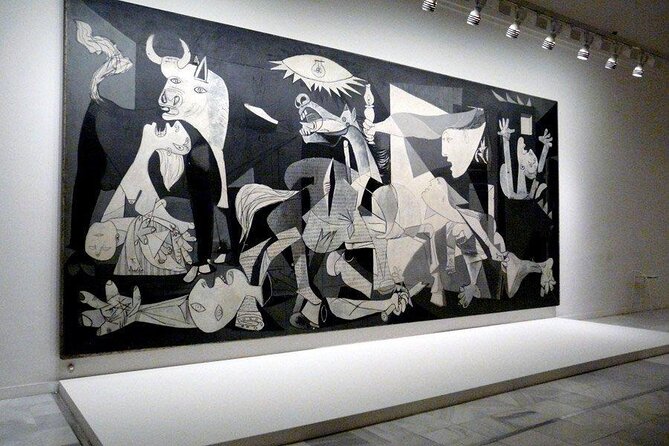
- Guernica gets serious attention: You’ll learn about Picasso’s process, the Spanish Civil War and the symbols in his most famous political painting.
- Walking connects the museums: The guide leads you between the museums, making the Paseo del Prado part of the experience.
- Plan for a demanding day: Each museum receives about 90 minutes, with roughly 90 minutes of free time for lunch.
Why this Madrid art tour works
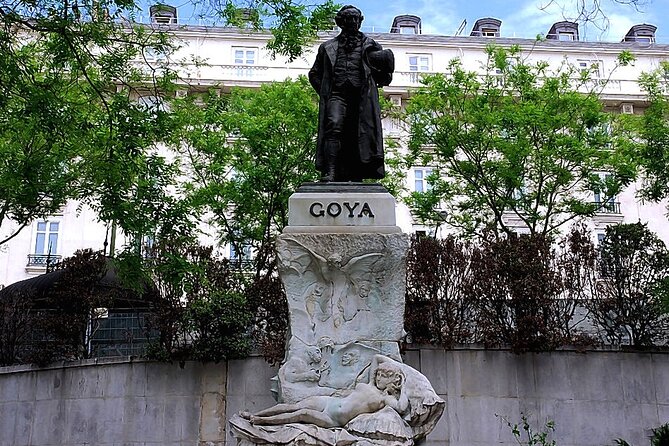
Madrid’s Paseo del Arte is unusually convenient for museum lovers. The Prado, Reina Sofía and Thyssen-Bornemisza are all in the same central area, yet their collections feel very different. You are not simply seeing three versions of the same museum.
The Prado takes you into royal collections and the great traditions of European painting. Reina Sofía shifts the focus toward modern Spain, especially Picasso and the trauma of the Civil War. The Thyssen then fills in many gaps, moving across centuries and styles from early European painting to Impressionism, Expressionism, Surrealism, abstraction and Pop Art.
I find that sequence useful because it gives you a working outline of European art. You can see how religious commissions, royal taste, war, new technology and changing ideas about the individual affected what painters put on canvas.
The guide is the key to making the day work. The tour is not designed as three rushed ticket stops. You receive an expert guide throughout, admission to each museum, a walking tour between them and radio equipment for the explanations. With only up to seven people, the format should feel more personal than a large coach group, while still costing less than arranging a completely private day.
The experience is offered in English and begins at 10 a.m. at the Prado. It ends at the Thyssen-Bornemisza, so you finish in the same museum district rather than being taken back across Madrid.
More Art Museum Tours in Madrid
- Madrid: Prado Museum Entry Ticket
★ 4.6 · 20,699 reviews - Madrid: Small Group of Prado Museum Tour & Optional Tapas
★ 4.6 · 2,437 reviews - Madrid: Prado Museum Guided Tour with Skip-the-Line Ticket
★ 4.5 · 2,018 reviews
Starting at the Prado with Velázquez and Goya
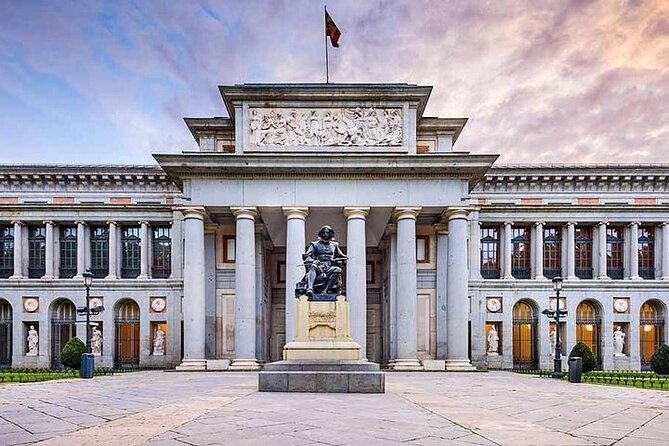
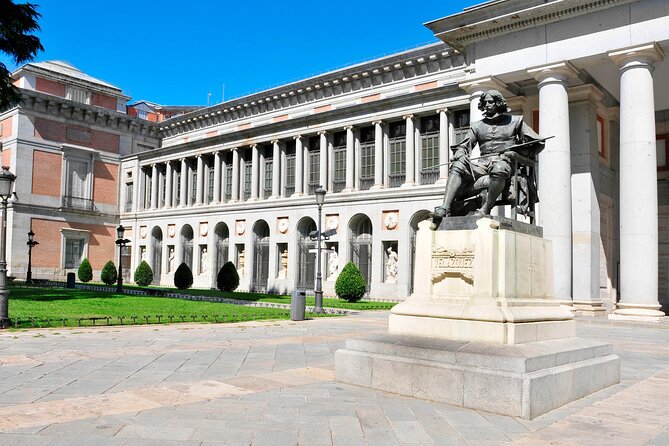
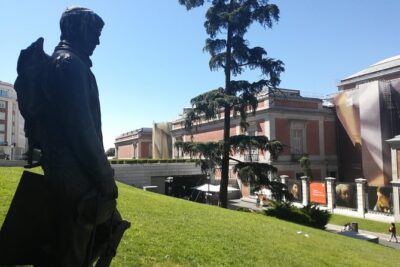
The Prado is the heavyweight opening act. Founded in 1819, it contains more than 7,000 paintings, though a 90-minute visit can only introduce you to a small selection. That is not a flaw in the tour. It is the reason a guide matters here.
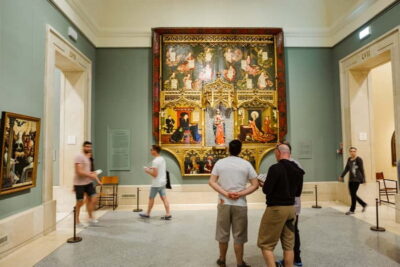
You can expect attention to major Spanish painters, especially Diego Velázquez and Francisco de Goya. The focus is not only on names and dates. The guide explains how perspective works, how artists used different painting techniques and what the images reveal about the customs and social order of their time.
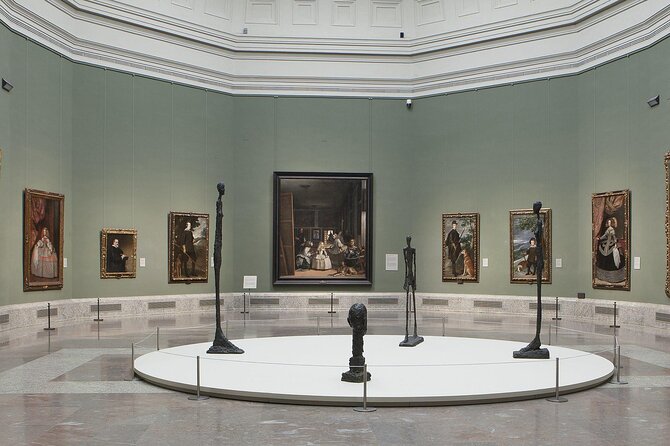
Velázquez’s Las Meninas is a natural high point. The painting is famous for its complicated use of perspective and the way it plays with the roles of painter, viewer and royal subject. A guide can point out the characters, the tiny visual clues and the questions built into the scene. Without that help, it is easy to admire the picture while missing why it has fascinated artists and historians for centuries.
The Prado also gives you a strong introduction to Northern European art. You’ll see Flemish Primitives, works marked by close detail and careful surfaces, along with paintings by Anthony van Dyck. The enigmatic pictures of Hieronymus Bosch add another layer. His images reflect the fears, beliefs and moral concerns of his society, but they do not offer easy answers.
Italian painting appears here as well, with works associated with Fra Angelico, Raphael and Titian. Titian’s equestrian portraits and religious scenes later influenced generations of painters. This range makes the Prado more than a museum of Spanish art. It is a record of the connections between Spain, Italy and Northern Europe.
The limitation is time. Ninety minutes goes quickly in a museum this large. You will not see everything, and you should not expect a leisurely look at every room. The benefit is that the guide helps you choose what deserves your attention, so you leave with a useful framework instead of a blur of famous names.
Walking from one museum to the next
The move between museums is part of the design. Rather than spending the day inside one enormous building, you walk with the guide along Madrid’s art district. That gives your eyes a break and lets the day change rhythm.
The walking portion also helps connect the museums as a single cultural area. You are not dealing with separate taxi rides, confusing transfers or the risk of arriving late at the next entrance. The guide leads the route, and the audio equipment helps you follow the commentary.
Wear comfortable shoes. The tour description does not give a precise walking distance, but the experience includes movement between three museums and several hours on your feet. That is worth considering if you prefer slow museum days with long café breaks.
Reina Sofía and Picasso’s Guernica
Reina Sofía changes the mood sharply. Its central work for this tour is Picasso’s Guernica, painted in Paris between May and June 1937 after the bombing of the Basque town of Guernica during the Spanish Civil War.
This is the part of the day where historical background matters most. The guide explains the painting’s symbols, the process behind its creation and the political story that gave it such lasting force. You’ll have a better chance of understanding the painting as a deliberate response to violence, rather than simply a large black-and-white modernist image.
The work reached Spain in 1981 and was first shown at the Casón del Buen Retiro. Since 1992, it has been displayed permanently at Reina Sofía. That movement is part of the painting’s story too. Guernica is not only about one event in 1937. It also reflects Spain’s changing relationship with its own past.
The tour’s focus on Picasso’s legacy is especially useful if modern art feels difficult to approach. One past participant described a playful exercise involving guessing what might appear in a Cubist painting. That kind of question-led teaching can make unfamiliar styles less intimidating. You are encouraged to look closely and form an idea before receiving the explanation.
Reina Sofía also marks the point where the tour may feel most emotionally demanding. Picasso’s painting is powerful, but the subject is grim. If you need quiet time afterward, the scheduled lunch break gives you a chance to reset before the final museum.
More Reina Sofia visits:
- Madrid: Reina Sofia and Prado Museum Tickets and Guided Tour
★ 4.6 · 342 reviews - Prado Museum with Reina Sofia Museum Guided Tour
★ 4.0 · 311 reviews - Madrid: Prado & Reina Sofía Museums Guided Tour
★ 4.5 · 180 reviews - Prado Museum Guided Tour and Optional Reina Sofia
★ 4.0 · 71 reviews
The Thyssen-Bornemisza’s broad sweep
The Thyssen-Bornemisza is a good final stop because it widens the story again. Its collection includes close to 1,000 works from the 13th through the 20th centuries, with artists such as Titian, Rubens, Rembrandt, Caravaggio, Manet, Renoir, Van Gogh, Gauguin, Kandinsky, Edward Hopper and Picasso.
You’ll see works that help fill in areas not strongly represented in Madrid’s older royal collection. Italian and Flemish early painters sit alongside Renaissance art, Impressionism and later movements. Monet, Degas, Van Gogh and Gauguin bring a different use of color, light and brushwork from what you saw at the Prado.
The 20th-century sections add Fauvism, Expressionism, Surrealism, abstraction and Pop Art. Picasso and Dalí provide important Spanish connections, while artists such as Kandinsky and Hopper broaden the story beyond Spain.
This museum can be especially rewarding after the Prado and Reina Sofía because you have already encountered several major ideas. You may recognize how artists moved away from traditional religious and royal subjects, how color became more independent and how modern painters began to question what a painting needed to show.
Again, 90 minutes is an introduction, not a complete visit. If one section catches your attention, you may wish you had more time to linger. Still, the guide gives you a path through a collection that can otherwise feel scattered across many periods and styles.
Lunch and the practical rhythm of the day
The schedule includes about 90 minutes of free time for lunch in Madrid. Lunch itself is not included unless you choose an option that adds it, so check the booking terms carefully before paying.
This break matters. Three museums in one day can become an endurance test without a pause, especially if art history is new to you. You can use the time to eat, rest and talk over what you have seen before returning to the final museum.
Because no specific restaurant is named, you should not assume a particular meal or venue. If you prefer not to make decisions during a busy museum day, the option to include lunch may be worth considering. If you have dietary needs or a favorite place in Madrid, free time gives you more control.
The guides and teaching style
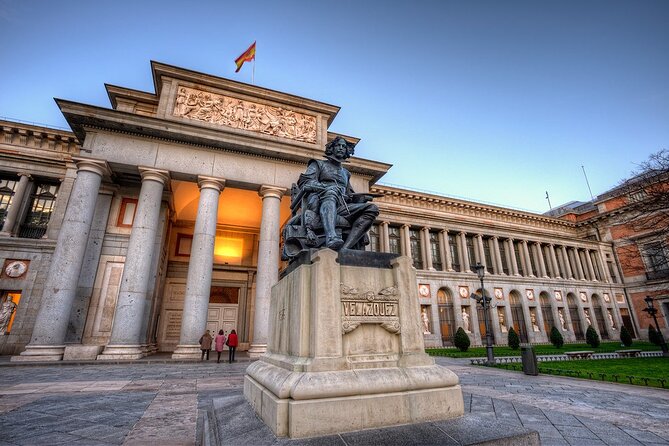
The strongest feature of this experience is the guide’s role as a teacher. Ana is praised for bringing energy and passion to many styles and artists. Ana Cristina is associated with a relaxed day that connects European art to the historical forces behind it. Laura is described as careful with the pace and clear in her explanations.
The supplied information also refers to a day led by two guides, one with a strong history background and another with an art specialty. The usual format is an expert guide throughout, so the exact guide arrangement may vary.
That range of expertise matters because the museums demand different skills. The Prado benefits from visual analysis and knowledge of court painting. Reina Sofía requires political and social context. The Thyssen asks you to move quickly across movements and centuries.
The radio guides are a practical plus. In a museum, even a group of seven can spread out around a painting. Good audio equipment lets you stand at a useful viewing distance without missing the explanation.
Value, group size and the full-day commitment
No tour price is provided here, so I cannot judge the exact cost against comparable Madrid experiences. I can assess what is included: admission to three museums, an expert guide, the walking connections, radio equipment and a small group capped at seven.
Buying three tickets separately may seem simpler, but it does not give you the structure or interpretation. The value is strongest if you want help deciding what to see and why it matters. It is weaker if you already know these collections well and prefer to wander alone.
The group limit is also important. A maximum of seven is small enough for questions and discussion, but the tour is still semi-private rather than fully private. If you want to set every stop and spend half an hour with one painting, an independent visit may suit you better.
This is a full eight-hour commitment, approximately. You should expect a steady day of listening, walking and standing. The experience suits you if you would rather gain a strong overview than spend an entire morning in one gallery.
Who should book this experience
I would choose this tour if you are visiting Madrid for the first time and want an organized introduction to its major art museums. It also suits couples or small groups who want serious art instruction without booking a fully private guide.
You do not need an advanced art background. The teaching style described by the experience works for both art lovers and beginners, with attention to technique, stories, symbols and historical setting.
It is a particularly good match for you if:
- You want to see all three major museums in one day.
- You enjoy learning how history shaped painting.
- You want help with works such as Las Meninas and Guernica.
- You prefer a small group to a large scheduled tour.
- You value a guide who can explain styles rather than simply name artists.
You might skip it if you dislike fixed schedules, need lots of breaks or want to explore each museum at your own pace. You may also find the day too concentrated if your main goal is photography, shopping or long café stops.
The tour requires good weather, presumably because museum connections are made on foot. If poor weather cancels the experience, you are offered another date or a full refund. You can cancel for a full refund up to 24 hours before the 10 a.m. start time. Changes or cancellations within 24 hours are not refunded.
Should you book the Paseo del Arte?
Book it if you want Madrid’s major art collections explained as one connected story. The small group, included museum tickets, radio equipment and strong guide focus make the day a practical choice for anyone who wants more than a quick look at famous paintings.
Go in with realistic expectations. You will not master three museums in eight hours, and you will not have time for every room. You will, however, leave with a better sense of why Velázquez, Goya, Picasso, Bosch, Titian, Van Gogh and the other artists matter.
For a first visit to Madrid, I see this as an efficient and serious introduction. For a seasoned museum visitor, its value depends on the guide and the chance to hear fresh connections. Either way, plan for comfortable shoes, an open mind and a full day of art.
FAQ
How long does the Paseo del Arte tour last?
The experience lasts approximately eight hours. The listed museum visits are about 90 minutes each, with around 90 minutes of free time for lunch.
Which museums are included?
Admission is included to the Museo Nacional del Prado, Museo Nacional Centro de Arte Reina Sofía and Museo Nacional Thyssen-Bornemisza.
Where does the tour begin and end?
The tour begins at the Prado Museum in Madrid at 10 a.m. It ends at the Thyssen-Bornemisza National Museum on Paseo del Prado.
How large is the group?
The experience has a maximum of seven participants. It is described as a semi-private small-group tour.
Is lunch included?
Lunch is not included in the standard inclusions. A lunch option is available, so check the selected booking option if you want the meal arranged.
What is the cancellation policy?
You can cancel at least 24 hours before the start time for a full refund. Cancellations or changes made within 24 hours are not refunded or accepted. If poor weather causes the tour to be canceled, you are offered another date or a full refund.
More Prado Tours in Madrid
- Madrid: Prado Museum Guided Tour With Fast Access
★ 4.8 · 1,785 reviews - Prado Museum Small Group Tour with Skip the Line Ticket
★ 5.0 · 1,738 reviews - Royal Palace & Prado Museum Skip the Line Guided Tour
★ 4.5 · 1,347 reviews - Madrid: Prado Museum Ticket with In-App Audio Guide
★ 3.6 · 1,154 reviews
Just added around Madrid
- Retiro Park & Prado Museum Private Tour★ 5.0 · 7 reviews
- Prado, Thyssen-Bornemisza or Reina Sofia Museum Private Tour★ 5.0 · 4 reviews
- Italian Prado Museum Tour | Maximum 7 people | No line★ 5.0 · 13 reviews
- Prado Museum Without the Crowds-Exclusive Guided Pre Opening Tour★ 5.0 · 137 reviews
- Madrid Highlights Private Tour with Prado Museum & Royal Palace★ 4.5 · 6 reviews
- Private Tour of Prado Museum in Madrid★ 4.5 · 28 reviews
- Prado Museum Guided Tour – In Spanish – 7 people per tour maximum★ 5.0 · 67 reviews
- Prado Museum Tour with ticket, small group & expert guide★ 5.0 · 6 reviews
Art Museum Tours in Madrid, compared.
Small Group of Prado Museum Tour & Optional Tapas
Read our review →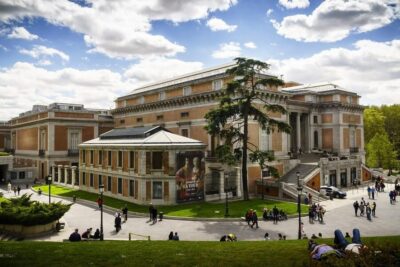
Prado Museum Guided Tour with Skip-the-Line Ticket
Read our review →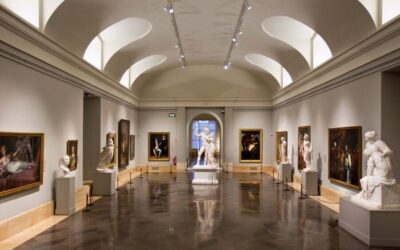
Prado Museum Small Group Tour with Skip the Line Ticket
Read our review →
Royal Palace & Prado Museum Skip the Line Guided Tour
Read our review →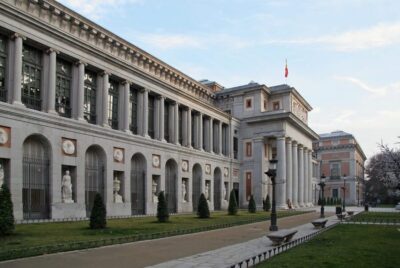
Prado Museum Guided Tour with Skip-the-Line Ticket
Read our review →Browse the lists this tour appears in