
REVIEW · MADRID
Prado Museum with Reina Sofia Museum Guided Tour
The clever part of this Madrid outing is its contrast. In about four hours, you move from the Prado’s royal paintings and centuries of Spanish art to the Reina Sofía’s modern works, surrealism, cubism, and Picasso’s Guernica. The two museums tell different chapters of the same story, and a good guide helps connect them.
I like the small-group format, advertised at no more than 10 people, and I like the way the best guides, including Elena, Helena, Alicia, and Gabi, explain both art and the political world around it. The main caution is pace: two huge museums in one morning leave no time for a full collection, and some departures have had larger groups, weak audio devices, or delays.
Key points to know before booking
- Two major museums in one morning: The tour covers about 1 hour 30 minutes at the Prado and 1 hour 15 minutes at the Reina Sofía, with time also needed for entry and movement between sites.
- A strong art-history contrast: Expect Velázquez, El Greco, and Bosch at the Prado, then Picasso, Dalí, Miró, and modern Spanish art at the Reina Sofía.
- The Prado visit is selective: You see important masterpieces and receive context, but you will not come close to covering the entire museum.
- The Reina Sofía ends the tour: If you choose the two-museum option, the guide finishes at C. de Sta. Isabel, 52.
- Audio matters: Whisper systems have caused problems on some departures, especially in crowded galleries.
- Check the group size and option: The advertised limit is 10 people, but some departures have been larger, and not every booking option includes both museums.
Why this two-museum plan works in Madrid
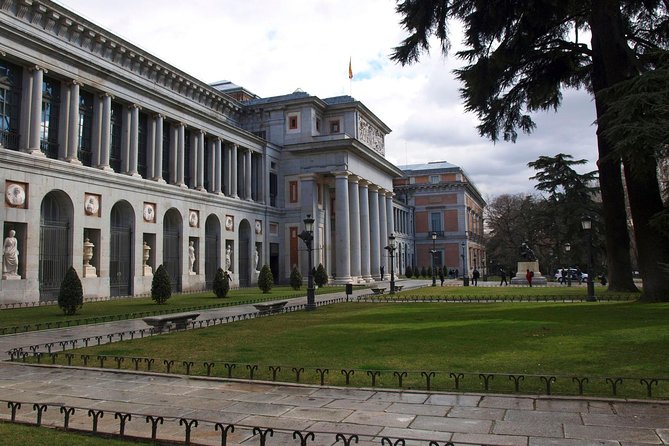
Madrid’s great art museums are close enough to combine, but they are large enough to overwhelm you. This tour gives you a route through each one instead of leaving you to wander from room to room with a map and a tired pair of feet.
The Prado is the older, more traditional stop. Its collection brings together Spanish royal art and major European painters. The Reina Sofía takes you into the 20th century, where artists used distorted bodies, fractured forms, dream imagery, and political symbols to make their point.
That pairing gives your morning a useful shape. At the Prado, you look at how painters handled court portraits, religion, mythology, and power. At the Reina Sofía, you see artists question those traditions and respond to war, social change, and modern life.
At $81.70 per person, the price is easiest to justify if you want admission to both museums and prefer an organized explanation rather than a self-guided visit. It is less attractive if you want to linger over hundreds of works, visit only one museum, or dislike moving at a group pace.
More Art Museum Tours in Madrid
- Madrid: Prado Museum Entry Ticket
★ 4.6 · 20,699 reviews - Madrid: Small Group of Prado Museum Tour & Optional Tapas
★ 4.6 · 2,437 reviews - Madrid: Prado Museum Guided Tour with Skip-the-Line Ticket
★ 4.5 · 2,018 reviews
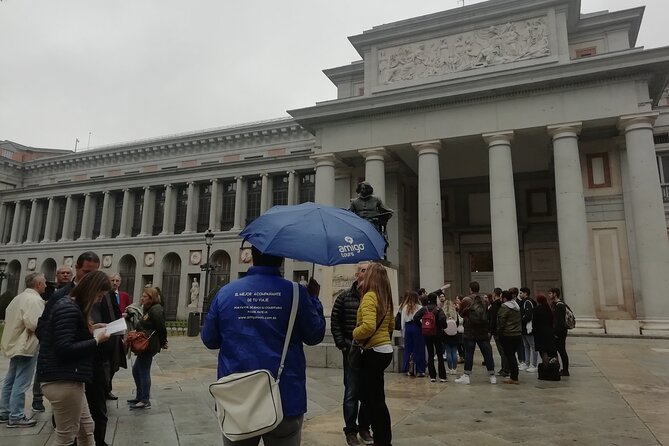
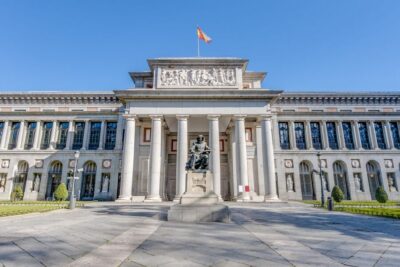
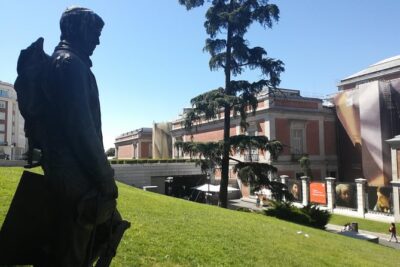
Meeting at the Velázquez Monument at 9:45 a.m.
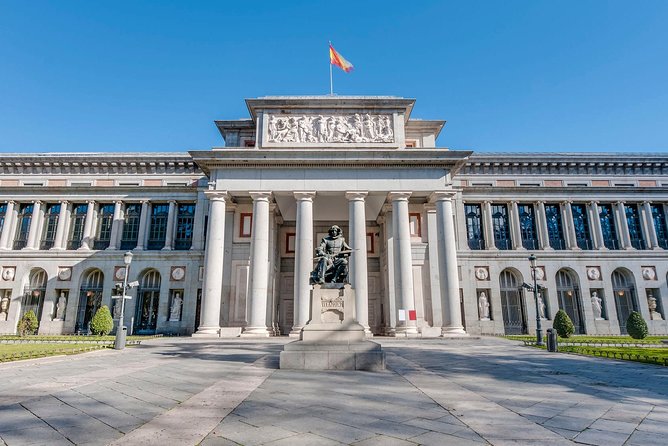
The meeting point is the Monumento a Velázquez on Paseo del Prado, 11. This is a practical starting place near the Prado’s grand boulevard and close to public transportation.
You should arrive early. The advertised Prado time is 1 hour 30 minutes, but part of the early schedule goes to checking tickets, organizing the group, and distributing whisper equipment. A few minutes spent finding the guide is not a problem, but a late arrival can create stress because museum entry is tied to the group’s timing.
The tour runs simultaneously in English and Spanish. That detail matters. If you are in an English-speaking group, the guide may still need to repeat some explanations in Spanish, or the reverse. Several people have found the information excellent but the bilingual format slower, particularly at the Reina Sofía.
The booking information describes a maximum of 10 people. That is the size you want for a museum tour, since small groups can gather around a painting without blocking a whole room. Still, some departures have reportedly reached roughly 25 people, particularly during busy periods. I would confirm the expected group size before paying if personal attention is a major reason for booking.
The Prado: a focused route through Spanish painting
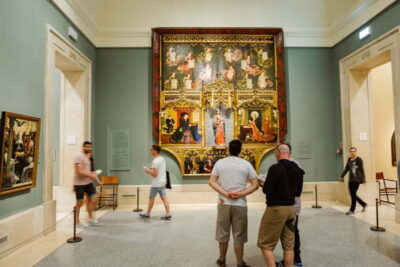
The Prado is the intellectual center of the first half of the morning. You enter with a guide who selects major works rather than trying to march you through every corridor.
Expect attention to painters such as Diego Velázquez, El Greco, and Hieronymus Bosch. These artists give the guide plenty to explain: composition, symbolism, facial expression, technique, patronage, and the way Spanish art changed over time.
Velázquez is especially important here. His work rewards close looking, and a guide can point out how a scene is arranged, where your eye goes first, and how small gestures reveal rank or character. El Greco offers a sharp contrast, with elongated forms and a style that can look strange until someone explains what makes it deliberate. Bosch adds another kind of challenge, with crowded scenes and curious details that invite questions.
The best part of this section is not simply seeing famous paintings. It is learning how to look at them. A strong guide can explain why a work matters, then give you a few details to seek out yourself. Alicia, Elena, Helena, and Gabi have been praised for making this information clear without turning the visit into a lecture.
Do not expect a full Prado visit. The museum’s collection is far too large for that, and the tour spends time discussing selected paintings in detail. One guide may linger over representative works, which means you see fewer rooms but gain more from the works you do see.
I consider that a fair trade for a first visit. You leave with a useful map of the collection and a list of artists to revisit. If you already know the Prado well, the fixed route may feel too basic. If this is your first encounter, it can save you from spending an hour wandering without a plan.
The whisper equipment is the weak point. It is intended to let you hear the guide without crowding around her, but audio devices have sometimes malfunctioned or been difficult to hear in busy rooms. One reported departure had people leaving early because they could not follow the explanation. If the sound cuts out, tell the guide immediately rather than quietly falling behind.
Also note the museum’s bag rules. One experience included visitors having to discard water before entering. The supplied information does not spell out every rule, so avoid arriving with unnecessary food or drinks in your bag.
Moving from the Prado to the Reina Sofía
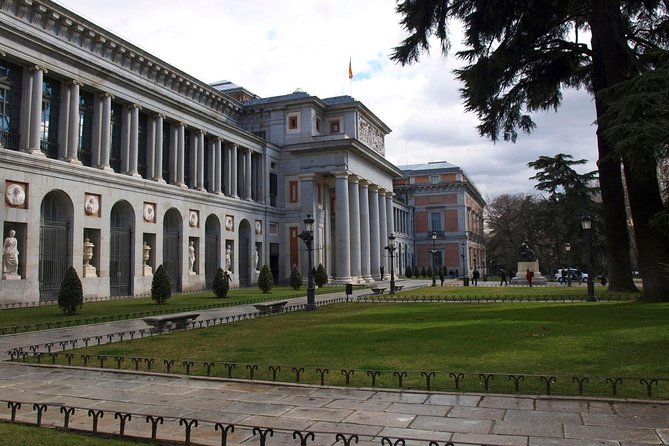
The tour then continues to the Museo Nacional Centro de Arte Reina Sofía. The itinerary presents this as an accompanied move, but one departure left people to find the second museum on their own. That is not a small detail, especially if you do not know Madrid or the group has been split up.
The endpoint is the Reina Sofía at Calle de Santa Isabel, 52. If you choose the two-museum option, the tour finishes there rather than returning you to the Prado. Plan your afternoon from the Reina Sofía side of central Madrid.
The transfer itself is not the main attraction. It is simply the bridge between two different ways of seeing Spanish art. Still, pay attention when the guide gives directions, and ask clearly where the group should meet if the escort arrangement is not obvious.
More Reina Sofia visits:
- Madrid: Reina Sofia and Prado Museum Tickets and Guided Tour
★ 4.6 · 342 reviews - Madrid: Prado & Reina Sofía Museums Guided Tour
★ 4.5 · 180 reviews - Prado Museum Guided Tour and Optional Reina Sofia
★ 4.0 · 71 reviews - Private Tour to the Prado and Reina Sofía Museum
★ 5.0 · 40 reviews
The Reina Sofía: modern art and the power of Guernica
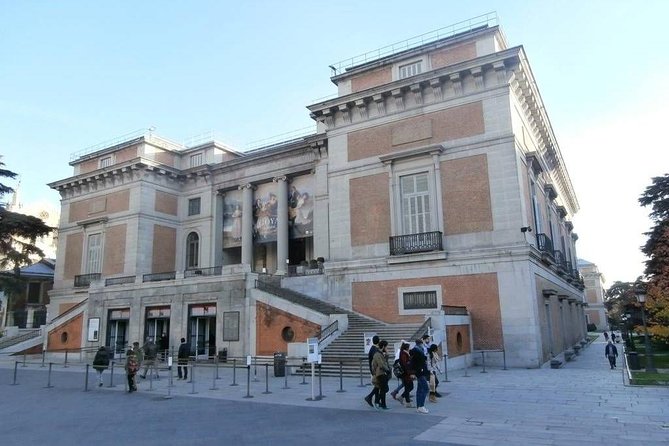
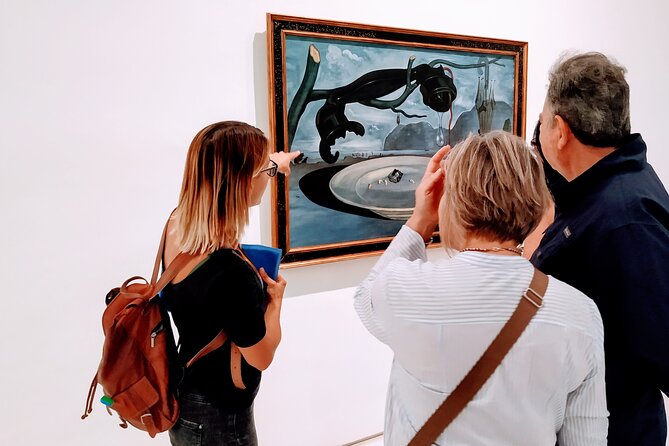
The Reina Sofía changes the mood quickly. This is Spain’s modern-art museum, with surreal scenes, cubist works, and paintings by Picasso, Salvador Dalí, and Joan Miró.
The guide’s job here is particularly useful because modern art can feel less direct than the Prado’s portraits and religious scenes. A fractured face or strange dream image may need some context before it begins to make sense. The strongest guides explain the artist’s life, the materials used, and the social or political ideas behind the work.
Picasso’s Guernica is the major draw. It is the work most people have come to see, but a guide can help you notice how the figures, animals, broken forms, and limited color work together. The painting is not just a large historical image. Its force comes from the way it turns violence and grief into a visual language that still feels immediate.
The Reina Sofía section lasts about 1 hour 15 minutes. That is enough for a guided introduction to important works, but not enough to explore the museum at leisure. You will likely leave with a strong sense of the main rooms and artists, then want to return for works the group passed by.
The bilingual format may slow this part of the tour. One well-received guide had to explain everything in both English and Spanish, creating pauses between rooms. That can be tiring, but it is better to know about it before booking. If you want a fast, private route directly to Guernica, this may not suit you.
Guides make the biggest difference
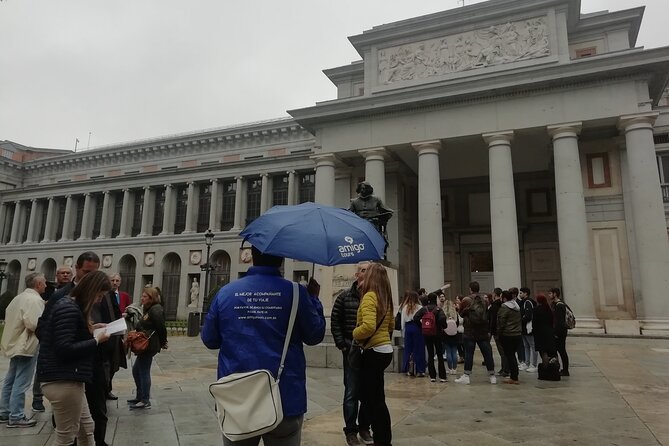
The guide is the heart of this experience. The museum buildings and paintings are excellent on their own, but the value of a paid tour rests on the quality of the person leading it.
The strongest reports praise guides named Elena, Helena, Alicia, Gabi, Ayla, Elaina, and Lei. Elena and Helena are repeatedly described as clear, warm, and strong in both art and Spanish history. Alicia is praised for linking paintings to one another and placing them in their historical setting. Gabi is noted for keeping the pace under control while explaining the works in an accessible way.
That range of feedback gives you a realistic expectation. You may receive more than a list of dates and names. The guide may explain how politics, religion, economics, and social life shaped the art. You should also feel free to ask questions, since several guides are specifically praised for welcoming them.
But guide quality is not the only variable. A fast-moving guide can make a museum visit feel like a chase. One departure had people struggling to keep up at the Reina Sofía, while another lost time waiting for members of the group. The advertised small size should help, but it is worth staying alert and making sure you can hear before the group moves on.
What the $81.70 price really buys
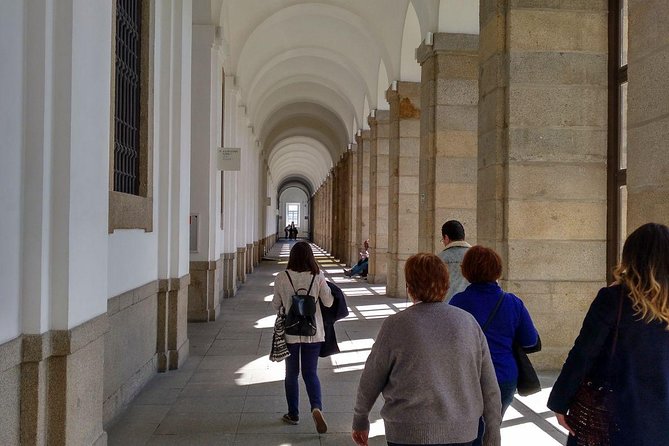
The fee includes a professional guide and admission to the Prado and Reina Sofía. Food, drinks, and transportation are not included.
The price is reasonable for you if three things matter: you want both museums, you want a planned route, and you value explanations of the major works. Buying entry and figuring out two enormous collections alone may cost less, but it also gives you more decisions to make and more chances to miss the works that matter most.
The price is harder to defend if you only want a short look at one museum. In that case, a single museum ticket and your own plan may offer better value. The tour also does not give you unlimited time inside both collections. You are paying for direction and interpretation, not an all-day museum pass.
I would view this as an orientation tour. Use it to learn the museums, identify the paintings you care about, and return later if your schedule allows. That approach makes the limited time feel like a benefit rather than a flaw.
Who should book this museum tour
I would recommend it most strongly to a first-time Madrid visitor with one morning available for art. It also suits you if art museums feel intimidating, if you want historical context, or if you prefer someone else to handle the route and entry process.
It is a good match for couples, families with older children, and small groups who want a shared introduction. Most people can participate, and service animals are allowed. The tour is near public transportation, which makes the start and finish fairly practical.
You may want another plan if you are a serious art specialist, need a slow pace, or hope to see most of the Prado. The schedule is tight, and a larger-than-advertised group can reduce the personal feel. You should also think twice if you need perfect audio or dislike bilingual guiding.
Book well ahead if your Madrid dates are fixed. This experience is often reserved about 38 days in advance. You receive confirmation when booking, and free cancellation is available up to 24 hours before the start time. Changes or cancellations inside that window are not accepted for a refund. The booking information also says poor weather can lead to a different date or a full refund.
Should you book it?
Book this tour if you want a smart first look at Madrid’s two essential art museums and you value a guide who can connect paintings with Spanish history. The Prado’s Velázquez, El Greco, and Bosch followed by the Reina Sofía’s Picasso, Dalí, Miró, and Guernica makes a satisfying four-hour route.
I would confirm two things before paying: that your option includes both museums, and that the expected group size is close to the advertised 10 people. If those details are in order, the tour offers good structure and strong cultural value. Just treat it as an introduction, not a complete visit, and leave room in your schedule to return to the museum that captures your interest most.
FAQ
How long does the tour last?
The experience lasts approximately four hours. The Prado portion is listed at 1 hour 30 minutes, and the Reina Sofía portion at 1 hour 15 minutes, with extra time needed for ticket organization, audio equipment, and movement between locations.
Where does the tour start?
It starts at the Monumento a Velázquez, Paseo del Prado, 11, in Madrid. The start time is 9:45 a.m.
Where does the tour finish?
The two-museum option ends at the Museo Nacional Centro de Arte Reina Sofía, Calle de Santa Isabel, 52. If you do not choose the Reina Sofía visit, you can remain at the Prado for as long as permitted.
Are both museum admissions included?
The two-museum option includes entrance to the Prado Museum and the Reina Sofía Museum. Check the option you select, since the inclusions can differ.
Is the tour offered in English?
Yes. The experience is offered in English, and tours may run simultaneously in English and Spanish.
How many people can join the tour?
The advertised maximum is 10 people. Some departures have reportedly been larger, so confirm the expected group size if a small group is important to you.
Can I cancel for a full refund?
You can cancel at least 24 hours before the local start time for a full refund. Cancellations or changes made less than 24 hours before the start time are not accepted for a refund.
More Prado Tours in Madrid
- Madrid: Prado Museum Guided Tour With Fast Access
★ 4.8 · 1,785 reviews - Prado Museum Small Group Tour with Skip the Line Ticket
★ 5.0 · 1,738 reviews - Royal Palace & Prado Museum Skip the Line Guided Tour
★ 4.5 · 1,347 reviews - Madrid: Prado Museum Ticket with In-App Audio Guide
★ 3.6 · 1,154 reviews
Just added around Madrid
- Retiro Park & Prado Museum Private Tour★ 5.0 · 7 reviews
- Paseo del Arte: Prado, Reina Sofía and Thyssen Museum★ 5.0 · 6 reviews
- Prado, Thyssen-Bornemisza or Reina Sofia Museum Private Tour★ 5.0 · 4 reviews
- Italian Prado Museum Tour | Maximum 7 people | No line★ 5.0 · 13 reviews
- Prado Museum Without the Crowds-Exclusive Guided Pre Opening Tour★ 5.0 · 137 reviews
- Madrid Highlights Private Tour with Prado Museum & Royal Palace★ 4.5 · 6 reviews
- Private Tour of Prado Museum in Madrid★ 4.5 · 28 reviews
- Prado Museum Guided Tour – In Spanish – 7 people per tour maximum★ 5.0 · 67 reviews
Art Museum Tours in Madrid, compared.
Small Group of Prado Museum Tour & Optional Tapas
Read our review →
Prado Museum Guided Tour with Skip-the-Line Ticket
Read our review →
Prado Museum Small Group Tour with Skip the Line Ticket
Read our review →
Royal Palace & Prado Museum Skip the Line Guided Tour
Read our review →
Prado Museum Guided Tour with Skip-the-Line Ticket
Read our review →Browse the lists this tour appears in