
REVIEW · MADRID
Prado walking Tour with an Art Lover
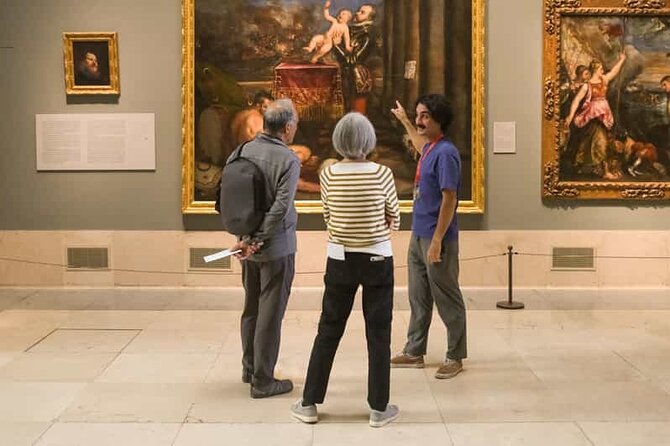
The Prado is not a museum you casually breeze through. It is a vast storehouse of European painting, and without a plan, you can spend hours looking at famous canvases without knowing why they matter. This tour gives you that plan, with Joaquín leading a small group of no more than seven through the museum’s major works.
I like two things right away: the skip-the-line admission saves valuable Madrid time, and the 2.5-hour format gives you enough room for real explanation without turning the visit into an all-day art marathon. The main consideration is price. At $76.89 per person, it costs more than entering the Prado alone, so the value depends on how much you want guidance.
Key points at a glance
- A seven-person maximum keeps the visit personal and makes it easier to ask questions.
- Joaquín connects art and Spanish history, rather than treating each painting as an isolated object.
- The route covers five centuries, from Bosch and Raphael to Velázquez and Goya.
- Skip-the-line entry is included, useful when your Madrid schedule is tight.
- The tour ends inside the museum’s southern section, not at the original meeting point.
- A follow-up PDF and nearby restaurant suggestions help you continue after the guided visit.
Why the Prado works better with a clear plan
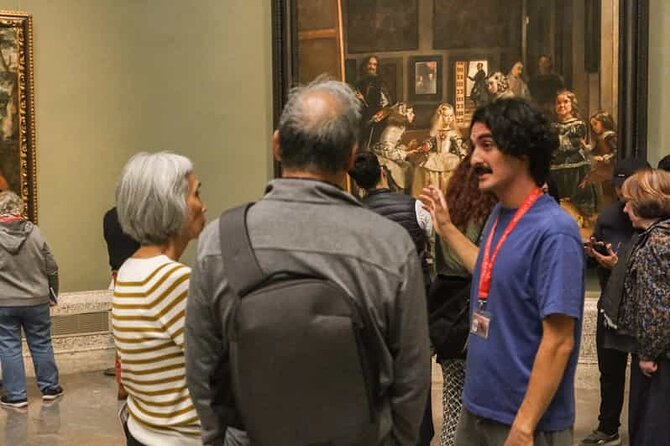
The Museo Nacional del Prado is one of Madrid’s essential stops, but its scale can be a problem. The collection covers painting from the 15th through the 19th centuries, with major works by artists whose names you may recognize but whose importance can be hard to place.
That is where a guided visit earns its fee. Instead of simply pointing out famous paintings, Joaquín’s approach follows the changes in art across time. You see how artists handled light, space, religion, portraiture, politics, and human emotion in different periods.
This matters most if you are not already comfortable in museums. One family with two teenagers found that the explanations helped them notice style, historical setting, and unusual details they would otherwise have missed. That is a useful clue about the tour’s tone: it is designed to make the Prado approachable, not to test you on art vocabulary.
If you already know the collection well, you may still find value in the connections between Bosch, Velázquez, and Goya. The visit is not just a list of masterpieces. It looks at how earlier artists influenced later painters and, eventually, modern art.
More Art Museum Tours in Madrid
- Madrid: Prado Museum Entry Ticket
★ 4.6 · 20,699 reviews - Madrid: Small Group of Prado Museum Tour & Optional Tapas
★ 4.6 · 2,437 reviews - Madrid: Prado Museum Guided Tour with Skip-the-Line Ticket
★ 4.5 · 2,018 reviews
Meeting Joaquín at the Goya monument
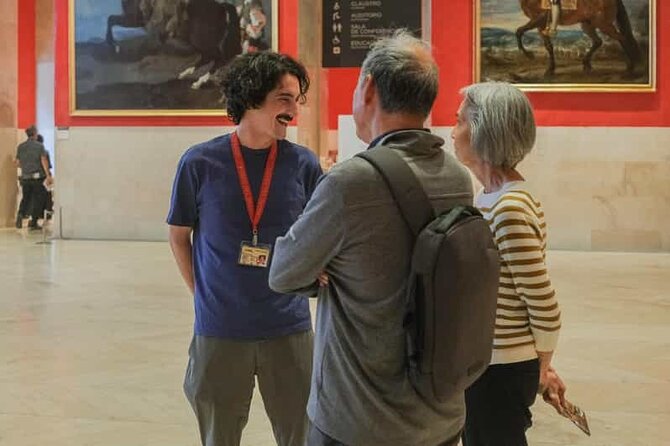
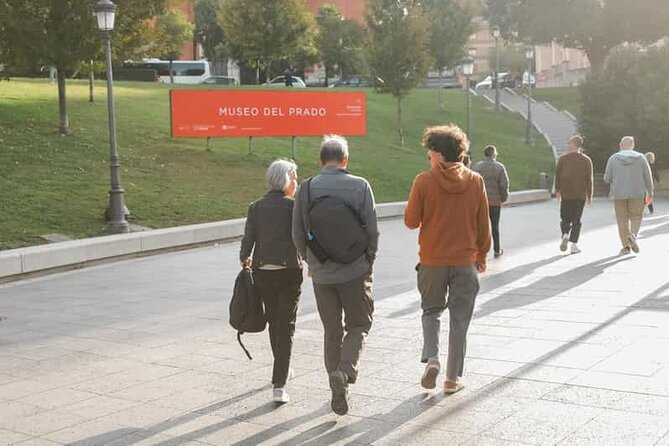
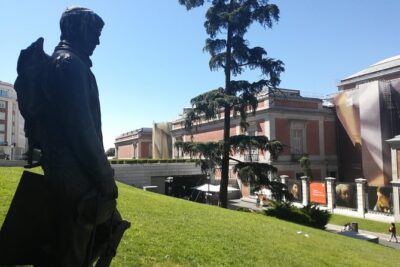
The tour begins at the Monument to Goya on Calle de Felipe IV, beside the Prado in Madrid’s Retiro district. This is a sensible starting point because the monument gives the visit an immediate connection to one of Spain’s most important painters.
Arrive with enough time to locate the meeting point. The information provided for the tour does not include hotel pickup, transportation, or drop-off, so you make your own way there. The museum is near public transportation, which makes the starting area practical from other parts of Madrid.
Beginning near Goya also helps set the theme. Goya is not treated as just another name on a museum map. His work represents a major shift in how artists looked at power, war, society, and the human face. That makes him a useful doorway into the Prado, especially before you move backward to earlier styles or forward toward his influence.
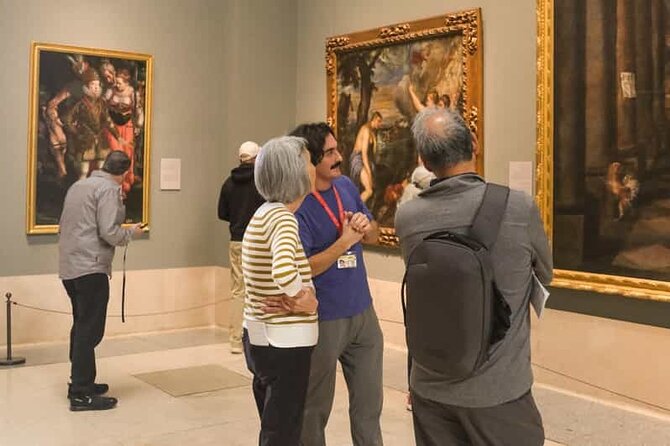
The small-group limit is important here. With no more than seven people, Joaquín can keep the group together without the stiff, crowded feel of a large museum tour. You should also have a better chance to ask about a particular painting or request more explanation if a certain period interests you.
Following five centuries of painting
The heart of the experience is a guided route through the Prado’s art from the 15th to the 19th century. The exact sequence of rooms is not specified, and museum displays can change, but the central promise is clear: you will use key artists to follow the development of European painting.
Bosch and the strange power of detail
Hieronymus Bosch offers a memorable early stop because his paintings are full of odd figures, unsettling scenes, and tiny incidents. His work rewards close attention, yet it can also confuse anyone who does not know how to approach it.
A good explanation helps you see that the strange details are not random decoration. They carry religious, moral, and social meaning. You might begin by noticing the fantastic creatures, then understand how the painting reflects the fears and beliefs of its time.
This is one of the places where a guide can turn a visually crowded painting into a readable one. Instead of standing back and saying that the work looks bizarre, you get a way to examine what Bosch is doing and why later artists continued to find his imagination useful.
More Prado tours and tickets:
- Madrid: Prado Museum Guided Tour With Fast Access
★ 4.8 · 1,785 reviews - Prado Museum Small Group Tour with Skip the Line Ticket
★ 5.0 · 1,738 reviews - Royal Palace & Prado Museum Skip the Line Guided Tour
★ 4.5 · 1,347 reviews - Madrid: Prado Museum Ticket with In-App Audio Guide
★ 3.6 · 1,154 reviews
Raphael and the language of balance
Raphael represents another stage in European art, with an emphasis on proportion, clarity, and controlled composition. His work gives you a chance to compare a more ordered visual language with Bosch’s crowded and unsettling world.
You do not need prior art training to follow the comparison. Joaquín is expected to explain how painters solve problems such as arranging figures, directing your eye, and making a religious or historical scene feel convincing.
These comparisons are more useful than isolated biographies. You begin to see art history as a series of choices and responses. One painter emphasizes calm balance, another fills the surface with warning and mystery, and later artists borrow, reject, or reshape those ideas.
Titian and the force of color
Titian brings color and surface into the conversation. His work helps show how paint itself can carry mood, status, sensuality, and movement.
For you, the practical benefit is learning what to look for beyond the subject of a picture. Instead of seeing only a portrait or mythological scene, you may start noticing how color controls attention and how the handling of paint changes the emotional effect.
The Prado is full of pictures that can look impressive at first glance but reveal more when someone explains the technique behind them. A focused guide can help you slow down at the right works instead of spending equal time on every room.
Velázquez and the Spanish court
Velázquez is central to any serious first visit to the Prado. His paintings connect art with royal power, social position, and the act of looking itself.
A guide can make his work less intimidating by breaking down the visual decisions. Who is looking at whom? Where does your eye go first? How does the painter suggest fabric, space, or personality without spelling everything out?
Velázquez also gives the tour a strong Spanish focus. His work is not only technically admired. It opens a window onto the court and society of his time. The result is a more useful museum visit because you are looking at both the painting and the world that produced it.
The tour’s discussion of Velázquez also links him to later painters. That connection gives the museum a longer reach. You are not simply checking off a Spanish master. You are seeing why his methods continued to matter.
Goya and the changing mood of art
Goya helps bring the route into the modern period. His work can be elegant, disturbing, political, intimate, or sharply comic, often within the same broad career.
This makes him a strong final figure for a tour about artistic change. Earlier painters often worked within established religious, royal, or mythological systems. Goya shows how an artist could use those traditions while also questioning the society around him.
The tour places Goya alongside the wider story of influence. You can consider how his directness and psychological intensity affected later painters. That is especially useful if you have little background in modern art, because it explains why Goya feels like a bridge between older European painting and newer ways of seeing.
What the 2.5-hour schedule means for you
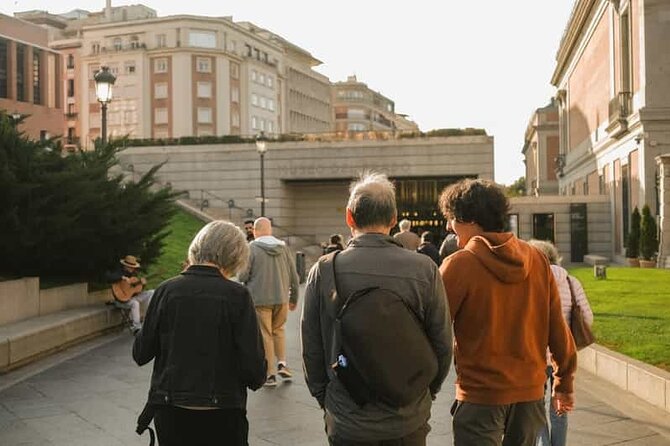
Two and a half hours is a good middle ground for the Prado. A shorter visit might feel rushed, while a much longer guided tour could leave you tired before you have time to enjoy the rest of Madrid.
You should expect a selective route, not every important room in the museum. The Prado contains far more art than any guided visit can cover in one session. The goal is to understand major examples and the links between them, then continue on your own if you wish.
That pace suits first-time visitors who want structure. It also helps families and mixed-interest groups. A teenager who is not eager to spend a full day with old paintings may stay engaged when the guide explains a strange Bosch scene, a clever Velázquez composition, or the unsettling side of Goya.
The tour is also suitable for experienced art lovers who want a fresh framework. The value is not only in seeing famous works. It is in hearing how one painter influenced another and in reconsidering paintings you may have seen before.
You should still plan your energy. The visit takes place inside a major museum, and the experience involves standing and walking through galleries. The supplied information says most people can participate, but it does not promise a special accessibility program or seating arrangements.
Small group size versus the $76.89 price
At $76.89 per person, this is a premium museum visit. You are paying for more than the admission ticket. The price covers a certified guide, skip-the-line entry, a small group capped at seven, and written suggestions for what to see or do afterward.
The small group is the main reason the price may make sense. A group of seven allows a more direct conversation. You can ask why a painting matters, request help comparing two artists, or admit that you are lost without having to speak over a crowd.
The skip-the-line ticket also has practical value. Madrid days disappear quickly, and waiting outside a major museum can be frustrating when you have dinner plans, another museum booked, or only a short stay in the city. The value is highest during busy periods, though no tour can guarantee that every part of the museum will be quiet.
I would compare this price with the cost of a basic museum ticket and ask yourself one question: will a guide change what you notice? If the answer is yes, the extra cost can be worthwhile. If you enjoy reading labels, moving at your own pace, and choosing every room yourself, independent entry may suit you better.
The supplied ratings give the tour a 5 out of 5 score from 31 ratings, with 100 percent recommending it. That does not remove the need to match the tour to your interests, but it supports the idea that the personal format is doing what it promises.
The useful extras after the main route
The tour includes a PDF with recommendations for continuing your visit after the guided portion. This is a small but useful addition because the Prado cannot be fully covered in 2.5 hours.
You can use the suggestions to return to a room that caught your attention or to see additional works connected to the artists discussed. It is also helpful if you want to stay inside the museum after the guide finishes and explore at a slower pace.
You also receive a list of recommended places to eat near the museum. That is practical in an area where museum timing can leave you hungry and unsure where to go next. The information supplied does not name the restaurants, so you should treat the list as a starting point rather than a full dining guide.
The endpoint is Pl. Murillo, 1, on the southernmost side of the Prado, and the tour ends inside the museum. If you need to return to the main entrance, Joaquín can take you back. This matters because the endpoint is not the same as the starting point, and you should avoid assuming that the tour will finish exactly where you met.
Who will get the most from this Prado tour
I would recommend this experience most strongly to first-time Prado visitors, families, and anyone who feels unsure about art museums. The language is meant to be accessible, and the guide adapts the visit to the group’s interests.
Families with older children and teenagers may find the limited group size especially helpful. The format allows the guide to adjust the explanation instead of delivering a fixed speech to a large audience. A family visit with two teenagers worked well because the guide made the paintings understandable rather than assuming prior knowledge.
This is also a good choice if you want the famous works but need help deciding why they are famous. Bosch, Raphael, Titian, Velázquez, and Goya are not just names to pass in a hallway. Each one adds a different piece to the story of European painting.
I would be more cautious if you want a quiet, independent visit or if you plan to spend the entire day studying one artist. The fixed route and 2.5-hour schedule give you structure, but they also limit personal wandering during the guided portion.
The tour is offered in English. Confirmation arrives when you book, and free cancellation is available up to 24 hours before the start time. Changes or cancellations made inside that 24-hour window are not accepted for a refund.
Should you book this Prado experience?
Book it if you want the Prado to make sense, not just look impressive. Joaquín’s small-group format, the short but useful historical arc, and skip-the-line entry address the three common problems at this museum: too much to see, too little context, and too much time lost at the entrance.
The strongest reason to choose it is the personal scale. Seven people is small enough for questions and flexible explanations, yet large enough to keep the price below a fully private tour. The main drawback is cost, especially if you are happy exploring museums without help.
For a first Prado visit, I think the price can be justified. You get a clear introduction to five centuries of art, practical suggestions for continuing afterward, and a guide who can help you see why Bosch, Velázquez, and Goya still matter. If that sounds like the kind of museum day you want, this is a smart way to begin.
FAQ
How long does the Prado walking tour last?
The tour lasts approximately 2 hours and 30 minutes.
Is museum admission included?
Yes. Skip-the-line admission to the Prado is included in the price.
How many people can join the tour?
The group has a maximum of seven participants.
What language is the tour offered in?
The tour is offered in English.
Where does the tour start and finish?
It starts at the Monument to Goya on Calle de Felipe IV in Madrid. It ends inside the Prado at its southernmost side, near Pl. Murillo. The guide can take you back to the main entrance if needed.
Is cancellation free?
Yes. You can cancel for a full refund up to 24 hours before the experience begins. Cancellations or changes made less than 24 hours before the start time are not accepted for a refund.
More Art Walks in Madrid
- Madrid’s Royal Palace & Prado Museum Private Walking Tour
★ 5.0 · 14 reviews - Guided Walking Tour of the Royal Collections Gallery
★ 5.0 · 6 reviews - Madrid: Prado Avenue and Retiro Park Guided Walking Tour
★ 4.9 · 5 reviews - Uffizi & Accademia Timed Entry: Small Group Duomo Walking Tour
★ 4.5 · 3,630 reviews
Just added around Madrid
- Retiro Park & Prado Museum Private Tour★ 5.0 · 7 reviews
- Paseo del Arte: Prado, Reina Sofía and Thyssen Museum★ 5.0 · 6 reviews
- Prado, Thyssen-Bornemisza or Reina Sofia Museum Private Tour★ 5.0 · 4 reviews
- Italian Prado Museum Tour | Maximum 7 people | No line★ 5.0 · 13 reviews
- Prado Museum Without the Crowds-Exclusive Guided Pre Opening Tour★ 5.0 · 137 reviews
- Madrid Highlights Private Tour with Prado Museum & Royal Palace★ 4.5 · 6 reviews
- Private Tour of Prado Museum in Madrid★ 4.5 · 28 reviews
- Prado Museum Guided Tour – In Spanish – 7 people per tour maximum★ 5.0 · 67 reviews
Art Museum Tours in Madrid, compared.

Small Group of Prado Museum Tour & Optional Tapas
Read our review →
Prado Museum Guided Tour with Skip-the-Line Ticket
Read our review →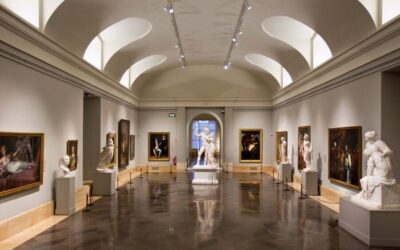
Prado Museum Small Group Tour with Skip the Line Ticket
Read our review →
Royal Palace & Prado Museum Skip the Line Guided Tour
Read our review →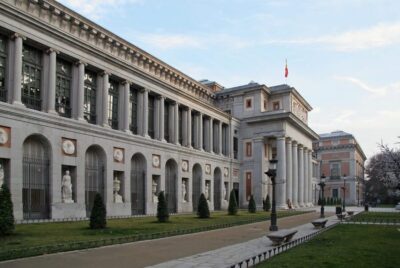

Prado Museum Guided Tour with Skip-the-Line Ticket
Read our review →Browse the lists this tour appears in