
REVIEW · BERLIN
Cold War, Berlin Wall, Spies and the East Side Gallery
Berlin’s Cold War story is easiest to grasp when you move through the places where it happened. This three-hour tour links the Palace of Tears, Alexanderplatz, Karl-Marx-Allee, the former death strip, and the East Side Gallery into one clear route. I like the way it joins big political events to escape attempts, Stasi surveillance, and daily life in East Berlin.
I also like the strong storytelling. Guides such as Paul, Xavier, Tina, Klaus, and Nikolai have been praised for making the past understandable, while some guides bring personal experience of life in the former East Germany. The main drawback is that you cover several districts by public transport and on foot, so this is not a slow, museum-style visit. You must also buy an AB day pass separately.
Key points to know before you book
- Start at the Palace of Tears: Meet outside Friedrichstrasse station beside the Tränenpalast, a former border crossing where departures split families.
- Follow the former East Berlin route: Alexanderplatz and Karl-Marx-Allee show how public space and architecture served the GDR state.
- Hear escape and surveillance stories: The tour focuses on informants, the Stasi, escape tunnels, rooftops, death strips, and the risks faced by people trying to leave.
- Use public transport between sites: An AB day pass is required and is not included in the $18 price.
- End with art on the Wall: The East Side Gallery turns a surviving section of the Berlin Wall into an open-air collection of murals.
- Expect a lively guide-led history lesson: English and German tours are available, with private and small-group options.
Why this $18 Berlin Wall tour is worth considering
At $18 per person, this is an inexpensive way to connect several Cold War sites that are spread across Berlin. You are not paying for entry to a major museum. You are paying for a guide who explains why each place matters and handles the route between them.
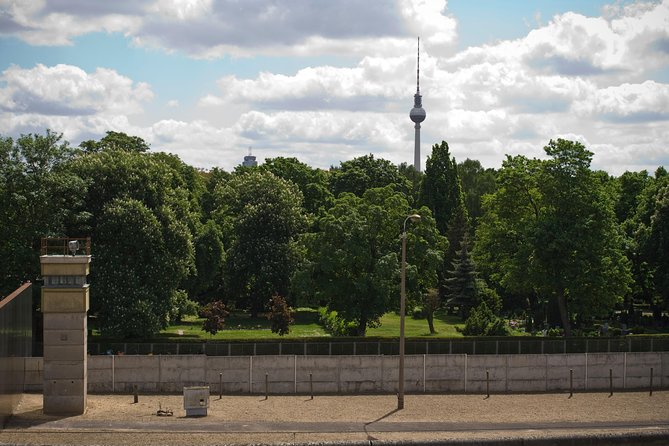
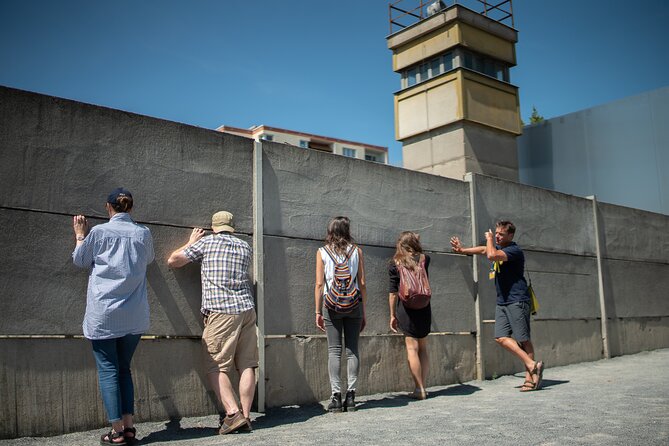
That distinction matters in Berlin. A remaining slab of concrete can look plain until you learn what stood beside it: guard paths, floodlights, fences, patrol roads, and the open strip where escapees were exposed. A grand boulevard can look like an ordinary city street until someone points out how its buildings were designed to project socialist power.
The overall rating is 4.8 from 254 ratings, and the strongest praise centers on the guides’ storytelling. Paul was singled out for making the subject clear to someone arriving with little background. Xavier was praised for combining historical detail with humor and for checking on the group when rain arrived. Other guides, including Jamie G, Maria, Glen, Klaus, Tina, Jim, Eran, and Nikolai, have been praised for clear explanations and lively delivery.
I would choose this tour if you want a broad introduction to divided Berlin in a short time. I would not choose it if your main goal is to spend a long period inside one museum or memorial. The tour keeps moving.
More Art Museum Tours in Berlin
- Berlin: East Side Gallery Spree Cruise in a Solar Catamaran
★ 4.1 · 1,086 reviews - Cold War, Berlin Wall, Spies and the East Side Gallery
★ 5.0 · 1,024 reviews - Berlin: The Wall Museum East Side Gallery Ticket
★ 4.1 · 292 reviews
Meeting at Friedrichstrasse and the Palace of Tears
The meeting point is outside Friedrichstrasse train station, on the square beside the Tränenpalast. Look for a guide with a yellow name badge and yellow umbrella. That bright meeting marker is useful in a busy transport area, so arrive with enough time to locate the group.
The Tränenpalast, or Palace of Tears, is a fitting first stop. Its name comes from the farewells that took place there. During the division of Berlin, people leaving East Berlin passed through this border facility while family members stayed behind. The building helps you understand that the Wall was not simply a barrier in the middle of a city. It controlled visits, departures, and family contact.
You spend about 20 minutes here. That is enough for an introduction and guided sightseeing, but not a long museum visit. The tour then uses a short train ride to reach Alexanderplatz. Your AB day pass is needed for these transfers and for the later ride toward Friedrichshain.
Alexanderplatz and the public face of East Berlin
Alexanderplatz gives you a useful change of scale. Here, the story shifts from border crossings to the public center of East Berlin. The square and nearby GDR-era buildings show how the communist government presented its capital to residents and foreign visitors.
Expect about 20 minutes of guided sightseeing. Your guide may use photographs or tablets to show how the area looked before and after major changes. Several past guides have been praised for bringing visual material, personal stories, and small details that are easy to miss when walking alone.
Alexanderplatz can be busy, and it is not a preserved Cold War set. That is part of the point. Berlin has changed quickly, but traces of the former East remain within the modern city. You get a sense of how official architecture, public gatherings, shopping, and state messaging met in one important square.
Karl-Marx-Allee and the 1953 workers’ uprising
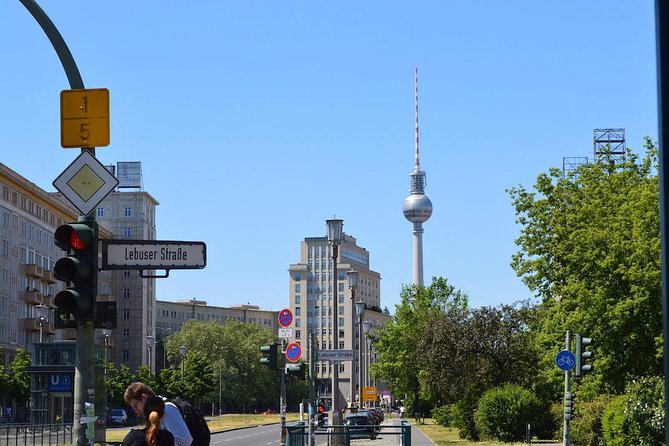
From Alexanderplatz, the tour continues down Karl-Marx-Allee. The broad avenue was built as a showpiece of socialist urban planning. Its scale was meant to impress, with monumental buildings and a carefully planned sense of order.
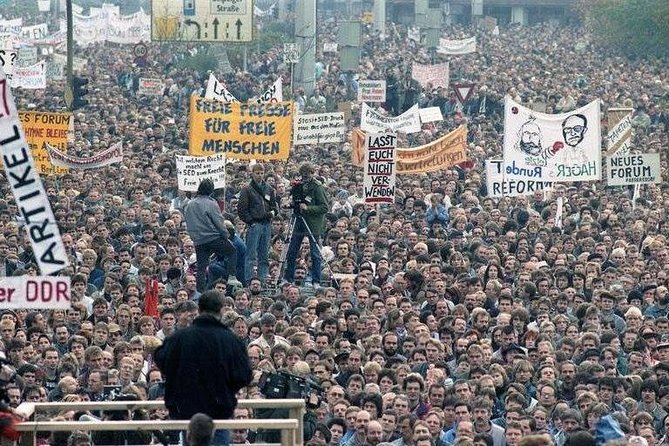
Your guide explains the propaganda in the architecture and connects the avenue to the 1953 workers’ uprising. Construction workers in East Berlin protested against increased work demands, and the unrest spread. The uprising challenged the communist government and was suppressed, but it exposed serious anger beneath the official image of unity.
This is one of the most useful stops for understanding daily life under the GDR. The Berlin Wall often dominates Cold War sightseeing, yet economic pressure, state control, and public resistance were already shaping East German society before the Wall was built.
You spend roughly 20 minutes walking and listening here. Wear comfortable shoes, because this tour involves outdoor walking on a large scale rather than a few short stops beside a bus.
A few more gallery visits around Berlin worth comparing
- Berlin: Berlin Wall & East Side Gallery Walking Tour
★ 4.9 · 264 reviews - Berlin: Bus Tour to Sachsenhausen, East Side Gallery, & Berlin Story Bunker
★ 4.5 · 262 reviews - Berlin: 3D Trick Art Museum — Tickets
★ 4.6 · 178 reviews - Berlin: East Side Gallery and Cold War Segway Tour
★ 4.6 · 20 reviews
Friedrichshain, the former death strip, and escape stories
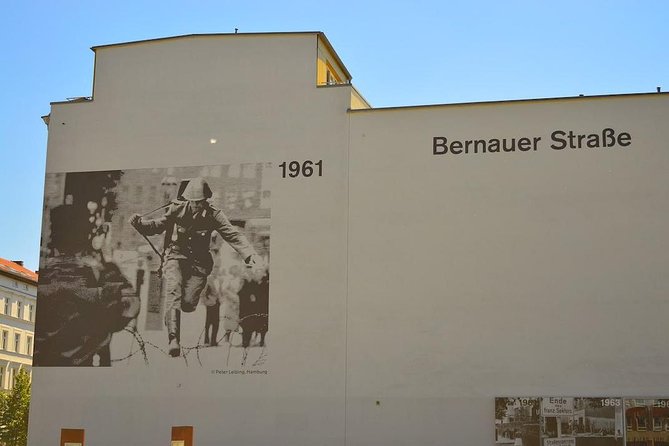
A short train ride brings you toward Friedrichshain and the surviving Berlin Wall areas. This section focuses on how the border worked and how people tried to cross it.
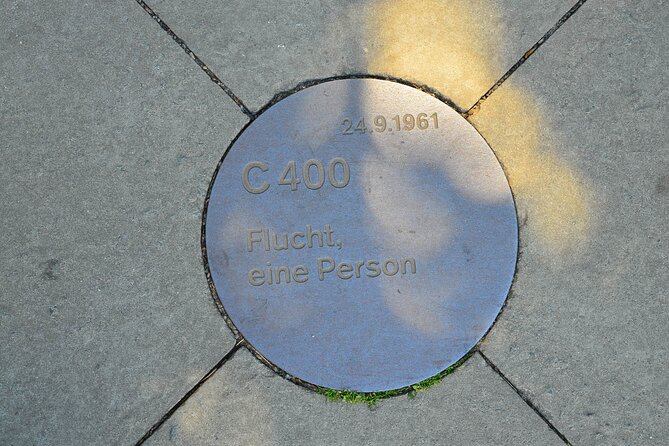
The tour covers escape attempts through tunnels, over rooftops, and across exposed ground. It also explains the role of the Stasi, East Germany’s secret police, along with informants and the surveillance system that reached into ordinary life. The most useful part is the human scale. Instead of treating the Wall as a monument alone, the guide connects it to families, friendships, fear, and difficult decisions.
You will hear about the death strip, the open zone between layers of border defenses where escapees could be watched and stopped. The exact remains vary from place to place, so do not expect a single untouched section of the entire border. What you get is a guided explanation of how the system operated and why crossing it was so dangerous.
The Friedrichshain section lasts about 20 minutes, followed by around 16 minutes of guided sightseeing beside the Berlin Wall. This is where a good guide makes a major difference. Several guides have been praised for answering many questions, keeping a group together, and explaining the effect of the Wall on families and society rather than reciting dates alone.
Some guides have firsthand links to the former East Germany. Klaus, for example, has been praised for sharing personal stories from having lived through the period. Other guides have spoken about growing up near the story or having lived in the GDR. The exact guide depends on the date and language you choose, so book this for the subject and format rather than expecting one particular person.
The East Side Gallery, where the Wall became art
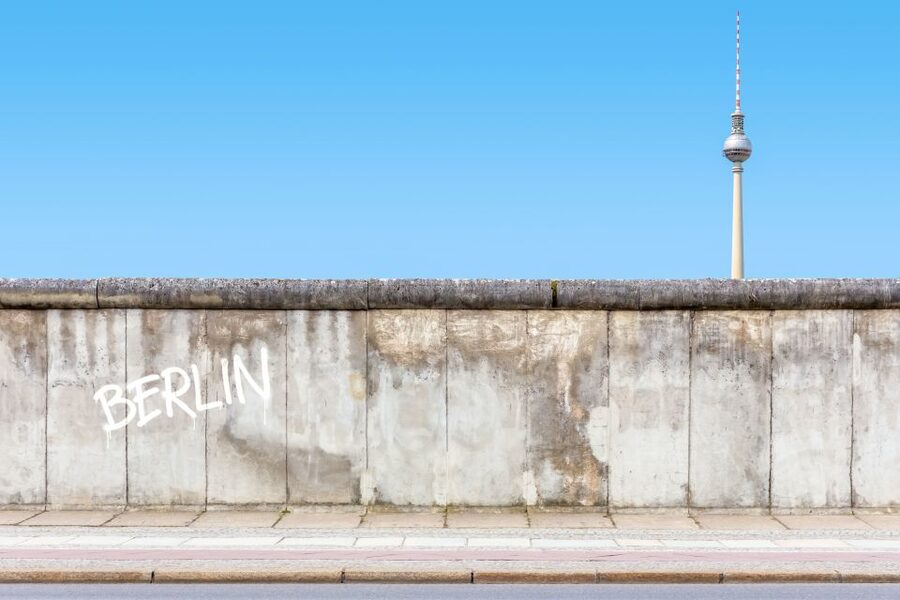
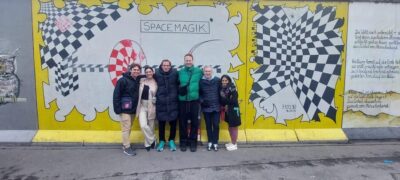
The tour finishes with a walk along the East Side Gallery. This long surviving stretch of the Berlin Wall was painted after the border opened and is now an open-air art gallery. The murals changed the meaning of the concrete. A structure built to stop people became a public surface for political ideas, humor, hope, and memory.
You spend about 20 minutes here. That gives you time to walk, look at the paintings, and hear how the Wall moved from a working border to a symbol of Berlin’s reunification. It is also one of the more photogenic parts of the tour, so bring a camera.
The East Side Gallery is exposed and can be crowded. You may also find some murals weathered or partly restored. That does not make the stop less important, but it helps set expectations. This is an outdoor memorial and art site, not a quiet gallery with a controlled viewing space.
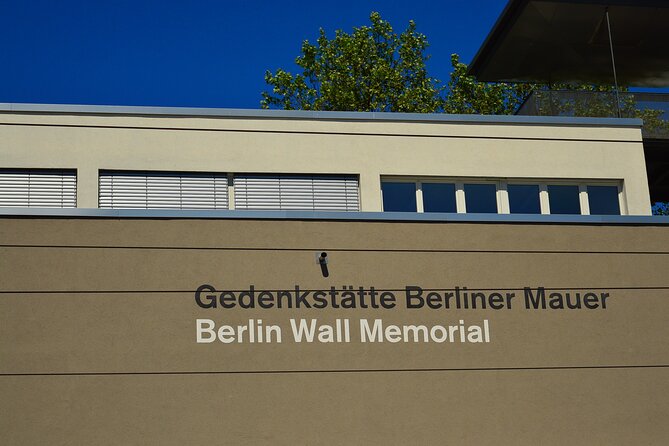
The route is listed as ending with drop-off options connected to Bernauer Straße. Confirm the exact end point when booking, since the meeting and finish arrangements can vary by selected option.
What the three-hour format feels like
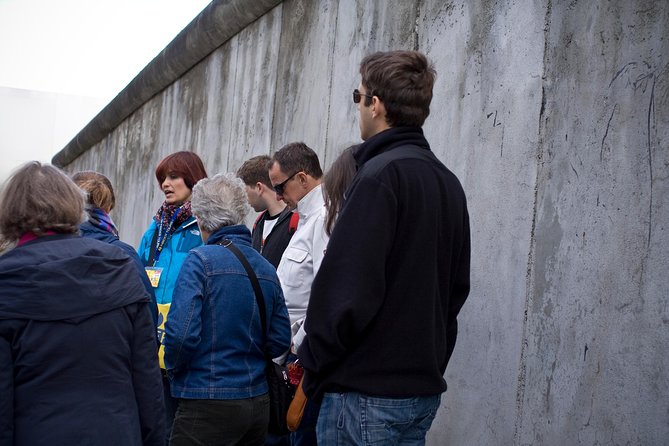
Three hours is a practical length for a first look at Cold War Berlin. You get several districts, two short train rides, major sites, and a single historical thread connecting them. The movement helps you see how the former East and West were built into the same city.
The trade-off is pace. You will not have long at every stop. If you stop often for photographs, ask many questions, or move slowly, the schedule may feel full. The walking is manageable for many people, but comfortable shoes are essential. You should also dress for the weather because the tour runs in rain or shine.
Private and small-group options are available. A smaller group should make it easier to ask questions and hear the guide, especially outdoors. One past group found that a large attendance made speaking difficult and suggested a microphone. If clear sound matters to you, check the group size when choosing your departure.
The tour is wheelchair accessible according to the activity details. Since it combines streets, stations, public transport, and outdoor sites, confirm the exact route and assistance needs before booking.
Guide quality is the main reason to book
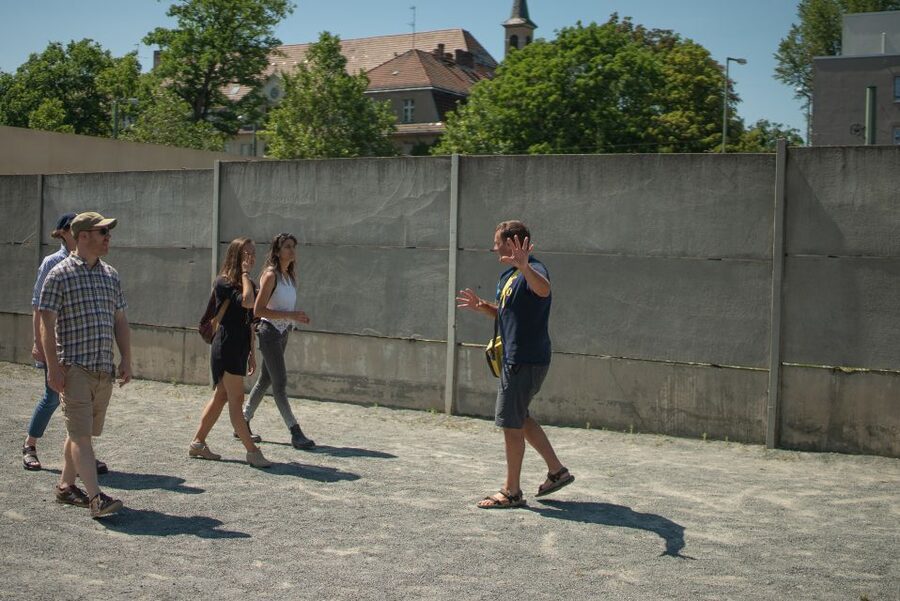
The route is good, but the guide is the real product. This subject includes complicated politics, personal suffering, architecture, and military tension. A flat lecture would make the same places feel dull. The strongest guides turn dates into stories without losing the larger context.
Paul has been praised for explaining both the how and the why of the division, especially for people with little previous knowledge. Xavier has been praised for warmth, humor, historical detail, and care during bad weather. Jim, Eran, Tina, Maria, Klaus, and Nikolai have also been praised for keeping the subject engaging and responding to questions.
The best fit is someone who wants context rather than a checklist. You should be ready to listen while walking, then ask questions when the guide pauses. If you already have a strong background in Cold War politics, you may want a more specialized museum visit afterward. One past participant hoped for more war and political history and less focus on the Wall, so expectations matter.
Practical details that affect the value
The $18 price is strong value if you want orientation across several neighborhoods. Remember to add the cost of an AB day pass, which is required but not included. Staff can help you buy it on the day.
Food and drink are not included, and there is no standard hotel pickup or drop-off. An optional pickup service is listed for some bookings. If you use it, wait in your hotel lobby five minutes before the scheduled time. The listed alternative finish is in front of the Tourist Information office at Brandenburg Gate, Pariser Platz 1, depending on the option selected.
Tours are offered in English and German. Free cancellation is available up to 24 hours before the start, and reserve-now-pay-later booking is offered. Those policies are useful if your Berlin schedule is still changing.
Bring comfortable clothes, weather-appropriate layers, and a camera. Alcohol and drugs are not permitted. Most of all, bring questions. The tour’s strongest feature is the chance to connect a physical place with the personal choices made there.
Should you book this Cold War Berlin tour?
Book it if you want a well-priced, active introduction to the Berlin Wall, East Berlin, and the people caught between political systems. It suits first-time Berlin visitors, history fans, families with older children, and anyone who wants more than a photo beside a remaining piece of concrete.
Skip it if you want a quiet museum visit, a fully indoor experience, or a narrow focus on military strategy and superpower politics. For most people, though, the mix of the Palace of Tears, Alexanderplatz, Karl-Marx-Allee, escape stories, and East Side Gallery gives the city’s divided past a clear shape. Buy the AB day pass, wear good shoes, and allow the guide’s stories to do the heavy lifting.
FAQ
How long does the Berlin Cold War tour last?
The tour lasts three hours.
How much does the tour cost?
The listed price is $18 per person.
Where does the tour begin?
Meet outside Friedrichstrasse train station, on the square beside the Tränenpalast, or Palace of Tears.
How will I recognize the guide?
Look for a guide wearing a yellow name badge and holding a yellow umbrella.
Is public transportation included?
No. You need an AB public transport day pass, which is not included. Staff can help you buy one on the day.
Which places does the tour visit?
The route includes the Palace of Tears, Alexanderplatz, Karl-Marx-Allee, Friedrichshain, sections of the Berlin Wall, and the East Side Gallery.
Is the tour offered in English?
Yes. Live guides are available in English and German.
Does the tour run in bad weather?
Yes. The tour proceeds regardless of the weather, so bring suitable clothing and comfortable shoes.
Can I cancel the booking?
You can cancel up to 24 hours in advance for a full refund. Reserve-now-pay-later booking is also available.
Just added around Berlin
- Ticket for The Wow Gallery Berlin★ 4.5 · 7 reviews
- Berlin’s Gallery Scene★ 5.0 · 4 reviews
- Berlin: Comedy in an Art Gallery (Mitte) – Saturday 7pm★ 5.0 · 2 reviews
- East side Gallery Tour★ 5.0 · 11 reviews
- East side Gallery Tour★ 4.8 · 4 reviews
- Berlin: East Side Gallery Photoshoot★ 5.0 · 2 reviews
- Berlin: Comedy in an Art Gallery (Mitte)★ 4.2 · 4 reviews
- Berlin: East Side Gallery and Cold War Segway Tour★ 4.6 · 20 reviews
Art Museum Tours in Berlin, compared.
East Side Gallery Spree Cruise in a Solar Catamaran
Read our review →
Cold War, Berlin Wall, Spies and the East Side Gallery
Read our review →
Bus Tour to Sachsenhausen, East Side Gallery, & Berlin Story Bunker
Read our review →

Browse the lists this tour appears in