
REVIEW · BERLIN
Cold War, Berlin Wall, Spies and the East Side Gallery
Berlin’s Cold War story becomes most powerful when you look at the places where it happened. This three-hour walk links the Palace of Tears, former border areas, the old death strip, East Berlin landmarks, and the painted remains of the Wall at the East Side Gallery. It turns a large political struggle into a story about families, escape attempts, surveillance, and ordinary daily life.
I like the way the tour joins major sights with smaller, sobering details, such as viewing the former Wall zone from an opening on the eastern side. I also like the guides’ use of personal stories and photos. Klaus, Nikolai, Paul, Cameron, Jasper, and others have been praised for clear explanations and lively answers to questions.
The main drawback is logistics. You must buy a Berlin AB transport ticket for about €10, and the tour uses public transport between sites. It covers a lot of ground, so a poorly organized group or a hard-to-hear guide could affect the experience. Arrive early and stay close.
Key points at a glance
- The Palace of Tears: See the former Friedrichstrasse border crossing where families said painful goodbyes.
- The death strip: Visit Wall remains and former border areas where escape attempts took place.
- East Berlin in context: Alexanderplatz and Karl-Marx-Allee show how communist power was presented in public space.
- Spy stories with a human edge: Learn about CIA, KGB, and Stasi surveillance methods.
- A strong final stop: End at the East Side Gallery, where Wall concrete became an open-air art display.
- Plan for public transport: The €10 AB ticket is not included, and you should arrive 15 minutes before the 10 a.m. start.
Why Cold War Berlin works best as a walking story
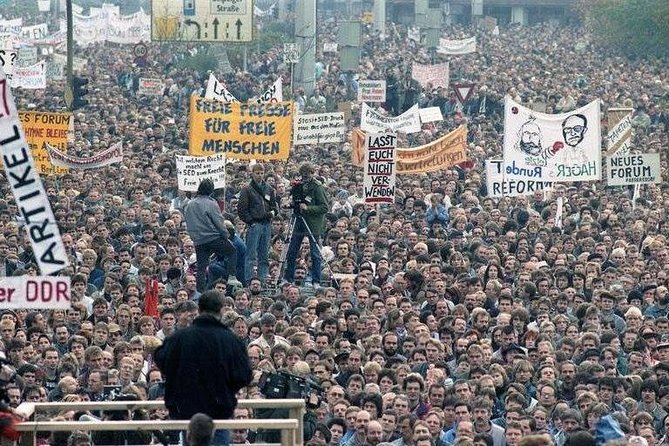
The Cold War can feel abstract when it is reduced to dates, speeches, and maps. In Berlin, the subject is physical. A train station could separate families. A wall could block a street, a workplace, or a view of a loved one’s home. A grand boulevard could serve as political theater while people quietly dealt with shortages, restrictions, and state control.
This tour gives you that physical setting. Instead of staying in one museum, you move through several parts of Berlin and watch the city change from the center of East German power to the former border and then to the Wall’s artistic afterlife.
The guide supplies the links. The best guides, including Klaus, Nikolai, Paul, Cameron, Jasper, and Jamie, are praised for making the subject easy to follow without flattening it into a school lecture. Some use photographs on an iPad to show how streets and border points looked before reunification. Some bring personal or family connections to life in East Germany and the Iron Curtain.
That human element matters. You will learn what the United States, NATO, the Soviet Union, and the Eastern Bloc were trying to achieve, but you will also hear what those pressures meant for people living in Berlin. The tour is at its best when military strategy meets a story about a family, a train passenger, or someone attempting to cross the border.
More Art Museum Tours in Berlin
- Berlin: East Side Gallery Spree Cruise in a Solar Catamaran
★ 4.1 · 1,086 reviews - Berlin: The Wall Museum East Side Gallery Ticket
★ 4.1 · 292 reviews - Berlin: Berlin Wall & East Side Gallery Walking Tour
★ 4.9 · 264 reviews
Starting at Friedrichstrasse Station
The meeting point is outside Friedrichstrasse train station, with the stated address at Reichstagufer 17. Arrive at least 15 minutes before the 10 a.m. start. This is not just a convenient station. Friedrichstrasse was one of the most important crossing points between East and West Berlin.
The guide begins with the city’s postwar division and explains why Berlin became the central stage of the Cold War. After World War II, the former capital of Nazi Germany was divided among the victorious powers. West Berlin became an enclave tied to the United States and its allies, while East Berlin served as the capital of the German Democratic Republic.
You may also hear about the underground route once known as the ghost train. These trains passed through stations in East Berlin while connecting parts of West Berlin. Stations were sealed, guarded, or left dark, creating one of the strangest transport systems in modern Europe.
There is a practical point here: the tour requires public transport, and the Berlin AB day ticket costs about €10 per person. That cost is separate from the tour price. The group can contain up to 22 people, so listen carefully when moving through stations and boarding trains.
Admiralspalast and the birth of East German power
The short stop at Admiralspalast lasts around five minutes. You see the place connected with the founding of the Socialist Unity Party, or SED, in 1946.
This is a brief stop, but it helps explain how political power was organized in the Soviet occupation zone. The SED became the ruling party of East Germany, and its influence shaped the government, media, police, schools, workplaces, and public life.
Do not expect a long interior visit here. The value comes from the explanation outside, when the guide places the building into the wider story of postwar occupation and the creation of two German states.
The Palace of Tears and divided families
The Tränenpalast, or Palace of Tears, is one of the most affecting places on the route. It was a border crossing at Friedrichstrasse Station, where people from East and West Berlin met, passed through controls, and often had to say goodbye.
The name comes from the emotional scenes that took place there. An East German family might be allowed to visit relatives in the West but then forced to return without them. A couple could have only minutes together before one person crossed back through the checkpoint.
The museum now tells this story through exhibits on border controls, escape attempts, separation, and reunification. Admission is included in the stop, and the tour allows about 20 minutes. That is enough for a focused visit, though not enough to study every display at length.
I find this stop especially useful for families and younger visitors because it makes the Wall personal. The political map matters, but the Palace of Tears shows the emotional cost in plain terms. It also gives the rest of the tour a human scale before you move into East Berlin’s grand public spaces.
A few more gallery visits around Berlin worth comparing
- Berlin: Bus Tour to Sachsenhausen, East Side Gallery, & Berlin Story Bunker
★ 4.5 · 262 reviews - Cold War, Berlin Wall, Spies and the East Side Gallery
★ 4.8 · 254 reviews - Berlin: 3D Trick Art Museum — Tickets
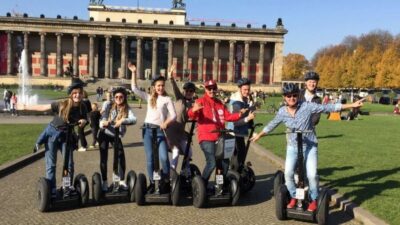
★ 4.6 · 178 reviews - Berlin: East Side Gallery and Cold War Segway Tour
★ 4.6 · 20 reviews
Alexanderplatz and the public face of East Berlin
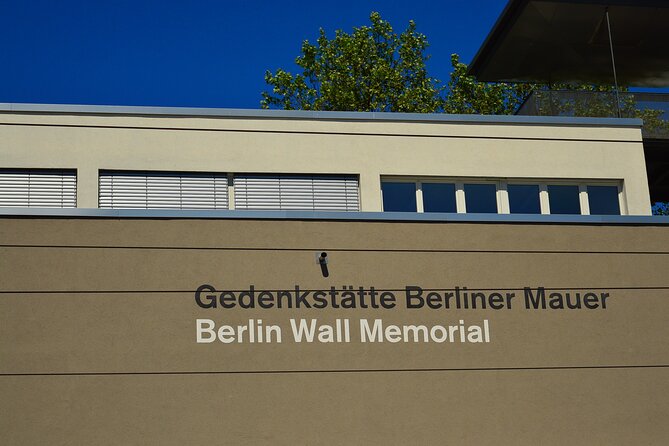
At Alexanderplatz, you see the former center of East Berlin’s public life. The square was used for political rallies, official events, advertising, shopping, and everyday routines. It was both a working city space and a stage for communist power.
The architecture and broad open areas reflect the GDR’s effort to present a modern socialist capital. The guide explains how public messages, party ceremonies, and daily life existed side by side. The square was not only a place for propaganda. It was also where people met friends, ran errands, and went about their business under a system shaped by surveillance.
The stop lasts about 15 minutes. You will not explore every building, but you will gain a useful sense of how East Germany presented itself to its citizens and to the outside world.
This is where a good guide makes a major difference. A simple description of buildings can feel dry. A guide who explains what was staged here, what was monitored, and how people experienced the square can turn it into a readable piece of Cold War history.
Karl-Marx-Allee and socialist spectacle
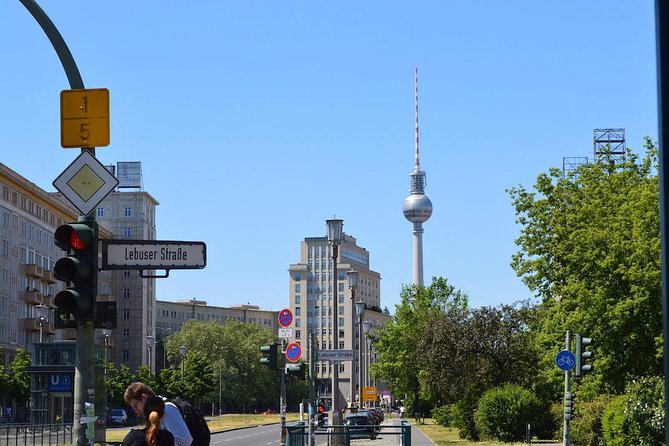
Karl-Marx-Allee gives you a different view of East German ideology. The broad boulevard was designed as a showcase street, lined with monumental buildings in the Stalinist style.
The scale was deliberate. The avenue was meant to project order, strength, and confidence. It presented the socialist state as a modern power with the resources to build grand housing and public spaces.
The guide also sets that image against the everyday reality of life behind the Iron Curtain. A polished boulevard could suggest plenty and progress, while ordinary people faced restrictions and lived under close state control. That contrast is one of the tour’s useful themes: architecture tells you what a government wanted you to believe, while personal stories reveal how people actually lived.
The stop takes about 20 minutes, and no separate admission is listed. You should expect to view the avenue from public areas rather than take a formal building tour.
The Wall Memorial and the former death strip
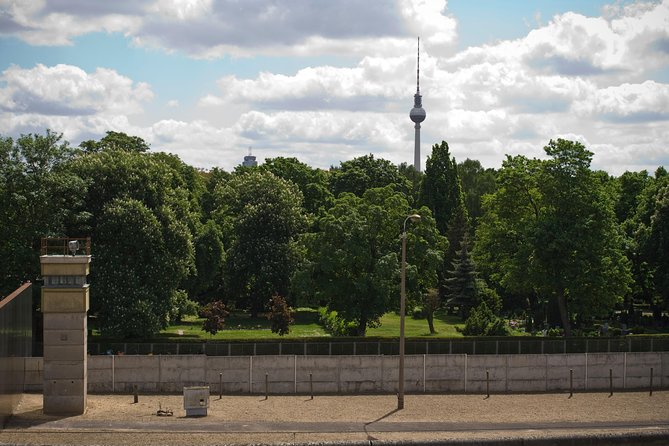
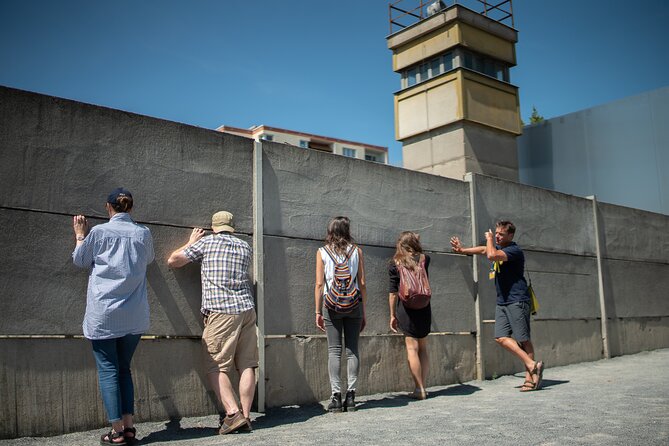
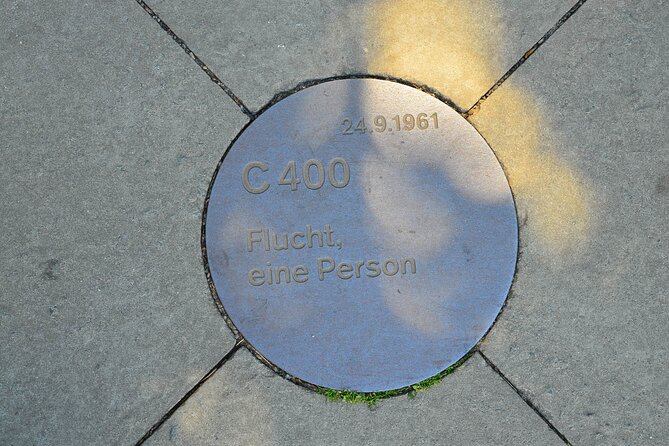
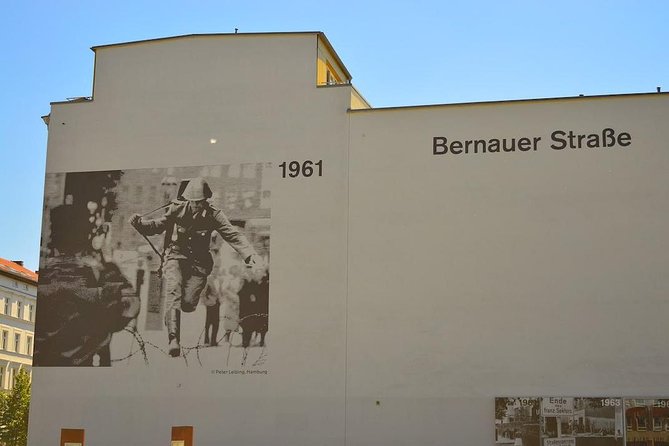
The most sobering part of the experience comes when the group reaches surviving Wall sections and former border areas. Bernauer Strasse is linked to dramatic escape attempts and is one of the clearest places to understand how the Wall cut through a living neighborhood.
The border was not simply one concrete barrier. It included fences, patrol routes, watchtowers, lights, and open ground. This space between barriers became known as the death strip because guards were ordered to stop escapes. The exact layout changed over time, but the purpose remained clear: to make crossing dangerous and difficult.
A particularly striking moment can come from looking toward the western side through an opening or gap from the eastern side of the former border zone. The view is simple, yet the meaning is heavy. You are looking across a space that once separated people who could see one another but could not freely meet.
The tour also connects the Wall to the former Stasi, East Germany’s secret police. You learn about surveillance methods used by the Stasi and how they compared with techniques associated with the CIA and KGB. This is not just a story about agents and spy gadgets. It is also about informants, files, fear, and the pressure created when neighbors, colleagues, or acquaintances might be reporting to the state.
Brandenburg Gate and a changed symbol
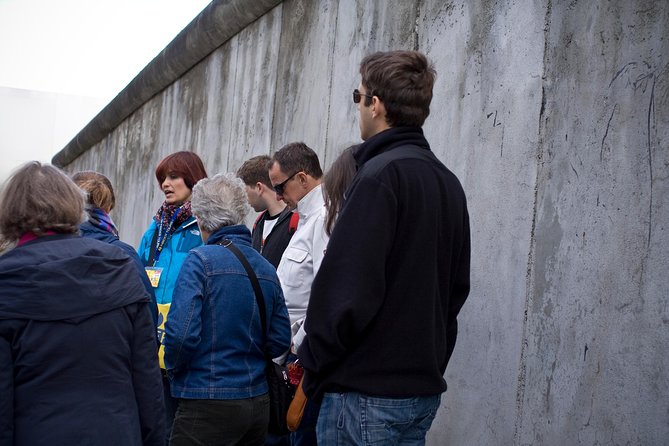
The route includes the Brandenburg Gate, one of Berlin’s best-known monuments. During the division, it stood in the restricted area beside the Wall and became a powerful symbol of a divided city and country.
Today, the gate represents peace and unity. The shift in meaning is worth noting. Monuments do not keep one fixed message forever. Political events can turn a symbol of separation into a place associated with reunification.
You should not expect an extended guided visit to every famous building near the gate. Its value here is as part of the larger story. The guide helps you see how the same monument could mean exclusion during the Cold War and national unity after the Wall fell.
Ending at the East Side Gallery
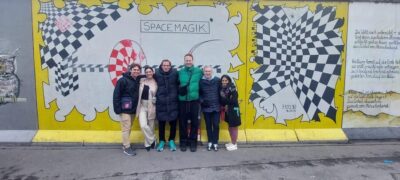
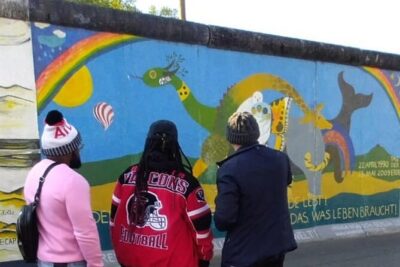
The tour finishes at the East Side Gallery on Mühlenstrasse. This is the longest remaining section of the Berlin Wall and one of the largest open-air art displays in the city.
Artists painted the concrete after the Wall fell, changing a structure built to control movement into a public canvas. The murals cover freedom, peace, protest, hope, and the strange afterlife of a former border.
The stop lasts around 25 minutes. That gives you time to see several well-known murals and understand why the gallery matters, but you may want to return later if you want to examine the artwork closely. The gallery is free and easy to combine with other plans because the tour ends near many transport choices.
Ending here gives the walk a clear emotional turn. Earlier, the Wall is linked with escape attempts, armed guards, and families forced apart. At the East Side Gallery, the same kind of concrete carries painted messages instead. The art does not erase the suffering, but it shows how Berlin reused the Wall to express freedom.
How much walking and transport to expect
This is a walking tour, but it is not three straight hours on foot. The group uses Berlin public transport between some locations. One guide, Jasper, was particularly praised for keeping a group together during the U-Bahn sections, a useful reminder that station transfers require attention.
The pace is generally moderate, with enough walking to connect the sites without turning the day into a marathon. Still, you should wear comfortable shoes and dress for the weather. Much of the experience takes place outdoors, and the tour continues even when conditions are less than ideal.
One participant was underdressed in cold weather and needed time to buy a jacket. The guide allowed that person to catch up, but it is wiser to check the forecast before you leave. Bring water, since food and drinks are not included.
Most people can take part, and service animals are allowed. The group size is capped at 22, which is small enough for a more personal explanation but large enough that you should stay close to the guide.
Guide quality and the value of the experience
The tour costs about $18.04 per person, but your real cost is closer to that price plus the €10 AB transport ticket. Even so, the value is good if you want a structured introduction to Cold War Berlin. A single museum visit can explain one part of the story. This walk connects a border station, political buildings, public squares, Wall remains, and the East Side Gallery.
The guides are the strongest part of the experience. Klaus is praised for handling a large amount of information in a clear, engaging way. Nikolai brings personal family connections to the Iron Curtain into his explanations. Paul uses photos and escape stories to make the past easier to picture. Cameron has a historian’s approach, while Jasper is noted for pacing and group control.
Other guides named in strong feedback include Maria, Ariel, Xavier, Grayson, James, Tobi, Tina, Rohan, Lewis, Aran, Glen, and Eran. Your guide will not necessarily be one of these people, and the quality of a walking tour can vary with presentation style. The best experience comes when the guide speaks clearly, manages the group well, and leaves time for questions.
There has also been criticism of a poorly organized tour with weak historical context, unclear audio, too much time spent on guessing games, and a schedule that ran far over time. That is worth taking seriously. A three-hour history walk needs structure. If the group is large or the guide is hard to hear, some detail can get lost.
Who should book this Cold War walk?
I would choose this tour if you are visiting Berlin for the first time and want a clear framework for the city’s divided past. It is also a good fit if you have already seen the Brandenburg Gate or East Side Gallery but want to understand how those places connect to the Wall, the GDR, and the superpower conflict.
Families can benefit from the personal stories, though younger children may find the surveillance and escape material heavy. History fans will appreciate the combination of military tension, political design, spy methods, and firsthand accounts. You should also consider it if you prefer seeing real locations rather than spending an entire morning indoors.
I would be more cautious if you want a slow, museum-heavy experience. The tour covers many locations in three hours, so each stop receives a focused explanation rather than a long examination. You may want to add the Stasi Museum afterward for more detail about the secret police, as the route gives you an introduction rather than a full museum visit.
Should you book it?
Book this tour if you want the Berlin Wall to become more than a photo stop. The route gives you the Palace of Tears, East Berlin’s political spaces, former death-strip areas, Wall remains, and the East Side Gallery in one organized morning.
The price is reasonable, but remember the separate transport ticket and the need to arrive early. Choose comfortable shoes, keep the group in sight, and come ready to ask questions. If your guide is as strong as Klaus, Nikolai, Paul, Cameron, or Jasper, you should leave with a clearer sense of both Cold War strategy and the people caught inside it.
FAQ
How long does the Cold War Berlin tour last?
The tour lasts approximately three hours.
Where does the tour begin?
It begins outside Friedrichstrasse train station at Reichstagufer 17, 10117 Berlin.
What time does the tour start?
The scheduled start time is 10 a.m. You should arrive 15 minutes early.
Where does the tour end?
The tour ends at the East Side Gallery on Mühlenstrasse, 10243 Berlin.
Is public transport included?
No. You need a Berlin AB Zone transport ticket, listed at about €10 per person.
What is included in the tour price?
A local expert guide is included. Food, drinks, hotel pickup, hotel drop-off, and the Berlin transport ticket are not included.
Can I cancel for a full refund?
Yes. You can cancel at least 24 hours before the local start time for a full refund. Changes or cancellations made less than 24 hours before the start are not accepted or refunded.
Just added around Berlin
- Ticket for The Wow Gallery Berlin★ 4.5 · 7 reviews
- Berlin’s Gallery Scene★ 5.0 · 4 reviews
- Berlin: Comedy in an Art Gallery (Mitte) – Saturday 7pm★ 5.0 · 2 reviews
- East side Gallery Tour★ 5.0 · 11 reviews
- East side Gallery Tour★ 4.8 · 4 reviews
- Berlin: Comedy in an Art Gallery (Mitte)★ 4.2 · 4 reviews
- Berlin: East Side Gallery Photoshoot★ 5.0 · 2 reviews
- Berlin: East Side Gallery and Cold War Segway Tour★ 4.6 · 20 reviews
Art Museum Tours in Berlin, compared.
East Side Gallery Spree Cruise in a Solar Catamaran
Read our review →
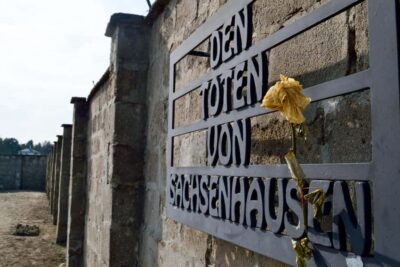
Bus Tour to Sachsenhausen, East Side Gallery, & Berlin Story Bunker
Read our review →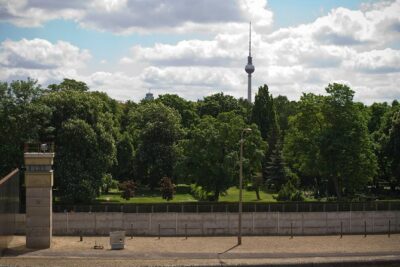
Cold War, Berlin Wall, Spies and the East Side Gallery
Read our review →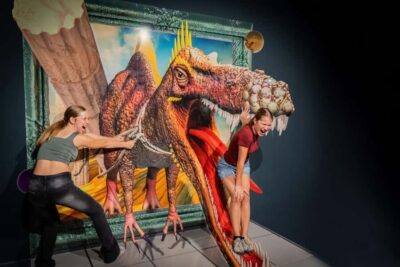
Browse the lists this tour appears in