
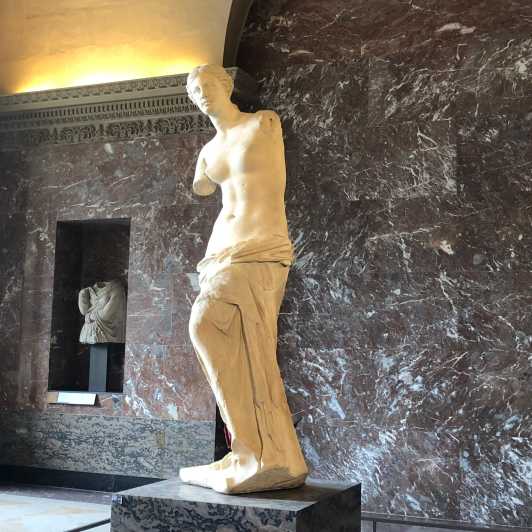
REVIEW · PARIS
Paris Louvre : Private Treasure Hunt for Families or groups
A poisonous vial, a cursed museum, and the Mona Lisa make a better family hook than a long lecture on art. On this two-hour private Louvre hunt, you follow clues through some of the museum’s biggest rooms while trying to save the collection from a mysterious fate.
I like the included entry tickets, which let you skip the ticket line, and the way the guide gives children a job to do at each artwork. Guides Hugo and Lisa have earned especially warm praise for keeping children involved. The catch is that the hunt can feel too hard or too light for some children, particularly a three-year-old or a six-year-old who is not keen on puzzles.
Key points to know before you book
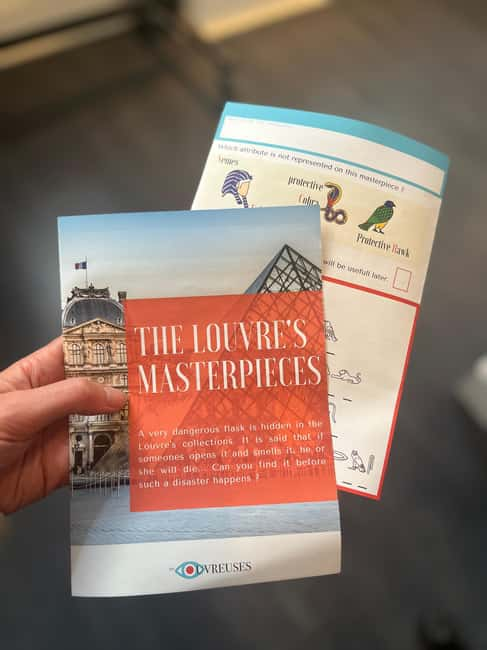
- A poisonous vial drives the story: Children follow coded messages and observation games to locate a dangerous object before tragedy strikes.
- Three famous artworks anchor the route: The Mona Lisa, Venus de Milo, and Winged Victory of Samothrace all feature in the hunt.
- Your guide matters: Hugo and Lisa have been singled out for patience and strong rapport with children.
- The group is private: The $648 price covers up to five people, so it makes the most sense for a family or small group sharing the cost.
- Two hours keeps the visit focused: You see major highlights without trying to conquer the entire Louvre.
- Very young children may struggle: The activity has worked best for children around six to nine, while a three-year-old may not take part in the same way.
A Louvre mission with a clear purpose
The Louvre can be a lot for a family. It is huge, crowded, and packed with art that adults may admire long before children do. This experience gives you a simple goal: find the poisonous vial hidden among the masterpieces.
Your guide meets you outside at 8 Place du Carrousel, below the Louis XIV statue. From there, you enter with the provided museum tickets. The story begins quickly, with a warning that the vial could send anyone who inhales it into an eternal sleep.
That plot is playful rather than frightening. The point is not to turn the Louvre into a haunted house. It is to give children a reason to look closely at paintings, sculptures, and details they might otherwise ignore.
At each stop, the guide presents a challenge. You may need to study an artwork, spot a detail, work through a coded message, or connect one clue to the next. The booklet helps keep the activity moving, though the difficulty can vary from child to child.
I like this format because it treats children as active participants. They are not simply being led from one famous object to another. They are helping solve a case.
More Art Museum Tours in Paris
- Paris: Louvre Museum Timed-Entrance Ticket
★ 4.6 · 71,977 reviews - Paris: Orsay Museum Entry Ticket
★ 4.7 · 25,647 reviews - Paris: Louvre Guided Tour with Reserved Access & Boat Cruise
★ 4.3 · 16,353 reviews
Entering beneath the Louis XIV statue
The meeting point is easy to identify: below the Louis XIV statue at the Louvre’s main courtyard. You should arrive with your group together, since the tickets are part of the booking and one missing ticket caused a serious problem for one family.
That issue is worth taking seriously. The price is high enough that every person in your party needs to be accounted for before you arrive. Check your booking details carefully and confirm the total number of participants. The supplied information includes one report of a person being unable to join because a ticket was missing.
Once the ticket question is settled, the entry arrangement is one of the tour’s strongest practical features. You do not need to buy separate Louvre admission, and the experience includes skip-the-ticket-line access. That saves time and spares you one of the least enjoyable parts of visiting a major museum with children.
Large bags and luggage are not allowed. Plan to arrive with only what you need for two hours. Food and drinks are not included, so handle those before or after the visit rather than expecting a snack break during the hunt.
Following clues through the Louvre
The guide leads your group through the museum while the story unfolds. You are not promised a full survey of the Louvre, and that is a good thing. In two hours, a focused route is far more useful than a rushed attempt to cover every wing.
The activity is built around observation. Children have to look at the art to solve the next part of the mystery. That changes the mood of a museum visit. Instead of asking a child to admire a work because it is famous, you give the child a reason to inspect it.
A private format also helps. Your guide can adjust the pace, explain a clue again, or give a child a little time to solve a puzzle. The strongest experiences appear to depend heavily on the individual guide. Hugo has been praised for patience and for involving children, while Lisa has been especially good at keeping young participants interested and helping them learn.
That personal element is important here. The basic route and booklet provide structure, but the guide is responsible for turning the material into a real game. A lively guide can make the same artwork feel like part of a case. A less engaging guide may leave the puzzles feeling like schoolwork.
The Mona Lisa as part of the case
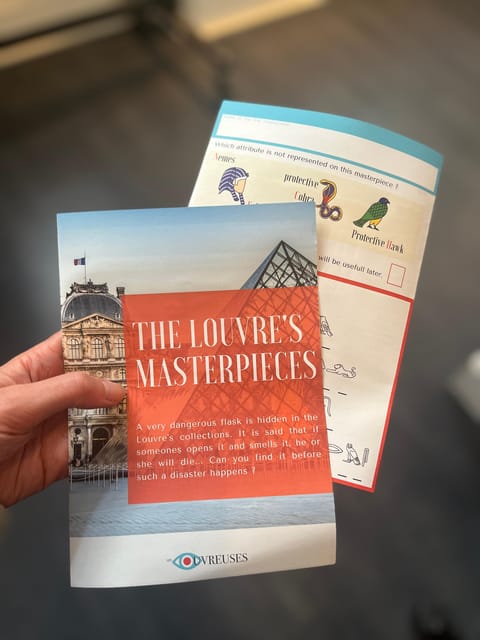
The Mona Lisa is one of the tour’s central stops. You see Leonardo da Vinci’s famous portrait while working through one of the clues in the larger mystery.
The value of seeing it in this setting is not simply that you can check a famous painting off your list. The hunt gives you a reason to focus on the work, notice details, and talk about what you see. That can be far more effective with children than trying to explain why the painting matters in the middle of a crowd.
The Mona Lisa is also the stop most likely to attract heavy attention inside the museum. Your guide can help keep the visit organized, but this is still a major Louvre highlight with plenty of interest around it. You should expect the experience to focus on the artwork rather than provide a long, quiet viewing period.
For adults, this stop may feel brief. For families, that can be the right trade. The aim is to keep everyone moving through the story, not to spend half the tour in front of one painting.
More gallery tours built for kids in Paris:
- Paris Louvre: 2-Hour Private Tour for Groups or Families
★ 4.6 · 639 reviews - Paris: Louvre Private Family Tour for Kids + Reserved Entry
★ 4.6 · 508 reviews - Paris Kids and Families Private Louvre Tour
★ 5.0 · 430 reviews - Family Friendly Louvre Museum Private Guided Tour
★ 5.0 · 190 reviews
Solving the Venus de Milo clue
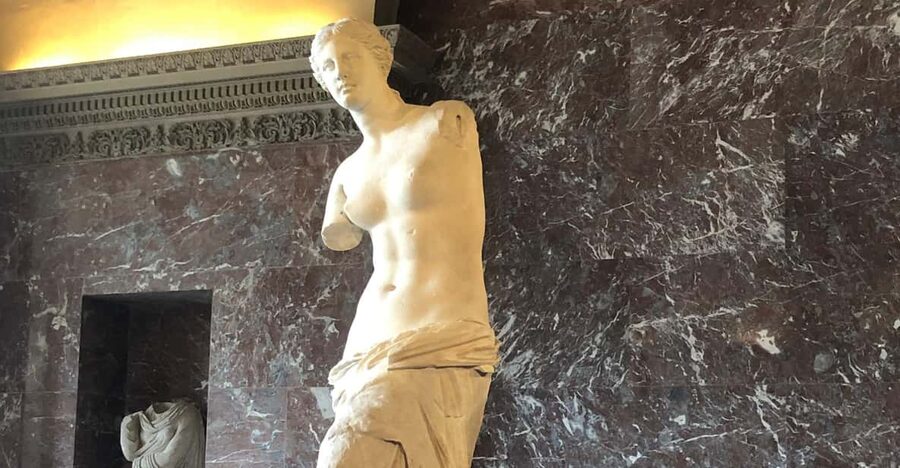
The Venus de Milo receives a guided stop of about 15 minutes. This gives you a little more time to pause with the sculpture and work through its challenge.
The statue offers a useful contrast to the Mona Lisa. You move from a portrait to an ancient sculpture, and children can look at its missing arms, posture, and scale while thinking about the clue. The activity uses observation rather than demanding a large amount of art knowledge.
I appreciate the variety in this part of the route. A family tour can lose energy if every stop asks children to do the same thing. Moving between different types of masterpieces keeps the hunt from becoming a single long worksheet.
Still, you should not expect every puzzle to be instantly clear. One family found the scavenger hunt more difficult and less engaging than expected, even though the guide was excellent. If your child becomes frustrated by riddles, you may need to treat the answer as a team effort rather than insisting that the youngest person solve every clue alone.
Reaching Winged Victory of Samothrace
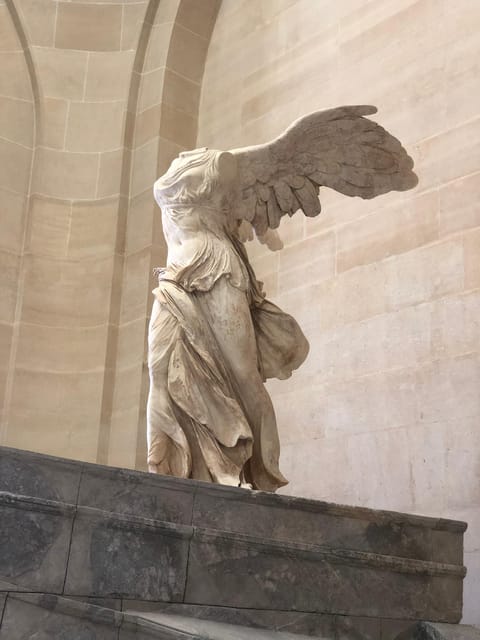
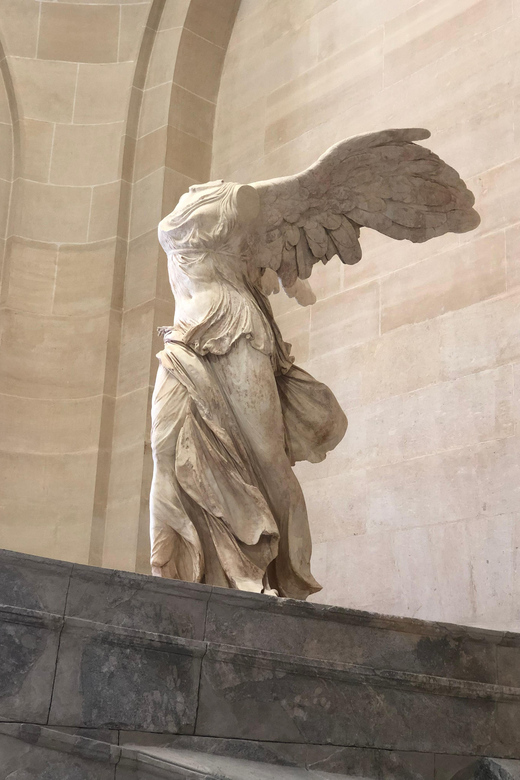
The Winged Victory of Samothrace, also called Nike, is another major stop. The sculpture is displayed at the top of the Daru staircase, where its dramatic setting adds to the sense of arrival.
For children, this can be a strong visual moment. The sculpture’s wings, movement, and position make it easy to discuss what the figure might be doing and how an artist can suggest motion in stone. The guide uses the artwork as another stage in the search for the vial.
The stop also shows the advantage of a route built around major highlights. You are not being asked to remember a long list of names. You have three famous works to connect with the case, and each one gives the family a shared reference point for the rest of the visit.
As with the other stops, the amount you get from it depends on the guide and your child’s attention span. The tour promises a lively introduction, not a detailed art-history class. Adults who want extended time at the sculpture may find the pace brisk.
What the private format is really worth
The price is $648 per group of up to five people. That works out to $129.60 per person for a full group of five, before considering that Louvre admission is already included.
That is a considerable price for two hours. The cost is easier to justify if you have a full group and want a private guide who can focus on your children. It is harder to justify for one or two people, or for a family hoping for a long museum visit.
The private arrangement has real value. You do not have to worry about a child slowing down a larger group, and the guide can speak directly to your family. You also get the booklet and museum entry, which removes two pieces of planning.
I would compare this with the cost of standard Louvre entry plus the effort of creating your own scavenger hunt. If you already know the museum well and enjoy planning activities, you could spend less by visiting independently. If you want someone else to manage the route, clues, timing, and art explanations, the private price may feel worthwhile.
The strongest value appears for a family of four or five with children who enjoy stories and puzzles. The cost per person rises quickly when fewer people share it.
Which children will enjoy it most
The activity is best suited to children who can listen, observe, and take part in simple puzzle solving. The most positive comments came from families with children around six to nine years old. Children in that range can usually follow the story and contribute to the clues while still enjoying the sense of play.
That does not mean every six-year-old will love it. One family found the activity less engaging than expected, and the difficulty of the scavenger hunt was part of the problem. Your child’s personality matters as much as age.
A three-year-old may enjoy walking through a grand museum and seeing the sculptures, but the actual hunt may be beyond that child’s attention span. One family found the three-year-old did not enjoy it, while the nine-year-olds did.
I would book this for children who ask questions, like finding details, or enjoy being given a mission. I would think twice if your group includes a very young child who needs frequent breaks or a child who dislikes riddles.
The experience can still work for adults. You get a guided visit to some of the Louvre’s most famous works, and the story gives you a reason to keep moving. Just expect the explanations to be shaped around the children rather than around advanced art history.
Guides make or break the experience
The supplied experience allows French or English, and the guide is the human center of the tour. Names that have received especially strong praise include Hugo and Lisa.
Hugo has been described as patient, friendly, and involved with children. Lisa has been praised for keeping children interested while also helping them learn. Those qualities matter more here than a long list of credentials.
You should also keep expectations realistic. The same activity may feel very different depending on who leads it. The booklet and route are fixed, but the guide controls the energy, the explanations, and how much help the children receive.
I would tell your guide at the start what your children enjoy and where they may need help. The tour is private, so it makes sense to use that flexibility. If the children need a little more explanation, ask. If they are racing ahead, let the guide keep the story moving.
Practical details for a smoother visit
The visit lasts two hours, with starting times based on availability. That is long enough for a solid introduction to the Louvre without asking most children to remain focused for half a day.
You meet outside at 8 Place du Carrousel, below the Louis XIV statue. The experience is offered as a private group, with French and English guides available.
Tickets and a booklet are included. Food and drinks are not. Luggage and large bags are not permitted, so arrive with a small amount of personal gear.
You can cancel up to 24 hours before the activity for a full refund. You can also reserve now and pay later, which helps if your Paris schedule is still shifting.
The overall rating is 3.9 from 14 ratings, which fits the pattern here: strong results with some families, but a clear dependence on the guide, the child’s age, and the difficulty of the puzzles. One very poor experience also involved a missing ticket, so confirming the number of people in your booking is essential.
Should you book the Louvre treasure hunt?
Book it if you want a private, story-led introduction to the Louvre and your children are roughly six to nine, enjoy puzzles, and can stay focused for two hours. The Mona Lisa, Venus de Milo, and Winged Victory give you the essential highlights, while the poisonous-vial mystery keeps the visit from feeling like a lecture.
I would be more cautious with a three-year-old, a child who dislikes riddles, or a group of fewer than five people sharing the $648 cost. The activity is not a guaranteed hit for every child, and the guide has a major effect on the result.
For the right family, this is a smart way to turn an intimidating museum into a shared mission. Just verify every ticket, travel light, and choose it for the puzzle-loving children in your group, not simply because the Louvre is famous.
FAQ
How long does the private Louvre treasure hunt last?
The activity lasts two hours.
Where do you meet the guide?
You meet the guide at 8 Place du Carrousel, below the Louis XIV statue.
Are Louvre admission tickets included?
Yes. Louvre Museum entry tickets are included, along with the guide and a booklet.
Which Louvre artworks are included?
The route includes the Mona Lisa, the Venus de Milo, and the Winged Victory of Samothrace, also called Nike.
Is the experience private?
Yes. It is offered as a private group activity for up to five people.
Which languages are available?
The tour is available with a live guide in French or English.
Can you cancel the booking?
Yes. You can cancel up to 24 hours in advance for a full refund. The activity also offers a reserve-now, pay-later option.
More Louvre Tours in Paris
- Louvre Museum Masterpieces Guided Tour with Access
★ 4.5 · 12,023 reviews - Paris: Louvre Overview, Exploration tour and Reserved Entry
★ 4.1 · 10,145 reviews - Paris: Louvre Museum Entry Ticket With Host and River Cruise
★ 4.6 · 9,926 reviews - Mona Lisa & Louvre Masterpieces Tour with Reserved Access
★ 4.6 · 6,812 reviews
Just added around Paris
- Paris Day Tour with Eiffel Tower, Louvre and Cruise Max 6 People★ 4.5 · 29 reviews
- visiting the masterpieces of impressionists at Orsay museum★ 5.0 · 7 reviews
- PRIVATE Louvre Wonders & Hidden Treasures Visit★ 5.0 · 65 reviews
- d’Orsay Museum Paris entry ticket★ 3.5 · 31 reviews
- Louvre Museum with private guide★ 5.0 · 3 reviews
- Louvre Wheelchair-Accessible Private Tour – Stress-Free & Easy★ 5.0 · 16 reviews
- LOUVRE, Small Group Guided Tour in French (TOP SALES)★ 4.5 · 9 reviews
- Musée d’Orsay Highlights Tour with Gourmet Lunch★ 4.5 · 11 reviews
Art Museum Tours in Paris, compared.


Louvre Guided Tour with Reserved Access & Boat Cruise
Read our review →
Louvre Overview, Exploration tour and Reserved Entry
Read our review →
Louvre Museum Entry Ticket With Host and River Cruise
Read our review →
Mona Lisa & Louvre Masterpieces Tour with Reserved Access
Read our review →
Louvre Museum – Exclusive Guided Tour (Entry Included)
Read our review →
Louvre Museum Hosted Entry and Mona Lisa Audioguide
Read our review →Browse the lists this tour appears in