REVIEW · PARIS
Paris: Guided Louvre Museum Tour with Optional Entry Ticket
The Louvre is too large to tackle casually, and this tour solves that problem with a brisk route through the museum’s essential rooms. You’ll see the Mona Lisa, The Wedding at Cana, Nike of Samothrace, Venus de Milo, Napoleon’s war paintings, the French crown jewels, and the Apollo Gallery in about two to three hours.
I like the separate skip-the-line entrance, especially for a first visit, and I like that you can choose the ticket option or join with a ticket you already have. Guides such as Elizabeth, Ahmed, Deli, Tatiana, and Fabien have been praised for lively storytelling, humor, and clear explanations.
The main drawback is the pace. The Louvre holds far more than any short tour can cover, so this is a highlights route, not a quiet afternoon with one painting. You also need to find a guide holding the yellow My Super Tour sign beneath the statue of Louis XIV, and that meeting point can be easy to miss.
Key points at a glance
- See major masterpieces efficiently: The route focuses on the Mona Lisa, The Wedding at Cana, Nike of Samothrace, Venus de Milo, Napoleon’s paintings, crown jewels, and Apollo Gallery.
- Use a separate entrance: Skip the long public line and spend your limited Paris time inside the museum instead.
- Choose your ticket setup: Pay for the entry ticket with the tour, or join if you already have your own ticket.
- Expect strong guide-led storytelling: Elizabeth, Ahmed, Deli, Tatiana, Fabien, and other guides have been praised for humor, warmth, and useful art context.
- Finish with freedom: The guided portion ends in the Apollo Gallery, leaving you free to continue through the museum alone.
- Add a Seine view of Paris: The optional cruise discount lets you see the Louvre and other landmarks from the river.
Why a guided Louvre visit makes sense
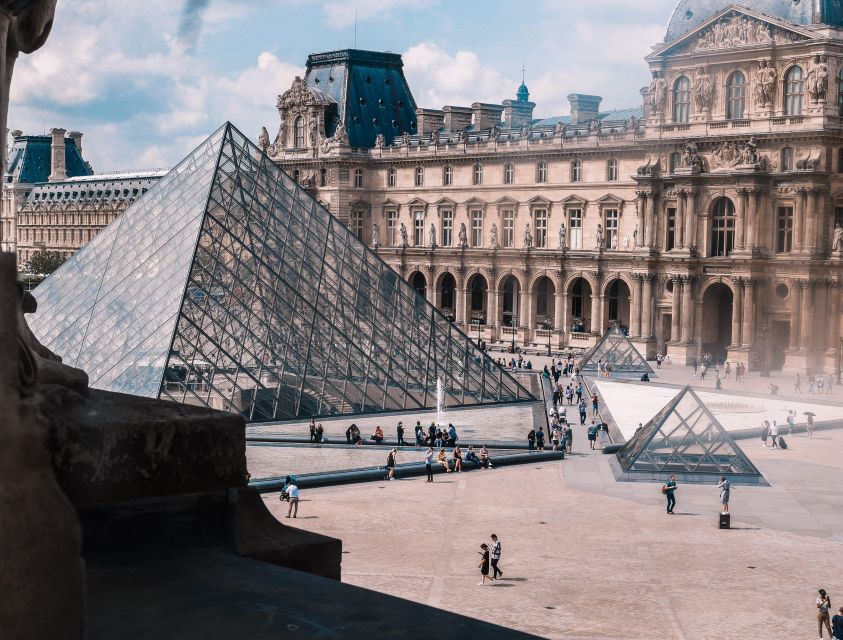
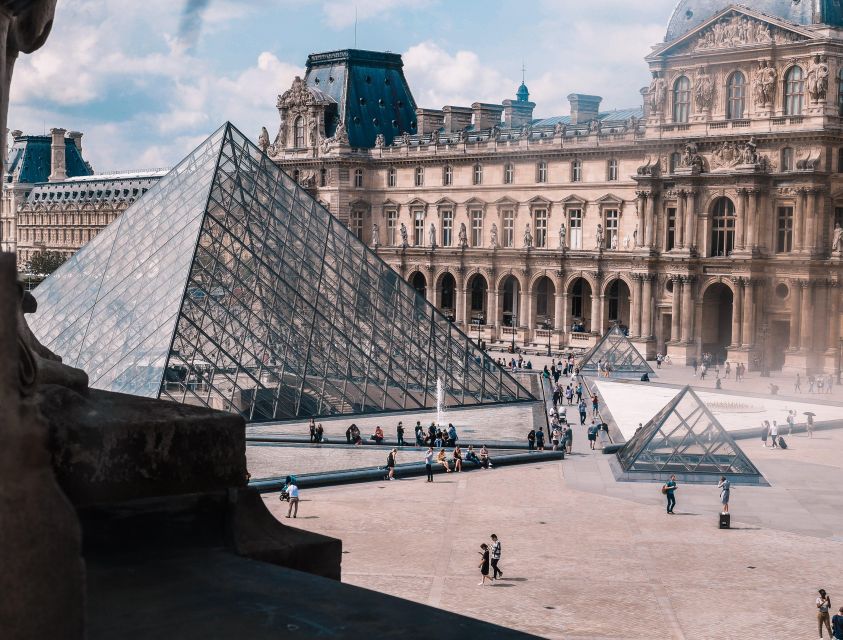
The Louvre is not simply a large art museum. It is a former royal residence with layers of French history built into its walls. The first structure on the site was built in 1190 as a fortress, and the building later became a palace for kings and emperors.
That setting can be hard to understand when you are following signs from one famous painting to the next. A good guide gives you the building’s story as you move through it, so the grand staircases, galleries, and decorated rooms feel connected rather than random.
I especially like this approach for a first visit. You get a map to help continue on your own, but you do not spend your first hour trying to work out where the major pieces are. The guide gives you a route and a framework, then you can return to the rooms that caught your interest.
This is also a practical choice if your Paris schedule is tight. The tour lasts two to three hours, enough time to see the main works without giving the Louvre an entire day. You will not see everything. That is not a realistic promise in a museum of this size. You will, however, leave with a strong first sense of its art and history.
More Art Museum Tours in Paris
- Paris: Louvre Museum Timed-Entrance Ticket
★ 4.6 · 71,977 reviews - Paris: Orsay Museum Entry Ticket
★ 4.7 · 25,647 reviews - Paris: Louvre Guided Tour with Reserved Access & Boat Cruise
★ 4.3 · 16,353 reviews
Meeting under Louis XIV’s statue
Your meeting point is beneath the statue of Louis XIV, near the Louvre. Look for the guide holding the yellow My Super Tour sign.
Give yourself extra time to find this spot. One person arrived 30 minutes early and still had trouble identifying the guide because the sign was not large and the guide’s identification was worn around the neck. That is useful advice: do not simply wait beneath the statue and assume the group will find you. Look actively for the yellow sign.
Once the guide gathers the group, you head toward the museum entrance. The group can be small, which makes it easier to hear explanations and ask questions. Some guides use a headset, a helpful feature in large rooms where voices can quickly disappear beneath the general museum noise.
The tour is offered in English or Russian. Check the language and starting time when booking. Availability can vary, and the activity lasts two to three hours.
Getting inside without the usual wait
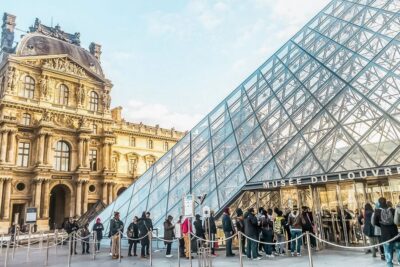
The separate entrance is one of the tour’s strongest practical benefits. The Louvre attracts enormous crowds, and standing in a long line before you have even reached the art can drain energy fast. Skip-the-line access does not make the museum empty, but it removes one major source of wasted time.
You can book the option that includes the museum entry ticket, or you can join the guided tour with your own ticket. That flexibility matters if you already bought admission or have arranged entry separately. Check your selected option carefully so you know exactly what is included.
Once inside, expect normal museum conditions around the famous works. The Mona Lisa in particular draws a crowd. The advantage of the tour is not that you get unlimited private time with the painting. The advantage is that your guide takes you there efficiently and explains what you are looking at instead of leaving you to fight through the room alone.
The Mona Lisa and The Wedding at Cana
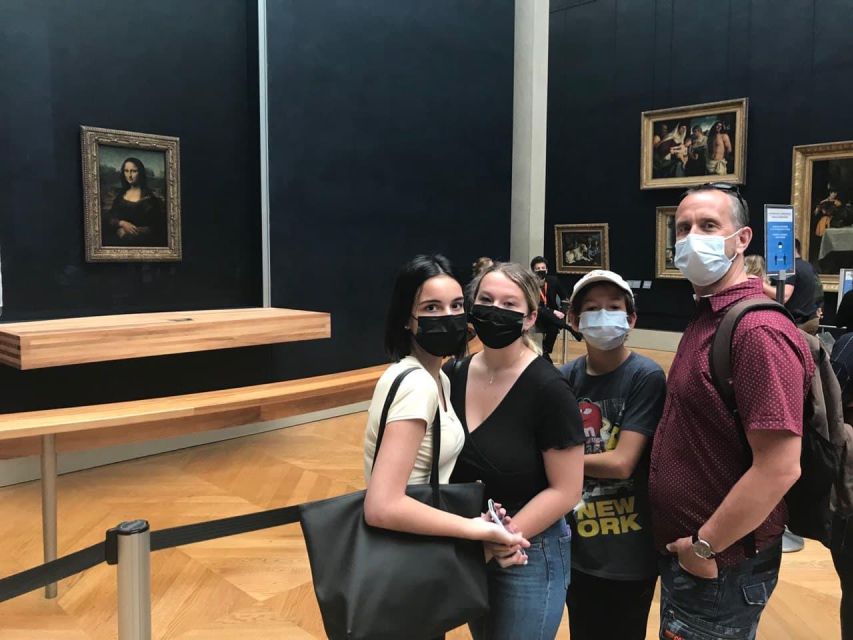
The Mona Lisa is the obvious headline stop, but the guide places it within a broader look at Renaissance art. You can expect an explanation of the painting’s hidden meanings and visual details, rather than a quick photo stop followed by a move to the next room.
The painting is protected behind glass and viewed by many people at once, so keep your expectations realistic. This is a busy encounter, not a silent one-on-one meeting with Leonardo da Vinci. Your guide helps turn a crowded stop into a useful one by pointing out what deserves your attention.
The Wedding at Cana gives you a different experience. Its enormous scale and crowded biblical scene show how a painting can work as both a religious story and a display of power, clothing, architecture, and human activity. The guide can help you read the scene rather than see it as just another famous canvas.
This contrast is one reason the tour works well. You move from the Mona Lisa’s small, tightly controlled image to a monumental painting that fills the wall. The two stops show very different ways artists used size, gesture, color, and composition.
More Louvre tours and timed tickets:
- Louvre Museum Masterpieces Guided Tour with Access
★ 4.5 · 12,023 reviews - Paris: Louvre Overview, Exploration tour and Reserved Entry
★ 4.1 · 10,145 reviews - Paris: Louvre Museum Entry Ticket With Host and River Cruise
★ 4.6 · 9,926 reviews - Mona Lisa & Louvre Masterpieces Tour with Reserved Access
★ 4.6 · 6,812 reviews
Greek sculpture at Nike and Venus de Milo
The route also gives serious time to Greek sculpture, including two of the Louvre’s most famous figures.
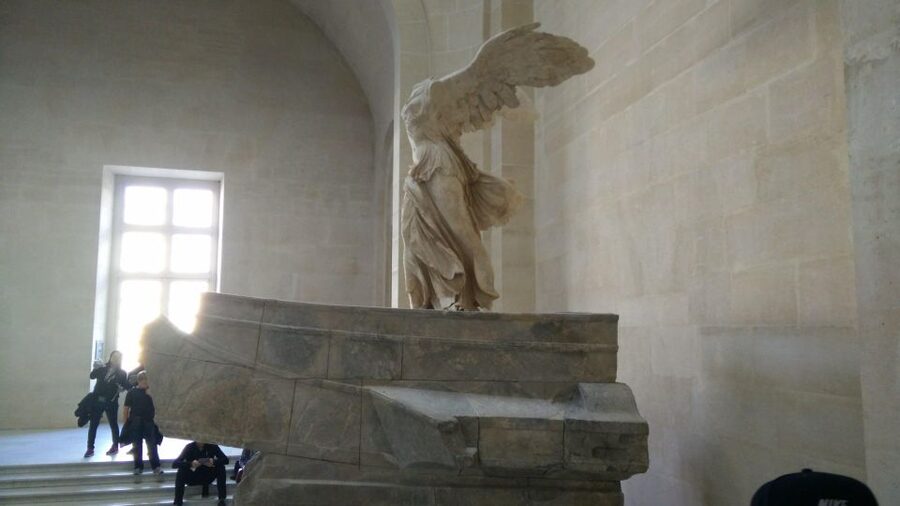
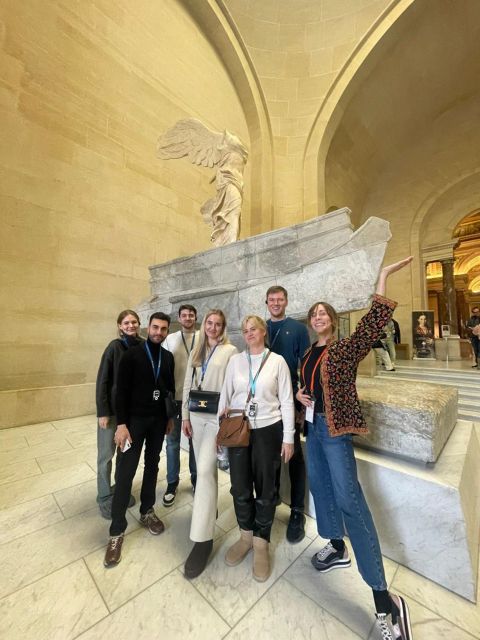
Nike of Samothrace is positioned dramatically at the top of a grand staircase. Even without a long explanation, the statue has force: the winged figure appears to move forward into the wind. A guide can point out how the folds of the clothing suggest motion and how the staircase adds to the effect.
Venus de Milo offers a quieter kind of fascination. This famous representation of the goddess Venus has lost its arms, but that damage has become part of its identity. You will learn why the statue remains important and how it fits into the museum’s collection of ancient art.
These stops are useful for anyone who feels unsure about sculpture. Rather than giving you a list of dates and names, a good guide explains how the work affects you through posture, material, scale, and placement. Deli, for example, was praised for showing the major works while also giving them enough context to feel meaningful within the larger museum.
Napoleon, royal jewels, and the less obvious Louvre
The Louvre is not only a parade of universally famous paintings. The tour also visits rooms connected with Napoleon’s wars and the French crown jewels.
The Napoleon displays help explain how art and decoration can project political authority. Huge paintings of military victories were not made merely to record events. They also helped present the emperor as powerful, successful, and worthy of loyalty. Seeing these works in the former palace gives them extra force.
The crown jewels offer another view of royal power. Their value is obvious, but the larger point is how rulers used precious stones, elaborate design, and ceremony to make authority visible. These rooms add variety to a route otherwise focused on paintings and sculpture.
I like this part of the itinerary because it keeps the tour from becoming a checklist of Mona Lisa, Venus, and exit. You see how art, architecture, military ambition, and wealth worked together inside a royal setting.
The route also includes Renaissance and Etruscan art, bringing the time span to about 3,000 years. That range is impressive, but it can also feel fast. If you want detailed attention to ancient Near Eastern art, Islamic art, decorative arts, or smaller collections, you will need to return on your own.
Ending in the Apollo Gallery
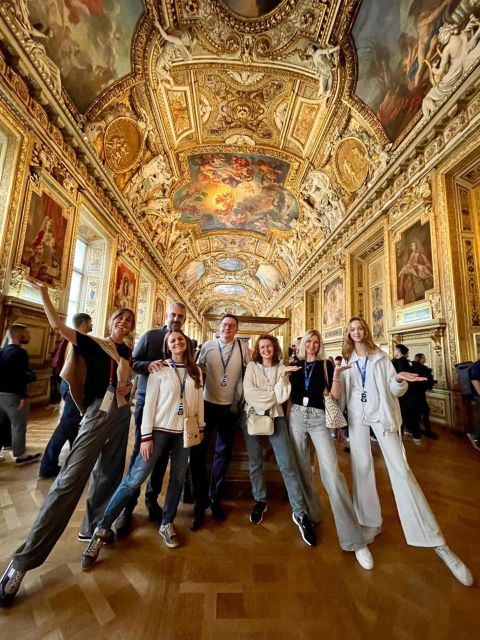
The guided tour ends in the Apollo Gallery, one of the Louvre’s great decorative spaces. This is a fitting final stop because it brings the palace side of the building into full view.
The gallery is known for its ornate decoration and connection to the French crown. Ending here lets you finish with a room that explains why the Louvre feels different from a standard art museum. You are not just walking through white exhibition halls. You are moving through a former center of royal life.
After the tour, you can use the museum map to continue alone. That free time is important. You might revisit a favorite painting, find a collection the group did not reach, or take a break before exploring more.
The tour does not promise to show every major department, and it should not. Its value comes from giving you a clear first route. Once you know where the highlights are, exploring the rest of the Louvre feels less overwhelming.
Guide style and what makes the tour enjoyable
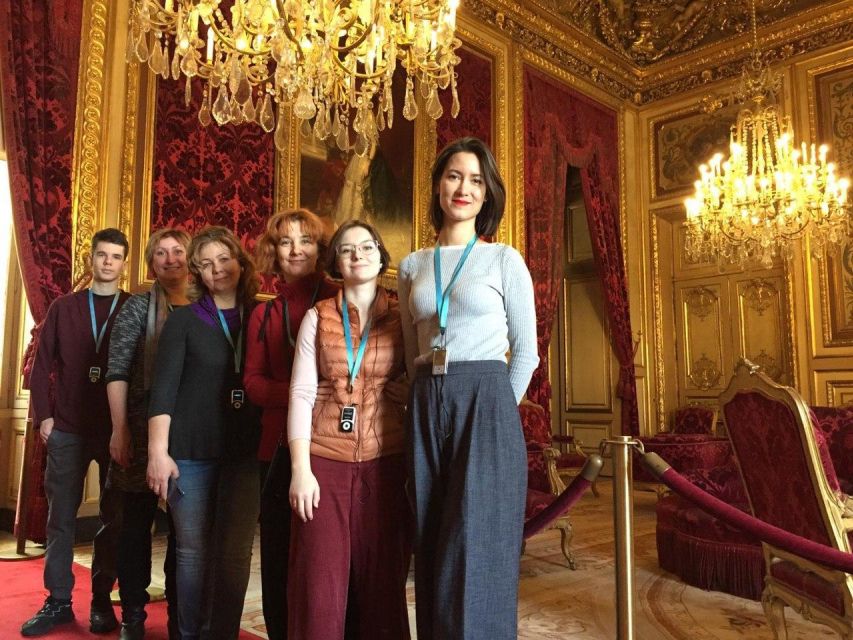
The strongest pattern in the guide feedback is personality. Elizabeth is praised for energetic, funny explanations and an interactive style. Ahmed is described as warm, entertaining, and clear, with one group particularly appreciating his headset and background stories. Deli is praised for combining professional guidance with a friendly manner.
Tatiana received especially warm praise for explaining the building, exhibitions, and individual works while also sharing useful Paris context. Fabien’s style was described as funny, relatable, and easy to follow. Natalia was singled out for linking each artwork to its history, and Monica was noted for keeping younger children interested.
That range matters because the guide assigned to your visit may shape the experience as much as the route itself. The company has several guides, so you cannot count on one particular person unless the booking specifically confirms that. Still, the repeated praise for humor, warmth, and storytelling suggests that the tour aims for conversation rather than a dry lecture.
I would choose this format if you like asking questions and learning the story behind an artwork. If you prefer to stand alone in silence and set your own pace, a self-guided visit may suit you better.
Is $128 a fair price?
At $128 per person, this is not a budget museum visit. The value depends on how much you care about saving time and having the collection explained.
The price includes a live guided tour, skip-the-line access, and an entry ticket if you select that option. It also includes a Louvre map for continuing independently, plus a discount on a Seine cruise. If you already have a valid ticket, the ticket-free option avoids paying twice.
For a first visit during a busy period, I can see the value. Two or three focused hours with a guide can prevent the common Louvre problem of wandering through huge corridors, missing the main works, and leaving exhausted without understanding what you saw.
The price is harder to justify if you want a long, slow museum day. You will still need extra time and possibly another ticket arrangement if you want to explore the Louvre’s many other departments. Think of this as a strong introduction, not a complete museum experience.
The cruise discount adds value if a Seine boat trip is already on your Paris plan. From the river, you can see the Louvre and other Paris landmarks from a different angle. It is an optional extra, not a reason by itself to book the museum tour.
Who should book this Louvre tour?
I recommend it most for:
- First-time Louvre visitors who want the famous works without planning a route themselves
- People with only a few hours available
- Families who benefit from stories, humor, and a clear path through the museum
- Visitors who dislike long entrance lines
- Anyone who wants an introduction before returning alone
- Visitors who may also use the discounted Seine cruise
I would think twice if you already know the Louvre well or want to spend the day studying one collection in detail. The group route has a set rhythm, and even a good guide cannot give every artwork the time it deserves in two or three hours.
The tour is not suitable for wheelchair users, according to the activity information. Bring water, wear comfortable shoes, and plan for a lot of standing and walking through a very large building.
Free cancellation is available up to 24 hours before the start time, and you can reserve now and pay later. Those terms help if your Paris schedule is still changing, but they do not replace checking the exact meeting time and ticket option before you book.
Should you book it?
Book this tour if you want to see the Louvre’s headline works, hear the stories behind them, and avoid spending your first visit lost in the world’s largest art museum. The best reasons are the separate entrance, the clear highlights route, and the guides’ lively approach, with Elizabeth, Ahmed, Deli, Tatiana, Fabien, and others earning praise for making art easier to follow.
Skip it if you want complete freedom, long periods of quiet looking, or a specialist route through a particular department. For most first-time visitors, though, this is a sensible way to get your bearings, see the icons, and finish with enough confidence to explore more on your own.
FAQ
How long does the Louvre tour last?
The tour lasts between two and three hours, depending on the selected starting time and the pace of the group.
Is a Louvre entry ticket included?
You can choose an option that includes the museum entry ticket. You can also join the tour if you already have your own ticket, so check the option you select when booking.
What artworks are included?
The route includes the Mona Lisa, The Wedding at Cana, Nike of Samothrace, Venus de Milo, Renaissance and Etruscan works, paintings about Napoleon’s wars, the French crown jewels, and the Apollo Gallery.
Where do I meet the guide?
Meet beneath the statue of Louis XIV near the Louvre. Look for the guide holding the yellow My Super Tour sign.
What languages are available?
The live tour is available in English and Russian.
Can I take a Seine cruise after the tour?
Yes. If you choose the relevant option, you can use a discount to purchase a Seine River cruise ticket.
Just added around Paris
- Paris Day Tour with Eiffel Tower, Louvre and Cruise Max 6 People★ 4.5 · 29 reviews
- PRIVATE Louvre Wonders & Hidden Treasures Visit★ 5.0 · 65 reviews
- d’Orsay Museum Paris entry ticket★ 3.5 · 31 reviews
- visiting the masterpieces of impressionists at Orsay museum★ 5.0 · 7 reviews
- Louvre Museum with private guide★ 5.0 · 3 reviews
- Louvre Wheelchair-Accessible Private Tour – Stress-Free & Easy★ 5.0 · 16 reviews
- LOUVRE, Small Group Guided Tour in French (TOP SALES)★ 4.5 · 9 reviews
- Louvre Museum Private 2-h Tour on Italian Art and masterpieces★ 5.0 · 51 reviews
Art Museum Tours in Paris, compared.
Louvre Guided Tour with Reserved Access & Boat Cruise
Read our review →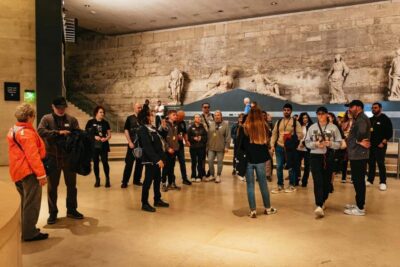
Louvre Overview, Exploration tour and Reserved Entry
Read our review →
Louvre Museum Entry Ticket With Host and River Cruise
Read our review →
Mona Lisa & Louvre Masterpieces Tour with Reserved Access
Read our review →
Louvre Museum – Exclusive Guided Tour (Entry Included)
Read our review →