
REVIEW · AMSTERDAM
Van Gogh Museum Guided Tour •10 people• Face to Face with Vincent
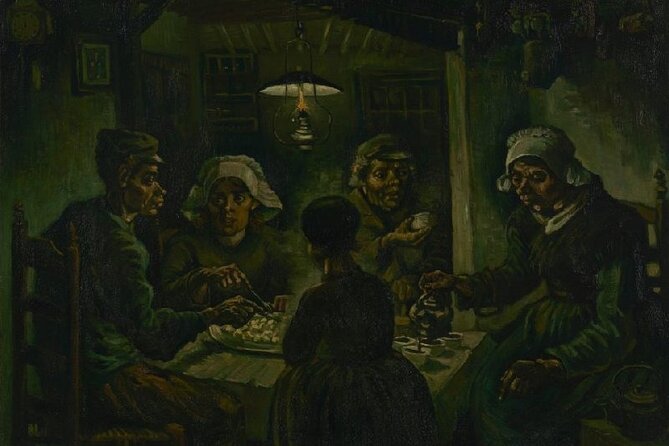
Vincent van Gogh is best understood up close, brushstroke by brushstroke. This Amsterdam tour uses the Van Gogh Museum collection to connect his changing technique with his illness, his time in Paris, Japanese art, and the intense final period when he produced more than 80 paintings in 70 days.
I like the small group of no more than 10 people, which gives the guide room to explain rather than simply recite dates. I also like the use of ScreenTours material to connect the museum pictures with the places and influences behind them, especially Paris and Japan. The main drawback is that the published timing is a little unclear: the experience is described as about 2 hours 30 minutes, while the museum visit itself is listed as 2 hours.
Key points to know
- A maximum of 10 people keeps the discussion personal and makes it easier to ask questions.
- Guide Ana receives special praise for her warmth, humor, and command of Van Gogh and the Netherlands.
- The tour follows Vincent’s development, from technique and influences to illness and his last paintings.
- ScreenTours brings outside context into the galleries, including Paris streets and Japanese artistic influence.
- The museum admission is included, so you are paying for both entry and the guided interpretation.
- Free cancellation applies up to 24 hours before the 10 a.m. start time.
Meeting Vincent through the museum collection
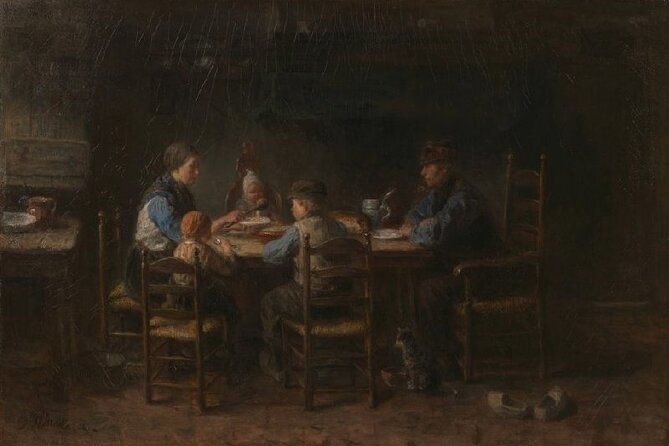
The appeal here is not simply seeing Van Gogh’s famous pictures. Amsterdam’s Van Gogh Museum holds the work in a way that lets you trace an artist changing before your eyes.
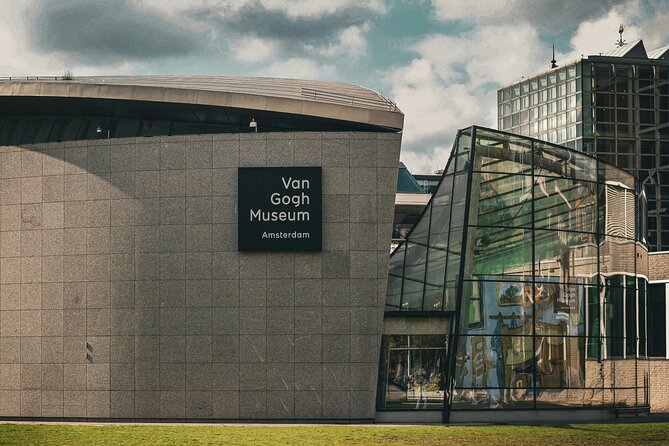
You begin at Paulus Potterstraat 7, 1071 CX Amsterdam, at 10 a.m. The meeting point is close to public transportation, and the activity ends back at the same place. The location matters because the museum is not an isolated sightseeing stop. It sits in the Museumplein area, where the city’s major art institutions are gathered together.
Once inside, the guide frames Van Gogh as an artist who was difficult even for his brother Theo to understand. That idea gives the visit a useful starting point. You are not being asked to admire a few bright sunflowers and move on. You are being encouraged to watch how Vincent’s work developed, and how his personal struggles affected the way he painted.
The small group helps here. Ten people is still large enough for lively discussion, but small enough that the guide can respond to questions. You should have a better chance of hearing clearly and staying with the group than you would on a large museum walk.
More Art Museum Tours in Amsterdam
- Amsterdam: Rijksmuseum Entry Ticket
★ 4.7 · 29,512 reviews - Amsterdam: Van Gogh Museum Ticket and City Canal Cruise
★ 4.6 · 3,899 reviews - Amsterdam: Van Gogh Museum Ticket & Canal Cruise
★ 4.5 · 3,304 reviews
How the two-hour museum visit unfolds
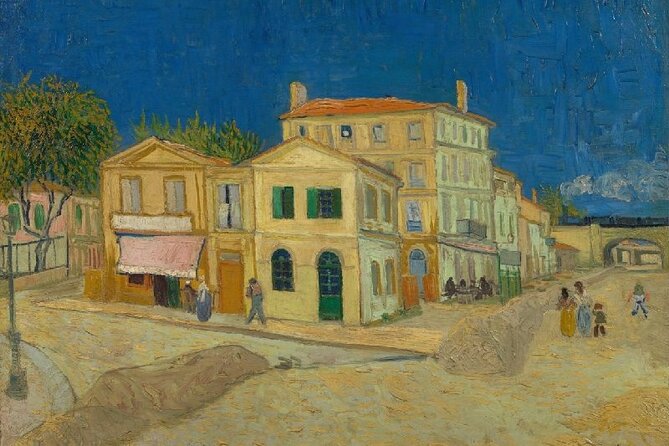
The main museum portion lasts about two hours. The broader experience is listed as approximately two and a half hours, so allow extra time around the formal gallery discussion rather than planning another appointment immediately afterward.
The tour is organized around ideas rather than a simple room-by-room march. That is a good fit for Van Gogh. His life and work do not make much sense when reduced to a list of cities and dates. The important thread is the shift in his way of seeing and painting.
You can expect attention to:
- His brushwork and changing technique
- The relationship between his illness and his art
- His artistic influences
- Japanese prints and their effect on his work
- Paris as a source of new color and inspiration
- His final period and its extraordinary output
- His tragic death
- Jo van Gogh’s work in bringing his paintings to a wider public
The value of this structure is that it gives you a way to look at the paintings. Instead of hearing only that a picture was painted in a certain year, you are prompted to ask what changed in the marks, colors, shadows, and emotional pressure of the work.
Watching technique change from painting to painting
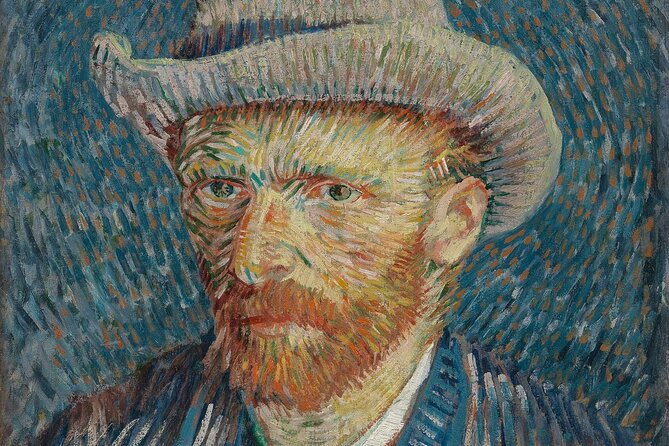
One of the strongest parts of the experience is the focus on brushstrokes. Van Gogh’s paintings can look instantly recognizable, but familiarity can make you stop looking closely. A guide who points out the direction, weight, and rhythm of the paint helps you see the decisions behind the famous style.
The tour also considers the contrast between shadow and light. That is more useful than treating his color as a simple sign of happiness or madness. His use of color developed through contact with other artists, places, and visual traditions. The guide’s job is to connect those influences without flattening the work into a single explanation.
I particularly like that the tour presents Van Gogh as an evolving painter. You are encouraged to notice movement rather than one fixed style. His pictures are not all doing the same thing, and the changes become clearer when you see them together in a museum devoted to his life and work.
The emotional side is part of the discussion, too. The tour examines his illness and the way it shaped the story people tell about him. That can be valuable, provided you keep the art in view. Van Gogh’s troubles are important context, but they should not swallow the paintings themselves. This experience appears designed to place illness alongside technique, influence, and ambition rather than use it as the only key.
Japanese influence and Parisian color
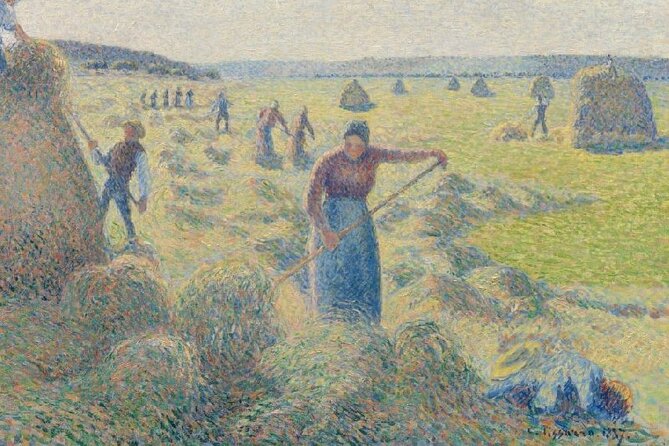
The Japanese influence gives the tour a useful wider frame. Van Gogh was not working in a vacuum. Looking at his interest in Japanese art helps explain certain choices in composition, line, and color. For a visitor who knows Van Gogh mainly through his most famous pictures, this can be one of the more revealing parts of the visit.
Paris receives similar attention. The tour connects the city’s streets with the change in Vincent’s palette. That connection matters because travel and place often alter an artist’s eye. Paris did not simply provide a backdrop for his life. It affected what he noticed and how he painted.
ScreenTours adds another layer by showing the works in relation to the places where they were conceived. The supplied details do not specify exactly which screens or images you will see, so you should not expect a particular digital presentation. But the stated approach is clear: the guide uses visual material to move beyond the gallery walls and connect the paintings with their wider setting.
This is especially helpful if you have limited time in Amsterdam. You get the museum collection itself, along with a guided link to artistic influences that you might otherwise need to research afterward.
More Van Gogh Museum tickets:
- Van Gogh Museum Amsterdam Exclusive Tour w/ Reserved Entry
★ 5.0 · 1,760 reviews - Van Gogh Museum Tour Reserved Entry Semi Private
★ 5.0 · 1,437 reviews - Amsterdam: Van Gogh Museum Entry Ticket and Guided Tour
★ 4.9 · 681 reviews - Combo Ticket: Van Gogh Museum Ticket and 1-Hour Canal Cruise
★ 4.0 · 676 reviews
The final 70 days and the pressure of the story
The tour gives special attention to Van Gogh’s last stage, when he painted more than 80 works in 70 days. That figure is striking, but the point is not merely speed. It introduces a period of extraordinary intensity and raises questions about the relationship between creative drive, rejection, and suffering.
The guide also discusses the rejection Vincent felt. That helps place the final paintings in a human context, though you should expect interpretation rather than a clinical account. The supplied details do not identify every picture included in this part of the route, so the exact gallery sequence may vary.
The subject can be emotionally heavy. If you prefer a light museum outing, this may feel more serious than a standard highlights tour. If you want to understand why the paintings carry such force, the attention to his last period should make the visit more meaningful.
The treatment of his tragic end is followed by the story of Jo van Gogh, who helped bring his work to worldwide recognition. This is an important correction to the familiar myth of the isolated genius. Van Gogh’s paintings did not become famous by magic. Their later recognition also depended on the people who preserved, organized, and promoted them.
Ending with Jo gives the tour a fuller arc. You see not only Vincent’s struggle to make the work, but also the later effort that helped the public understand it.
Why the guide makes a difference
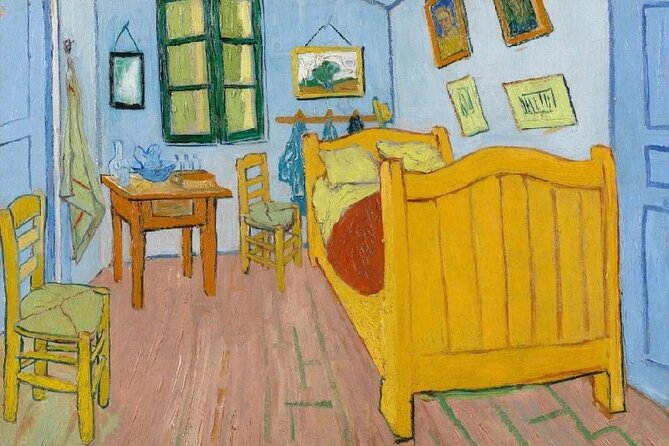
A museum guide can either bring paintings to life or turn them into a string of facts. Here, the strongest praise is directed toward Ana, who is described as warm, funny, approachable, and able to discuss both Van Gogh and the Netherlands more broadly.
Those qualities matter in a museum. A guide who welcomes questions can adjust the level of detail when one person wants more art history and another wants help reading a particular picture. Ana is also praised for making the visit feel personal and engaging rather than formal.
The guide is not the only reason to book, but the experience depends heavily on who leads it. The provider is ScreenTours, and Ana is the guide named in the available feedback. Guides can change, so you should not assume she will lead every departure. Still, her qualities show the style this experience aims for: informed, conversational, and emotionally engaged.
The praise also points to a useful advantage for Spanish-speaking visitors. The comments supplied about Ana are in Spanish, and the response from the provider is also in Spanish. The tour data does not formally state the operating language, so you should confirm that before booking if language is important to you.
Is $52.06 a fair price?
At $52.06 per person, this is not the cheapest way to enter the museum. You are paying for admission plus a small-group explanation lasting roughly two to two and a half hours.
The price makes more sense if you want a guided visit with a clear story. A museum this focused can be rewarding on your own, but it can also leave you moving from famous picture to famous picture without seeing the links between them. Here, the guide supplies a framework for technique, illness, Japan, Paris, the final period, and Jo van Gogh’s work.
The value is strongest for first-time visitors, people with limited time, and anyone who wants more than labels beside the paintings. It is also a reasonable choice if you tend to lose focus in art museums. A good guide gives the visit momentum.
The value is weaker for experienced Van Gogh students who prefer to set their own pace. A guided group, even one capped at 10, means you will not linger wherever you wish or skip every topic that you already know. You are buying structure as much as information.
The booking pattern also deserves attention. The experience is booked, on average, 68 days in advance. That does not guarantee every date sells out, but it is a practical sign that you should not leave this until the last minute if your Amsterdam schedule is fixed.
Timing, group size, and practical planning
The meeting time is 10 a.m., and the meeting point is Paulus Potterstraat 7. Since the tour is near public transportation, getting there should fit easily into a morning in Amsterdam. The published information does not give a recommended arrival time, so I would plan to be at the meeting point a little early.
The maximum group size is 10. That is small enough to support questions and personal attention, but it is still a group tour. You will need to stay with the guide and follow the planned route.
Most people can participate. No special fitness requirement is stated, but the activity takes place in a museum and lasts for several hours. If standing or walking for that length of time is a concern, ask the provider before booking, since the supplied information does not detail seating or accessibility arrangements.
The activity ends where it begins. That is convenient if you plan to continue around Museumplein afterward. You can visit another museum, stop for lunch, or simply use the area as a base for the rest of your day.
A mobile ticket is provided. Keep it available on your phone, and make sure your screen is charged before you arrive. Confirmation is sent at the time of booking.
Free cancellation is available if you cancel at least 24 hours before the local start time. Changes or cancellations inside that window are not accepted and are not refunded.
Who will get the most from this visit?
I would choose this tour if you want to understand Van Gogh through a connected story rather than a quick list of masterpieces. The focus on brushwork and artistic development should suit curious beginners especially well.
It also fits visitors who like human context. The tour does not avoid illness, rejection, or tragedy, but it places those themes beside the art and the people who influenced and supported Vincent.
You may also enjoy it if you are interested in how artists borrow and adapt ideas. The sections on Japanese influence and Paris give the visit a wider reach than a biography limited to Van Gogh’s personal problems.
I would hesitate if you want complete independence inside the museum. You may prefer a self-guided visit if you already know the collection well, want to spend long periods with just one painting, or dislike following a fixed route.
The same goes for visitors seeking a very short activity. The museum discussion alone is around two hours, and the full experience is listed at about two and a half hours. This is a focused museum visit, not a quick photo stop.
Should you book Face to Face with Vincent?
Book it if you want the Van Gogh Museum to make sense as a story of artistic change, outside influence, emotional strain, and later recognition. The group limit, included admission, and attention to technique give the $52.06 price a solid case, especially for a first visit.
The strongest reason to choose it is the guide-led interpretation. Ana is praised for combining serious subject knowledge with humor and warmth, though you should confirm the guide and language for your date. The main caution is the timing ambiguity and the reduced freedom that comes with any group tour.
If those points suit your plans, this is a thoughtful way to meet Van Gogh face to face, with enough context to keep the famous images from becoming mere souvenirs.
FAQ
Where does the tour start?
The tour starts at Paulus Potterstraat 7, 1071 CX Amsterdam, Netherlands.
What time does the tour begin?
The stated start time is 10 a.m.
How long does the experience last?
The overall experience is listed as approximately 2 hours 30 minutes. The Van Gogh Museum portion is listed as 2 hours.
Is museum admission included?
Yes. Admission to the Van Gogh Museum is included.
How large is the group?
The activity accepts a maximum of 10 travelers.
Does the tour end at the starting point?
Yes. The activity ends back at the meeting point.
Can I cancel for a refund?
Yes. You can cancel at least 24 hours before the experience start time for a full refund. Cancellations or changes made less than 24 hours before the start are not accepted and are not refunded.
Just added around Amsterdam
- Small Group Tour to NP Hoge Veluwe (van Gogh) from Amsterdam★ 5.0 · 19 reviews
- Van Gogh and Rembrandt Immersive Experience Entry Amsterdam★ 4.0 · 2 reviews
- Van Gogh Museum Guided Visit Including Tickets★ 4.5 · 9 reviews
- Van Gogh Museum Tour excluding Entrance Tickets★ 5.0 · 16 reviews
- Van Gogh Museum with Audio Guide★ 3.5 · 80 reviews
- Van Gogh Museum Entry Ticket and Guided Tour★ 4.5 · 48 reviews
- Van Gogh Museum, Small Group Tour (incl timed entry tickets)★ 5.0 · 5 reviews
- Amsterdam: Explore the Van Gogh Museum & His Masterpieces★ 3.5 · 64 reviews
Art Museum Tours in Amsterdam, compared.
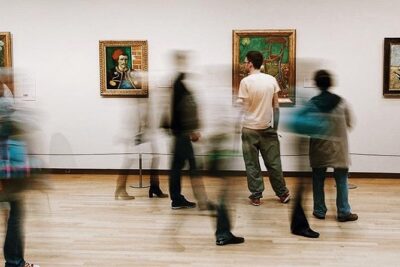
Van Gogh Museum Amsterdam Exclusive Tour w/ Reserved Entry
Read our review →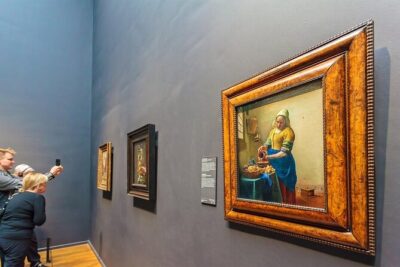
Rijksmuseum Amsterdam Small-Group Tour with Private Upgrade
Read our review →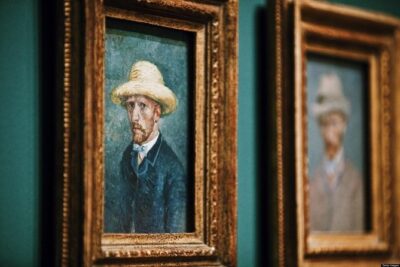
Van Gogh Museum Tour Reserved Entry Semi Private
Read our review →
Rijksmuseum Entry Ticket and Canal Cruise Combo
Read our review →Browse the lists this tour appears in