
REVIEW · BARCELONA
Picasso’s Barcelona on Electric Bike Small Group Tour
Barcelona makes sense from a bike seat. This route links Roman Ciutat Vella, the Born district, Ciutadella Park, and the Olympic waterfront without asking you to walk the whole distance. The electric motor helps you keep up while you watch the streets, not your pedals.
I like the easy overview and the small group limit of 10 people. I also like the mix of old streets, market buildings, park paths, and seafront views. Guides including Lily, Kubi, Nil, and Uri have brought strong local history and friendly commentary to the ride.
The main catch is the tour’s title. Picasso gets attention at Ciutadella Park, but much of the talk concerns Barcelona’s Roman, medieval, Olympic, and sporting past. If you want a focused art tour, this may not deliver what you expect.
Key points to know before booking
- A useful first look at Barcelona: Cover several districts in 2.5 hours, including places that are spread too far apart for a short walking tour.
- Electric help on city streets: The motor takes pressure off your legs, so you can focus more on buildings, parks, and the guide’s commentary.
- A compact group: The maximum of 10 riders should make it easier to hear instructions and stay together.
- A strong history route: Expect Roman Barcelona, medieval workshops, the 1888 Universal Exposition, the 1992 Olympics, and the city’s old fishing quarter.
- Picasso is one stop, not the whole theme: Ciutadella Park connects the artist to the city, but the tour also covers sports, urban change, and local neighborhoods.
- Meet in the Born area: The start point is in an old quarter and can be tricky to locate, so allow extra time before the 4 pm departure.
Why an electric bike works well in Barcelona
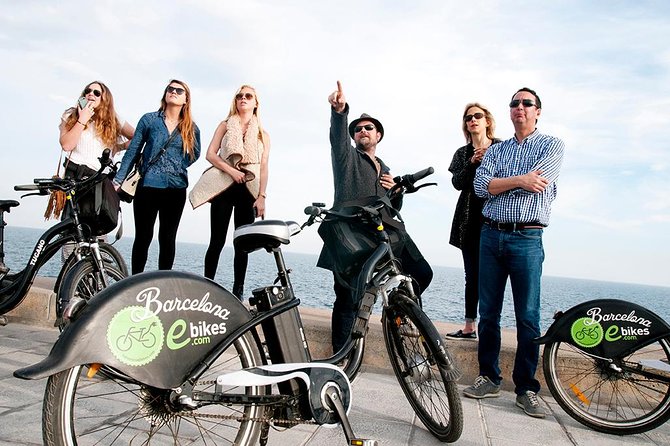
Barcelona is easy to admire and tiring to cross. The old center is compact in places, but the Olympic waterfront, Ciutadella Park, Born, and nearby neighborhoods are spread across a fair stretch of the city. An electric bike lets you link these areas without turning the outing into a workout.
You still need to pedal and steer. The motor simply makes the effort lighter, which matters when you are riding at a group pace or dealing with small changes in road level. Several parts of the route also pass through busy city spaces, so you need to pay attention even when the bike feels easy to operate.
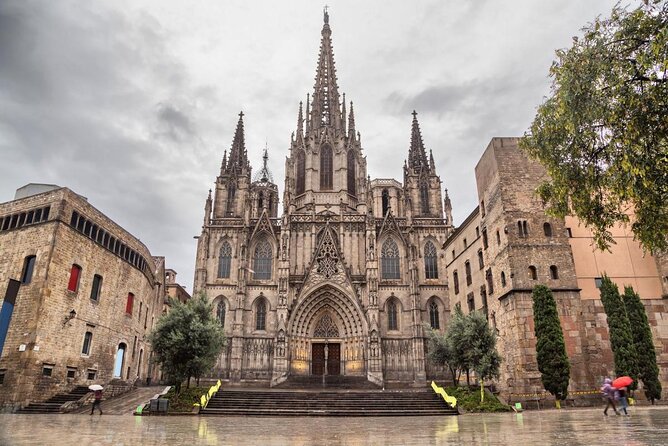
The tour begins with a short briefing at Barcelona eBikes. Your guide introduces the bikes, explains how they work, and supplies a helmet, water, and wireless headset. At Barcelona Cathedral, you get another chance to test the motor in a large square before the main ride continues.
That practice period is useful if this is your first electric bike experience. One rider described it as a first e-bike outing and found the learning curve worth it, though the route could feel like an obstacle course when people and vehicles appeared suddenly. Keep your eyes ahead, leave space between bikes, and do not assume the motor makes city riding automatic.
More Art Museum Tours in Barcelona
- Barcelona: Picasso Museum Skip-the-Line Guided Tour
★ 4.5 · 3,355 reviews - Girona & Dali Museum Small Group Tour with Pick-up from Barcelona
★ 5.0 · 2,965 reviews - From Barcelona: Girona, Figueres, Dalí Museum, and Cadaqués
★ 4.7 · 1,928 reviews
Starting in the old Born quarter
The meeting point is Plaça de Sant Agustí Vell, 16, in Ciutat Vella. This is in the Born area, where Barcelona’s oldest layers are close to the surface. The location can be hard to spot because the surrounding streets form a maze, so I would use a map app and arrive well before 4 pm.
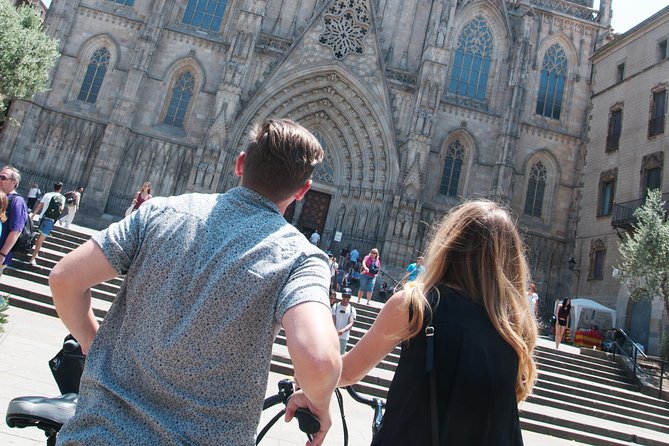
From the shop, the route heads toward the Cathedral of Barcelona. In the square outside, your guide explains the controls and lets you try the bike. This is not a sightseeing stop with an interior visit. It is a calm place to learn the controls before riding farther into the city.
The surrounding old town is the area where Barcelona began as Roman Barcino. As you ride, the guide sets the city’s early story against the medieval streets around you. This opening gives the tour a useful frame: Barcelona is not just Gaudí façades and beaches, but a city built up over Roman, medieval, industrial, and modern layers.
Santa Caterina Market and the old city
Santa Caterina Market adds a quick look at one of Barcelona’s distinctive market buildings. Its colorful roof and unusual organic shape give it a different feel from the city’s better-known food markets.
You should not expect a long food tasting or an extended indoor market visit. The value here is visual and local. It helps you see how a working market can also become part of the city’s modern design story.
The early section of the route is best for riders who want context rather than a long list of photo stops. Your guide connects the market, the old lanes, and the Born district, helping you understand how close Barcelona’s daily life remains to its oldest streets.
El Born Centre and the city beneath your wheels
El Born Centre de Cultura i Memòria was once Barcelona’s most important food market and the city’s first market with a roof. Today, the building protects archaeological remains from an older part of the city.
The stop lasts about 15 minutes. That is enough time for an explanation and a look at the remains, but not enough for a full museum visit. Think of it as a compact history lesson built into the cycling route.
I find this one of the more useful stops because it shows how Barcelona preserves its past in practical, unexpected places. You are not only looking at façades above street level. You are also seeing evidence of earlier streets and buildings below the modern city.
More Picasso museum visits:
- Picasso Museum Skip-the-Line Guided Tour
★ 4.5 · 1,079 reviews - Barcelona: Small Group Picasso Tour with Picasso Museum
★ 4.6 · 698 reviews - Picasso Museum and Walking Tour Plus Optional Wine & Food Tasting
★ 5.0 · 596 reviews - Picasso Small Group Walking Tour with Museum Skip the Line Ticket
★ 4.0 · 548 reviews
Ciutadella Park and the Picasso connection
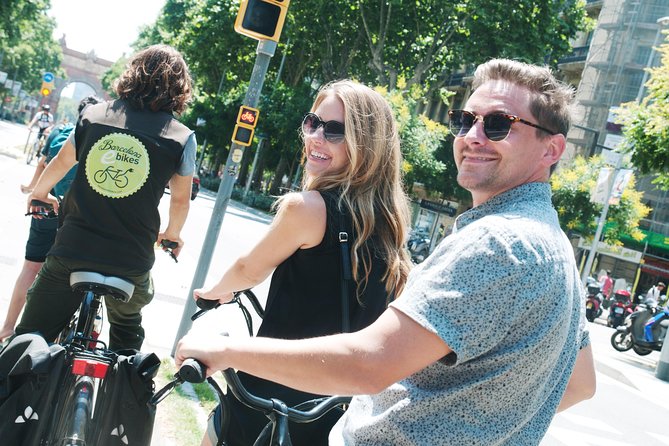
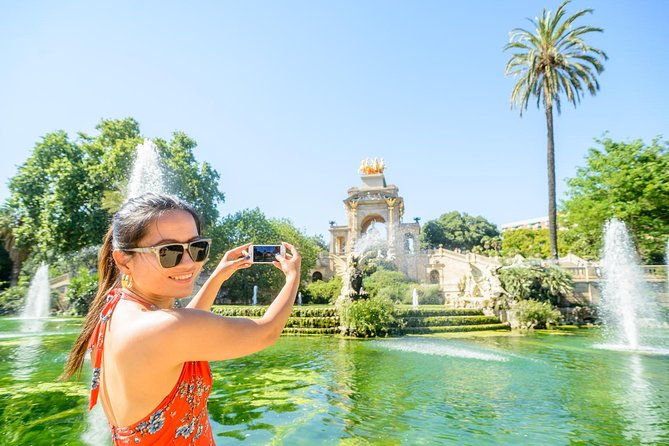
The route continues through one of Barcelona’s most pleasant parks toward the Arc de Triomf. The arch offers a striking view as you ride nearby, and the park provides a change from the narrow lanes of the old center.
Ciutadella Park hosted the Universal Exposition of 1888. Later, it became a place where Picasso and his family spent time. That connection explains the Picasso name in the tour title, but it is important to set expectations: this is not a museum tour or a detailed study of Picasso’s work.
The stop takes about 15 minutes. You hear about the park’s exhibition history and its connection to the artist, while also getting a break from traffic and dense streets. For many riders, this is one of the most enjoyable parts of the route because the setting opens up and the ride feels more relaxed.
If your main goal is Barcelona’s art history, you may find the Picasso material too brief. If you want an introduction to the city that includes art as one part of a larger story, the stop fits well.
From the 1992 Olympics to the waterfront
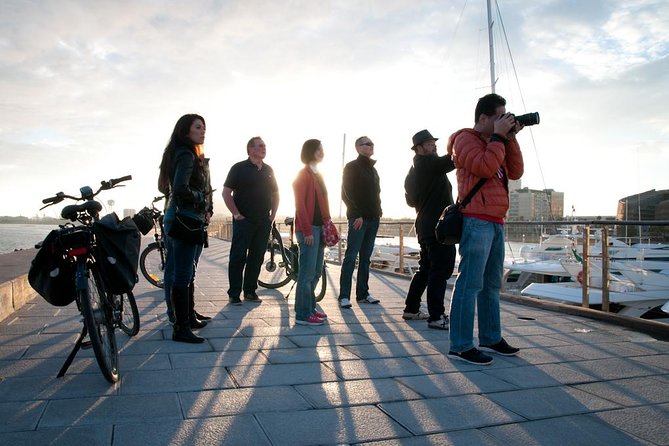
At Port Olímpic, the guide explains how the seafront changed for the 1992 Summer Olympic Games. This part of Barcelona was transformed from an older industrial and port zone into a public waterfront associated with the city’s modern identity.
The stop lasts about 10 minutes. You get a look at what the Olympics meant for Barcelona and how the city used the event to reshape its relationship with the sea. The commentary here leans toward urban and sports history rather than art.
That balance has two sides. I like seeing how a major event changed the physical city, especially after the older streets and Roman remains earlier in the ride. But if you booked this specifically for Picasso, the Olympic section may feel like a detour.
The waterfront also gives you some of the route’s best open views. You are riding rather than stopping for a long photo session, so have your camera ready before reaching the seafront.
The old fishermen’s quarter and Santa Maria del Mar
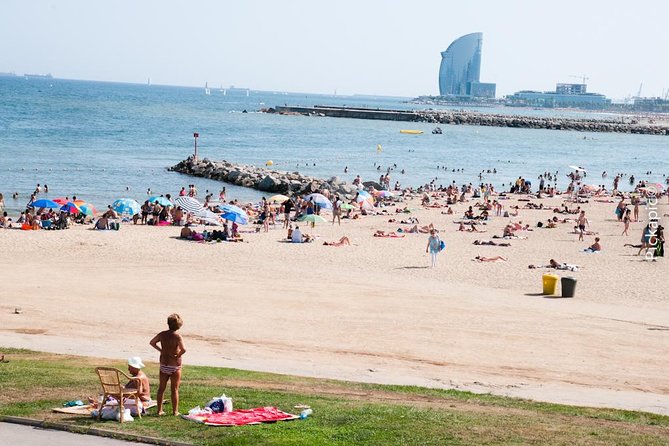
After the Olympic waterfront, the route passes through a local neighborhood traditionally linked with Barcelona’s fishermen and women. This section helps connect the grand Olympic project with the older working communities beside the sea.
The contrast is valuable. Barcelona’s waterfront was not always presented as a leisure district. It also supported people whose work depended on the harbor and the sea. Your guide uses this area to explain a more everyday side of the city.
The route then reaches the Basilica de Santa Maria del Mar, known locally as La Catedral del Mar. This Gothic basilica in the Born district was built by people from the neighborhood, with a connection to the protection and fortunes of the sea.
The stop lasts about 15 minutes. You receive an outside explanation and a chance to take in the building. The schedule does not promise an interior visit, so do not book this expecting a full church tour.
Medieval workshops in the Born lanes
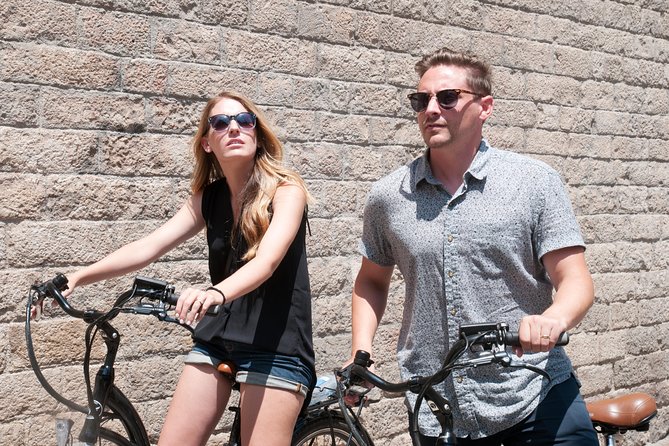
The final old-town section leads through a maze of narrow streets where craftspeople once operated workshops. The area still has shops selling handmade clothing, jewelry, and other small goods.
This is a good place to slow down and notice details that are easy to miss on a standard bus tour. The streets are not just attractive scenery. They reflect how work, shopping, and neighborhood life were arranged in medieval Barcelona.
You will need to stay alert here. Narrow lanes, pedestrians, and vehicles can make cycling feel less relaxed than the park or waterfront sections. The guide sets the pace, but you remain responsible for steering and keeping a safe distance.
What the guides add to the ride
The guide can make or break a short city tour. Names associated with this route include Lily, Kubi, Nil, and Uri. Lily has been praised for being friendly and clear, while Kubi has provided detailed explanations and interesting stops. Nil has led a particularly pleasant history-focused ride, and Uri has taken extra time to explain points in Spanish even though the scheduled tour is in English.
That range matters because the route covers many subjects in limited time. A good guide can tie Roman Barcino to medieval trade, the 1888 exposition, the Olympics, the fishing quarter, and Picasso’s time in Ciutadella Park without making the ride feel like a lecture.
The wireless headset should help you hear while moving, though the supplied information does not promise perfect sound in every street. One criticism involved an English-speaking guide who was difficult for the rider to understand. If clear spoken English is essential for you, keep this possible variation in mind.
Pace, group size, and riding conditions
The tour lasts about 2 hours and 30 minutes and ends where it begins. It is not a racing tour. The route is designed as a broad city introduction, with short stops of about 10 to 15 minutes at several key sites.
A group of no more than 10 is a sensible size for city cycling. It is small enough for the guide to keep an eye on the line and large enough to have a social feel. Still, your experience depends partly on the other riders, especially in narrow streets.
Children can affect the pace and spacing. One rider found it frustrating when children stopped or moved across the line. This is not a reason to avoid the tour if you are comfortable with a mixed group, but it is worth knowing that you may not have a perfectly smooth ride every second.
Most people can take part, according to the activity details. You should still be comfortable balancing, steering, stopping, and riding around pedestrians and vehicles. The bikes, helmets, water, and headsets are included.
Is $50.69 a fair price?
At $50.69 per person, this is not the cheapest way to see Barcelona. You are paying for the electric bike, helmet, water, guide, headset, and a route that links several districts in one outing.
The value is strongest if you are new to Barcelona or have limited time. In 2.5 hours, you reach the old center, Born, Santa Caterina Market, El Born Centre, Ciutadella Park, Arc de Triomf, Port Olímpic, the fishermen’s quarter, Santa Maria del Mar, and the medieval craft streets. Covering that distance on foot would take much longer.
The value is weaker if you already know these areas or mainly want a serious Picasso tour. You could rent a bike and explore independently, but then you would lose the historical explanations, route planning, equipment, and local tips.
The tour is recommended by 96 percent of customers and has a 4.8 rating from 68 reviews. Those numbers point to a generally strong experience, but the lower ratings show the key risks clearly: uneven guide communication, mixed group behavior, and a route that gives more time to general city history than to art.
Practical details before you go
The tour is offered in English and begins at 4 pm. It starts and ends at Barcelona eBikes, at Plaça de Sant Agustí Vell, 16, in Ciutat Vella. Public transportation is nearby.
I would arrive early because the meeting point can be difficult to find in the Born streets. Confirmation is provided when you book, and free cancellation is available if you cancel at least 24 hours before the start time. Changes or cancellations made inside that 24-hour window are not refunded.
The tour is booked, on average, 13 days ahead. That does not guarantee every departure sells out, but it is a useful reason to reserve before your visit if your schedule is tight.
Who should book this Barcelona e-bike tour?
I would choose this for a first or second day in Barcelona, when you want to understand how the old center, Born, park, port, and waterfront fit together. It is also a good pick if walking long distances is tiring but you still want to see more than one neighborhood.
You will get the most from it if you enjoy a broad city story. Expect Roman foundations, medieval streets, Gothic architecture, market history, the 1888 exposition, Picasso’s connection to Ciutadella, the 1992 Olympics, and Barcelona’s fishing communities.
I would choose another experience if your priority is a focused Picasso itinerary, a long indoor visit to Santa Maria del Mar, or a slow food tour. This ride gives you an overview, not a deep study of one subject.
Should you book it?
Book it if you want an active, practical introduction to Barcelona and like the idea of covering real distance without exhausting your legs. The best features are the small group, electric assistance, varied route, and guides such as Lily, Kubi, Nil, and Uri, who have brought warmth and strong city context to the ride.
Skip it if the Picasso title is your main reason for booking. The artist is part of the Ciutadella story, but the route is just as much about Roman Barcelona, medieval Born, Olympic redevelopment, and the waterfront. Arrive early for the meeting point, ride attentively, and you should get a useful first map of the city.
FAQ
Where does the Picasso’s Barcelona electric bike tour start?
It starts at Barcelona eBikes, Plaça de Sant Agustí Vell, 16, in Ciutat Vella, Barcelona.
What time does the tour begin?
The tour starts at 4 pm.
How long does the experience last?
It lasts approximately 2 hours and 30 minutes.
Where does the tour finish?
The activity ends back at the original meeting point.
What is included in the price?
The tour includes an electric bike, bicycle use, a helmet, bottled water, a professional guide, and a wireless headset.
Is the tour offered in English?
Yes. The scheduled language is English.
How many people can join the tour?
The maximum group size is 10 people.
Does the tour visit Picasso-related places?
Yes. The route includes Ciutadella Park, where Picasso and his family used to spend time. The tour also covers many other subjects, including Roman Barcelona, medieval streets, the 1888 exposition, and the 1992 Olympics.
Can I cancel for a full refund?
Yes, if you cancel at least 24 hours before the experience starts. Cancellations or changes made less than 24 hours before the start time are not refunded.
More E-Bikes in Barcelona
- Geneva Countryside And Art Museum At A Castle Wine By E-Bike
★ 3.8 · 16 reviews
More Cycling Tours in Barcelona
- Barcelona: Undiscovered Secrets of Picasso on E-Bike
★ 4.5 · 13 reviews - Paris Highlights Bike Tour: Eiffel Tower, Louvre and Notre-Dame
★ 5.0 · 853 reviews - Rome: Villa Borghese E-Bike Tour (Small Group or Private)
★ 4.9 · 92 reviews - Rome: Villa Borghese, Villa Ada, and Coppedè E-Bike Tour
★ 4.8 · 78 reviews
Just added around Barcelona
- Self-Guided Audio Tour-The Surrealist Barcelona of Dalí and Gaudí★ 3.5 · 8 reviews
- Dali Museum, Figueres & Cadaques Private Tour with Hotel pick-up★ 5.0 · 46 reviews
- Xcape Room Bcn: Corpse Gallery Escape Room Barcelona★ 5.0 · 3 reviews
- Private Dalí Museum and Tour from Barcelona★ 5.0 · 4 reviews
- From Barcelona: Private Girona and Figueres with Dali Museum Tour★ 5.0 · 113 reviews
- Picasso Museum in Barcelona: Guided Tour with Expert Guide★ 4.5 · 55 reviews
- Picasso Museum private tour and walk in El Born district★ 4.5 · 10 reviews
- Private Barcelona Art and Tapas Walking Tour with Picasso Museum★ 5.0 · 34 reviews
Art Museum Tours in Barcelona, compared.
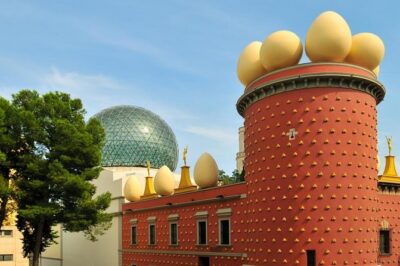
Girona & Dali Museum Small Group Tour with Pick-up from Barcelona
Read our review →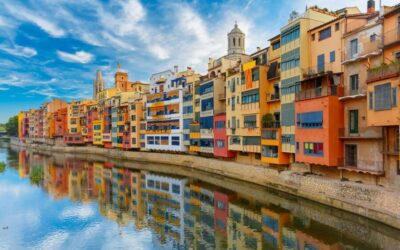
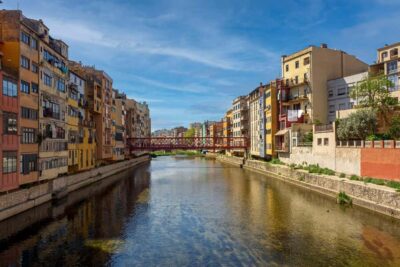
Dali Museum, House & Cadaques Small Group Tour from Barcelona
Read our review →
Girona and Dali Museum Full Day tour from Barcelona
Read our review →
Browse the lists this tour appears in