REVIEW · SPAIN
Jerez de la Frontera: Sherry Gallery and San Dionisio Palace
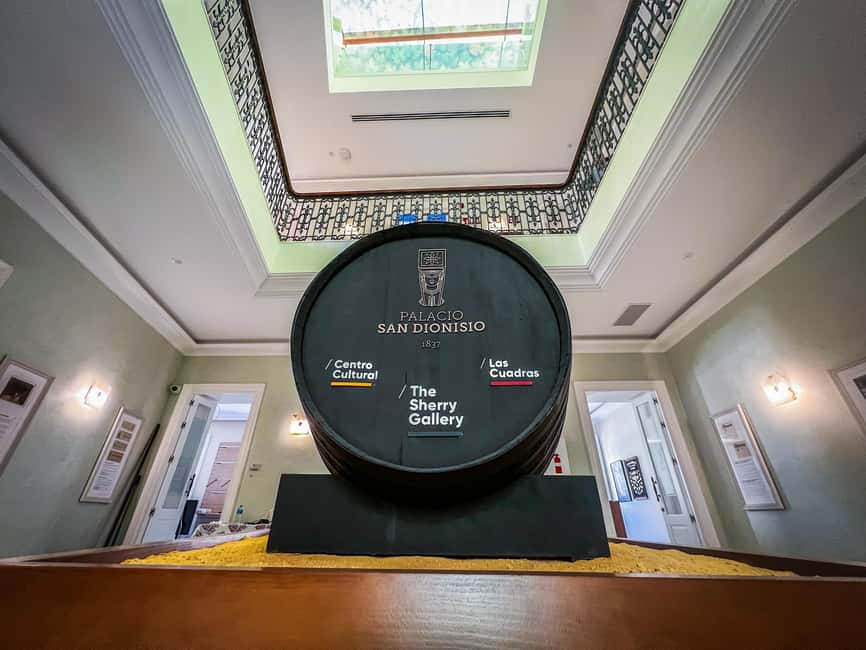
The most unusual part of this Jerez experience is the setting: a 19th-century palace turned into the only museum dedicated to sherry wine and brandy. Inside, you move from old bottles and labels to touchscreens, aroma stations, and the story of sherry from vineyard to glass.
I like the small-group format, limited to 10 people, and the fact that the tasting is part of the visit rather than an extra charge. I also like the mix of serious wine information and handsome palace rooms. The main consideration is time: 90 minutes goes quickly, so you will not have hours to study every label or linger over the tasting.
Key points
- A palace setting: San Dionisio Palace dates from 1837 and gives the museum a more memorable backdrop than a standard tasting room.
- The largest historic bottle and label collection: You can inspect old packaging and see how sherry culture has changed over time.
- A full sherry story: Exhibits cover vineyards, production, branding, brandy, and the final glass.
- Hands-on displays: Touchscreens and aroma modules make the visit easier to follow than a wall of text.
- Four wines included: The tasting comes with a savory snack, while an Iberian cold-cut plate is available for an added cost.
- A compact small-group visit: With no more than 10 participants and a guide in Spanish or English, questions should be easy to ask.
Starting in Plaza de la Asunción
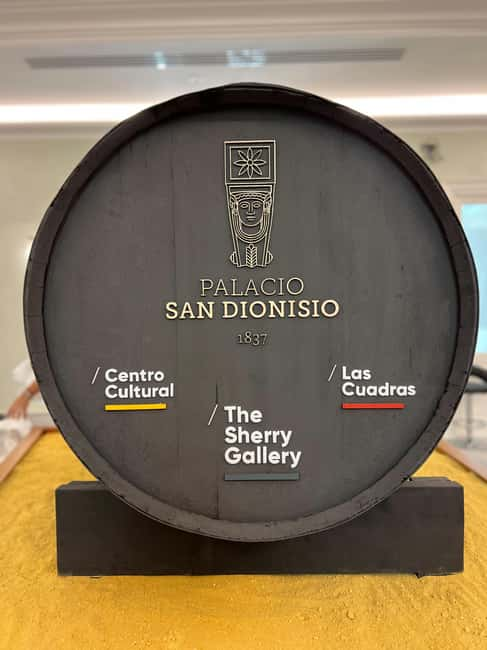
The Sherry Gallery and San Dionisio Palace sit in the heart of Jerez de la Frontera, at Plaza de la Asunción. That central location matters. You can pair the visit with other sights in the old city instead of setting aside a half-day for a distant winery.
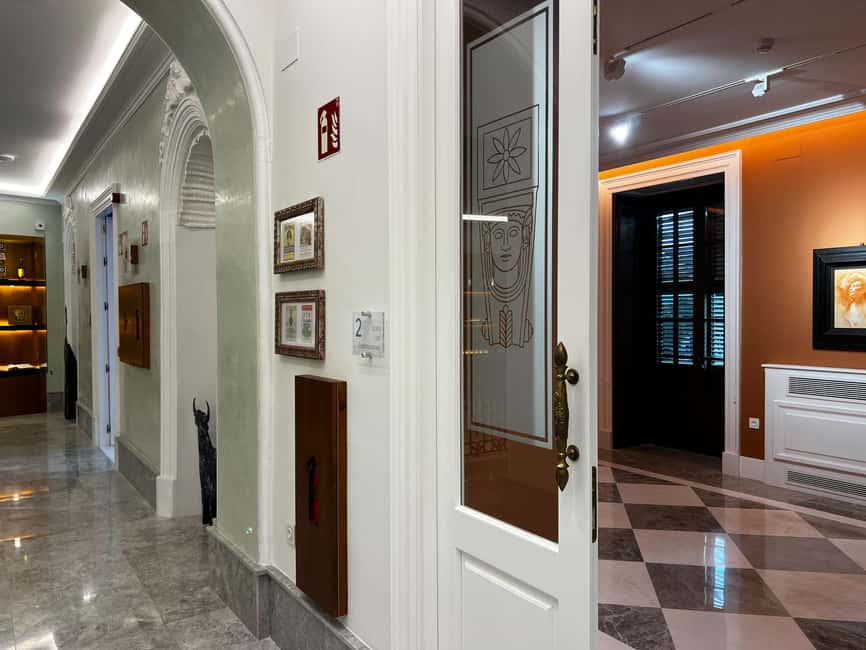
The experience begins at the palace itself. You are not entering a modern industrial bodega on the edge of town. You are walking into a building from 1837, now renovated for exhibitions and tastings. That contrast gives the visit its character: elegant rooms outside, practical wine education inside.
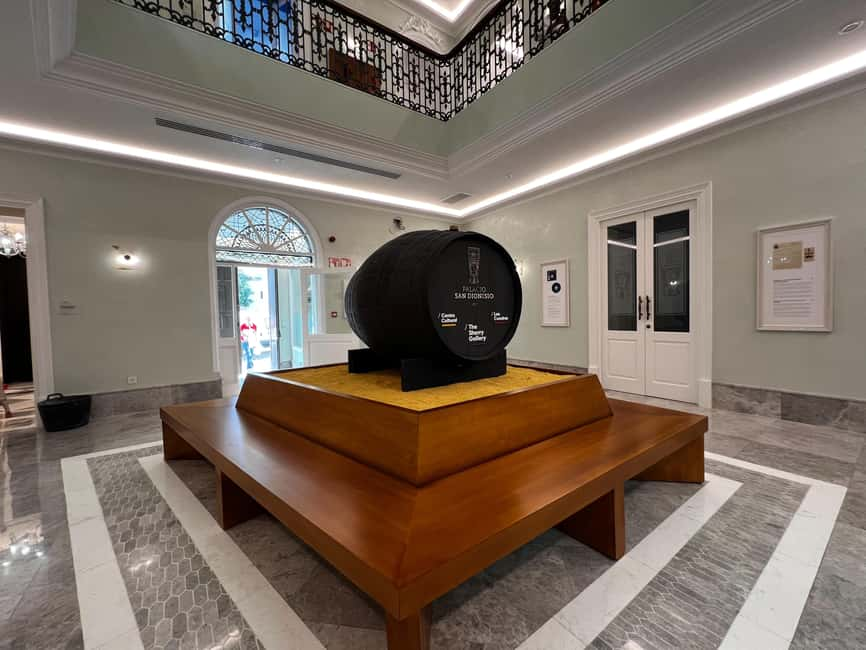
I would arrive ready to look up and around before the guide starts. The palace is part of the appeal, and the setting helps explain why Jerez’s wine culture is tied to local identity, commerce, and ceremony. The tour is not only a glass of sherry followed by a few facts. It uses the building, objects, and displays to tell a larger story.
A few more gallery visits around Spain worth comparing
- Madrid: Prado Museum Entry Ticket
★ 4.6 · 20,699 reviews - Barcelona: Picasso Museum Skip-the-Line Guided Tour
★ 4.5 · 3,355 reviews - Girona & Dali Museum Small Group Tour with Pick-up from Barcelona
★ 5.0 · 2,965 reviews
The 45-minute guided tour
The guided portion lasts about 45 minutes. In a group capped at 10 people, you should have a better chance of hearing clearly and asking questions than you would in a large coach group. That smaller size also suits the displays, especially the interactive screens and label collection.
A guide leads you through the story of the Sherry Triangle, the area associated with sherry production in Andalusia. The material covers the route from vineyard to bottle and then to your glass. You will not need prior wine knowledge. The displays are designed to explain the subject to curious beginners as well as people who already know a fino from an oloroso.
A guide named Jesús has been praised for giving detailed, professional explanations. If he leads your visit, you can expect a guide comfortable with both the broad story and the smaller details. The listed tour languages are Spanish and English. Some content remains in its original language, so the guide’s explanation matters, particularly if you want more than a quick visual tour.
The tour also has a practical advantage for anyone short on time. You get a clear introduction to Jerez’s wine culture without committing to a long excursion outside the city. The trade-off is that the pace must stay brisk. If a particular bottle, label, or production method catches your attention, you may have only a moment before the group moves on.
Historic labels and bottles in the Sherry Room
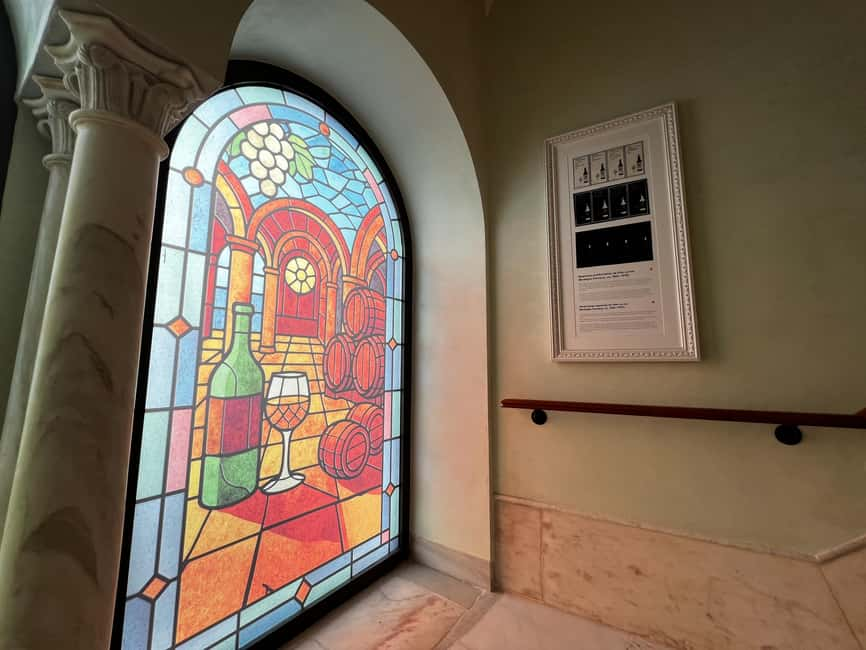
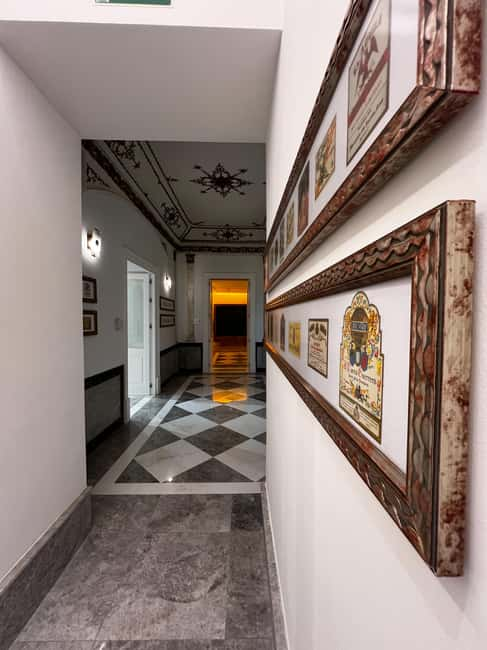
The largest collection of historic labels and bottles is one of the strongest reasons to book this experience. Wine museums often focus on barrels, vineyards, or machinery. Here, the packaging itself becomes part of the story.
Old labels can show how producers presented sherry to the public, how names and designs changed, and how wine was sold across different periods. Bottles add a physical sense of age and place that a touchscreen cannot fully replace. You are looking at objects that once carried sherry into homes, restaurants, and cellars.
The Sherry Room is also useful if you are trying to understand the difference between learning about sherry and simply drinking it. Labels give you vocabulary. By the time you reach the tasting, you may have a better idea of what to look for on a bottle and why the name, style, or producer matters.
This collection will appeal most to people who enjoy visual details, branding, and food culture. If you want only a tasting with minimal explanation, some of the exhibition time may feel like more than you need. If you want context for the drink, the bottles and labels give the visit real substance.
Touchscreens, aromas, and the route from vineyard to glass
The gallery uses interactive touchscreens and tactile displays rather than relying only on printed panels. You can explore distinctive labels and bottles, while aroma modules add a sensory element before the wine reaches your glass.
That is a sensible approach for sherry. The subject can become technical quickly, and a long explanation of production methods may not stay with you. Seeing, touching, and smelling the material gives you several ways to remember it.
A large exhibition area follows the wine-making process from vineyard to glass. This section is valuable because it connects the finished drink with the work behind it. You see sherry as a product of place and method, not simply a sweet after-dinner wine. The material also includes brandy, so the visit is broader than sherry alone.
The audiovisual room adds another layer. It can help organize the information you have seen in the galleries, especially if you prefer a guided story to a series of separate objects. Some content may appear in its original language, so listen to the guide’s comments if you want the full meaning.
Same city, a completely different collection:
- Málaga: Museo Picasso Málaga Entry Ticket
★ 4.4 · 11,138 reviews - Madrid: Small Group of Prado Museum Tour & Optional Tapas
★ 4.6 · 2,437 reviews - Madrid: Prado Museum Guided Tour with Skip-the-Line Ticket
★ 4.5 · 2,018 reviews - From Barcelona: Girona, Figueres, Dalí Museum, and Cadaqués
★ 4.7 · 1,928 reviews
The Brandy Room and temporary exhibitions
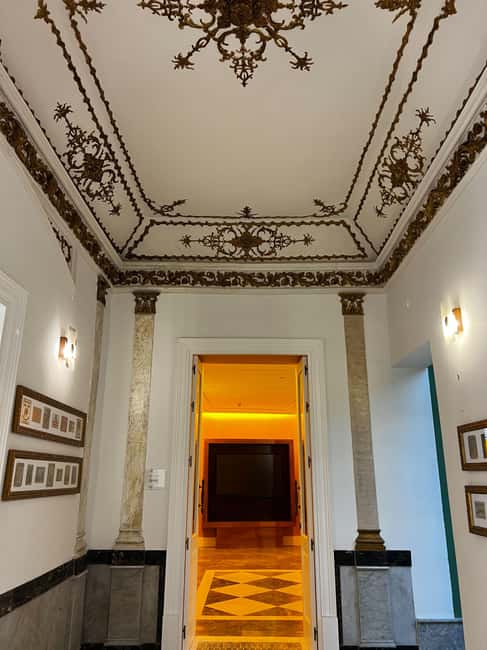
The Brandy Room gives the visit a useful change of focus. Many people associate Jerez only with sherry, but brandy is part of the region’s drinks culture as well. The room lets you see that connection without needing a separate museum visit.
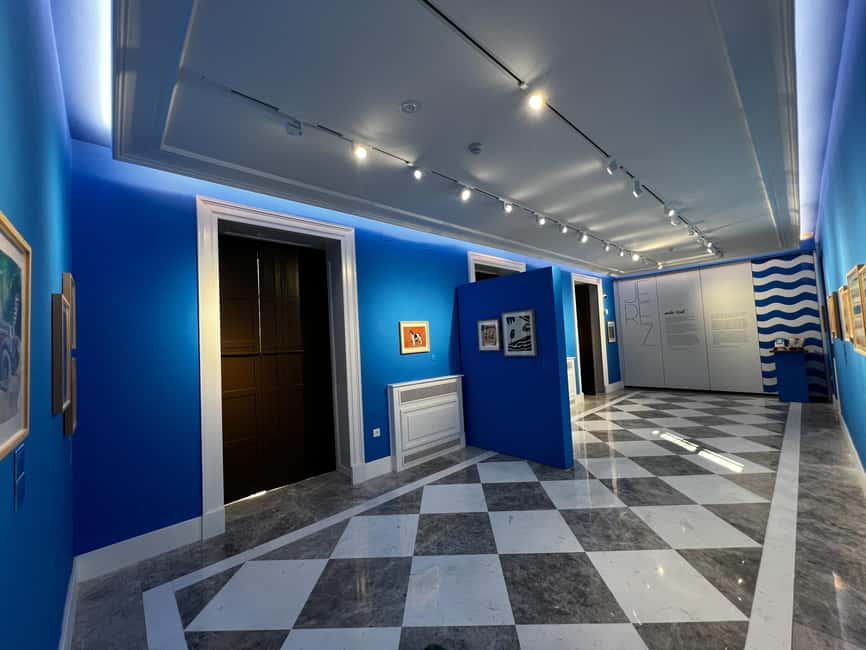
Temporary exhibition rooms are included, too. Their subject matter can change, so I would treat them as an extra rather than the main reason to book. They may add local culture, design, or a fresh angle to the permanent collection, but the exact content is not fixed.
This is one place where the 90-minute schedule shapes your visit. You will see the rooms as part of a guided route, but you may not have time to read every panel closely. If exhibitions are your main interest, ask how much free time is available once the guided portion ends.
Four sherries and a savory snack
The tasting follows the gallery visit and includes four Jerez wines with a savory snack. That is a good number for a short introduction. Four samples let you compare styles instead of judging the region from one glass.
The order and exact wines are not specified, so do not book expecting a particular producer or bottle. The guide should give you the basic context needed to compare what you taste. Pay attention to differences in aroma, sweetness, dryness, body, and finish, then connect those impressions with the displays you have just seen.
The included snack is modest, but useful. A small salty bite helps keep the tasting from feeling too abstract and gives you a local food pairing without raising the base price. You can add an Iberian cold-cut plate if you want something more substantial.
I would not add the platter automatically. At $23 per person, the included tasting already makes the experience reasonably priced for a museum visit with a guide. Add the cold cuts if you want to turn the final portion into a fuller aperitif, or if you are especially interested in how cured meats work with sherry.
The tasting is best approached as an introduction, not a full bodega appointment. You are sampling four wines in a museum setting, not spending an afternoon with a producer. For many people, that balance is exactly right. You get enough variety to understand the basics and still have time for another Jerez sight afterward.
Thirty minutes to browse and buy
After the tour and tasting, you have about 30 minutes of free time. This is when you can return to a display, take a closer look at a bottle, or browse the museum shop.
The shop sells exclusive products, though purchases are not included. The exact selection is not specified, so think of it as an opportunity rather than a promise of a particular brand or souvenir. It may be a useful place to find a bottle or wine-related gift after learning what you like during the tasting.
The free time also helps compensate for the guided pace. You may not have time to study everything during the first pass, but you can use these 30 minutes to revisit the parts that interested you. Still, do not confuse this with unlimited museum access. The full scheduled experience is about 90 minutes.
How the $23 price compares
At $23 per person, the value is strongest if you want three things in one compact stop: a guided museum visit, a palace interior, and four wine samples. The price includes access to the Brandy Museum, exhibition rooms, the audiovisual room, the Sherry Room, interactive displays, and the tasting with a savory snack.
That is more useful than paying for a bare tasting and leaving without understanding what you drank. It also costs less in time than a longer winery excursion, which can matter if Jerez is one stop on a larger Andalusia itinerary.
The price does not include the Iberian platter or shop purchases. That keeps the base cost clear, but you should budget extra if you want a larger food pairing or a bottle afterward.
The strongest value comes for first-time sherry drinkers and visitors who want local culture without a long transfer. If you already know the sherry houses well and mainly want a relaxed tasting, the exhibition portion may not justify the price on its own. For everyone else, the combination is fair.
Who will enjoy this palace visit most
I would recommend it to:
- Wine beginners who want an explanation before tasting.
- Food-focused visitors curious about sherry and Iberian cold cuts.
- Museum fans who enjoy labels, bottles, and interactive displays.
- Couples or small groups who prefer a quiet, organized visit.
- Anyone with only a short window in Jerez.
- Travelers who want a central cultural stop rather than a trip outside town.
Families may also appreciate the touchscreens and aroma modules, though the experience is built around wine education and tasting. Anyone avoiding alcohol should know that the tasting is a central part of the visit, not a minor add-on.
The tour is wheelchair accessible, and the small group should make movement and questions easier. The listed live languages are Spanish and English. A German-language visit has also been arranged on at least one occasion, but you should confirm the language available for your chosen time rather than assume it is offered every day.
Practical timing and booking advice
Plan on 90 minutes from start to finish: roughly 45 minutes for the guided visit, a tasting portion, and about 30 minutes of free time. The supplied schedule describes the tasting as 45 hours, which cannot fit the stated 1.5-hour duration, so it is best understood as part of the 90-minute program rather than a separate multi-hour event.
Small groups are limited to 10 people. That is a real benefit in rooms with labels, bottles, and touchscreens. You can ask a question without holding up a large crowd, and the guide can keep the tasting more personal.
You can cancel up to 24 hours before the activity for a full refund. The reserve-now, pay-later option also helps if your Andalusia plans are still shifting. Availability and starting times should be checked before you book.
Should you book The Sherry Gallery?
Book it if you want a well-paced introduction to Jerez wine, especially if this is your first serious encounter with sherry. The 1837 palace, historic bottles, interactive displays, and four-wine tasting give you more context than a quick bar stop, while the central location keeps the time commitment manageable.
Skip it if you want a long, producer-led cellar visit or a tasting built around one specific sherry house. This is a museum and cultural tour first, with wine tasting as its satisfying finish.
For most short stays in Jerez, I would make room for it. The price is fair, the group is small, and the experience gives you enough background to recognize what you are drinking when you order sherry elsewhere in Andalusia.
FAQ
Where does the experience begin?
It begins at The Sherry Gallery and San Dionisio Palace in Plaza de la Asunción, Jerez de la Frontera.
How long does the visit last?
The full experience lasts about 1.5 hours. It includes a guided visit, wine tasting, and free time.
What is included in the price?
The price includes the guided tour, access to The Sherry Gallery, the Brandy Museum, exhibition rooms, the audiovisual room, and a tasting of Jerez wines with a savory snack.
How many wines are included in the tasting?
You receive a tasting of four sherry wines.
Is an Iberian cold-cut plate included?
No. An Iberian platter is available as an optional extra and is not included in the listed price.
Which languages are available?
Live tours are offered in Spanish and English. Some content is presented in its original language.
Is the experience wheelchair accessible?
Yes. The activity is listed as wheelchair accessible.
Just added around Spain
- Foko Immersive Gallery Ticket★ 5.0 · 14 reviews
- Malaga Tour with VR Stops: Alcazaba, Roman Theatre, Picasso &more★ 5.0 · 4 reviews
- Visit the Picasso Museum with an Accredited Guide★ 4.0 · 10 reviews
- Torremolinos with Picasso Clues Self Guided Treasure Hunt★ 5.0 · 2 reviews
- Malaga Private Tour: Alcazaba, Market, Catedral & Picasso★ 4.5 · 11 reviews
- Private visit to Picasso Museum in Malaga with official tour guide★ 4.5 · 2 reviews
- Picasso roots Private Walking Tour in Central Malaga★ 5.0 · 9 reviews
- Picasso’s Birthplace Museum Entrance Ticket★ 3.5 · 47 reviews
Art Museum Tours in Spain, compared.


Girona & Dali Museum Small Group Tour with Pick-up from Barcelona
Read our review →
Small Group of Prado Museum Tour & Optional Tapas
Read our review →
Prado Museum Guided Tour with Skip-the-Line Ticket
Read our review →