
REVIEW · BARCELONA
Barcelona: Picasso’s Barcelona & Picasso Museum Walking Tour
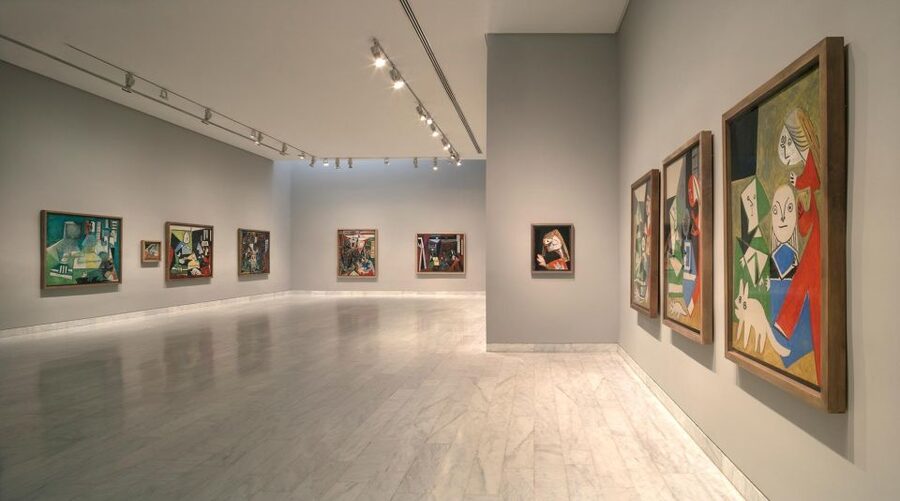
Picasso’s Barcelona makes the most sense on foot. This tour links the young artist to the cafés, lanes, studios, and public spaces that shaped him before leading you into the Picasso Museum. The best part is the connection between the city outside and the art inside, especially Picasso’s reinterpretations of Las Meninas.
I like the small groups of up to 12, which should make it easier to hear the guide and ask questions. I also like the reserved museum entry, since the walking tour gives you a story to carry into the galleries instead of leaving you to face Picasso’s work cold.
The main caution is that the tour depends heavily on the guide. One low-rated account described a rushed, hard-to-hear tour led by Marcel, while several other ratings praised the information, language skills, and personal attention. Bring comfortable shoes, stay close in the narrow streets, and confirm the exact timing because the advertised total duration and the individual schedule do not quite match.
Key points at a glance
- Picasso’s teenage and young-adult Barcelona: Walk through the Gothic and Born quarters, where the artist spent much of his Barcelona life.
- Els Quatre Gats: See the famous bohemian café linked with Picasso and other artists and intellectuals.
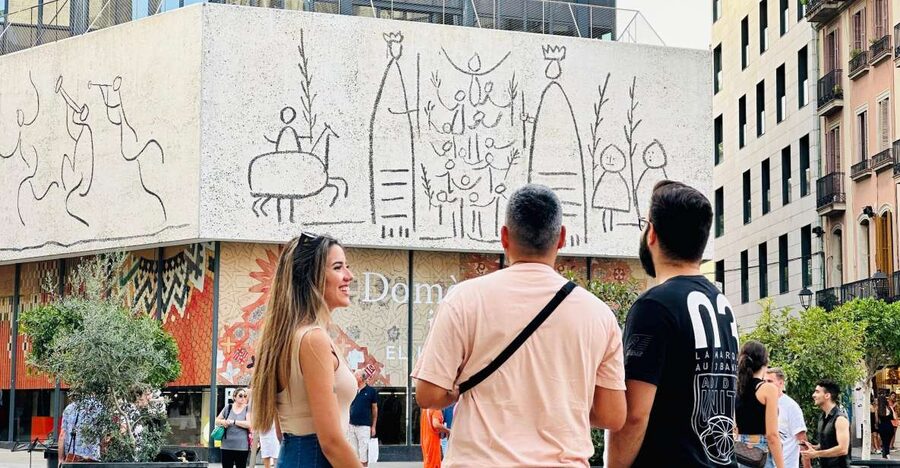
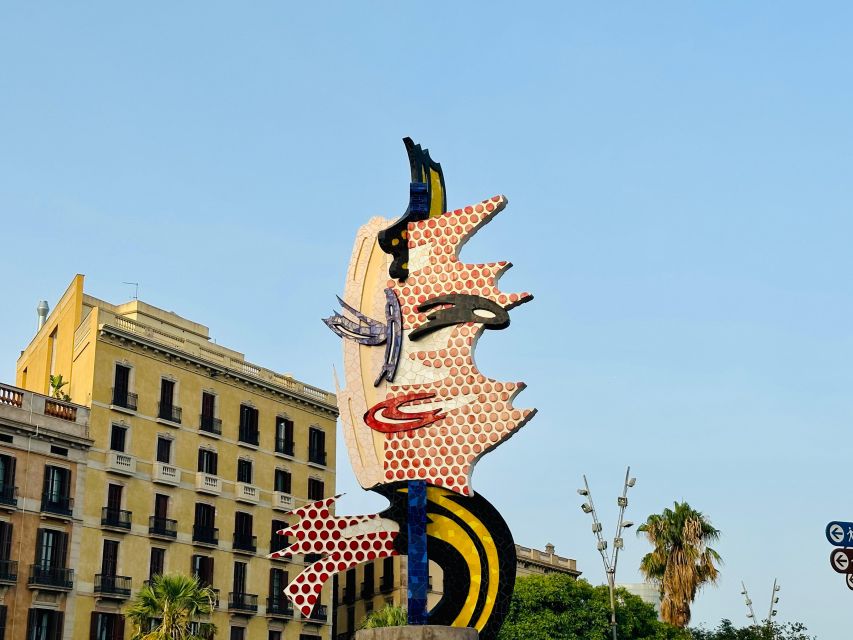
- Outdoor art and city clues: Look for Picasso-related works in public spaces and places tied to his creative development.
- Museum time after the walk: Enter the Barcelona Picasso Museum with a fast-track ticket, but explore the galleries on your own.
- Four language choices: Tours are offered in English, Japanese, Korean, and Chinese.
- A compact format: The advertised duration is 2.5 hours, with a walking portion followed by the museum visit.
Why Picasso’s Barcelona works better on foot
Picasso is often treated as a purely studio-based artist, a man of bold shapes and difficult ideas. This tour takes a more useful approach. It asks you to look at the city that formed him before asking you to make sense of the art.
Barcelona was important to Picasso when he was young. He studied, met fellow artists, spent evenings in cafés, and developed the strong personality that later made him one of Spain’s best-known artists. Walking through the Gothic Quarter and Born gives you a sense of the places connected with that stage of his life.
You are not simply moving from one museum room to another. You are following a route through old Barcelona, with the guide pointing out cafés, streets, public works, and locations linked to Picasso’s early years. That helps explain why his art changed over time, from the Blue Period to the Rose Period and then to Cubism.
The tour is especially useful if you know Picasso’s name but do not yet feel comfortable with his work. The guide is meant to provide a basic timeline and show how the artist’s life and surroundings relate to his changing style. You should not expect an advanced art-history seminar, but you should come away with a clearer way to look.
More Art Museum Tours in Barcelona
- Barcelona: Picasso Museum Skip-the-Line Guided Tour
★ 4.5 · 3,355 reviews - Girona & Dali Museum Small Group Tour with Pick-up from Barcelona
★ 5.0 · 2,965 reviews - From Barcelona: Girona, Figueres, Dalí Museum, and Cadaqués
★ 4.7 · 1,928 reviews
Starting near Hard Rock Café
The meeting point is the Hard Rock Café. Look for the guide wearing or carrying the Touring Pandas logo. That detail matters in central Barcelona, where crowded streets and many tour groups can make a meeting point less obvious than it sounds.
Arrive ready to walk. Comfortable shoes are not a minor suggestion here. The route passes through the Gothic Quarter and Born, areas known for narrow lanes and a maze-like street plan. The tour is not a long countryside walk, but uneven pavement and frequent stops can tire you faster than the distance suggests.
Hotel pick-up is not included. You need to make your own way to the starting point, and the activity information asks you to check availability for the actual start time. Give yourself extra time to reach the Hard Rock Café, especially if you are coming from another part of the city.
The Gothic Quarter and Picasso’s early years
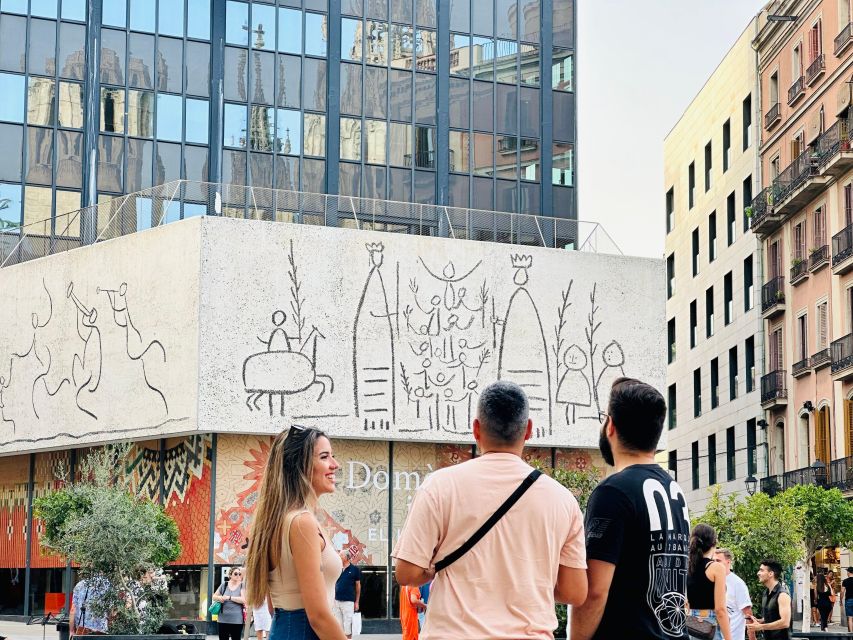
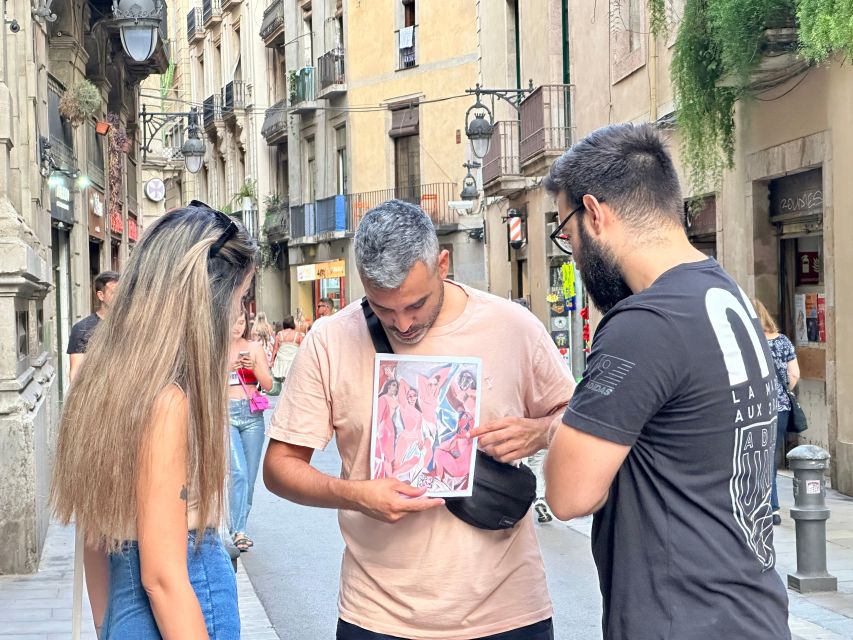
The first part lasts about an hour and a half according to the stated itinerary. You walk through the Gothic Quarter and Born while the guide explains Picasso’s connection to Barcelona and identifies places linked with his youth.
The strength of this section is context. Picasso’s early work can seem detached from ordinary life, but streets and meeting places help put a human scale around the artist. You can picture a young painter moving through the city, meeting other creative people, and building the confidence to test new ideas.
The tour also covers Picasso’s Blue, Rose, and Cubist periods. These labels are familiar, but they can blur together if you encounter them without explanation. A good guide will help you see the broad changes in mood, subject, and form rather than treating the periods as a list to memorize.
The information provided does not promise a fixed list of every street or artwork you will see. That is useful to keep in mind. The route may be shaped by local conditions, group pace, and the guide’s approach. You should expect the main Barcelona connections, not a guaranteed stop at every place associated with Picasso.
Els Quatre Gats and Barcelona’s creative circle
One of the key stops is Els Quatre Gats, the bohemian café where Picasso and other intellectuals met. This is one of the most meaningful places on the route because it shows Picasso as a young artist within a social circle, not as an isolated genius known only from later museum labels.
The café gives the walking tour a strong sense of place. Picasso’s career did not begin with Cubism. It began with study, friendship, debate, and the need to find an audience. A stop here helps you understand the type of artistic world he entered in Barcelona.
The value depends on how the guide handles the location. If you get a clear explanation of why Els Quatre Gats mattered, it becomes more than a quick photo stop. If the group pauses in a noisy area, listening may be harder. One poor account specifically described the guide speaking in noisy places and leaving little room for questions.
That is a practical concern, not a reason to reject the tour outright. Several other ratings describe the guides as informative, personally engaged, and able to answer questions. Still, stay near the guide and speak up if you cannot hear. In a small group, that is easier than it would be with a large coach tour.
More Picasso museum visits:
- Picasso Museum Skip-the-Line Guided Tour
★ 4.5 · 1,079 reviews - Barcelona: Small Group Picasso Tour with Picasso Museum
★ 4.6 · 698 reviews - Picasso Museum and Walking Tour Plus Optional Wine & Food Tasting
★ 5.0 · 596 reviews - Picasso Small Group Walking Tour with Museum Skip the Line Ticket
★ 4.0 · 548 reviews
Public art and Picasso’s influence beyond the museum
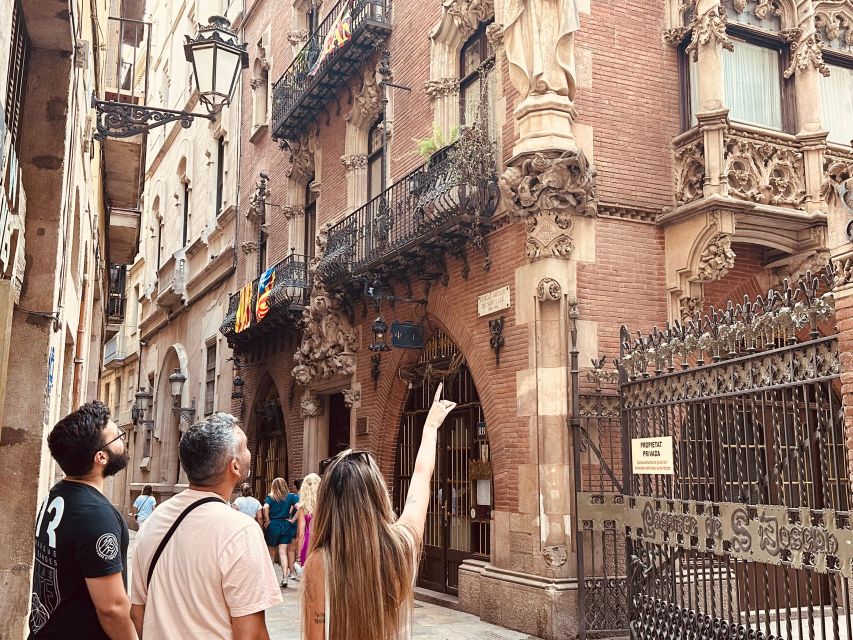
The walk includes some of Picasso’s work in the open air, along with works by other artists influenced by him. This broadens the tour beyond biography and gives you a chance to see how Picasso’s ideas entered the city itself.
Public art also breaks up the history talk. You are not expected to stand in one place for the entire 90-minute walk while listening to dates and names. Instead, the city becomes part of the lesson. A building, sculpture, or public artwork can show how Picasso’s style has been remembered and reused.
The exact outdoor works are not specified, so do not book this expecting a set list of famous pieces. The point is to connect Picasso with Barcelona’s public spaces and with artists who came after him. That is a worthwhile addition, especially if you plan to visit the museum right afterward.
Entering the Barcelona Picasso Museum
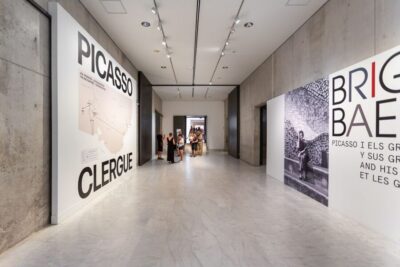
After the walking route, you arrive at the Barcelona Picasso Museum with a reserved spot and fast-track entry. The guide does not lead the museum visit. You explore the galleries independently once inside.
That arrangement has both a benefit and a limit. The benefit is freedom. You can move at your own pace, pause at works that interest you, and skip pieces that do not hold your attention. You are not tied to a guide’s speech in every room.
The limit is that the museum experience depends on how well you remember the walking tour. If you want detailed explanations of individual paintings, this package may feel incomplete because the museum portion is not guided. The best way to use it is to listen closely during the city walk, then apply that background to the galleries.
The museum is particularly important for its presentation of Picasso’s reinterpretations of Las Meninas. These works offer a clear look at Picasso responding to an earlier Spanish masterpiece through his own language. Even if Cubism is not your favorite style, this section gives you a useful chance to compare an established work with Picasso’s forceful reworking of it.
The museum visit is not an optional extra tacked onto a street walk. It is the second half of the experience. The walking route explains the young artist in Barcelona, while the museum shows how his work developed and how he responded to Spanish artistic traditions.
Blue, Rose, and Cubist periods in plain language
The tour promises an explanation of Picasso’s Blue, Rose, and Cubist periods. That promise matters because Picasso’s work can feel like several different artists sharing one name.
You can expect the guide to give you a broad path through those changes:
- The Blue Period is linked with a cooler, more somber mood.
- The Rose Period marks a shift in tone and subject.
- Cubism breaks familiar forms into new viewpoints and shapes.
The provided information does not give a full lecture outline, so the depth will depend on the guide. Still, the sequence is a good framework for first-time museum visitors. It gives you something to look for instead of asking you to admire the paintings without a clue about what changed.
I would treat the art-history portion as an introduction rather than a final answer. You will likely understand more after the tour, but you should not expect every painting in the museum to be explained. The real gain is learning how to place Picasso’s work within a larger timeline.
Small groups, language options, and guide quality
The group is limited to 12 people. That is a sensible size for the Gothic Quarter, where a large crowd can block lanes and make it easy to lose sight of a guide. It also gives you a better chance to ask a question during the walk.
Language choices include English, Japanese, Korean, and Chinese. This is helpful if you prefer to discuss art in one of those languages. The activity information does not identify the regular guides by name, but one negative account names Marcel and describes a rushed style, weak audience connection, and a wrong museum entrance.
You should balance that warning against the stronger pattern of praise for informative guides, clear English, personal attention, and good answers to follow-up questions. One high rating described the guide as very involved, and another noted that the timing felt right. A German-language account, translated in the available information, praised the personal feel of a very small departure and the guide’s broad basic knowledge of Picasso.
The takeaway is simple: this tour has a good format, but delivery matters. Keep the guide in sight, ask questions early, and say something if the group reaches a noisy location. Those small actions can make a real difference.
Does $46 offer good value?
At $46 per person, the price covers the guided Barcelona walk, a small group of up to 12, and the reserved Picasso Museum ticket. It does not include hotel transport or a guided museum tour.
I consider the price fair if you want both the city context and museum admission in one booking. You are paying for more than a ticket. The guide connects Picasso’s early Barcelona life with the art you see later, and that connection is difficult to build from a museum visit alone.
The value is lower if you only want to enter the museum and browse independently. In that case, the walking portion may feel like extra time and cost. It is also not the best choice if you want a detailed, room-by-room museum lecture, since the museum visit is unguided.
The small group helps justify the cost. A cheaper walk with a large crowd can be hard to hear in the old center. Here, the group limit should make the route more manageable, although one poor experience shows that a small group does not automatically guarantee a polished guide.
Timing, bags, and useful preparation
The activity is advertised as 2.5 hours. The detailed schedule describes a 1.5-hour walking tour and a 1.5-hour museum visit, which adds up to three hours. Because of that mismatch, check the available start time and plan your day with some flexibility.
Do not bring luggage or large bags. Flash photography is not allowed. The safest plan is to carry only what you need for the walk and museum entry.
Wear comfortable shoes and keep your belongings light. The old streets can be crowded, and a large bag will make narrow lanes more awkward. You should also be ready to walk at the group’s pace rather than treating this as a slow café-to-café stroll.
Cancellation is flexible: you can cancel up to 24 hours ahead for a full refund. You can also reserve now and pay later, which helps if your Barcelona schedule is still taking shape.
Who should book this Picasso tour?
I would choose this tour for a first visit to the Picasso Museum, especially if you want a clear introduction to the artist’s Barcelona years. It suits people who enjoy learning through streets, cafés, and local places before entering a museum.
It is also a good fit if you like a compact activity with several parts: a historic-center walk, art history, outdoor works, and museum time. The four language options make it useful for more than English-speaking visitors.
I would look elsewhere if you want a private tour, a slow pace, or a guide inside every museum room. The group is small, but it is not private, and the museum portion is self-guided. People with limited time should also resolve the 2.5-hour versus three-hour timing issue before booking.
Should you book it?
Book this experience if you want Picasso’s Barcelona placed before your eyes, not just explained on a museum label. The visit to Els Quatre Gats, the Gothic and Born streets, and the later look at Las Meninas give the tour a sensible arc.
Skip it if you prefer to visit the museum alone or need a guaranteed expert-led gallery tour. The mixed guide performance means you should keep expectations practical. At $46, the package is worthwhile for the city walk, small group, and museum entry, particularly when you want a helpful starting point for understanding Picasso.
FAQ
Where does the tour begin?
The meeting point is the Hard Rock Café in Barcelona. Look for a guide with the Touring Pandas logo.
How long does the activity last?
The advertised duration is 2.5 hours. The detailed schedule describes about 1.5 hours of walking and 1.5 hours at the museum, so you should confirm the exact timing when choosing a start time.
What areas of Barcelona does the walking tour cover?
The route covers the Gothic Quarter and Born, the areas connected with Picasso’s life in Barcelona.
Does the tour visit Els Quatre Gats?
Yes. Els Quatre Gats is included as a stop connected with Picasso and other intellectuals who met there.
Is the Picasso Museum entrance included?
Yes. The package includes a reserved, fast-track ticket for the Barcelona Picasso Museum.
Is the museum visit guided?
No. The walking portion is guided, but the museum visit is not guided inside the galleries.
What languages are available?
The tour is offered in English, Japanese, Korean, and Chinese.
Is hotel pick-up included?
No. You need to reach the Hard Rock Café meeting point yourself.
Can I cancel the booking?
Yes. You can cancel up to 24 hours in advance for a full refund. You can also reserve now and pay later.
More Art Walks in Barcelona
- Barcelona: Picasso Museum Entry, Digital Guide & Born Walk
★ 3.6 · 148 reviews - Picasso Museum and Walking Tour Plus Wine Tasting Upgrade
★ 4.3 · 111 reviews - Barcelona: Picasso Walking Tour with Picasso Museum Tickets
★ 3.5 · 93 reviews - Barcelona Art and Tapas Small Group Walking Tour with Picasso Museum
★ 5.0 · 40 reviews
Just added around Barcelona
- Self-Guided Audio Tour-The Surrealist Barcelona of Dalí and Gaudí★ 3.5 · 8 reviews
- Dali Museum, Figueres & Cadaques Private Tour with Hotel pick-up★ 5.0 · 46 reviews
- Xcape Room Bcn: Corpse Gallery Escape Room Barcelona★ 5.0 · 3 reviews
- Private Dalí Museum and Tour from Barcelona★ 5.0 · 4 reviews
- From Barcelona: Private Girona and Figueres with Dali Museum Tour★ 5.0 · 113 reviews
- Picasso Museum in Barcelona: Guided Tour with Expert Guide★ 4.5 · 55 reviews
- Picasso Museum private tour and walk in El Born district★ 4.5 · 10 reviews
- Private Barcelona Art and Tapas Walking Tour with Picasso Museum★ 5.0 · 34 reviews
Art Museum Tours in Barcelona, compared.
Girona & Dali Museum Small Group Tour with Pick-up from Barcelona
Read our review →
Dali Museum, House & Cadaques Small Group Tour from Barcelona
Read our review →
Girona and Dali Museum Full Day tour from Barcelona
Read our review →
Browse the lists this tour appears in