
REVIEW · FIGUERES
Toy Museum: toys belonging to Anna Maria and Salvador Dalí and García Lorca
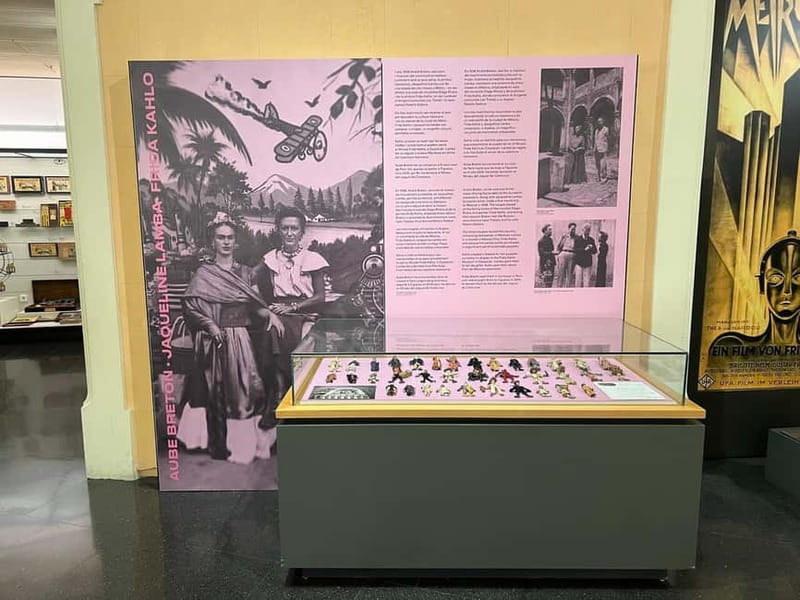
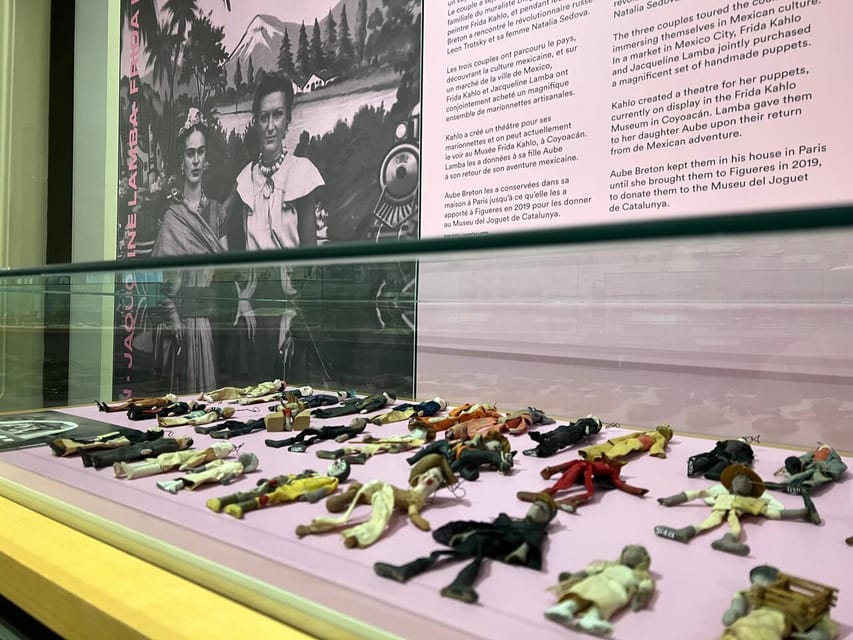
The most surprising part of this museum is how many famous artists appear through their childhood toys. You can see objects linked to Anna Maria and Salvador Dalí, toys that fascinated Federico García Lorca, and Mexican puppets acquired by Frida Kahlo, Jacqueline Lamba, and André Breton. It turns a familiar subject into a small lesson in art, memory, and imagination.
I like the mix of personal stories and broad collections. I also like that the visit reaches beyond Spain, with toys and games from all five continents, plus a working model railway and carefully detailed dollhouses. The main consideration is sheer volume: there is so much to see that a quick visit may leave you feeling you only skimmed the surface.
Key points to know before you go
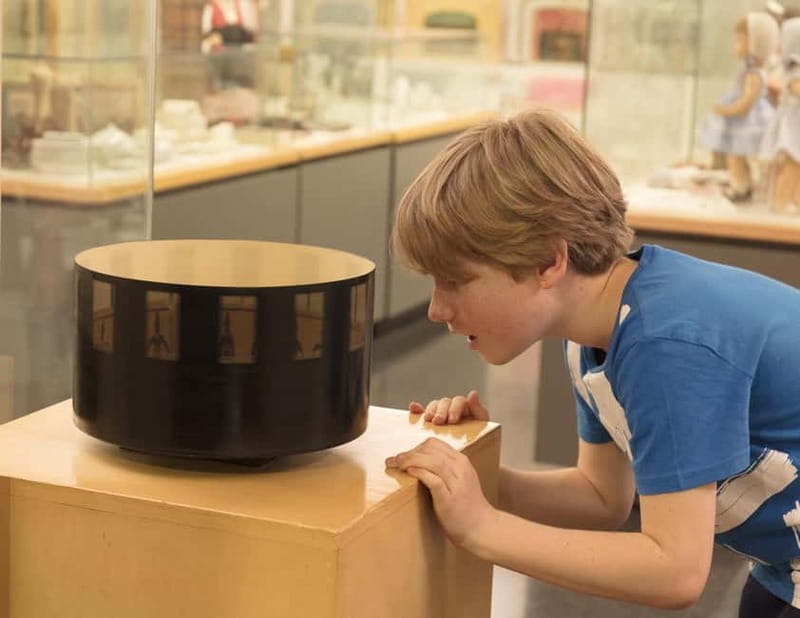
- Dalí and Lorca connections: See toys belonging to Anna Maria and Salvador Dalí, including objects that fascinated Federico García Lorca.
- Mexican puppet collection: Find puppets acquired by Frida Kahlo, Jacqueline Lamba, and André Breton.
- Five continents of play: Compare games and toys from different cultures and generations.
- Model railway: Allow time for the spectacular working train layout, one of the museum’s major visual attractions.
- Audio guide in four languages: Follow the visit in Spanish, English, French, or Catalan.
- Good value at $10: The ticket includes admission and the audio guide, with access valid for one day.
Why famous childhood toys make this museum different
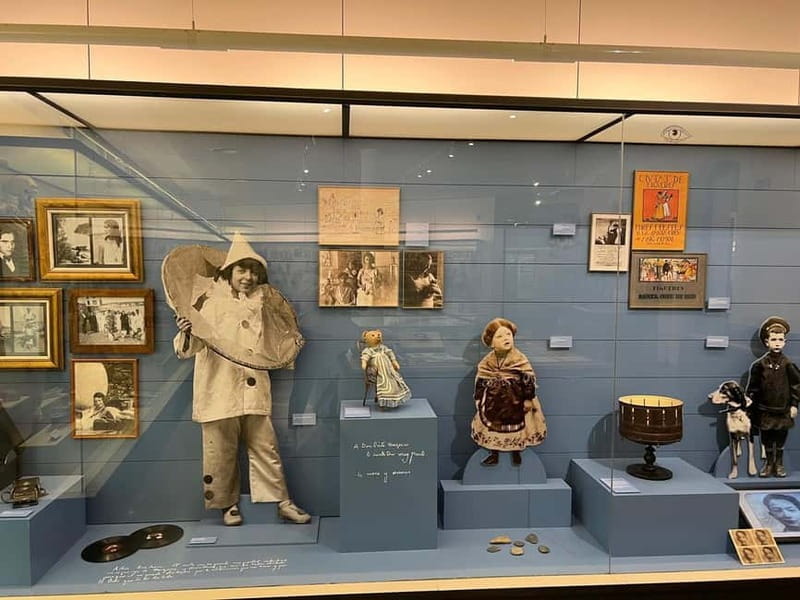
Many toy museums depend on nostalgia alone. This one adds a strong artistic thread. The toys connected with Salvador Dalí and his sister Anna Maria give you a glimpse of the world around the young Dalí before the famous paintings and surreal images. The link to Federico García Lorca adds another layer, since you are not only looking at old playthings but also at objects that caught the attention of an important poet.
I find this kind of display more interesting than a simple row of vintage toys. A toy can show what a child owned, what a family valued, and how people once spent time before screens took over. In this case, the objects also sit close to the early lives of major Spanish cultural figures.
The museum does not limit itself to one famous family. Its collection includes games and toys from five continents, so the visit widens from personal history to world culture. You can compare how children play, what materials are used, and how much imagination can be packed into a small object.
The Frida Kahlo, Jacqueline Lamba, and André Breton connection gives the puppet display its own pull. These Mexican puppets are not simply decorative figures. Their link to artists and collectors makes you look at them as pieces with a place in a larger creative world.
More Art Museum Tours in Figueres
- Figueres: Dalí Theatre-Museum Entry Ticket
★ 4.7 · 802 reviews - Visita guiada por el Teatro-Museo Dalí
★ 4.5 · 77 reviews - Figueres: Dalí Theatre-Museum Guided Tour with Tickets
★ 4.7 · 29 reviews
Starting the visit with the audio guide
Your admission includes an audio guide, available in Spanish, English, French, and Catalan. That matters here because the collection is large and varied. Without some structure, you could easily spend your time moving from one colorful object to the next without understanding why a particular group matters.
I would use the guide as a framework rather than listening to every word at the same pace. Start with the sections connected to Dalí, García Lorca, and the Mexican puppets. Then slow down in the areas that interest you most, especially if you are visiting with children or with someone who enjoys model-making, dolls, robots, or old games.
Some content is shown in its original language, so you should expect a few displays to retain their original wording. The multilingual audio guide helps, but it does not mean every written item has been translated into every language.
The booking information does not name individual guides, and this is not presented as a live guided tour. You explore at your own pace with the audio guide. That makes the visit flexible, but you will need to manage your own timing and choose where to linger.
The Dalí family and Federico García Lorca
The Dalí section is the museum’s strongest reason to visit for many adults. Anna Maria and Salvador Dalí are presented through the toys that belonged to them, offering a more intimate view than a standard art display. You are seeing objects from childhood, not finished works intended for a gallery.
The connection with Federico García Lorca is especially appealing because it brings the museum into the cultural life of Catalonia and Spain. The toys fascinated the poet, and that detail encourages you to look at them as objects capable of inspiring a creative mind.
I would not expect a full biography of Dalí or Lorca here. This is still a toy museum, not an art museum or literary museum. The value comes from the small scale of the evidence: a toy, a memory, a household, and the beginnings of an imagination.
For adults, this section can be more rewarding than expected. You may arrive thinking the museum is mainly for children, then find yourself considering how play shaped people who later worked in painting, poetry, and other creative fields.
Mexican puppets and the artists who collected them
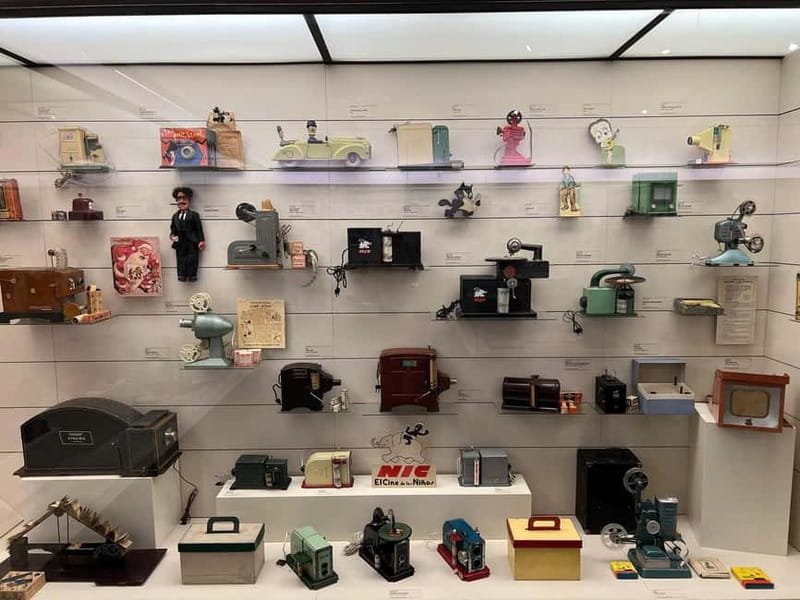
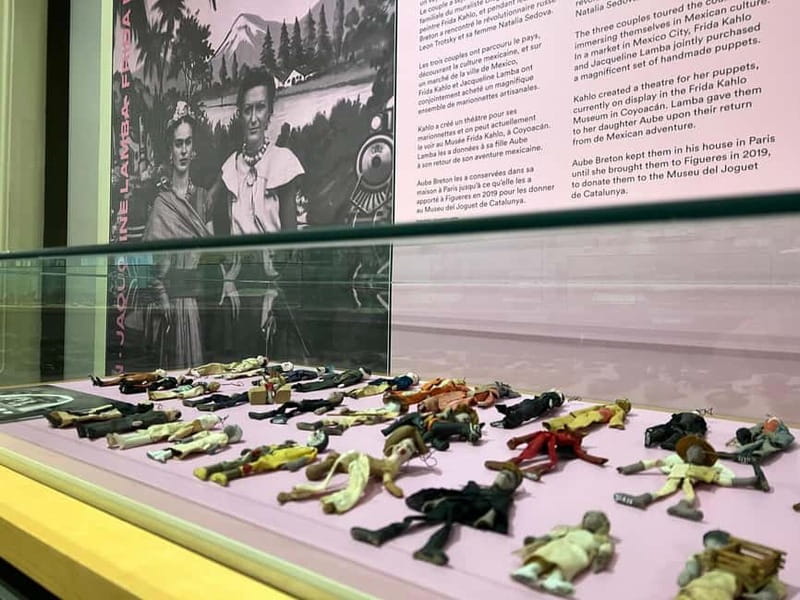
The collection of Mexican puppets adds a distinct visual change. These figures were acquired by Frida Kahlo, Jacqueline Lamba, and André Breton, three names associated with modern art and surrealist circles. Their presence gives this display a stronger art connection than you might expect from a conventional puppet case.
Look closely at the figures and the way they are presented. The supplied information does not provide details about the exact materials, dates, or number of puppets, so I would not arrive expecting a technical catalogue. Instead, pay attention to the personalities and forms of the puppets, and to the idea that artists saw creative value in objects made for play and performance.
This section works well alongside the Dalí display. Both ask you to consider how artists respond to everyday objects. The toys and puppets were not necessarily made as high art, yet they could still spark ideas, memories, and stories.
If your interest is mainly in Frida Kahlo’s paintings, keep your expectations in check. The museum presents puppets associated with her collecting, not a full Frida Kahlo exhibition. That is still a fine reason to stop, but it is a focused connection rather than the main subject of the museum.
More Dali museums and houses:
- Girona & Dali Museum Small Group Tour with Pick-up from Barcelona
★ 5.0 · 2,965 reviews - From Barcelona: Girona, Figueres, Dalí Museum, and Cadaqués
★ 4.7 · 1,928 reviews - From Barcelona: Girona&Dalí Museum Day Trip with Small Group
★ 4.7 · 1,874 reviews - Dali Museum, House & Cadaques Small Group Tour from Barcelona
★ 4.5 · 1,441 reviews
Five continents of games and toys
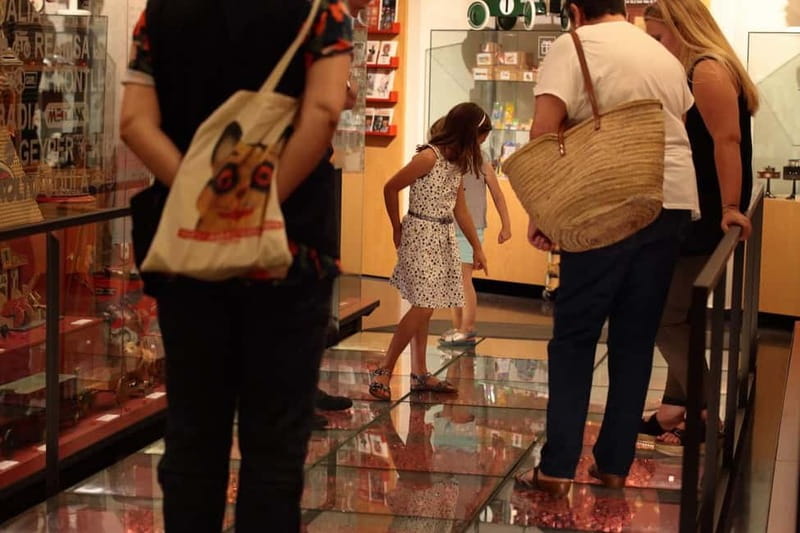
After the well-known names, the wider collection gives the museum its range. Games and toys from all five continents let you see how play changes from place to place, while also revealing a common human need to invent rules, characters, challenges, and stories.
This section can be particularly useful for families. Children may not care who Dalí was, but they can usually connect with the basic idea of a game or toy. Adults can use the displays to explain how different generations entertained themselves, often with objects that required more imagination than a modern electronic device.
The displays also offer a useful contrast between handmade and manufactured toys. The provided information does not identify every country or object, so I would avoid treating the collection as a complete survey of world play. Think of it as a broad selection, with plenty of chances to pause when a particular game catches your eye.
One of the museum’s pleasures is the return of childhood memories. You might recognize a type of game, a familiar doll, or a toy that reminds you of another period in your life. That personal response is part of the experience, not a distraction from the historical material.
The working model railway deserves time
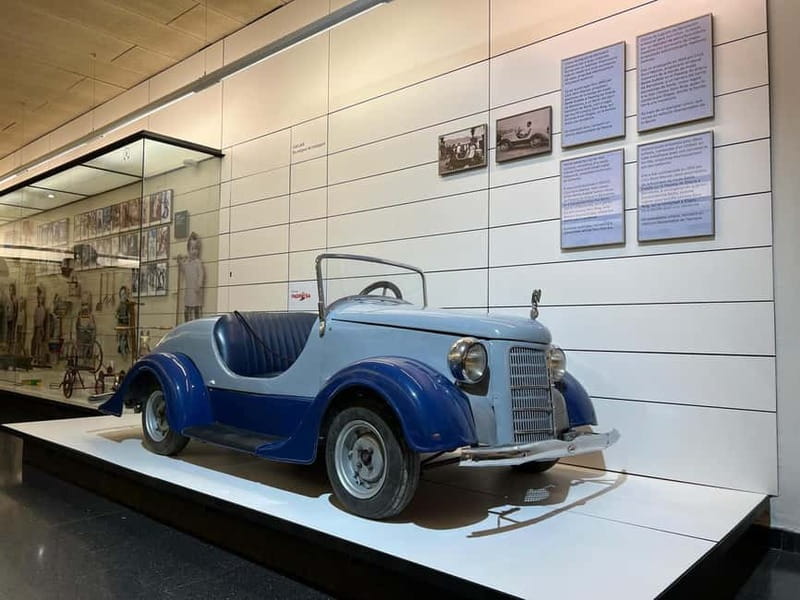
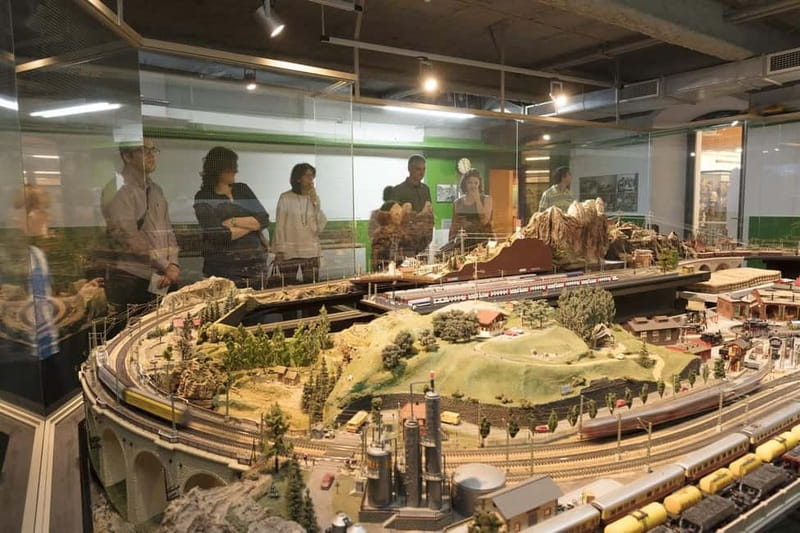
The spectacular model railway is one of the displays I would make sure not to rush. A working railway gives the museum movement and scale, especially after you have spent time looking at smaller, stationary objects.
Model railways reward patience. You may notice the broad scene first, then start spotting small details as the trains move through it. The information provided does not give the layout’s size, operating schedule, or exact controls, so you should not plan your visit around a specific train sequence. Simply allow time to watch it work.
For children, this may be the easiest part of the museum to enjoy immediately. For adults, it can bring back the pleasure of building, arranging, and controlling a miniature world. It also shows how a toy can become a serious craft, with careful design and close attention to detail.
If you are short on time, do not skip the railway completely. Give it a proper pause before moving on. The museum has many static displays, and the moving trains provide a welcome change of pace.
Dollhouses, robots, and video games
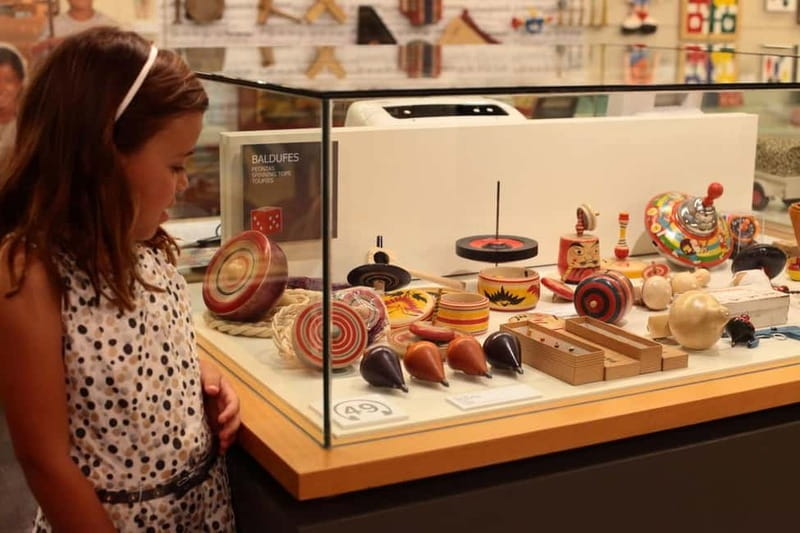
The room dedicated to dollhouses is another major stop. Dollhouses reward close looking because the appeal lies in small details. You can examine miniature rooms, furniture, and decoration rather than simply glance at a large object and move on.
A past visitor specifically praised the decoration and detail in the dollhouses, and that matches the way this part of the collection should be approached. Give yourself time to look from room to room. These displays are easy to rush past, but the small touches are the point.
The museum also includes a collection of robots and video games. This helps widen the idea of a toy beyond wooden figures, dolls, and traditional board games. Robots bring a mechanical feel, while video games show a more recent stage in the history of play.
The combination is useful because it places older toys beside newer forms of entertainment. You can see how play changes with technology while keeping the same basic goals: challenge, make-believe, collecting, competition, or simple fun.
The available information does not specify which consoles, games, or robot models are displayed. I would treat these areas as part of the museum’s broad range rather than arrive expecting a detailed history of electronic gaming.
How long to allow and how to pace the museum
The activity is valid for one day, but that does not state a fixed visit length. You can check the available starting times when booking. Since the collection covers famous personal toys, international games, puppets, dollhouses, trains, robots, and video games, your visit length will depend on how closely you listen to the audio guide.
A fast visit may suit you if you want a small cultural stop in Catalonia. A slower visit makes more sense if you are interested in art, childhood history, collecting, or miniatures. I would not try to absorb every display at the same speed.
A useful order is:
- Begin with the Dalí and García Lorca material.
- Continue to the Mexican puppets.
- Explore the toys and games from the five continents.
- Spend time at the model railway.
- Finish with dollhouses, robots, and video games.
You do not have to follow that exact order, but it moves from the museum’s strongest personal stories to its broad collection and then to its most visually active displays.
The museum’s current score is 4.7 from 11 ratings, with praise focused on the range of toys, the return to childhood memories, the detailed dollhouses, and the price. That pattern is useful: the museum’s appeal is not based on one single object. It comes from the combination of famous names, variety, detail, and nostalgia.
Is $10 good value?
At $10 per person, the admission is reasonable for a museum that includes both entry and an audio guide. You are not paying only to see one special display. The ticket covers a collection that reaches from historic toys to robots and video games, with several sections that can interest adults as much as children.
The value improves if you take your time. A rushed visit can make any museum feel expensive, even when the ticket is modest. Here, the audio guide gives you a better chance to understand the connections behind the objects, while the variety helps keep the visit from feeling like a single-theme display.
The museum also offers free cancellation up to 24 hours before the visit and a reserve-now, pay-later option. These policies are useful if your Catalonia plans are still changing. Bring a passport or ID card, since identification is listed as required.
The ticket is not a good fit if you want a formal live lecture, a short display focused only on Dalí, or an art museum devoted mainly to Frida Kahlo. It is a better buy if you want a broad, playful collection with cultural connections and enough material to suit different ages.
Practical rules for a smoother visit
The museum is wheelchair accessible, which is important if you are planning the day around ease of movement. The meeting point is the museum entrance, and the activity has a one-day validity rather than a fixed multi-day pass.
Food and drinks are not allowed. Large bags and luggage are also prohibited, so do not arrive expecting to carry a full day pack into the galleries. Selfie sticks, flash photography, tripods, skateboards, scooters, and skates are not allowed either.
The photography rules matter around the smaller displays. Avoid flash and tripods, and plan to look carefully rather than treat the museum as a photo stop. The collection is best enjoyed at close range, especially the dollhouses, puppets, and model railway.
The audio guide is offered in Spanish, English, French, and Catalan. If you need one of those languages, you can follow the main visit without relying only on the original-language labels.
Who will enjoy this museum most?
I would recommend it first to families looking for an indoor activity with plenty of visual variety. Children can focus on trains, robots, dolls, and games, while adults can follow the Dalí, Lorca, Kahlo, Lamba, and Breton connections.
It also suits adults traveling without children. The nostalgia is not limited to one age group, and the old toys can prompt strong memories. If you enjoy collecting, miniatures, puppets, or design, you may find the dollhouses and model railway especially rewarding.
Art and literature enthusiasts have a clear reason to visit, but should keep the scale of the experience in mind. You will find links to famous artists and a poet, not a full art collection or literary archive.
The museum may be less satisfying if you dislike broad collections with many separate sections. Its strength is variety, and its weakness is the same thing. You can see a lot, but not every object will hold your attention equally.
Should you book the Toy Museum of Catalonia?
Book it if you want a reasonably priced museum that mixes childhood memories with art, culture, and careful miniature displays. The strongest reasons are the toys connected with Anna Maria and Salvador Dalí, the link to Federico García Lorca, the Mexican puppets connected with Frida Kahlo, Jacqueline Lamba, and André Breton, and the working model railway.
I would also choose it for a family day because the collection gives children several easy entry points, from trains to video games. Adults get more from the cultural stories and the chance to see how toys reflect different periods and places.
Skip it if your schedule allows only a very quick stop and you dislike large collections. With so many categories, you will get the best value by giving the museum enough time to explore beyond the headline names.
At $10, with the audio guide included and flexible cancellation up to 24 hours ahead, this is a sensible choice for anyone who wants to keep play, memory, and art in the same afternoon.
FAQ
Where is the Toy Museum located?
The Toy Museum is in Catalonia, Spain. The meeting point is at the museum entrance.
How much does admission cost?
Admission costs $10 per person. The audio guide is included.
What languages are available for the audio guide?
The audio guide is available in Spanish, English, French, and Catalan.
Is the museum wheelchair accessible?
Yes. The activity is listed as wheelchair accessible.
How long is the museum ticket valid?
The activity is valid for one day. Available starting times can be checked when booking.
What identification should I bring?
Bring a passport or ID card.
Can I bring food, luggage, or photography equipment?
Food and drinks are not allowed. Large bags and luggage are prohibited, as are selfie sticks, flash photography, tripods, skateboards, scooters, and skates.
Just added around Spain
- Foko Immersive Gallery Ticket★ 5.0 · 14 reviews
- Malaga Tour with VR Stops: Alcazaba, Roman Theatre, Picasso &more★ 5.0 · 4 reviews
- Visit the Picasso Museum with an Accredited Guide★ 4.0 · 10 reviews
- Torremolinos with Picasso Clues Self Guided Treasure Hunt★ 5.0 · 2 reviews
- Malaga Private Tour: Alcazaba, Market, Catedral & Picasso★ 4.5 · 11 reviews
- Private visit to Picasso Museum in Malaga with official tour guide★ 4.5 · 2 reviews
- Picasso roots Private Walking Tour in Central Malaga★ 5.0 · 9 reviews
- Picasso’s Birthplace Museum Entrance Ticket★ 3.5 · 47 reviews
Art Museum Tours in Figueres, compared.


Salvador Dalí Theatre-Museum in Figueres private/shared tour
Read our review →
Dalí Museum + Market to Fork hands-on cooking class with Chef Yves
Read our review →
Figueres Walking Tour with Guided Visit to the Dalí Museum
Read our review →
Browse the lists this tour appears in