
REVIEW · THE USA
Miami Little Havana Food Tour Corporate or Family Any Size Group
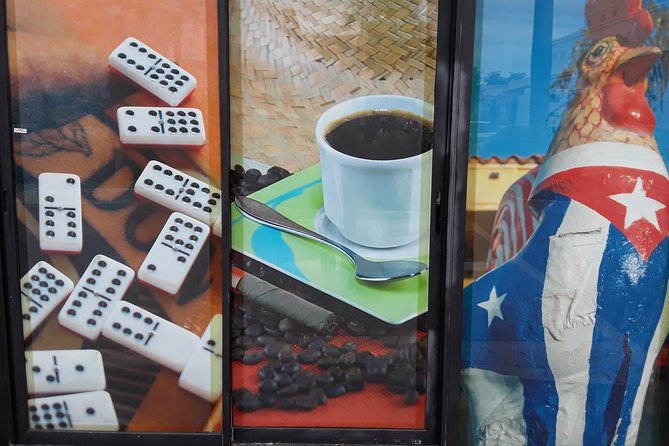
Little Havana comes alive through its everyday rituals: coffee passed across a counter, dominoes snapping on a table, cigar tobacco rolled by hand, and music spilling from old Calle Ocho venues. This tour puts those details together with a Cuban guide, often Angel, who shares family stories alongside the history of Miami’s Cuban community.
I like the mix of food and culture, especially the Cuban sandwich, cafecito, pastries, ice cream, and churros reported on longer outings. I also like the access to places such as Cubaocho, the cigar shop, Agustin Gainza’s art space, and Domino Park. The main consideration is that the advertised tour lasts about two and a half hours, but the amount of food and time at each stop can vary.
Key things to know before you book
- Angel brings local context: He connects Cuban migration, family life, food, religion, music, and the Bay of Pigs to the streets around Calle Ocho.
- Food is more than a token snack: Depending on the day, tastings can include a Cuban sandwich, pastries, churros, ice cream, coffee, and Cuban-style drinks.
- Cigar rolling is part of the visit: You’ll stop at a Little Havana cigar shop to watch tobacco being rolled and learn about the tradition.
- The group is capped at 15 people: That is small enough for questions, though private or family groups may have a more personal pace.
- Several stops are brief: Cubaocho, Agustin Gainza Arts and Tavern, Calle Ocho, and Domino Park are each listed at about 10 minutes, so the guide’s storytelling is a major part of the experience.
- Parking and weather matter: The meeting point is at 1637 SW 8th Street, and the tour can be canceled in poor weather with a refund or alternate date.
Why this Little Havana tour feels different
Many sightseeing walks show you the painted roosters, cigar shops, and famous theater, then move on. This experience tries to explain why those places matter. The focus is not just on Cuban food. It is on the people who built a new home along Southwest Eighth Street and kept familiar customs alive in Miami.
That human angle is the tour’s strongest feature. Angel is described as a Miami native with Cuban roots and strong ties to the local community. He tells personal stories, including memories of family coffee, while also explaining major events such as Cuban migration and the Bay of Pigs invasion. You get a sense of history without being trapped in a formal lecture.
I would book this for someone who wants a guide who talks freely and answers questions. It is especially useful on a first visit to Little Havana, when the neighborhood’s symbols can seem disconnected. A domino game, a theater, a cafecito, and a cigar are more interesting once you understand the people and events behind them.
The tour is conducted in English and uses a walking format. Transportation is not included, so you need to reach the meeting point yourself and return there at the end. The listed group limit of 15 helps keep the walk manageable, but the experience may feel less polished than a large commercial tour. Its appeal is the local voice and the flexible, conversational style.
More gallery tours built for kids in the USA:
- Paris Louvre: 2-Hour Private Tour for Groups or Families
★ 4.6 · 639 reviews - Paris: Louvre Private Family Tour for Kids + Reserved Entry
★ 4.6 · 508 reviews - Paris Kids and Families Private Louvre Tour
★ 5.0 · 430 reviews
Starting with Cuban food on Calle Ocho
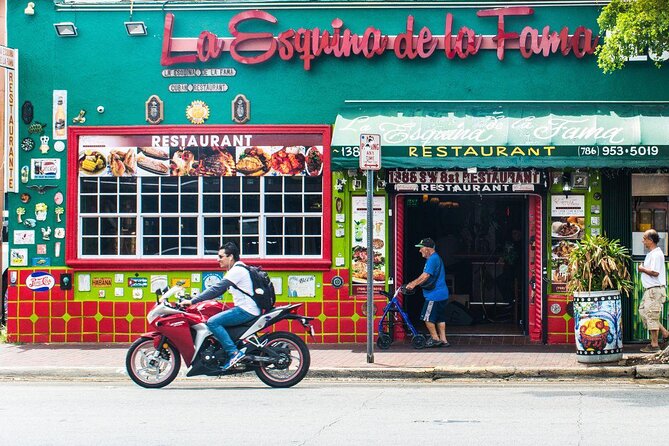
The meeting point is at 1637 SW 8th Street in Miami. The experience begins in the Calle Ocho area, the main corridor through Little Havana, and food is an important part of the opening.
Past outings have included a Cuban sandwich, pastries, churros, ice cream, coffee, and a small cup of cafecito. The exact food selection is not presented as a fixed menu, so you should treat the tastings as part of a cultural walk rather than a full restaurant meal. One person found the Cuban sandwich and churros especially good, while another noted that the description sounded more like snacks than lunch.
That distinction matters. If you arrive hungry, you may appreciate the sandwich and other samples. If you have already eaten, you can still enjoy the explanations and smaller tastings, but the food may be more than you need. I would avoid scheduling a large meal immediately before the tour, while also keeping expectations sensible because the precise serving plan can change.
The value comes from context. You are not simply handed a pastry and sent along. Angel explains how food, coffee, and family customs fit into Cuban life in Miami. For many people, the cafecito becomes a memorable part of the experience, especially because it is tied to conversation and local routine.
Cubaocho Museum and Performing Arts Center
Cubaocho is one of the most atmospheric stops. The venue combines a museum, performing arts space, cocktails, music, dancing, and a large collection of art. The visit is listed at about 10 minutes, with admission included.
That short time can be enough to get a feel for the room, but it is not enough for a full museum visit. You will likely see art and hear about the venue rather than study every piece. If you enjoy Cuban music and nightlife, this stop may be one of the tour’s highlights. Mojitos are available for purchase, but they are not included in the tour price.
The cocktail is worth treating as an optional extra rather than a required expense. One detailed account praised the mojito at Cubaocho after trying several elsewhere in Little Havana. If you enjoy rum drinks, this is a sensible place to buy one. If you do not drink, the music, art, and setting still give the stop value.
Cubaocho also helps explain why Little Havana is more than a daytime food district. Its cultural life continues through performance, art, and social spaces. The visit is brief, but it adds atmosphere that a purely historical walk might miss.
Agustin Gainza’s art and tavern
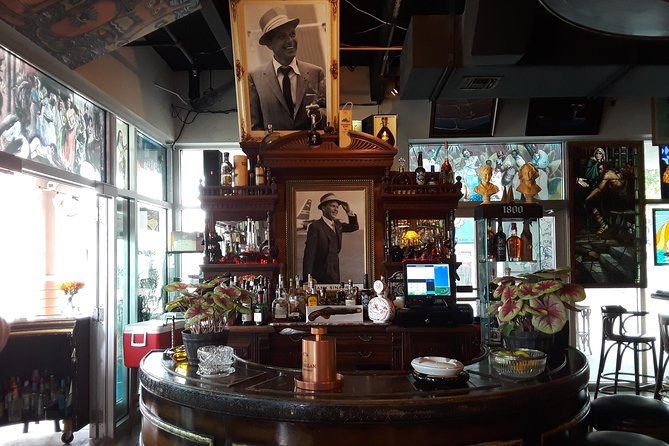
Agustin Gainza Arts and Tavern, also known as Taberna del Pintor, presents another side of Calle Ocho. The space is connected to the Cuban artist Agustin Gainza, whose work includes drawing, etching, ceramics, and painting.
The venue has been part of the South Florida art scene for decades, and Gainza’s work has appeared in the United States, Europe, the Caribbean, and Cuba. You do not need to be an art specialist to enjoy the stop. The useful part is seeing how Cuban identity is expressed through a local artist rather than only through tourist symbols.
Again, the planned stop is short. You are getting an introduction, not a long gallery tour. That makes the guide’s explanation important. Ask questions if you want more detail, especially about the artwork, Gainza’s Cuban background, or the role of small arts venues in Little Havana.
I like this inclusion because it breaks up the food stops. You spend part of the walk tasting and talking, then pause for visual culture. It also gives the neighborhood more depth. Calle Ocho is not only about restaurants, bars, and souvenirs. It supports working artists and long-running cultural spaces.
A few more gallery visits around the USA worth comparing
- Wynwood Food & Art Tour – exclusive access to the Wynwood Walls
★ 5.0 · 158 reviews - Miami Design District Food & Art Tour
★ 5.0 · 24 reviews - Miami: Wynwood Food and Art Tour
★ 5.0 · 12 reviews - MLK Walking Art History & Food Tour
★ 5.0 · 7 reviews
Calle Ocho, Miami’s Cuban-American main street
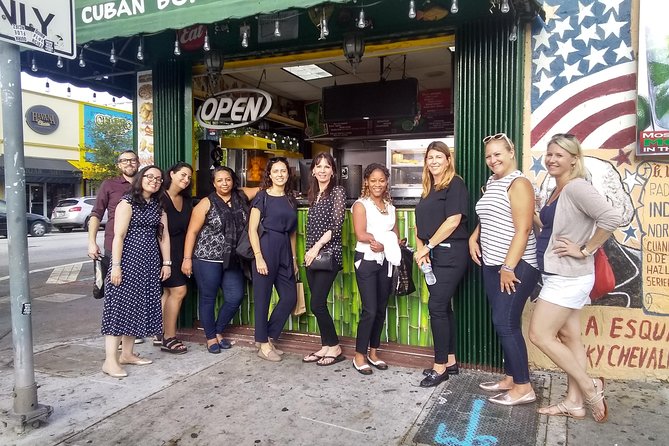
Calle Ocho is the broad setting for much of the tour. It is known for restaurants, museums, art galleries, nightlife, and the annual Calle Ocho Festival. The walk uses this busy corridor to show how Little Havana developed as a place of new beginnings for Cuban families arriving in Miami.
The guide’s personal connection is important here. A street can look like a row of businesses when you explore it alone. With someone who knows the community, you get stories about the people, family traditions, and changes that shaped the area.
The area is family-friendly, but it is still an urban entertainment district. Expect traffic, activity, and stops in commercial spaces rather than a quiet museum-style visit. Comfortable walking shoes are sensible, and you should keep the pace flexible because conversations may last longer than the posted schedule.
This is also where the tour’s value becomes clear. You are paying for more than food samples. You are paying for interpretation, introductions, and a way to connect separate sights into one story. If you want only a list of restaurants, you can find that on your own. If you want to understand why Calle Ocho matters, the guided format earns its place.
Domino Park and the sound of the neighborhood
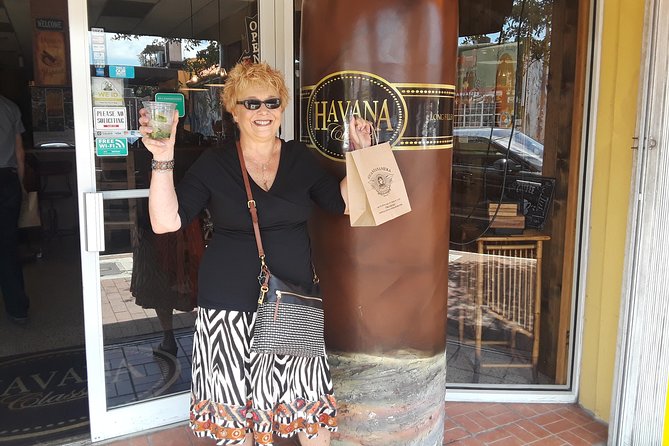
Maximo Gomez Park, widely called Domino Park, sits at Southwest Eighth Street and 15th Avenue, near the Tower Theater. Local residents have played dominoes here for decades, and the game remains a social ritual as much as a pastime.
The sound is part of the attraction. Dominoes hit the tables, players concentrate, and laughter breaks the silence between rounds. The park is a meeting place where generations and identities overlap. You are seeing a living community space, not a staged display built only for sightseeing.
The listed stop lasts about 10 minutes. That gives you time to observe the tables and hear the explanation, but not necessarily enough time to watch a full match unfold. The rules and local customs may be discussed, and you can ask questions, but the park is still an active public place with its own rhythm.
I consider this one of the most useful stops because it shows Little Havana through ordinary life. The art and music venues are memorable, but Domino Park explains how neighbors spend time together. It is a small glimpse of the social fabric that keeps the neighborhood connected.
Tower Theater and a century of Cuban cinema
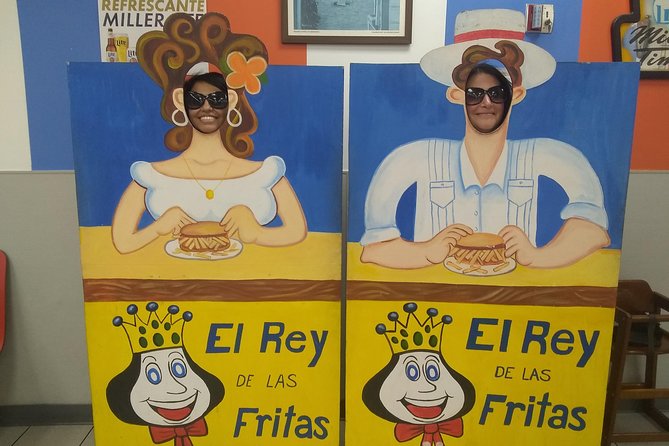
The MDC Tower Theater opened in December 1926 and was once considered the finest modern theater in the South. Its location on Calle Ocho gave it special importance for Cuban families arriving in Miami during the late 1950s and 1960s.
For many newcomers, the theater offered both entertainment and an introduction to American culture. Its programming later shifted to English-language films with Spanish subtitles and then to Spanish-language films. That change reflects the way Miami adapted to a growing Cuban population.
The theater is still operating after nearly a century. The tour includes a look at this landmark, but the supplied schedule does not give a separate duration or promise entry to a screening. Think of it as a meaningful exterior or cultural stop, depending on the guide’s plan, rather than a movie-theater visit.
This is a strong history point because it connects migration to a familiar public institution. A theater may sound less dramatic than a political museum, yet it shows how people adjusted to a new country through films, language, and shared entertainment.
Cigars, music, and the optional evening finish
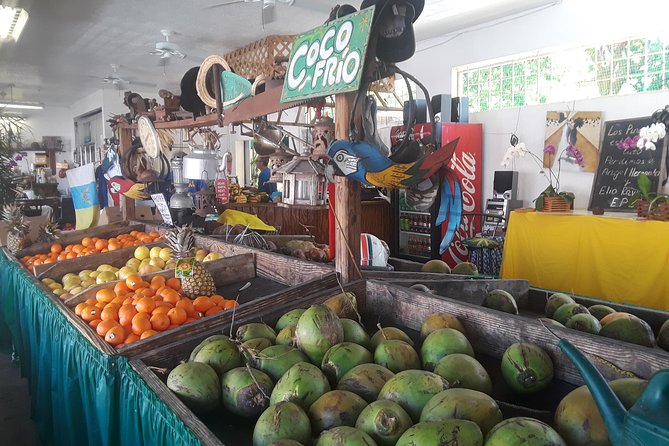
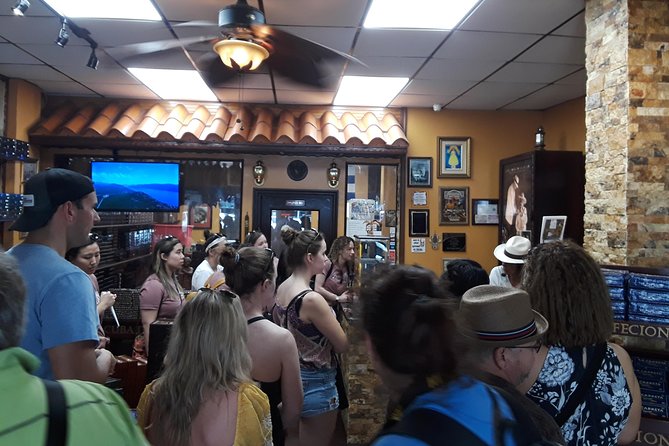
The tour includes a Little Havana cigar shop with live rolling, an explanation of cigar traditions, and a gift shop. You can watch the tobacco being shaped by hand and learn why cigar making remains closely tied to Cuban identity.
You do not need to smoke to enjoy this stop. The craft itself is the point, and the demonstration adds a hands-on element to the walk. If you want to buy a cigar or souvenir, that is an additional personal purchase, not part of the included tastings.
The final pass-by is an iconic nightclub from the 1930s to the 1950s that now operates as a live-music venue with Cuban food and drinks. The tour finishes there for anyone who wants to stay, with discounts and specials offered after the scheduled walk.
That optional ending is useful if you want to turn a daytime tour into an evening out. It is also a reason to check the timing when booking. The listed duration is about two and a half hours, but past outings have run close to four hours when the group asked many questions or continued socializing.
How much value does the tour offer?
No tour price is provided here, so I cannot judge the exact cost. I can judge what you are receiving: an English-speaking Cuban guide, multiple cultural stops, food and drink tastings, admission to listed venues, cigar rolling, and a small group capped at 15 people.
The value is strongest for you if you would otherwise pay separately for food samples, a cultural walk, and introductions to local places. It is weaker if you want a formal museum tour, a guaranteed full meal, or a tightly timed schedule. The tour is built around conversation and local connections, not a fixed tasting menu.
Several outings have lasted longer than the advertised time. That can be a bonus if you enjoy a relaxed pace, but it can also affect plans for dinner or another booking. Leave room in your schedule instead of placing a hard appointment immediately afterward.
There have been occasional problems with communication, cancellations, and meeting arrangements. Some cancellations were connected to rain, and one account describes a missed start after the guide did not appear. The operator says weather cancellations receive a refund or alternate date, and a full refund was issued in another rain-related case. I would confirm the meeting details close to departure and arrive early, especially because parking and traffic on Calle Ocho can take time.
Free cancellation is available up to 24 hours before the start time. Changes or cancellations inside that window are not refundable, except that poor weather may bring an alternate date or full refund.
Who should book this experience?
I would recommend it to:
- First-time visitors to Little Havana who want history with their food.
- Families interested in Cuban culture, music, art, coffee, and dominoes.
- Small groups that enjoy asking questions and setting a relaxed pace.
- People who want a local guide rather than a self-guided stroll.
- Returning Miami visitors looking for a more personal look at Calle Ocho.
I would be more cautious if you dislike walking, want a guaranteed restaurant meal, or prefer a precise schedule. The tour includes snacks and tastings, but the food can vary. Some stops are short, and the guide’s storytelling may take center stage.
Should you book the Little Havana food tour?
Book it if you want food tied to family and neighborhood history, not just a series of bites. Angel’s personal stories, the cigar demonstration, Domino Park, Cubaocho, and the Tower Theater give the walk a clear sense of place.
Skip it if your main goal is a long sit-down meal or a formal art and museum itinerary. Also confirm the start time and weather plans, and allow extra time after the tour in case the conversation continues.
For most people visiting Miami for the first time, this is a useful way to get oriented to Little Havana. You leave with more than a full stomach. You gain a better understanding of why Calle Ocho remains one of Miami’s most distinctive neighborhoods.
FAQ
How long does the Little Havana food tour last?
The scheduled duration is approximately 2 hours and 30 minutes. Some outings have lasted longer, particularly when the group asked many questions or continued visiting local venues.
Where does the tour start and end?
The tour starts at 1637 SW 8th Street, Miami, Florida 33135. It ends back at the meeting point.
What food and drinks are included?
Included refreshments are coffee and/or tea. Food tastings described during the experience include Cuban sandwiches, pastries, churros, ice cream, and cafecito, though the exact selection may vary. Mojitos at Cubaocho are available for purchase and are not listed as included.
Is transportation included?
No. Transportation is not included, so you must make your own way to the meeting point and return there after the walk.
How many people can join the tour?
The maximum group size is 15 people. Corporate and family groups of any size can book, although the experience itself has a listed maximum of 15 participants.
What happens if the weather is poor?
The experience requires good weather. If it is canceled because of poor weather, you will be offered a different date or a full refund. You can also cancel for a full refund if you do so at least 24 hours before the start time.
More Food in the USA
- Wynwood Food and Art Walking Tour
★ 5.0 · 6 reviews - A Food and Art Walking Tour through Old Town ABQ
★ 3.0 · 5 reviews - Picasso Museum and Walking Tour Plus Optional Wine & Food Tasting
★ 5.0 · 596 reviews - 4-Hour Outback Gourmet Food & Aboriginal Art Tour
★ 4.5 · 91 reviews
Just added around the USA
- NYC Combo: Statue of Liberty Cruise, St Patrick’s Cathedral & Moma entrance★ 4.0 · 8 reviews
- New York City Art Gallery Tour★ 5.0 · 7 reviews
- Skip the Line Tickets for MoMA and Whitney Museum Combo★ 3.0 · 2 reviews
- Chelsea Galleries and High Line; Art, Architecture and History★ 5.0 · 14 reviews
- Visit The Guggenheim Museum & 3h Manhattan Walking Tour★ 4.5 · 3 reviews
- Tribeca Contemporary Art Tour with NYC Art Critic★ 5.0 · 5 reviews
- American Museum of Natural History and MOMA Combo Tickets★ 4.5 · 3 reviews
- Chelsea Architecture and Art Tour with Award Winning NYC Guide★ 5.0 · 9 reviews
Art Museum Tours in the USA, compared.

Medieval Torture Museum with Ghost Hunting and Tiny Art Gallery
Read our review →
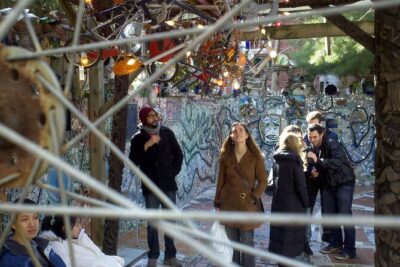
Philadelphia Murals and Street Art Tour with Magic Gardens
Read our review →
The National Gallery of Art DC – Exclusive Guided Museum Tour
Read our review →
Wynwood Food & Art Tour – exclusive access to the Wynwood Walls
Read our review →
DC National Gallery of Art Guided Tour Semi-Private 8ppl Max
Read our review →Browse the lists this tour appears in